
Pad Thai
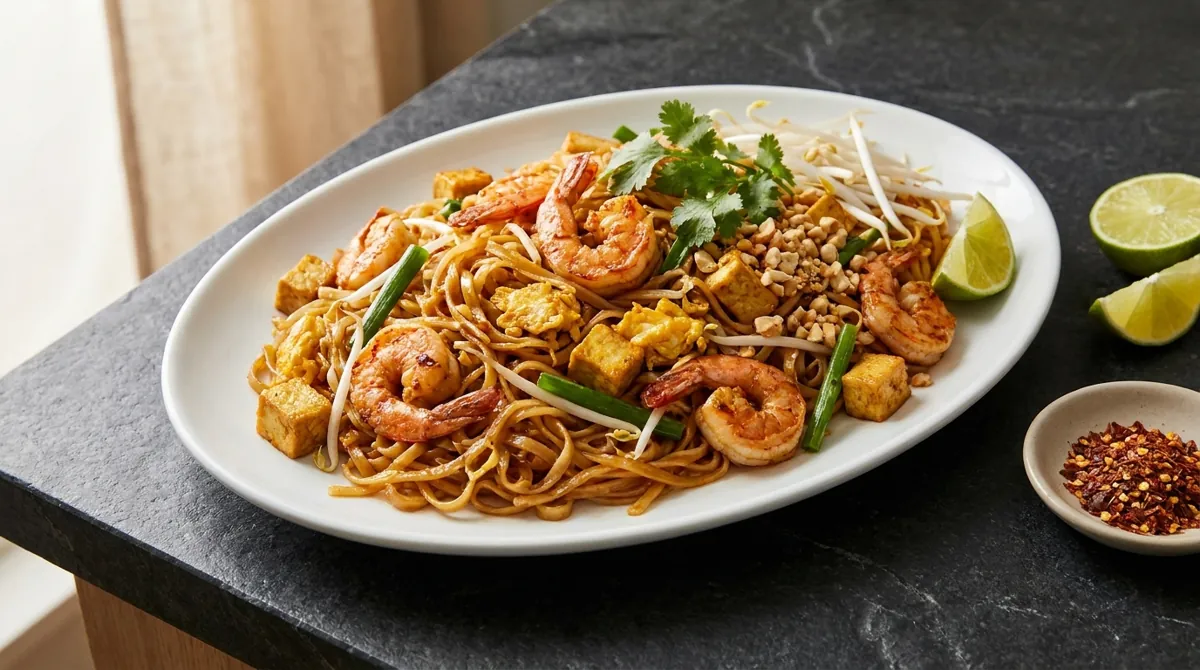
Flat rice noodles stir-fried with shrimp, egg and tofu in a sweet, sour and salty tamarind and fish sauce, finished with bean sprouts, scallions, crushed peanuts and lime: the noodle dish Thailand's government promoted as a national dish in the 1930s and 1940s.
🍳Cook alongOne move at a time, with real timers
 Edited by JP Lambiase
Change the estimate
Swaps change the price only: cook any meat to its own safe temperature. Where these numbers come from
Stir-fried rice noodles came to what is now Thailand with Chinese traders and cooks, and the dish's first name gives that away: kuai tiao pad thai, from the Teochew word for a flat rice noodle, meaning roughly "Thai-style stir-fried noodles". Fried noodles were still seen as Chinese food in Thailand well into the 1900s.
Pad thai as a national dish is a mid-20th-century creation. In the early 1940s, war and destructive floods left the country short of rice, and the government promoted noodles, which stretch a bowl of rice further, with a standard recipe given to street vendors. How much Phibun invented and how much he simply promoted is disputed: his son recalled the family cooking it at home before, and some historians credit Thai Chinese cooks with creating it.
The story did not stop there. From 2001 the Thai government backed Thai restaurants abroad, and their number nearly tripled by 2018, carrying pad thai to every takeout menu in America.
Why it works the kitchen science
Soaked, not boiled, noodles
Hot tap water softens them only partway, so they finish in the pan by absorbing the sauce and stay chewy instead of mushy or broken.
Tamarind
Its fruity sourness, balanced by fish sauce, sugar and chili, is the flavor of pad thai. Wikipedia lists tamarind juice as a core ingredient, and America's Test Kitchen calls it essential.
Shrimp first, then out
Seared alone in a hot pan they brown without overcooking, and go back in only at the end.
A 12-inch skillet
A home burner cannot keep a wok hot enough for four servings, and a wide nonstick skillet keeps the noodles from sticking.
🧰 You'll need 6 items
Everything the steps call for. Tick off what you have before you start.
Pans and pots
Tools
Step by step
- Step 1
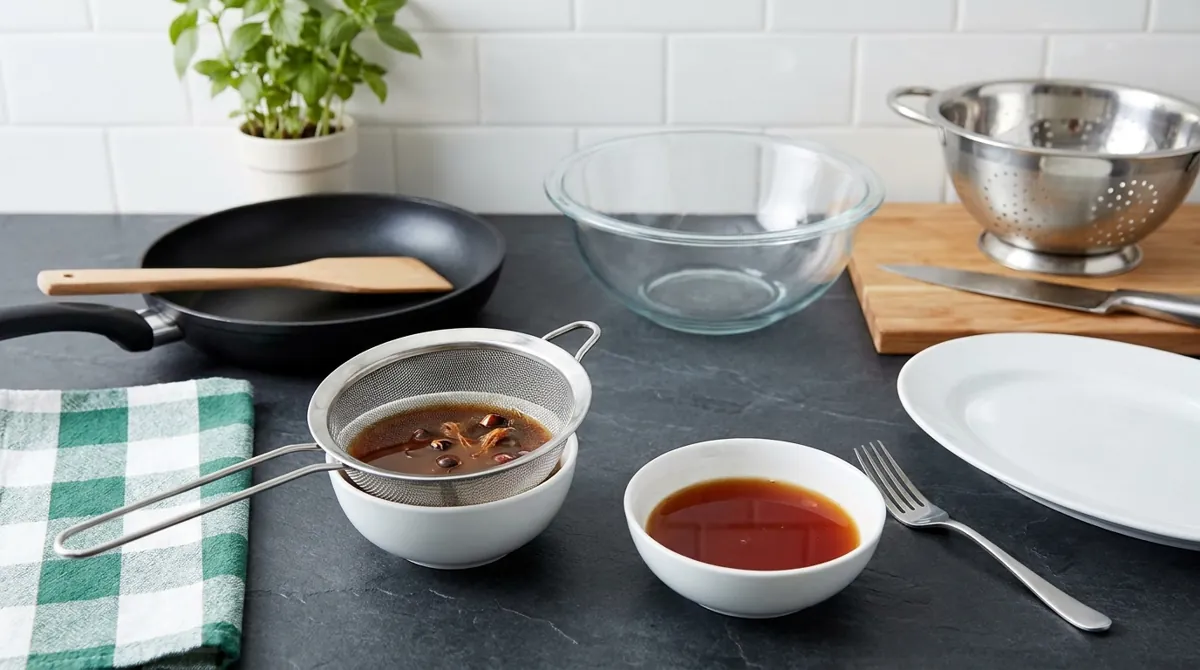
Soak the tamarind in the boiling water in a small bowl for 10 minutes, mash it with a fork, then press it through a fine-mesh strainer into a second bowl and discard the seeds and fibers. Stir in the fish sauce, sugar, vinegar, cayenne and 2 tbsp oil.
- Step 2
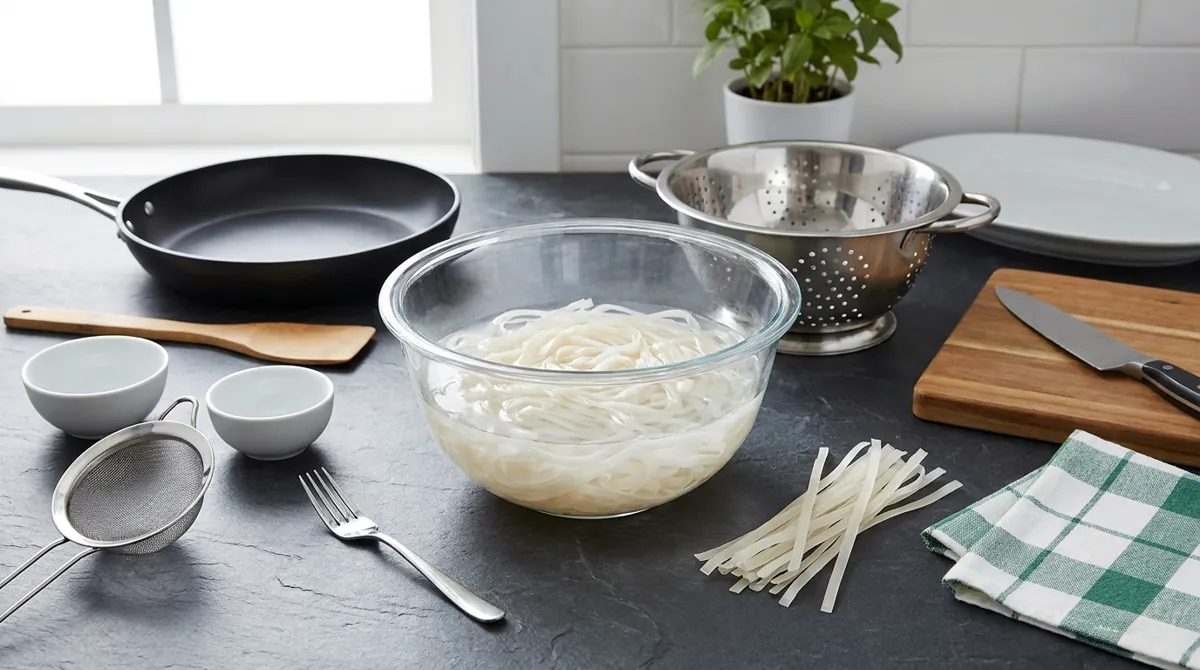
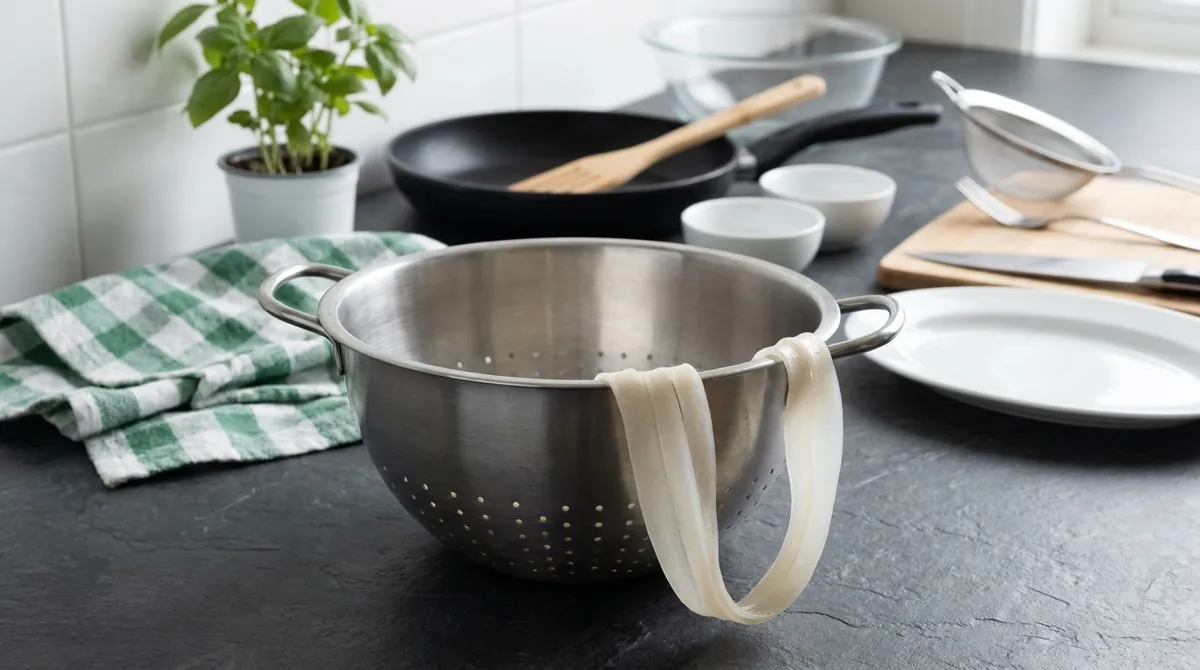
Cover the noodles with hot tap water in a large bowl and soak about 20 minutes, until they bend easily but are still firm and white at the center. Drain in a colander.
✓ What it should look like - Step 3
Get everything ready next to the stove: the sauce, drained noodles, beaten eggs with a pinch of salt, tofu, garlic and shallot, sprouts, scallions and peanuts. The stir-fry moves fast.
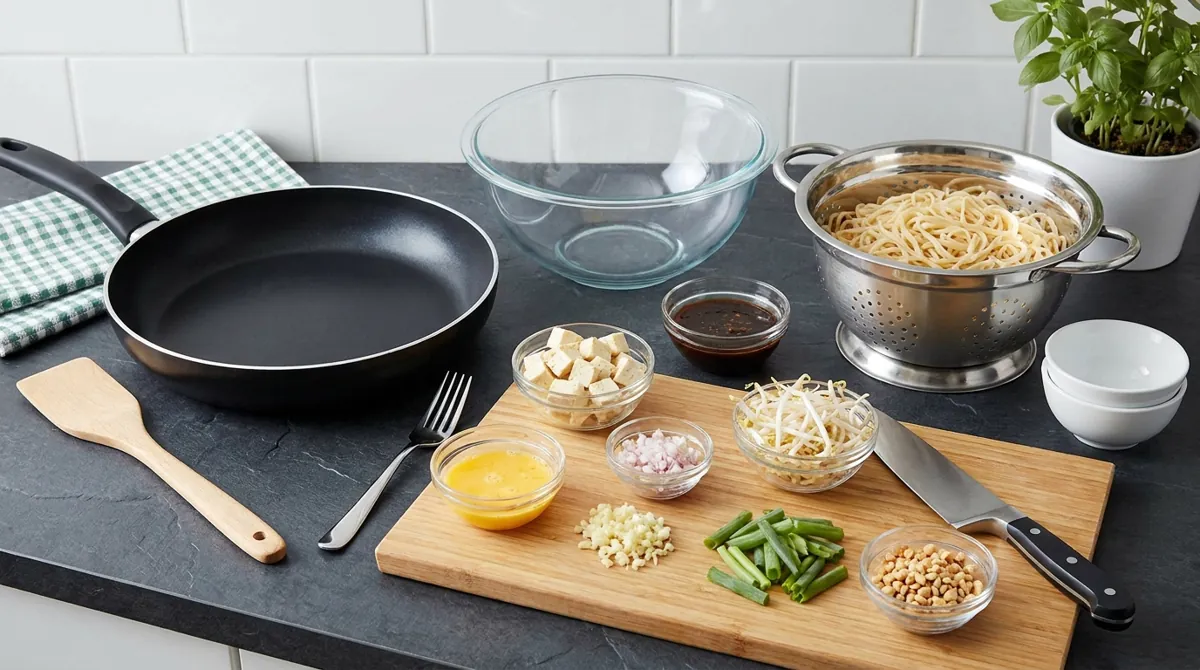
- Step 4
Heat 1 tbsp oil in a 12-inch nonstick skillet over high heat until just smoking. Add the shrimp and a pinch of salt and cook, stirring, about 3 minutes, until opaque and browned at the edges. Move them to a plate.
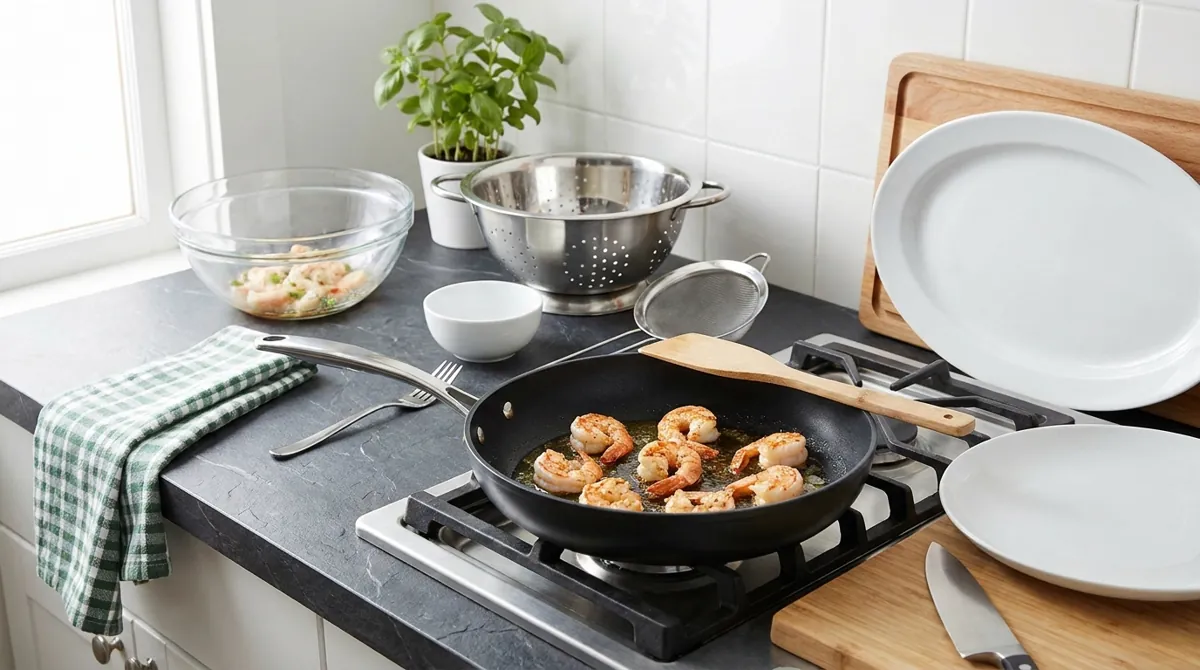
- Step 5
Take the skillet off the heat, add the last 1 tbsp oil, the garlic and shallot, and cook over medium heat until light golden, about 1 1/2 minutes. Add the eggs and scramble about 20 seconds, then add the noodles (and the dried shrimp and radish, if using) and toss to combine.
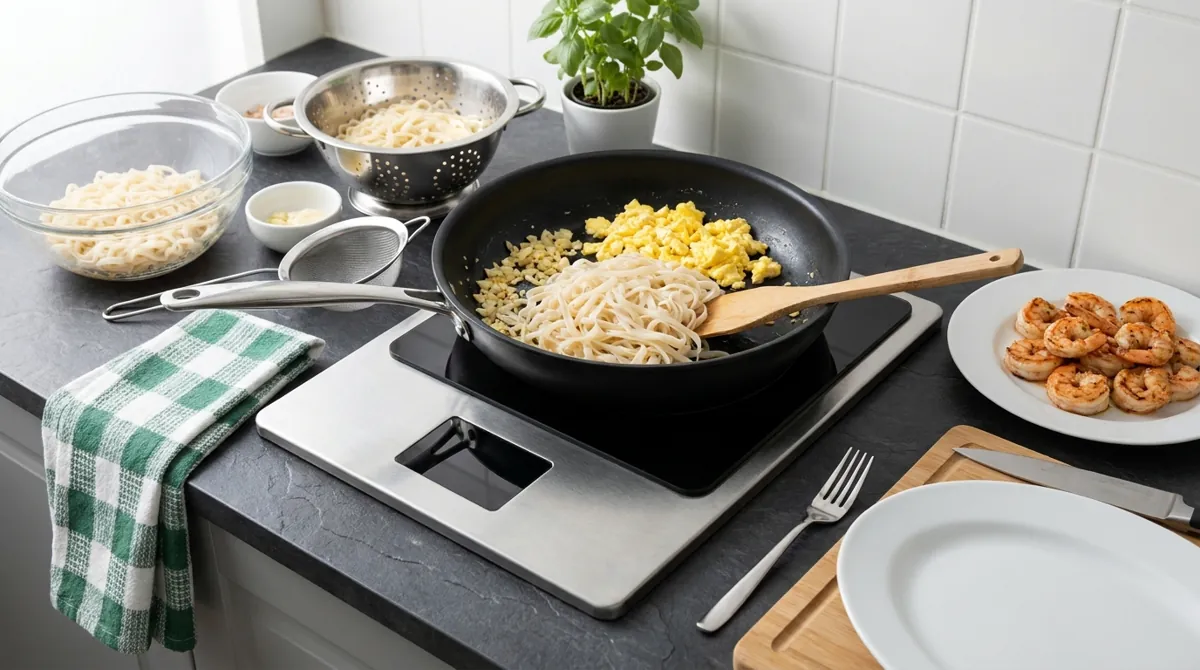
- Step 6
Add the sauce, turn the heat to high and toss until the noodles are evenly coated. Add 1/4 cup of the peanuts, the sprouts, tofu, most of the scallions and the shrimp, and keep tossing until the noodles are tender and have soaked up the sauce, about 2 1/2 minutes. If they are still firm, add 2 tbsp water and toss a minute more.
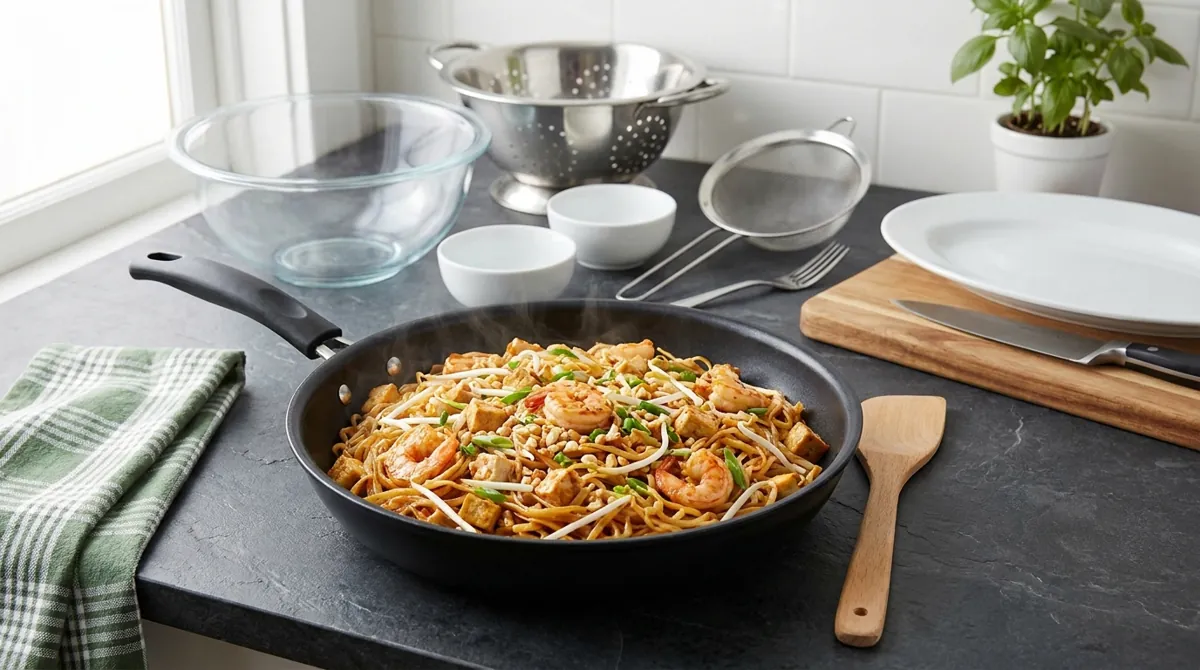
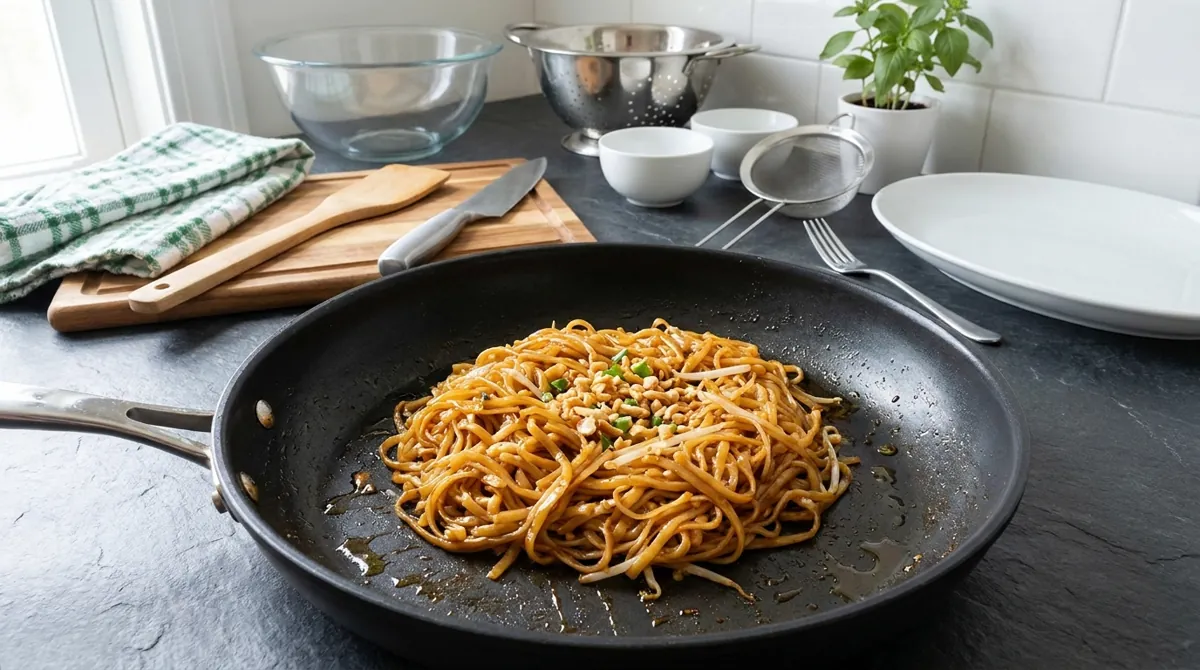
✓ What it should look like - Step 7
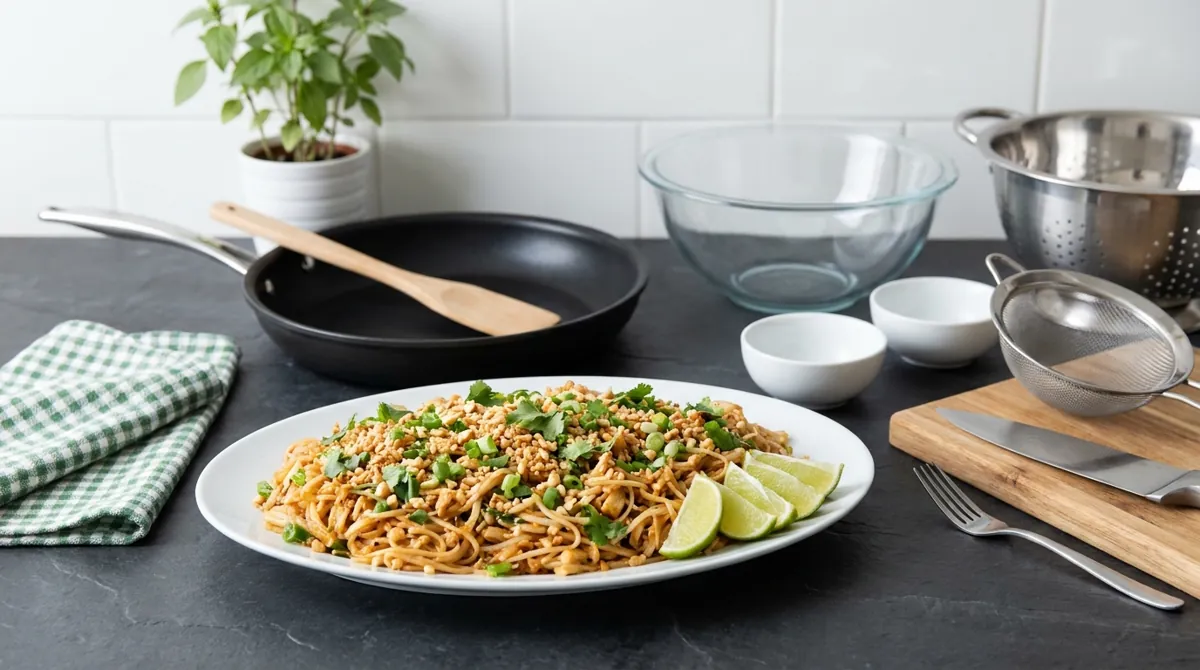
Pile it onto a platter, scatter the rest of the scallions and peanuts and the cilantro on top, and serve right away with lime wedges and chili flakes.
Pad Thai
Serves 4 · about 8 cups · 45 min total
Sauce
- 2 tbsp tamarind pulp from a block (30 g), or 1 1/2 tbsp tamarind concentrate
- 3/4 cup boiling water
- 3 tbsp fish sauce (54 g)
- 3 tbsp palm sugar or light brown sugar (36 g)
- 1 tbsp rice vinegar
- 1/2 to 3/4 tsp cayenne pepper or Thai chili flakes
- 2 tbsp peanut or vegetable oil (27 g)
Noodles and stir-fry
- 8 oz dried flat rice noodles, about 1/8 inch wide (227 g)
- 2 tbsp peanut or vegetable oil (27 g)
- 12 oz medium shrimp, peeled and deveined (340 g)
- 1/4 tsp fine salt, divided
- 4 oz extra-firm tofu, patted dry and cut into 1/2 inch cubes (113 g)
- 3 garlic cloves, minced (9 g)
- 1 medium shallot, minced (40 g)
- 2 large eggs, beaten (100 g)
- 2 tbsp dried shrimp, chopped, and 2 tbsp Thai preserved radish, chopped, optional
- 3 cups bean sprouts (170 g)
- 5 scallions, green parts cut into 1 inch lengths, or a bunch of garlic chives (40 g)
- 6 tbsp roasted unsalted peanuts, chopped (54 g)
- Lime wedges, cilantro and more chili flakes, to serve
Equipment: 12-inch nonstick skillet, Chef's knife and cutting board, Measuring cups and spoons, Mixing bowls, Fine-mesh strainer, Colander
Method
- Soak the tamarind in the boiling water in a small bowl for 10 minutes, mash it with a fork, then press it through a fine-mesh strainer into a second bowl and discard the seeds and fibers. Stir in the fish sauce, sugar, vinegar, cayenne and 2 tbsp oil.
- Cover the noodles with hot tap water in a large bowl and soak about 20 minutes, until they bend easily but are still firm and white at the center. Drain in a colander.
- Get everything ready next to the stove: the sauce, drained noodles, beaten eggs with a pinch of salt, tofu, garlic and shallot, sprouts, scallions and peanuts. The stir-fry moves fast.
- Heat 1 tbsp oil in a 12-inch nonstick skillet over high heat until just smoking. Add the shrimp and a pinch of salt and cook, stirring, about 3 minutes, until opaque and browned at the edges. Move them to a plate.
- Take the skillet off the heat, add the last 1 tbsp oil, the garlic and shallot, and cook over medium heat until light golden, about 1 1/2 minutes. Add the eggs and scramble about 20 seconds, then add the noodles (and the dried shrimp and radish, if using) and toss to combine.
- Add the sauce, turn the heat to high and toss until the noodles are evenly coated. Add 1/4 cup of the peanuts, the sprouts, tofu, most of the scallions and the shrimp, and keep tossing until the noodles are tender and have soaked up the sauce, about 2 1/2 minutes. If they are still firm, add 2 tbsp water and toss a minute more.
- Pile it onto a platter, scatter the rest of the scallions and peanuts and the cilantro on top, and serve right away with lime wedges and chili flakes.
Americanized house recipe, written for this site. History: Wikipedia, "Pad thai" (kuai tiao pad thai and the Teochew noodle word, Chinese stir-fried noodles, mid-20th-century invention, the Phibun government and wartime rice shortage as the common account, Thai Chinese invention argued by Kasma Loha-unchit, core and optional ingredients, the 2001 soft-power restaurant plan); Mental Floss, "A Brief History of Pad Thai" (18th-century Chinese traders, Phibun, Siam renamed Thailand, the Cultural Mandates, war and floods in the early 1940s, a standard recipe for vendors, Phibun's son on the family cook, some historians crediting Chinese cooks, restaurants abroad nearly tripling 2001 to 2018). Technique: America's Test Kitchen, "Pad Thai" (tamarind soaked in boiling water and strained, fish sauce, sugar, rice vinegar and cayenne, 8 oz rice stick noodles soaked in hot tap water about 20 minutes, shrimp seared first in a 12-inch skillet, garlic and shallot, scrambled eggs, a final 2 1/2-minute toss with sprouts, scallions and peanuts). en.wikipedia.org. Ingredient list follows the source; the method is in our own words.
All sources (3)
Tips
- Tamarind is sold as a pulp block (soak and strain it) or as a thinner concentrate (use about 1 1/2 tbsp mixed with 1 1/2 tbsp water). No tamarind at all? America's Test Kitchen suggests 1 1/2 tbsp lime juice plus 1 1/2 tbsp water, and skip the lime wedges.
- For a vegetarian version, use soy sauce in place of the fish sauce, skip the shrimp and double the tofu.
- Make it in one batch for four at most; a crowded pan steams the noodles into a clump.
The rules people argue about
What the sources agree on, what they don't, and what is just a good story.
- Phibun invented pad thai. Disputed: his government promoted it as a national dish, but his son recalled it cooked at home before, and some historians credit Thai Chinese cooks.
Meatballs of the World

Italian-American Meatballs
Big, tender meatballs braised for an hour in red sauce over spaghetti. The one most Americans grew up with.

Pallottine (Abruzzo Meatballs)
Tiny meatballs, smaller than a marble, tossed right through square spaghetti alla chitarra. No bread at all.

Swedish Meatballs (Köttbullar)
Small, soft meatballs browned in butter, in a cream sauce made from the same pan, with lingonberry jam on the plate.

Danish Frikadeller
Pork meatballs shaped with a spoon and fried slowly in butter, crusty outside and soft in the middle.

Königsberger Klopse
German meatballs that are never fried: poached, then served in a creamy white sauce with capers.

Spanish Albóndigas in Almond Saffron Sauce
The tapas bar classic: small meatballs in a golden sauce thickened with fried almonds and bread.

Mexican Albóndigas with Chipotle and Mint
Soft meatballs with rice and fresh mint inside, simmered in a smoky tomato and chipotle broth.

Izgara Köfte (Turkish Grilled Meatballs)
Small, flat meatballs kneaded hard, rested cold, and charred on a hot grill pan.

Lion's Head Meatballs
Big, soft pork meatballs, stirred into a sticky paste, fried to set, then braised in a savory sauce.

Chicken Tsukune
Japan's chicken meatball: kneaded sticky, grilled on skewers, glazed with sweet soy tare, dipped in egg yolk.