
Panna Cotta
Silky, barely set vanilla cream with a gentle wobble, the Piedmont dessert that is mostly cream and patience, with a strawberry topping.
🍳Cook alongOne move at a time, with real timers
 Edited by JP Lambiase
Change the estimate
Swaps change the price only: cook any meat to its own safe temperature. Where these numbers come from
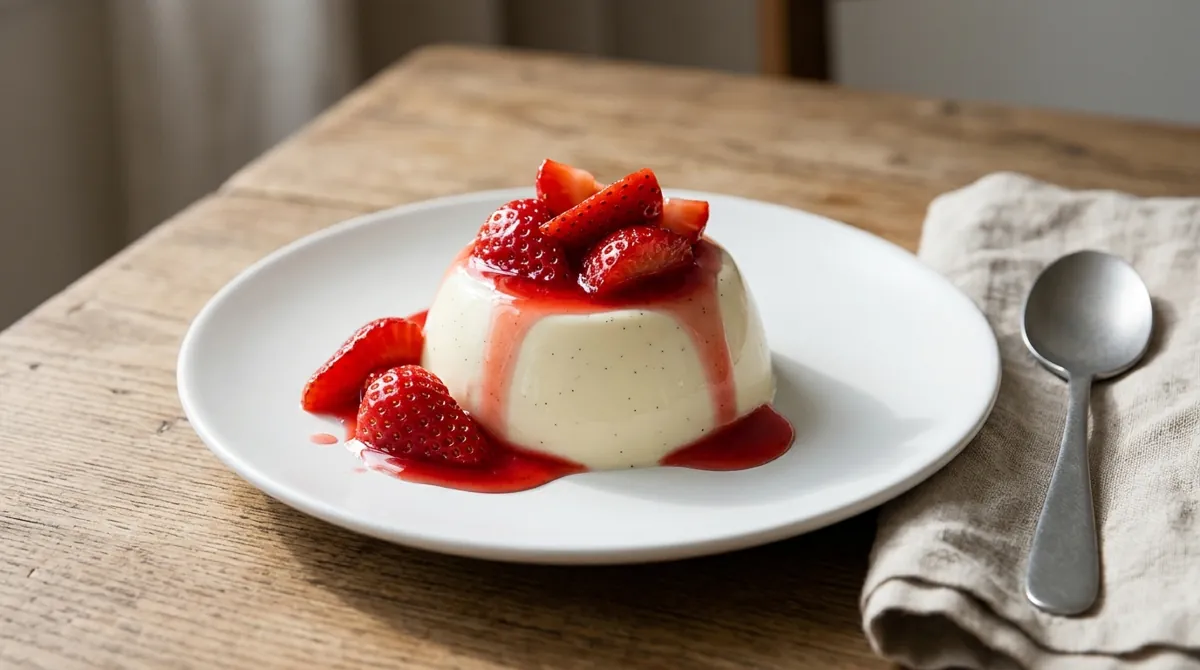
Panna cotta means "cooked cream" in Italian. It is cream, milk and sugar lightly set with gelatin, chilled in a mold and turned out onto a plate. It is usually described as a traditional dessert of Piedmont in northern Italy, but the name itself is young: Wikipedia notes it does not appear in Italian cookbooks until the 1960s.
The best-known story says a Hungarian woman in the Langhe hills invented it in the early 19th century; that account is unverified, and the more colorful versions, in which she is a ballerina, are folklore we could not trace to any source, so both are DISPUTED. Older relatives are documented: an 1879 Italian dictionary lists latte inglese ("English milk"), a molded cream-and-gelatin dish, and Carême's 1815 fromage bavarois is a close cousin made with whipped cream. The Piedmontese version is often poured over a caramel-lined mold and flavored with rum or marsala.
Why it works the kitchen science
Bloomed gelatin
Soaking it in cold liquid first spreads the granules so they dissolve smoothly in the hot cream.
Heating without boiling
Boiling weakens gelatin and can break the cream; steam rising is hot enough.
A small amount of gelatin
Just enough to set, which keeps the texture silky and the wobble.
🧰 You'll need 5 items
Everything the steps call for. Tick off what you have before you start.
Pans and pots
Tools
Step by step
- Step 1
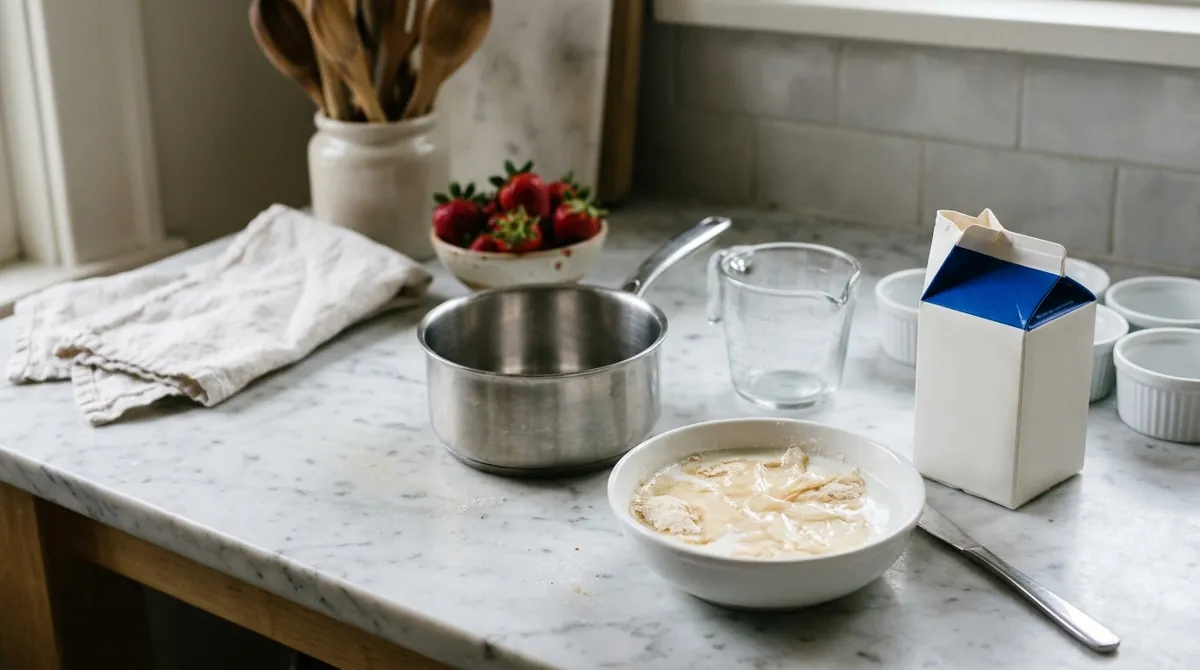
Sprinkle the gelatin over the 3 tablespoons cold milk in a small bowl and leave it 5 minutes to soften.
- Step 2
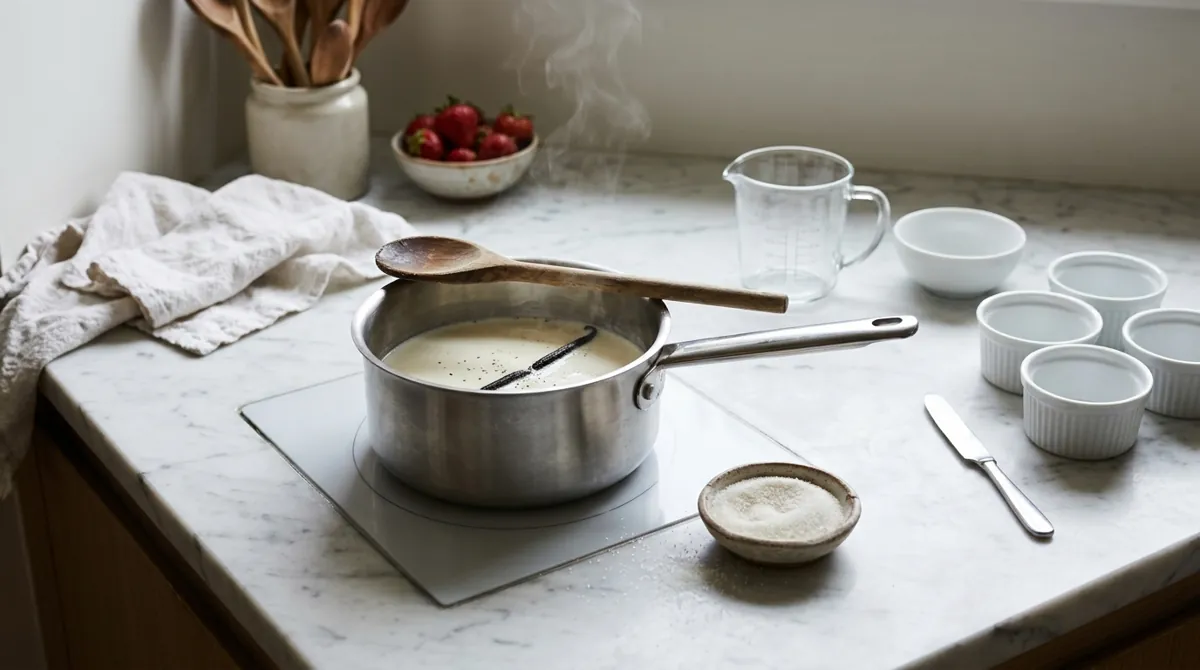
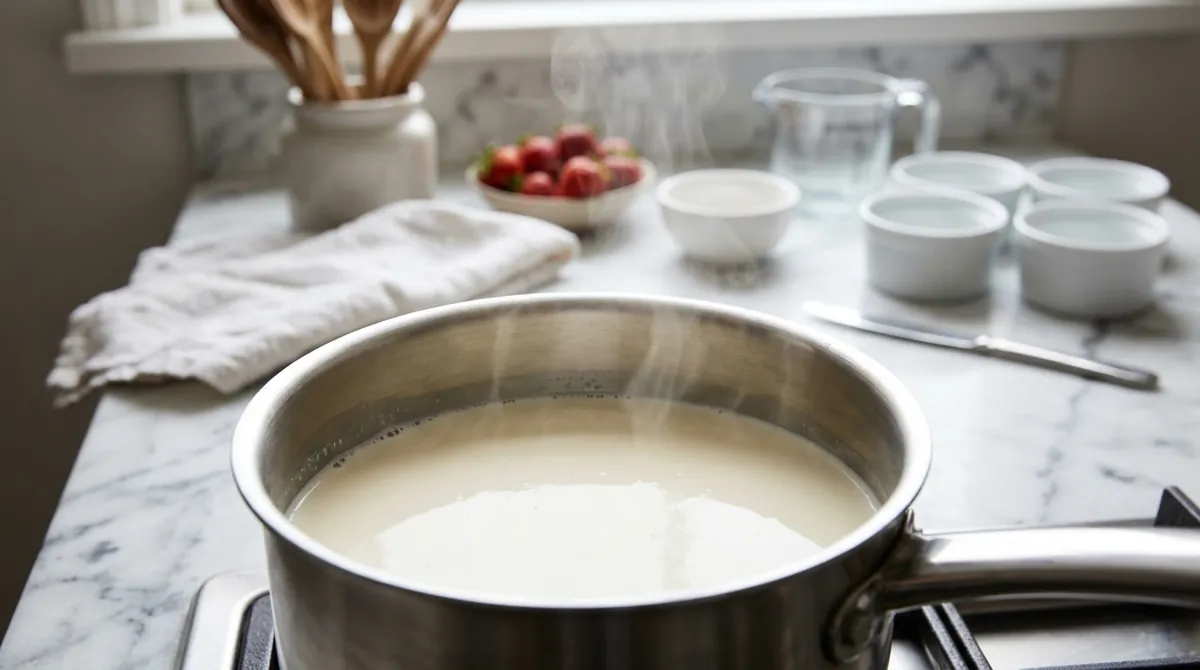
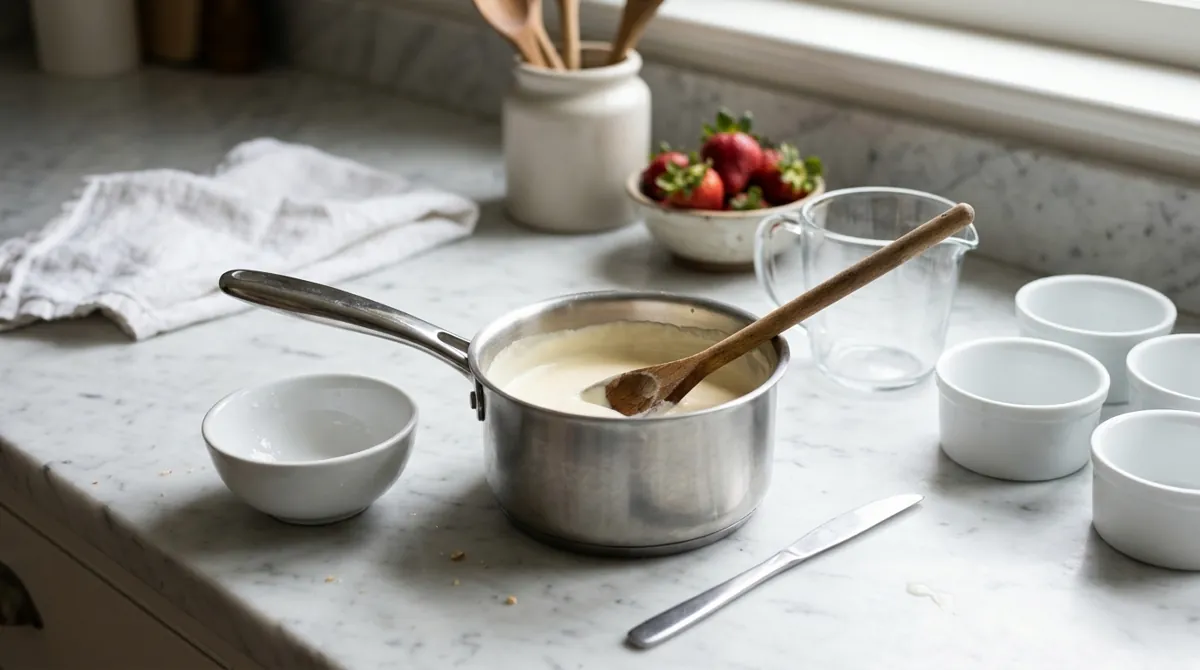
Heat the cream, remaining milk, sugar, salt and the split vanilla bean in a saucepan over medium heat, stirring until the sugar dissolves and steam rises. Do not let it boil.
✓ What it should look like - Step 3
Remove the pan from the heat, add the softened gelatin and stir 1 to 2 minutes until it has completely dissolved with no grains. Remove the vanilla bean, or stir in the extract.
- Step 4
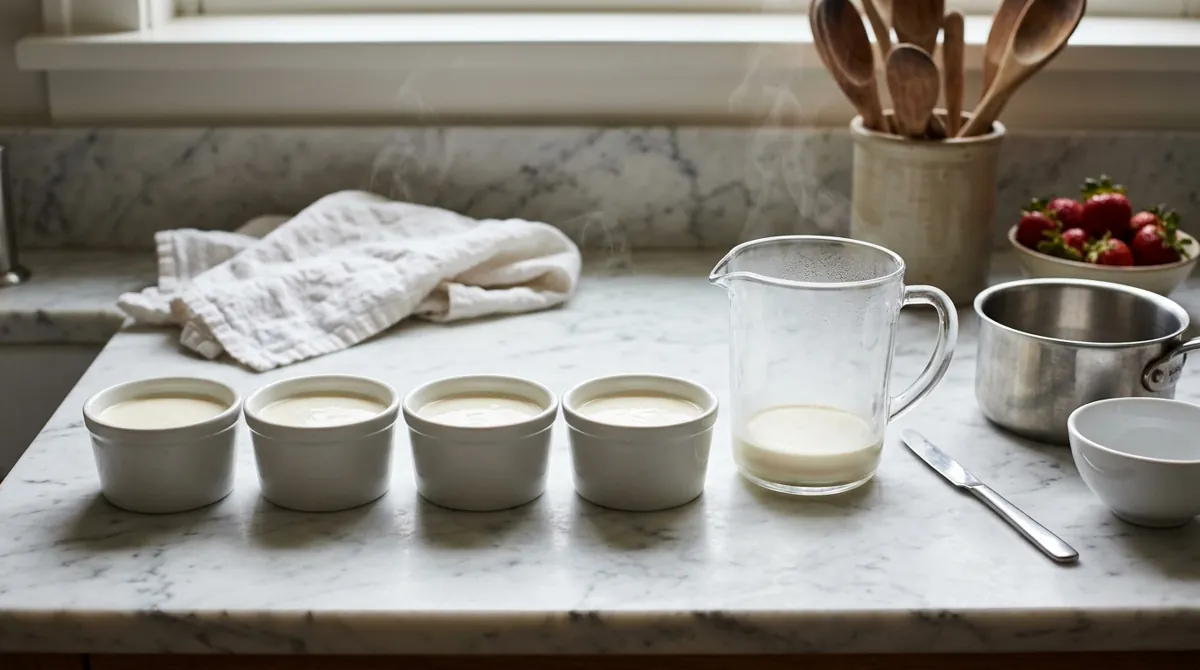
Strain into a jug and divide it among 4 lightly oiled ramekins. Cool 15 minutes at room temperature, then cover and chill at least 4 hours, until set but still wobbly.
- Step 5
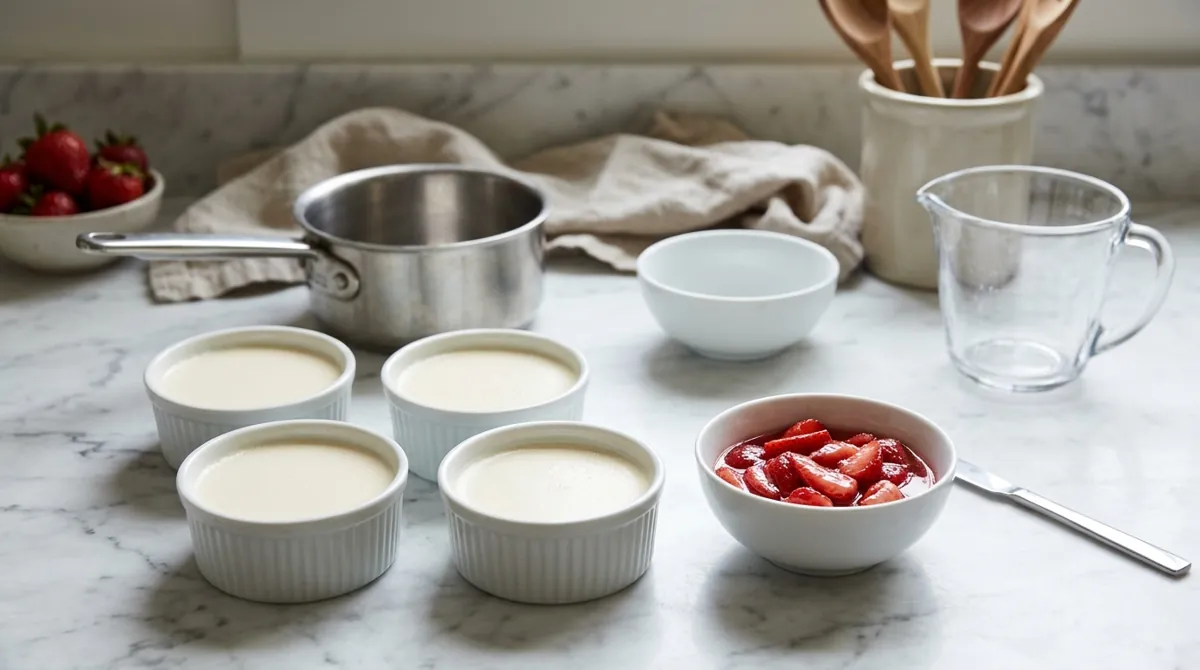
Toss the strawberries with the sugar and let them sit 15 minutes while the panna cotta chills.
✓ What it should look like - Step 6
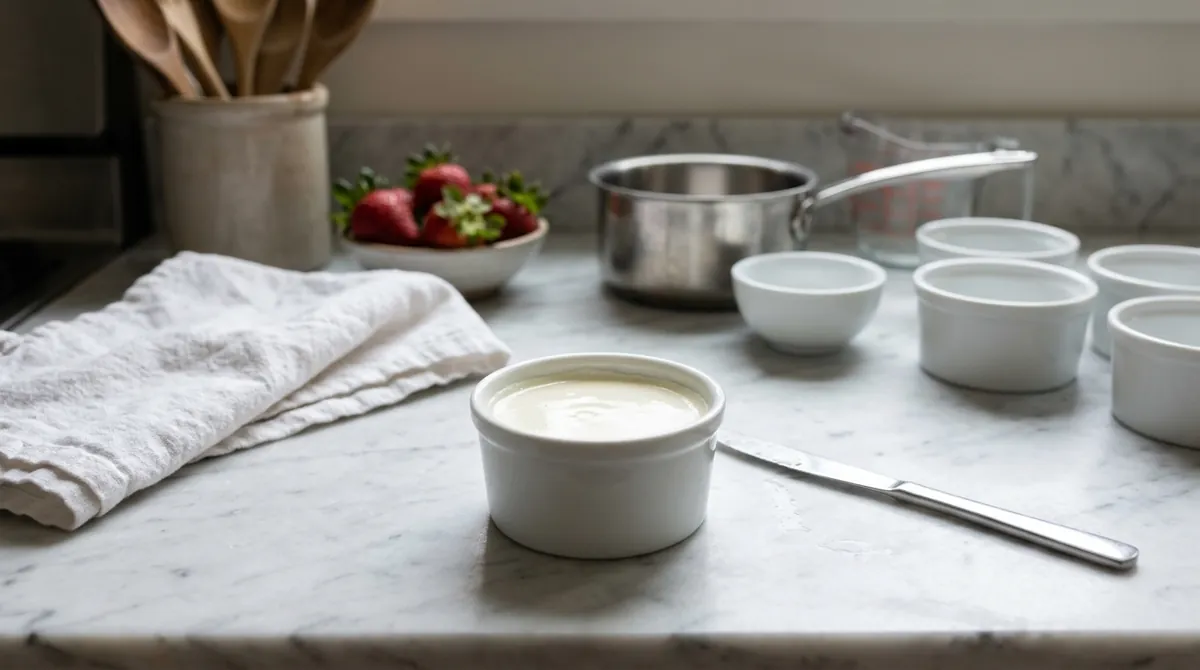
To serve, run a thin knife around each edge, set the ramekin in hot water for 10 seconds, turn it out onto a plate and top with the berries.
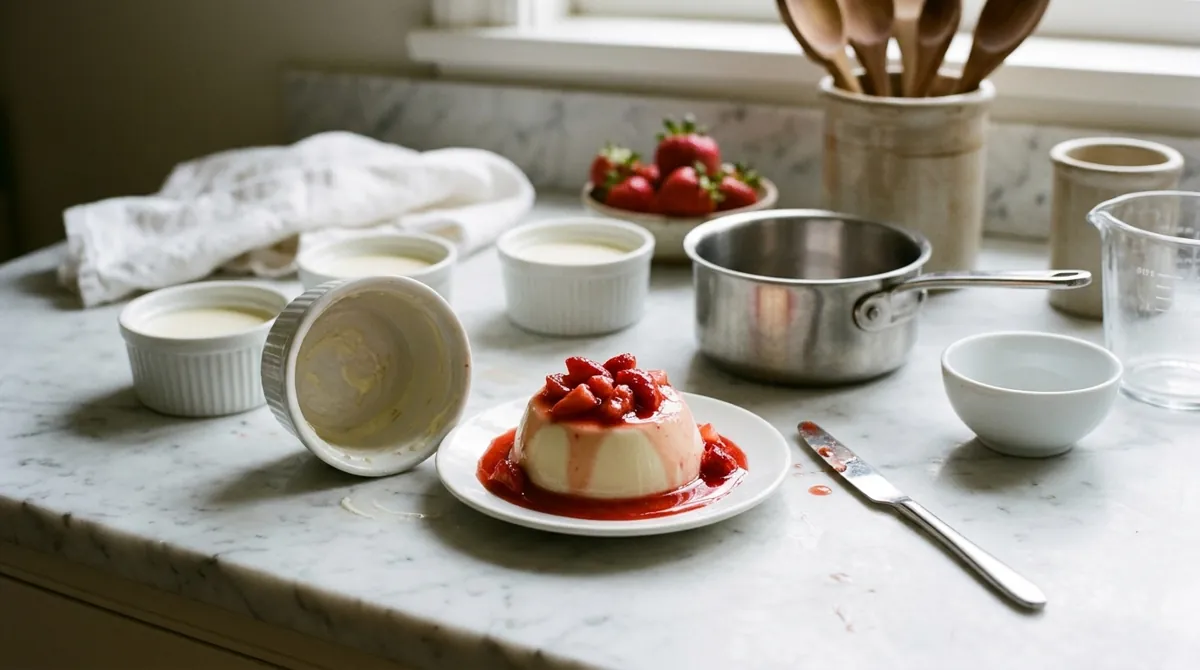
Panna Cotta
Serves 4 · 4 ramekins of about 6 ounces · 4 hr 20 min total
- 1 envelope unflavored powdered gelatin (7 g, about 2 1/4 tsp)
- 3 tablespoons cold milk, for blooming the gelatin
- 1 3/4 cups heavy cream (420 g)
- 3/4 cup whole milk (183 g)
- 1/4 cup granulated sugar (50 g)
- 1 vanilla bean, or 1 tsp vanilla extract
- Pinch of fine salt
- 1 cup sliced strawberries and 1 tablespoon sugar, to serve (about 150 g)
Equipment: Saucepan, Chef's knife and cutting board, Measuring cups and spoons, Mixing bowls, Fine-mesh strainer
Method
- Sprinkle the gelatin over the 3 tablespoons cold milk in a small bowl and leave it 5 minutes to soften.
- Heat the cream, remaining milk, sugar, salt and the split vanilla bean in a saucepan over medium heat, stirring until the sugar dissolves and steam rises. Do not let it boil.
- Remove the pan from the heat, add the softened gelatin and stir 1 to 2 minutes until it has completely dissolved with no grains. Remove the vanilla bean, or stir in the extract.
- Strain into a jug and divide it among 4 lightly oiled ramekins. Cool 15 minutes at room temperature, then cover and chill at least 4 hours, until set but still wobbly.
- Toss the strawberries with the sugar and let them sit 15 minutes while the panna cotta chills.
- To serve, run a thin knife around each edge, set the ramekin in hot water for 10 seconds, turn it out onto a plate and top with the berries.
Americanized house recipe, written for this site, within the common ratios (1 packet, about 2 1/4 tsp, of gelatin to 2 1/2 cups of cream and milk for a mold that unmolds; a softer set for serving in the glass). History: Wikipedia, "Panna cotta" (Piedmont, name not in cookbooks until the 1960s, the unverified Langhe story, latte inglese 1879, Carême 1815 bavarois, caramel, rum and marsala). en.wikipedia.org. Ingredient list follows the source; the method is in our own words.
All sources (1)
Tips
- Do not use more gelatin for a sturdier set unless you want a rubbery panna cotta; for serving in glasses cut the gelatin to 2 tsp.
- Keeps 3 days covered in the refrigerator.
- Caramel version: swirl 1/3 cup sugar to amber caramel into the molds before the cream, as in Piedmont.
The rules people argue about
What the sources agree on, what they don't, and what is just a good story.
- Panna cotta is a centuries-old Piedmont dessert. Disputed: Italian sources do not use the name until the 1960s; related cream-and-gelatin desserts are older.
- A Hungarian ballerina invented it in the Langhe. Folklore: Wikipedia mentions an unverified Hungarian woman in the Langhe and no ballerina; the ballerina version is not backed by any record we found.
Meatballs of the World

Italian-American Meatballs
Big, tender meatballs braised for an hour in red sauce over spaghetti. The one most Americans grew up with.

Pallottine (Abruzzo Meatballs)
Tiny meatballs, smaller than a marble, tossed right through square spaghetti alla chitarra. No bread at all.

Swedish Meatballs (Köttbullar)
Small, soft meatballs browned in butter, in a cream sauce made from the same pan, with lingonberry jam on the plate.

Danish Frikadeller
Pork meatballs shaped with a spoon and fried slowly in butter, crusty outside and soft in the middle.

Königsberger Klopse
German meatballs that are never fried: poached, then served in a creamy white sauce with capers.

Spanish Albóndigas in Almond Saffron Sauce
The tapas bar classic: small meatballs in a golden sauce thickened with fried almonds and bread.

Mexican Albóndigas with Chipotle and Mint
Soft meatballs with rice and fresh mint inside, simmered in a smoky tomato and chipotle broth.

Izgara Köfte (Turkish Grilled Meatballs)
Small, flat meatballs kneaded hard, rested cold, and charred on a hot grill pan.

Lion's Head Meatballs
Big, soft pork meatballs, stirred into a sticky paste, fried to set, then braised in a savory sauce.

Chicken Tsukune
Japan's chicken meatball: kneaded sticky, grilled on skewers, glazed with sweet soy tare, dipped in egg yolk.