
Peach Cobbler
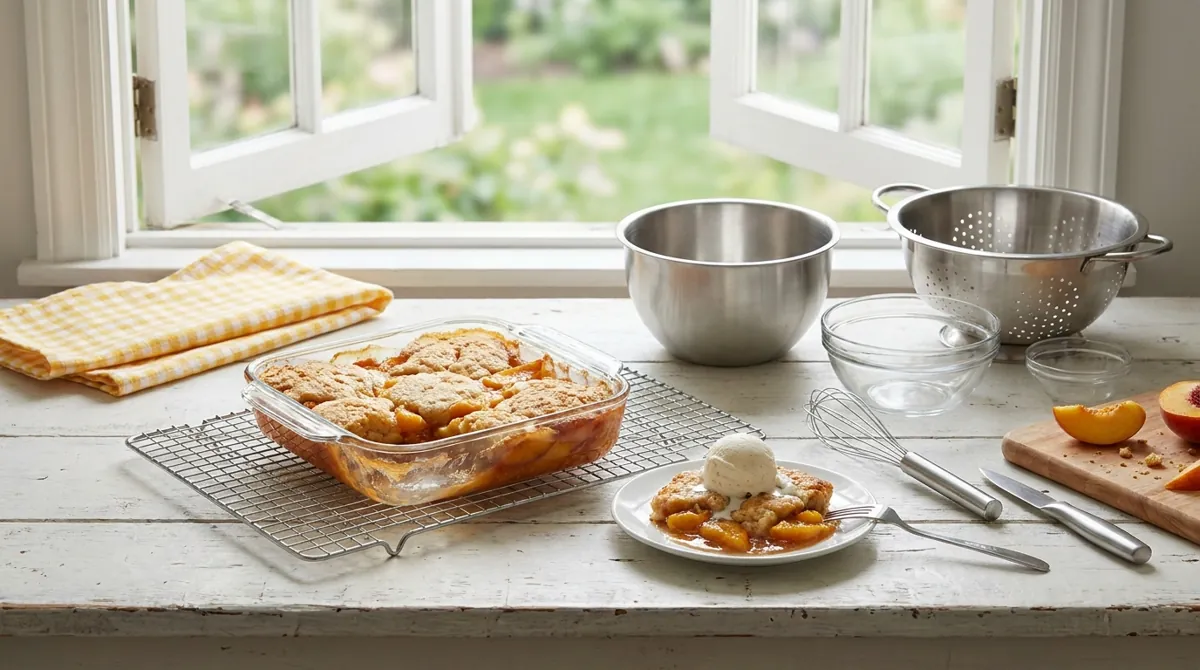
Ripe yellow peaches tossed in sugar and their own thickened juice, baked until bubbling under tender, golden cream biscuits: the improvised settlers' dessert the South made its own, best warm with vanilla ice cream.
🍳Cook alongOne move at a time, with real timers
 Edited by JP Lambiase
Change the estimate
Swaps change the price only: cook any meat to its own safe temperature. Where these numbers come from
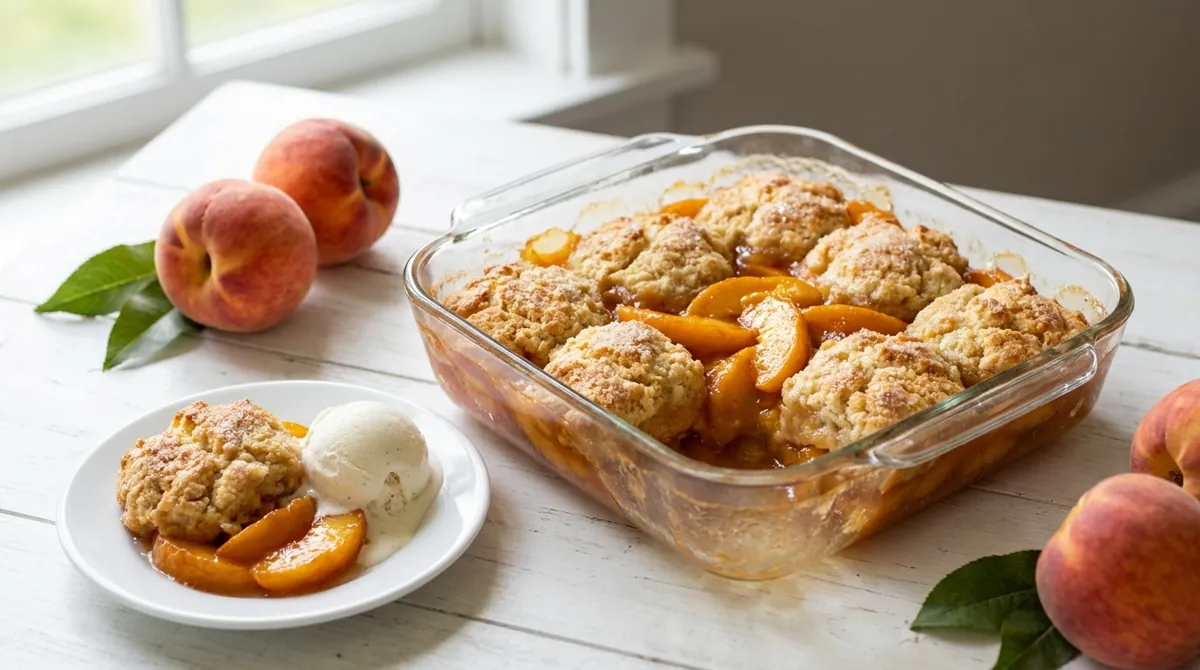
Cobbler is a make-do dessert. English settlers in the American colonies could not make the suet puddings they knew from home without the right ingredients and equipment, so they covered stewed fruit with pastry, and later with rounds of biscuit dough or dumplings, and baked it in a Dutch oven over the fire. The Museum of the New South puts it another way: pies were hard to make on an open hearth, so cooks put fruit under biscuit dough in a deep pot over hot coals. Either way, it was the settlers' stand-in for something harder to bake. Nobody is sure where the name comes from: it may come from "cobeler", an old word for a wooden bowl, or from a topping that looks like a cobbled street.
Peaches came to North America with Spanish colonists in the 16th century and grew especially well in Georgia. One of the earliest printed recipes, possibly the first, is in Lettice Bryan's The Kentucky Housewife of 1839, called "Peach Pot Pie or Cobler": peaches baked in a pot lined and lidded with a thick, plain pastry, not biscuits. Canning made peaches a year-round fruit by the 20th century, and in the 1950s the Georgia Peach Council proposed a National Peach Cobbler Day on April 13, out of fresh peach season, to sell canned peaches. In 2013 the Texas Legislature made peach cobbler the official cobbler of Texas.
This version uses fresh summer peaches under a cream biscuit topping, the most common American style.
Why it works the kitchen science
Macerating and draining
Peaches vary a lot in juiciness, and sugar pulls the juice out so you can put back a measured 1/4 cup. The filling comes out the same every time instead of soupy (America's Test Kitchen's method).
Prebaking the fruit
The biscuits go onto hot, already-bubbling peaches, so their undersides cook through instead of staying doughy.
Cold butter and cream, barely mixed
The butter bits steam and lift the biscuits, and little stirring keeps them tender rather than tough.
Gaps between the biscuits
Steam escapes, the filling reduces, and each biscuit browns all around. That cobbled look is the point.
Bubbling in the center
Cornstarch only thickens fully once the juice boils, so wait for thick bubbles in the middle.
🧰 You'll need 8 items
Everything the steps call for. Tick off what you have before you start.
Appliances
Pans and pots
Tools
Step by step
- Step 1
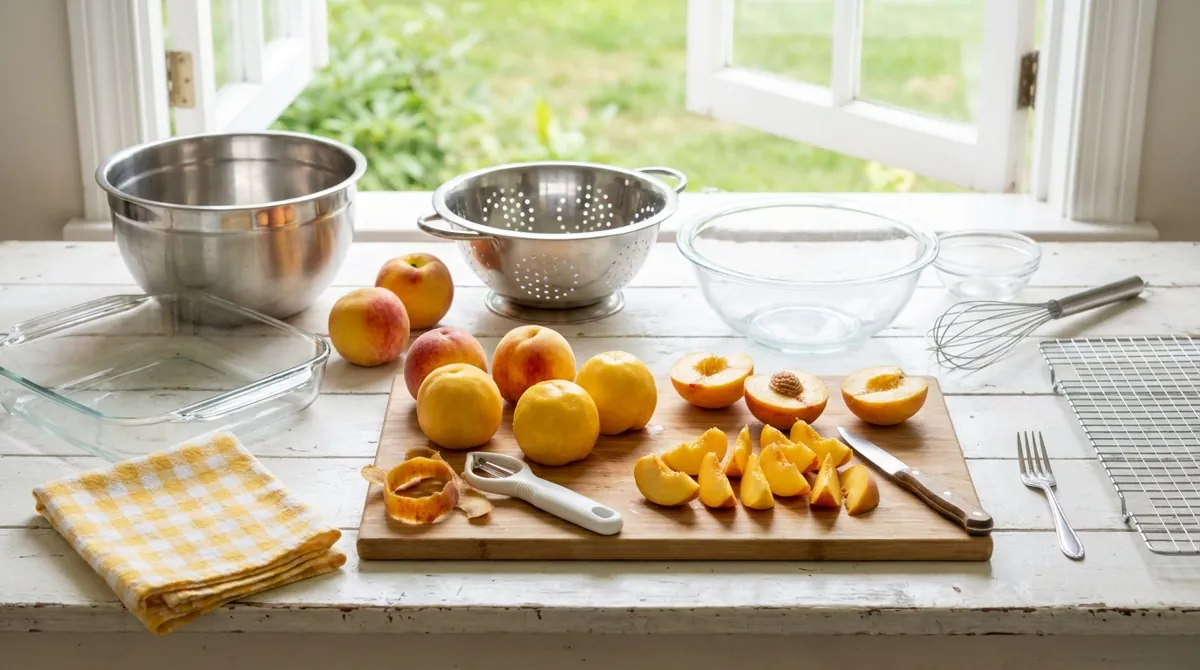
Heat the oven to 425°F with a rack in the lower middle. Peel the peaches with a vegetable peeler (if they are too soft to peel, drop them into boiling water for 30 to 60 seconds, then into ice water, and slip the skins off). Halve, pit and cut each half into 4 wedges.
- Step 2
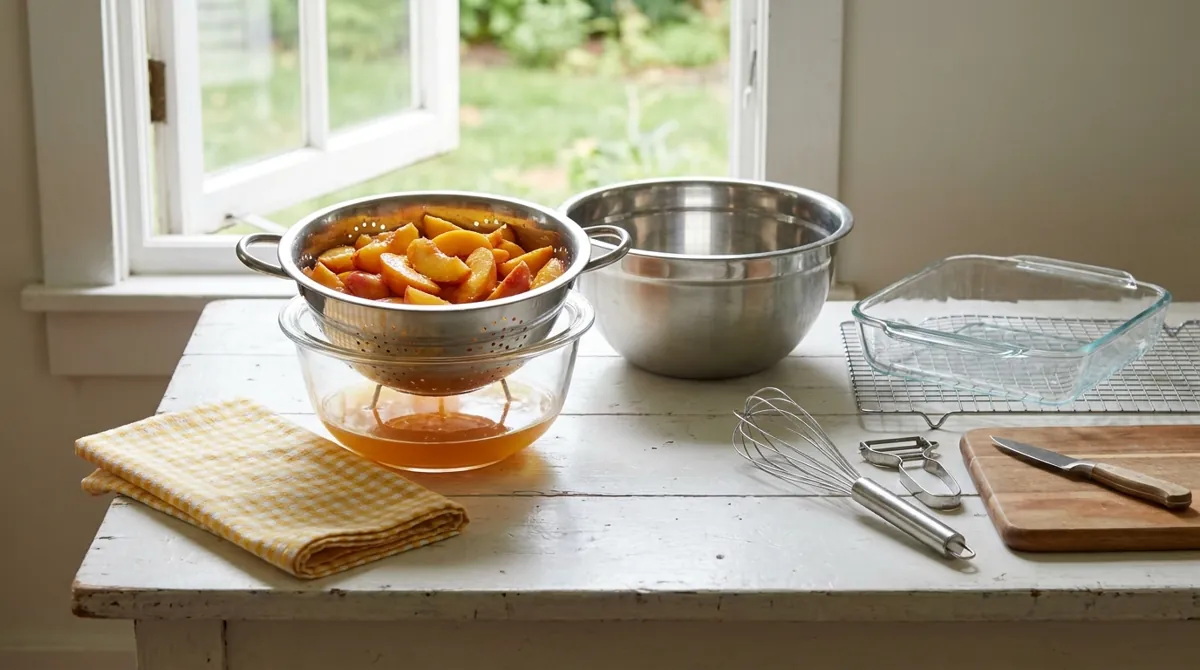
Toss the peaches with the 1/3 cup sugar in a large bowl and let them stand 30 minutes, tossing a few times. Drain them in a colander set over a bowl, keeping the juice.
- Step 3
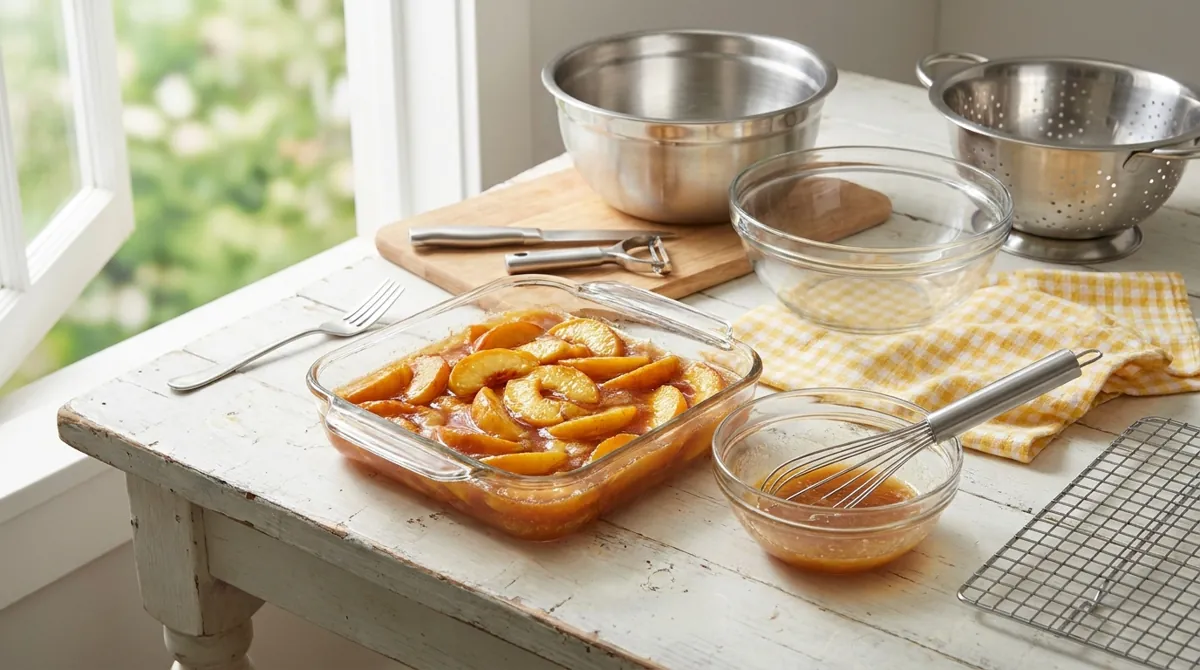
Whisk 1/4 cup of the drained juice with the cornstarch, lemon juice, cinnamon and salt (discard the rest of the juice). Toss it with the peaches, spread them in an 8 inch square glass baking dish and bake about 10 minutes, until the juice just starts to bubble at the edges.
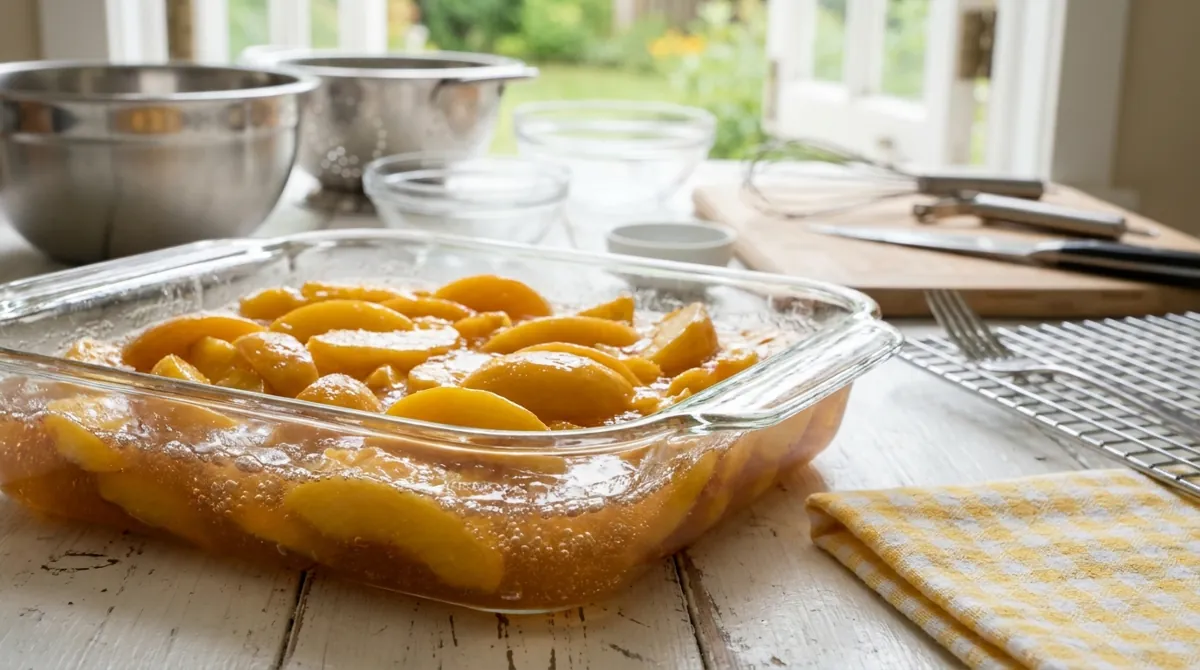
✓ What it should look like - Step 4
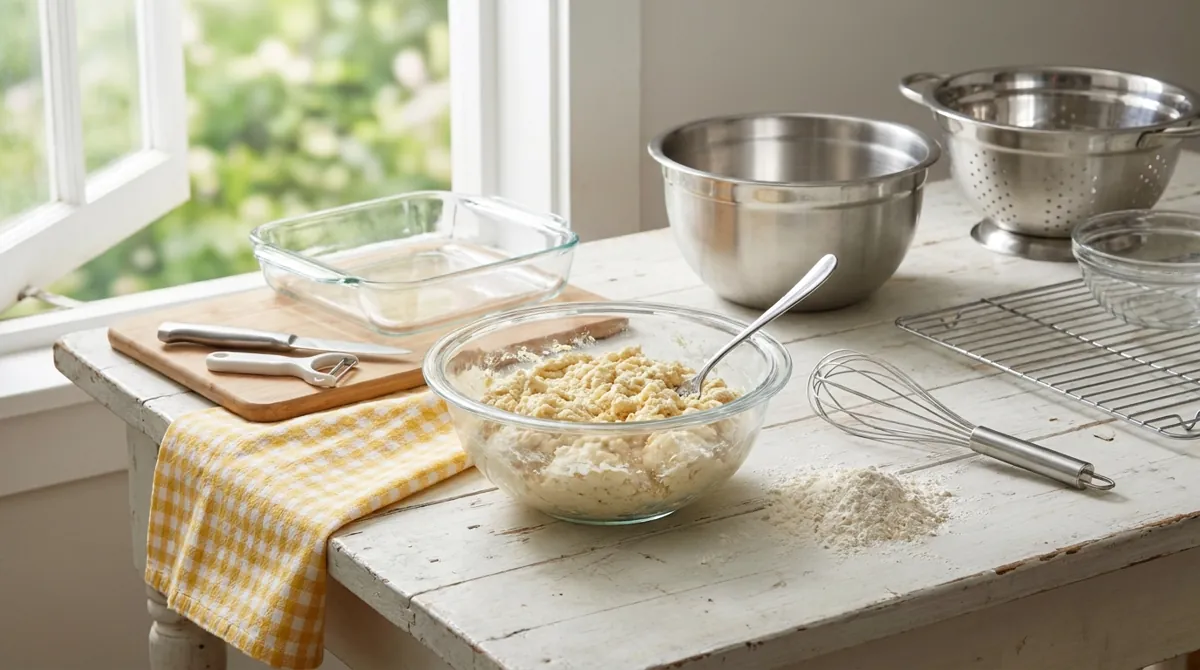
Meanwhile make the topping: whisk the flour, 3 tbsp sugar, baking powder and salt in a medium bowl. Rub in the cold butter with your fingertips until it looks like coarse crumbs with a few pea-size pieces. Stir in the cream with a fork just until a shaggy dough forms. Do not overmix.
- Step 5
Take the dish out, drop the dough over the hot peaches in 8 rough mounds, leaving gaps between them, and sprinkle with the last 1 tbsp sugar. Bake 18 to 22 minutes, until the biscuits are deep golden and the filling bubbles thickly in the center, not just at the edges.
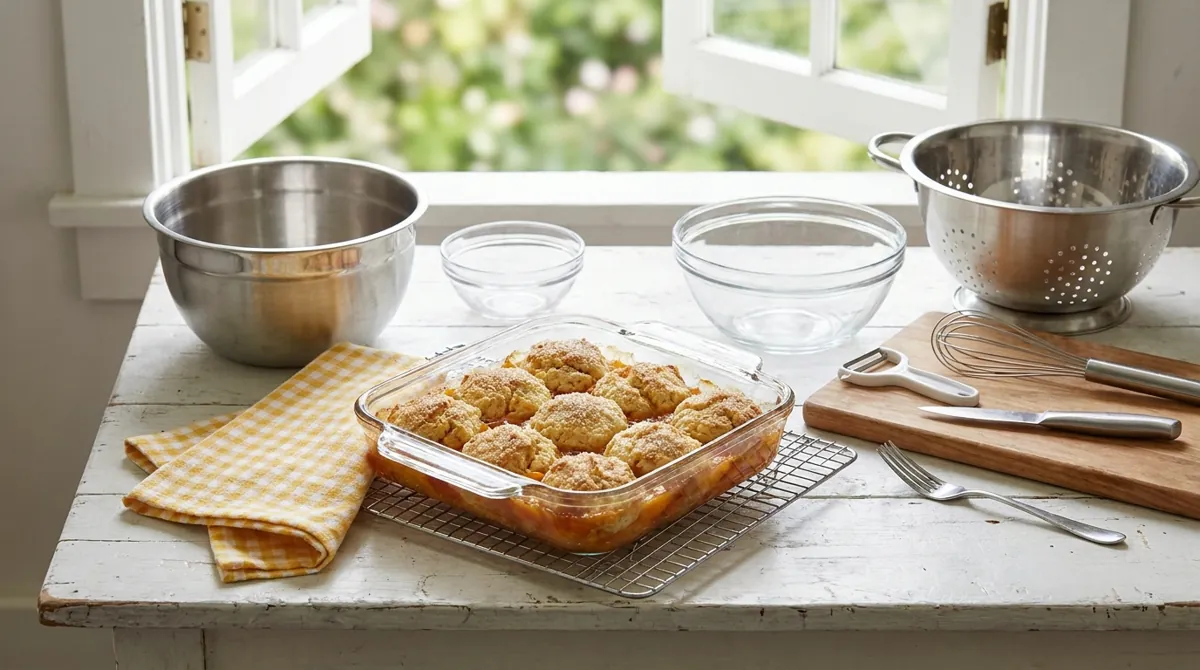
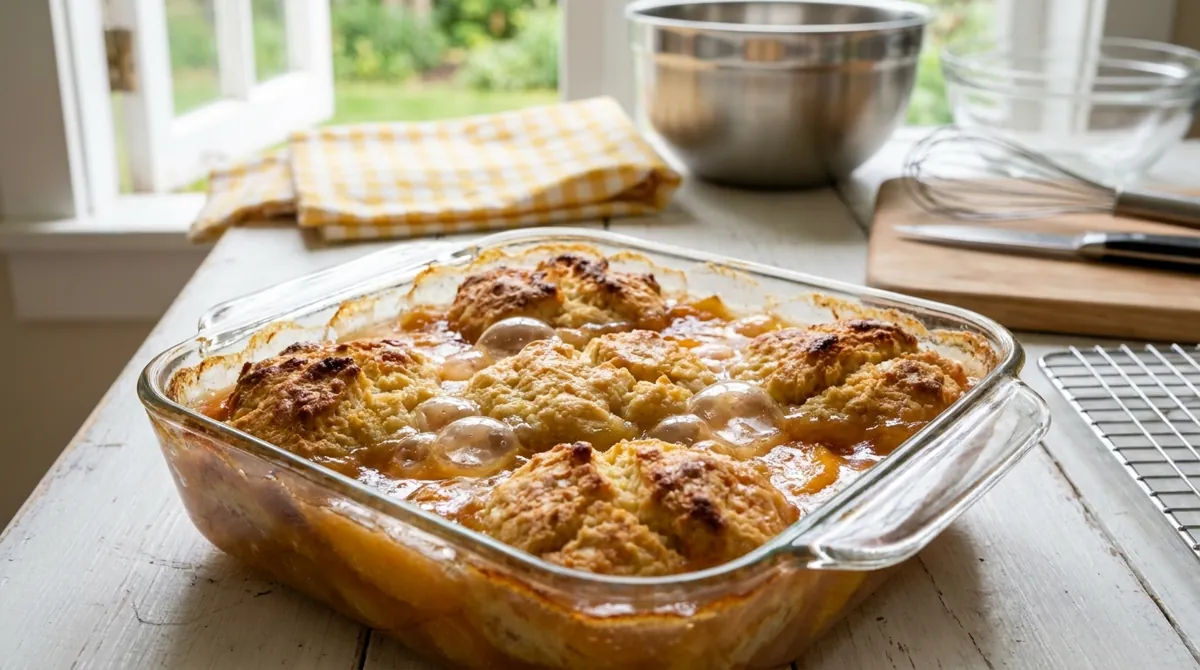
✓ What it should look like - Step 6
Cool on a rack at least 20 minutes, so the juice thickens, and serve warm with vanilla ice cream.
Peach Cobbler
Serves 6 · one 8 inch square baking dish · 1 hr 35 min total
Filling
- 2 1/2 lb ripe but firm yellow peaches, about 7 medium (1134 g whole, about 1000 g peeled, pitted and sliced)
- 1/3 cup granulated sugar (67 g)
- 1 tbsp cornstarch (8 g)
- 1 tbsp fresh lemon juice (15 g)
- 1/4 tsp ground cinnamon
- Pinch of fine salt
Cream biscuit topping
- 1 1/4 cups all-purpose flour (156 g)
- 3 tbsp granulated sugar (38 g), plus 1 tbsp (13 g) for sprinkling
- 1 1/2 tsp baking powder (6 g)
- 1/4 tsp fine salt
- 4 tbsp cold unsalted butter, cut into small cubes (57 g)
- 2/3 cup cold heavy cream (160 g)
To serve
- Vanilla ice cream or lightly whipped cream, optional
Equipment: Oven, Baking dish, Chef's knife and cutting board, Measuring cups and spoons, Mixing bowls, Whisk, Colander, Vegetable peeler
Method
- Heat the oven to 425°F with a rack in the lower middle. Peel the peaches with a vegetable peeler (if they are too soft to peel, drop them into boiling water for 30 to 60 seconds, then into ice water, and slip the skins off). Halve, pit and cut each half into 4 wedges.
- Toss the peaches with the 1/3 cup sugar in a large bowl and let them stand 30 minutes, tossing a few times. Drain them in a colander set over a bowl, keeping the juice.
- Whisk 1/4 cup of the drained juice with the cornstarch, lemon juice, cinnamon and salt (discard the rest of the juice). Toss it with the peaches, spread them in an 8 inch square glass baking dish and bake about 10 minutes, until the juice just starts to bubble at the edges.
- Meanwhile make the topping: whisk the flour, 3 tbsp sugar, baking powder and salt in a medium bowl. Rub in the cold butter with your fingertips until it looks like coarse crumbs with a few pea-size pieces. Stir in the cream with a fork just until a shaggy dough forms. Do not overmix.
- Take the dish out, drop the dough over the hot peaches in 8 rough mounds, leaving gaps between them, and sprinkle with the last 1 tbsp sugar. Bake 18 to 22 minutes, until the biscuits are deep golden and the filling bubbles thickly in the center, not just at the edges.
- Cool on a rack at least 20 minutes, so the juice thickens, and serve warm with vanilla ice cream.
Americanized house recipe, written for this site. History: Wikipedia, "Cobbler (food)" (English settlers and suet puddings, Dutch ovens, later biscuit, scone batter or dumpling toppings, "cobeler" and the cobbled-street theory, Lettice Bryan's 1839 "Peach Pot Pie or Cobler", grunt, slump, pandowdy, buckle, betty and the North Carolina sonker, Southern deep-dish cobblers with two crusts, Texas official cobbler in 2013)); Museum of the New South, "Peach Cobbler" (pies hard on open hearths, biscuit dough over coals, the 1839 Kentucky Housewife, Spanish peaches in 1539, Georgia, South Carolina growing more peaches, canning and year-round peaches); Researching Food History, "Peach Cobler" (the 1839 recipe text: a pot lined and covered with plain or standing paste half an inch thick); UPI, "National Peach Cobbler Day started in the 1950s to sell canned peaches" (Georgia Peach Council, April chosen outside fresh peach season). Technique: America's Test Kitchen, "Fresh Peach Cobbler" (macerate the peaches in sugar, drain and return 1/4 cup of juice with cornstarch and lemon, prebake the filling 10 minutes at 425°F, space the biscuits apart). Poured-batter Southern style for comparison: Jewish Food Society, "Southern Peach Cobbler". en.wikipedia.org. Ingredient list follows the source; the method is in our own words.
Tips
- Out of season, use 2 lb frozen sliced peaches, thawed and drained, and skip the maceration; toss with the sugar, cornstarch, lemon and 1/4 cup of the thawed juice.
- Scoop away the dark red flesh around the pit, as America's Test Kitchen does, for a cleaner, brighter filling.
- To double, use a 9 by 13 inch dish and add about 5 minutes to each bake.
- Cobbler is best the day it is made. Rewarm leftovers at 350°F for 10 minutes to crisp the biscuits.
The rules people argue about
What the sources agree on, what they don't, and what is just a good story.
- Cobbler was the settlers' stand-in for pie. Disputed as to what it replaced: Wikipedia says English settlers could not make their suet puddings; the Museum of the New South says pies were hard to make on an open hearth. Both agree it was an improvised colonial dish.
- A cobbler has a biscuit topping. Disputed: biscuit dough, batter, dumplings and pastry all have a claim. The earliest printed peach cobbler (1839) used a thick plain pastry lining a pot, many Southern home cooks pour a batter over melted butter and add the fruit, and some Southern cobblers are deep-dish with a top and bottom crust.
Meatballs of the World

Italian-American Meatballs
Big, tender meatballs braised for an hour in red sauce over spaghetti. The one most Americans grew up with.

Pallottine (Abruzzo Meatballs)
Tiny meatballs, smaller than a marble, tossed right through square spaghetti alla chitarra. No bread at all.

Swedish Meatballs (Köttbullar)
Small, soft meatballs browned in butter, in a cream sauce made from the same pan, with lingonberry jam on the plate.

Danish Frikadeller
Pork meatballs shaped with a spoon and fried slowly in butter, crusty outside and soft in the middle.

Königsberger Klopse
German meatballs that are never fried: poached, then served in a creamy white sauce with capers.

Spanish Albóndigas in Almond Saffron Sauce
The tapas bar classic: small meatballs in a golden sauce thickened with fried almonds and bread.

Mexican Albóndigas with Chipotle and Mint
Soft meatballs with rice and fresh mint inside, simmered in a smoky tomato and chipotle broth.

Izgara Köfte (Turkish Grilled Meatballs)
Small, flat meatballs kneaded hard, rested cold, and charred on a hot grill pan.

Lion's Head Meatballs
Big, soft pork meatballs, stirred into a sticky paste, fried to set, then braised in a savory sauce.

Chicken Tsukune
Japan's chicken meatball: kneaded sticky, grilled on skewers, glazed with sweet soy tare, dipped in egg yolk.