
Pita Bread
Soft, puffy homemade pita with a hollow pocket, baked in a blazing hot oven in under four minutes a piece, from a dough of flour, yeast, water and olive oil.
🍳Cook alongOne move at a time, with real timers
 Edited by JP Lambiase
Change the estimate
Swaps change the price only: cook any meat to its own safe temperature. Where these numbers come from
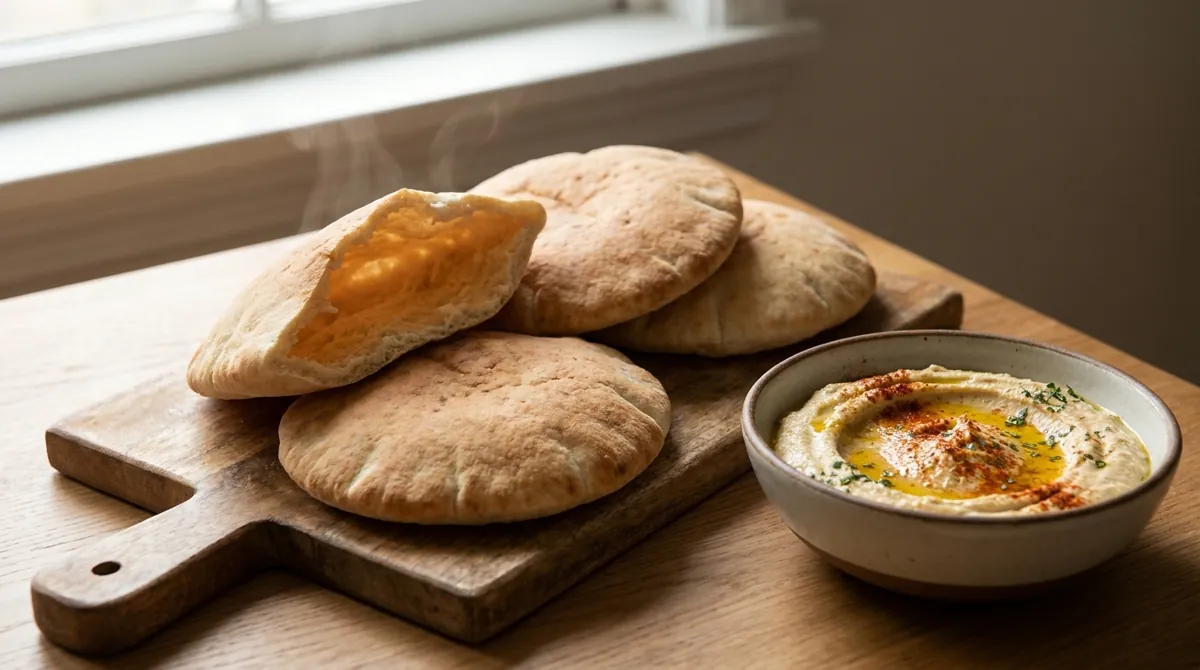
Pita is a round yeasted flatbread from the Levant, the eastern Mediterranean, and it is eaten across the Middle East and the Mediterranean world with hummus, falafel, kebabs and salads. It is a cousin of the other flatbreads of the region, and the name is used for many versions, including the thick, pocketless Greek pita used for gyros.
The pocket is the trick. In a very hot oven the surface of a thin round of dough sets quickly, the water inside turns to steam, and the round puffs like a balloon, leaving a hollow in the middle that you can open and fill. As it cools it deflates but keeps the pocket.
Why it works the kitchen science
Very hot surface and oven
The thin round sets on the outside before the inside dries, so trapped steam inflates it into a pocket.
Even rolling
A thin spot or a tear lets the steam escape, and that pita will not puff.
Short bake
Pita should be soft and pliable, so pull it as soon as it has puffed, before it browns and turns crisp.
🧰 You'll need 6 items
Everything the steps call for. Tick off what you have before you start.
Appliances
Pans and pots
Tools
Step by step
- Step 1
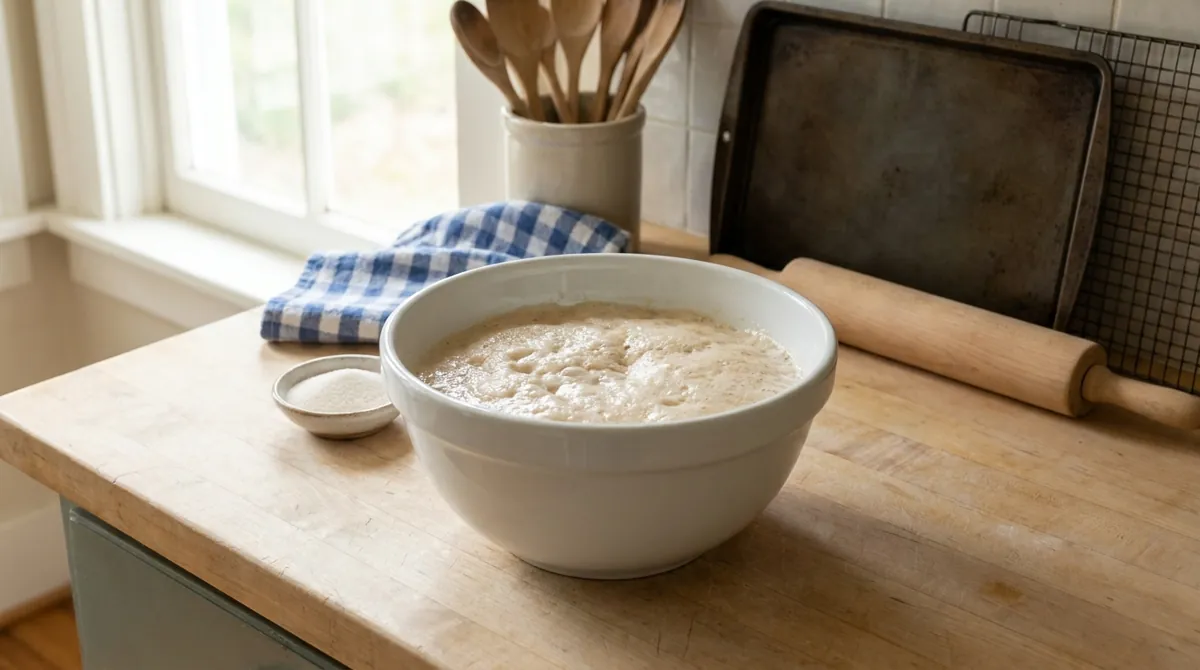
Mix the warm water, yeast and sugar in a large bowl and leave it 5 to 10 minutes, until foamy.
- Step 2
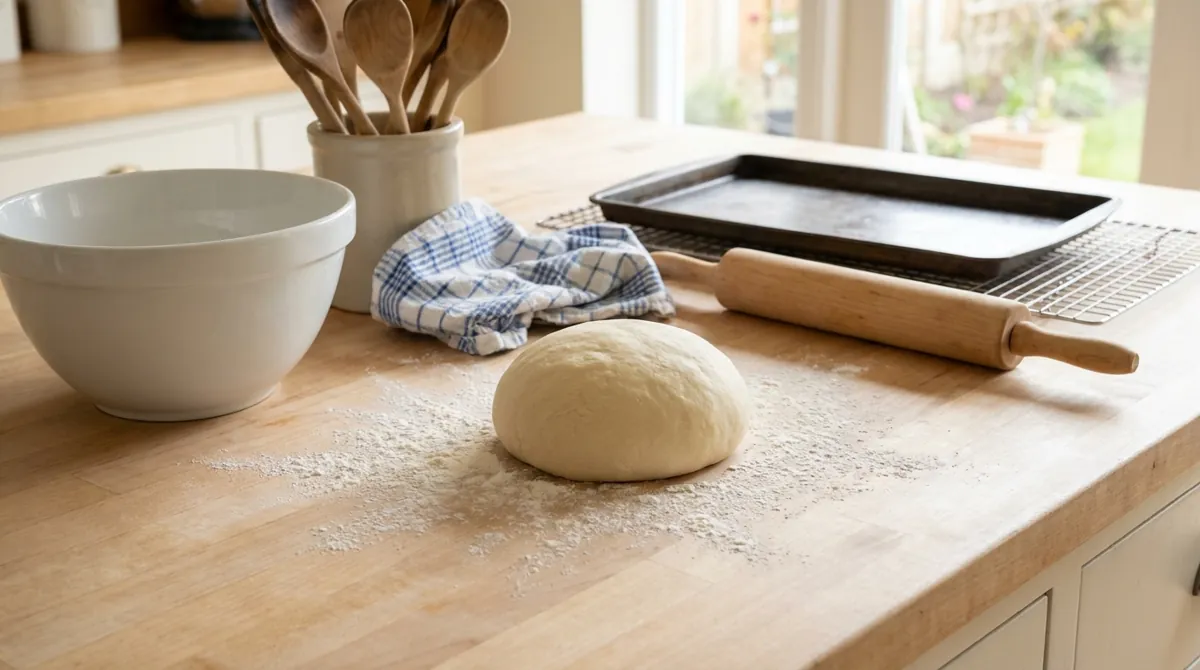
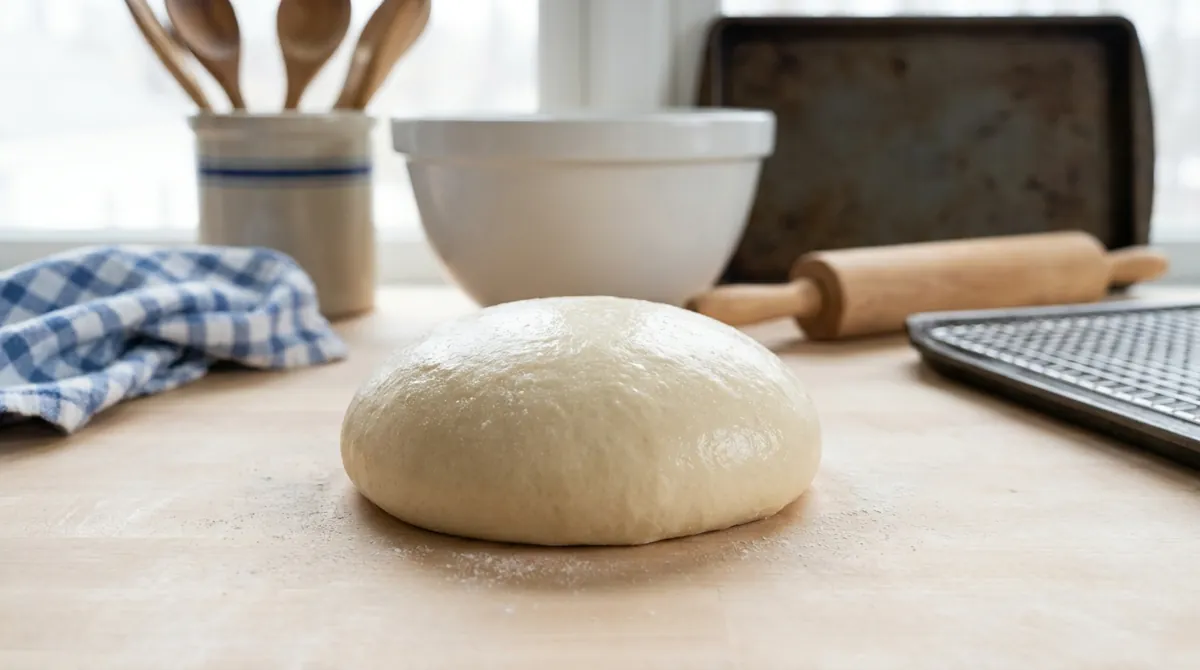
Add the flour, salt and olive oil and mix to a shaggy dough. Knead on a lightly floured counter 8 minutes, until smooth, soft and just slightly tacky.
✓ What it should look like - Step 3
Put the dough in an oiled bowl, cover and let it rise 1 hour, until doubled.
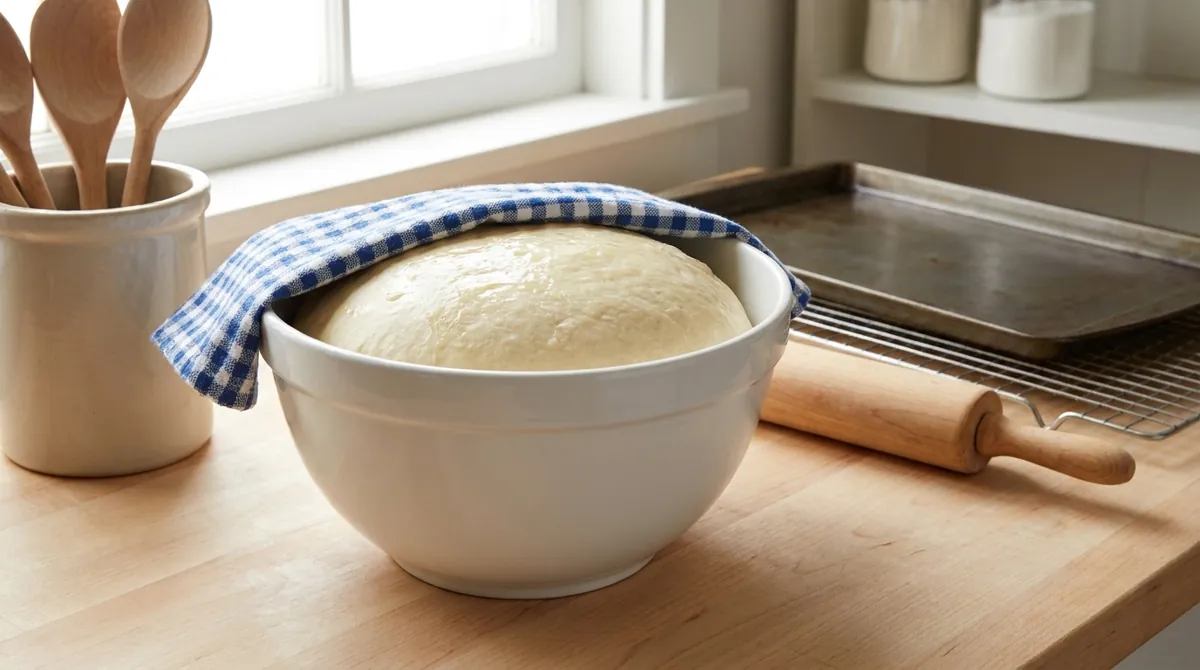
- Step 4
Put a heavy baking sheet or baking steel on the lowest oven rack and heat the oven to 500°F for at least 30 minutes. Divide the dough into 8 pieces, roll each into a ball and rest them under a towel for 15 minutes.
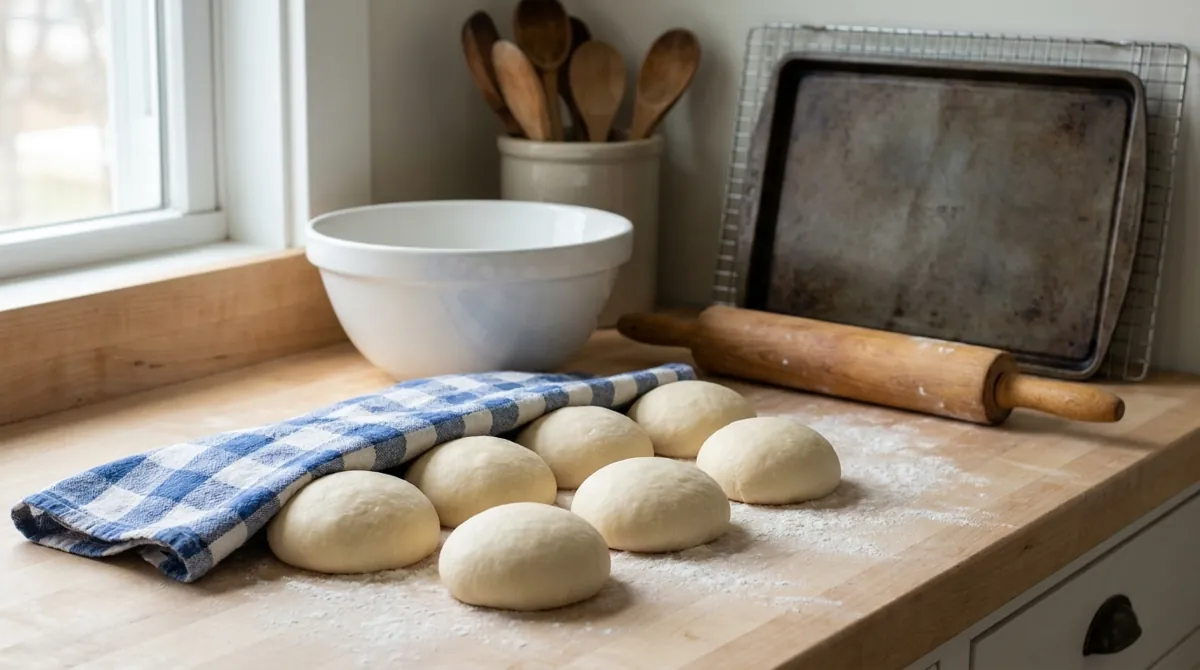
- Step 5
Roll each ball into a round about 7 inches wide and 1/8 inch thick, even all over, with no thin spots or tears. Dust lightly with flour only as needed.
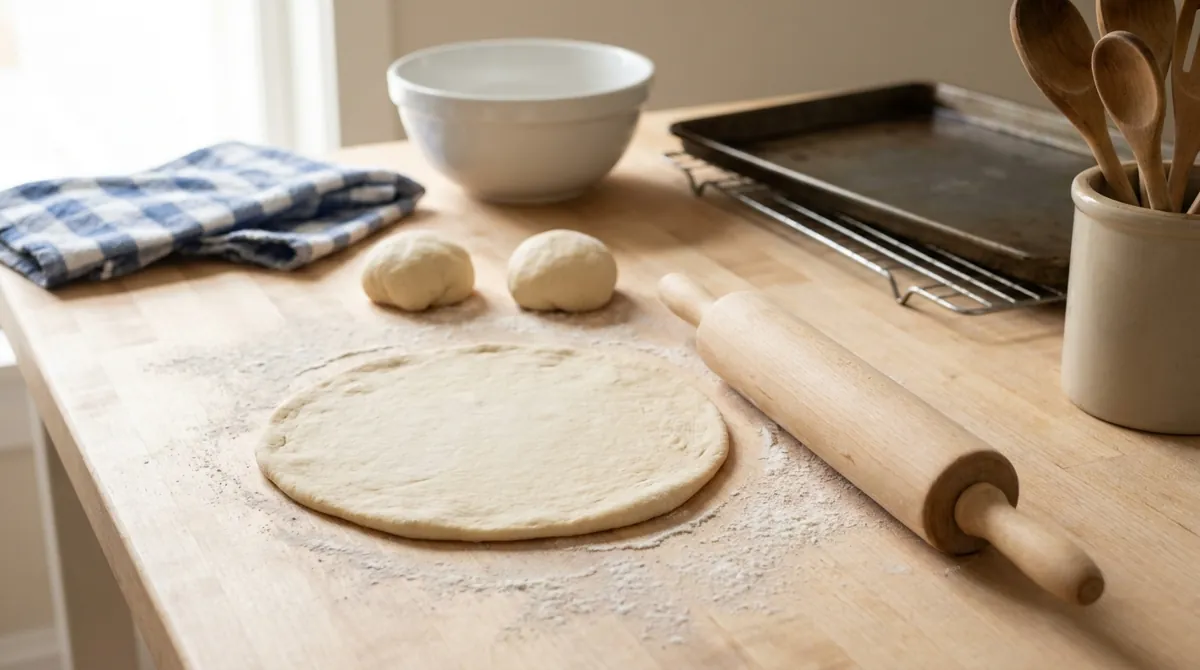
- Step 6
Bake 2 or 3 rounds at a time on the hot sheet for 3 to 4 minutes, until they have puffed into a balloon and have only a few pale golden spots. Do not bake until crisp.
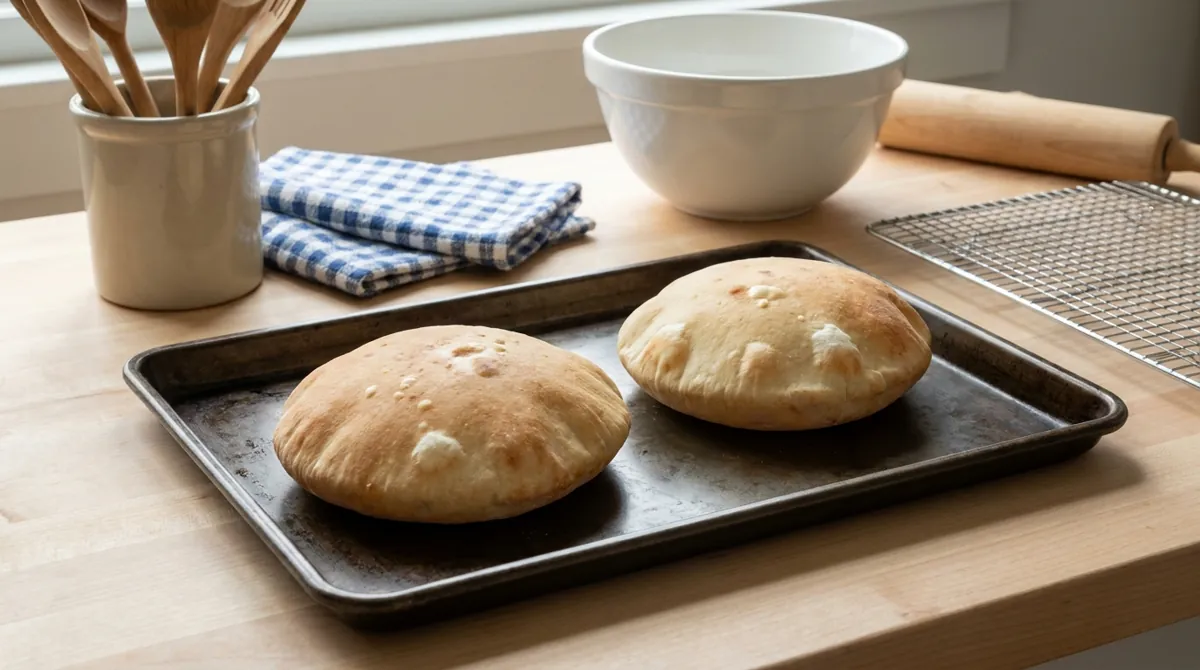
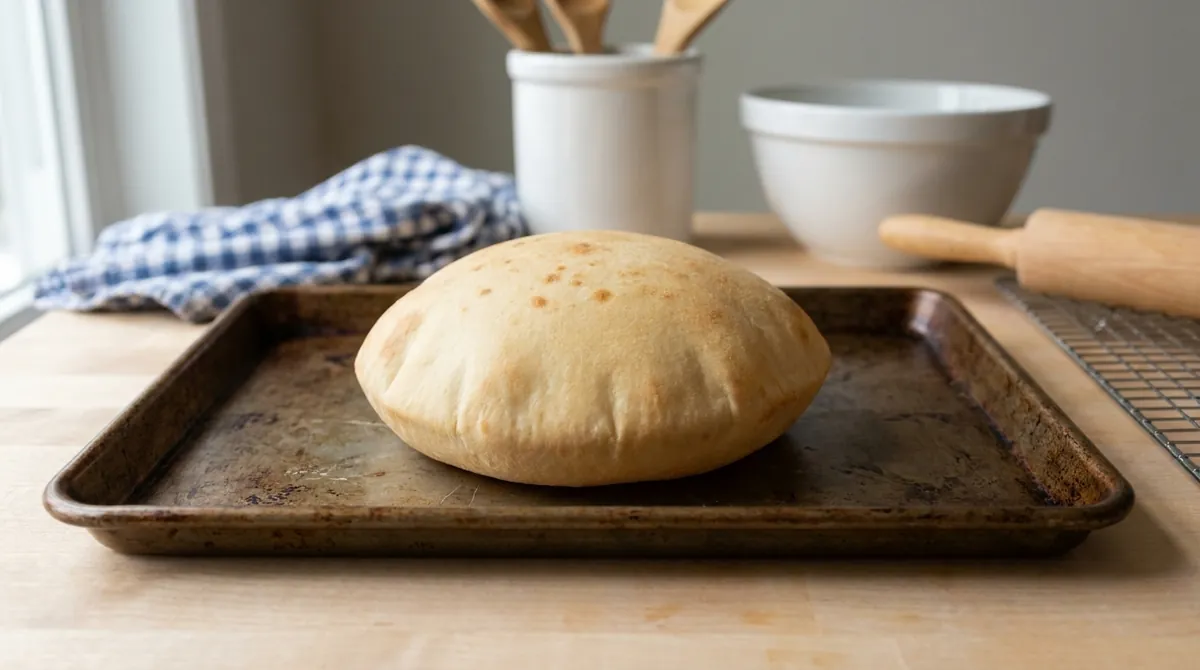
✓ What it should look like - Step 7
Stack the pitas in a clean kitchen towel and fold it over them for 10 minutes so they soften and the pockets deflate gently.
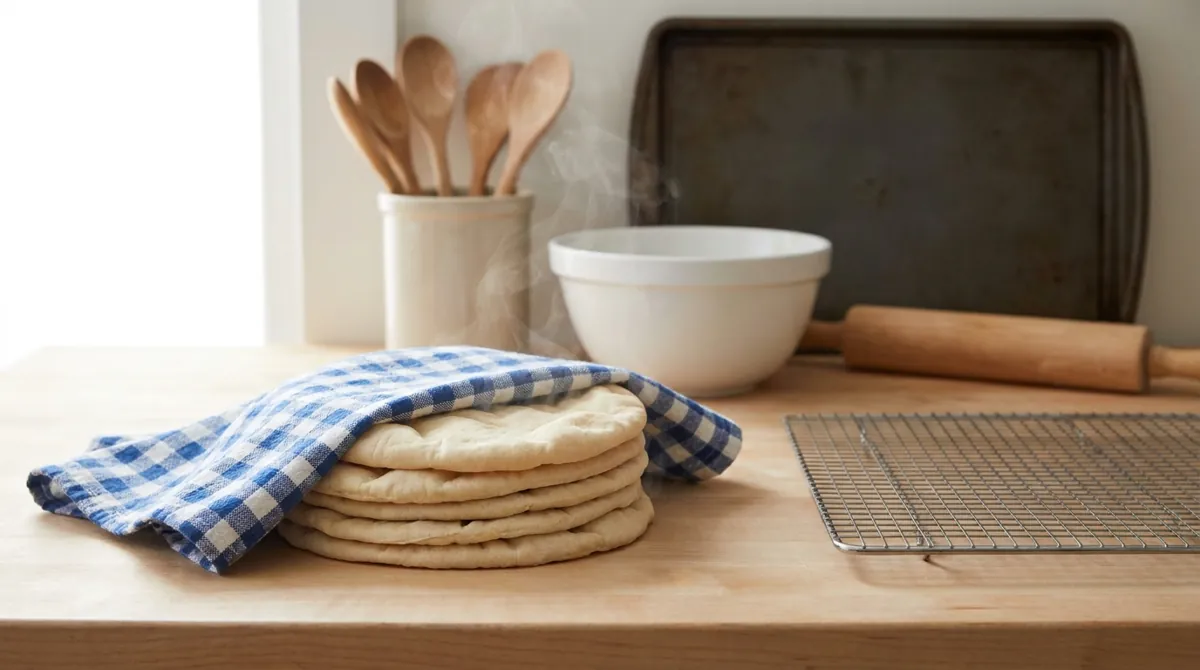
Pita Bread
Serves 8 pitas · 8 pitas, about 7 inches across · 1 hr 50 min total
- 1 cup warm water (240 g), about 105 to 110°F, plus up to 2 tablespoons more if needed
- 2 1/4 tsp active dry or instant yeast (1 packet, 7 g)
- 1 tsp granulated sugar (4 g)
- 3 cups all-purpose flour (380 g), plus more for rolling
- 1 1/2 tsp fine salt
- 2 tablespoons olive oil (27 g), plus a little for the bowl
Equipment: Oven, Rimmed baking sheet, Pizza stone or steel, Measuring cups and spoons, Mixing bowls, Rolling pin
Method
- Mix the warm water, yeast and sugar in a large bowl and leave it 5 to 10 minutes, until foamy.
- Add the flour, salt and olive oil and mix to a shaggy dough. Knead on a lightly floured counter 8 minutes, until smooth, soft and just slightly tacky.
- Put the dough in an oiled bowl, cover and let it rise 1 hour, until doubled.
- Put a heavy baking sheet or baking steel on the lowest oven rack and heat the oven to 500°F for at least 30 minutes. Divide the dough into 8 pieces, roll each into a ball and rest them under a towel for 15 minutes.
- Roll each ball into a round about 7 inches wide and 1/8 inch thick, even all over, with no thin spots or tears. Dust lightly with flour only as needed.
- Bake 2 or 3 rounds at a time on the hot sheet for 3 to 4 minutes, until they have puffed into a balloon and have only a few pale golden spots. Do not bake until crisp.
- Stack the pitas in a clean kitchen towel and fold it over them for 10 minutes so they soften and the pockets deflate gently.
Americanized house recipe, written for this site, within the common ratios (about 60 to 65 percent water by flour weight, baked as hot as a home oven allows; Wikipedia gives 450 to 475°F for traditional ovens). History: Wikipedia, "Pita" (Natufian flatbread in Jordan about 14,500 years ago, Babylonian tannur flatbreads, pocket formed by steam, name origin uncertain, Perry and Marks on the later pocket pita). Technique checked against King Arthur Baking, "Golden Pita Bread" (360 g flour to 227 g water, about 63 percent hydration; 500°F oven with a stone or steel; rolled about 1/8 inch thick; 3 to 4 minutes; pitas "won't always puff"). en.wikipedia.org. Ingredient list follows the source; the method is in our own words.
All sources (2)
Tips
- A pita that does not puff is still good to eat; usual causes are a cool oven, a dried-out surface from resting too long uncovered, or dough rolled unevenly.
- Whole wheat works for half the flour; add a tablespoon more water.
- Keeps 2 days in a zip bag, or 3 months frozen. Warm them in a dry skillet before serving.
The rules people argue about
What the sources agree on, what they don't, and what is just a good story.
- Pita is an ancient bread. Disputed as a single bread: flatbreads are among the oldest foods known (Natufian flatbread in Jordan about 14,500 years ago, tannur-baked flatbreads in Babylonian Mesopotamia about 4,000 years ago), but the steam-puffed pocket pita does not appear in ancient texts or medieval Arab cookbooks, and food historians Charles Perry and Gil Marks think it was a later development.
- The word pita comes from Hebrew or from Greek. Disputed: English took it from Modern Greek pita ("bread, cake, pie"; first English citation 1936), but where the Greek word came from is uncertain.
- Pita must be baked on a stone. Folklore as a rule: stones, steels and heavy sheets all work; what matters is a surface and oven as hot as you can make them.
Meatballs of the World

Italian-American Meatballs
Big, tender meatballs braised for an hour in red sauce over spaghetti. The one most Americans grew up with.

Pallottine (Abruzzo Meatballs)
Tiny meatballs, smaller than a marble, tossed right through square spaghetti alla chitarra. No bread at all.

Swedish Meatballs (Köttbullar)
Small, soft meatballs browned in butter, in a cream sauce made from the same pan, with lingonberry jam on the plate.

Danish Frikadeller
Pork meatballs shaped with a spoon and fried slowly in butter, crusty outside and soft in the middle.

Königsberger Klopse
German meatballs that are never fried: poached, then served in a creamy white sauce with capers.

Spanish Albóndigas in Almond Saffron Sauce
The tapas bar classic: small meatballs in a golden sauce thickened with fried almonds and bread.

Mexican Albóndigas with Chipotle and Mint
Soft meatballs with rice and fresh mint inside, simmered in a smoky tomato and chipotle broth.

Izgara Köfte (Turkish Grilled Meatballs)
Small, flat meatballs kneaded hard, rested cold, and charred on a hot grill pan.

Lion's Head Meatballs
Big, soft pork meatballs, stirred into a sticky paste, fried to set, then braised in a savory sauce.

Chicken Tsukune
Japan's chicken meatball: kneaded sticky, grilled on skewers, glazed with sweet soy tare, dipped in egg yolk.