
Po' Boy
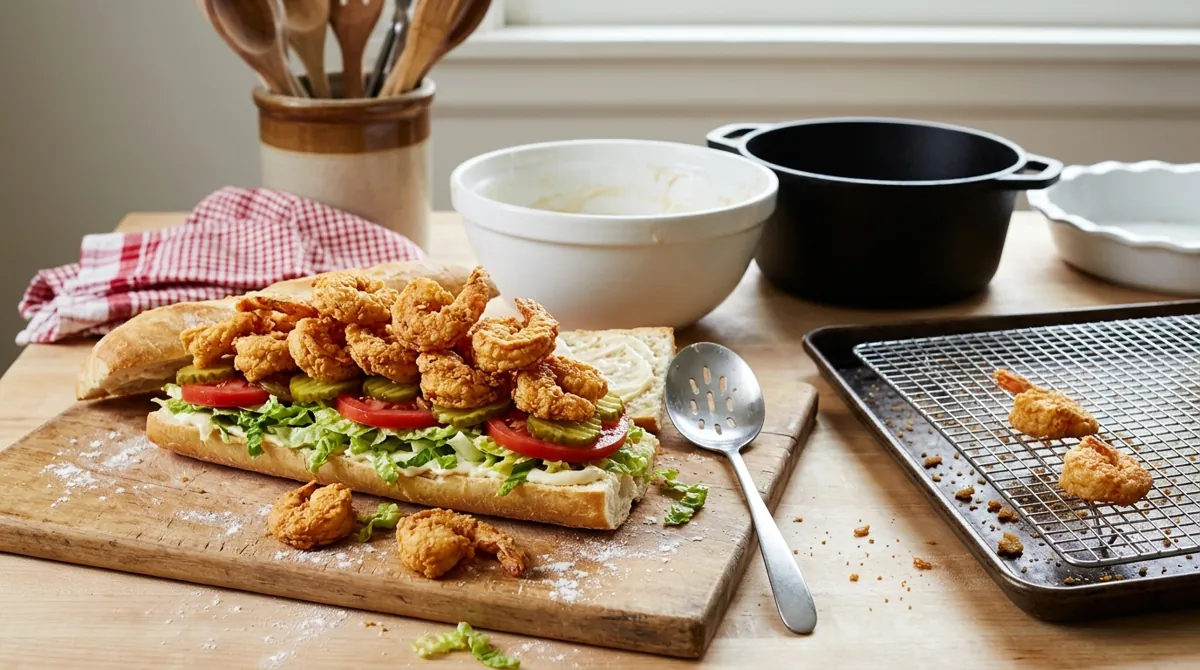
Crisp cornmeal-fried shrimp piled on crackly French bread with mayo, lettuce, tomato and pickles: the New Orleans sandwich born in a 1929 streetcar strike.
🍳Cook alongOne move at a time, with real timers
 Edited by JP Lambiase
Change the estimate
Swaps change the price only: cook any meat to its own safe temperature. Where these numbers come from
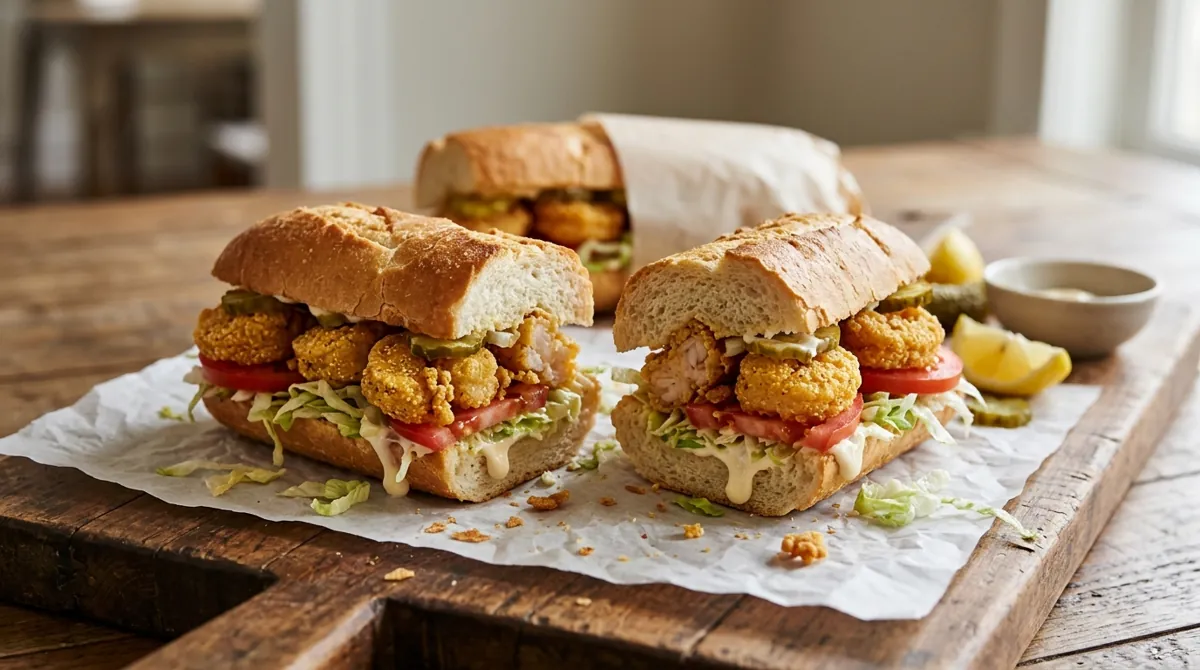
The po' boy comes from New Orleans, and the story most often told is a labor story. In 1929 the city's streetcar workers went on strike. Bennie and Clovis Martin, brothers and former streetcar conductors who ran a coffee stand and restaurant by the French Market, announced they would feed the strikers free. When a striker came to the door, the cry went up in the kitchen, "Here comes another poor boy," and the sandwich took the name. The Martins are said to have filled long loaves of French bread with cheap fillings such as fried potatoes and gravy.
The bread is part of the story too. The Martins reportedly asked a local baker for a loaf with an even shape and no tapered ends, so each sandwich could be cut straight across. Which bakery that was is argued, and fried shrimp and oysters came later as the sandwich moved from relief food to restaurant staple.
Why it works the kitchen science
Buttermilk soak
The tang and the thin film of liquid make the coating stick and season the shrimp through.
Cornmeal plus flour
The cornmeal gives the crunch, and the flour makes the crust hold together.
Oil at about 360°f
Hot enough to crisp the outside before the shrimp turn rubbery.
Frying in batches
Too many shrimp at once drops the oil temperature and the coating turns greasy.
Crackly crust and soft middle on the bread
It holds a heavy, wet filling without going soggy.
🧰 You'll need 10 items
Everything the steps call for. Tick off what you have before you start.
Appliances
Pans and pots
Tools
Supplies
Step by step
- Step 1
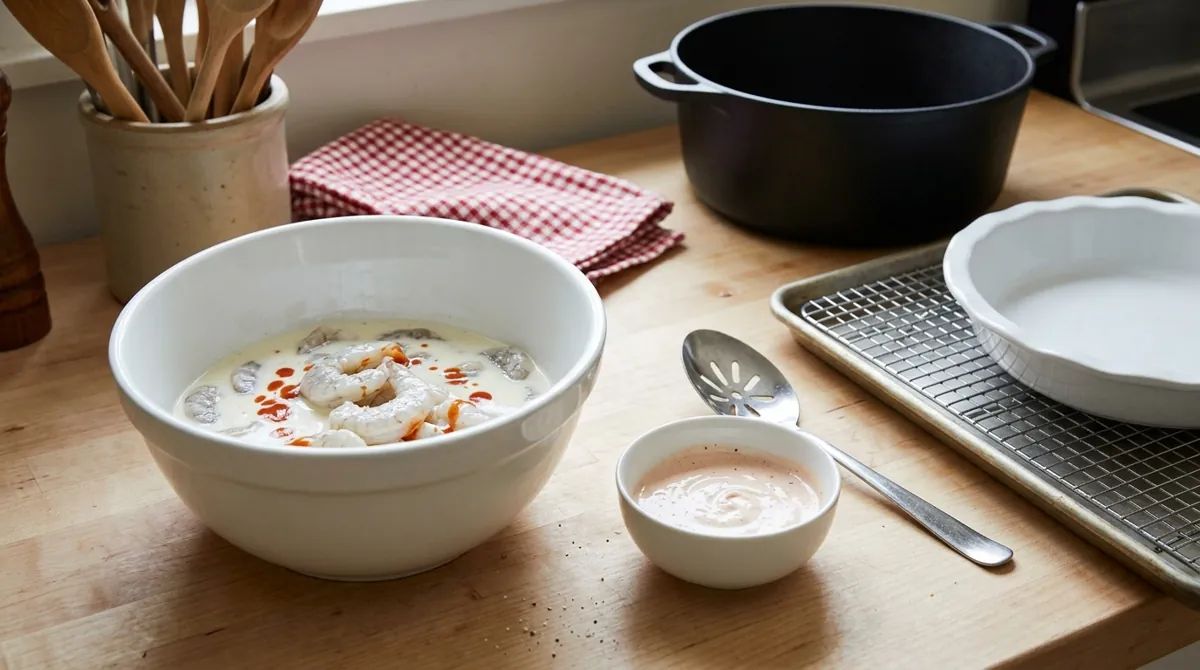
Stir the shrimp with the buttermilk and 1 tablespoon hot sauce in a large bowl and refrigerate 15 minutes. Stir the mayonnaise, 1 teaspoon hot sauce and the lemon juice in a small bowl.
- Step 2
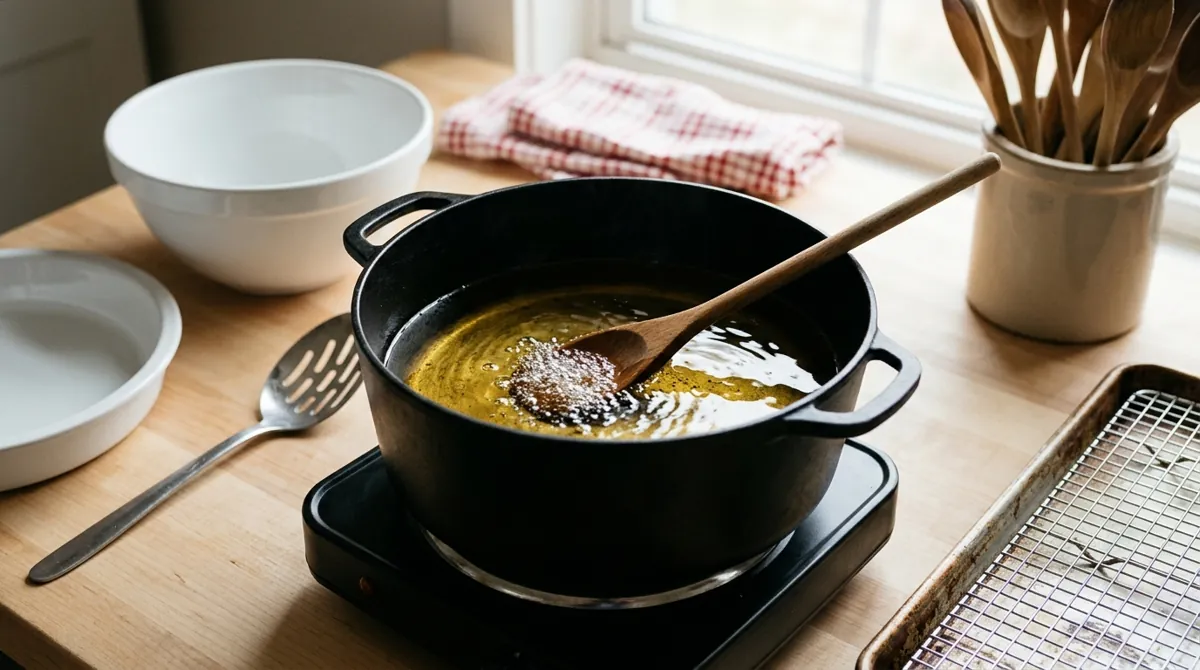
Pour 2 inches of oil into a heavy Dutch oven and heat it over medium heat to 360°F, clipping a thermometer to the side.
- Step 3
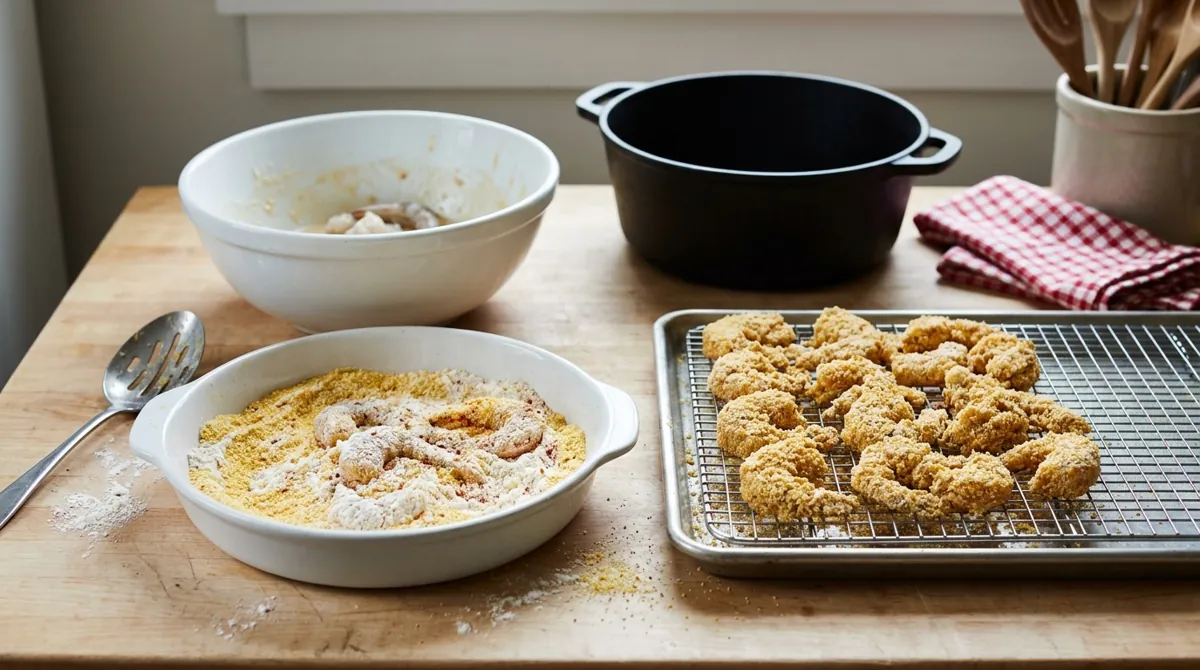
Whisk the cornmeal, flour, Creole seasoning and salt in a shallow dish. Lift the shrimp out of the buttermilk a handful at a time, let the extra drip off, toss them in the coating until covered, and set them on a wire rack.
- Step 4
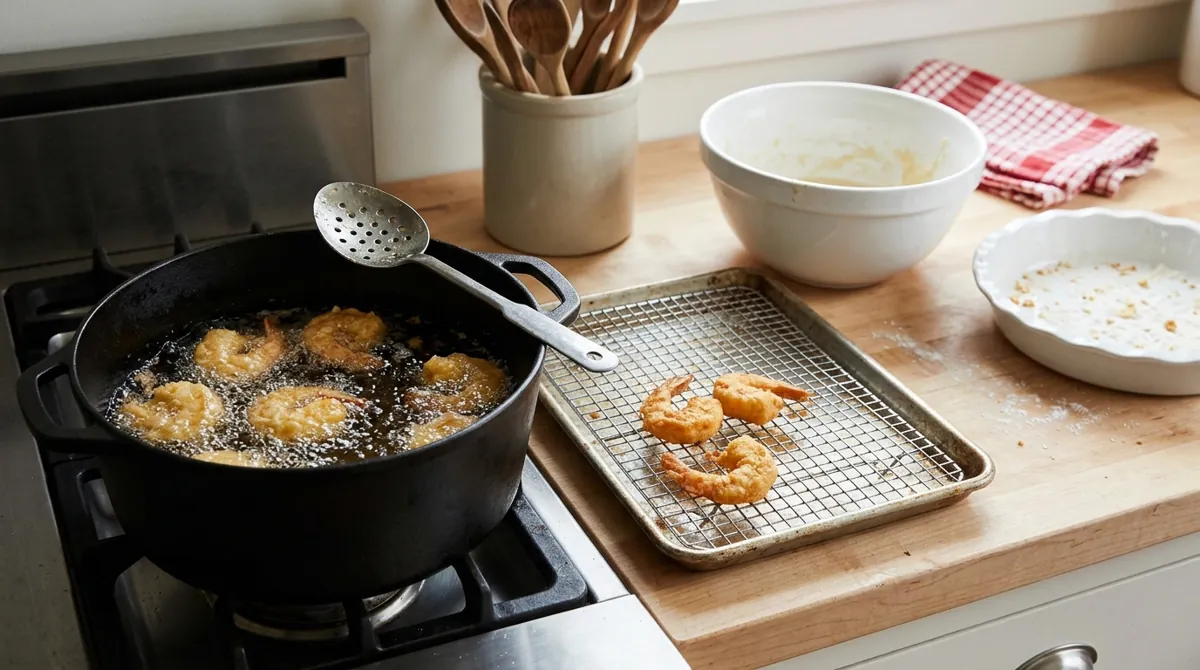
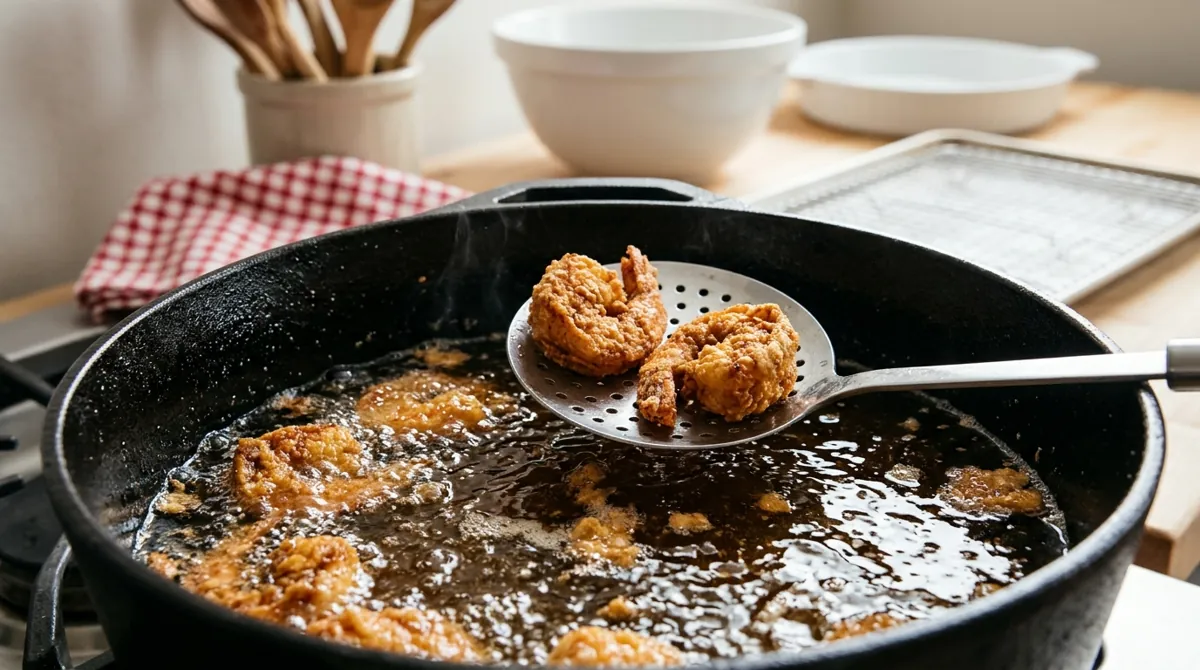
Fry the shrimp in 3 batches, 2 to 3 minutes each, until deep golden and crisp, keeping the oil near 360°F.
✓ What it should look like - Step 5
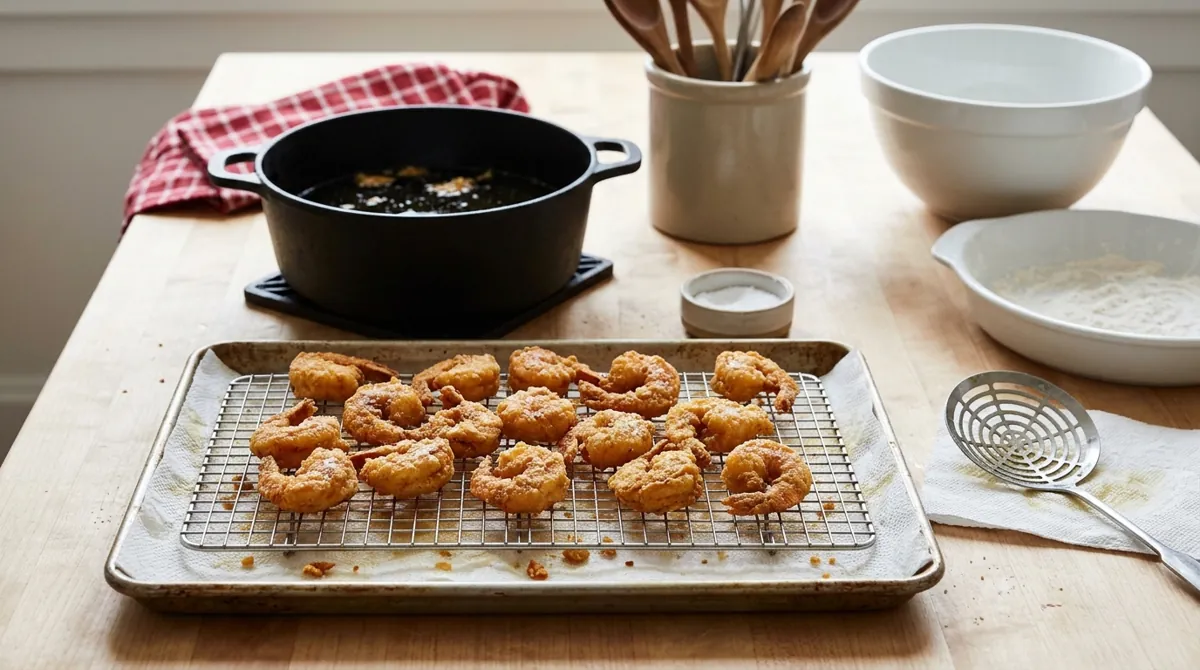
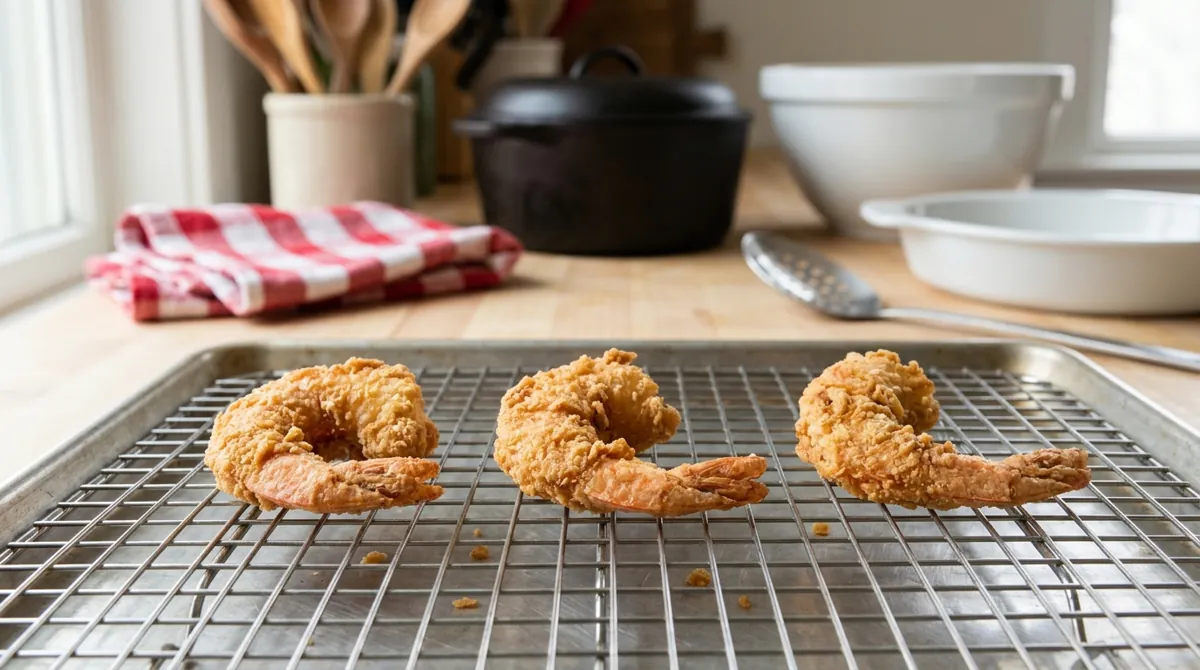
Drain the shrimp on a rack set over paper towels and salt them right away.
✓ What it should look like - Step 6
Warm the bread in a 350°F oven for 5 minutes, split it lengthwise, spread both sides with the dressing, and layer the lettuce, tomato and pickles. Pile in the hot shrimp and serve at once.
Po' Boy
Serves 4 · 4 sandwiches · 55 min total
Shrimp
- 1 1/2 lb large shrimp, peeled and deveined (680 g)
- 3/4 cup buttermilk (183 g)
- 1 tbsp hot sauce
Coating
- 3/4 cup yellow cornmeal (105 g)
- 3/4 cup all-purpose flour (95 g)
- 2 tsp Creole seasoning
- 1/2 tsp fine salt
Dressing and bread
- 1/2 cup mayonnaise (110 g)
- 1 tsp hot sauce and 1 tsp lemon juice, stirred into the mayonnaise
- 4 pieces of crusty French bread, each 8 inches long (about 480 g in all)
- 2 cups shredded romaine lettuce (95 g)
- 2 ripe tomatoes, sliced (300 g)
- Dill pickle slices, to taste
For frying
- About 2 quarts peanut or vegetable oil (enough for 2 inches in a Dutch oven)
Equipment: Oven, Wire rack, Dutch oven, Instant-read thermometer, Deep-fry or candy thermometer, Chef's knife and cutting board, Measuring cups and spoons, Mixing bowls, Whisk, Paper towels
Method
- Stir the shrimp with the buttermilk and 1 tablespoon hot sauce in a large bowl and refrigerate 15 minutes. Stir the mayonnaise, 1 teaspoon hot sauce and the lemon juice in a small bowl.
- Pour 2 inches of oil into a heavy Dutch oven and heat it over medium heat to 360°F, clipping a thermometer to the side.
- Whisk the cornmeal, flour, Creole seasoning and salt in a shallow dish. Lift the shrimp out of the buttermilk a handful at a time, let the extra drip off, toss them in the coating until covered, and set them on a wire rack.
- Fry the shrimp in 3 batches, 2 to 3 minutes each, until deep golden and crisp, keeping the oil near 360°F.
- Drain the shrimp on a rack set over paper towels and salt them right away.
- Warm the bread in a 350°F oven for 5 minutes, split it lengthwise, spread both sides with the dressing, and layer the lettuce, tomato and pickles. Pile in the hot shrimp and serve at once.
Americanized house recipe, written for this site, within the common ratios of New Orleans recipes (shrimp soaked in seasoned buttermilk, a cornmeal and flour coating, oil at about 360°F, 2 to 3 minutes a batch). History: Wikipedia, "Po' boy" (the 1929 strike, Bennie and Clovis Martin, the "poor boy" cry); Southern Foodways Alliance and New Orleans bakery histories for the bread. These pages were not fetched in full for this draft. en.wikipedia.org. Ingredient list follows the source; the method is in our own words.
All sources (1)
Tips
- Shrimp are done in 2 to 3 minutes; longer makes them tough.
- Pat the loaf's inside with a little mayonnaise so the juices from the tomato soak in less.
- Swap the shrimp for shucked oysters (1 minute a batch) or catfish fillets.
- Eat within a few minutes; the crust softens as it sits.
The rules people argue about
What the sources agree on, what they don't, and what is just a good story.
- The Martin brothers invented the po' boy in the 1929 strike. Disputed: the Martin account is the best-known and widely repeated, and sandwiches on long French loaves were likely sold before it; the name is what the strike story explains.
- Which bakery made the original loaf. Disputed: New Orleans bakeries have each told their own version of who baked the first po' boy loaf.
Meatballs of the World

Italian-American Meatballs
Big, tender meatballs braised for an hour in red sauce over spaghetti. The one most Americans grew up with.

Pallottine (Abruzzo Meatballs)
Tiny meatballs, smaller than a marble, tossed right through square spaghetti alla chitarra. No bread at all.

Swedish Meatballs (Köttbullar)
Small, soft meatballs browned in butter, in a cream sauce made from the same pan, with lingonberry jam on the plate.

Danish Frikadeller
Pork meatballs shaped with a spoon and fried slowly in butter, crusty outside and soft in the middle.

Königsberger Klopse
German meatballs that are never fried: poached, then served in a creamy white sauce with capers.

Spanish Albóndigas in Almond Saffron Sauce
The tapas bar classic: small meatballs in a golden sauce thickened with fried almonds and bread.

Mexican Albóndigas with Chipotle and Mint
Soft meatballs with rice and fresh mint inside, simmered in a smoky tomato and chipotle broth.

Izgara Köfte (Turkish Grilled Meatballs)
Small, flat meatballs kneaded hard, rested cold, and charred on a hot grill pan.

Lion's Head Meatballs
Big, soft pork meatballs, stirred into a sticky paste, fried to set, then braised in a savory sauce.

Chicken Tsukune
Japan's chicken meatball: kneaded sticky, grilled on skewers, glazed with sweet soy tare, dipped in egg yolk.