
Pound Cake
Butter, sugar, eggs and flour in nearly equal weights, beaten long and baked low into a dense, fine, golden loaf with a crack down the middle: the 1700s English cake that the first American cookbook printed in 1796.
🍳Cook alongOne move at a time, with real timers
 Edited by JP Lambiase
Change the estimate
Swaps change the price only: cook any meat to its own safe temperature. Where these numbers come from
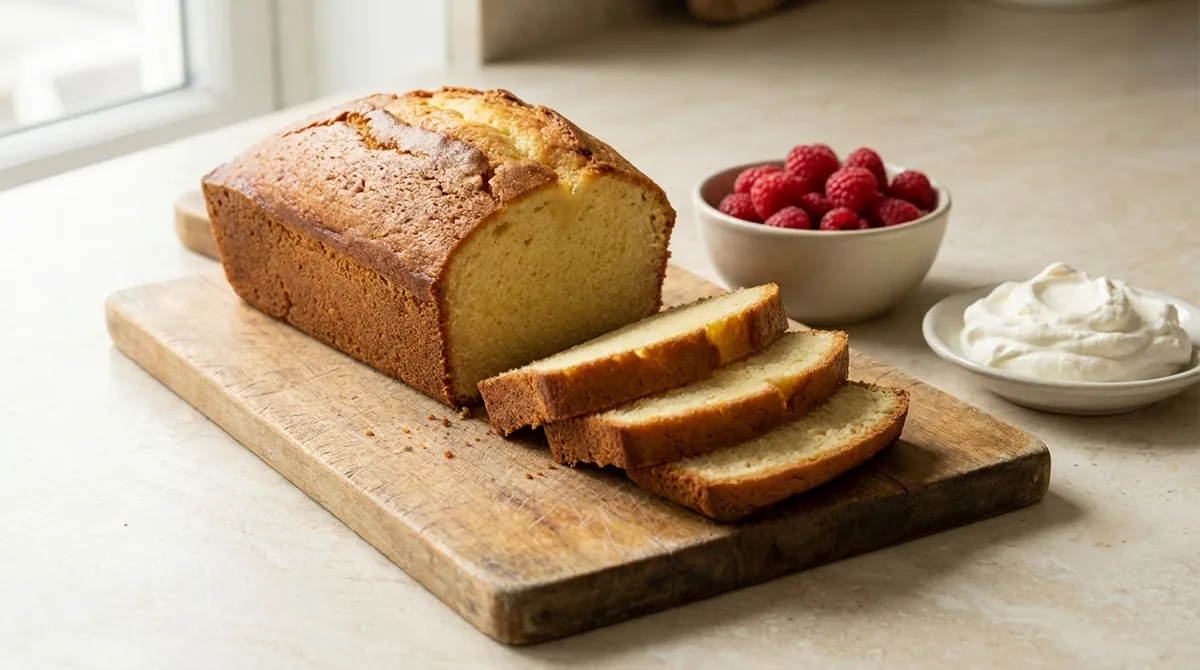
The recipe is in the name. Pound cake was first recorded in England, made with a pound each of flour, butter, sugar and eggs, a formula you can remember without writing it down. Wikipedia dates the earliest known printed recipe to Hannah Glasse's The Art of Cookery of 1747. There was no baking powder yet: the only lift came from air beaten into the butter and sugar and from the eggs, so the cake was dense, fine-grained and keeps for days.
The cake crossed to the colonies before anyone in America wrote it down. When American Cookery by Amelia Simmons, printed in Hartford in 1796 and known as the first cookbook by an American for Americans, gave its recipe, it was barely a sentence: "One pound sugar, one pound butter, one pound flour, one pound or ten eggs, rose water one gill, spices to your taste; watch it well, it will bake in a slow oven in 15 minutes." A second recipe, "Another (called) Pound Cake", already bends the rule, with three quarters of a pound of butter and brandy. Little is known about Simmons herself beyond the book.
Americans kept changing it. Eliza Leslie's 1851 recipe added wine, brandy, rose water and citrus; later bakers added baking powder, milk, sour cream or cream cheese, and the pound cake became a fixture of Southern kitchens and church tables. This version stays close to the old proportions, with no leavening, only long creaming.
Why it works the kitchen science
Room-temperature butter and eggs
Soft butter (about 65°F) traps air when beaten with sugar, and room-temperature eggs blend in without chilling and breaking the batter. Cold butter will not cream (King Arthur Baking).
Long creaming
With no baking powder, the air beaten into the butter and sugar is most of the lift. Pale and fluffy means it is ready.
Eggs added slowly
Each bit of egg has to be absorbed before the next, or the batter curdles and the cake bakes heavy.
Flour mixed in just until combined
More beating builds gluten and makes the cake tough. All-purpose flour gives the structure a heavy butter batter needs.
A low oven
325°F lets the dense batter bake through to the center before the crust gets too dark.
🧰 You'll need 9 items
Everything the steps call for. Tick off what you have before you start.
Appliances
Pans and pots
Tools
Supplies
Step by step
- Step 1
Set the butter and eggs out about 1 hour ahead so both are at room temperature. Heat the oven to 325°F with a rack in the middle. Butter a 9 by 5 inch light-colored metal loaf pan and dust it with flour, tapping out the excess.
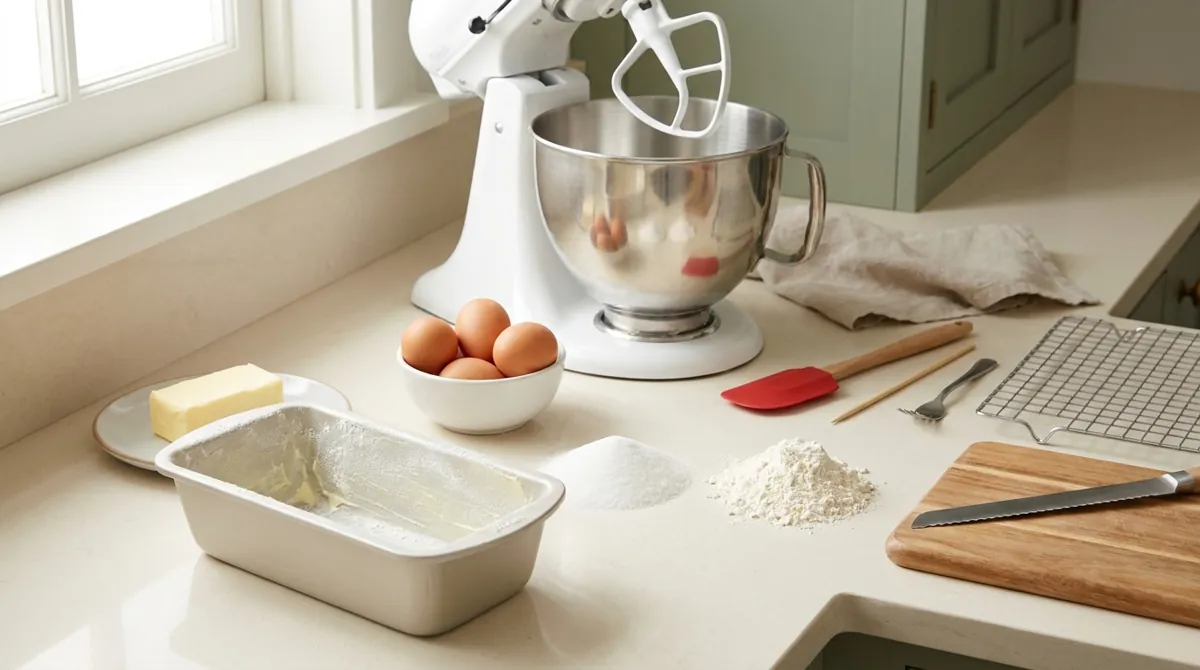
- Step 2
Beat the butter and salt in a stand mixer with the paddle on medium speed for 1 minute, then add the sugar and beat 5 to 7 minutes, scraping the bowl twice, until the mixture is very pale, almost white, and fluffy.
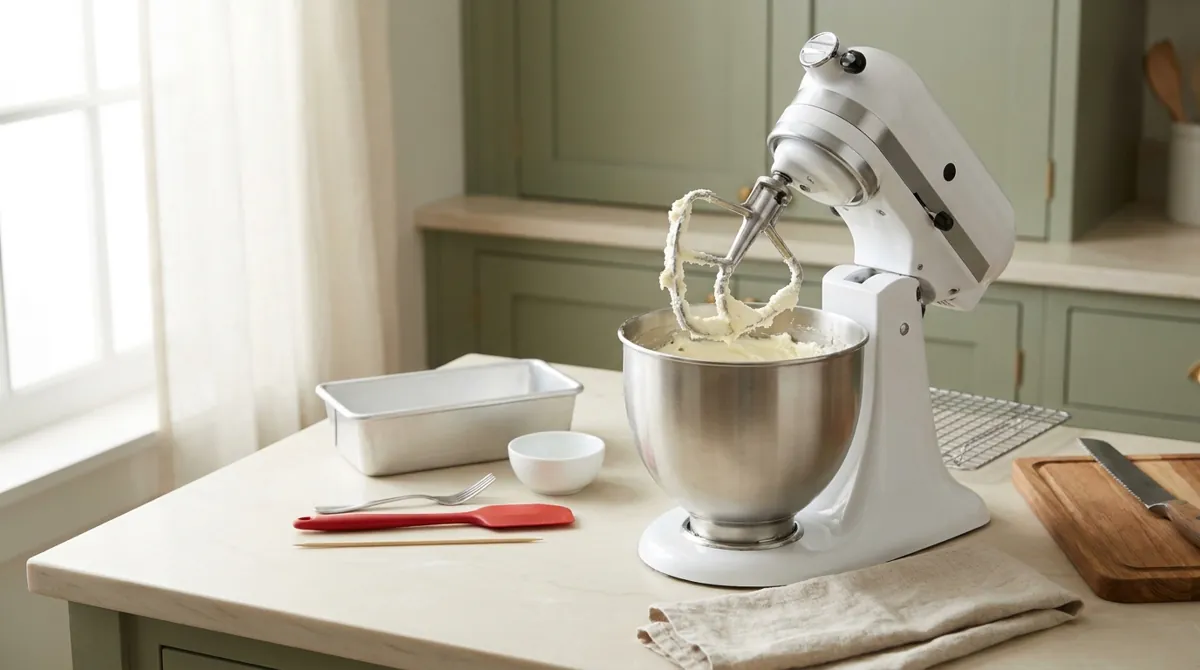
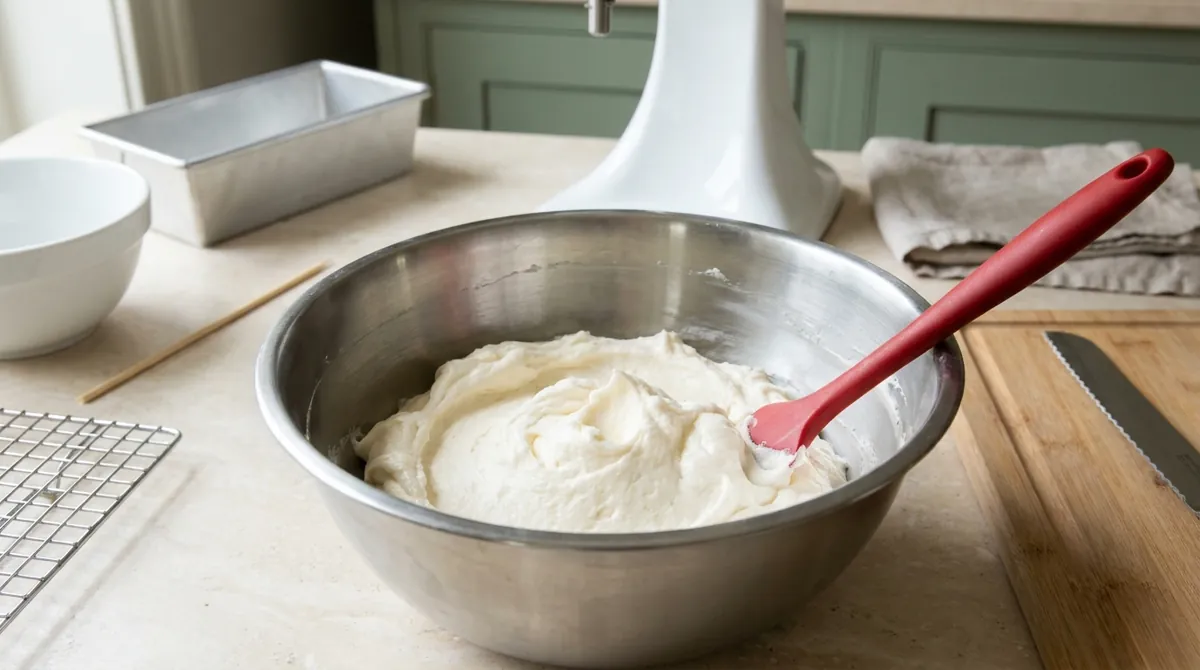
✓ What it should look like - Step 3
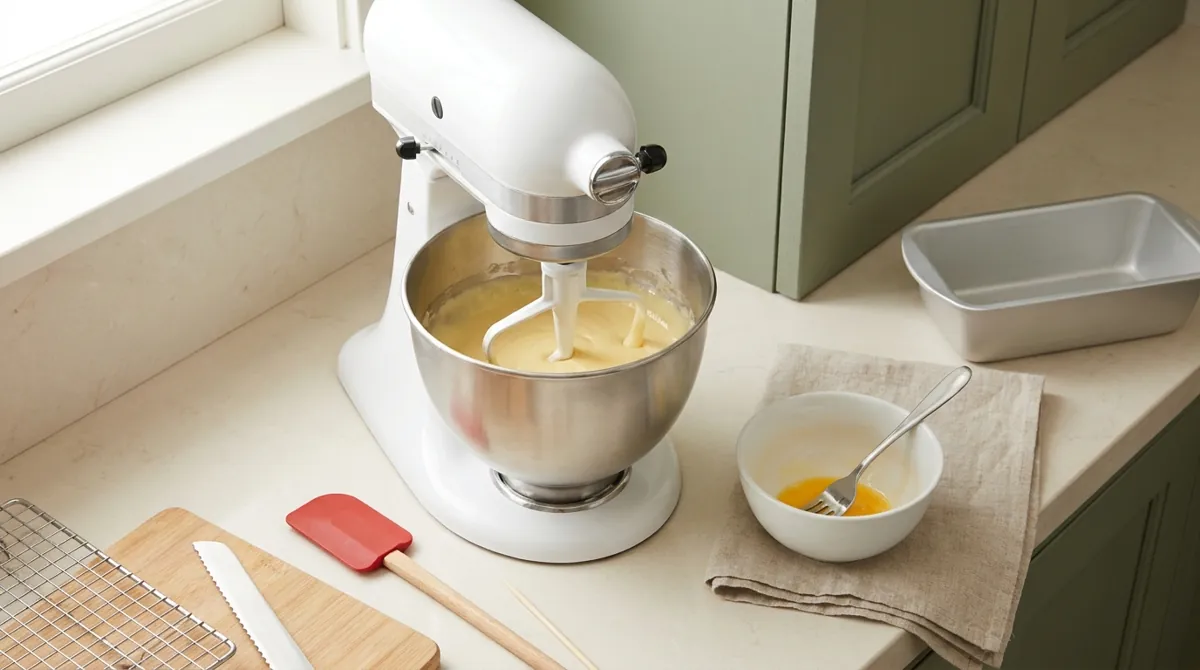
Beat the eggs in a small bowl with the vanilla. With the mixer on medium, add them a little at a time over about 2 minutes, beating well after each addition so the batter stays smooth and does not look curdled.
- Step 4
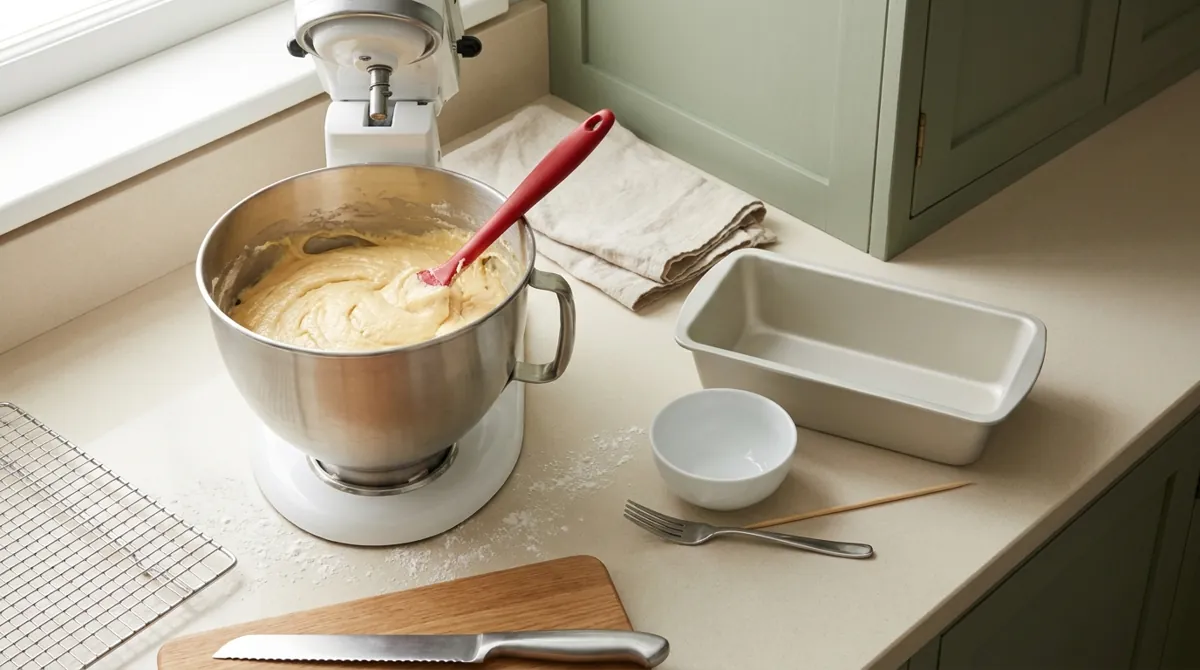
Turn the mixer to low and add the flour in 3 additions, mixing only until it disappears. Finish by folding with a rubber spatula, scraping the bottom of the bowl.
- Step 5
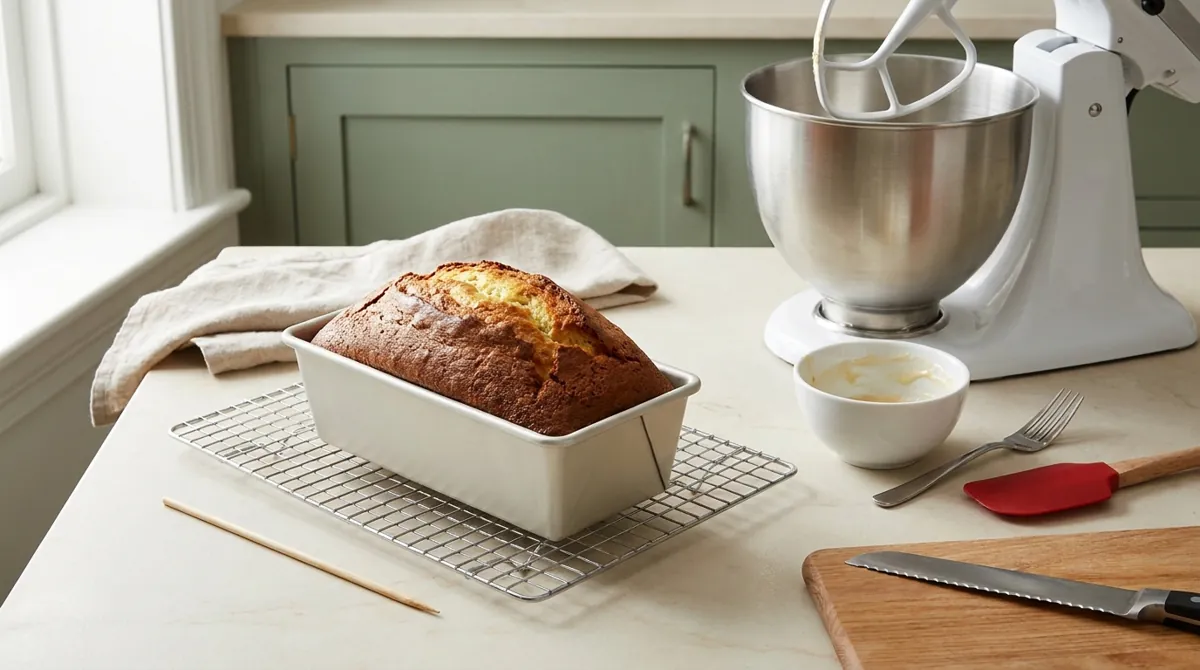
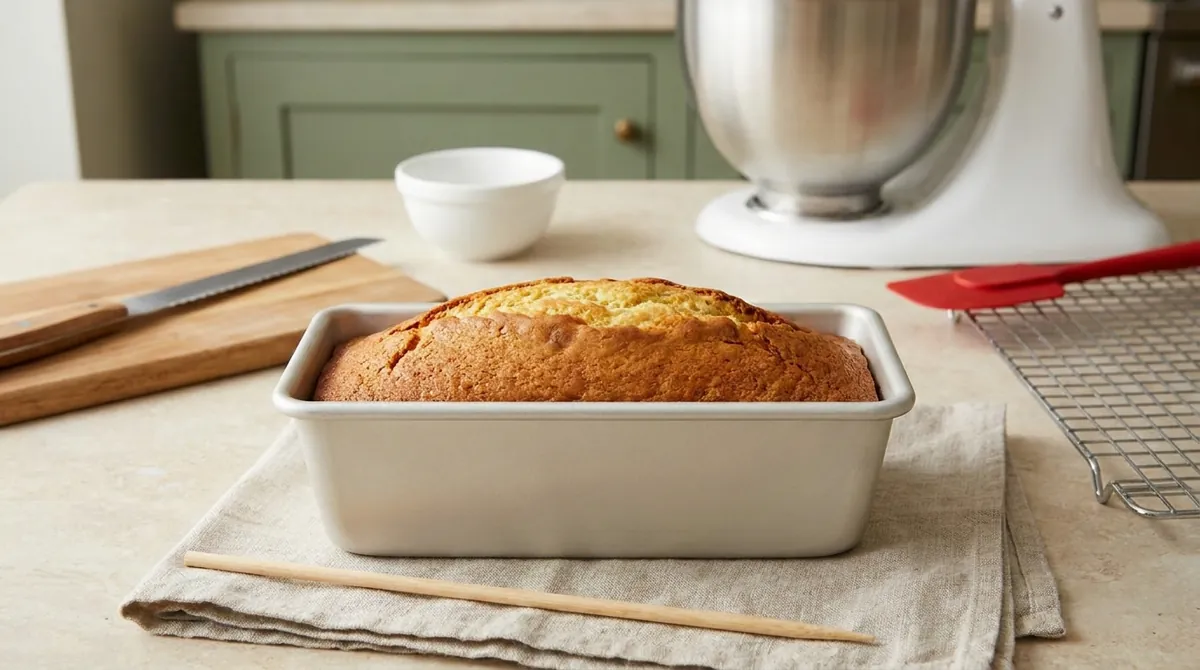
Scrape the batter into the pan and smooth the top. Bake 70 to 80 minutes, until the top is deep golden with a crack down the center and a skewer in the middle comes out clean (about 205°F inside). If the top browns too fast after 50 minutes, lay a sheet of foil loosely over it.
✓ What it should look like - Step 6
Cool 15 minutes in the pan on a wire rack, then turn the cake out and cool completely, at least 1 hour, before slicing.
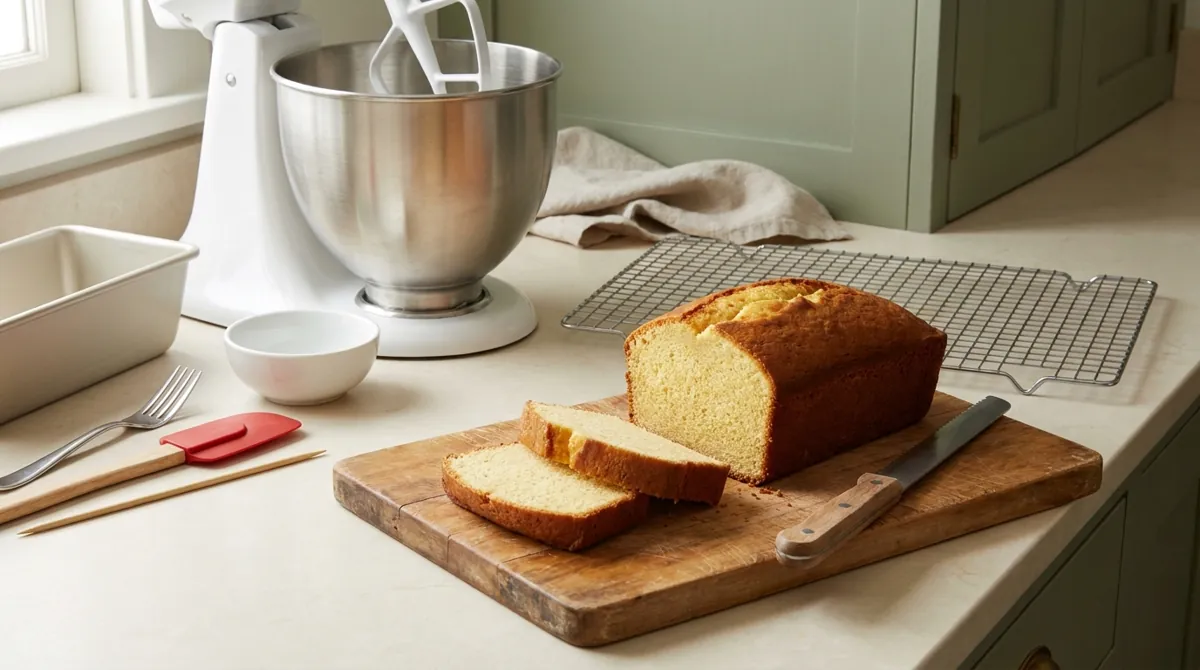
Pound Cake
Serves 12 slices · one 9 by 5 inch loaf · 2 hr 50 min total
- 1 cup unsalted butter, softened to about 65°F (227 g), plus a little for the pan
- 1 cup plus 2 tbsp granulated sugar (227 g)
- 4 large eggs, at room temperature (200 g out of the shell)
- 1 2/3 cups all-purpose flour (200 g), plus a little for the pan
- 1/2 tsp fine salt
- 2 tsp vanilla extract (or 1 tbsp rose water, as in 1796)
Equipment: Oven, Stand mixer (or a hand mixer), Loaf pan, Wire rack, Measuring cups and spoons, Mixing bowls, Spatula, Aluminum foil, Skewers
Method
- Set the butter and eggs out about 1 hour ahead so both are at room temperature. Heat the oven to 325°F with a rack in the middle. Butter a 9 by 5 inch light-colored metal loaf pan and dust it with flour, tapping out the excess.
- Beat the butter and salt in a stand mixer with the paddle on medium speed for 1 minute, then add the sugar and beat 5 to 7 minutes, scraping the bowl twice, until the mixture is very pale, almost white, and fluffy.
- Beat the eggs in a small bowl with the vanilla. With the mixer on medium, add them a little at a time over about 2 minutes, beating well after each addition so the batter stays smooth and does not look curdled.
- Turn the mixer to low and add the flour in 3 additions, mixing only until it disappears. Finish by folding with a rubber spatula, scraping the bottom of the bowl.
- Scrape the batter into the pan and smooth the top. Bake 70 to 80 minutes, until the top is deep golden with a crack down the center and a skewer in the middle comes out clean (about 205°F inside). If the top browns too fast after 50 minutes, lay a sheet of foil loosely over it.
- Cool 15 minutes in the pan on a wire rack, then turn the cake out and cool completely, at least 1 hour, before slicing.
Americanized house recipe, written for this site. History: Wikipedia, "Pound cake" (a pound each of the four ingredients, first recorded in England, Hannah Glasse 1747 as the earliest known recipe, American Cookery 1796, Eliza Leslie 1851, the Indian pound cake of 1846, quatre-quarts, baking soda or powder, oil and sour cream variations, James Villas on cake flour); Amelia Simmons, American Cookery (Hartford, 1796), Project Gutenberg text with both "Pound Cake" recipes; The American Table, "Pound Cake (1796)" (the cake predates Simmons, the book as the first American cookbook, little known about Simmons). Technique: King Arthur Baking, "King Arthur's Original Pound Cake" (9 by 5 inch loaf, room-temperature butter and eggs, traditional pound cake lifted only by air and eggs, a clean toothpick test, foil if the top browns too fast); King Arthur Baking, "How to make the ultimate pound cake" (room-temperature butter, metal pans bake more evenly than glass). en.wikipedia.org. Ingredient list follows the source; the method is in our own words.
Tips
- The crack down the middle is normal and traditional: the outside sets first and the center rises through it.
- Pound cake slices more cleanly and tastes better on day two. Wrapped well, it keeps 4 days at room temperature or 3 months frozen.
- Toast thick slices in a skillet with butter and serve with berries and whipped cream.
- For a lighter, more modern cake, add 1 tsp baking powder with the flour and 1/4 cup milk after the second flour addition.
- To bake in a 10 inch tube or Bundt pan, double the recipe and bake about 75 to 90 minutes.
The rules people argue about
What the sources agree on, what they don't, and what is just a good story.
- Real pound cake has no baking powder. Disputed: the traditional cake rose only on air and eggs, and King Arthur notes that; many modern and Southern recipes add a little baking powder or soda for a lighter crumb.
- Cake flour makes a better pound cake. Disputed: many Southern bakers swear by it, but James Villas argued in Saveur (2008), as Wikipedia reports, that cake flour lacks the strength for the heavy batter.
Meatballs of the World

Italian-American Meatballs
Big, tender meatballs braised for an hour in red sauce over spaghetti. The one most Americans grew up with.

Pallottine (Abruzzo Meatballs)
Tiny meatballs, smaller than a marble, tossed right through square spaghetti alla chitarra. No bread at all.

Swedish Meatballs (Köttbullar)
Small, soft meatballs browned in butter, in a cream sauce made from the same pan, with lingonberry jam on the plate.

Danish Frikadeller
Pork meatballs shaped with a spoon and fried slowly in butter, crusty outside and soft in the middle.

Königsberger Klopse
German meatballs that are never fried: poached, then served in a creamy white sauce with capers.

Spanish Albóndigas in Almond Saffron Sauce
The tapas bar classic: small meatballs in a golden sauce thickened with fried almonds and bread.

Mexican Albóndigas with Chipotle and Mint
Soft meatballs with rice and fresh mint inside, simmered in a smoky tomato and chipotle broth.

Izgara Köfte (Turkish Grilled Meatballs)
Small, flat meatballs kneaded hard, rested cold, and charred on a hot grill pan.

Lion's Head Meatballs
Big, soft pork meatballs, stirred into a sticky paste, fried to set, then braised in a savory sauce.

Chicken Tsukune
Japan's chicken meatball: kneaded sticky, grilled on skewers, glazed with sweet soy tare, dipped in egg yolk.