
Pozole
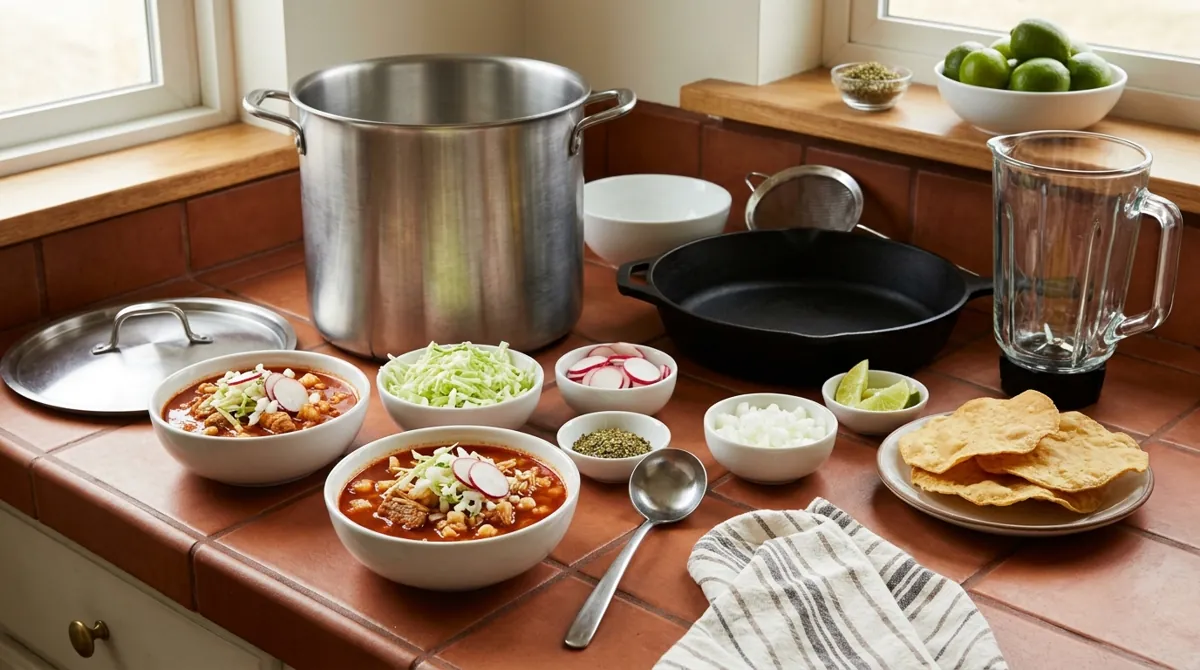
Tender pork and plump hominy simmered in a brick-red guajillo and ancho broth, piled with cabbage, radish, onion and lime: Mexico's festive celebration stew.
🍳Cook alongOne move at a time, with real timers
 Edited by JP Lambiase
Change the estimate
Swaps change the price only: cook any meat to its own safe temperature. Where these numbers come from
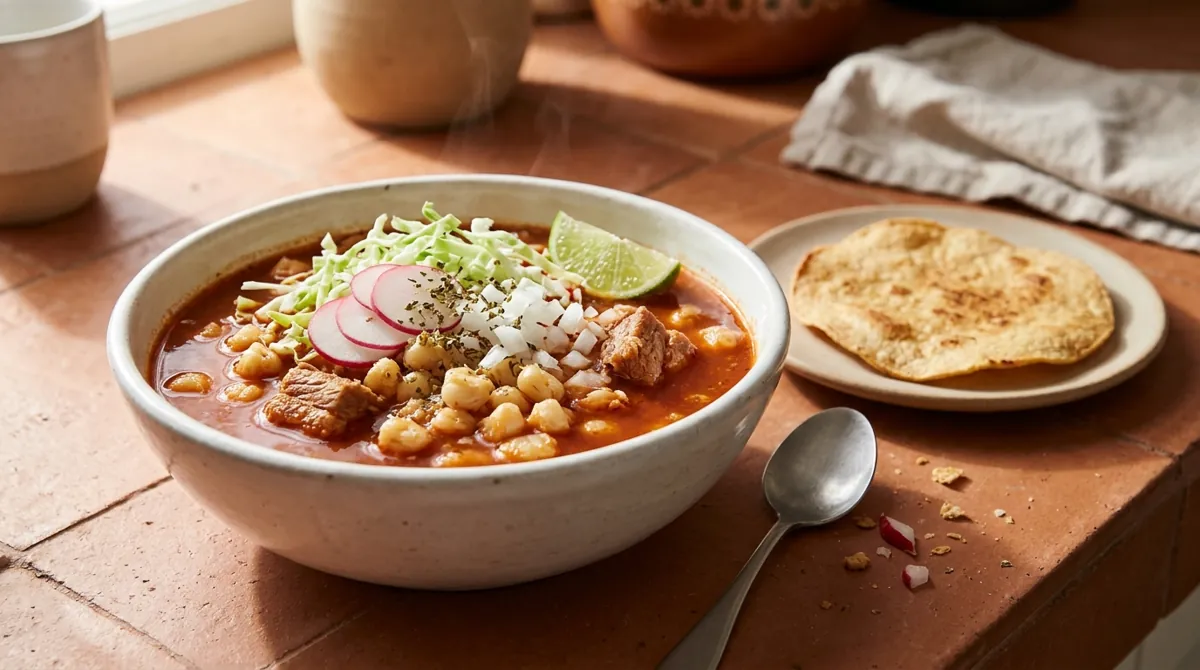
Pozole comes from the Nahuatl pozolli, and hominy stew has been made in Mesoamerica since before the Spanish arrived. Corn was sacred to the Aztecs and other peoples, so pozole was a dish for special occasions. It appears in the 16th-century Florentine Codex of Bernardino de Sahagun, and a page of the Codex Magliabechiano is said to show it.
Every pozole starts with hominy, dried corn treated with lime or lye (nixtamalization), simmered in a pork or chicken broth. Three styles are common: blanco with no added sauce, verde with tomatillos and green chiles, and rojo with dried red chiles such as guajillo and ancho. Pozole is still the dish of New Year's Eve, Independence Day, birthdays and Christmas, with cabbage, radish, onion, oregano and lime on the table for each person to add. In New Mexico it is spelled posole.
Why it works the kitchen science
Simmering the pork first
It builds a plain, rich pork broth to carry the chile sauce, and the meat is tender before the hominy goes in.
Toasting then soaking the chiles
Toasting wakes their flavor and soaking softens them to a smooth, brick-red puree.
Straining the sauce
Dried chile skins stay tough, so straining makes the broth silky.
Fresh cold garnishes
Crunchy cabbage, radish and lime cut the richness of the pork and the broth.
🧰 You'll need 7 items
Everything the steps call for. Tick off what you have before you start.
Pans and pots
Tools
Step by step
- Step 1
Put the pork, halved onion, 3 whole garlic cloves, bay leaves, salt and water in a large pot. Bring to a boil, skim, then simmer partly covered 60 to 75 minutes, until the pork is tender.
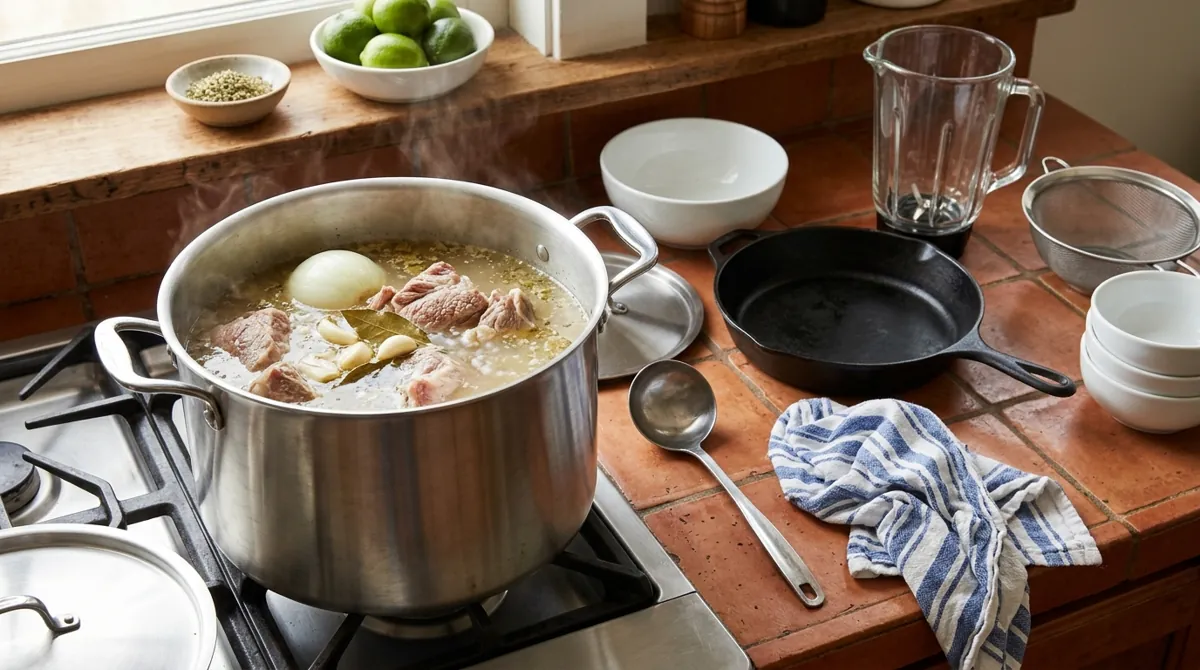
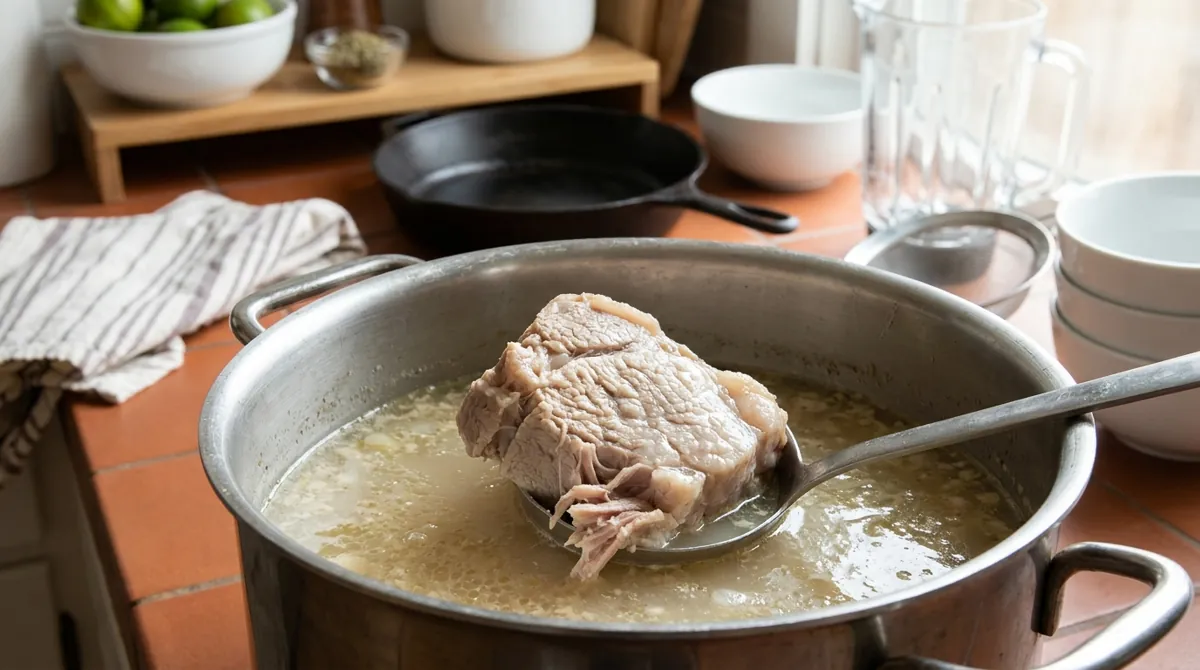
✓ What it should look like - Step 2
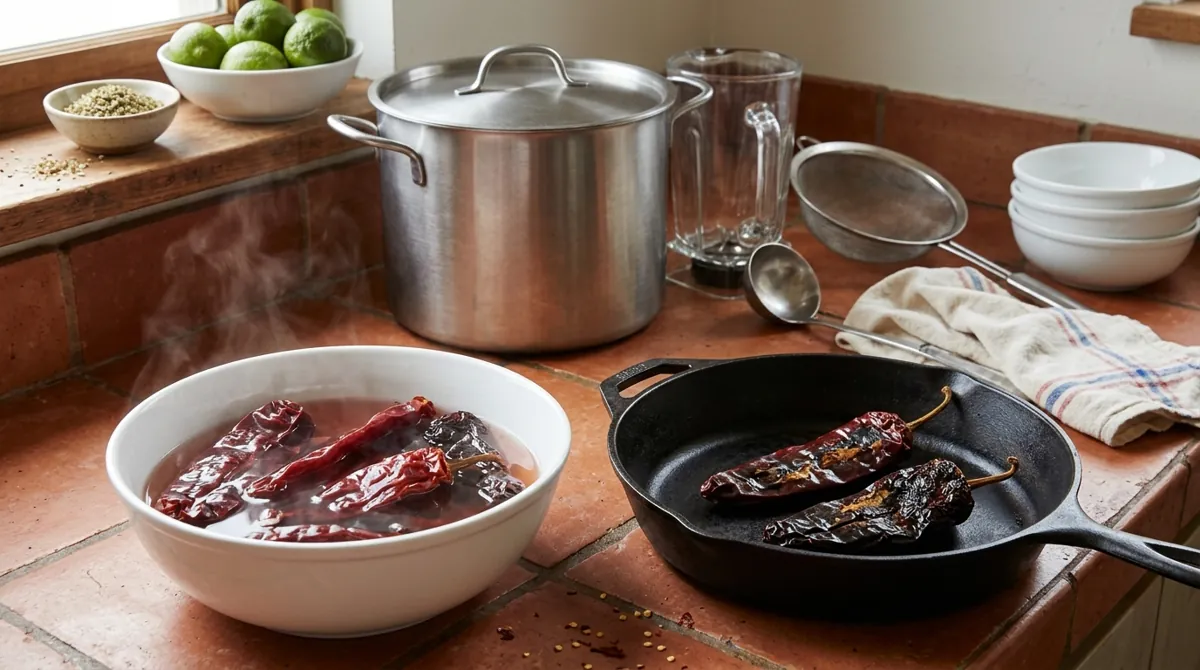
Meanwhile, toast the chiles in a dry skillet 20 to 30 seconds per side until fragrant, then soak in 2 cups hot water 15 to 20 minutes, until soft.
- Step 3
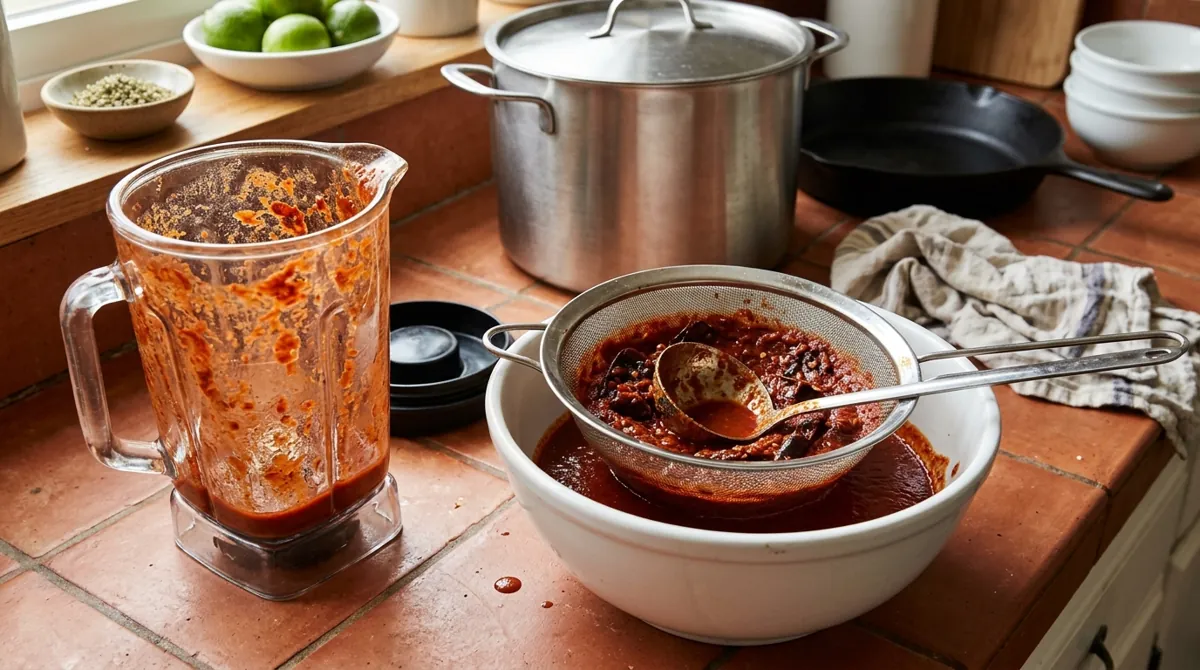
Blend the soaked chiles, 3 garlic cloves, the oregano, cumin and 1 cup of the soaking water until smooth, then press through a strainer to remove skins.
- Step 4
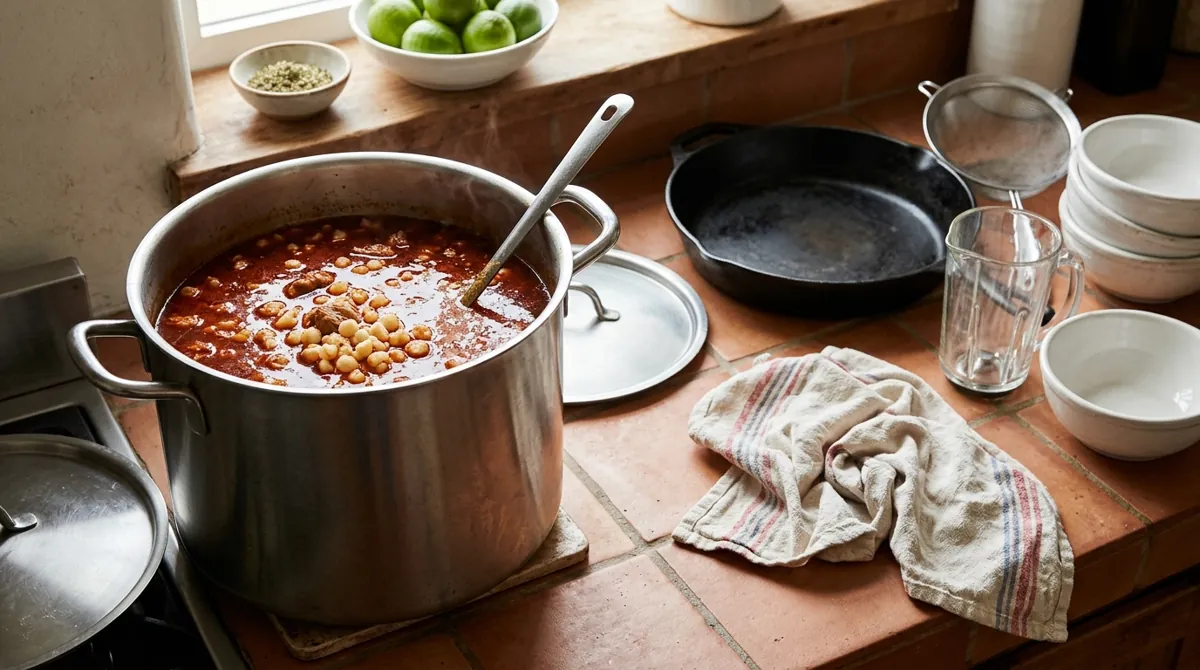
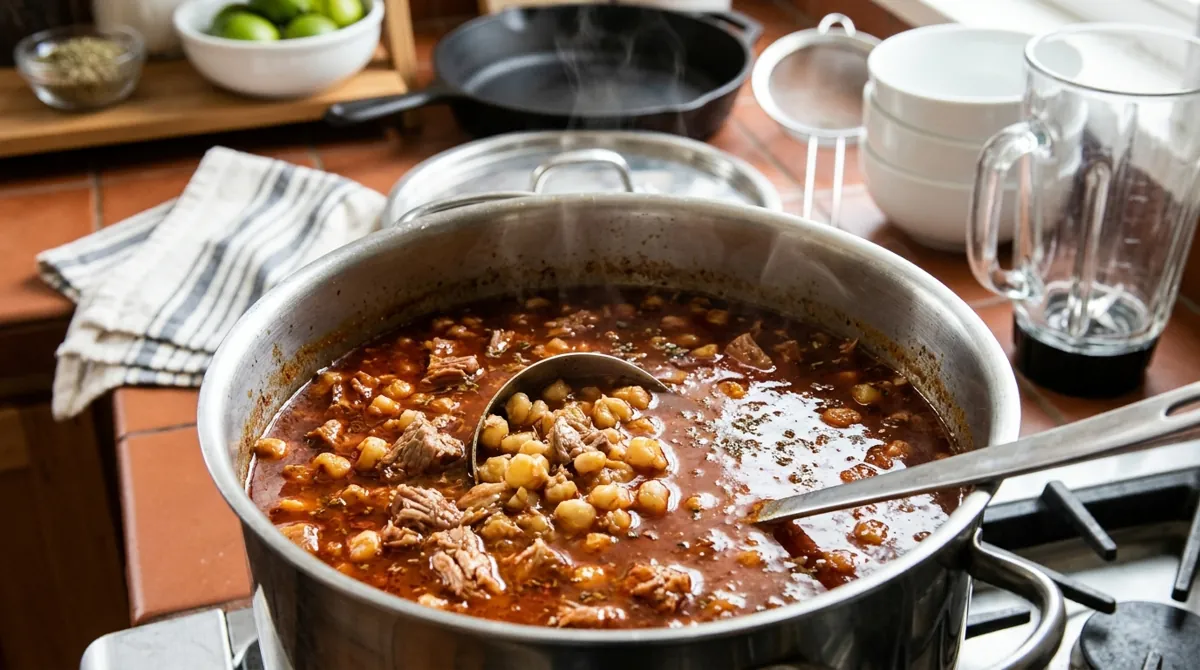
Remove the onion and bay leaves from the pot. Add the strained chile sauce and the hominy and simmer 30 minutes, until the broth is deep red and the hominy has swelled.
✓ What it should look like - Step 5
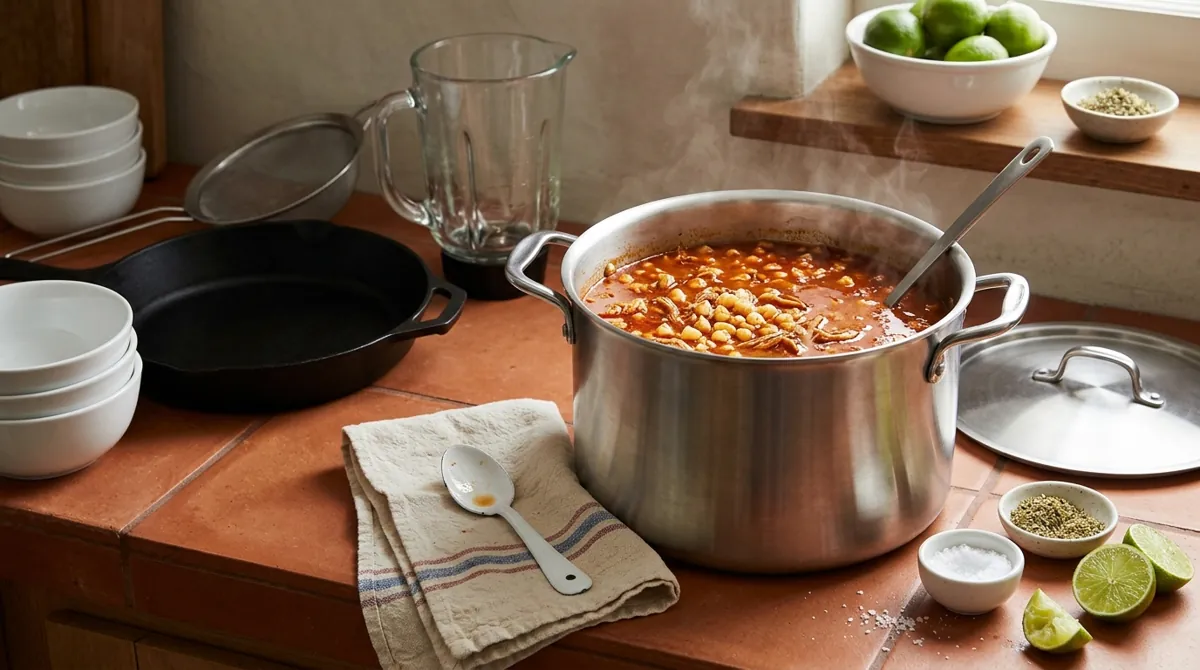
Taste and add salt. If the pork is not falling apart tender, simmer 15 minutes more.
- Step 6
Ladle into bowls and top with cabbage, radish, onion, a pinch of oregano and a squeeze of lime, with tostadas on the side.
Pozole
Serves 6 · about 3 quarts · 2 hr 30 min total
Pork and broth
- 2 pounds boneless pork shoulder (900 g), in 2 inch chunks
- 1 white onion, halved
- 6 garlic cloves, 3 left whole for the broth and 3 for the sauce
- 2 bay leaves
- 1 tablespoon kosher salt, plus more to taste
- 8 cups water (1.9 liters)
Chile sauce
- 4 dried guajillo chiles, stemmed and seeded (about 20 g)
- 2 dried ancho chiles, stemmed and seeded (about 25 g)
- 2 tsp dried Mexican oregano
- 1 tsp ground cumin
Hominy
- 2 cans (25 ounces each) white hominy, rinsed and drained (about 800 g drained)
To serve
- 3 cups shredded green cabbage
- 6 radishes, thinly sliced
- 1/2 white onion, finely chopped
- 2 limes, in wedges
- Dried Mexican oregano
- Tostadas
Equipment: Large pot, Skillet, Chef's knife and cutting board, Measuring cups and spoons, Mixing bowls, Ladle, Fine-mesh strainer
Method
- Put the pork, halved onion, 3 whole garlic cloves, bay leaves, salt and water in a large pot. Bring to a boil, skim, then simmer partly covered 60 to 75 minutes, until the pork is tender.
- Meanwhile, toast the chiles in a dry skillet 20 to 30 seconds per side until fragrant, then soak in 2 cups hot water 15 to 20 minutes, until soft.
- Blend the soaked chiles, 3 garlic cloves, the oregano, cumin and 1 cup of the soaking water until smooth, then press through a strainer to remove skins.
- Remove the onion and bay leaves from the pot. Add the strained chile sauce and the hominy and simmer 30 minutes, until the broth is deep red and the hominy has swelled.
- Taste and add salt. If the pork is not falling apart tender, simmer 15 minutes more.
- Ladle into bowls and top with cabbage, radish, onion, a pinch of oregano and a squeeze of lime, with tostadas on the side.
Americanized house recipe, written for this site: pork shoulder, canned hominy and a guajillo and ancho chile sauce, within the usual ratios of home pozole rojo recipes (about 2 pounds of pork and 2 cans of hominy for 6, 4 to 6 dried chiles). History and styles: Wikipedia, "Pozole"; Wikipedia, "Hominy" (nixtamalization). Mexico in My Kitchen, "Red Pozole", and The Kitchn, "Pozole Rojo", could not be fetched. en.wikipedia.org. Ingredient list follows the source; the method is in our own words.
Tips
- For a milder pozole use 3 guajillo and 1 ancho; for more heat add 1 or 2 dried chiles de arbol to the soak.
- Do not toast chiles longer than 30 seconds a side; scorched chiles turn the broth bitter.
- Chicken thighs work for a lighter version; simmer them 30 to 40 minutes instead.
- It tastes better the next day. Cool and refrigerate up to 4 days, or freeze up to 3 months, and add garnishes fresh.
The rules people argue about
What the sources agree on, what they don't, and what is just a good story.
- Pozole must be pork. Disputed: pork is the usual choice, but chicken is common and vegetarian versions use beans.
Meatballs of the World

Italian-American Meatballs
Big, tender meatballs braised for an hour in red sauce over spaghetti. The one most Americans grew up with.

Pallottine (Abruzzo Meatballs)
Tiny meatballs, smaller than a marble, tossed right through square spaghetti alla chitarra. No bread at all.

Swedish Meatballs (Köttbullar)
Small, soft meatballs browned in butter, in a cream sauce made from the same pan, with lingonberry jam on the plate.

Danish Frikadeller
Pork meatballs shaped with a spoon and fried slowly in butter, crusty outside and soft in the middle.

Königsberger Klopse
German meatballs that are never fried: poached, then served in a creamy white sauce with capers.

Spanish Albóndigas in Almond Saffron Sauce
The tapas bar classic: small meatballs in a golden sauce thickened with fried almonds and bread.

Mexican Albóndigas with Chipotle and Mint
Soft meatballs with rice and fresh mint inside, simmered in a smoky tomato and chipotle broth.

Izgara Köfte (Turkish Grilled Meatballs)
Small, flat meatballs kneaded hard, rested cold, and charred on a hot grill pan.

Lion's Head Meatballs
Big, soft pork meatballs, stirred into a sticky paste, fried to set, then braised in a savory sauce.

Chicken Tsukune
Japan's chicken meatball: kneaded sticky, grilled on skewers, glazed with sweet soy tare, dipped in egg yolk.