
Pulled Pork
A whole pork shoulder rubbed with brown sugar, paprika and pepper, roasted low for hours until it falls apart, then pulled and splashed with a sharp Eastern Carolina vinegar and pepper sauce: the oldest barbecue in America, made in a home oven.
🍳Cook alongOne move at a time, with real timers
 Edited by JP Lambiase
Change the estimate
Swaps change the price only: cook any meat to its own safe temperature. Where these numbers come from
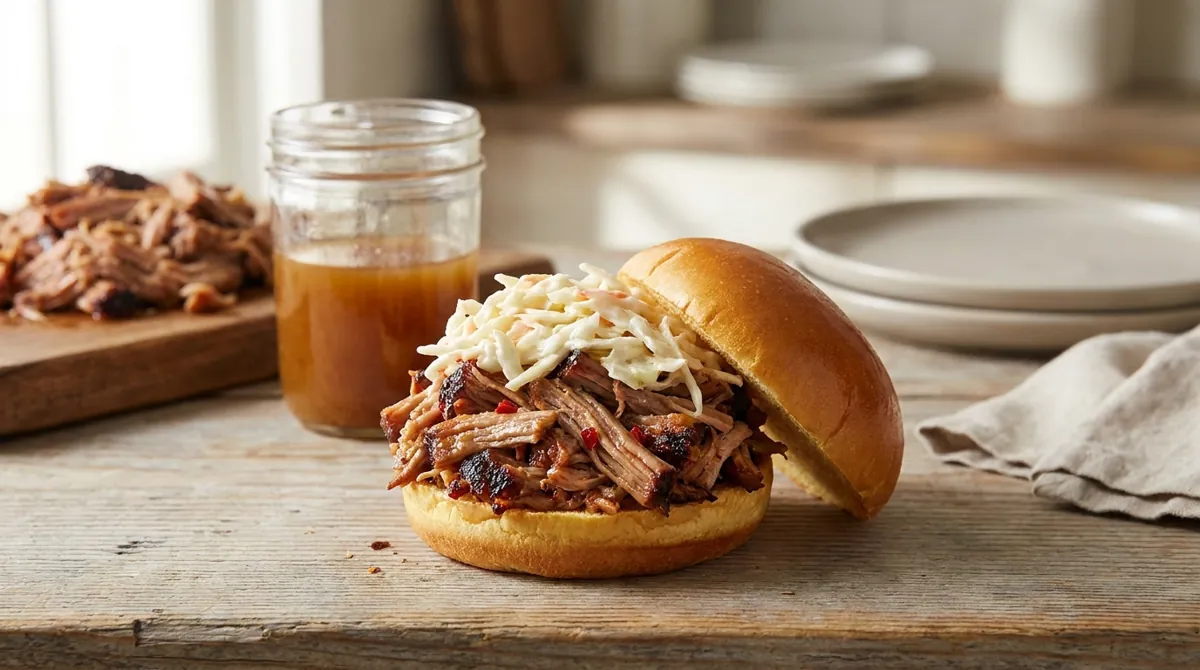
Pulled pork comes from the Carolinas, and from a much bigger party. Whole-hog barbecue, a pig split and cooked slowly over coals in a pit, was firmly established in the British colonies by the 18th century, and large communal pig barbecues spread from the Virginia colony into North and South Carolina in the mid-1700s, for church gatherings, fundraisers and political rallies. References to "a whole Hog barbecu'd" in North Carolina date to the 1700s, and the Oxford Encyclopedia of Food and Drink in America calls whole hog "the oldest style of open pit barbecue" in the country.
The sauce came early too. Eastern North Carolina's thin mix of vinegar and pepper, with no tomato, has stayed largely the same since the early to mid-1800s. Around World War I, barbecue stands in the Piedmont began cooking only parts of the hog, mostly shoulders, and added ketchup, by then widely bottled, to the sauce. That became Lexington style: pork shoulder, pulled or lightly chopped, with a red vinegar "dip". By World War II the two styles were distinct, and they still argue. In 2006 a bill to make the Lexington Barbecue Festival the state's official barbecue festival was defeated.
The shoulder is what most of America now means by pulled pork. This home version roasts it low in the oven and finishes it the eastern way, with vinegar and pepper.
Why it works the kitchen science
The shoulder
A hard-working, well-marbled cut full of collagen. Kept for hours between about 160 and 200°F, the collagen melts into gelatin, so the meat turns soft and juicy instead of dry.
Low and long
At 300°F the outside browns into a crust while the inside has time to break down before it dries out.
Cooking to 200°f, not to time
Pork butts vary, and the meat only pulls cleanly once it reaches about 195 to 205°F. Below that it is cooked but tough.
Resting
The juices settle and the meat firms just enough to shred into strands rather than mush.
Vinegar and pepper
The sharp, thin sauce cuts the richness and soaks into every strand, which is exactly why Eastern Carolina never needed tomato.
🧰 You'll need 10 items
Everything the steps call for. Tick off what you have before you start.
Appliances
Pans and pots
Tools
Supplies
Step by step
- Step 1
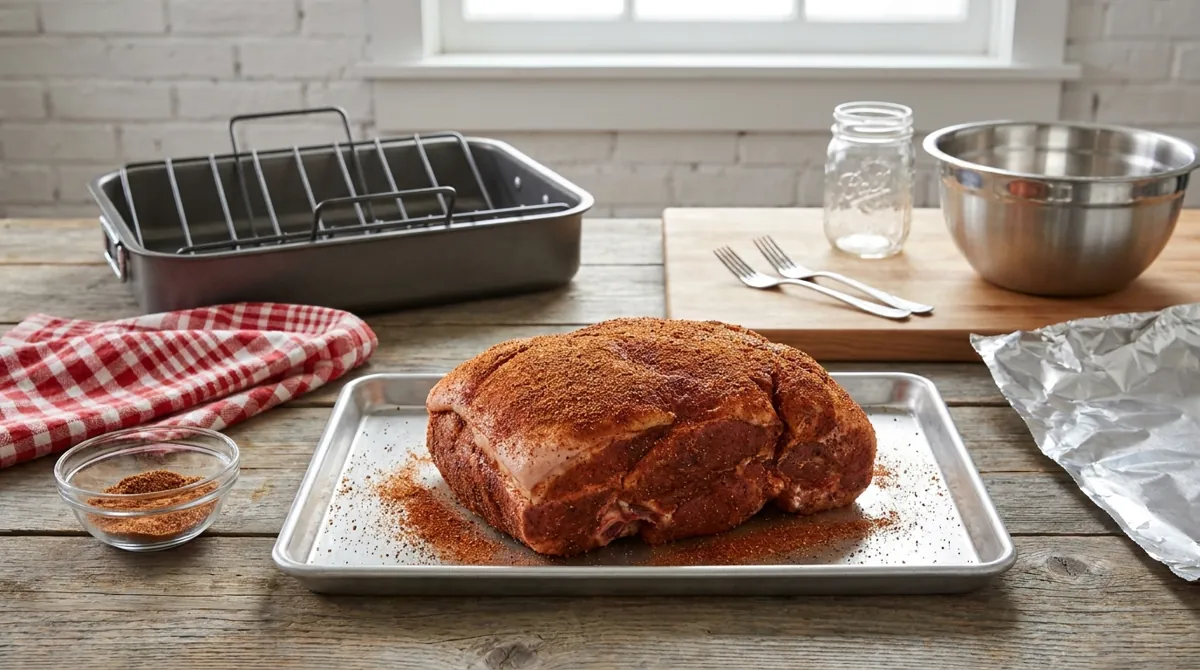
Heat the oven to 300°F with a rack in the lower third. Stir the rub ingredients together in a small bowl. Pat the pork dry with paper towels and press the rub all over it, into every fold. (For deeper seasoning, do this up to a day ahead and refrigerate it uncovered.)
- Step 2
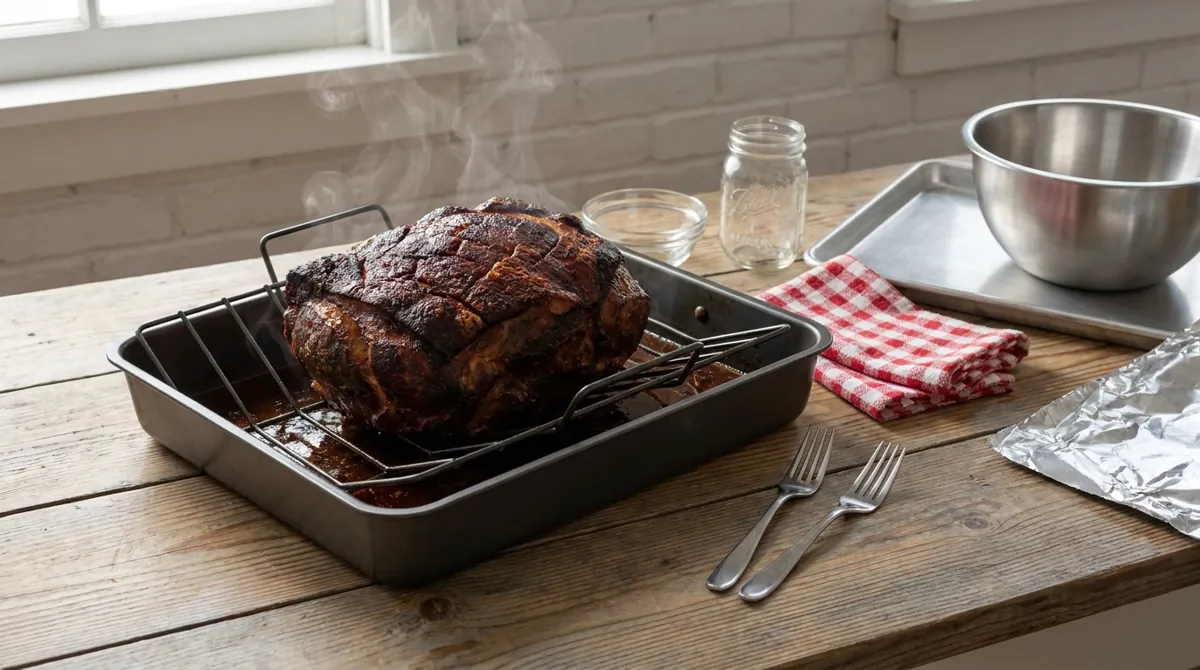
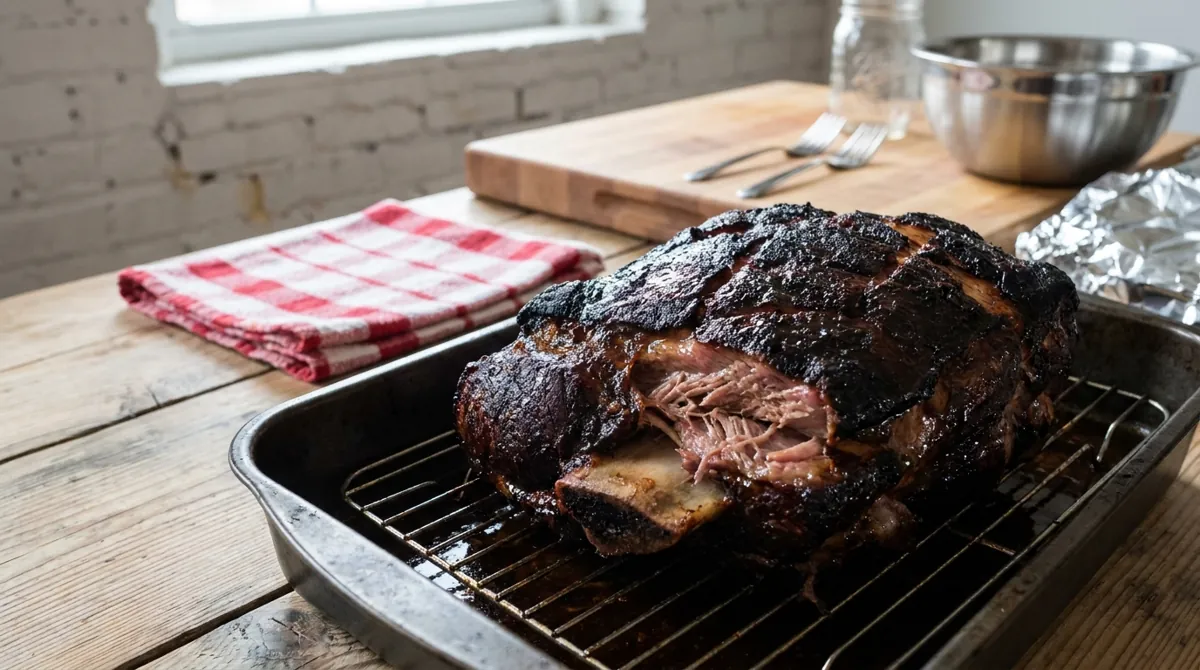
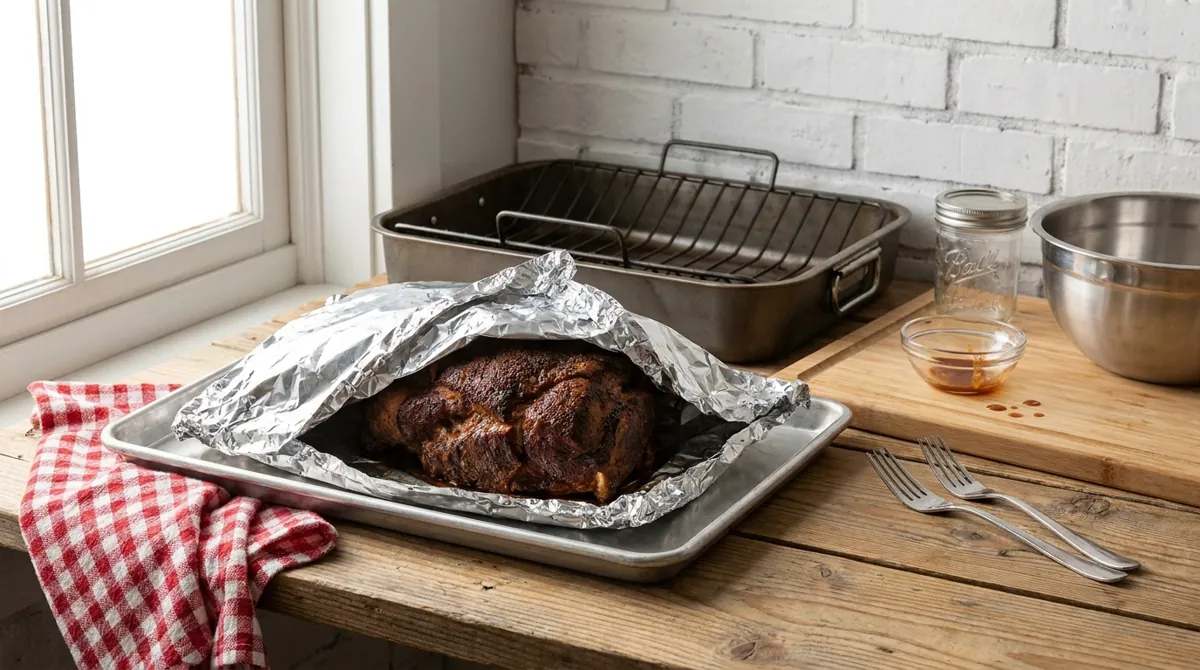
Set the pork fat side up on a wire rack in a large roasting pan and pour 1 cup of water into the pan. Roast uncovered 6 to 7 hours, until the outside is a dark mahogany crust and a thermometer in the thickest part reads 200°F; the bone should wiggle loose. If the crust is very dark before the meat is tender, wrap the pork tightly in foil and keep going. Add water to the pan if it dries out.
✓ What it should look like - Step 3
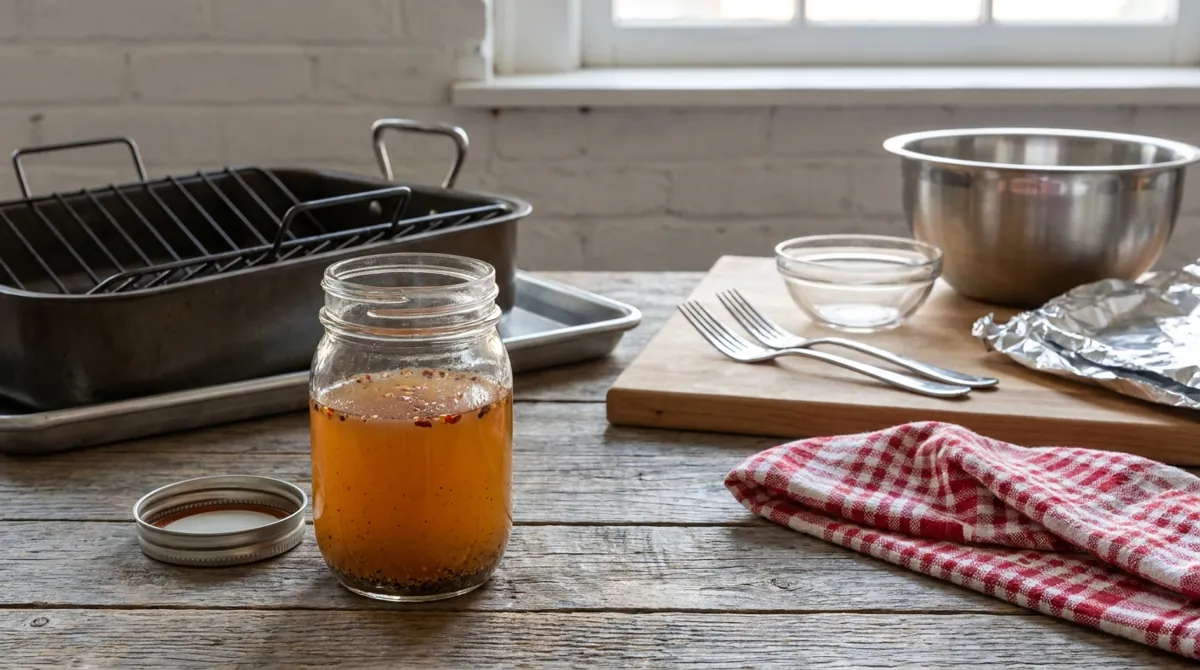
While it roasts, make the sauce: stir the vinegar, brown sugar, pepper flakes, salt, black pepper and hot sauce in a jar until the sugar dissolves. Let it stand at room temperature so the pepper flavors it.
- Step 4
Move the pork to a rimmed sheet pan, tent it loosely with foil and rest it 45 minutes. Pour the pan juices into a measuring cup and skim off the fat.
- Step 5
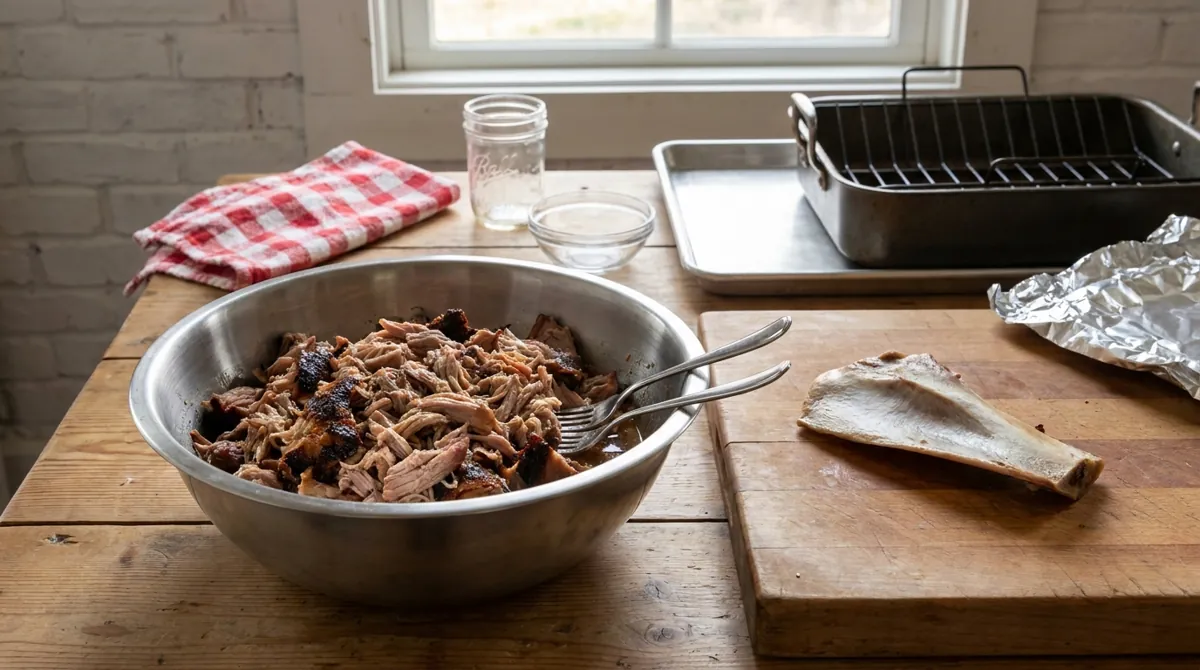
Pull the pork apart with two forks into long, juicy shreds, pulling out the bone and any large pieces of soft fat. Chop some of the dark crust and mix it through.
✓ What it should look like - Step 6
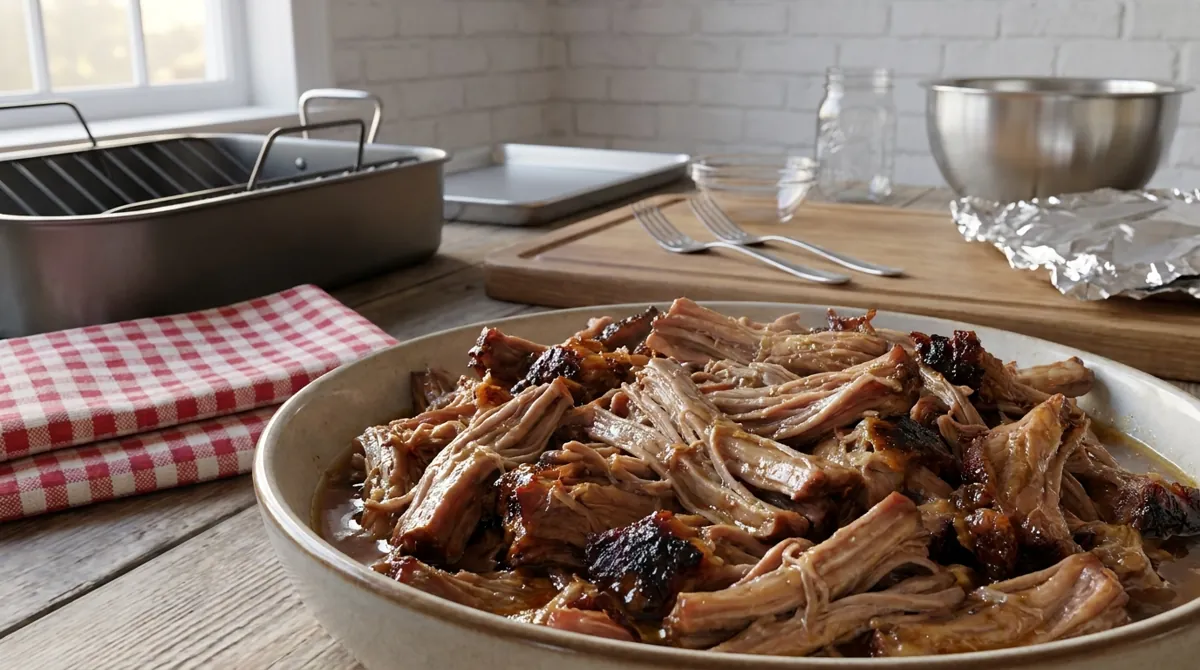
Toss the pork with 1/2 cup of the sauce and a few spoonfuls of the skimmed pan juices, taste, and add more sauce or salt. Serve on soft buns with coleslaw and the rest of the sauce on the side.
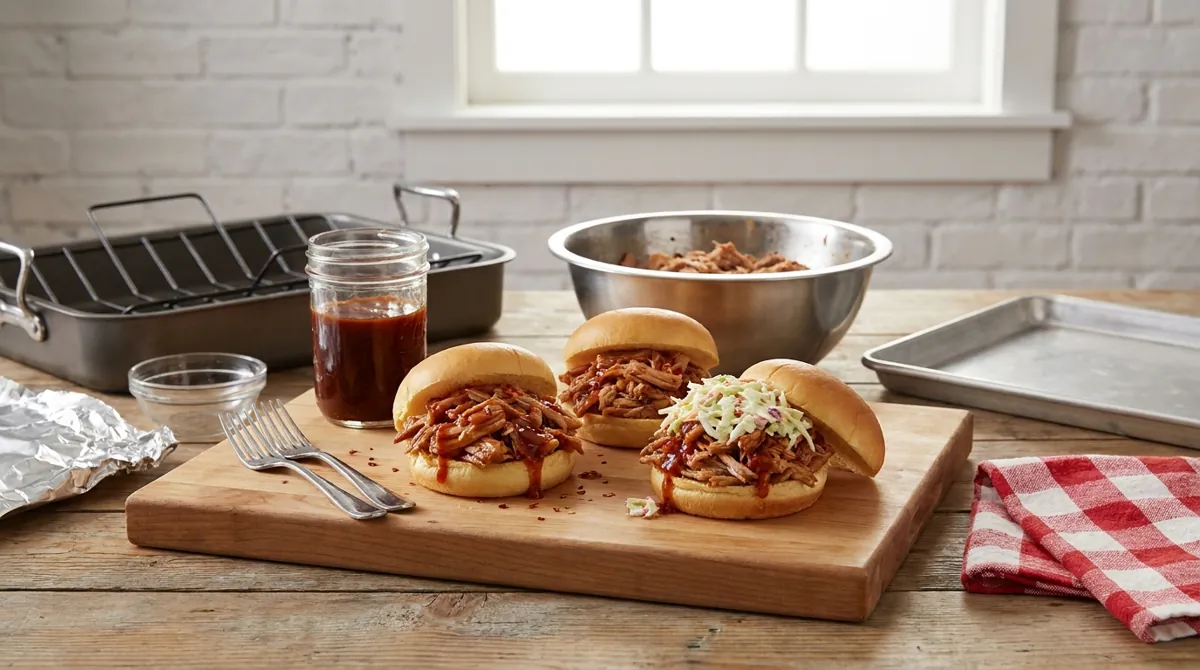
Pulled Pork
Serves 10 to 12 · about 4 lb pulled pork, from one 6 to 7 lb bone-in pork butt · 7 hr 35 min total
Pork and rub
- 1 bone-in pork butt (Boston butt, the upper shoulder), 6 to 7 lb (about 3000 g; about 2700 g without the bone)
- 3 tbsp packed dark brown sugar (40 g)
- 2 tbsp sweet paprika (14 g)
- 2 tbsp kosher salt
- 1 tbsp coarsely ground black pepper (7 g)
- 2 tsp garlic powder
- 1 tsp cayenne pepper (2 g)
Eastern Carolina vinegar sauce
- 1 1/2 cups apple cider vinegar (360 g)
- 2 tbsp packed dark brown sugar (25 g)
- 1 tbsp red pepper flakes (5 g)
- 1 tsp kosher salt
- 1 tsp coarsely ground black pepper (2 g)
- 1 tsp hot sauce
To serve
- 10 to 12 soft hamburger buns (about 500 g) and coleslaw, optional
Equipment: Oven, Rimmed baking sheet, Roasting pan, Wire rack, Instant-read thermometer, Chef's knife and cutting board, Measuring cups and spoons, Mixing bowls, Aluminum foil, Paper towels
Method
- Heat the oven to 300°F with a rack in the lower third. Stir the rub ingredients together in a small bowl. Pat the pork dry with paper towels and press the rub all over it, into every fold. (For deeper seasoning, do this up to a day ahead and refrigerate it uncovered.)
- Set the pork fat side up on a wire rack in a large roasting pan and pour 1 cup of water into the pan. Roast uncovered 6 to 7 hours, until the outside is a dark mahogany crust and a thermometer in the thickest part reads 200°F; the bone should wiggle loose. If the crust is very dark before the meat is tender, wrap the pork tightly in foil and keep going. Add water to the pan if it dries out.
- While it roasts, make the sauce: stir the vinegar, brown sugar, pepper flakes, salt, black pepper and hot sauce in a jar until the sugar dissolves. Let it stand at room temperature so the pepper flavors it.
- Move the pork to a rimmed sheet pan, tent it loosely with foil and rest it 45 minutes. Pour the pan juices into a measuring cup and skim off the fat.
- Pull the pork apart with two forks into long, juicy shreds, pulling out the bone and any large pieces of soft fat. Chop some of the dark crust and mix it through.
- Toss the pork with 1/2 cup of the sauce and a few spoonfuls of the skimmed pan juices, taste, and add more sauce or salt. Serve on soft buns with coleslaw and the rest of the sauce on the side.
Americanized house recipe, written for this site. History: Wikipedia, "Whole-hog barbecue" (established in the British colonies by the 18th century, per Robert F. Moss; spread from the Virginia colony to the Carolinas in the mid-1700s; "the oldest style of open pit barbecue" per the Oxford Encyclopedia of Food and Drink in America; vinegar and red pepper sauce); Wikipedia, "Barbecue in North Carolina" (Eastern whole hog and vinegar-pepper sauce, Lexington shoulder and red "dip", finely chopped versus pulled, the 2006 festival bill and 2007 compromise); Friends of the Tobacco Farm Life Museum, "Going Whole Hog: History of North Carolina BBQ" ("a whole Hog barbecu'd" in the 1700s, the eastern sauce since the early to mid-1800s, Piedmont stands turning to shoulders and ketchup around World War I, distinct styles by World War II). Technique and doneness: Wikipedia, "Pulled pork" (shoulder or Boston butt, internal 195 to 205°F so it pulls apart, about 275°F in a smoker). en.wikipedia.org. Ingredient list follows the source; the method is in our own words.
Tips
- Want smoke? Cook it in a smoker or kettle grill set up for indirect heat at about 275°F with hickory or oak, to the same 200°F.
- Expect a stall: around 160°F the temperature can sit still for an hour or more while moisture evaporates. Keep going, or wrap it in foil.
- For Lexington style, stir 1/3 cup ketchup into the sauce.
- Pulled pork freezes well for 3 months with some of the juices. Reheat it covered at 300°F with a splash of sauce.
The rules people argue about
What the sources agree on, what they don't, and what is just a good story.
- Real Carolina barbecue is the whole hog. Disputed by region: Eastern North Carolina cooks the whole hog; Lexington and the Piedmont have cooked shoulders since around World War I.
- Done is 195°F. Disputed by a few degrees: most guides give 195 to 205°F; this recipe uses 200°F and a loose bone.
Meatballs of the World

Italian-American Meatballs
Big, tender meatballs braised for an hour in red sauce over spaghetti. The one most Americans grew up with.

Pallottine (Abruzzo Meatballs)
Tiny meatballs, smaller than a marble, tossed right through square spaghetti alla chitarra. No bread at all.

Swedish Meatballs (Köttbullar)
Small, soft meatballs browned in butter, in a cream sauce made from the same pan, with lingonberry jam on the plate.

Danish Frikadeller
Pork meatballs shaped with a spoon and fried slowly in butter, crusty outside and soft in the middle.

Königsberger Klopse
German meatballs that are never fried: poached, then served in a creamy white sauce with capers.

Spanish Albóndigas in Almond Saffron Sauce
The tapas bar classic: small meatballs in a golden sauce thickened with fried almonds and bread.

Mexican Albóndigas with Chipotle and Mint
Soft meatballs with rice and fresh mint inside, simmered in a smoky tomato and chipotle broth.

Izgara Köfte (Turkish Grilled Meatballs)
Small, flat meatballs kneaded hard, rested cold, and charred on a hot grill pan.

Lion's Head Meatballs
Big, soft pork meatballs, stirred into a sticky paste, fried to set, then braised in a savory sauce.

Chicken Tsukune
Japan's chicken meatball: kneaded sticky, grilled on skewers, glazed with sweet soy tare, dipped in egg yolk.