
Ramen
A quick Tokyo-style shoyu ramen for a weeknight: store-bought fresh ramen noodles in soy-seasoned chicken broth with ginger and garlic, a jammy soy-marinated egg, bok choy, scallions and nori. Chinese noodles that became Japan's dish, then the 1958 instant block that fed America.
🍳Cook alongOne move at a time, with real timers
 Edited by JP Lambiase
Change the estimate
Swaps change the price only: cook any meat to its own safe temperature. Where these numbers come from
Ramen is a Japanese dish built on a Chinese noodle. Its ancestors were cooked in Japan's Chinese communities from the 1880s, and the soup is first recorded in Yokohama's Chinatown in the early 20th century. According to ramen historian Hiroshi Osaki, the first shop devoted to it was Rairaiken, opened in Asakusa, Tokyo, in 1910 by Kan'ichi Ozaki, with Chinese cooks serving what was then called Shina soba. The noodles are still Chinese-style: wheat noodles made with kansui, an alkaline mineral water that makes them yellow, springy and firm in hot broth. The word "ramen" probably comes from Mandarin lamian, "pulled noodles", though how the name stuck is unclear.
After the war, with cheap American wheat flooding Japan and rice scarce, ramen stalls spread through the cities. Then in 1958 Momofuku Ando of Nissin invented instant noodles: Chicken Ramen, a dried block of fried noodles sold from August 25, 1958. It was a block in a bag, not a cup. On a 1966 trip to the US, Ando watched Americans break the block into cups and pour hot water over it, and Nissin launched Cup Noodles in Japan on September 18, 1971. Nissin had set up a US company in Los Angeles in 1970, sold Top Ramen there that autumn, and brought out Cup O'Noodles in November 1973. For decades that was what "ramen" meant to most Americans, until ramen shops caught on in US cities in the 2000s.
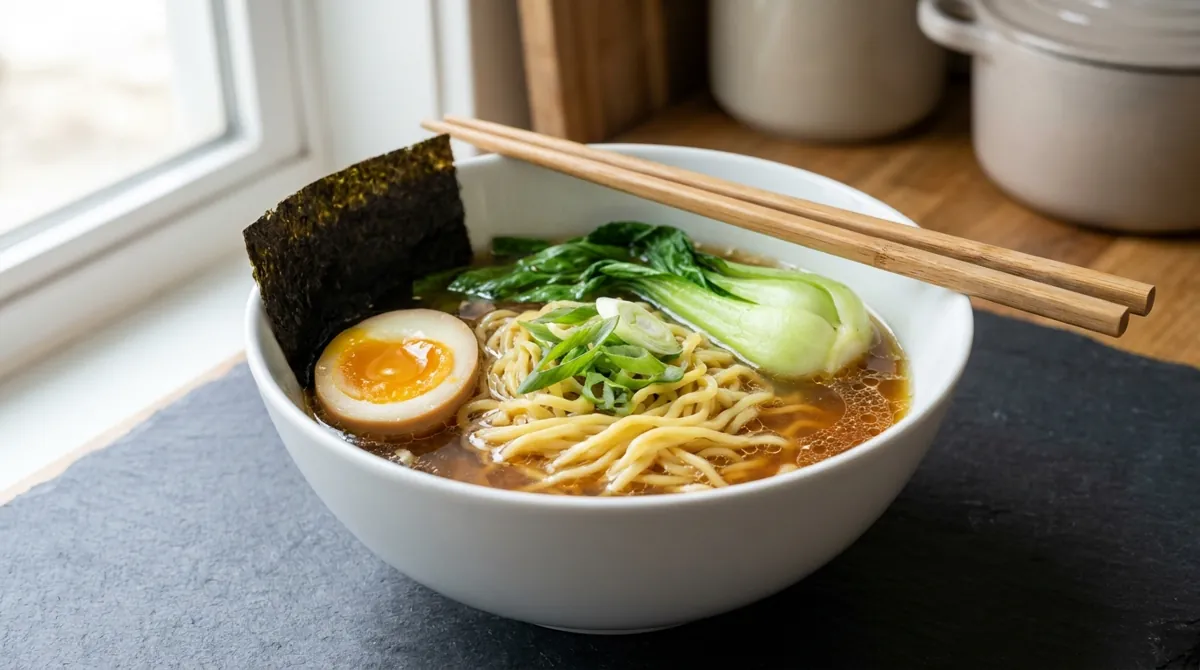
This bowl is the achievable home version: a shoyu (soy sauce) ramen in the Tokyo style, with soy-seasoned chicken broth, store-bought fresh ramen noodles and a soft-boiled marinated egg.
Why it works the kitchen science
Tare in the bowl, not the pot
The soy and sesame oil season each bowl at full strength, the way ramen shops do it, so the broth tastes of soy without boiling it flat.
🧰 You'll need 9 items
Everything the steps call for. Tick off what you have before you start.
Pans and pots
Tools
Step by step
- Step 1
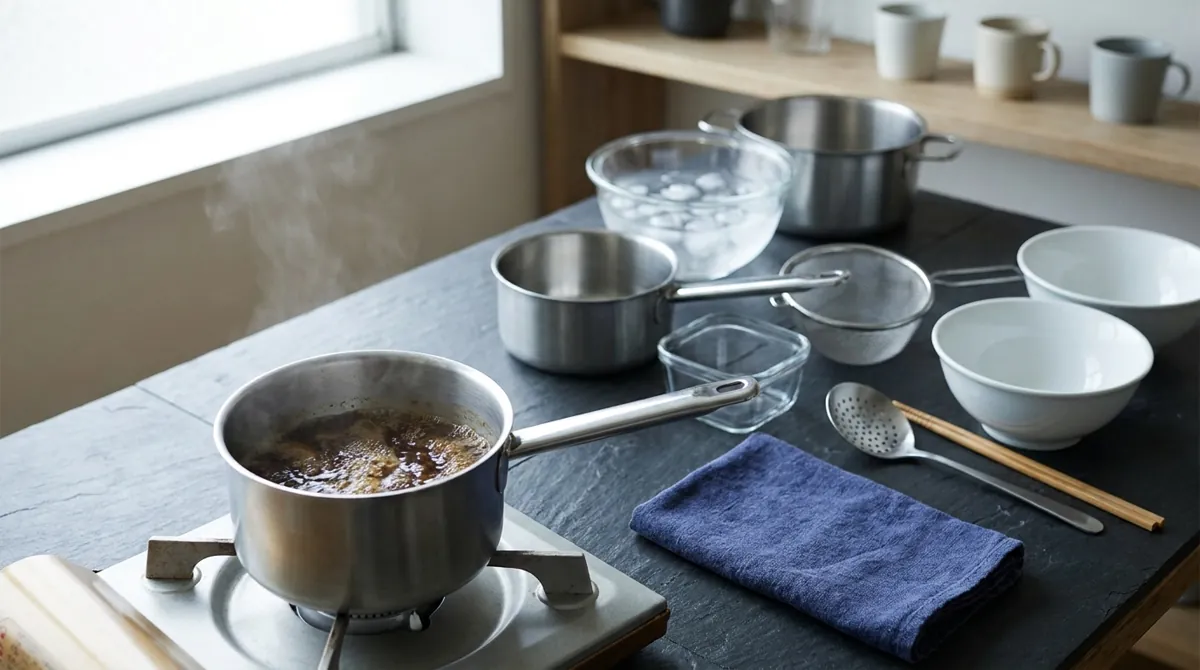
Make the egg marinade: bring the soy sauce, mirin, water and sugar to a boil in a small saucepan, simmer 1 minute, then cool completely.
- Step 2
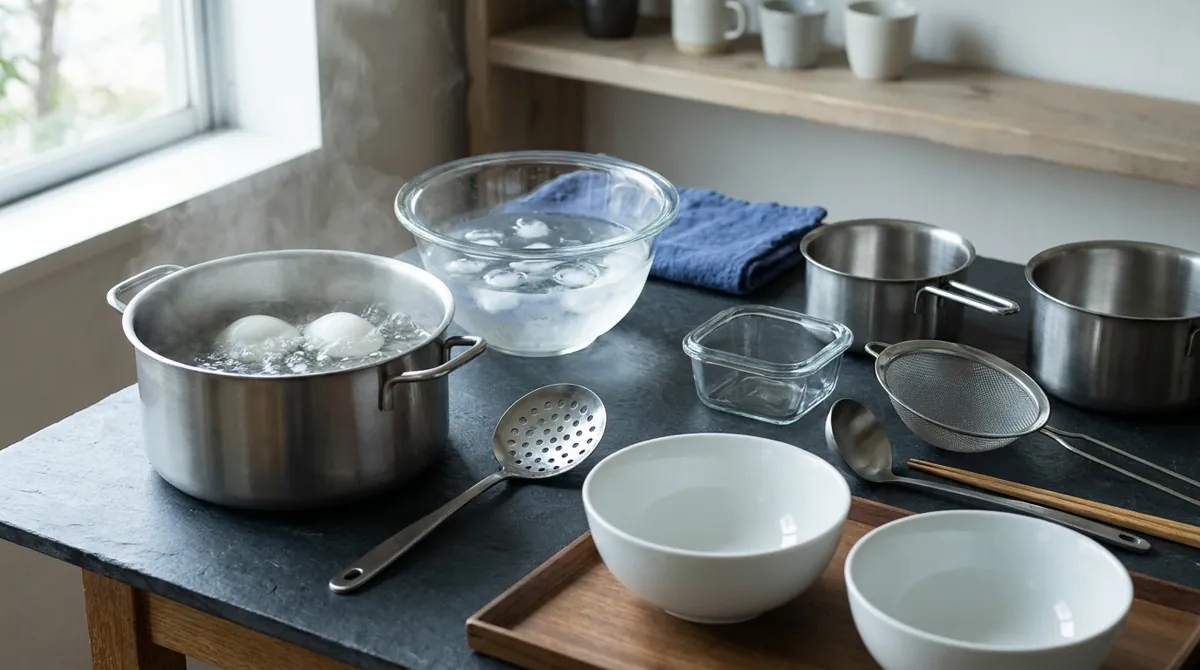
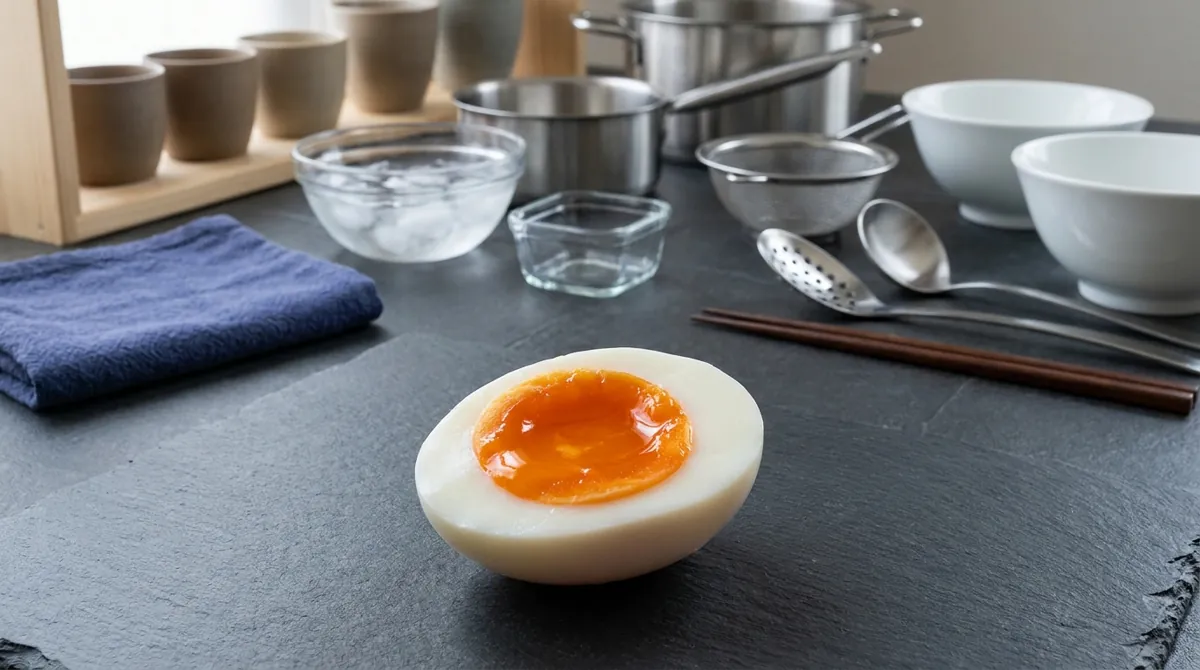
Bring a large pot of water to a rolling boil. Lower the cold eggs in with a slotted spoon and boil exactly 7 minutes (6 1/2 for a runnier yolk). Move them to a bowl of ice water for 15 minutes.
✓ What it should look like - Step 3
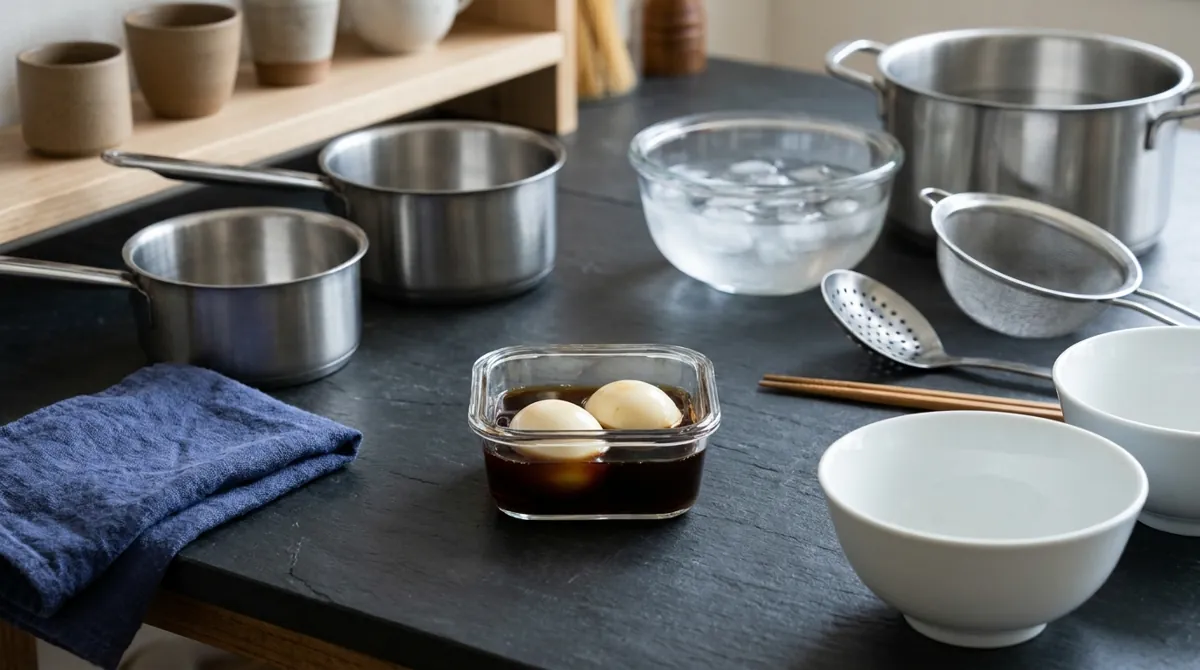
Peel the eggs carefully and put them in a small container or zip-top bag with the cooled marinade, so they are covered. Refrigerate at least 4 hours, best overnight, and no more than 24 hours or they turn too salty.
- Step 4
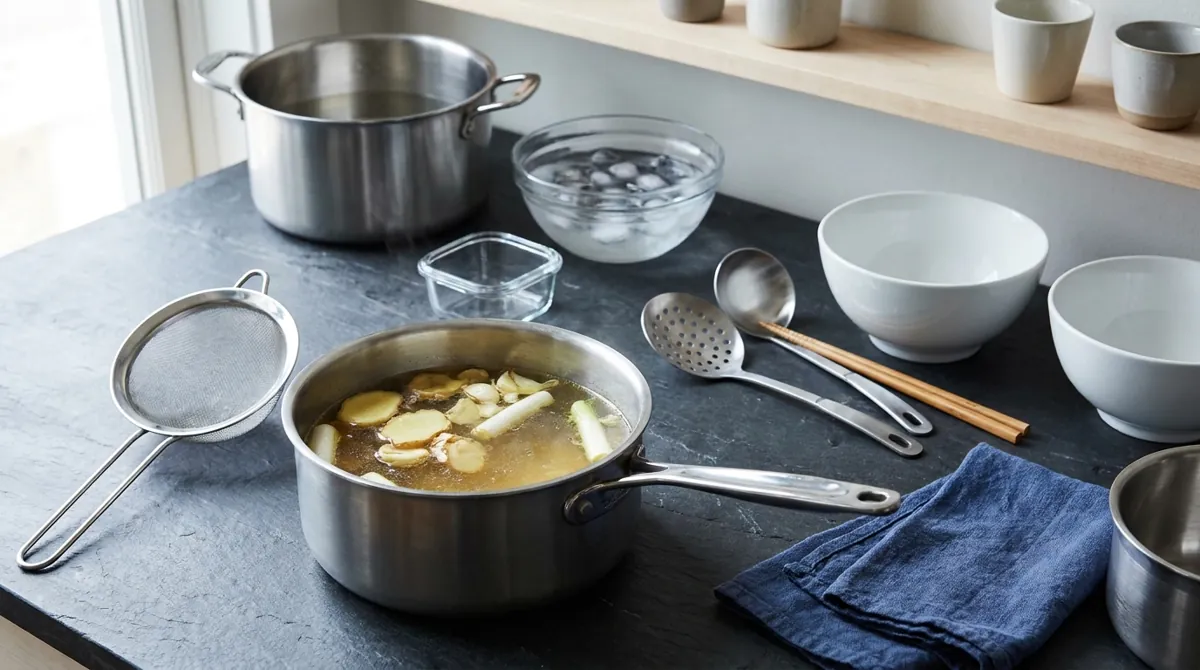
In a medium saucepan, bring the chicken broth, garlic, ginger and scallion whites to a simmer and keep it at a gentle simmer for 15 minutes. Strain out the aromatics with a fine-mesh strainer and keep the broth hot.
- Step 5
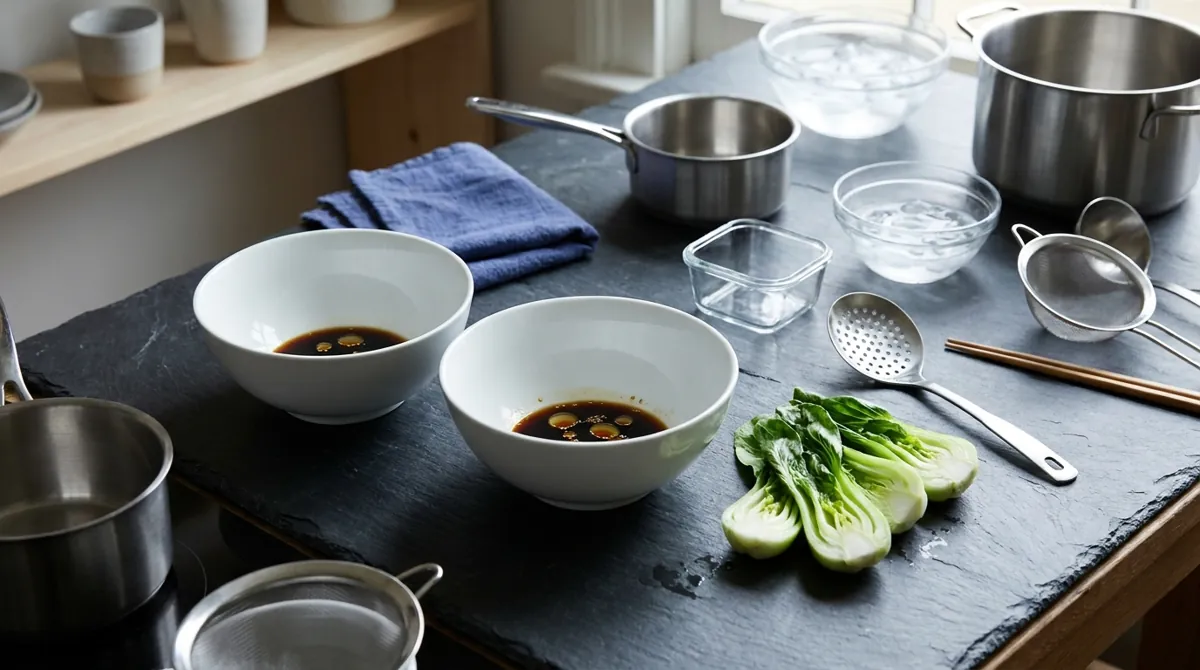
Bring the large pot of water back to a boil. Fill both ramen bowls with hot tap water to warm them. Blanch the bok choy in the boiling pot for 1 minute and lift it out with the slotted spoon. Empty the bowls and put 2 tbsp soy sauce and 1 tsp sesame oil in each.
- Step 6
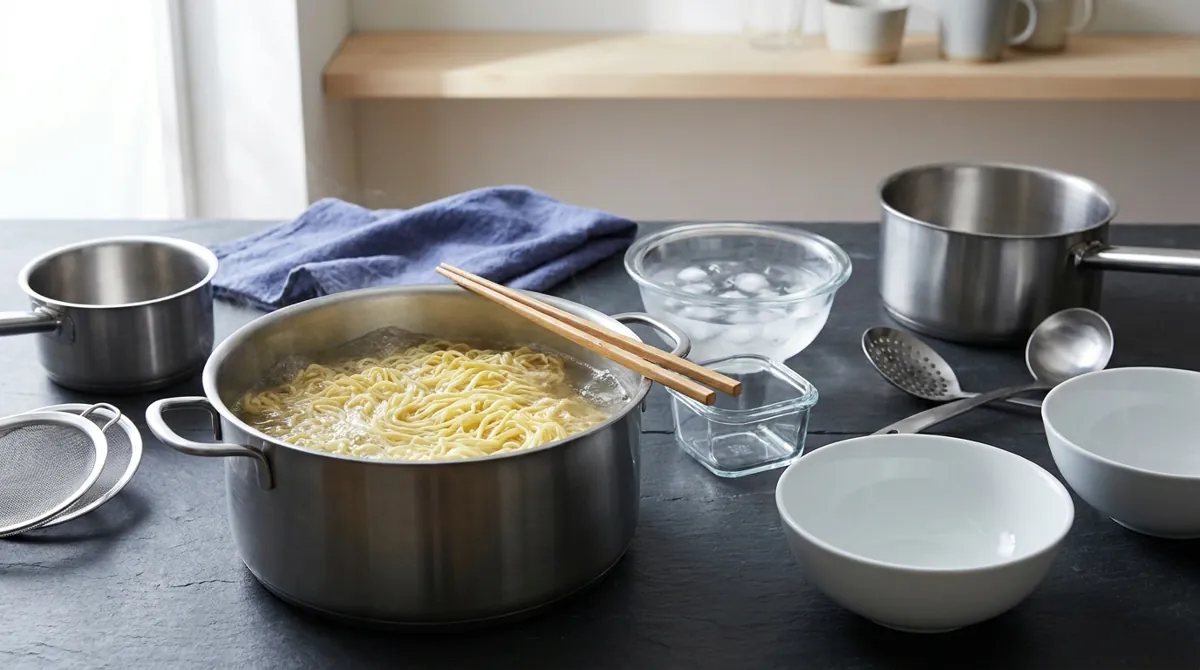
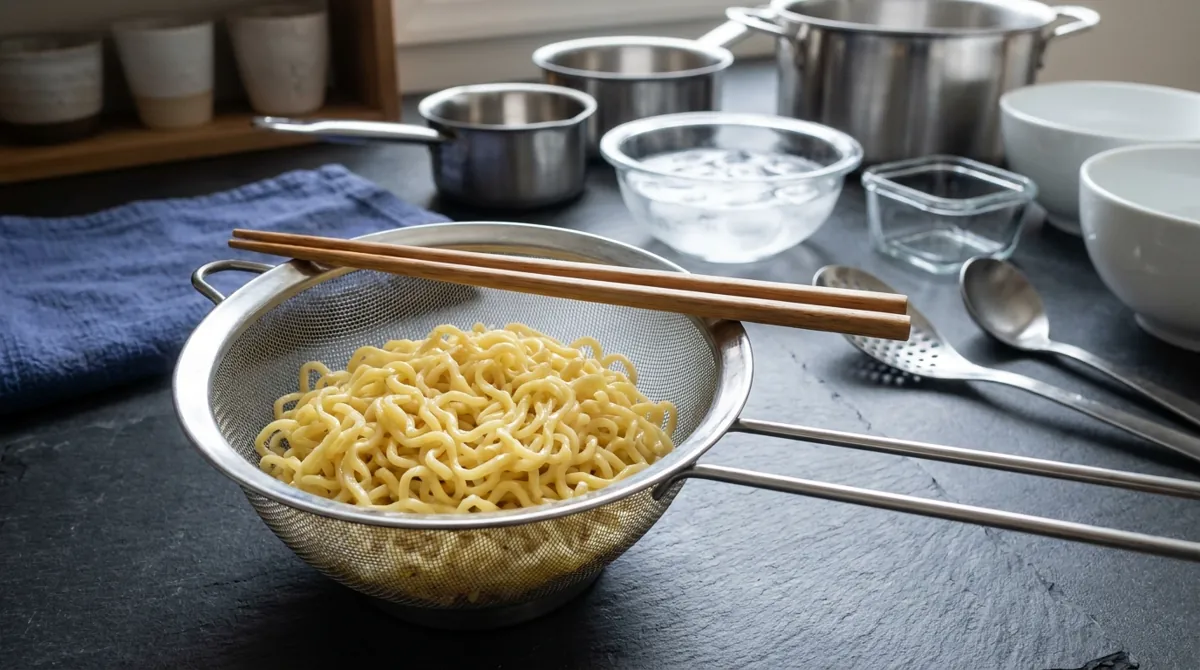
Shake the fresh noodles loose and cook them in the boiling pot for the time on the package, usually 1 to 2 minutes, stirring with chopsticks, until tender but still springy. Drain well, shaking off the water.
✓ What it should look like - Step 7
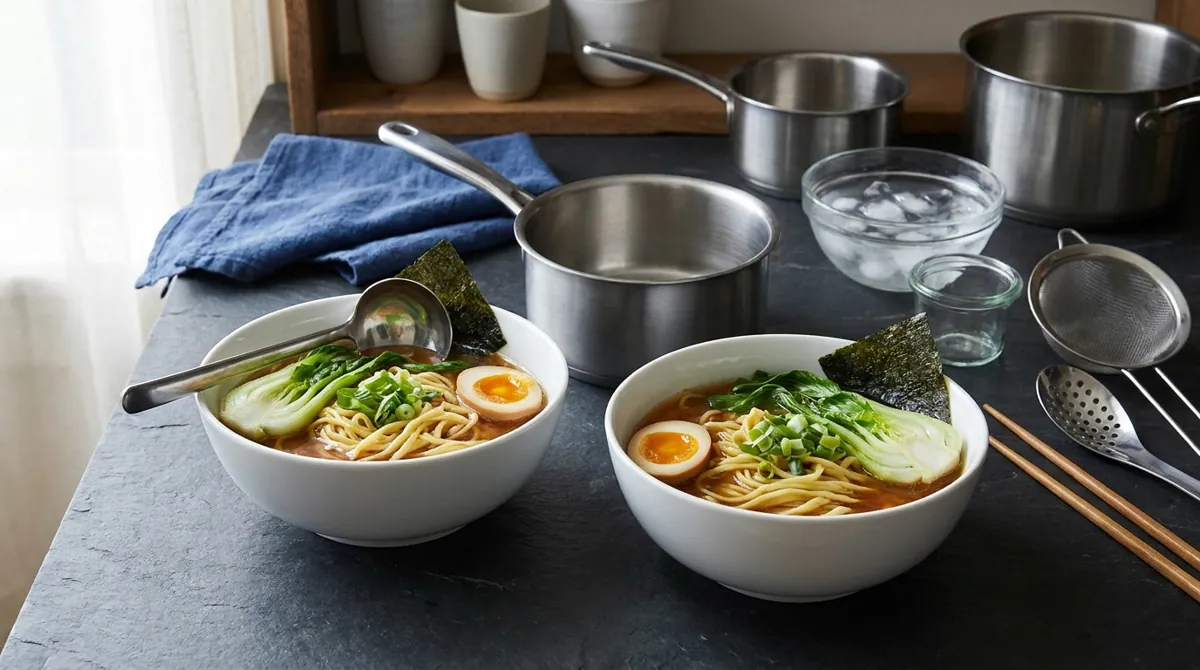
Ladle 2 cups of hot broth into each bowl and stir it into the tare. Add the noodles and lift them with chopsticks so they lie neatly. Top each bowl with a halved egg, the bok choy, sliced scallion greens and a half sheet of nori tucked at the edge. Eat right away.
Ramen
Serves 2 bowls · 2 large bowls · 4 hr 50 min total
Marinated eggs
- 2 large eggs, straight from the fridge
- 1/4 cup soy sauce
- 1/4 cup mirin
- 1/4 cup water
- 1 tsp sugar
Broth
- 4 cups low-sodium chicken broth (960 g)
- 2 garlic cloves, smashed (6 g)
- 1 inch piece fresh ginger, thinly sliced (10 g)
- 3 scallions (45 g), white parts cut in 2 inch lengths, green parts thinly sliced
Tare (seasoning in each bowl)
- 4 tbsp soy sauce (64 g), 2 tbsp per bowl
- 2 tsp toasted sesame oil (9 g), 1 tsp per bowl
Bowls
- 2 portions fresh ramen noodles (about 260 g), from the refrigerated section of an Asian grocery
- 2 heads baby bok choy (150 g), halved lengthwise
- 1 sheet nori (3 g), cut in half
Equipment: Large pot, Small saucepan, Chef's knife and cutting board, Measuring cups and spoons, Mixing bowls, Ladle, Slotted spoon or spider, Fine-mesh strainer, Colander
Method
- Make the egg marinade: bring the soy sauce, mirin, water and sugar to a boil in a small saucepan, simmer 1 minute, then cool completely.
- Bring a large pot of water to a rolling boil. Lower the cold eggs in with a slotted spoon and boil exactly 7 minutes (6 1/2 for a runnier yolk). Move them to a bowl of ice water for 15 minutes.
- Peel the eggs carefully and put them in a small container or zip-top bag with the cooled marinade, so they are covered. Refrigerate at least 4 hours, best overnight, and no more than 24 hours or they turn too salty.
- In a medium saucepan, bring the chicken broth, garlic, ginger and scallion whites to a simmer and keep it at a gentle simmer for 15 minutes. Strain out the aromatics with a fine-mesh strainer and keep the broth hot.
- Bring the large pot of water back to a boil. Fill both ramen bowls with hot tap water to warm them. Blanch the bok choy in the boiling pot for 1 minute and lift it out with the slotted spoon. Empty the bowls and put 2 tbsp soy sauce and 1 tsp sesame oil in each.
- Shake the fresh noodles loose and cook them in the boiling pot for the time on the package, usually 1 to 2 minutes, stirring with chopsticks, until tender but still springy. Drain well, shaking off the water.
- Ladle 2 cups of hot broth into each bowl and stir it into the tare. Add the noodles and lift them with chopsticks so they lie neatly. Top each bowl with a halved egg, the bok choy, sliced scallion greens and a half sheet of nori tucked at the edge. Eat right away.
Americanized house recipe, written for this site. History: Wikipedia, "Ramen" (1880s Chinese communities, Yokohama Chinatown, Rairaiken 1910 per Hiroshi Osaki, kansui, lamian, postwar wheat, Tokyo shoyu style); Wikipedia, "Instant noodles" (Ando, Chikin Ramen 25 August 1958, the 1966 paper-cup trip, the Taiwanese Chang Kuo-wen claim); Nissin Foods, company history (Chicken Ramen August 25, 1958; Cup Noodles September 18, 1971; Nissin Foods U.S.A. July 1970 and Top Ramen autumn 1970; Cup O'Noodles November 1973). Egg: Just One Cookbook, "Ramen Egg (Ajitsuke Tamago)" (7 minutes from the fridge for a jammy yolk, 15-minute ice bath, soy, mirin and sake or water marinade, 8 hours to overnight). en.wikipedia.org. Ingredient list follows the source; the method is in our own words.
Tips
- Older eggs peel more easily than very fresh ones.
- No mirin? Use 1/4 cup water and 1 tbsp sugar instead.
- Have everything ready before the noodles go in; ramen waits for no one and the noodles soften in the broth within minutes.
- No fresh ramen noodles? Use instant ramen blocks and throw away the flavor packet; cook them about 3 minutes.
- Add sliced roast pork, leftover roast chicken, corn or bean sprouts if you want a bigger bowl.
The rules people argue about
What the sources agree on, what they don't, and what is just a good story.
- Rairaiken in 1910 was the first ramen shop. Disputed: it is the most cited first, based on Hiroshi Osaki's research; Chinese noodle soups were sold in Japan before it.
- Momofuku Ando invented instant noodles. Disputed: Nissin launched the first commercial one in 1958, but a Taiwanese account credits Chang Kuo-wen with a 1956 patent he is said to have sold to Ando in 1961.
Meatballs of the World

Italian-American Meatballs
Big, tender meatballs braised for an hour in red sauce over spaghetti. The one most Americans grew up with.

Pallottine (Abruzzo Meatballs)
Tiny meatballs, smaller than a marble, tossed right through square spaghetti alla chitarra. No bread at all.

Swedish Meatballs (Köttbullar)
Small, soft meatballs browned in butter, in a cream sauce made from the same pan, with lingonberry jam on the plate.

Danish Frikadeller
Pork meatballs shaped with a spoon and fried slowly in butter, crusty outside and soft in the middle.

Königsberger Klopse
German meatballs that are never fried: poached, then served in a creamy white sauce with capers.

Spanish Albóndigas in Almond Saffron Sauce
The tapas bar classic: small meatballs in a golden sauce thickened with fried almonds and bread.

Mexican Albóndigas with Chipotle and Mint
Soft meatballs with rice and fresh mint inside, simmered in a smoky tomato and chipotle broth.

Izgara Köfte (Turkish Grilled Meatballs)
Small, flat meatballs kneaded hard, rested cold, and charred on a hot grill pan.

Lion's Head Meatballs
Big, soft pork meatballs, stirred into a sticky paste, fried to set, then braised in a savory sauce.

Chicken Tsukune
Japan's chicken meatball: kneaded sticky, grilled on skewers, glazed with sweet soy tare, dipped in egg yolk.