
Rice Krispie Treats
Butter, marshmallows and crisped rice cereal pressed into a pan: the three-ingredient no-bake bar every American kid has made, born in a cereal company test kitchen.
🍳Cook alongOne move at a time, with real timers
 Edited by JP Lambiase
Change the estimate
Swaps change the price only: cook any meat to its own safe temperature. Where these numbers come from
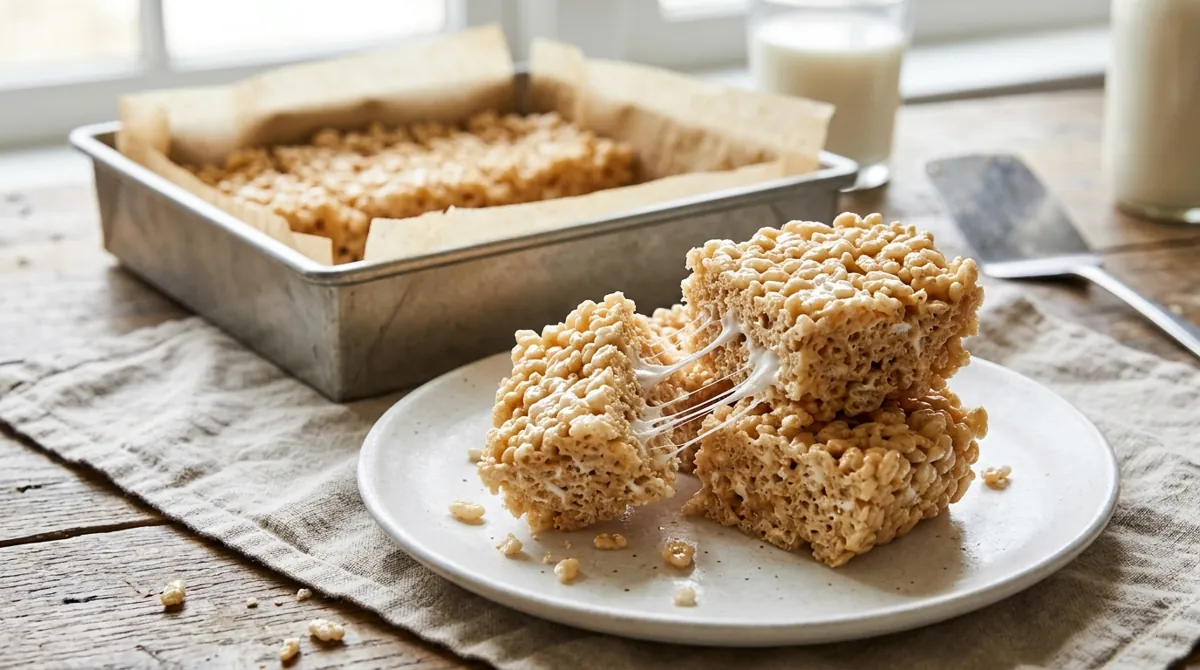
Rice Krispie Treats were invented in 1939 in the Kellogg Company's kitchens in Battle Creek, Michigan, by Kellogg employees Malitta Jensen and Mildred Day, as a way to sell more cereal. By the fall of 1940 the recipe was in supermarket and newspaper ads, and it was soon renamed "Marshmallow Squares". The 1950 magazine-ad version used 1/4 cup butter, 1/2 pound marshmallows, 1/2 teaspoon vanilla and 5 cups of cereal.
The recipe was a marketing tool, printed on the box for decades, and that is why nearly everyone learned it by heart. Kellogg's did not sell ready-made bars until 1995; other makers sold similar "crisped rice treats" before that.
Why it works the kitchen science
Low heat
Marshmallow scorches and turns tough if the pot is too hot; gentle heat keeps it soft and stretchy.
Butter first
It coats the pot and flavors the marshmallow so the bars are rich rather than just sweet.
Light pressing
The air between the cereal pieces is what keeps the bars chewy and crisp, not dense.
🧰 You'll need 4 items
Everything the steps call for. Tick off what you have before you start.
Pans and pots
Tools
Step by step
- Step 1
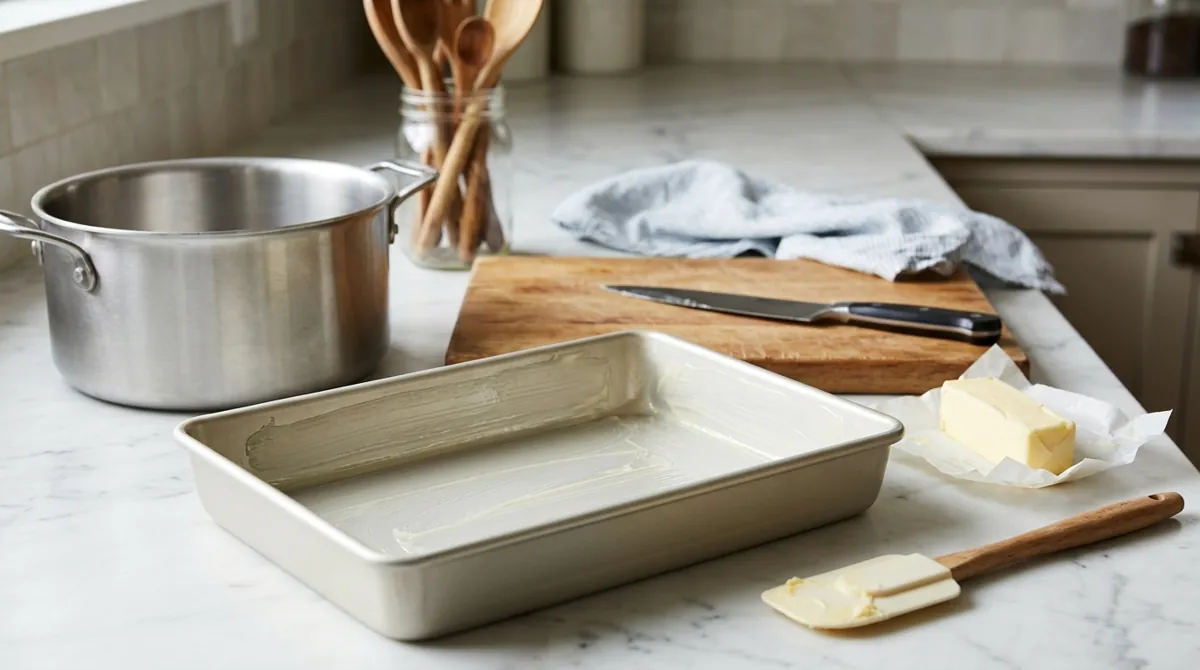
Butter a 9 by 13 inch pan and a rubber spatula.
- Step 2
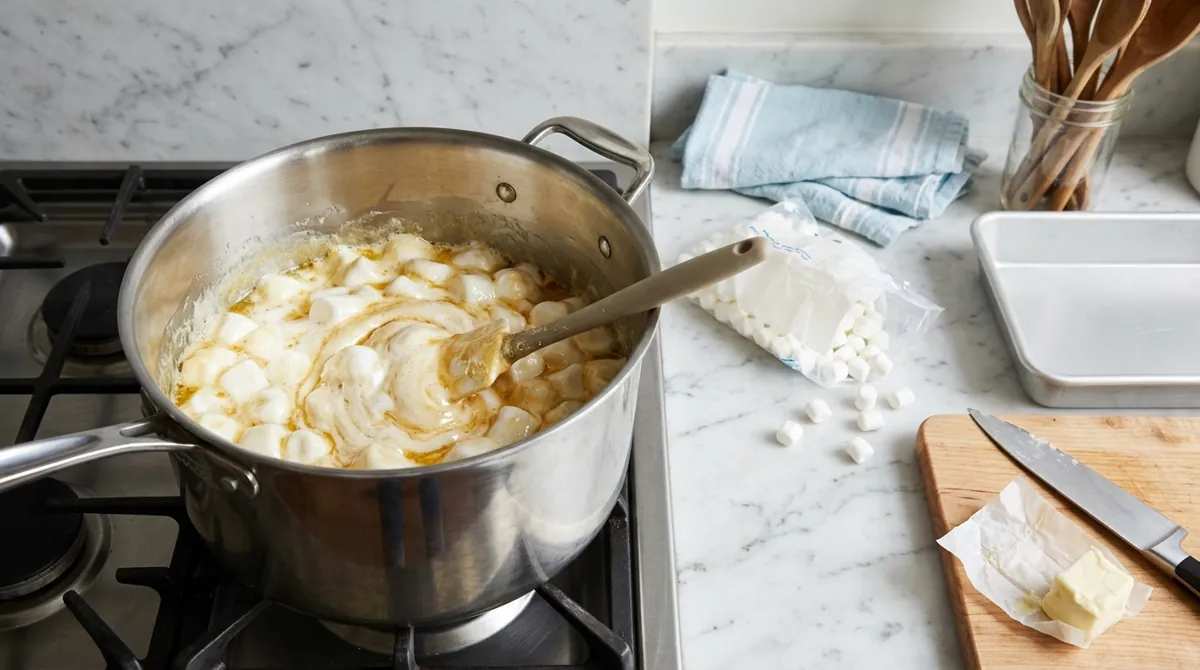
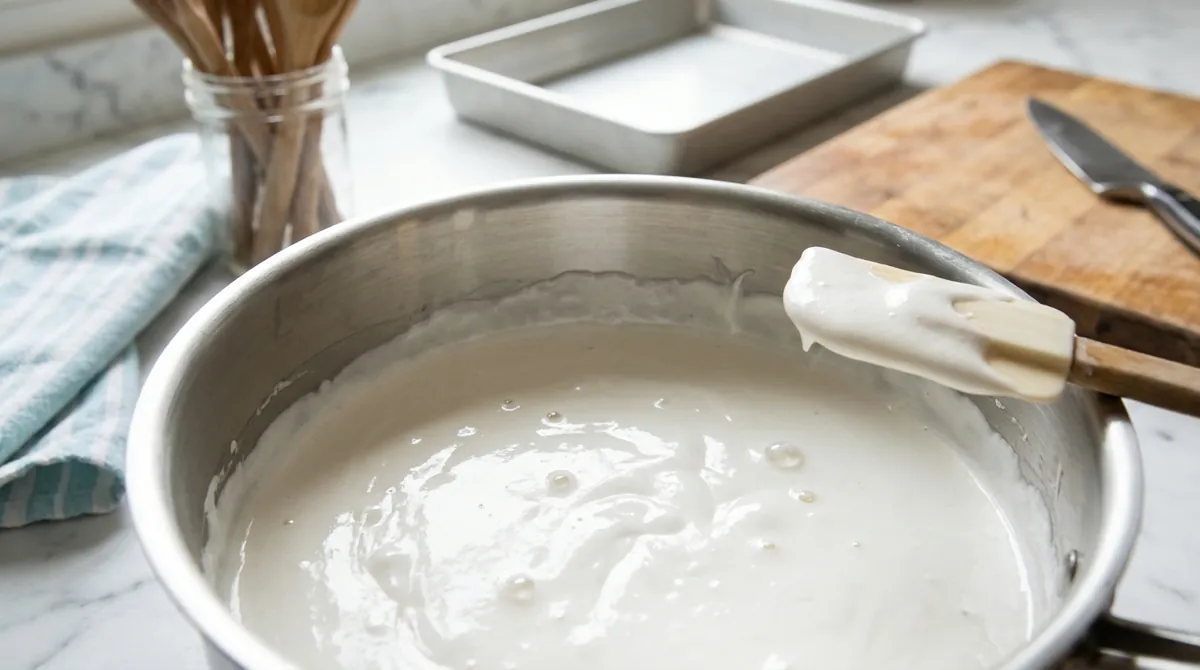
Melt the butter in a large pot over low heat. Add the marshmallows and stir until about three-quarters melted, then take the pot off the heat and stir until smooth.
✓ What it should look like - Step 3
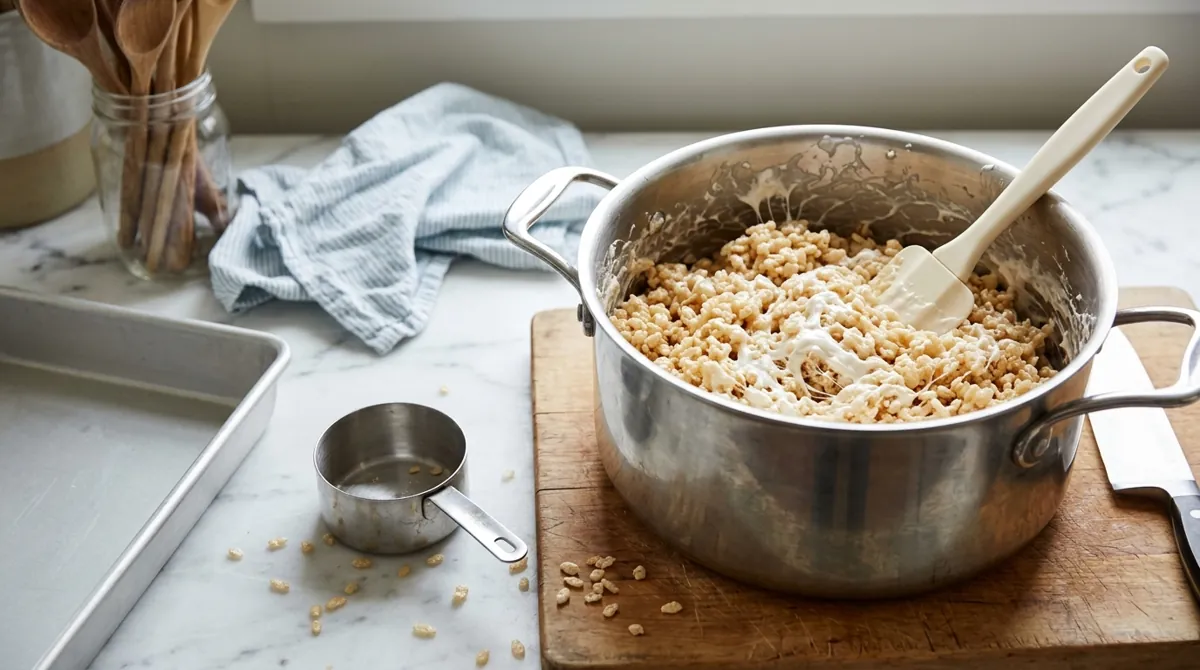
Stir in the vanilla and salt, then add the cereal all at once and stir until every piece is coated. Work fast; the mix stiffens as it cools.
- Step 4
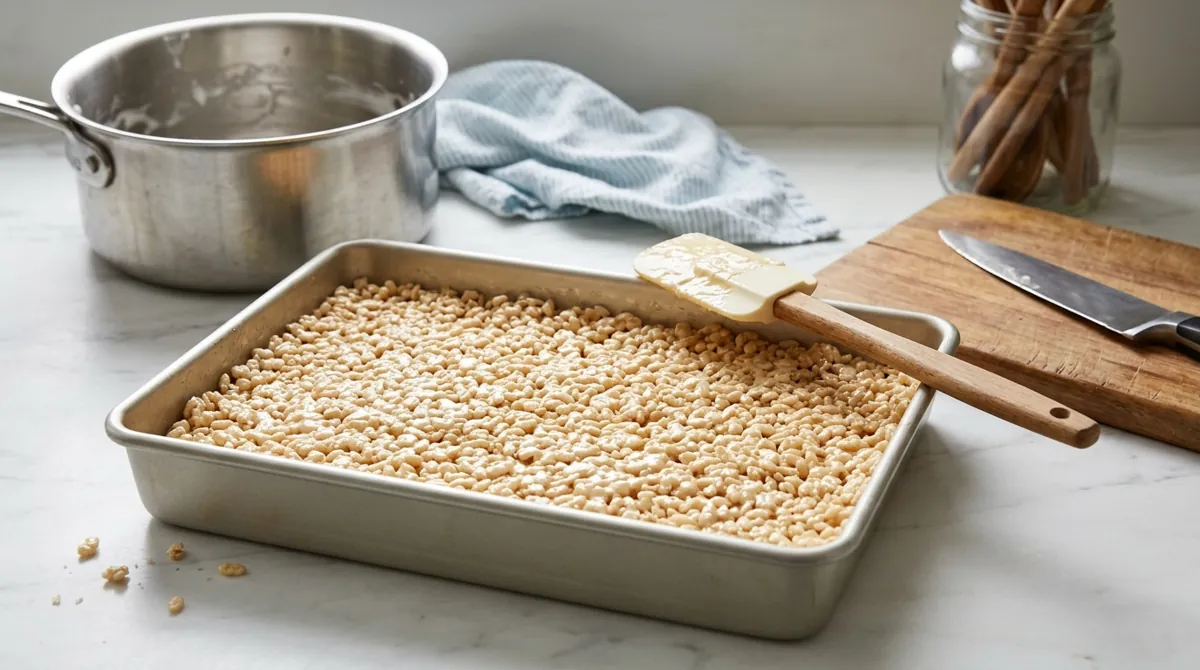
Scrape it into the pan and press it flat with the buttered spatula, gently. Pressing too hard packs the cereal and makes the bars hard.
- Step 5
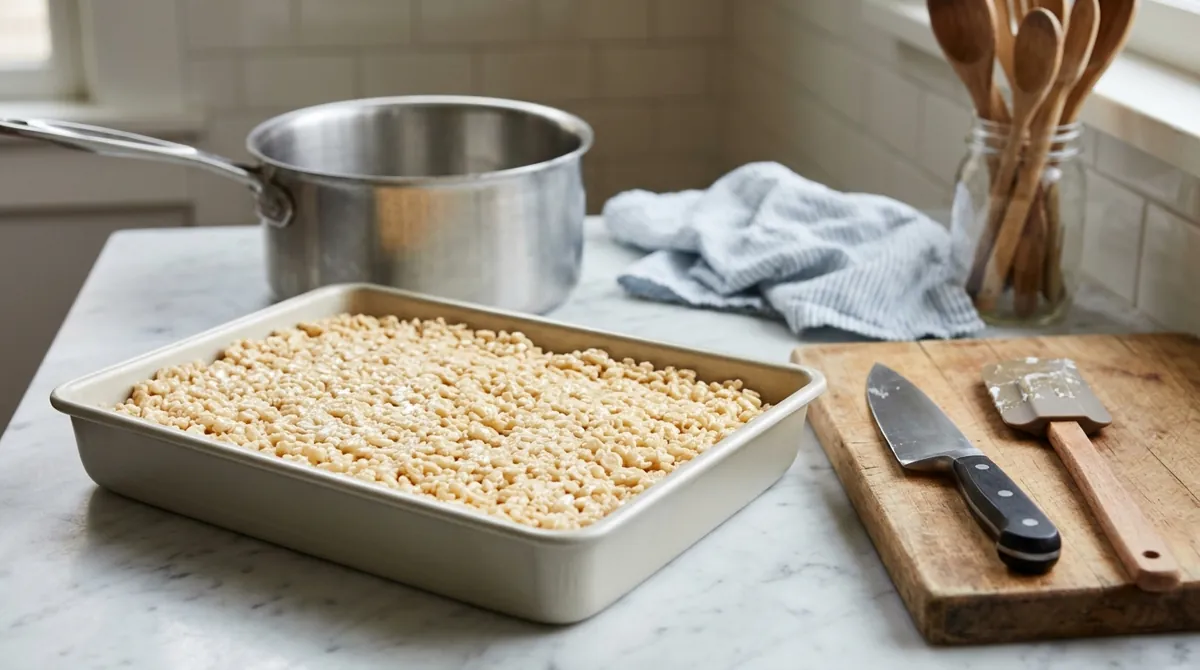
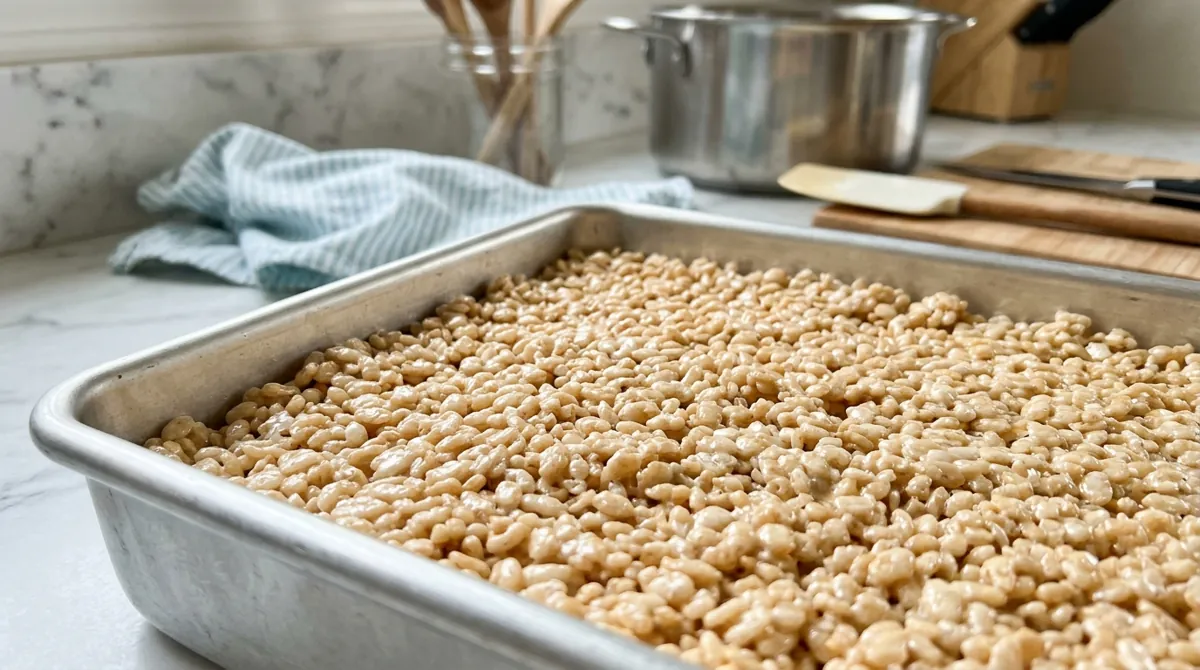
Cool 1 hour at room temperature until set. The top should be glossy and spring back lightly when touched.
✓ What it should look like - Step 6
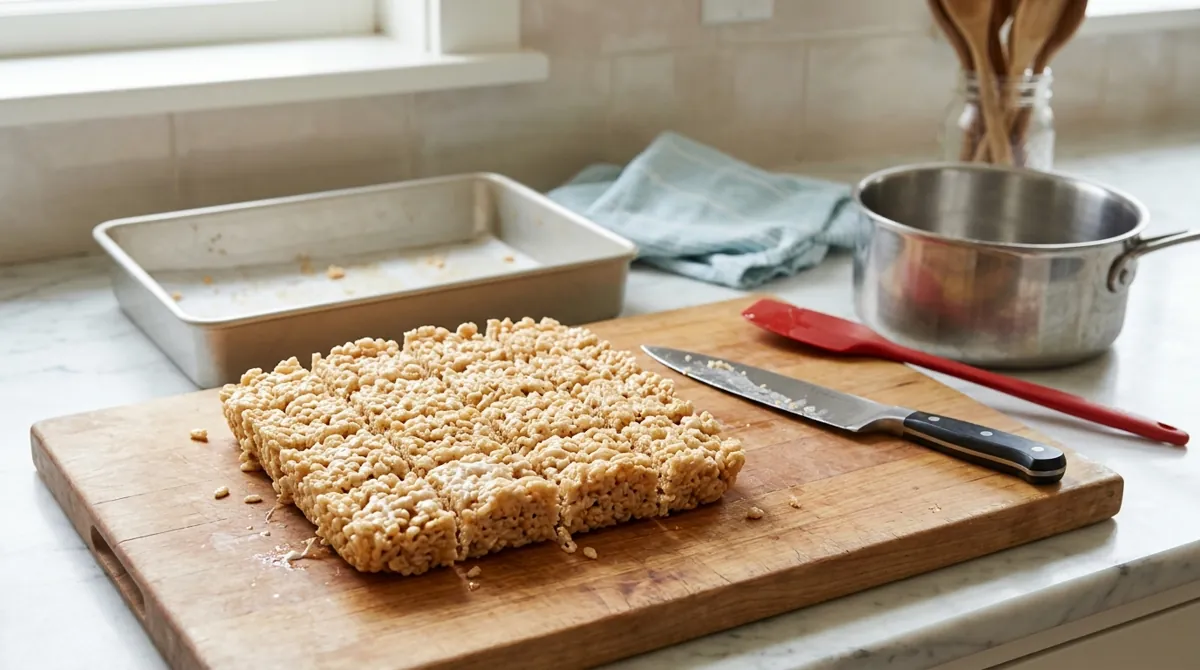
Cut into 16 squares with a buttered knife.
Rice Krispie Treats
Serves 16 squares · one 9 by 13 inch pan · 1 hr 15 min total
- 3 tablespoons unsalted butter (42 g), plus a little for the pan and spatula
- 1 bag (10 ounces, 283 g) marshmallows, about 40 regular marshmallows
- 6 cups crisped rice cereal (about 170 g)
- 1/2 tsp vanilla extract
- Pinch of fine salt
Equipment: Large pot, Chef's knife and cutting board, Measuring cups and spoons, Spatula
Method
- Butter a 9 by 13 inch pan and a rubber spatula.
- Melt the butter in a large pot over low heat. Add the marshmallows and stir until about three-quarters melted, then take the pot off the heat and stir until smooth.
- Stir in the vanilla and salt, then add the cereal all at once and stir until every piece is coated. Work fast; the mix stiffens as it cools.
- Scrape it into the pan and press it flat with the buttered spatula, gently. Pressing too hard packs the cereal and makes the bars hard.
- Cool 1 hour at room temperature until set. The top should be glossy and spring back lightly when touched.
- Cut into 16 squares with a buttered knife.
Americanized house recipe, written for this site, within the ratios of the classic box recipe (3 tablespoons butter, one 10 ounce bag of marshmallows, 6 cups of cereal). History: Wikipedia, "Rice Krispies Treats" (Jensen and Day, 1939, Battle Creek, the 1950 ad recipe); Kellogg's recipe page, (not fetched. en.wikipedia.org. Ingredient list follows the source; the method is in our own words.
All sources (2)
Tips
- Fresh marshmallows matter: old stale ones make hard bars. Use a fresh bag.
- Brown the butter for a nutty flavor, then add the marshmallows as usual.
- Keep them in an airtight container for 2 days; the cereal goes soft after that. Do not refrigerate; they harden.
- Add a handful of chocolate chips after the mix cools slightly, or drizzle melted chocolate on top.
The rules people argue about
What the sources agree on, what they don't, and what is just a good story.
- Kellogg's invented the treat in 1939. Well documented as the origin of the box recipe, with a 1940 ad; other sources of similar marshmallow-cereal bars are not fully traced, so treat "first ever" as Disputed.
Meatballs of the World

Italian-American Meatballs
Big, tender meatballs braised for an hour in red sauce over spaghetti. The one most Americans grew up with.

Pallottine (Abruzzo Meatballs)
Tiny meatballs, smaller than a marble, tossed right through square spaghetti alla chitarra. No bread at all.

Swedish Meatballs (Köttbullar)
Small, soft meatballs browned in butter, in a cream sauce made from the same pan, with lingonberry jam on the plate.

Danish Frikadeller
Pork meatballs shaped with a spoon and fried slowly in butter, crusty outside and soft in the middle.

Königsberger Klopse
German meatballs that are never fried: poached, then served in a creamy white sauce with capers.

Spanish Albóndigas in Almond Saffron Sauce
The tapas bar classic: small meatballs in a golden sauce thickened with fried almonds and bread.

Mexican Albóndigas with Chipotle and Mint
Soft meatballs with rice and fresh mint inside, simmered in a smoky tomato and chipotle broth.

Izgara Köfte (Turkish Grilled Meatballs)
Small, flat meatballs kneaded hard, rested cold, and charred on a hot grill pan.

Lion's Head Meatballs
Big, soft pork meatballs, stirred into a sticky paste, fried to set, then braised in a savory sauce.

Chicken Tsukune
Japan's chicken meatball: kneaded sticky, grilled on skewers, glazed with sweet soy tare, dipped in egg yolk.