
Salisbury Steak
Seasoned beef patties seared in a skillet and simmered in a rich mushroom and onion gravy: the diner and TV-dinner staple that began as a doctor's health food.
🍳Cook alongOne move at a time, with real timers
 Edited by JP Lambiase
Change the estimate
Swaps change the price only: cook any meat to its own safe temperature. Where these numbers come from
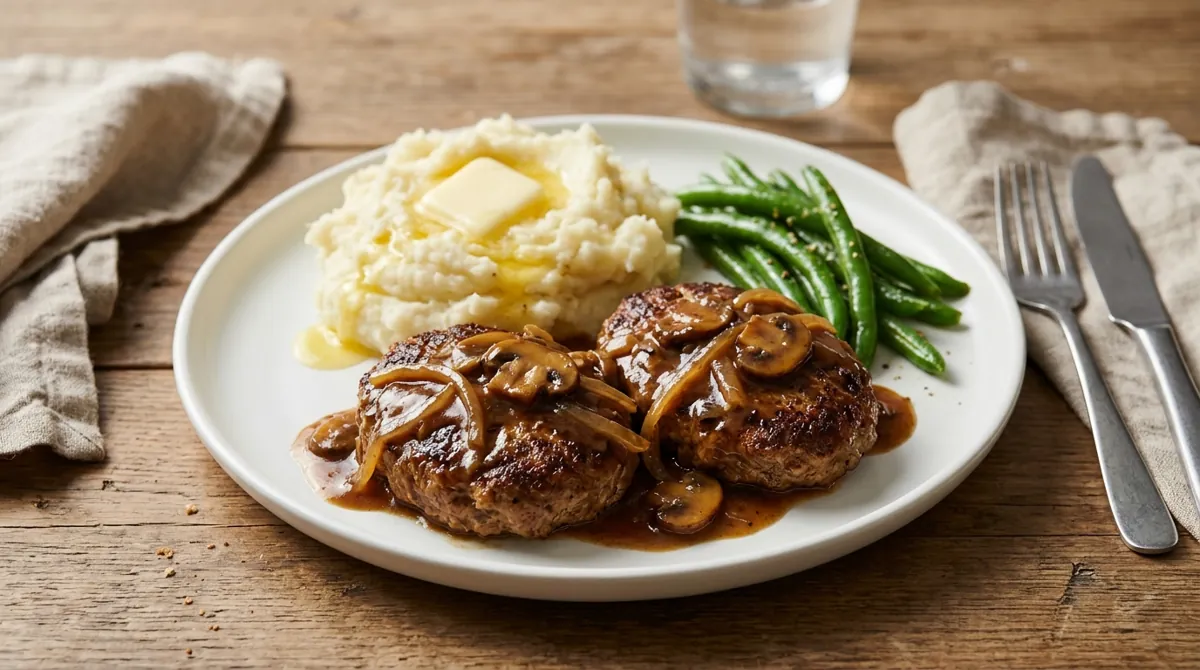
Salisbury steak is named for Dr. James H. Salisbury (1823 to 1905), an American physician and chemist who prescribed a heavy beef diet for digestive trouble and other illness. His treatment was broiled cakes of lean ground beef, which he called "muscle pulp of beef", free of fat and gristle, eaten with hot water several times a day. The year usually given for his book making the case is 1888.
Wikipedia says the name "Salisbury steak" for a ground beef patty as a main course has been used in the United States since 1897. It is a relative of Hamburg steak, the 19th-century patty of German-American cooking. Over the 20th century the dish became a lunchroom and diner plate with brown gravy, mashed potatoes and green beans, and then a frozen TV dinner.
Why it works the kitchen science
A bread and milk panade
The starch and moisture hold on to juice, so a patty cooked through in gravy stays tender instead of turning dry and tight.
Searing first
The browning on the beef and the browned bits left in the pan are the flavor of the gravy.
Mixing gently
Pressing the meat hard makes a dense, springy, sausage-like patty.
Roux in the pan
Flour cooked in the butter and beef fat thickens the broth to a smooth gravy without lumps.
Simmering in the gravy
The patties finish gently, so they stay moist and take on the sauce.
🧰 You'll need 5 items
Everything the steps call for. Tick off what you have before you start.
Pans and pots
Tools
Step by step
- Step 1
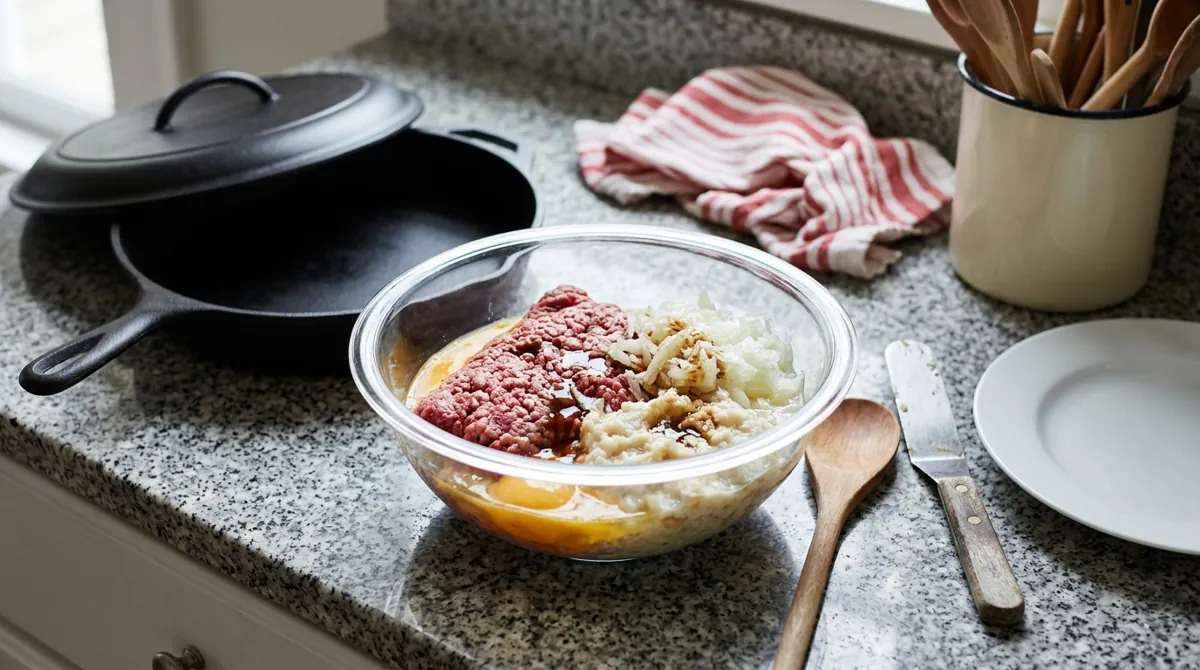
Mash the torn bread and milk to a paste in a large bowl. Add the beef, egg, grated onion, Worcestershire, ketchup, salt and pepper and mix gently with your hands just until combined.
- Step 2
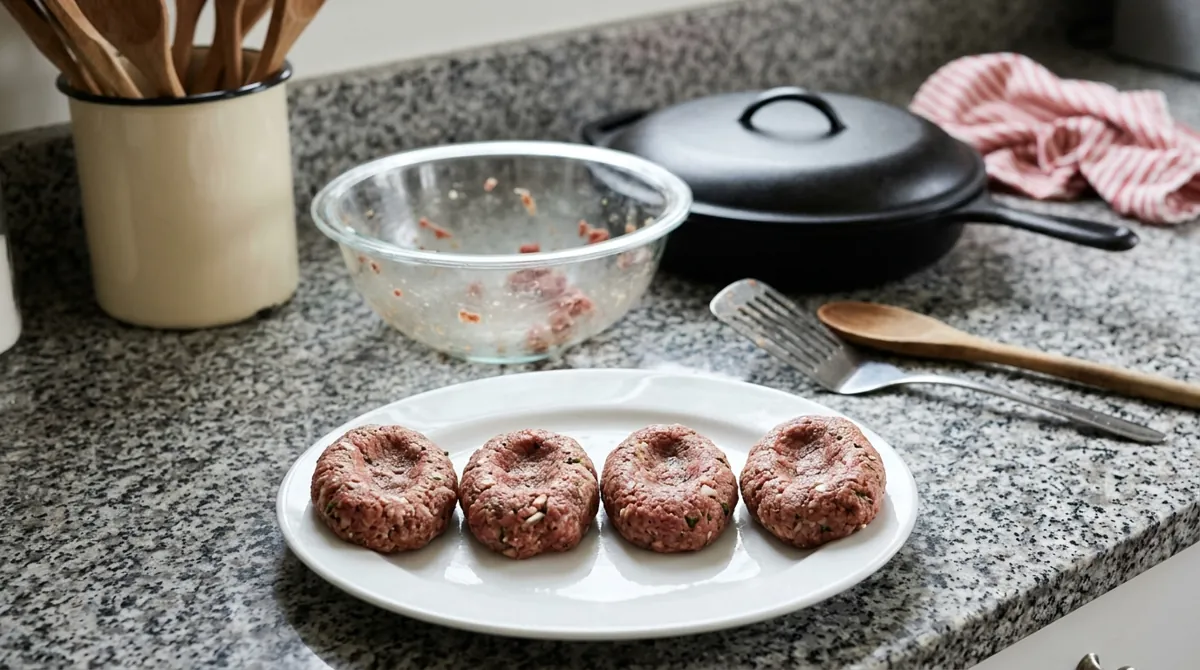
Shape the meat into four oval patties about 3/4 inch thick, with a shallow dimple in the center of each.
- Step 3
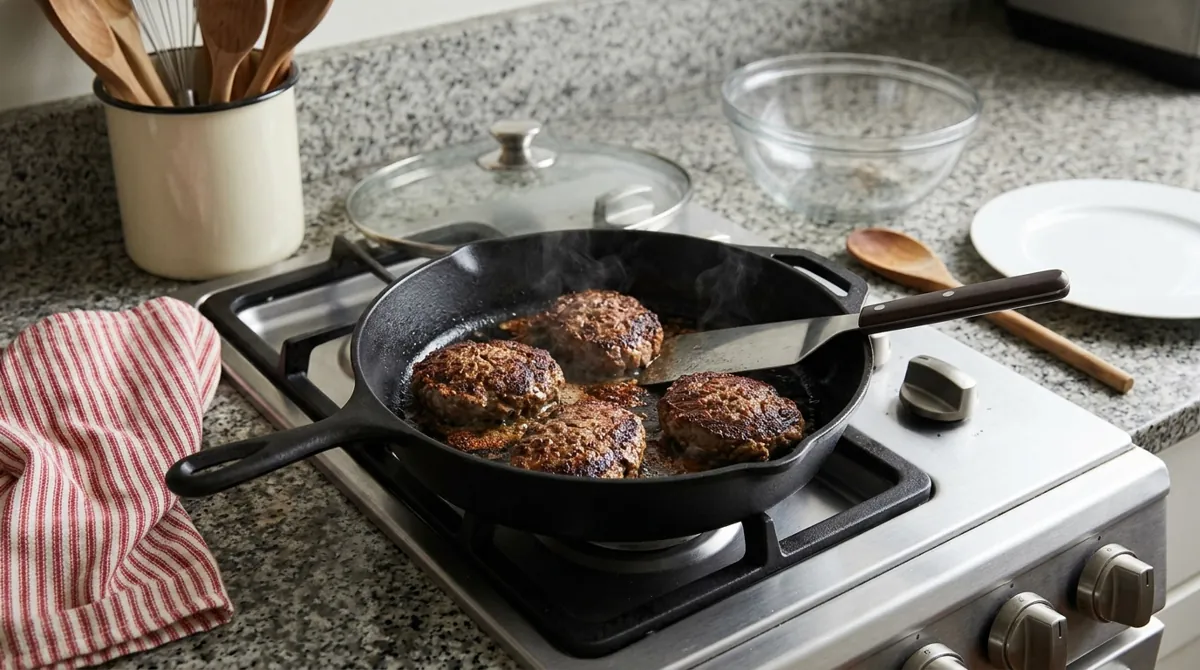
Heat the oil in a large cast iron skillet over medium-high heat and sear the patties 3 to 4 minutes a side, until deeply browned. They will not be cooked through. Move them to a plate and pour off all but about 1 tablespoon of fat.
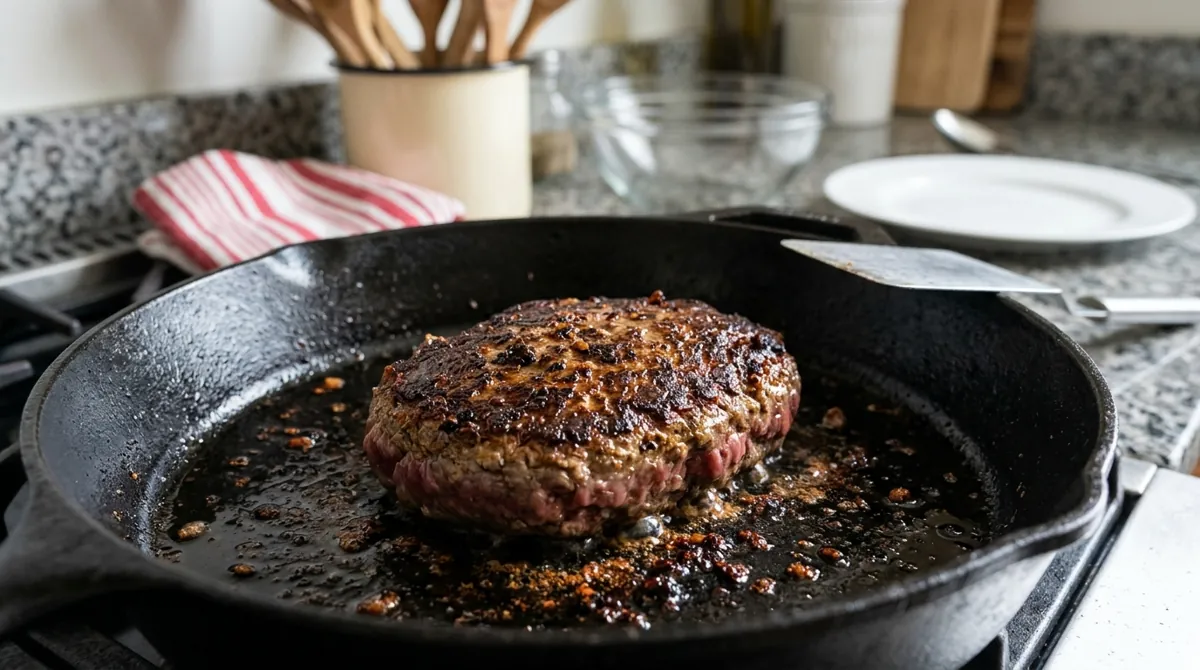
✓ What it should look like - Step 4
Lower the heat to medium, melt the butter in the same skillet and cook the sliced onion and mushrooms 8 minutes, until the mushrooms have given off their water and browned.
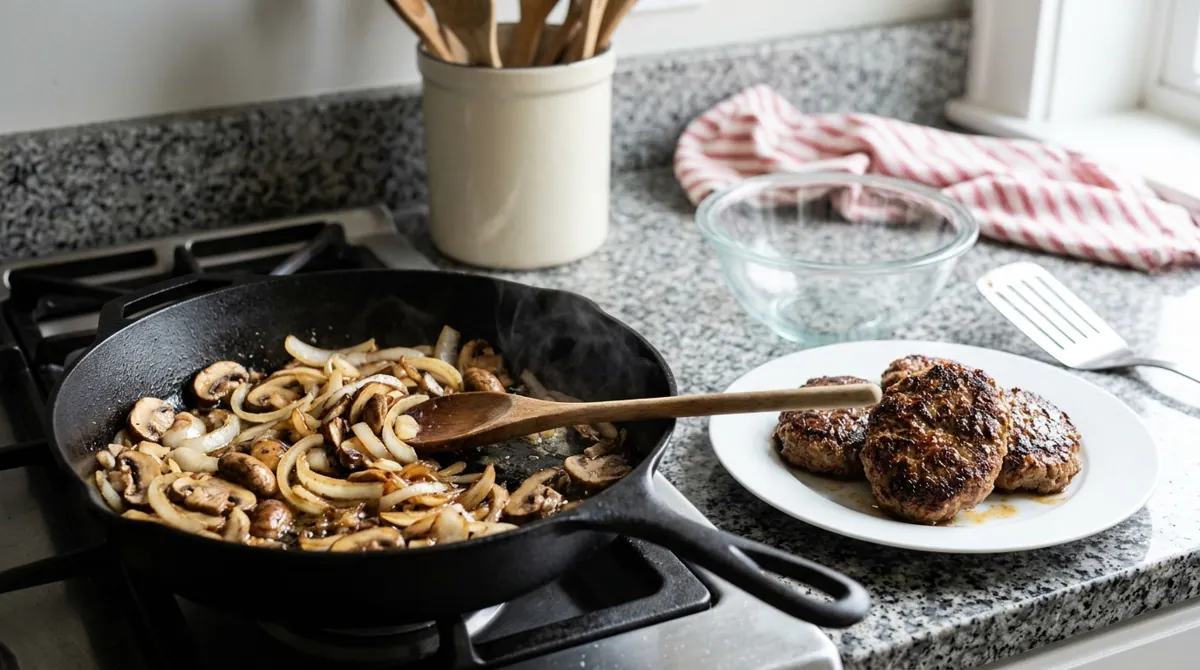
- Step 5
Sprinkle the flour over the vegetables and stir for 1 minute. Add the broth a little at a time, stirring, then the Worcestershire and ketchup, scraping the browned bits from the pan. Simmer 3 minutes, until it coats a spoon.
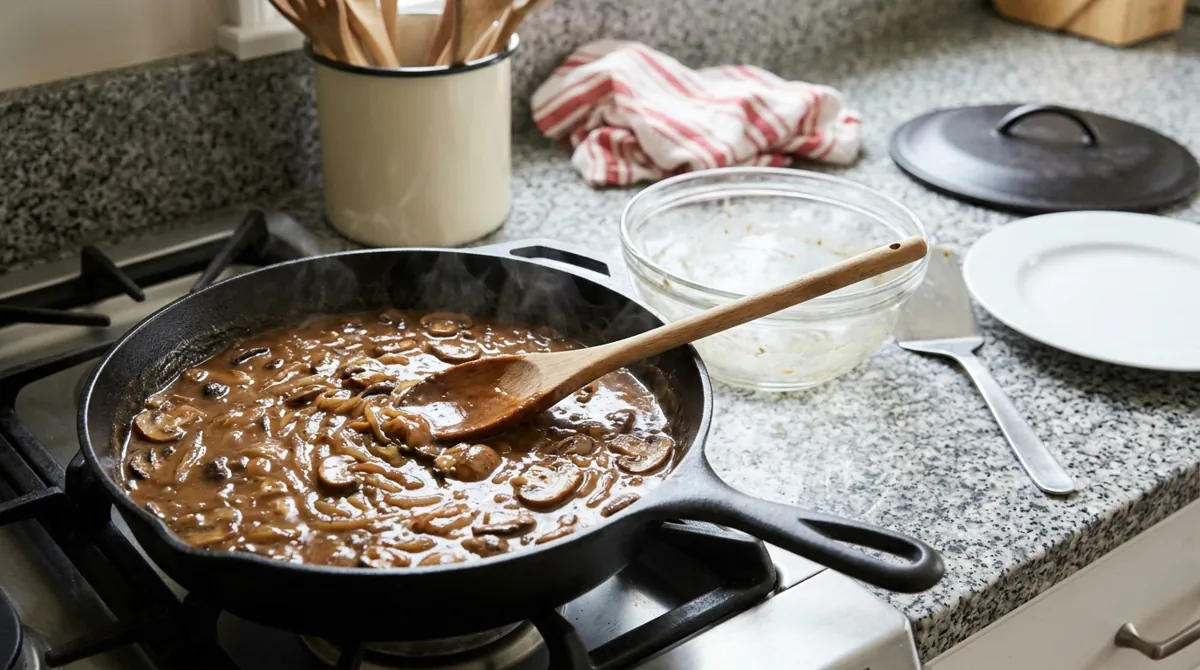
- Step 6
Return the patties and any juices to the skillet, spoon gravy over them, cover and simmer on low 10 to 12 minutes, until the center reads 160°F.
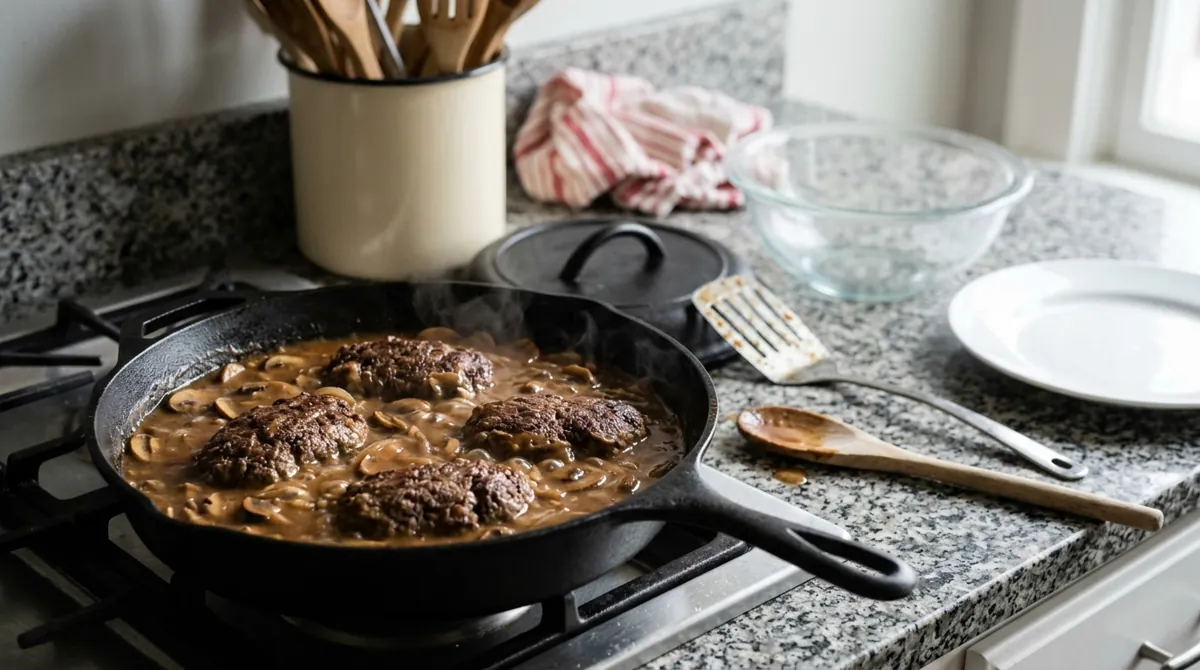
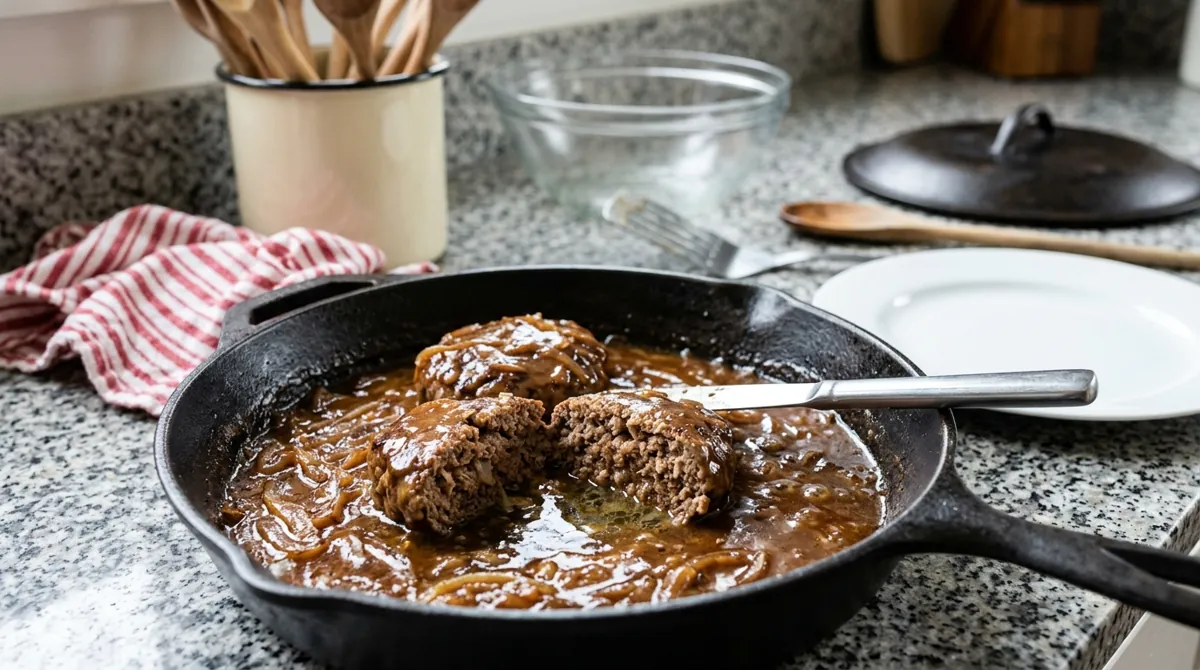
✓ What it should look like - Step 7
Serve the patties with the gravy over mashed potatoes or buttered egg noodles, with green beans.
Salisbury Steak
Serves 4 · 4 large patties · 45 min total
Patties
- 1 1/2 lb 85% lean ground beef (680 g)
- 1 slice white sandwich bread, torn into small bits (28 g)
- 2 tbsp whole milk (30 g)
- 1 large egg (50 g)
- 1/2 small yellow onion, grated (about 50 g)
- 1 tbsp Worcestershire sauce (17 g)
- 1 tbsp ketchup (17 g)
- 1 tsp fine salt and 1/2 tsp black pepper
- 1 tbsp neutral oil for the pan
Gravy
- 2 tbsp unsalted butter (28 g)
- 1/2 yellow onion, thinly sliced (about 100 g)
- 8 oz cremini mushrooms, sliced (225 g)
- 2 tbsp all-purpose flour (16 g)
- 2 cups beef broth (480 g)
- 1 tbsp Worcestershire sauce (17 g)
- 1 tbsp ketchup (17 g)
Equipment: Cast-iron skillet, Instant-read thermometer, Chef's knife and cutting board, Measuring cups and spoons, Mixing bowls
Method
- Mash the torn bread and milk to a paste in a large bowl. Add the beef, egg, grated onion, Worcestershire, ketchup, salt and pepper and mix gently with your hands just until combined.
- Shape the meat into four oval patties about 3/4 inch thick, with a shallow dimple in the center of each.
- Heat the oil in a large cast iron skillet over medium-high heat and sear the patties 3 to 4 minutes a side, until deeply browned. They will not be cooked through. Move them to a plate and pour off all but about 1 tablespoon of fat.
- Lower the heat to medium, melt the butter in the same skillet and cook the sliced onion and mushrooms 8 minutes, until the mushrooms have given off their water and browned.
- Sprinkle the flour over the vegetables and stir for 1 minute. Add the broth a little at a time, stirring, then the Worcestershire and ketchup, scraping the browned bits from the pan. Simmer 3 minutes, until it coats a spoon.
- Return the patties and any juices to the skillet, spoon gravy over them, cover and simmer on low 10 to 12 minutes, until the center reads 160°F.
- Serve the patties with the gravy over mashed potatoes or buttered egg noodles, with green beans.
Americanized house recipe, written for this site, using common ratios (patties of 85% lean beef with a bread and milk panade, seared, then simmered in a flour-thickened mushroom gravy to 160°F). History: Wikipedia, "Salisbury steak" (Dr. James Salisbury, "muscle pulp of beef", the 1897 use of the name, Hamburg steak, the TV dinner). en.wikipedia.org. Ingredient list follows the source; the method is in our own words.
All sources (1)
Tips
- Use 85% lean beef; leaner beef makes dry patties and fattier beef makes the gravy greasy.
- The dimple stops the patty from puffing up in the center.
- If the gravy is too thick, thin it with a splash of broth; if too thin, simmer it uncovered a few more minutes.
- It keeps 3 days in the fridge and freezes well in its gravy for up to 3 months.
The rules people argue about
What the sources agree on, what they don't, and what is just a good story.
- Dr. Salisbury invented the dish. Disputed: he promoted a plain broiled beef cake for health in the late 1800s; the brown-gravy diner plate that carries his name is a later development.
- It is just a hamburger steak. Disputed: Wikipedia calls it a version of Hamburg steak, and the two differ mainly in the gravy and, sometimes, the seasoning. The line is not fixed.
Meatballs of the World

Italian-American Meatballs
Big, tender meatballs braised for an hour in red sauce over spaghetti. The one most Americans grew up with.

Pallottine (Abruzzo Meatballs)
Tiny meatballs, smaller than a marble, tossed right through square spaghetti alla chitarra. No bread at all.

Swedish Meatballs (Köttbullar)
Small, soft meatballs browned in butter, in a cream sauce made from the same pan, with lingonberry jam on the plate.

Danish Frikadeller
Pork meatballs shaped with a spoon and fried slowly in butter, crusty outside and soft in the middle.

Königsberger Klopse
German meatballs that are never fried: poached, then served in a creamy white sauce with capers.

Spanish Albóndigas in Almond Saffron Sauce
The tapas bar classic: small meatballs in a golden sauce thickened with fried almonds and bread.

Mexican Albóndigas with Chipotle and Mint
Soft meatballs with rice and fresh mint inside, simmered in a smoky tomato and chipotle broth.

Izgara Köfte (Turkish Grilled Meatballs)
Small, flat meatballs kneaded hard, rested cold, and charred on a hot grill pan.

Lion's Head Meatballs
Big, soft pork meatballs, stirred into a sticky paste, fried to set, then braised in a savory sauce.

Chicken Tsukune
Japan's chicken meatball: kneaded sticky, grilled on skewers, glazed with sweet soy tare, dipped in egg yolk.