
Salsa
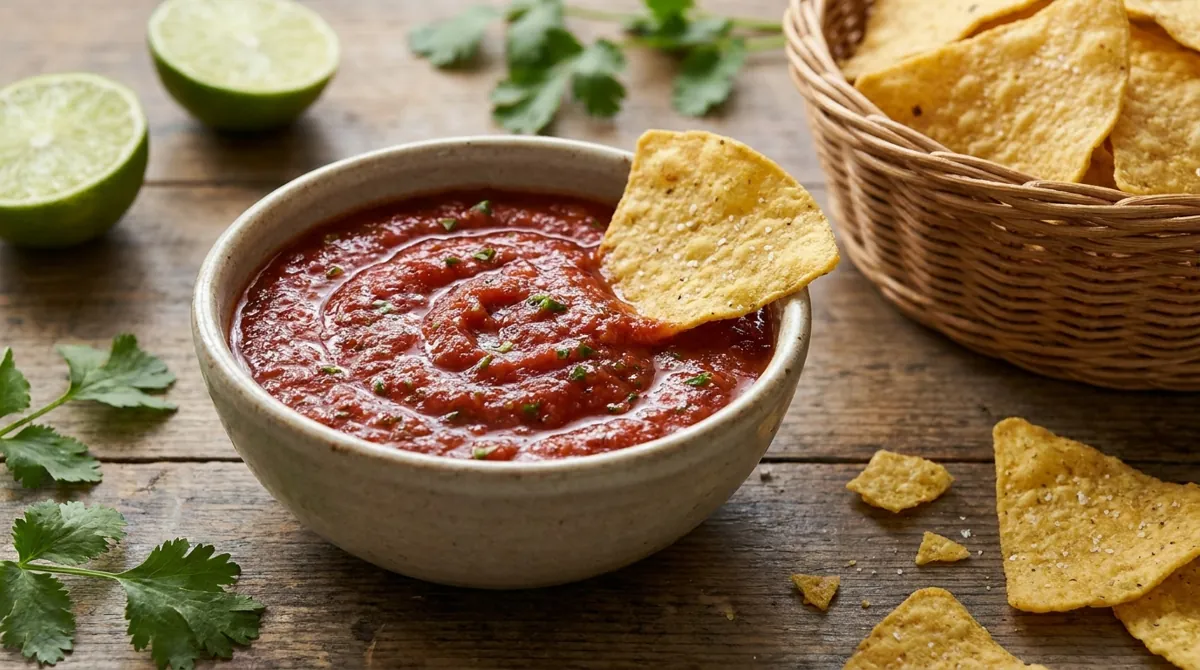
A restaurant-style red table salsa: canned tomatoes, onion, jalapeño, cilantro and lime blitzed in a food processor in 10 minutes, the bowl that arrives with the chips before you have even ordered. (This is a blended red table salsa, not pico de gallo.)
🍳Cook alongOne move at a time, with real timers
 Edited by JP Lambiase
Change the estimate
Swaps change the price only: cook any meat to its own safe temperature. Where these numbers come from
Salsa is simply the Spanish word for "sauce", and the idea behind it is very old. The Aztecs ate sauces of chili peppers and tomatoes, often with ground squash seeds, on turkey, fish and other meats, and Spanish writers of the 1500s described them. The best-known naming story credits the Franciscan friar Alonso de Molina, whose 1571 Nahuatl and Spanish dictionary is said to have used "salsa" for these chili sauces. That claim is repeated in many places, via food historian Andrew F. Smith, but I could not check Molina's text directly, and Bernardino de Sahagún's earlier account of the sauces is sometimes cited too.
The salsa on a restaurant table in the United States is a more recent story. Tomato salsas spread through American Mexican restaurants and then supermarkets, helped by bottled brands such as Pace's "picante sauce" (1947). By 1992 American salsa sales passed ketchup in dollar value. This recipe is that table salsa: red, a little loose, blended nearly smooth with some texture left. It is not pico de gallo, the chopped fresh tomato salad, which is a different dish and sits closer to guacamole.
Why it works the kitchen science
Canned whole tomatoes
They are picked and packed ripe, so they taste better and more consistent than pale supermarket tomatoes most of the year.
Pulsing, not running the machine
You keep small bits for texture, and the salsa does not get aerated and pink.
Resting 30 minutes
Salt and acid mellow the raw onion and garlic and tie everything together.
🧰 You'll need 4 items
Everything the steps call for. Tick off what you have before you start.
Appliances
Tools
Step by step
- Step 1
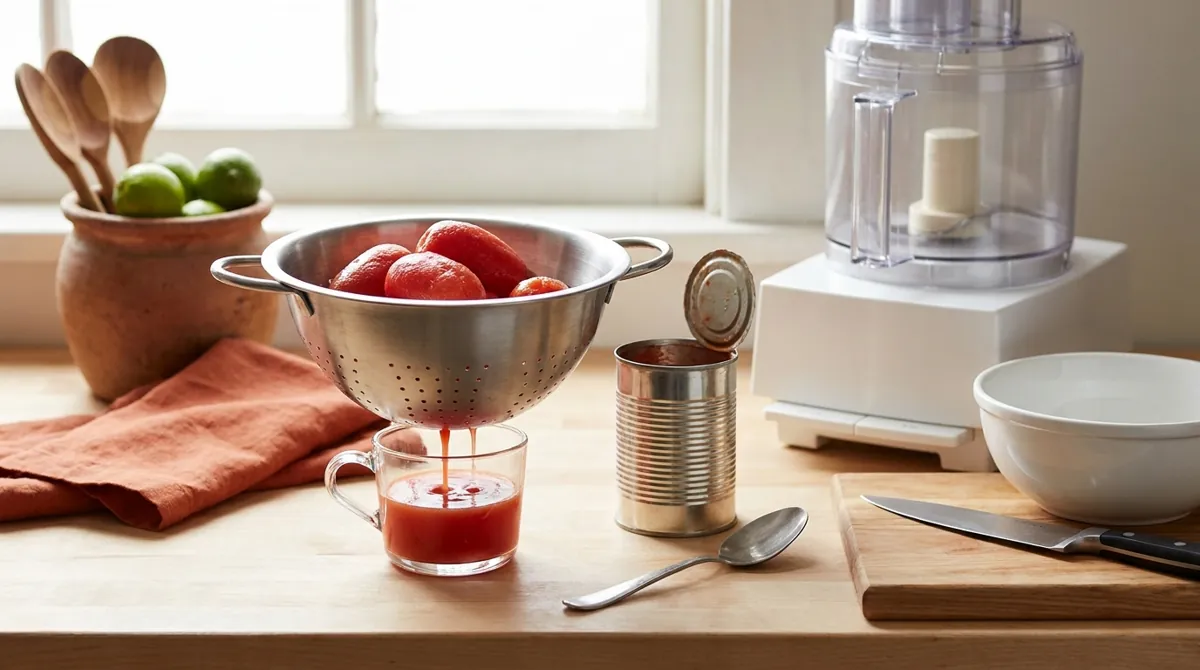
Open the tomatoes and pour off about 1/2 cup of the juice into a cup, keeping it nearby. Roughly chop the onion and jalapeños.
- Step 2
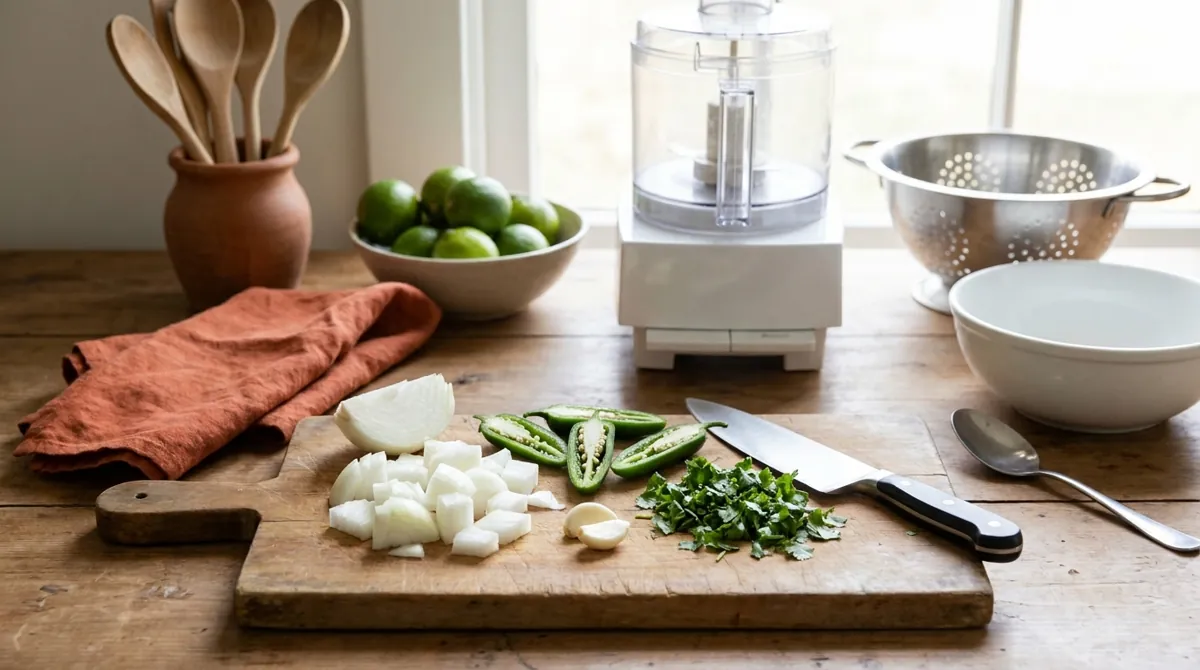
Put the onion, jalapeños, garlic and cilantro in a food processor and pulse 5 or 6 times, until finely chopped.
- Step 3
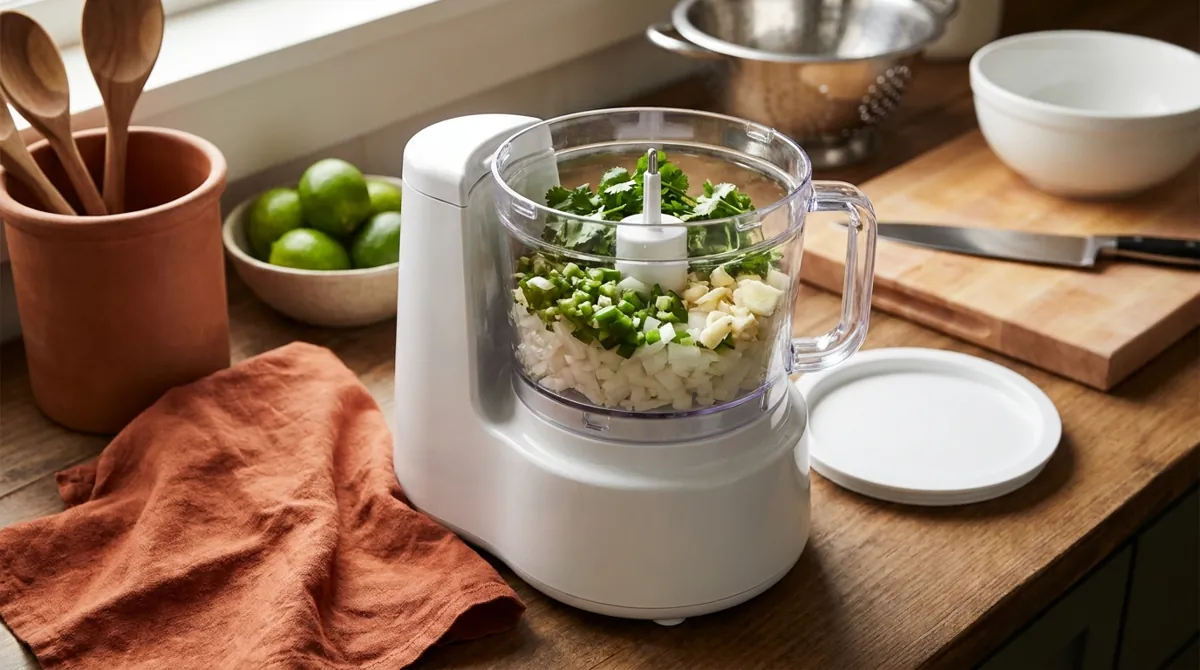
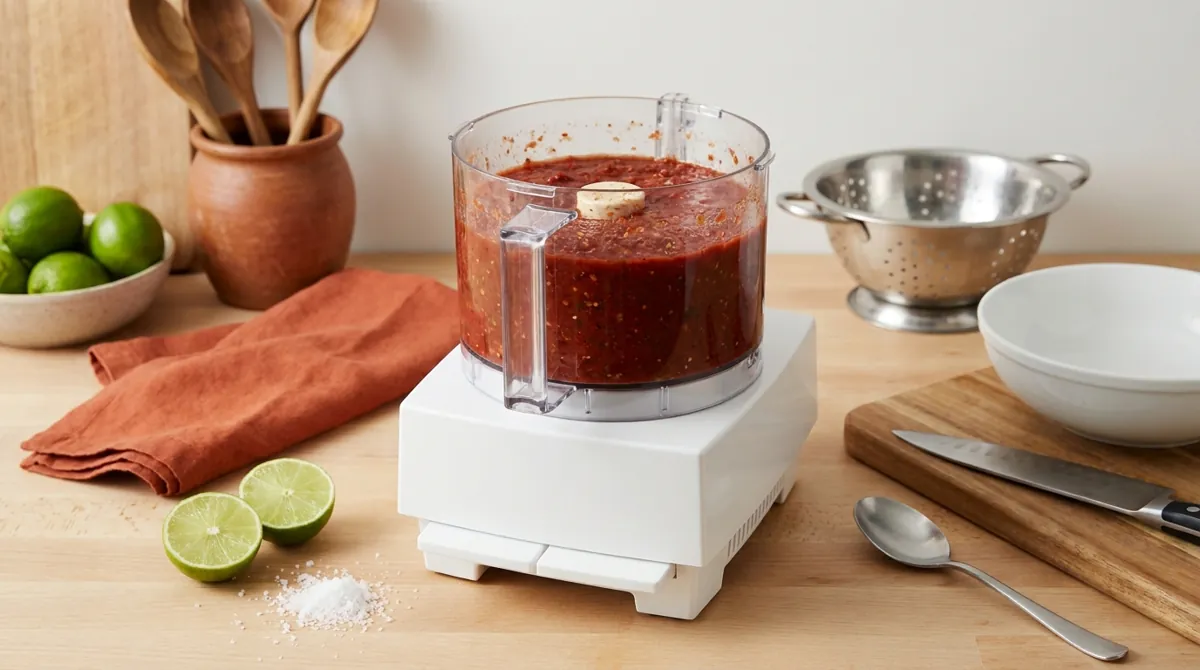
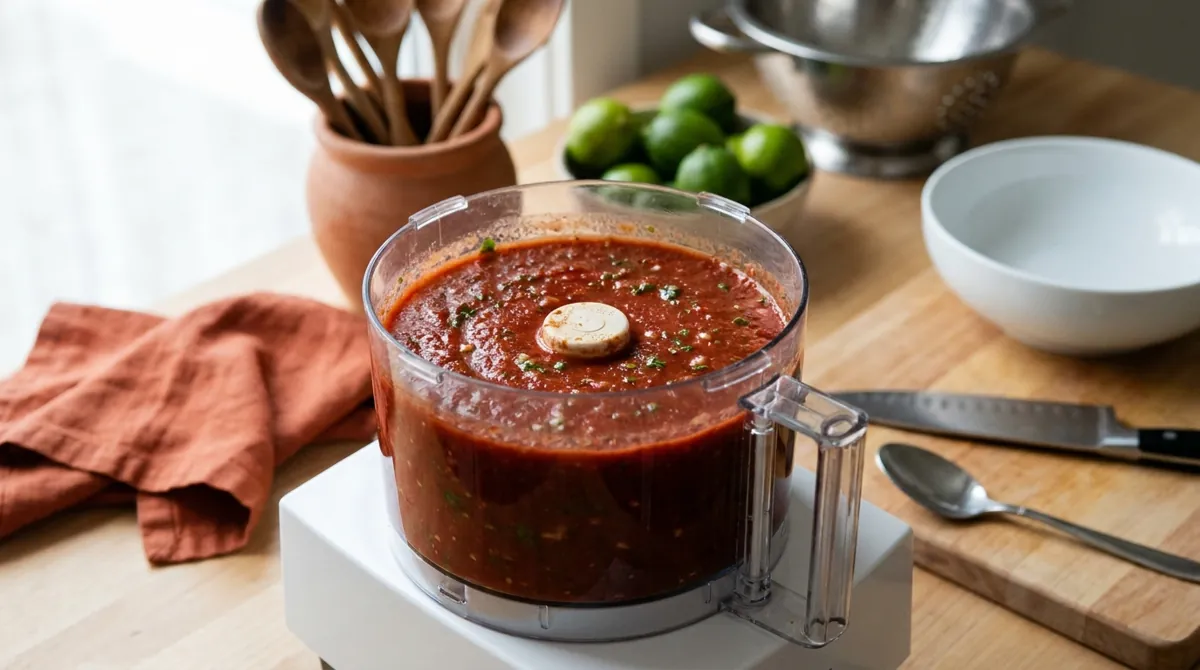
Add the tomatoes, lime juice, salt and cumin. Pulse 6 to 8 times, until the salsa is mostly smooth with small flecks left. Stop before it turns to a pink foam.
- Step 4
Taste with a chip. Add salt, more lime, a pinch of sugar if the tomatoes are sharp, or a splash of the saved juice if it is too thick.
✓ What it should look like - Step 5
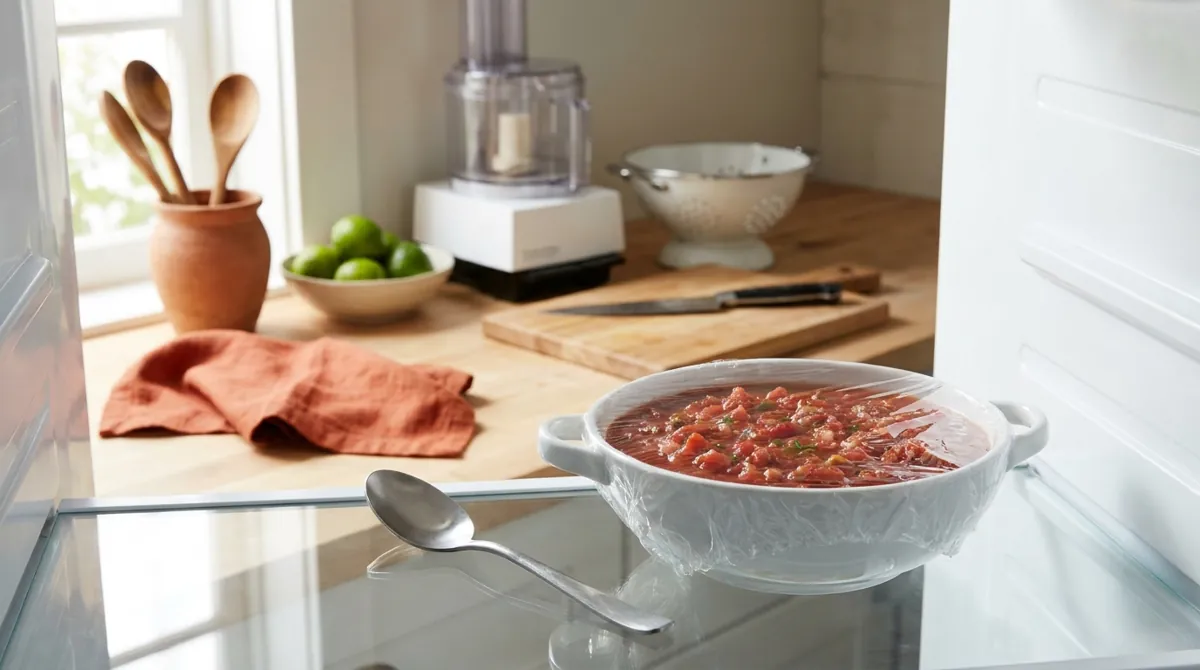
Chill at least 30 minutes, so the flavors blend and the salt draws the sharpness out of the raw onion.
- Step 6
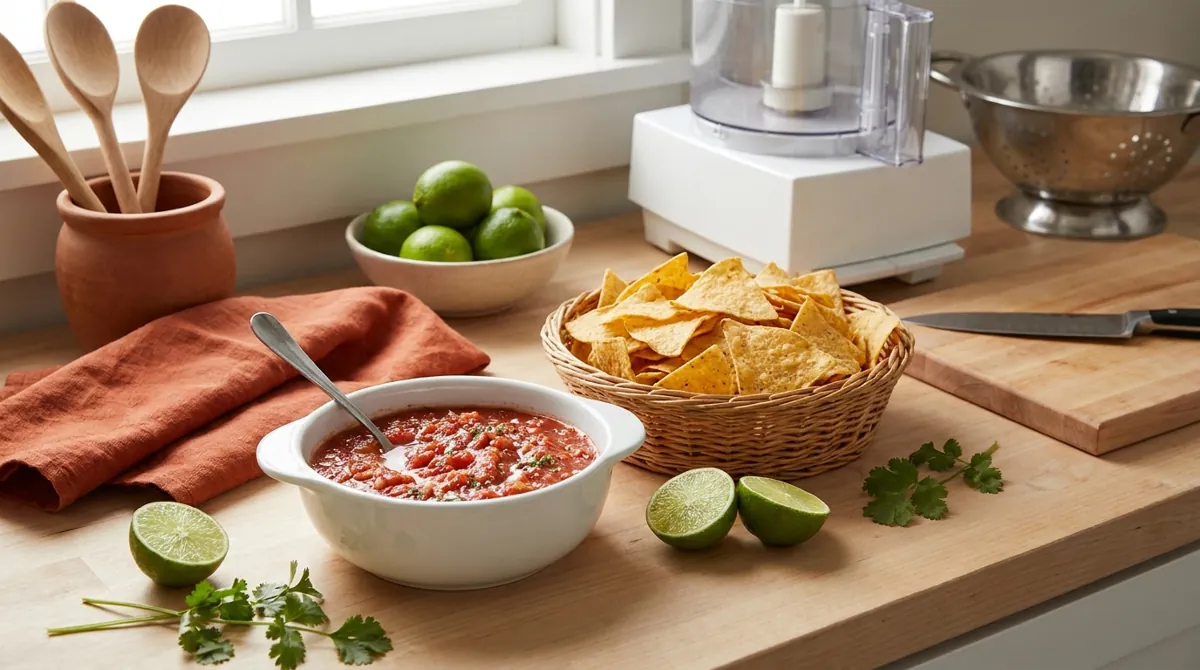
Serve cold or at room temperature in a bowl with tortilla chips.
Salsa
Serves 8 (about 2 cups) · about 2 cups · 40 min total
- 1 can (28 oz) whole peeled tomatoes, drained of about 1/2 cup of its juice (about 700 g in all)
- 1/2 small white onion (55 g), in chunks
- 1 to 2 jalapeños (30 g), stemmed, seeds removed for milder salsa
- 1 garlic clove (3 g)
- 1/2 cup packed fresh cilantro leaves and tender stems (about 20 g)
- 2 tbsp fresh lime juice (31 g)
- 1 tsp kosher salt, plus more to taste
- 1/2 tsp ground cumin
- Pinch of sugar, optional
Equipment: Food processor, Chef's knife and cutting board, Measuring cups and spoons, Mixing bowls
Method
- Open the tomatoes and pour off about 1/2 cup of the juice into a cup, keeping it nearby. Roughly chop the onion and jalapeños.
- Put the onion, jalapeños, garlic and cilantro in a food processor and pulse 5 or 6 times, until finely chopped.
- Add the tomatoes, lime juice, salt and cumin. Pulse 6 to 8 times, until the salsa is mostly smooth with small flecks left. Stop before it turns to a pink foam.
- Taste with a chip. Add salt, more lime, a pinch of sugar if the tomatoes are sharp, or a splash of the saved juice if it is too thick.
- Chill at least 30 minutes, so the flavors blend and the salt draws the sharpness out of the raw onion.
- Serve cold or at room temperature in a bowl with tortilla chips.
Americanized house recipe, written for this site. Method checked against common restaurant-style blender salsa recipes (canned tomatoes, onion, jalapeño, garlic, cilantro, lime, salt, cumin), for example and. History: Wikipedia, "Salsa (sauce)" (salsa roja as cooked or blended tomato and chili sauce, popularized by Mexican restaurants in the United States, outselling ketchup in 1992)); Tasting Table, "The Ancient Origins Of Salsa" (Aztec chili and tomato sauces); Wikipedia, "Pace Foods" (picante sauce, 1947). iheartnaptime.net. Ingredient list follows the source; the method is in our own words.
Tips
- For a deeper, smoky flavor, use canned fire-roasted tomatoes, or broil the onion and jalapeños until charred at the edges first.
- Jalapeño heat varies; keep the seeds for a hotter salsa.
- Keeps about 5 days in the refrigerator. It thickens as it sits; thin with a spoon of the saved juice.
- It needs more salt than you expect; taste it with a chip, because chips are salty too.
The rules people argue about
What the sources agree on, what they don't, and what is just a good story.
- Salsa was named by Alonso de Molina in 1571. Disputed: it is widely repeated, often credited to Andrew F. Smith's research, but I could not check the 1571 text, and Sahagún described Aztec chili sauces earlier.
Meatballs of the World

Italian-American Meatballs
Big, tender meatballs braised for an hour in red sauce over spaghetti. The one most Americans grew up with.

Pallottine (Abruzzo Meatballs)
Tiny meatballs, smaller than a marble, tossed right through square spaghetti alla chitarra. No bread at all.

Swedish Meatballs (Köttbullar)
Small, soft meatballs browned in butter, in a cream sauce made from the same pan, with lingonberry jam on the plate.

Danish Frikadeller
Pork meatballs shaped with a spoon and fried slowly in butter, crusty outside and soft in the middle.

Königsberger Klopse
German meatballs that are never fried: poached, then served in a creamy white sauce with capers.

Spanish Albóndigas in Almond Saffron Sauce
The tapas bar classic: small meatballs in a golden sauce thickened with fried almonds and bread.

Mexican Albóndigas with Chipotle and Mint
Soft meatballs with rice and fresh mint inside, simmered in a smoky tomato and chipotle broth.

Izgara Köfte (Turkish Grilled Meatballs)
Small, flat meatballs kneaded hard, rested cold, and charred on a hot grill pan.

Lion's Head Meatballs
Big, soft pork meatballs, stirred into a sticky paste, fried to set, then braised in a savory sauce.

Chicken Tsukune
Japan's chicken meatball: kneaded sticky, grilled on skewers, glazed with sweet soy tare, dipped in egg yolk.