
Samosas
A crisp, blistered pastry cone packed with spiced potato and peas: the samosa, a Central Asian pastry that traders carried into India centuries ago and that India made its own.
🍳Cook alongOne move at a time, with real timers
 Edited by JP Lambiase
Change the estimate
Swaps change the price only: cook any meat to its own safe temperature. Where these numbers come from
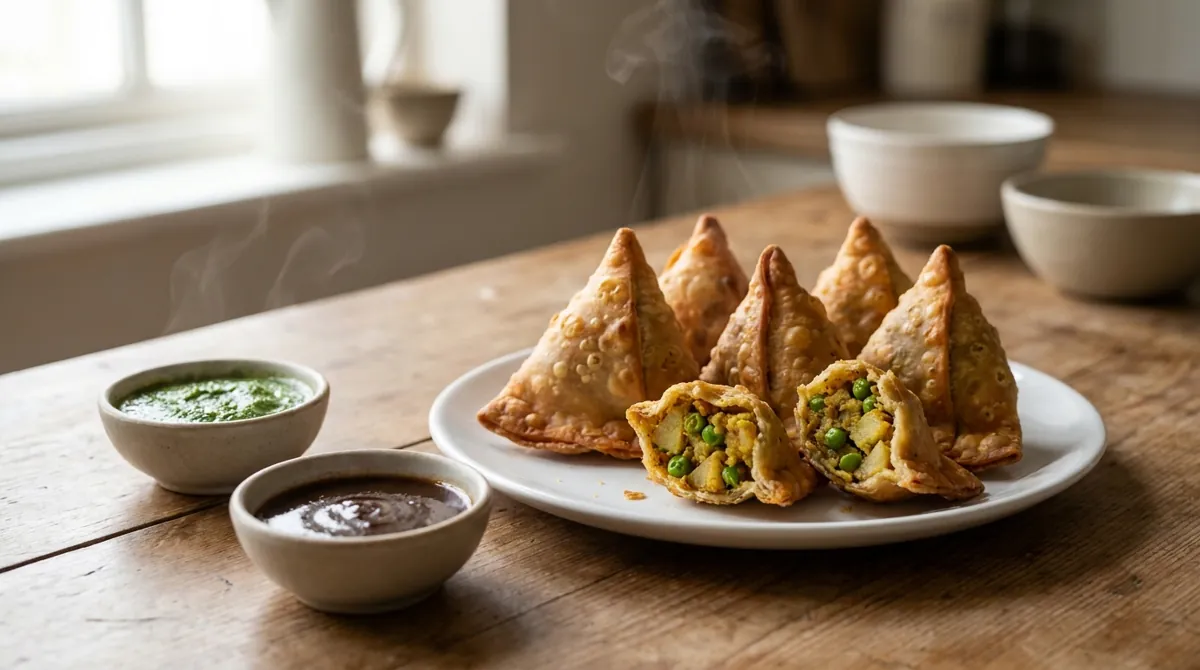
The samosa did not start in India. Its name comes from the Middle Persian sambosag, a triangular pastry, and the South Asian samosa is believed to descend from a medieval baked precursor from Central Asia and the Middle East; the historian Abu'l-Fadl Bayhaqi (died 1077) mentions it. Wikipedia says the Central Asian samsa reached the Indian subcontinent in the 13th or 14th century, brought by cooks and traders from the Middle East and Central Asia to the Delhi Sultanate courts. Around 1300 the poet Amir Khusrau wrote of nobles eating samosa made with meat, ghee and onion, and in the 14th century the traveler Ibn Battuta described a minced-meat pie served at the court of Muhammad bin Tughluq.
In India the filling changed to suit local taste: potatoes, peas and warm spices, with chilies and ginger. The potato is a New World crop that reached India only after European traders brought it, so the potato samosa is a later, Indian chapter of an older story, and the earliest samosas were meat.
Why it works the kitchen science
Oil rubbed into the flour (the moyan)
It makes the crust short and flaky, with small blisters, instead of bready.
A stiff dough
Soft dough puffs and soaks up oil; stiff dough fries crisp.
Low and slow frying
The crust cooks through before it browns. High heat browns it fast and leaves it raw and soft.
A dry filling
Wet filling steams the pastry from inside and bursts the seams.
🧰 You'll need 6 items
Everything the steps call for. Tick off what you have before you start.
Pans and pots
Tools
Step by step
- Step 1
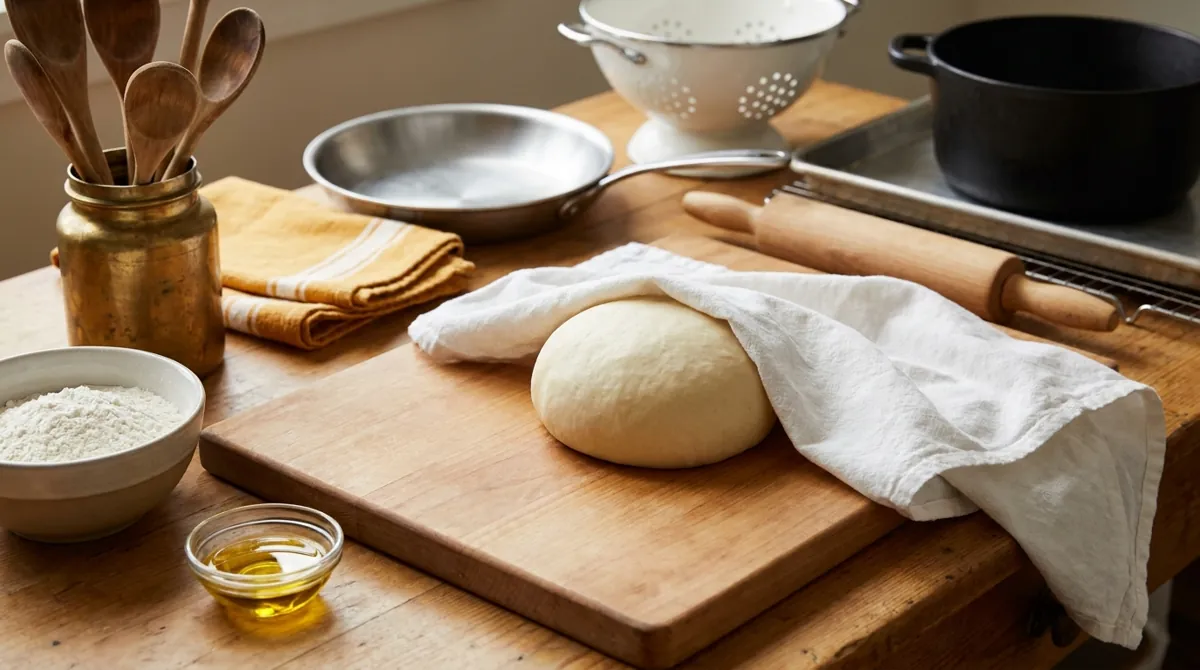
Mix the flour and salt, rub in the oil with your fingers until it looks like damp sand, then add the water a splash at a time to make a stiff dough. Knead 5 minutes, cover and rest 30 minutes.
- Step 2
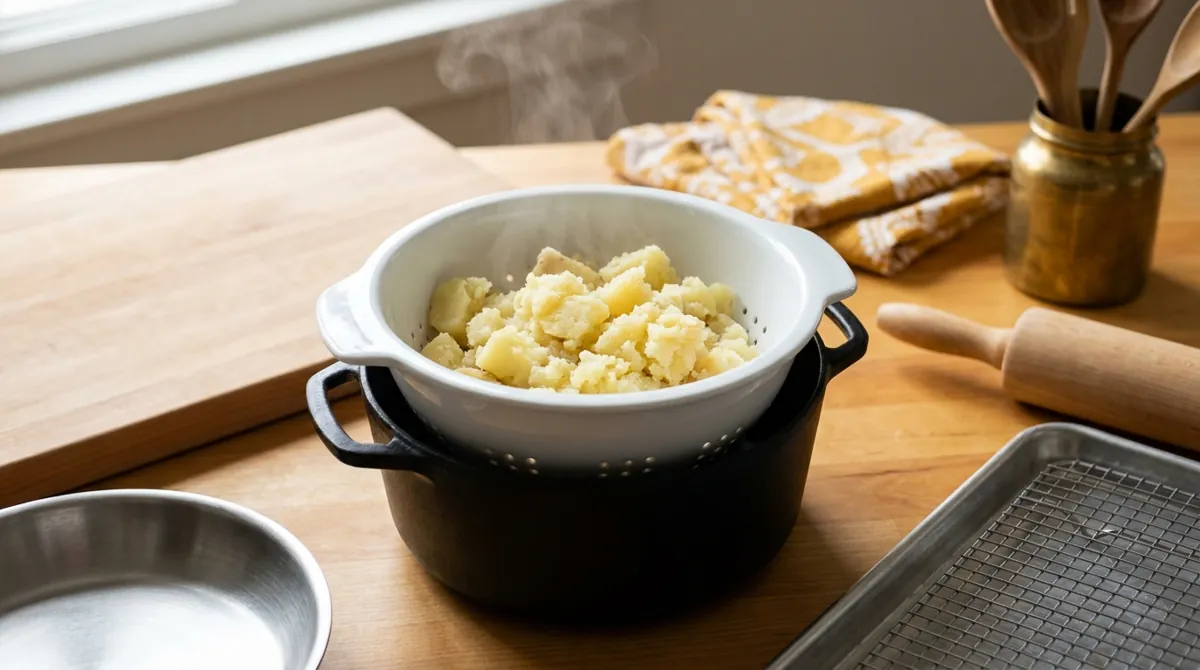
Boil the potatoes in salted water 12 to 15 minutes, until just tender. Drain and let them steam dry for 5 minutes, then crush coarsely with a fork.
- Step 3
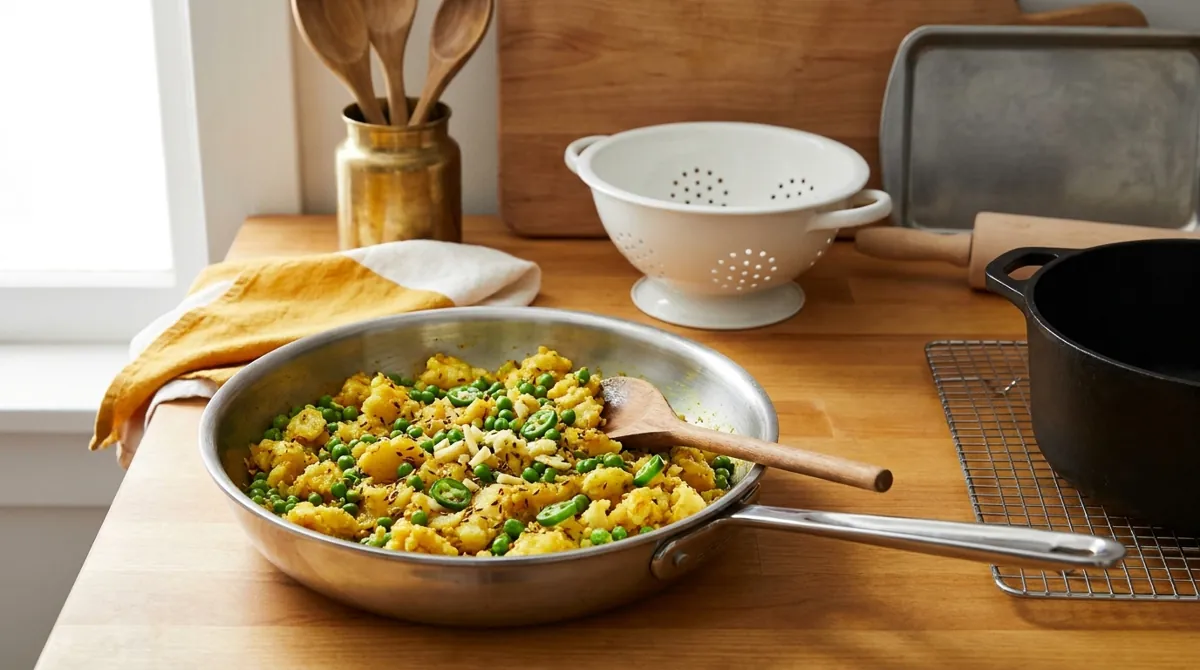
Heat the tablespoon of oil in a skillet over medium heat. Add the cumin seeds 30 seconds, then the ginger and chili 1 minute. Stir in the coriander, turmeric, garam masala and salt, then the potatoes and peas, and cook 3 minutes. Add the lemon juice and cool completely. The filling should be dry and crumbly, not wet.
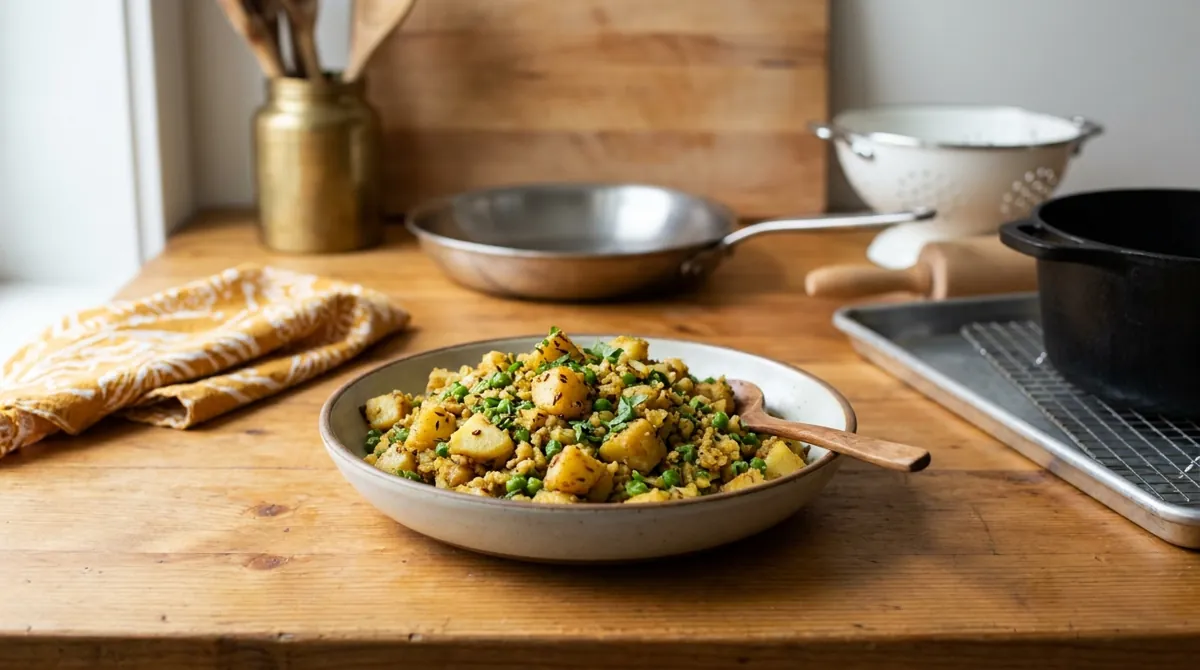
✓ What it should look like - Step 4
Divide the dough into 8 balls. Roll each into a thin oval about 7 inches long and cut it across in half to make two half-moons.
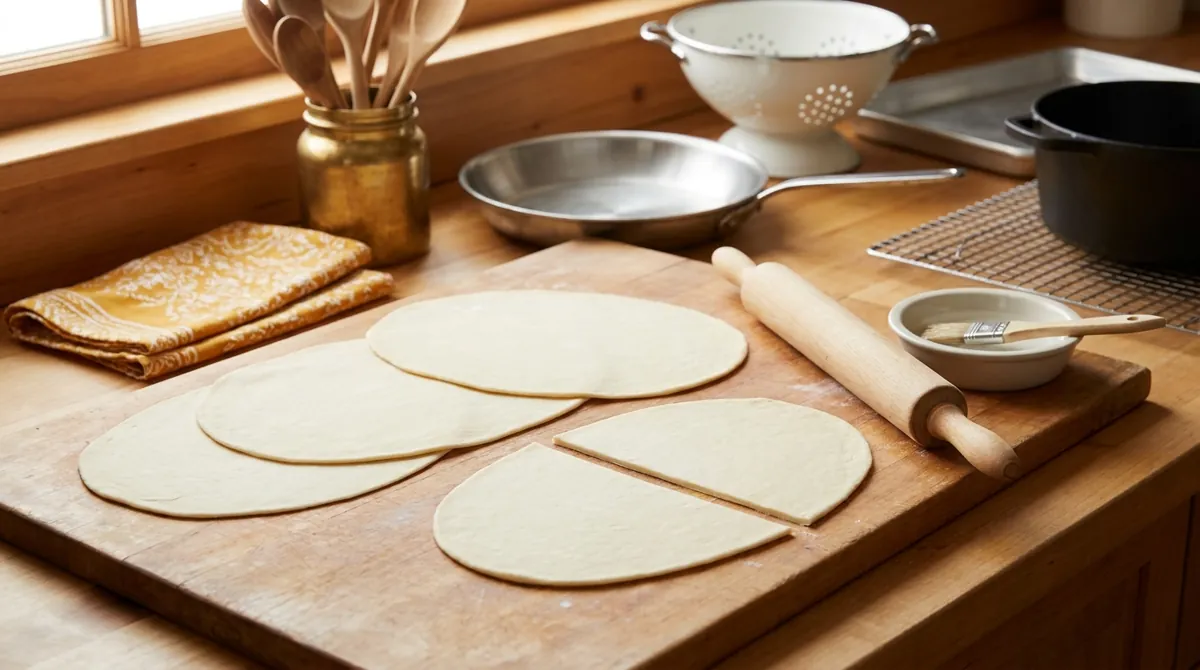
- Step 5
Wet the straight edge of a half-moon, bring the corners together to overlap into a cone, and press the seam. Fill the cone with about 2 tablespoons of filling, wet the open rim and pinch it shut. Make all 16.
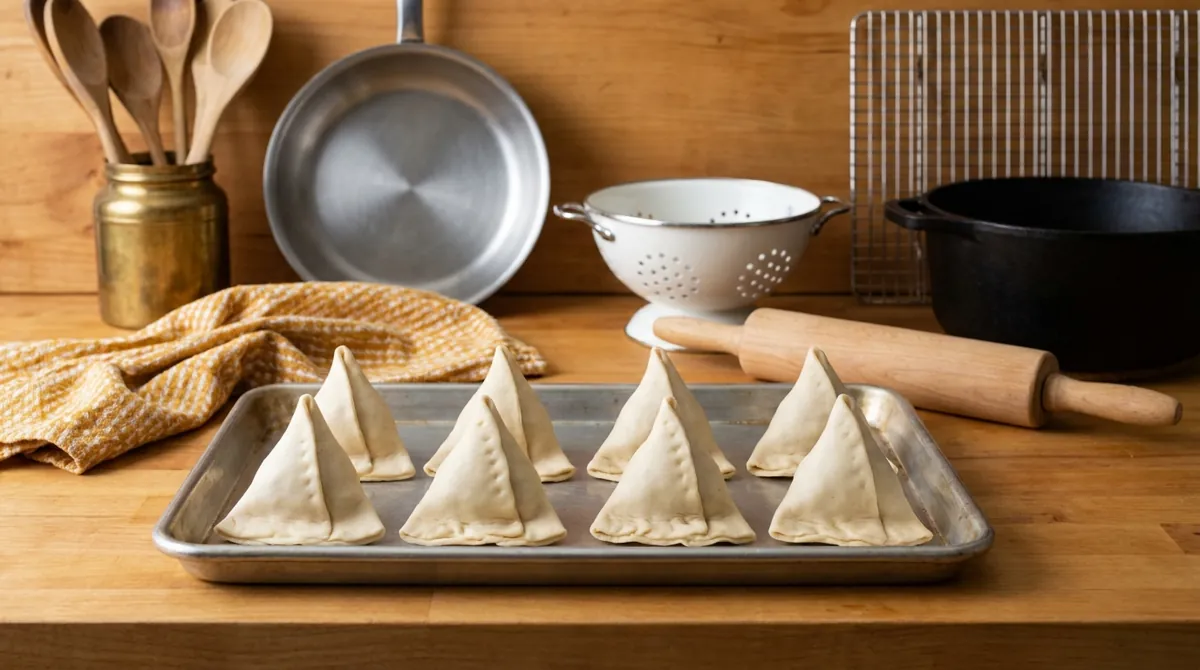
- Step 6
Heat about 2 inches of oil in a deep pot to 325°F. Fry the samosas in batches of 5 or 6 over medium-low heat for 10 to 12 minutes, until deep golden and blistered, adjusting the heat to hold the temperature. Drain on a rack and serve hot with chutney.
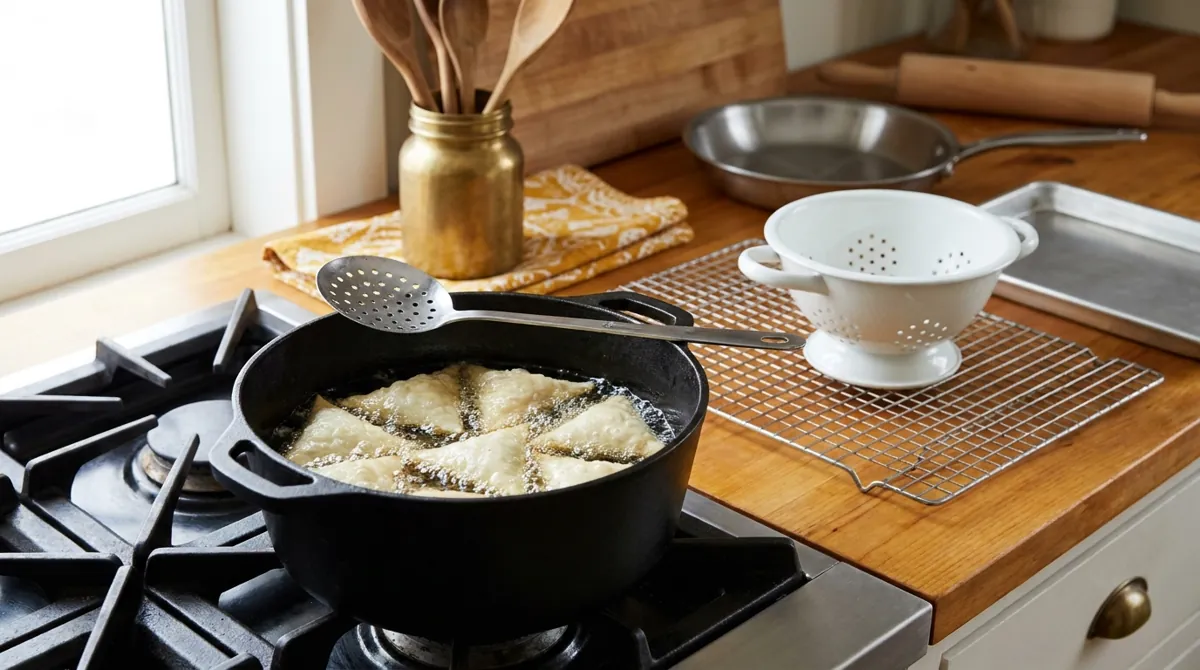
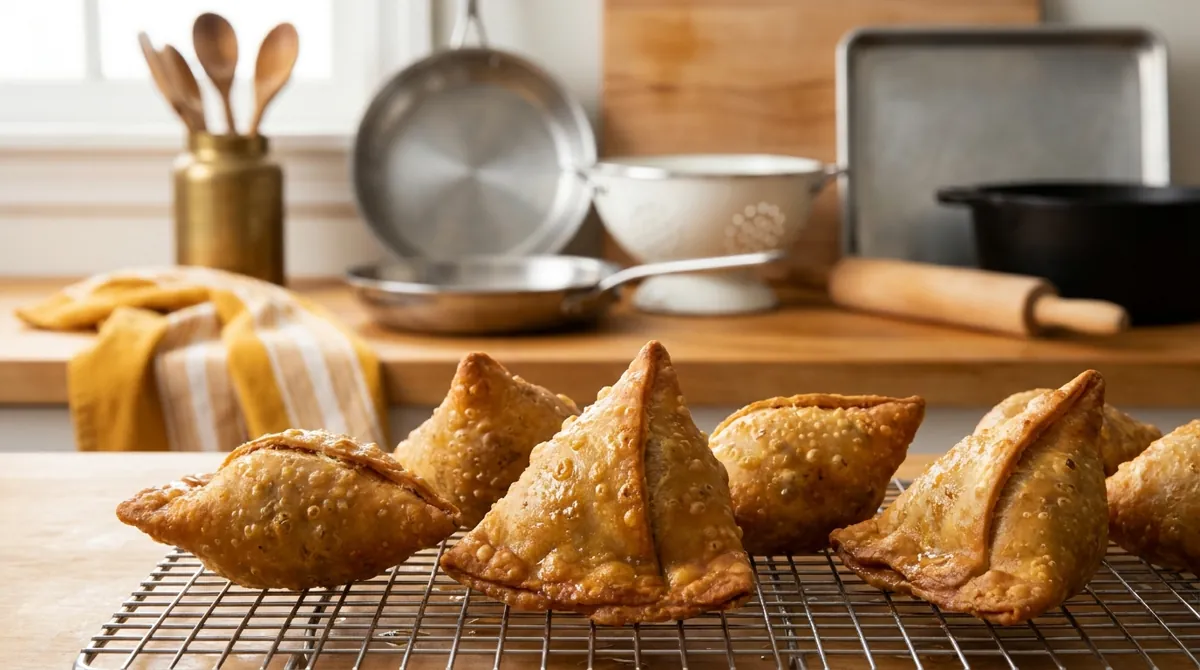
✓ What it should look like
Samosas
Serves 8 (2 samosas each) · 16 samosas · 1 hr 20 min total
Dough
- 2 cups all-purpose flour (250 g)
- 1/2 tsp fine salt
- 4 tbsp neutral oil or melted ghee (55 g)
- About 1/2 cup cold water (120 g), added a little at a time
Filling
- 3 medium russet potatoes (about 450 g), peeled and cut in chunks
- 1 tbsp neutral oil (14 g)
- 1 tsp cumin seeds (2 g)
- 1 tbsp finely grated fresh ginger (6 g)
- 1 serrano chili, finely chopped (10 g), seeds out for milder
- 1/2 cup frozen peas (75 g)
- 1 tsp ground coriander, 1/2 tsp turmeric, 1/2 tsp garam masala, 1/2 tsp salt
- 1 tbsp lemon juice (15 g)
To fry
- About 3 cups neutral oil for frying, of which about 3 tbsp is absorbed (40 g counted)
Equipment: Large pot, Skillet, Deep-fry or candy thermometer, Chef's knife and cutting board, Measuring cups and spoons, Rolling pin
Method
- Mix the flour and salt, rub in the oil with your fingers until it looks like damp sand, then add the water a splash at a time to make a stiff dough. Knead 5 minutes, cover and rest 30 minutes.
- Boil the potatoes in salted water 12 to 15 minutes, until just tender. Drain and let them steam dry for 5 minutes, then crush coarsely with a fork.
- Heat the tablespoon of oil in a skillet over medium heat. Add the cumin seeds 30 seconds, then the ginger and chili 1 minute. Stir in the coriander, turmeric, garam masala and salt, then the potatoes and peas, and cook 3 minutes. Add the lemon juice and cool completely. The filling should be dry and crumbly, not wet.
- Divide the dough into 8 balls. Roll each into a thin oval about 7 inches long and cut it across in half to make two half-moons.
- Wet the straight edge of a half-moon, bring the corners together to overlap into a cone, and press the seam. Fill the cone with about 2 tablespoons of filling, wet the open rim and pinch it shut. Make all 16.
- Heat about 2 inches of oil in a deep pot to 325°F. Fry the samosas in batches of 5 or 6 over medium-low heat for 10 to 12 minutes, until deep golden and blistered, adjusting the heat to hold the temperature. Drain on a rack and serve hot with chutney.
Americanized house recipe, written for this site. History: Wikipedia, "Samosa" (Middle Persian sambosag, medieval precursor, arrival in South Asia in the 13th or 14th century, Amir Khusrau, Ibn Battuta). Dough and frying: the standard home method of a stiff flour-and-oil dough fried slowly at moderate heat. en.wikipedia.org. Ingredient list follows the source; the method is in our own words.
All sources (1)
Tips
- Let the filling cool all the way before filling the cones; warm filling makes the dough soft.
- Bake instead: brush with oil and bake at 400°F for 25 to 30 minutes, turning once. They are paler and less blistered.
- Shaped, unfried samosas freeze well on a tray, then in a bag for 3 months. Fry from frozen at a slightly lower heat.
The rules people argue about
What the sources agree on, what they don't, and what is just a good story.
- The samosa is originally Indian. Disputed by the sources: it descends from a Central Asian and Middle Eastern pastry (sambosag) that Wikipedia says arrived in India in the 13th or 14th century.
Meatballs of the World

Italian-American Meatballs
Big, tender meatballs braised for an hour in red sauce over spaghetti. The one most Americans grew up with.

Pallottine (Abruzzo Meatballs)
Tiny meatballs, smaller than a marble, tossed right through square spaghetti alla chitarra. No bread at all.

Swedish Meatballs (Köttbullar)
Small, soft meatballs browned in butter, in a cream sauce made from the same pan, with lingonberry jam on the plate.

Danish Frikadeller
Pork meatballs shaped with a spoon and fried slowly in butter, crusty outside and soft in the middle.

Königsberger Klopse
German meatballs that are never fried: poached, then served in a creamy white sauce with capers.

Spanish Albóndigas in Almond Saffron Sauce
The tapas bar classic: small meatballs in a golden sauce thickened with fried almonds and bread.

Mexican Albóndigas with Chipotle and Mint
Soft meatballs with rice and fresh mint inside, simmered in a smoky tomato and chipotle broth.

Izgara Köfte (Turkish Grilled Meatballs)
Small, flat meatballs kneaded hard, rested cold, and charred on a hot grill pan.

Lion's Head Meatballs
Big, soft pork meatballs, stirred into a sticky paste, fried to set, then braised in a savory sauce.

Chicken Tsukune
Japan's chicken meatball: kneaded sticky, grilled on skewers, glazed with sweet soy tare, dipped in egg yolk.