
Scones
Tall, tender, golden scones with flaky layers, best split warm and eaten with jam and cream: Scotland's quick bread and the heart of an afternoon tea.
🍳Cook alongOne move at a time, with real timers
 Edited by JP Lambiase
Change the estimate
Swaps change the price only: cook any meat to its own safe temperature. Where these numbers come from
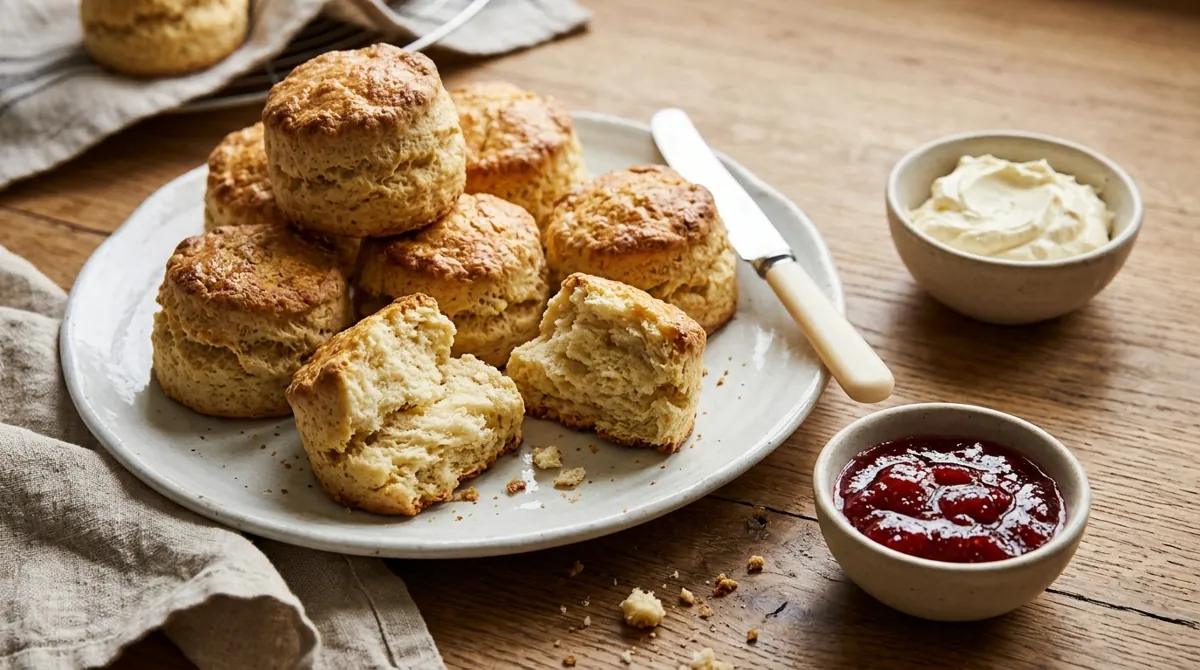
The scone is a Scottish quick bread. The word is first recorded in Gavin Douglas's 1513 Scots translation of the Aeneid, and most dictionaries trace it to Scottish Gaelic sgonn, "a large lump or mass." The earliest scones were flat rounds of oats or barley baked on a griddle, not the tall, sweet, butter-rich scones we know. That version appeared only after baking powder became widely available in the 1840s. A second theory ties the name to the town of Scone, the old coronation place of Scottish kings; Wikipedia lists both and treats the Gaelic root as the most widely accepted.
Today the scone is the centerpiece of the British cream tea: split, spread with jam and clotted cream. The first printed reference to scones in a cream tea that Wikipedia cites is a 1932 Cornishman article, and the question of whether jam or cream goes on first still divides Devon and Cornwall.
Why it works the kitchen science
Cold butter in pieces
It melts in the hot oven and leaves steam pockets, giving flaky layers and a tender crumb.
Minimal mixing
Less gluten, so the scones stay tender and rise tall instead of turning tough.
No twisting the cutter
Twisting seals the cut edges and stops the scones rising evenly.
A hot oven and a short chill
The dough sets fast and rises before the butter softens.
🧰 You'll need 9 items
Everything the steps call for. Tick off what you have before you start.
Appliances
Pans and pots
Tools
Supplies
Step by step
- Step 1
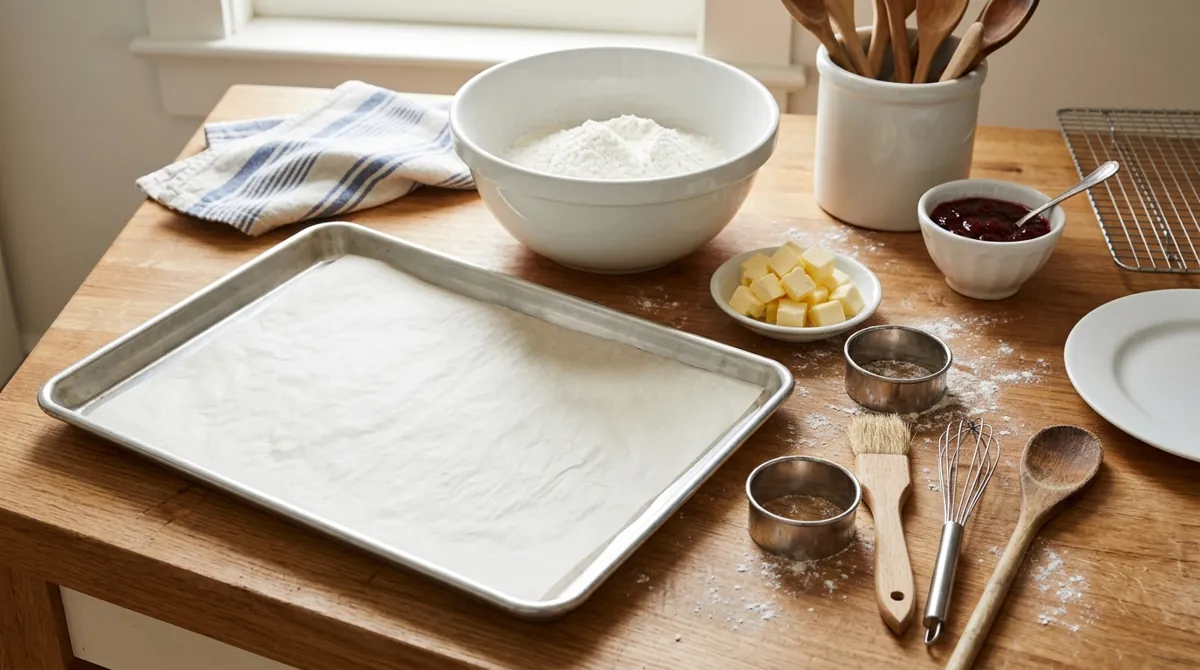
Heat the oven to 425°F with a rack in the middle. Line a baking sheet with parchment paper.
- Step 2
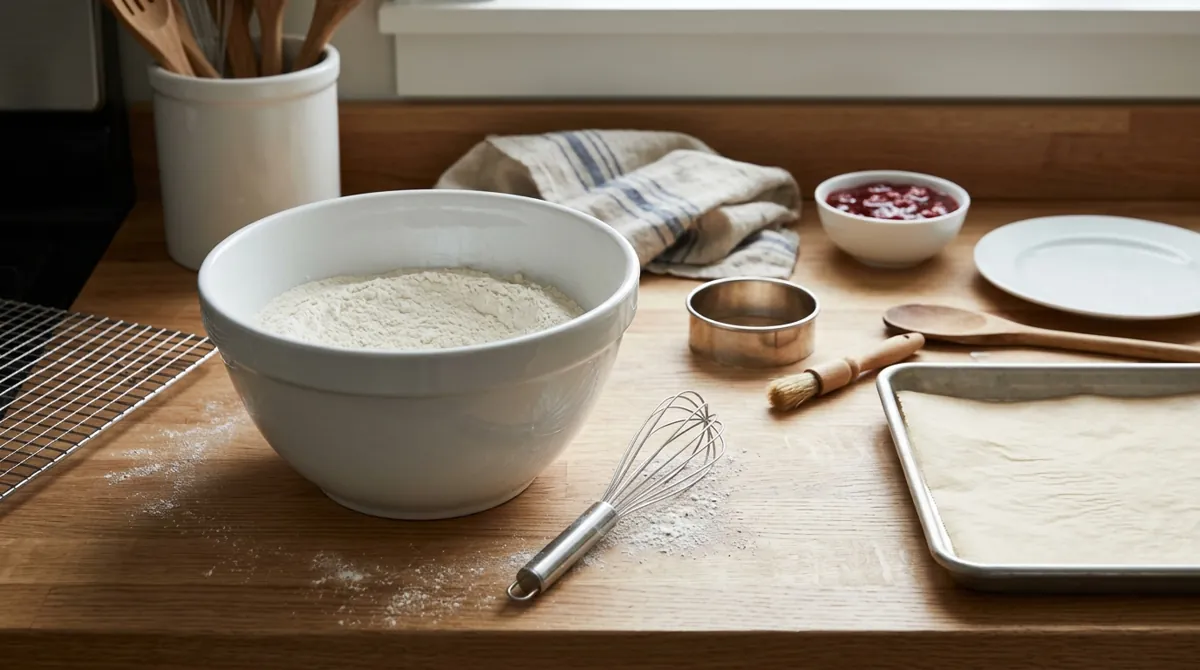
Whisk the flour, sugar, baking powder and salt together in a large bowl.
- Step 3
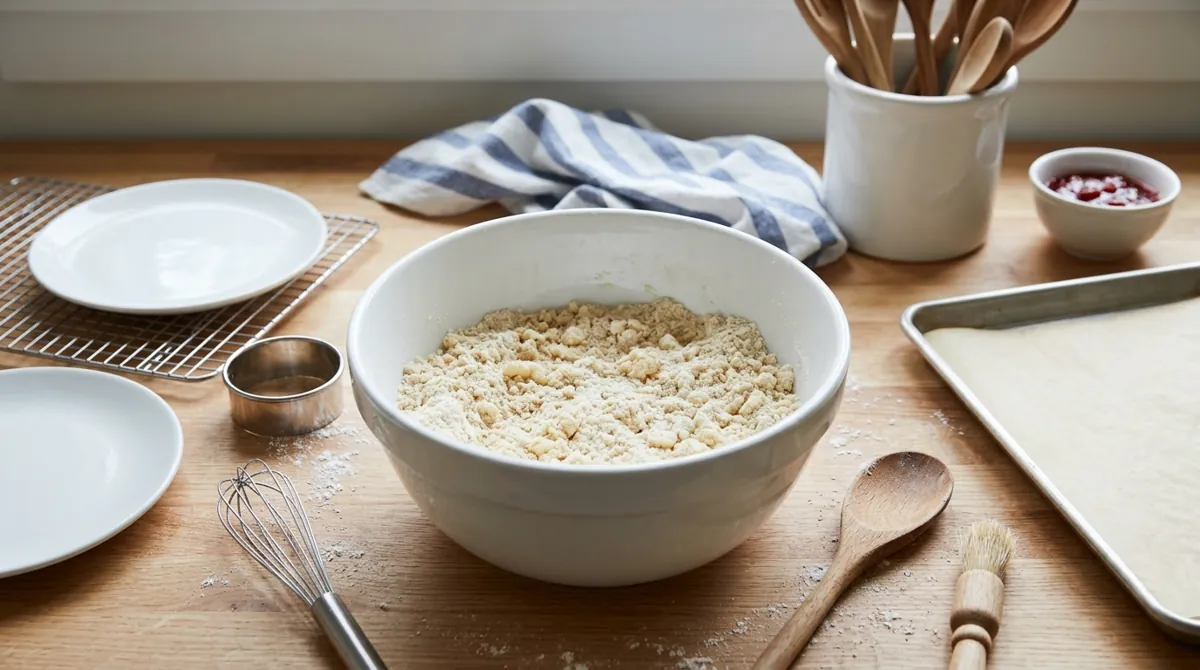
Add the cold butter cubes and rub them into the flour with your fingertips until the mix looks like coarse crumbs with some pea-sized pieces of butter left.
- Step 4
Whisk the egg with the cream, add it to the bowl and mix with a fork or wooden spoon just until a shaggy dough forms. Press it together; it should hold but look rough, not smooth.
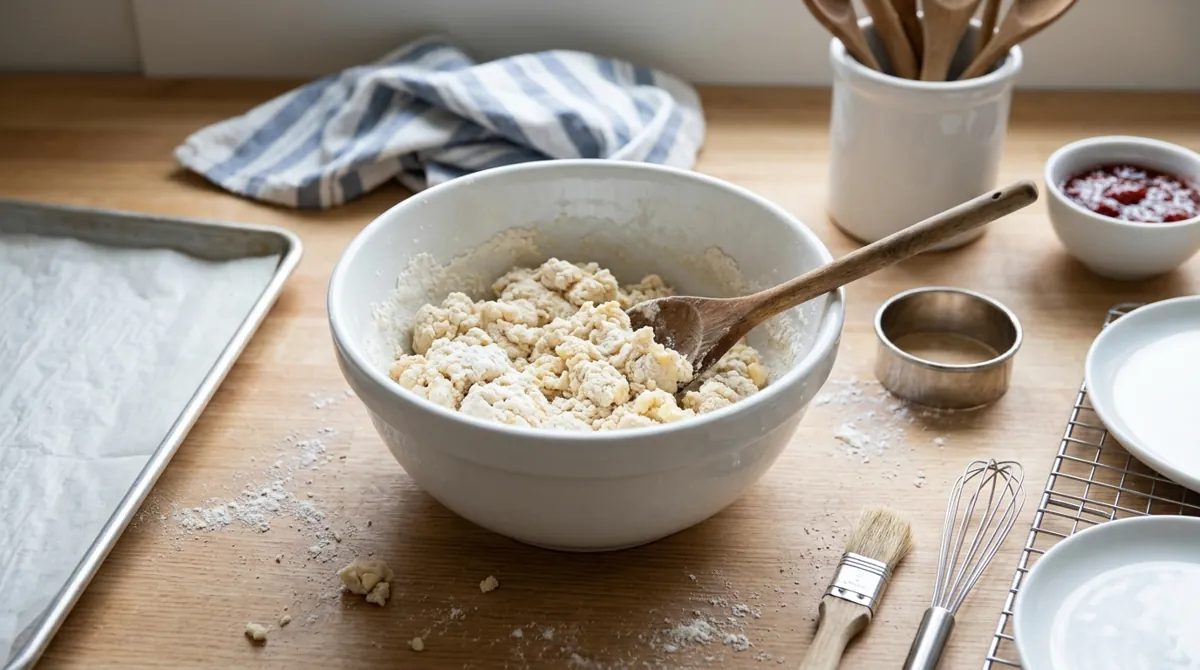
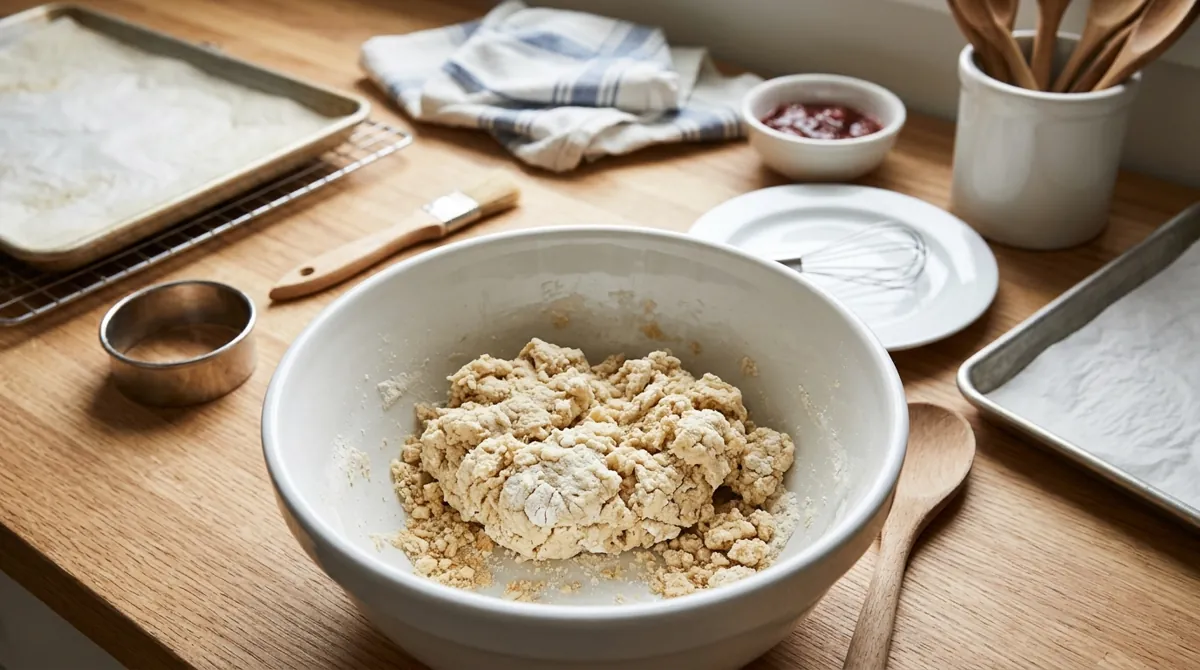
✓ What it should look like - Step 5
Pat the dough on a floured counter into a round about 1 inch thick. Stamp out rounds with a 2 1/2 inch biscuit cutter without twisting, pressing the scraps together once. Set them on the baking sheet, brush the tops with cream and chill 10 minutes.
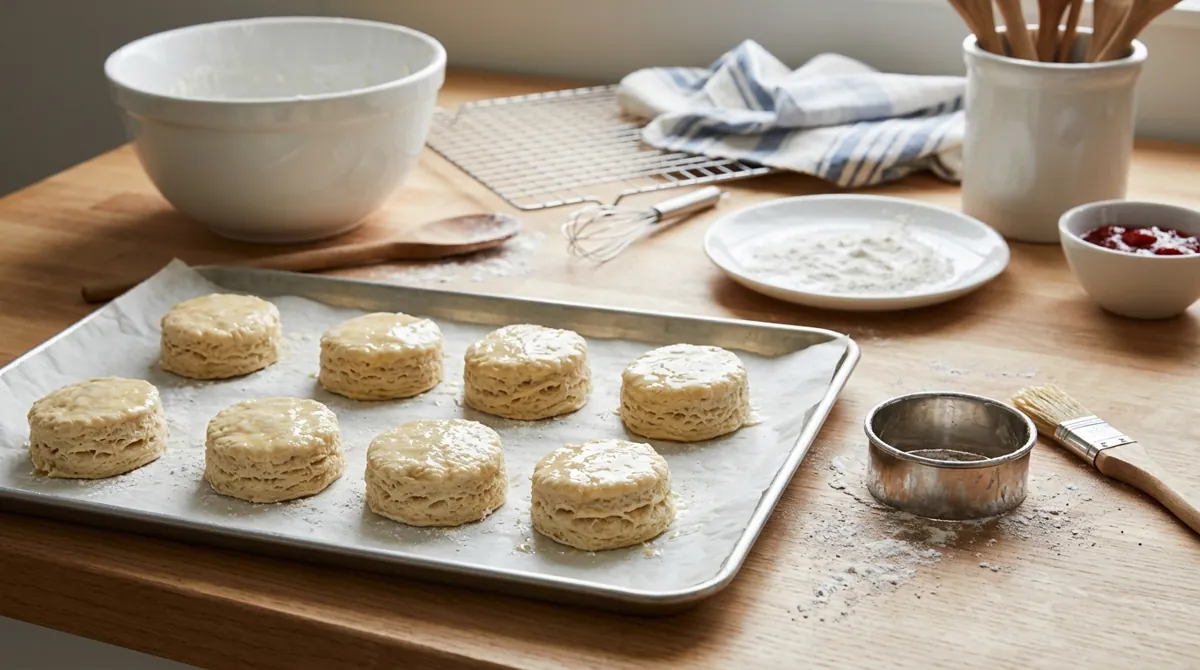
- Step 6
Bake 15 to 18 minutes, until risen and deep golden on top and lightly golden underneath. Cool on a rack for 10 minutes and serve warm with jam and cream.
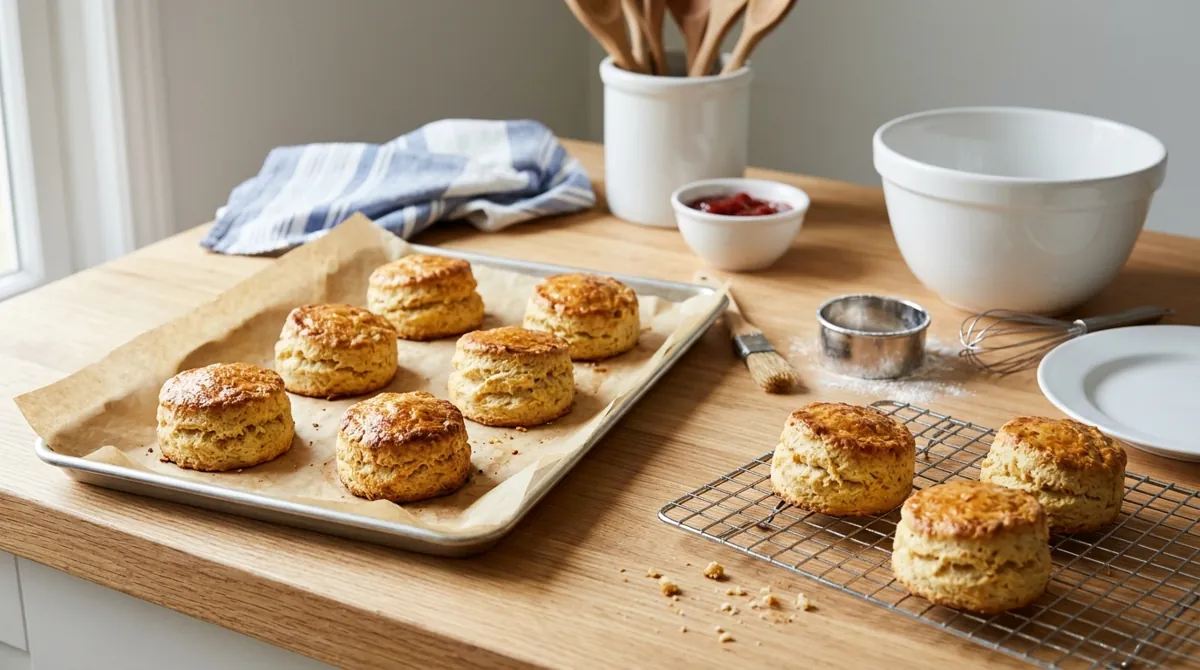
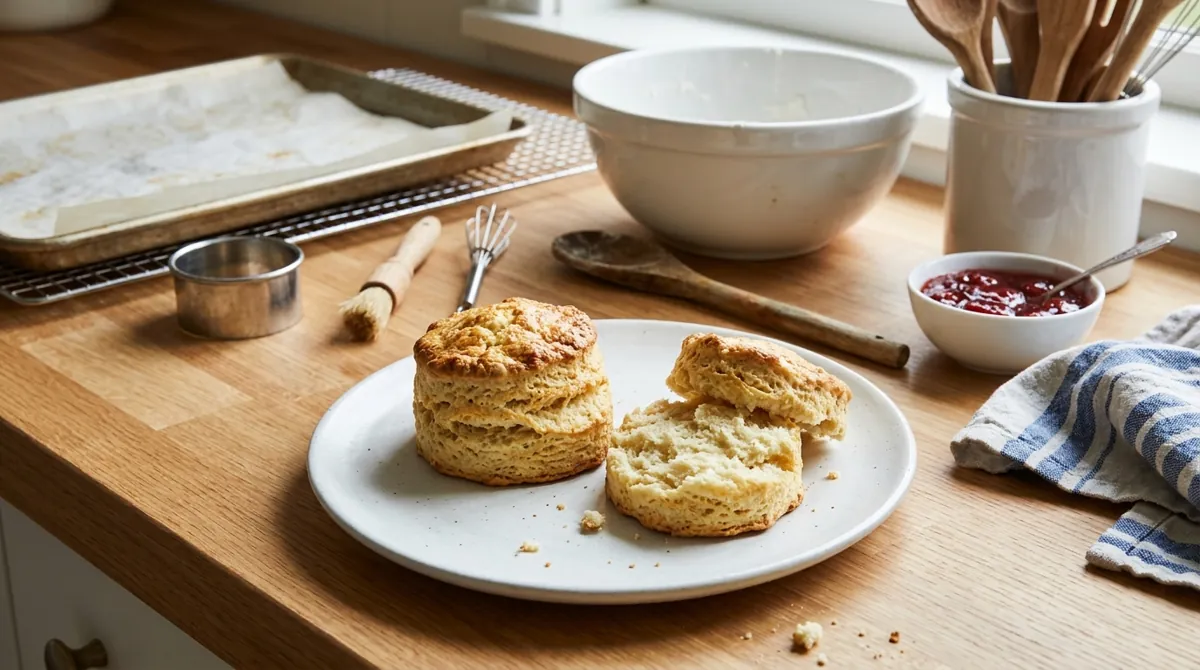
✓ What it should look like
Scones
Serves 8 · 8 scones · 45 min total
Dry
- 2 cups all-purpose flour (250 g)
- 1/4 cup granulated sugar (50 g)
- 2 1/2 tsp baking powder
- 1/2 tsp fine salt
Wet
- 6 tbsp very cold unsalted butter (85 g), cut into small cubes
- 1 large egg (50 g)
- 1/2 cup cold heavy cream (120 g), plus a little for brushing
To serve
- Strawberry jam and clotted cream or whipped cream
Equipment: Oven, Rimmed baking sheet, Chef's knife and cutting board, Measuring cups and spoons, Mixing bowls, Whisk, Biscuit or cookie cutter, Pastry brush, Parchment paper
Method
- Heat the oven to 425°F with a rack in the middle. Line a baking sheet with parchment paper.
- Whisk the flour, sugar, baking powder and salt together in a large bowl.
- Add the cold butter cubes and rub them into the flour with your fingertips until the mix looks like coarse crumbs with some pea-sized pieces of butter left.
- Whisk the egg with the cream, add it to the bowl and mix with a fork or wooden spoon just until a shaggy dough forms. Press it together; it should hold but look rough, not smooth.
- Pat the dough on a floured counter into a round about 1 inch thick. Stamp out rounds with a 2 1/2 inch biscuit cutter without twisting, pressing the scraps together once. Set them on the baking sheet, brush the tops with cream and chill 10 minutes.
- Bake 15 to 18 minutes, until risen and deep golden on top and lightly golden underneath. Cool on a rack for 10 minutes and serve warm with jam and cream.
Americanized house recipe, written for this site, within the usual ratios for British-style scones (about 2 cups flour, 2 1/2 teaspoons baking powder, 6 tablespoons cold butter, 1 egg and about 1/2 cup cream or milk, baked hot at 425°F). History: Wikipedia, "Scone" (Gavin Douglas 1513, Gaelic sgonn, town of Scone, baking powder, the 1932 cream tea reference, pronunciation). The Devon cream-first and Cornwall jam-first custom is widely reported but was not stated on the page fetched. en.wikipedia.org. Ingredient list follows the source; the method is in our own words.
All sources (1)
Tips
- Use real baking powder that is fresh; old powder gives short, dense scones.
- Add 1/2 cup raisins or currants with the dry ingredients for fruit scones.
- Scones are best the day they are baked. Freeze the shaped, unbaked rounds and bake from frozen, adding a few minutes.
- Buttermilk can replace the cream for a tangier, slightly lighter scone.
The rules people argue about
What the sources agree on, what they don't, and what is just a good story.
- Jam or cream first? Disputed: the custom usually reported is cream first in Devon and jam first in Cornwall, and each side insists its way is right. There is no rule beyond local pride.
- How do you say it? Disputed: "scone" rhymes with "gone" in much of northern England and Scotland and with "tone" in the Midlands, Ireland and the United States.
- The scone is named for the town of Scone. Disputed: the Gaelic sgonn ("lump") is the more widely accepted root; the town theory is a rival explanation.
Meatballs of the World

Italian-American Meatballs
Big, tender meatballs braised for an hour in red sauce over spaghetti. The one most Americans grew up with.

Pallottine (Abruzzo Meatballs)
Tiny meatballs, smaller than a marble, tossed right through square spaghetti alla chitarra. No bread at all.

Swedish Meatballs (Köttbullar)
Small, soft meatballs browned in butter, in a cream sauce made from the same pan, with lingonberry jam on the plate.

Danish Frikadeller
Pork meatballs shaped with a spoon and fried slowly in butter, crusty outside and soft in the middle.

Königsberger Klopse
German meatballs that are never fried: poached, then served in a creamy white sauce with capers.

Spanish Albóndigas in Almond Saffron Sauce
The tapas bar classic: small meatballs in a golden sauce thickened with fried almonds and bread.

Mexican Albóndigas with Chipotle and Mint
Soft meatballs with rice and fresh mint inside, simmered in a smoky tomato and chipotle broth.

Izgara Köfte (Turkish Grilled Meatballs)
Small, flat meatballs kneaded hard, rested cold, and charred on a hot grill pan.

Lion's Head Meatballs
Big, soft pork meatballs, stirred into a sticky paste, fried to set, then braised in a savory sauce.

Chicken Tsukune
Japan's chicken meatball: kneaded sticky, grilled on skewers, glazed with sweet soy tare, dipped in egg yolk.