
Shakshuka
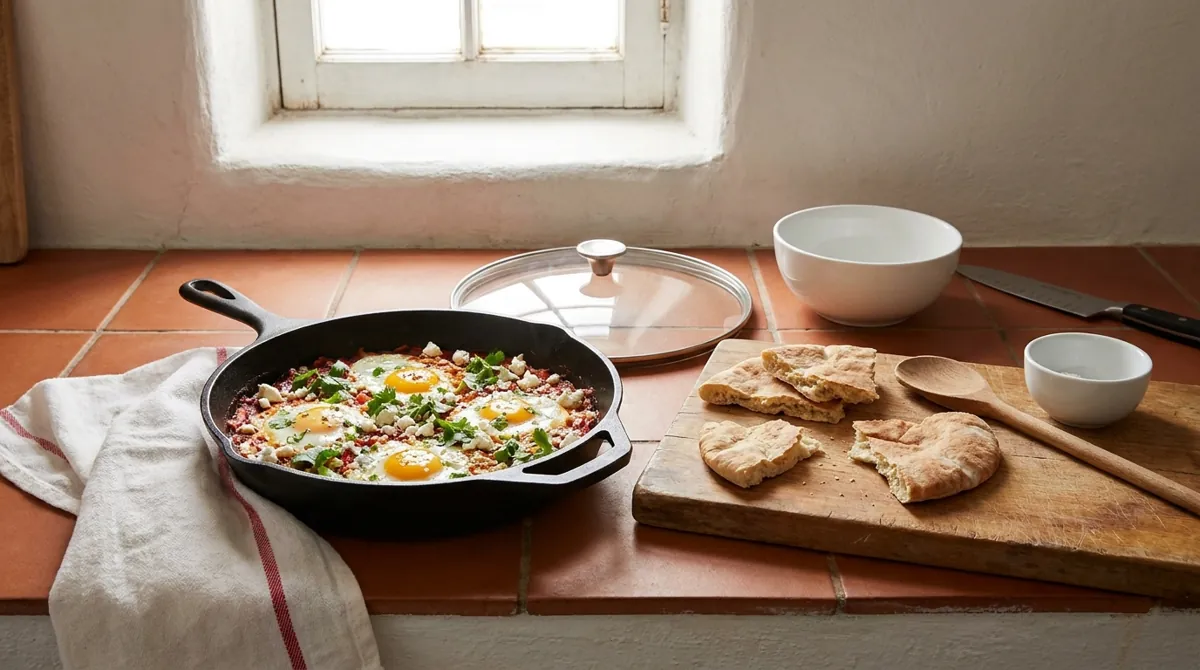
Eggs gently poached in a skillet of thick, cumin and paprika spiced tomato and red pepper sauce, finished with feta and herbs and eaten straight from the pan with bread: the Maghrebi one-pan dish that traveled to Israel and onto American brunch menus.
🍳Cook alongOne move at a time, with real timers
 Edited by JP Lambiase
Change the estimate
Swaps change the price only: cook any meat to its own safe temperature. Where these numbers come from
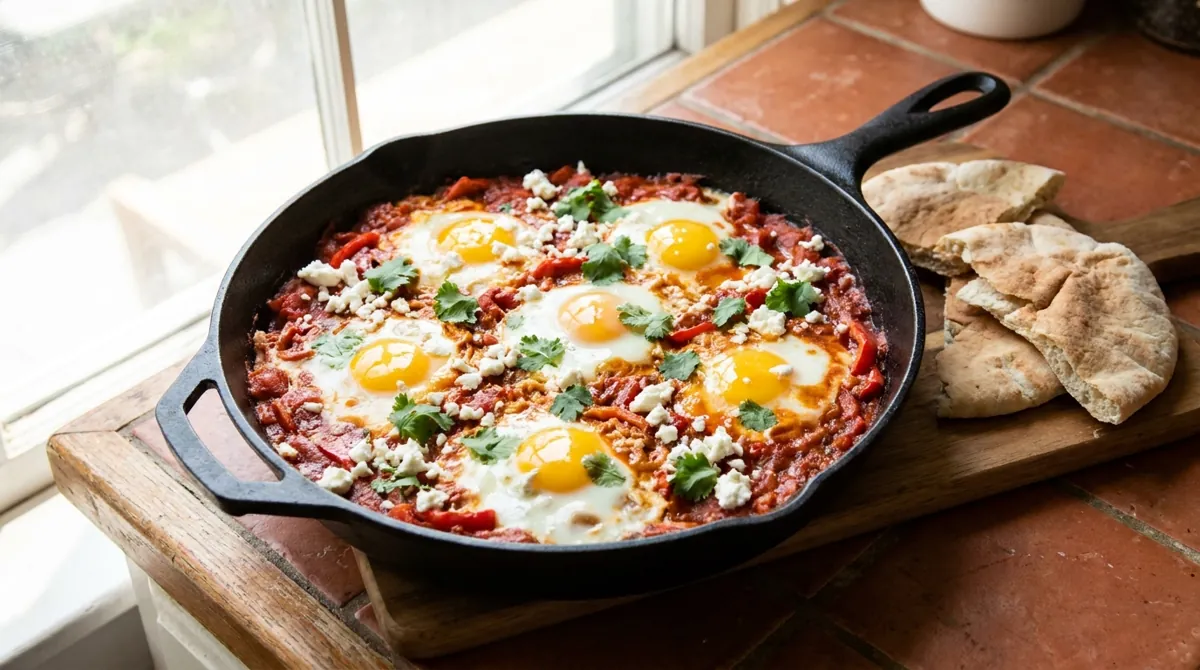
Shakshuka is a dish of the Maghreb, the North African lands of Tunisia, Algeria, Libya and Morocco. The name comes from Maghrebi Arabic: in Algerian Arabic it means a mixture, in Tunisian Arabic "mixed", and the Oxford English Dictionary traces it to a sound-word verb meaning to bubble, to sizzle, to be mixed up. The French spelling chakchouka, borrowed from Algerian Arabic, reached English in the 19th century.
Where it came from before that is argued over. The food writer Gil Marks pointed to its likeness to the Turkish dish menemen and suggested it spread to North Africa under the Ottoman Empire. The linguist Anthony Buccini and the historian Noam Sienna see it instead as one member of a wider family of western Mediterranean vegetable stews, alongside menemen, Basque piperade and French ratatouille. All of these depend on tomatoes and peppers, plants from the Americas, so the dish as we know it is only a few centuries old.
Maghrebi Jews brought shakshuka to Israel in the 1950s, where it caught on and, from the 1990s, moved onto restaurant menus. From there it became a brunch dish across America and Europe.
Why it works the kitchen science
Browning the onion and pepper first
Their sugars caramelize, giving the sauce depth that raw vegetables simmered in tomato never get.
Blooming the spices and tomato paste in oil
Heat draws out their flavor, and darkened paste tastes rounder and less tinny.
A thick sauce
A watery sauce floods the eggs and cooks them unevenly; thick sauce holds each egg in its well.
Off the heat, then covered
Adding the eggs to a pan that is not bubbling and covering it lets the tops cook by steam, so the whites set before the yolks go hard (America's Test Kitchen). Spooning sauce over the whites, not the yolks, evens it out further.
🧰 You'll need 3 items
Everything the steps call for. Tick off what you have before you start.
Pans and pots
Tools
Step by step
- Step 1
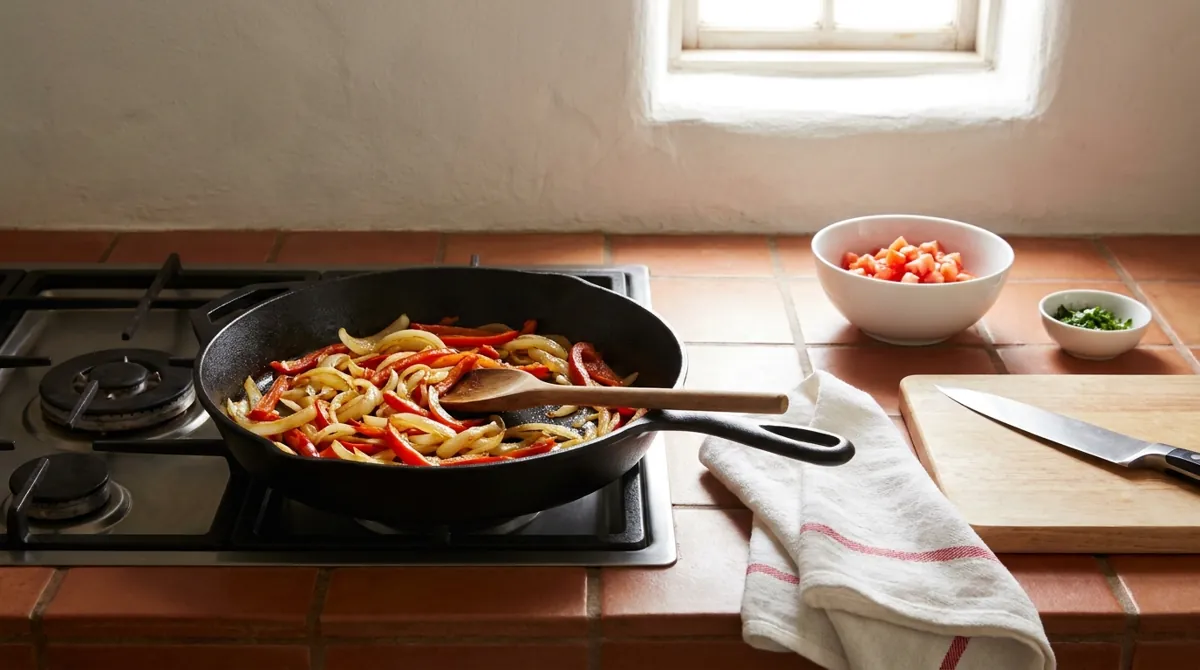
Heat the oil in a 12 inch skillet over medium heat. Add the onion, red pepper and salt and cook, stirring now and then, until soft and lightly browned, 8 to 10 minutes.
- Step 2
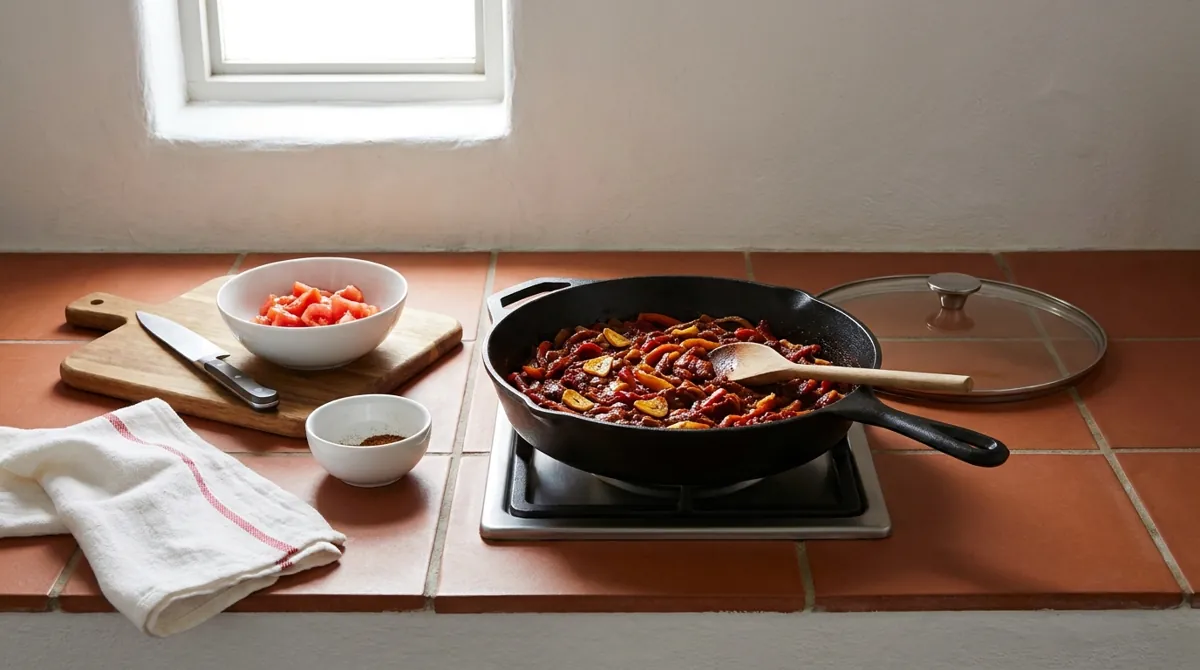
Add the garlic and cook 1 minute. Stir in the tomato paste, cumin, paprika and cayenne and cook, stirring, until the paste darkens and the spices smell toasty, about 1 minute.
- Step 3
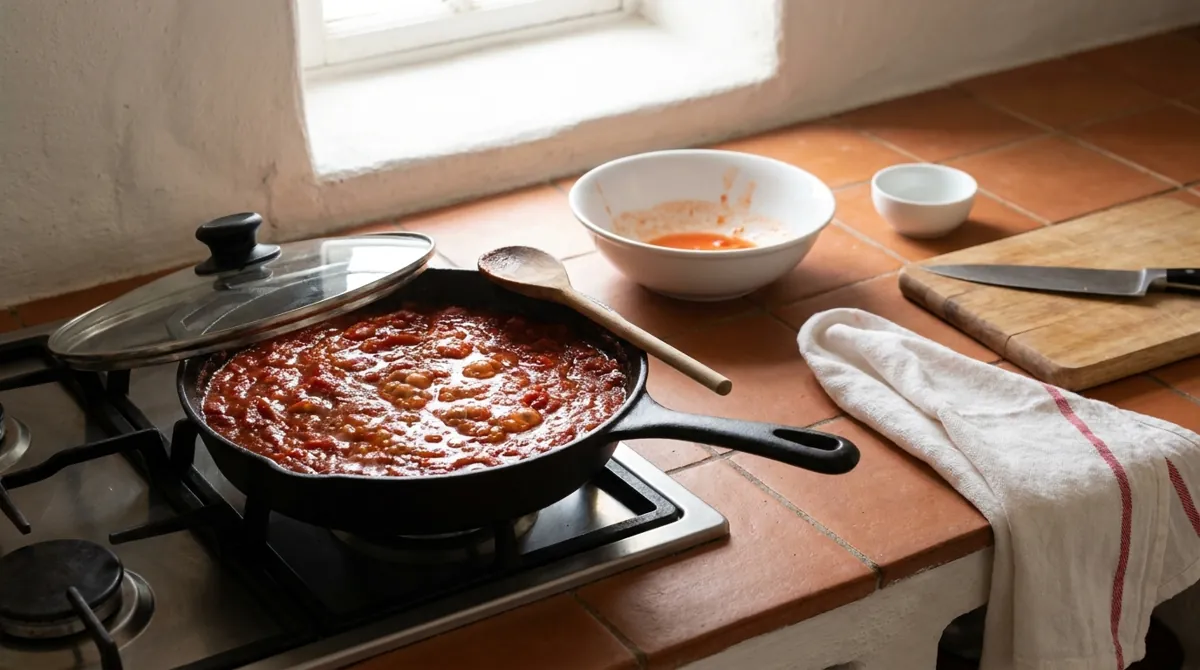
Add the crushed tomatoes and their juice, bring to a simmer and cook, stirring now and then, until the sauce is thick enough that a spoon leaves a clear trail across the bottom of the pan, 10 to 15 minutes. Taste and add salt.
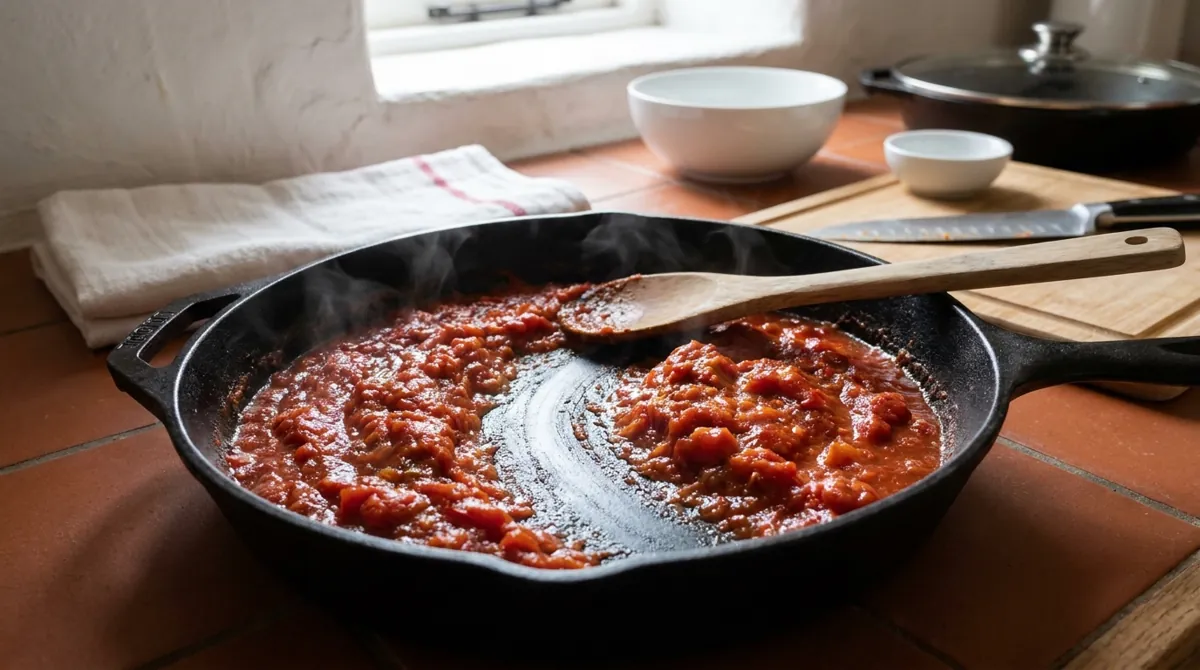
✓ What it should look like - Step 4
Take the skillet off the heat. Make 6 wells in the sauce with the back of a spoon and crack an egg into each. Spoon a little sauce over the edges of the whites, leaving the yolks bare, and sprinkle the eggs with salt.
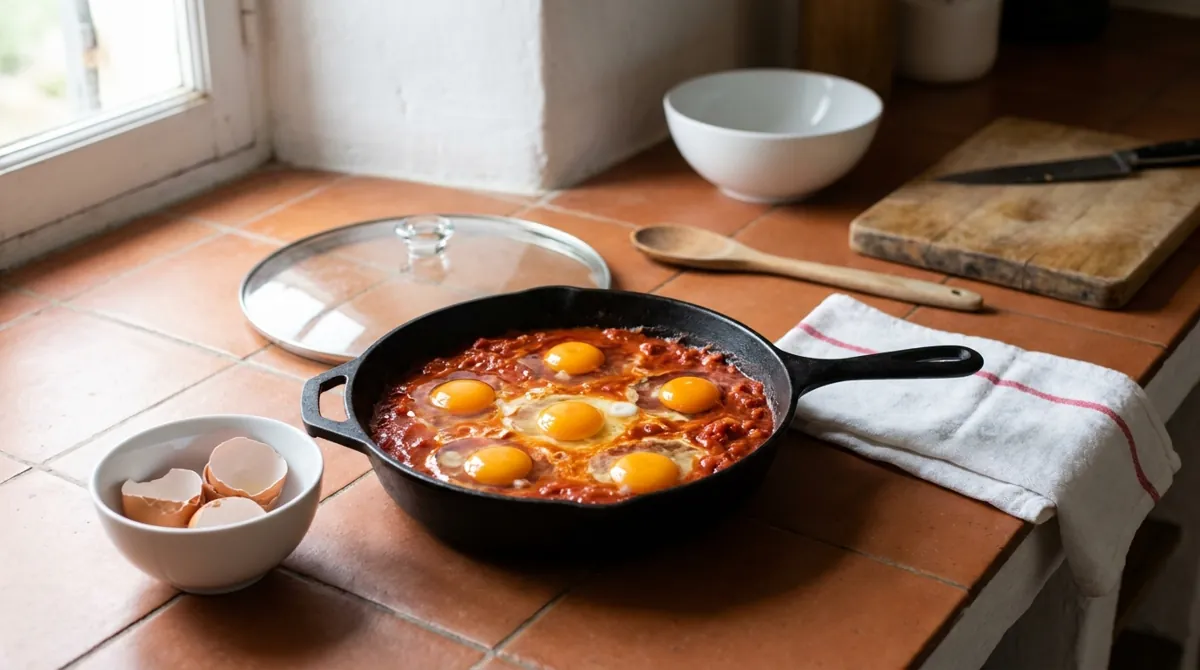
- Step 5
Put the skillet back over medium-low heat, cover and cook until the whites are set but the yolks are still runny, 5 to 8 minutes. Check after 4 minutes; the eggs keep cooking in the hot pan.
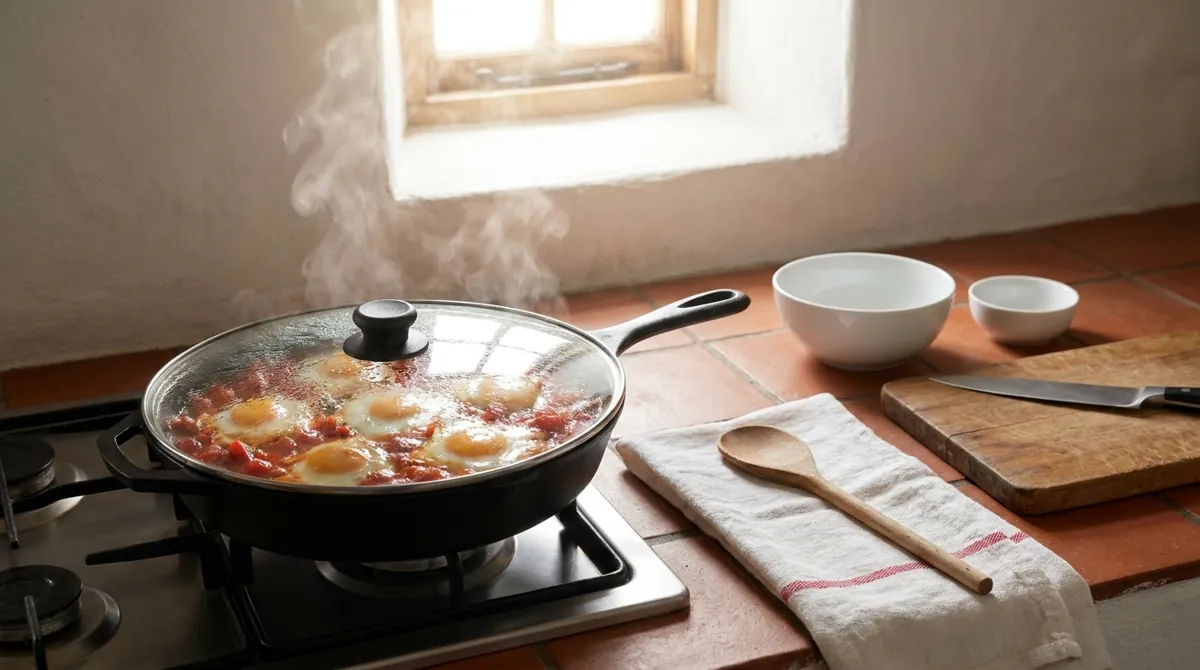
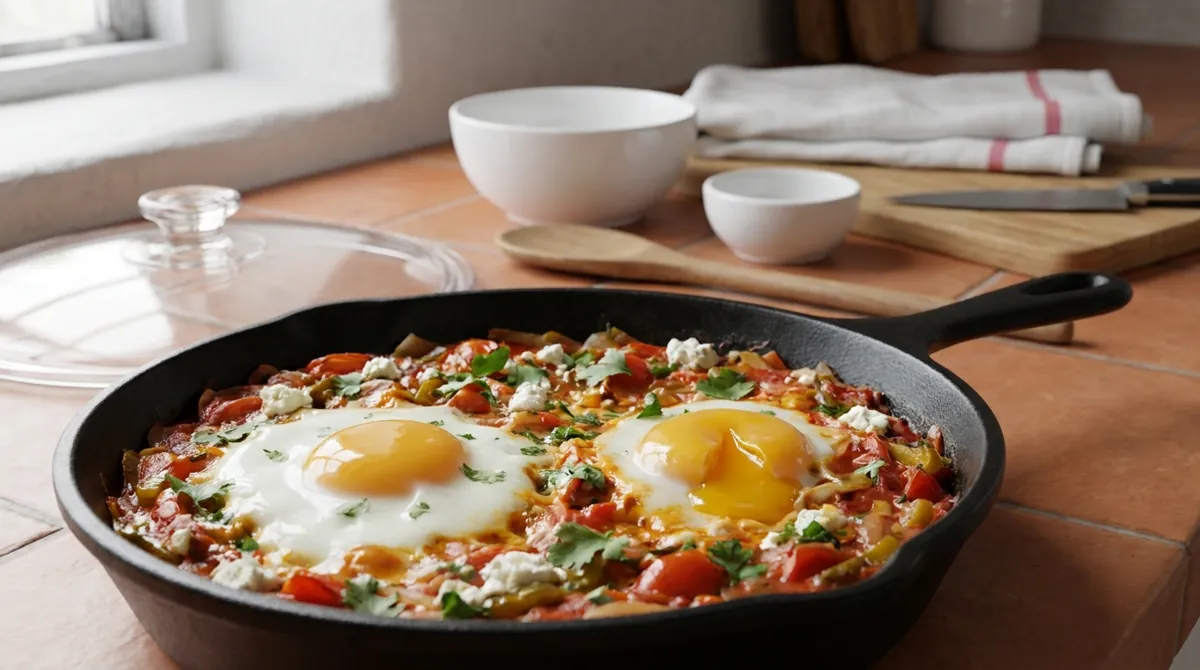
✓ What it should look like - Step 6
Scatter the feta and herbs over the top and serve right away from the skillet, with warm pita or crusty bread.
Shakshuka
Serves 4 · one 12 inch skillet, 6 eggs · 45 min total
Sauce
- 3 tbsp extra-virgin olive oil (40 g)
- 1 medium onion, thinly sliced (150 g)
- 1 large red bell pepper, thinly sliced (150 g)
- 1/2 tsp fine salt, plus more to taste
- 4 garlic cloves, thinly sliced (12 g)
- 1 tbsp tomato paste (16 g)
- 2 tsp ground cumin (4 g)
- 2 tsp sweet or smoked paprika (5 g)
- 1/4 to 1/2 tsp cayenne pepper, or 1 to 2 tsp harissa
- One 28 oz can whole peeled tomatoes, crushed in the bowl (794 g)
Eggs and finish
- 6 large eggs (300 g)
- 1/2 cup crumbled feta (75 g)
- 1/4 cup chopped cilantro or parsley (8 g)
- Warm pita or crusty bread, to serve
Equipment: Skillet, Chef's knife and cutting board, Measuring cups and spoons
Method
- Heat the oil in a 12 inch skillet over medium heat. Add the onion, red pepper and salt and cook, stirring now and then, until soft and lightly browned, 8 to 10 minutes.
- Add the garlic and cook 1 minute. Stir in the tomato paste, cumin, paprika and cayenne and cook, stirring, until the paste darkens and the spices smell toasty, about 1 minute.
- Add the crushed tomatoes and their juice, bring to a simmer and cook, stirring now and then, until the sauce is thick enough that a spoon leaves a clear trail across the bottom of the pan, 10 to 15 minutes. Taste and add salt.
- Take the skillet off the heat. Make 6 wells in the sauce with the back of a spoon and crack an egg into each. Spoon a little sauce over the edges of the whites, leaving the yolks bare, and sprinkle the eggs with salt.
- Put the skillet back over medium-low heat, cover and cook until the whites are set but the yolks are still runny, 5 to 8 minutes. Check after 4 minutes; the eggs keep cooking in the hot pan.
- Scatter the feta and herbs over the top and serve right away from the skillet, with warm pita or crusty bread.
Americanized house recipe, written for this site. History: Wikipedia, "Shakshouka" (Maghrebi dish of Ottoman North Africa, Gil Marks on menemen and the Ottoman route, Buccini and Sienna on a family of western Mediterranean vegetable stews with menemen, piperade and ratatouille, the Algerian and Tunisian Arabic meanings, the OED on the bubbling, sizzling verb and the French chakchouka in 19th-century English, Maghrebi Jews bringing it to Israel in the 1950s and restaurants from the 1990s, regional versions with preserved lemon, sheep's milk cheese, olives, harissa or sausage). Technique: America's Test Kitchen, "North African-Style Poached Eggs" (bloom the spices, cook the tomato paste until dark, simmer the sauce about 10 minutes, take the skillet off the heat before adding the eggs, make wells with the back of a spoon, spoon sauce over the whites but not the yolks, cover so the eggs cook from above, whites set and yolks still runny). en.wikipedia.org. Ingredient list follows the source; the method is in our own words.
All sources (2)
Tips
- For a smoother, more even-cooking sauce, America's Test Kitchen blends the tomatoes until smooth before adding the eggs.
- Make the sauce up to 3 days ahead, rewarm it in the skillet and add the eggs just before serving.
- Add a spoonful of harissa, a few olives, chopped preserved lemon or slices of merguez sausage, as cooks across North Africa do.
- For green shakshuka, a modern variation, swap the tomato sauce for wilted chard or spinach with garlic and cumin.
The rules people argue about
What the sources agree on, what they don't, and what is just a good story.
- Shakshuka came from the Ottoman Empire. Disputed: Gil Marks suggested an Ottoman route via menemen; Buccini and Sienna place it in a wider family of Mediterranean vegetable stews with no single source.
Meatballs of the World

Italian-American Meatballs
Big, tender meatballs braised for an hour in red sauce over spaghetti. The one most Americans grew up with.

Pallottine (Abruzzo Meatballs)
Tiny meatballs, smaller than a marble, tossed right through square spaghetti alla chitarra. No bread at all.

Swedish Meatballs (Köttbullar)
Small, soft meatballs browned in butter, in a cream sauce made from the same pan, with lingonberry jam on the plate.

Danish Frikadeller
Pork meatballs shaped with a spoon and fried slowly in butter, crusty outside and soft in the middle.

Königsberger Klopse
German meatballs that are never fried: poached, then served in a creamy white sauce with capers.

Spanish Albóndigas in Almond Saffron Sauce
The tapas bar classic: small meatballs in a golden sauce thickened with fried almonds and bread.

Mexican Albóndigas with Chipotle and Mint
Soft meatballs with rice and fresh mint inside, simmered in a smoky tomato and chipotle broth.

Izgara Köfte (Turkish Grilled Meatballs)
Small, flat meatballs kneaded hard, rested cold, and charred on a hot grill pan.

Lion's Head Meatballs
Big, soft pork meatballs, stirred into a sticky paste, fried to set, then braised in a savory sauce.

Chicken Tsukune
Japan's chicken meatball: kneaded sticky, grilled on skewers, glazed with sweet soy tare, dipped in egg yolk.