
Sloppy Joes
Ground beef simmered with onion, green pepper, ketchup and tomato sauce into a sweet, tangy, saucy filling, piled onto a toasted bun: the messy, cheap 20th-century American sandwich nobody can agree who invented.
🍳Cook alongOne move at a time, with real timers
 Edited by JP Lambiase
Change the estimate
Swaps change the price only: cook any meat to its own safe temperature. Where these numbers come from
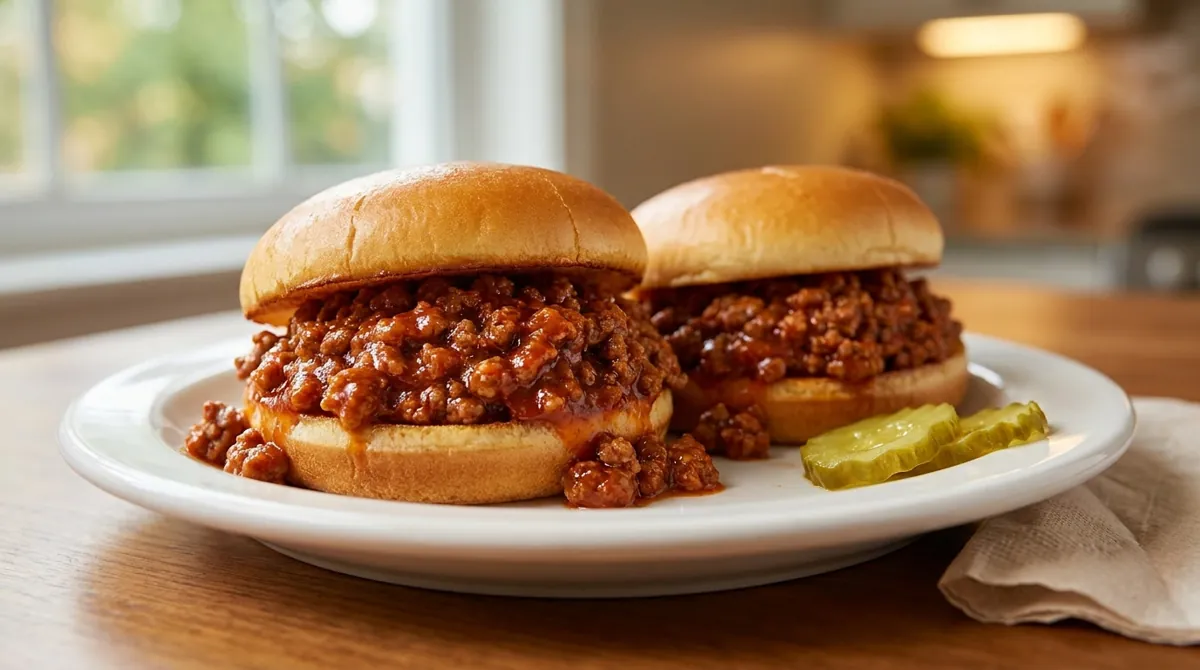
Everyone knows a sloppy joe, and nobody knows who Joe was. Wikipedia lists several theories. The most often told is Havana: José "Sloppy Joe" Abeal y Otero, owner of Sloppy Joe's Bar there, is said to have served a simple sandwich of ground beef stewed in tomatoes around 1917, possibly his take on Cuban ropa vieja or picadillo. Key West's famous Sloppy Joe's bar is only a borrowed name: Ernest Hemingway reportedly talked owner Joe Russell into renaming his Silver Slipper after the Havana bar in the 1930s, and it has nothing to do with inventing the sandwich.
The other story is Midwestern. Marilyn Brown, a researcher for Heinz, said her work at the Carnegie Library pointed to the loose-meat sandwiches sold in Sioux City, Iowa in the 1930s, made by a cook named Joe. And in New Jersey, the Town Hall Deli says the Havana bar also served a messy ham, turkey and Russian dressing sandwich, which the deli copied and called a sloppy joe; that is still what the name means in parts of New Jersey.
What is documented is that the name shows up on sandwiches in the 1940s; the earliest example Wikipedia cites is a 1944 Ohio newspaper ad headed "Originated in Cuba." Cheap, quick and easy to feed a crowd, the sandwich became a family supper staple, and by the 1960s companies such as Manwich were selling it in a can.
This version is the classic: beef, onion and green pepper in a ketchup and tomato sauce, made from scratch in 35 minutes.
Why it works the kitchen science
Soft onion and pepper first
They cook down sweet and melt into the sauce instead of staying crunchy.
Not browning the beef
America's Test Kitchen found that cooking it only until it loses its pink keeps the crumbles tender; browned beef turns hard and pebbly in the sauce.
Ketchup plus tomato sauce
Ketchup brings sweetness and tang, the tomato sauce body without more sugar.
Worcestershire, mustard and chili powder
Savory depth and a little heat to balance the sweet.
Toasted buns
A crisp, dry face holds out against the sauce a few minutes longer.
🧰 You'll need 4 items
Everything the steps call for. Tick off what you have before you start.
Appliances
Pans and pots
Tools
Step by step
- Step 1
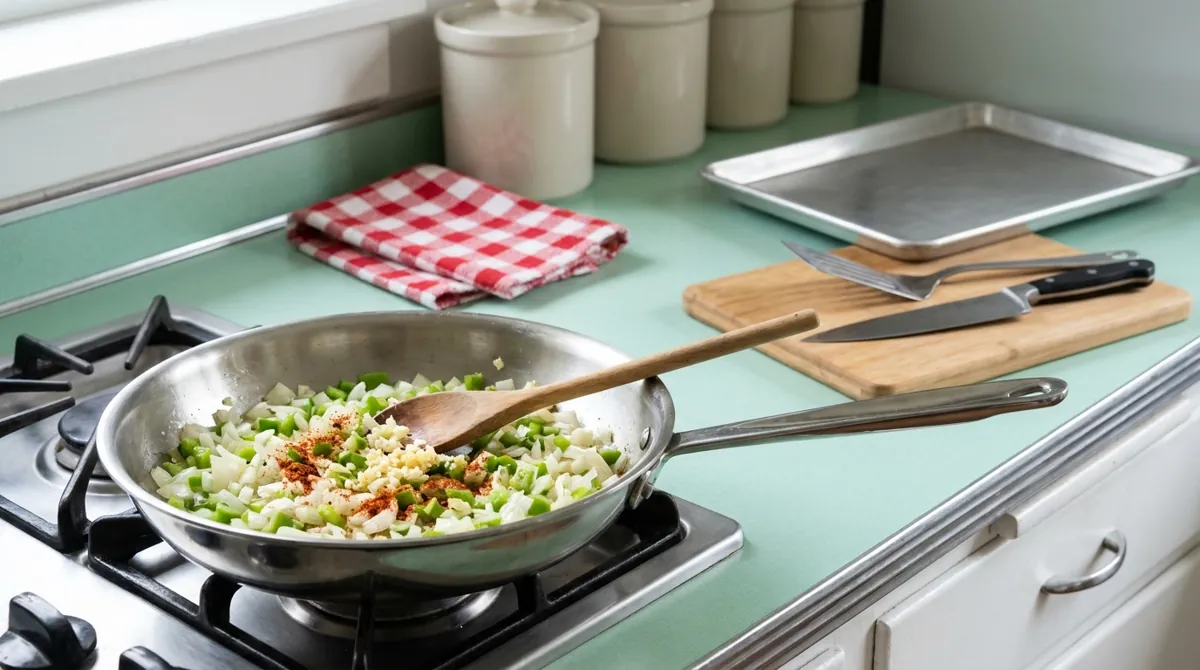
Heat the oil in a 12 inch skillet over medium heat. Cook the onion and green pepper with the salt until soft, 5 to 6 minutes. Stir in the garlic and chili powder for 30 seconds.
- Step 2
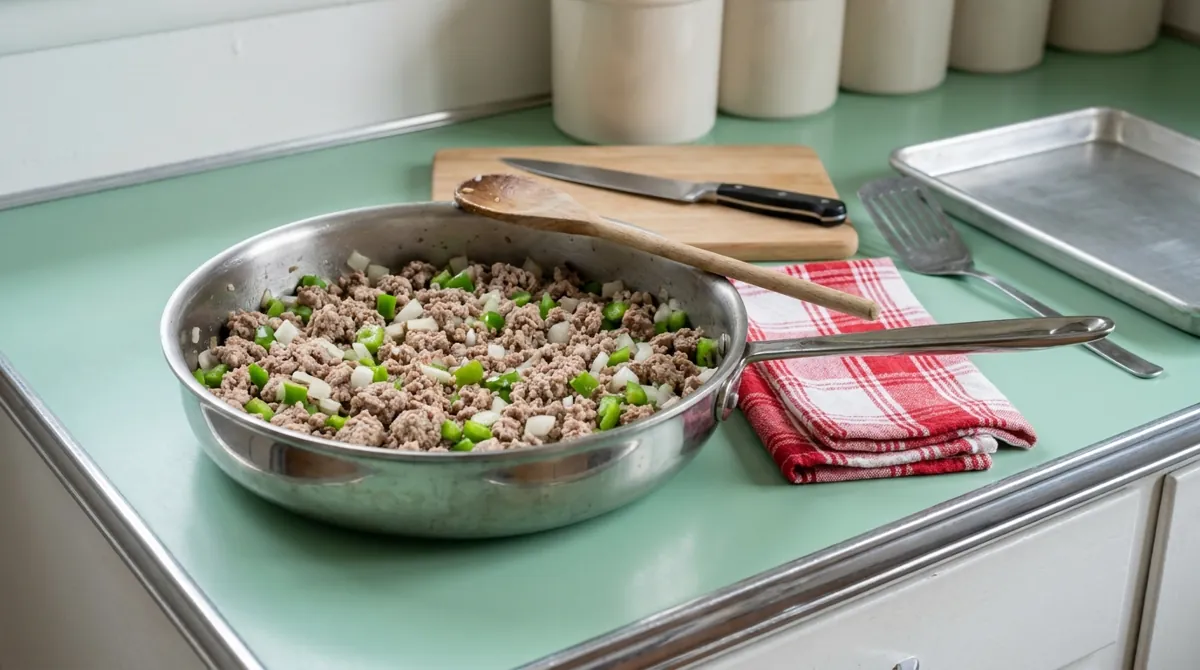
Add the beef and break it up with a wooden spoon. Cook just until it loses its raw pink color, 4 to 5 minutes; do not brown it. If there is a lot of fat, spoon most of it off.
- Step 3
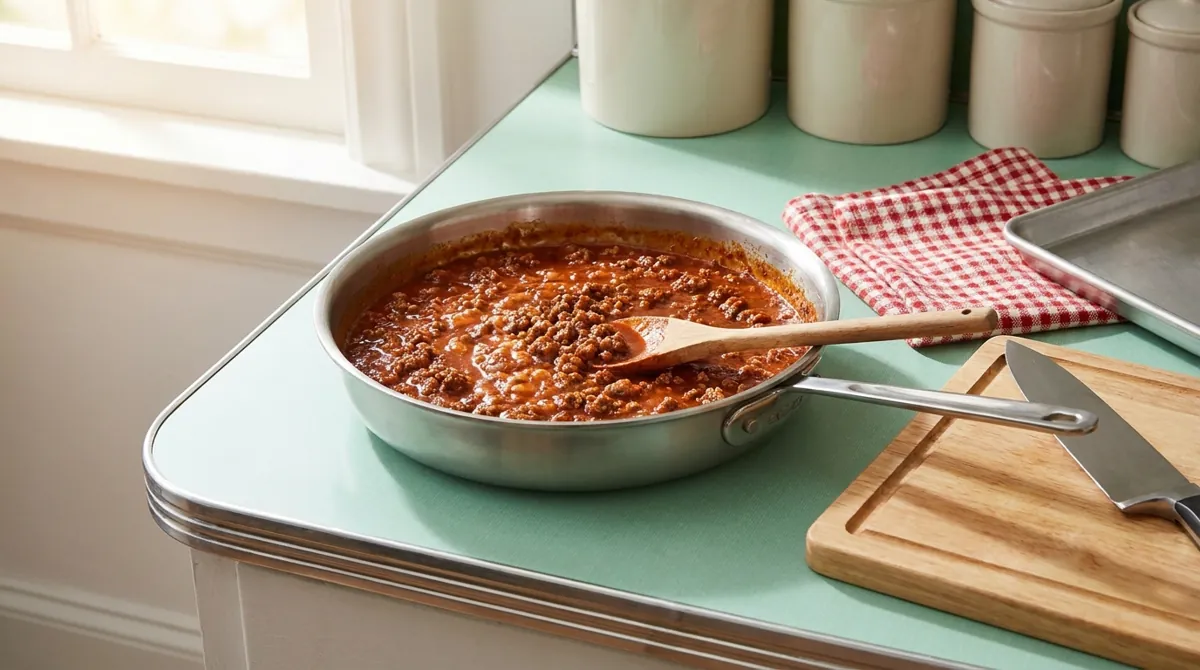
Stir in the tomato sauce, ketchup, brown sugar, Worcestershire, mustard, water and pepper. Simmer, stirring now and then, until the sauce is slightly thicker than ketchup and the beef is tender, 10 to 12 minutes. The beef should reach 160°F. Taste and add hot sauce or salt.
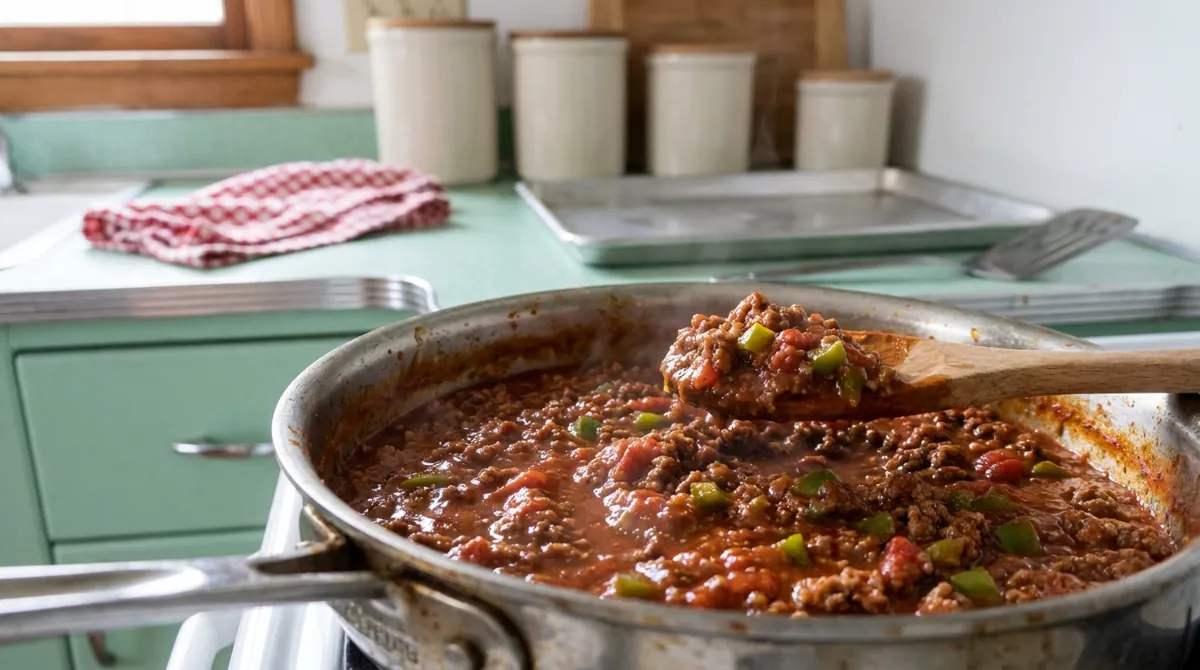
✓ What it should look like - Step 4
While it simmers, toast the cut sides of the buns under the broiler or in a dry skillet until golden, 1 to 2 minutes.
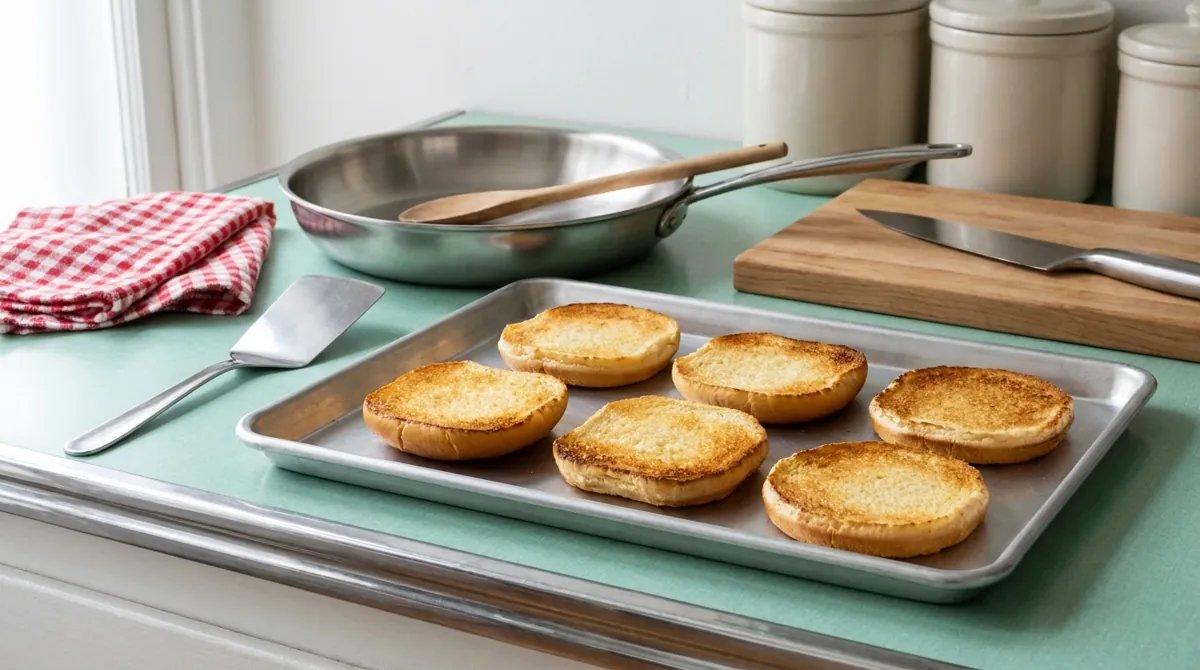
- Step 5
Spoon a generous 3/4 cup of filling onto each bottom bun, add pickles if you like and top with the other half. Serve with plenty of napkins.
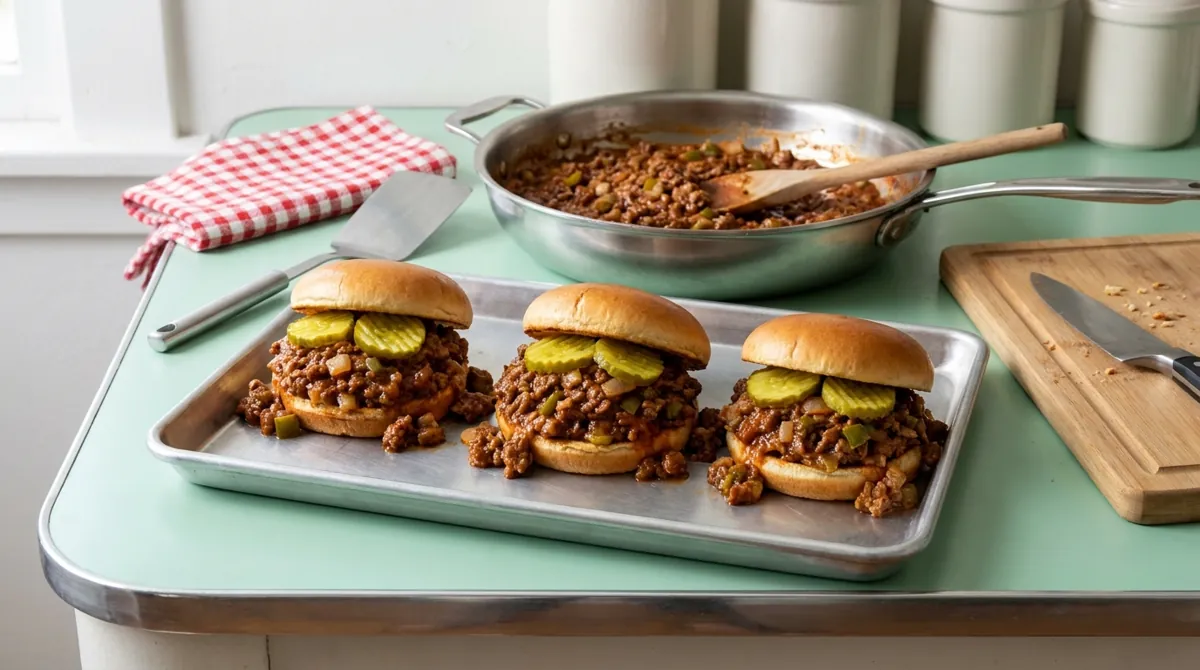
Sloppy Joes
Serves 6 · about 5 cups filling, 6 sandwiches · 35 min total
Filling
- 1 tbsp canola oil (14 g)
- 1 medium onion, finely chopped (150 g)
- 1/2 green bell pepper, finely chopped (75 g)
- 2 garlic cloves, minced (6 g)
- 1 tsp chili powder
- 1 1/2 lb 85/15 ground beef (680 g)
- 1 cup canned tomato sauce (245 g)
- 1/2 cup ketchup (120 g)
- 1 tbsp packed light brown sugar (13 g)
- 1 tbsp Worcestershire sauce (17 g)
- 1 tsp yellow mustard (5 g)
- 1/4 cup water
- 1/2 tsp fine salt and 1/4 tsp black pepper
- A few dashes hot sauce, optional
To serve
- 6 hamburger buns (about 312 g)
- Dill pickle chips, optional
Equipment: Oven, Skillet, Chef's knife and cutting board, Measuring cups and spoons
Method
- Heat the oil in a 12 inch skillet over medium heat. Cook the onion and green pepper with the salt until soft, 5 to 6 minutes. Stir in the garlic and chili powder for 30 seconds.
- Add the beef and break it up with a wooden spoon. Cook just until it loses its raw pink color, 4 to 5 minutes; do not brown it. If there is a lot of fat, spoon most of it off.
- Stir in the tomato sauce, ketchup, brown sugar, Worcestershire, mustard, water and pepper. Simmer, stirring now and then, until the sauce is slightly thicker than ketchup and the beef is tender, 10 to 12 minutes. The beef should reach 160°F. Taste and add hot sauce or salt.
- While it simmers, toast the cut sides of the buns under the broiler or in a dry skillet until golden, 1 to 2 minutes.
- Spoon a generous 3/4 cup of filling onto each bottom bun, add pickles if you like and top with the other half. Serve with plenty of napkins.
Americanized house recipe, written for this site. History: Wikipedia, "Sloppy joe" (several origin theories; Jose Abeal y Otero and Sloppy Joe's Bar in Havana, ground beef stewed in tomatoes, possibly ropa vieja or picadillo; Hemingway, Joe Russell and the Silver Slipper in Key West; Marilyn Brown of Heinz, the Carnegie Library and the Sioux City loose-meat sandwich made by a cook named Joe; the Town Hall Deli ham and turkey sloppy joe; sandwich references from the 1940s and the 1944 Ohio ad "Originated in Cuba"; packaged products such as Manwich by the 1960s). Technique: America's Test Kitchen, "Sloppy Joes" (beef cooked only until it loses its pink so it stays tender, tomato puree and ketchup, garlic and chili powder to balance the sweetness, simmered until slightly thicker than ketchup). Safety: FoodSafety.gov (US Department of Health and Human Services), "Safe Minimum Internal Temperatures" (ground beef 160°F). en.wikipedia.org. Ingredient list follows the source; the method is in our own words.
All sources (3)
Tips
- Make it a day ahead; the filling reheats perfectly and freezes for 3 months.
- For the Iowa loose-meat style (the Maid-Rite cousin), skip the ketchup and tomato and simmer the beef with onion, broth and a little mustard.
- Stretch it: add a cup of cooked lentils or finely chopped mushrooms with the beef.
- Top with a slice of cheddar and melt it under the broiler on the open bun.
The rules people argue about
What the sources agree on, what they don't, and what is just a good story.
- The sloppy joe was invented at Sloppy Joe's Bar in Havana. Disputed: it is one theory; Wikipedia says the owner "reportedly" created a ground beef and tomato sandwich, possibly from ropa vieja or picadillo.
- It was invented in Sioux City, Iowa by a cook named Joe. Disputed: it rests on one Heinz researcher's account of Carnegie Library research; no name or date for Joe is documented.
- A sloppy joe is ground beef in tomato sauce. Disputed by state: in parts of New Jersey a sloppy joe is a triple-decker deli sandwich of ham, turkey and Russian dressing, from the Town Hall Deli's version.
- Brown the beef first. Disputed: most recipes do; America's Test Kitchen cooks it only until it loses its pink so it stays tender, which this recipe follows.
Meatballs of the World

Italian-American Meatballs
Big, tender meatballs braised for an hour in red sauce over spaghetti. The one most Americans grew up with.

Pallottine (Abruzzo Meatballs)
Tiny meatballs, smaller than a marble, tossed right through square spaghetti alla chitarra. No bread at all.

Swedish Meatballs (Köttbullar)
Small, soft meatballs browned in butter, in a cream sauce made from the same pan, with lingonberry jam on the plate.

Danish Frikadeller
Pork meatballs shaped with a spoon and fried slowly in butter, crusty outside and soft in the middle.

Königsberger Klopse
German meatballs that are never fried: poached, then served in a creamy white sauce with capers.

Spanish Albóndigas in Almond Saffron Sauce
The tapas bar classic: small meatballs in a golden sauce thickened with fried almonds and bread.

Mexican Albóndigas with Chipotle and Mint
Soft meatballs with rice and fresh mint inside, simmered in a smoky tomato and chipotle broth.

Izgara Köfte (Turkish Grilled Meatballs)
Small, flat meatballs kneaded hard, rested cold, and charred on a hot grill pan.

Lion's Head Meatballs
Big, soft pork meatballs, stirred into a sticky paste, fried to set, then braised in a savory sauce.

Chicken Tsukune
Japan's chicken meatball: kneaded sticky, grilled on skewers, glazed with sweet soy tare, dipped in egg yolk.