
Soft Pretzels
Deep mahogany, chewy and salty, these ballpark and mall-stand pretzels are a plain yeast dough given a quick baking soda bath before the oven.
🍳Cook alongOne move at a time, with real timers
 Edited by JP Lambiase
Change the estimate
Swaps change the price only: cook any meat to its own safe temperature. Where these numbers come from
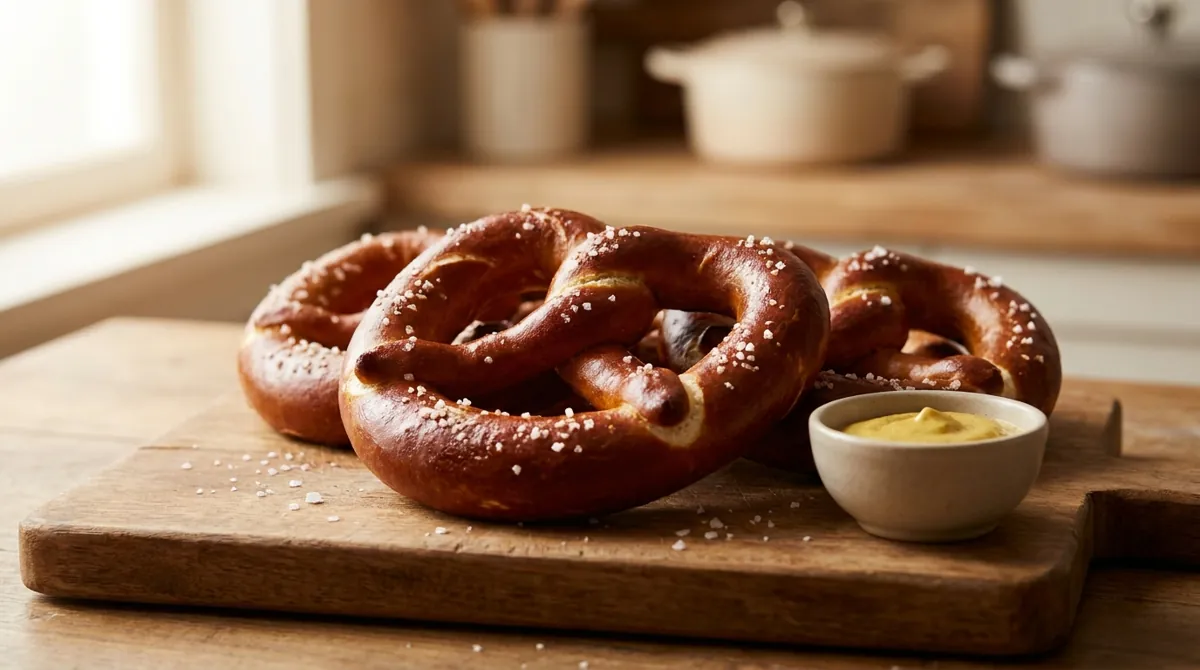
The pretzel is a knot of dough that has been a German and Alpine bakery bread for centuries; a 12th century illustration from Alsace may contain the earliest picture of one, and the shape became the sign of a baker's guild. German immigrants carried it to Pennsylvania, and southeastern Pennsylvania became the birthplace of the American pretzel industry; the Sturgis bakery in Lititz is dated to 1850 in one place and 1861 in another on Wikipedia. Philadelphia then made the soft pretzel a street food, sold warm with yellow mustard.
What makes it a pretzel and not just a breadstick is the alkaline bath. Traditional German Laugengebaeck is dipped in a lye solution before baking; at home, a boiling baking soda bath does a milder version of the same job, giving the crust its dark brown color, shine and a distinct pretzel taste.
Why it works the kitchen science
The alkaline bath
Baking soda raises the pH of the surface, which speeds browning (the Maillard reaction) so the crust turns deep brown and glossy with the classic pretzel flavor in a short bake.
A stiff, relatively dry dough
It holds its shape through the bath and gives the dense, chewy crumb.
A hot oven
450°F sets the crust fast so the inside stays soft.
🧰 You'll need 9 items
Everything the steps call for. Tick off what you have before you start.
Appliances
Pans and pots
Tools
Supplies
Step by step
- Step 1
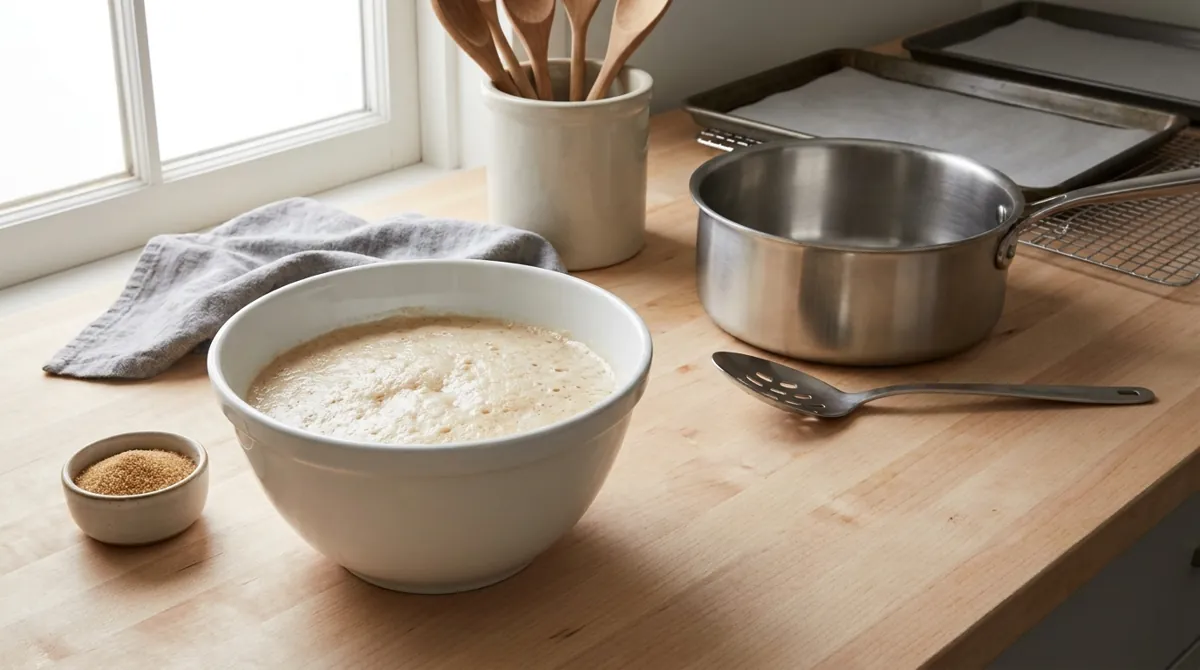
Stir the warm water, yeast and brown sugar together in a large bowl and leave it 5 minutes, until foamy.
- Step 2
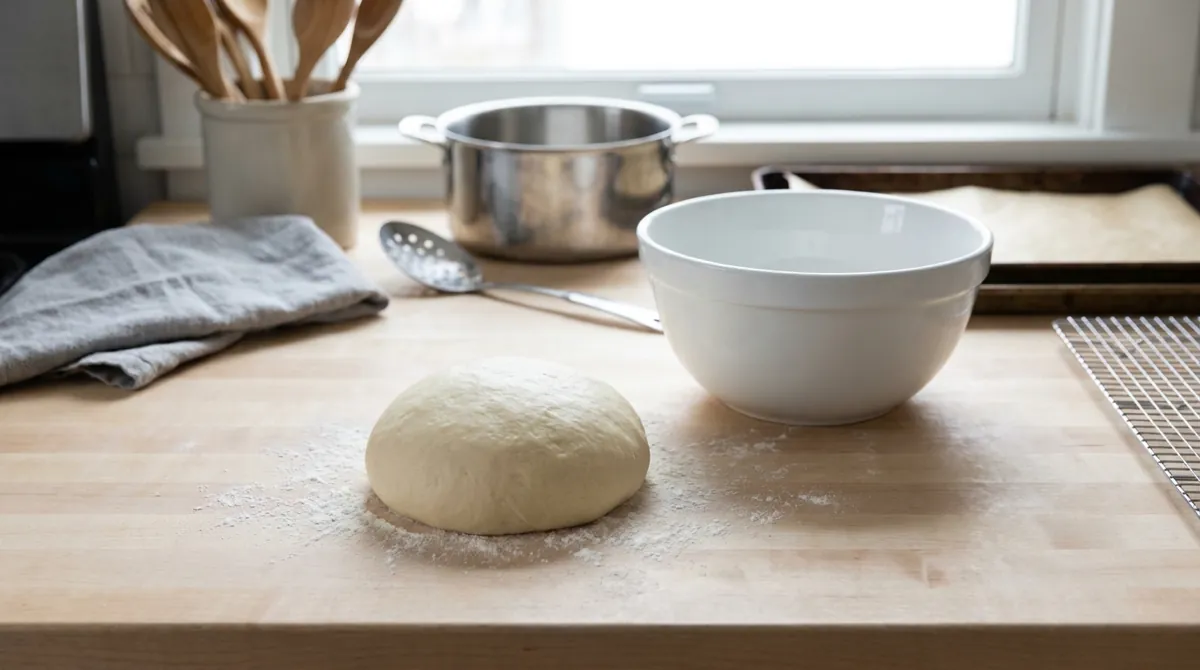
Add the flour, salt and melted butter and mix to a shaggy dough. Knead on a floured counter 6 to 8 minutes, until smooth and elastic.
✓ What it should look like - Step 3
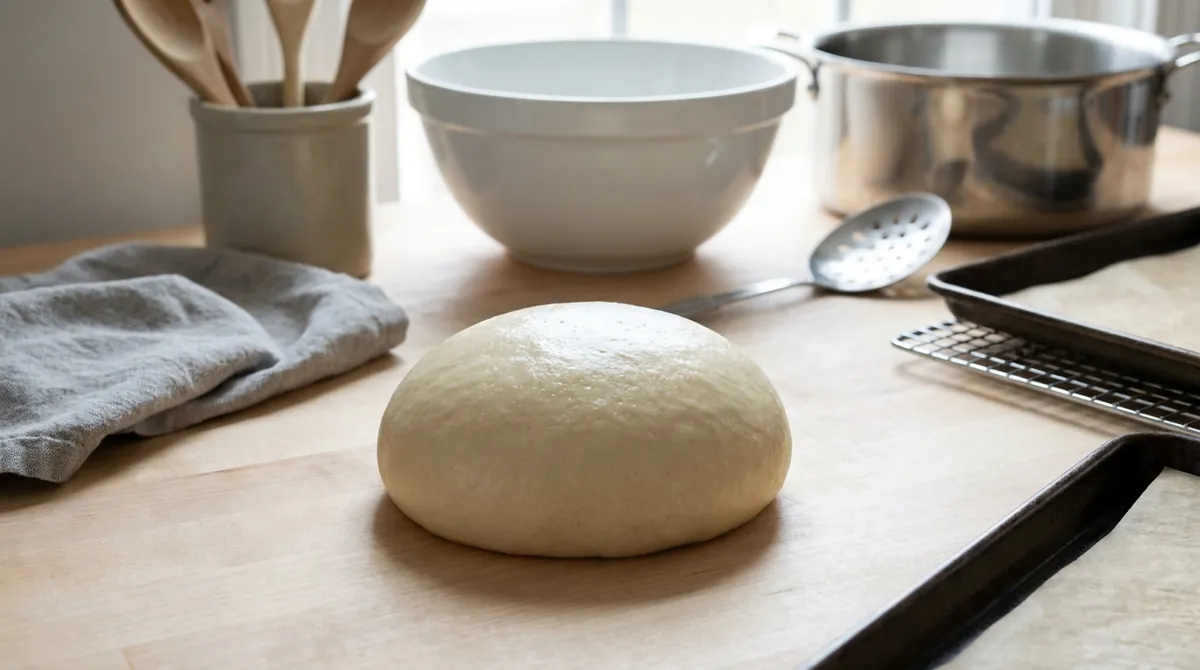
Put the dough in an oiled bowl, cover and let it rise 45 to 60 minutes, until doubled.
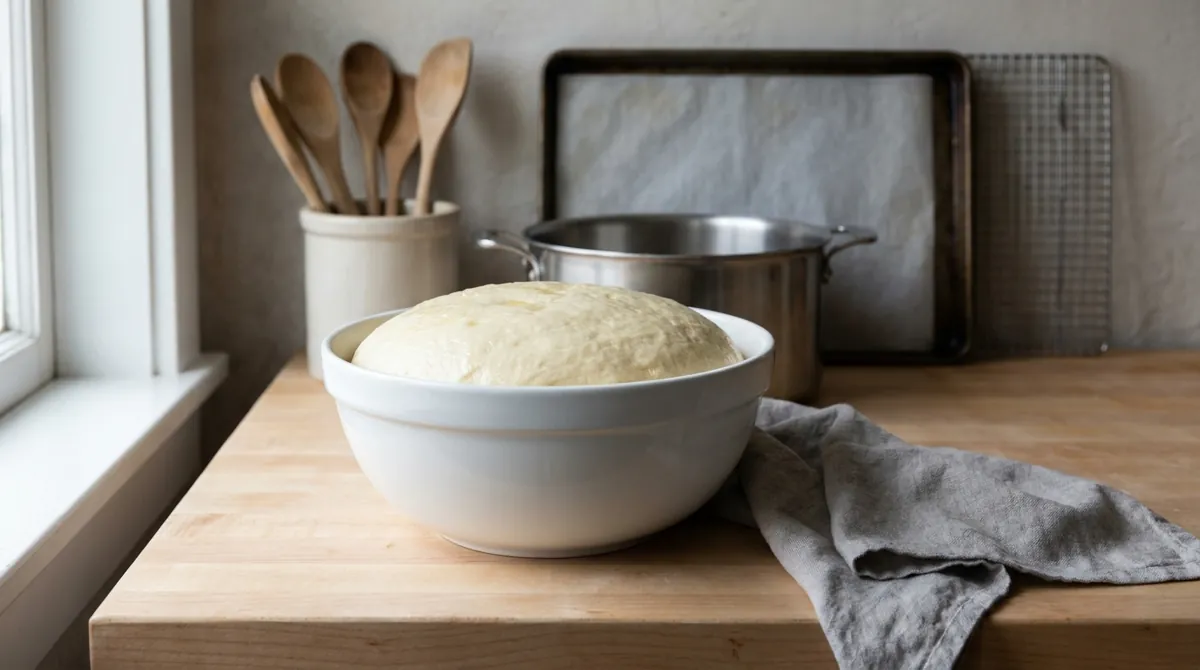
- Step 4
Heat the oven to 450°F. Line two baking sheets with parchment and oil the parchment lightly. Bring the 10 cups of water to a boil in a wide pot, then add the baking soda (it foams up, so add it gradually).
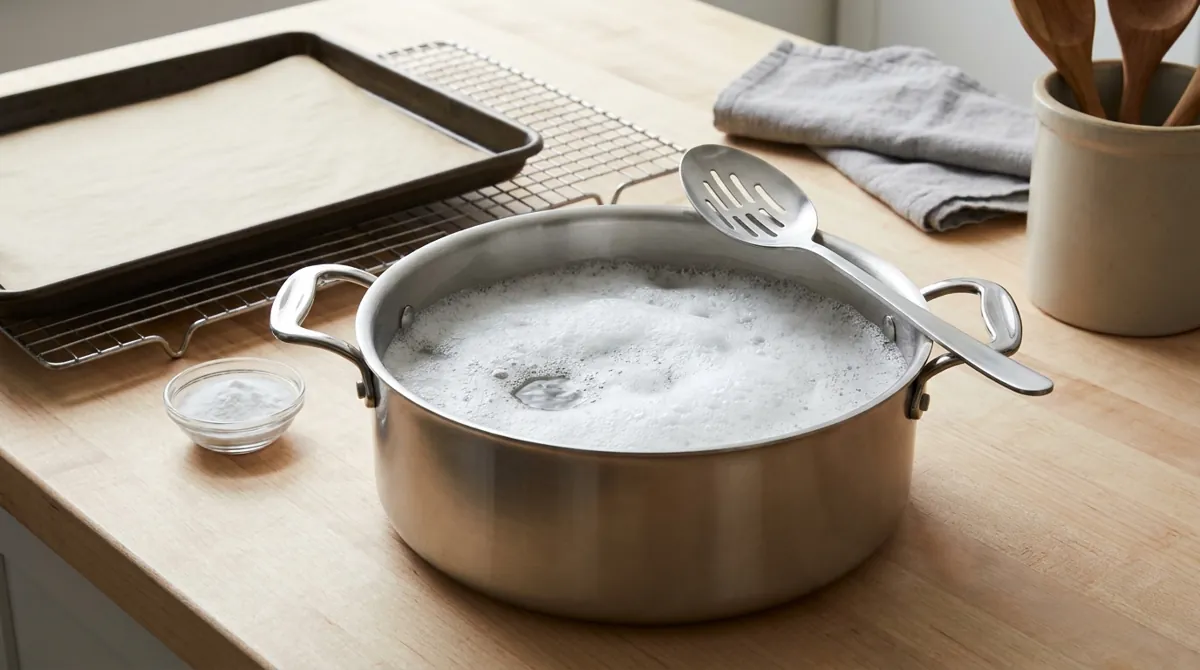
- Step 5
Divide the dough into 8 pieces. Roll each into a rope about 24 inches long, form a U, cross the ends twice and press them onto the bottom of the curve to make the pretzel shape.
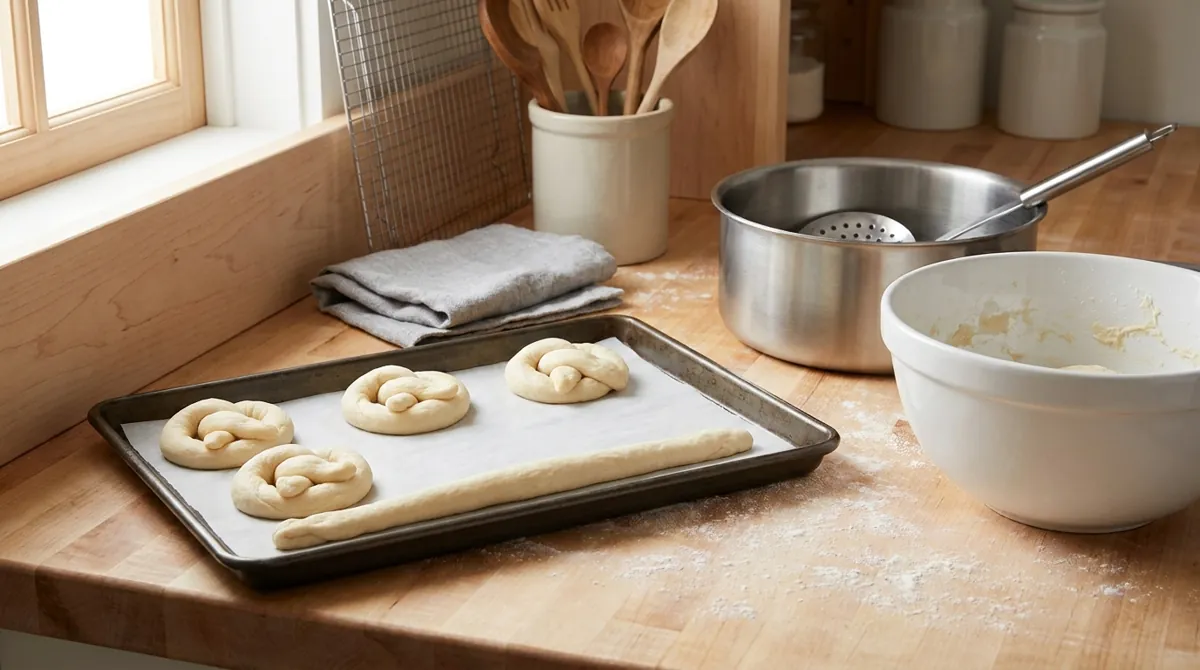
- Step 6
Lower each pretzel into the simmering bath for 30 seconds per side. Lift out with a slotted spoon, drain, set on the prepared sheets and sprinkle with coarse salt.
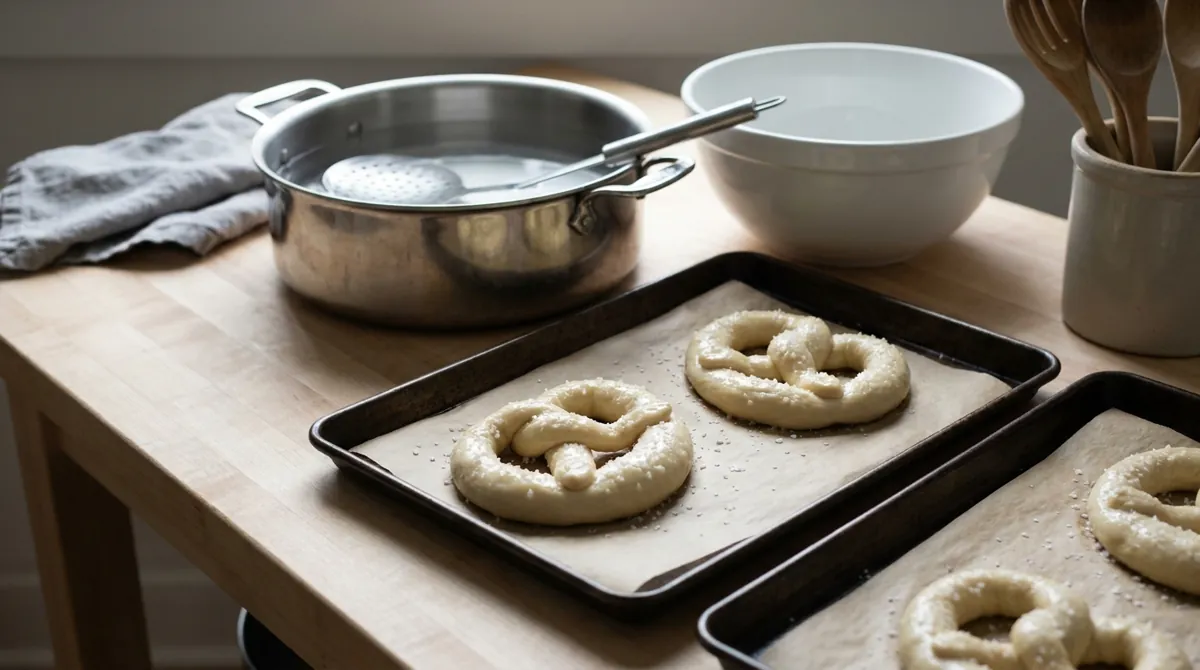
- Step 7
Bake 12 to 14 minutes, until deep mahogany brown. Brush with melted butter while hot if you like. Cool 5 minutes on a rack before eating.
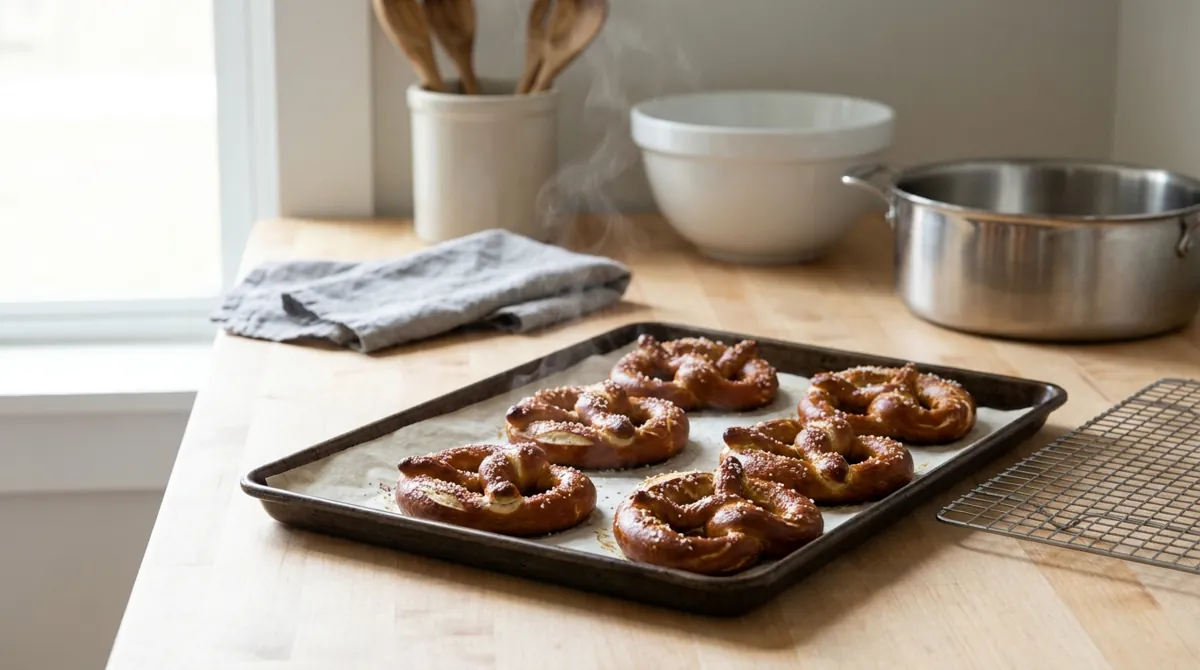
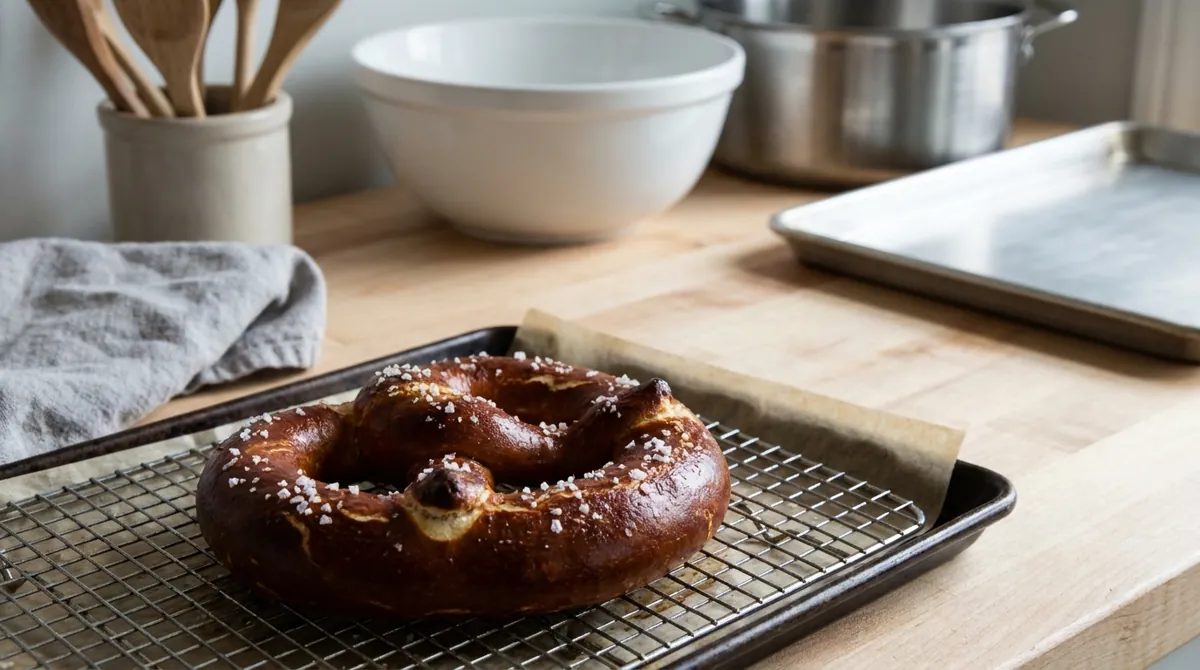
✓ What it should look like
Soft Pretzels
Serves 8 pretzels · 8 large pretzels · 1 hr 45 min total
Dough
- 1 1/2 cups warm water (355 g), about 105°F
- 2 1/4 tsp active dry yeast (1 packet, 7 g)
- 1 tablespoon packed light brown sugar (13 g)
- 4 cups all-purpose flour (500 g), plus more for the counter
- 2 tsp fine salt
- 2 tablespoons unsalted butter (28 g), melted, plus a little oil for the bowl
Bath and topping
- 10 cups water (2.4 L)
- 2/3 cup baking soda (about 130 g)
- Coarse pretzel salt or flaky salt, for the tops
- 2 tablespoons melted butter, for brushing (optional)
Equipment: Oven, Rimmed baking sheet, Large pot, Measuring cups and spoons, Mixing bowls, Slotted spoon or spider, Rolling pin, Pastry brush, Parchment paper
Method
- Stir the warm water, yeast and brown sugar together in a large bowl and leave it 5 minutes, until foamy.
- Add the flour, salt and melted butter and mix to a shaggy dough. Knead on a floured counter 6 to 8 minutes, until smooth and elastic.
- Put the dough in an oiled bowl, cover and let it rise 45 to 60 minutes, until doubled.
- Heat the oven to 450°F. Line two baking sheets with parchment and oil the parchment lightly. Bring the 10 cups of water to a boil in a wide pot, then add the baking soda (it foams up, so add it gradually).
- Divide the dough into 8 pieces. Roll each into a rope about 24 inches long, form a U, cross the ends twice and press them onto the bottom of the curve to make the pretzel shape.
- Lower each pretzel into the simmering bath for 30 seconds per side. Lift out with a slotted spoon, drain, set on the prepared sheets and sprinkle with coarse salt.
- Bake 12 to 14 minutes, until deep mahogany brown. Brush with melted butter while hot if you like. Cool 5 minutes on a rack before eating.
Americanized house recipe, written for this site. History: Wikipedia, "Pretzel" (the 610 AD Italian monk story and the competing French monastery claim, the 12th century Hortus deliciarum image, lye treatment and the Maillard reaction, Pennsylvania German immigrants in the late 1700s, the Lititz bakery dates of 1850 and 1861). Technique checked against King Arthur Baking, "Hot Buttered Soft Pretzels" (bread flour dough with 7 g yeast; a stronger bath of 1 cup boiling water to 2 tablespoons baking soda with a 2 minute soak; 475°F for 8 to 9 minutes; ropes 28 to 30 inches). Our bath is a milder, larger pot (about 5 percent baking soda by weight versus King Arthur's 12 percent) with a shorter dip, a common alternative; King Arthur's newer pretzel class uses 450°F for 12 to 16 minutes with a 10 second dip per side. en.wikipedia.org. Ingredient list follows the source; the method is in our own words.
All sources (2)
Tips
- Prefer King Arthur's way? Dissolve 2 tablespoons baking soda in 1 cup of boiling water in a square pan, soak each pretzel 2 minutes, and bake at 475°F for 8 to 9 minutes.
- Use a stainless steel or enamel pot for the bath; aluminum can discolor and react with the baking soda.
- Pretzels are best the day they are made. Freeze baked ones up to 2 months and reheat at 350°F for 8 minutes.
- Serve with yellow mustard, beer cheese or cinnamon sugar and melted butter.
The rules people argue about
What the sources agree on, what they don't, and what is just a good story.
- A monk invented the pretzel around 610 AD as a reward for children who learned their prayers, the dough twisted to look like arms folded in prayer. Folklore: it is a popular story, but Wikipedia calls it the most popular story, notes a rival claim of a southern French monastery, and the earliest possible picture is a 12th century illustration.
- Philadelphia invented the soft pretzel. Disputed: the pretzel came from Germany and the Pennsylvania German bakeries of Lititz and the Lancaster area; Philadelphia made it a street-corner food.
Meatballs of the World

Italian-American Meatballs
Big, tender meatballs braised for an hour in red sauce over spaghetti. The one most Americans grew up with.

Pallottine (Abruzzo Meatballs)
Tiny meatballs, smaller than a marble, tossed right through square spaghetti alla chitarra. No bread at all.

Swedish Meatballs (Köttbullar)
Small, soft meatballs browned in butter, in a cream sauce made from the same pan, with lingonberry jam on the plate.

Danish Frikadeller
Pork meatballs shaped with a spoon and fried slowly in butter, crusty outside and soft in the middle.

Königsberger Klopse
German meatballs that are never fried: poached, then served in a creamy white sauce with capers.

Spanish Albóndigas in Almond Saffron Sauce
The tapas bar classic: small meatballs in a golden sauce thickened with fried almonds and bread.

Mexican Albóndigas with Chipotle and Mint
Soft meatballs with rice and fresh mint inside, simmered in a smoky tomato and chipotle broth.

Izgara Köfte (Turkish Grilled Meatballs)
Small, flat meatballs kneaded hard, rested cold, and charred on a hot grill pan.

Lion's Head Meatballs
Big, soft pork meatballs, stirred into a sticky paste, fried to set, then braised in a savory sauce.

Chicken Tsukune
Japan's chicken meatball: kneaded sticky, grilled on skewers, glazed with sweet soy tare, dipped in egg yolk.