
Spaghetti Bolognese
A slow, meaty ragù of beef, pork belly, soffritto, wine, a little tomato and milk, simmered for hours the Bologna way, then tossed with the spaghetti the rest of the world insists on.
🍳Cook alongOne move at a time, with real timers
 Edited by JP Lambiase
Change the estimate
Swaps change the price only: cook any meat to its own safe temperature. Where these numbers come from
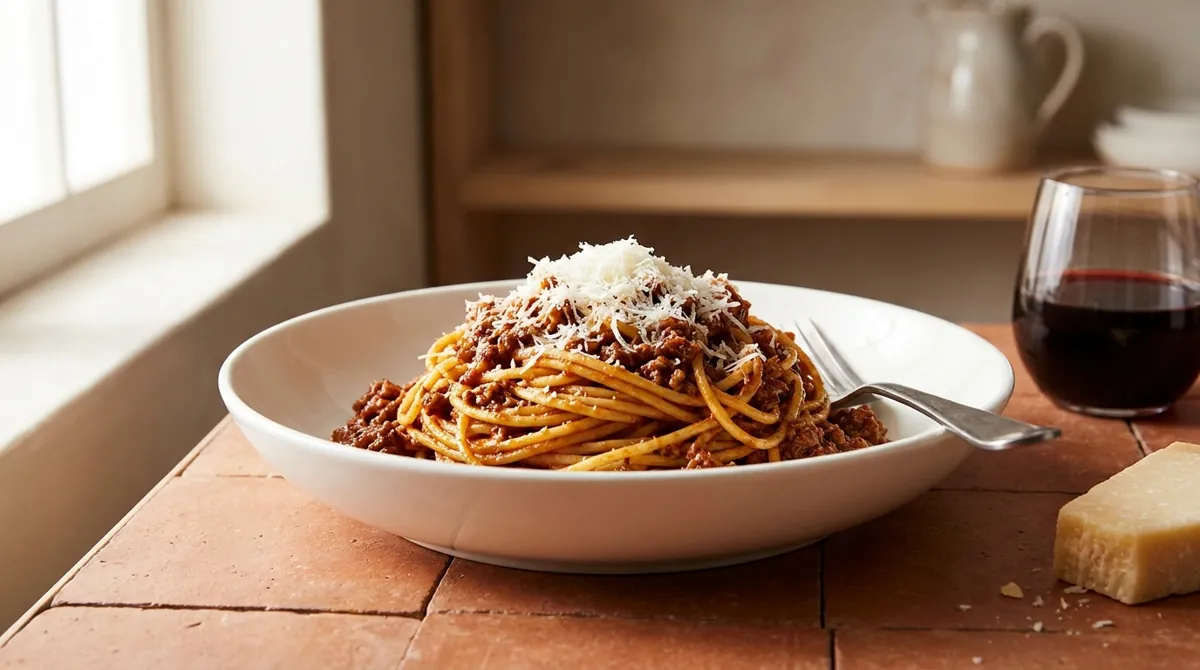
Ragù alla bolognese is a meat sauce first and a tomato sauce barely at all. Its roots run back to the French ragout, a stew of finely cut ingredients popular in the 18th century, and the earliest documented pasta ragù comes from Imola, near Bologna, in the late 1700s, credited to Alberto Alvisi, cook to the cardinal who later became Pope Pius VII. The Bologna version that matters today is beef and a little fatty pork, cooked down with onion, carrot and celery, white or red wine, a small amount of tomato and usually milk, then simmered for hours until thick.
In 1982 the Accademia Italiana della Cucina deposited an official "classic" recipe with the Bologna Chamber of Commerce, and on 20 April 2023 it deposited an updated one: more beef, fresh pork belly instead of cured pancetta, less tomato, and milk now optional. Both are served the same way in Bologna: with fresh egg tagliatelle, never spaghetti.
Spaghetti bolognese is the version the rest of the world made. Its first known mention is in Julia Lovejoy Cuniberti's 1917 Practical Italian Recipes for American Kitchens, sold to raise money for Italian soldiers in World War I. It may have grown up among southern Italian emigrants in the Americas or in postwar British Italian restaurants; nobody is sure. Abroad, "bolognese" usually means a tomato-heavy meat sauce closer to a Neapolitan ragù. Italians generally regard it as inauthentic.
This version cooks the sauce the Bologna way, by the 2023 Accademia method, and serves it on spaghetti, the way Americans order it.
Why it works the kitchen science
Pork belly and soffritto first, gently
The pork fat cooks the vegetables slowly so they turn sweet, not bitter, and it carries flavor through the sauce.
Browning the beef until it sizzles
The water has to cook off before the meat can brown, and that browning is most of the sauce's depth.
Little tomato
The Accademia's 2023 recipe cut the tomato to about 5 parts for every 8 of meat. This is a meat sauce with tomato, not a tomato sauce with meat.
Milk
It softens the tomato's acidity and makes the meat tender and the sauce rounder.
Time
Two to three hours at a bare simmer turns ground beef into something closer to a braise.
🧰 You'll need 4 items
Everything the steps call for. Tick off what you have before you start.
Pans and pots
Tools
Step by step
- Step 1
Chop the onion, carrot and celery very fine with a chef's knife on a cutting board, keeping them in one pile, and chop the pork belly fine in a separate pile.
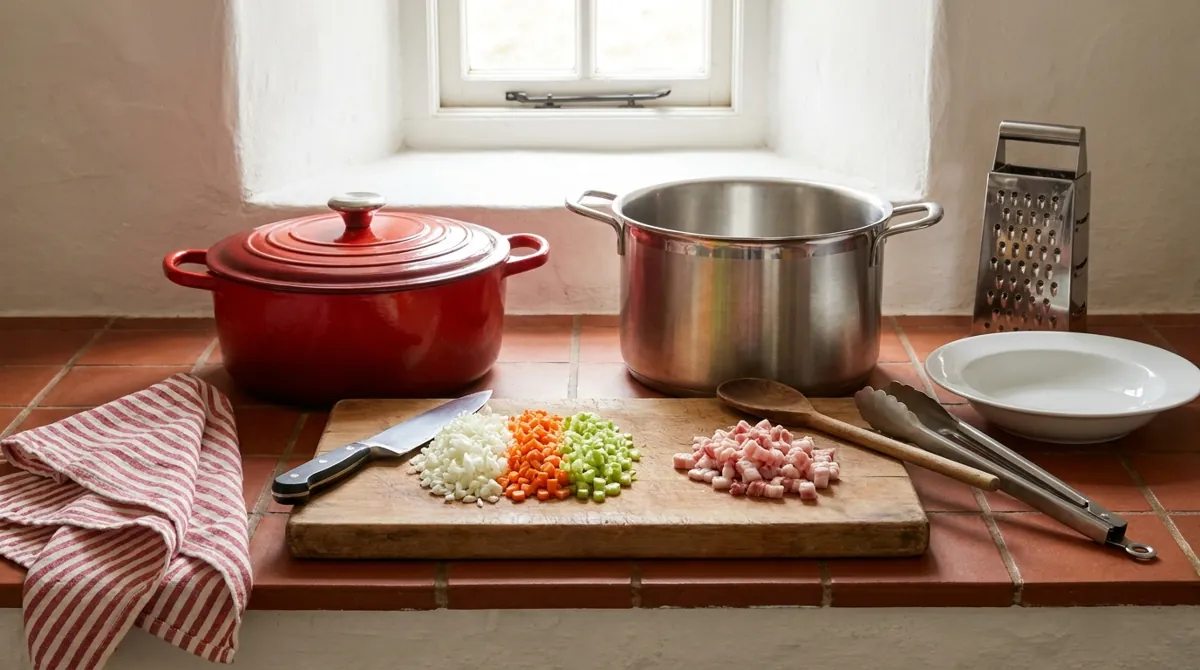
- Step 2
Warm the olive oil in a heavy 5 to 6 quart Dutch oven over medium-low heat. Add the pork belly and cook about 5 minutes, until the fat runs and it turns translucent. Add the chopped vegetables and cook gently, stirring now and then, 8 to 10 minutes, until soft and golden but not brown.
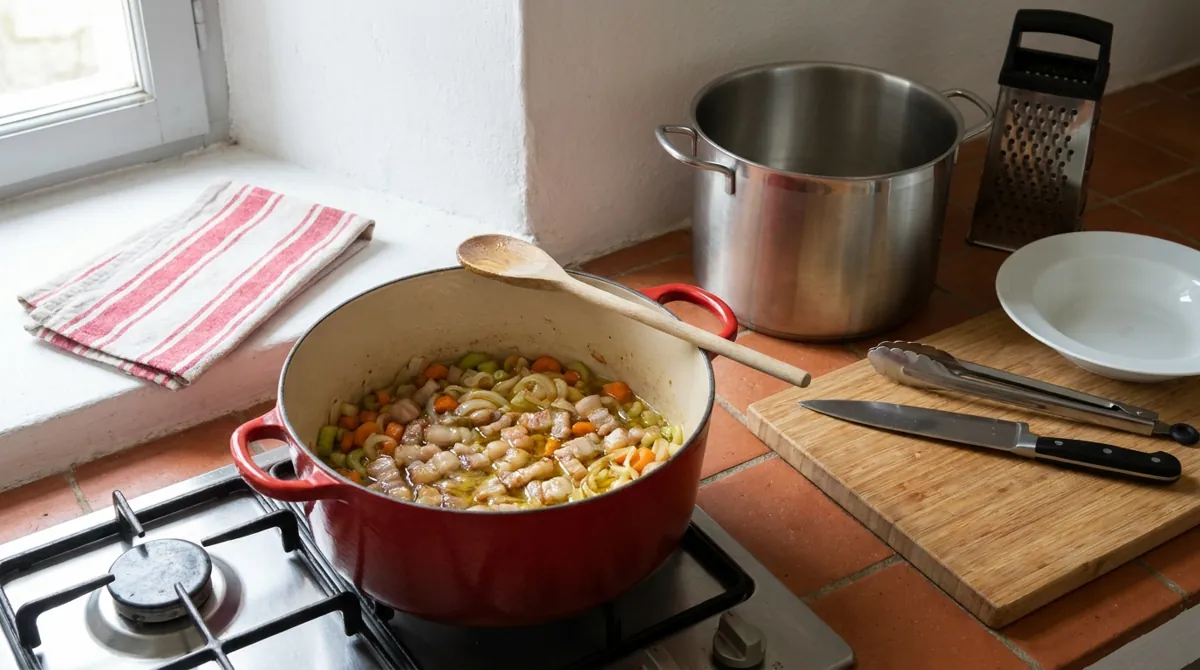
- Step 3
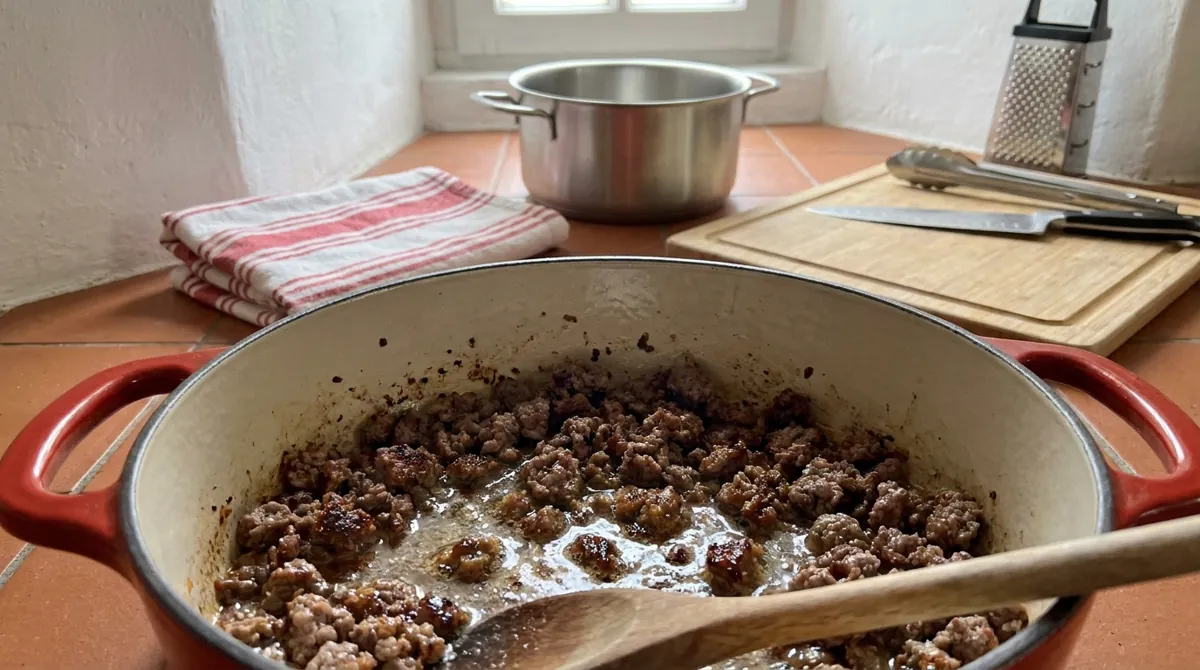
Raise the heat to medium-high, add the beef and break it up with a wooden spoon. Cook 10 to 15 minutes, until all the liquid has cooked off, no pink is left, the meat sizzles in its fat and it has begun to brown.
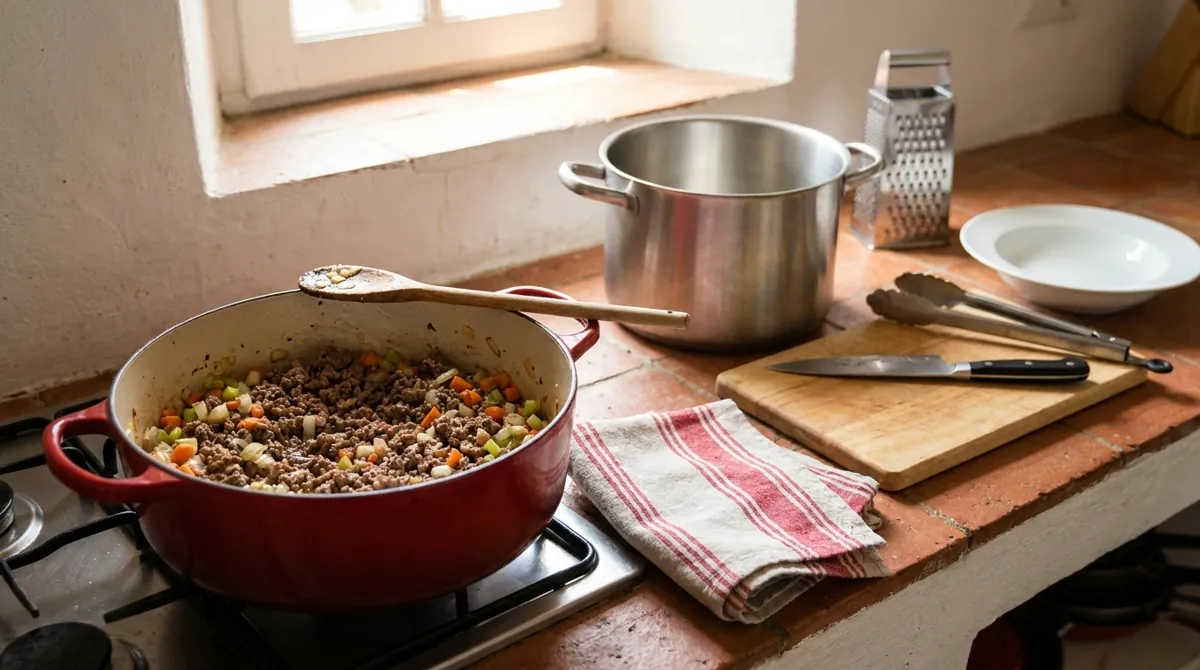
✓ What it should look like - Step 4
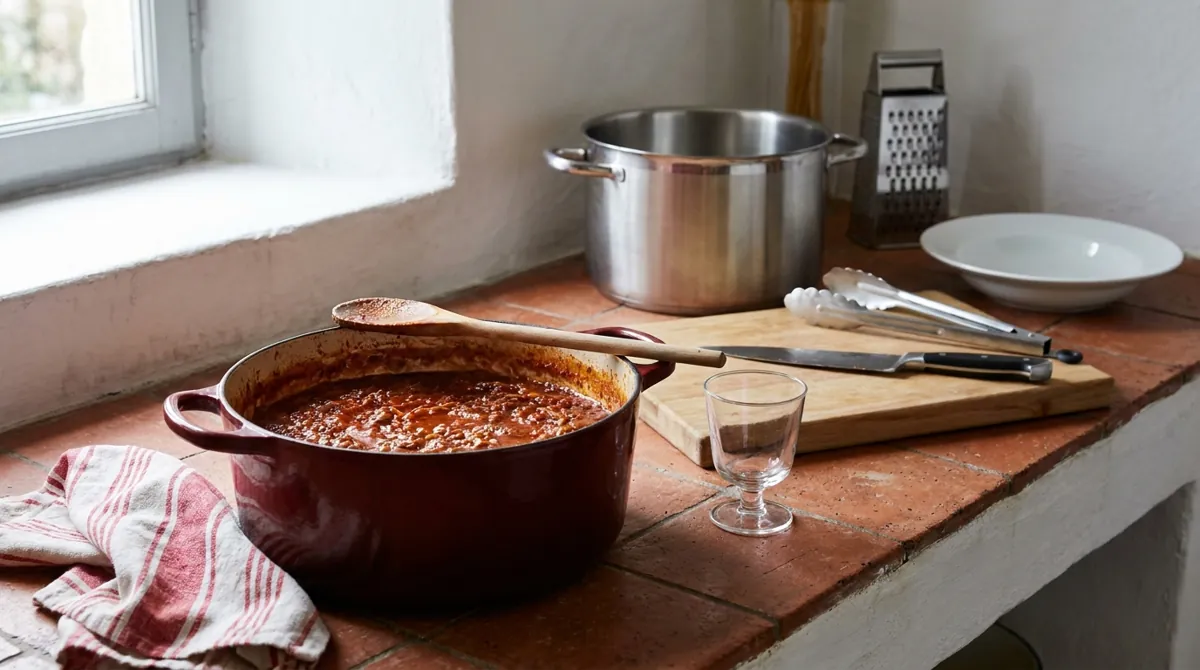
Pour in the wine and cook, stirring, until it has evaporated completely and the pot smells of meat again, not alcohol, about 5 minutes.
- Step 5
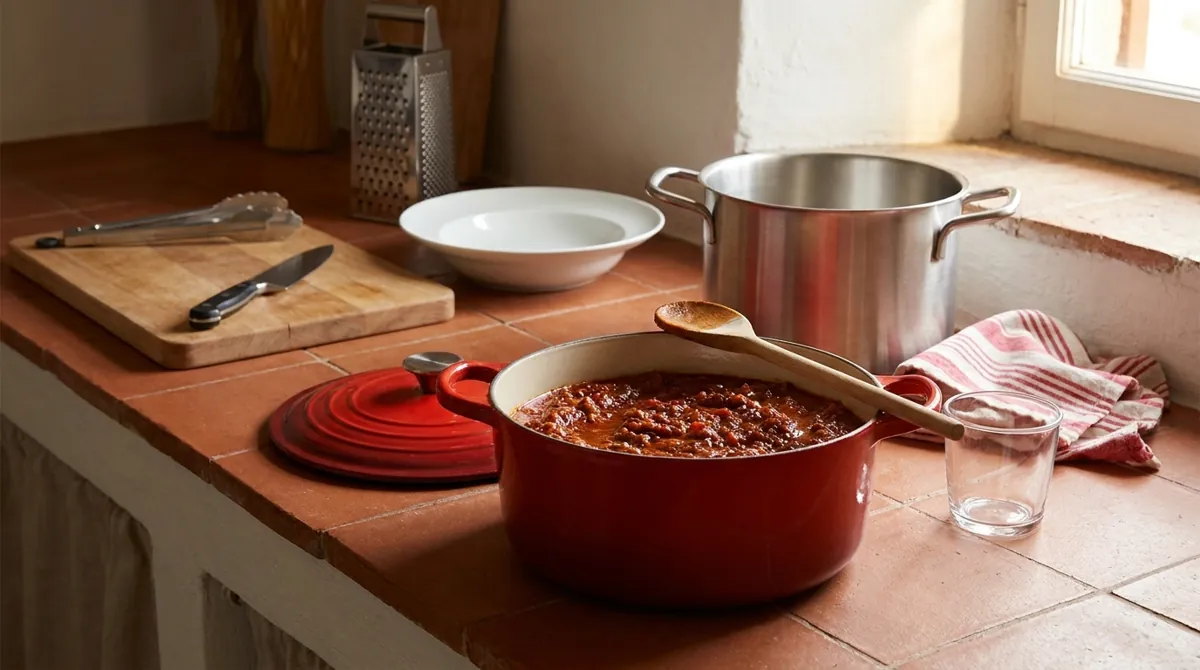
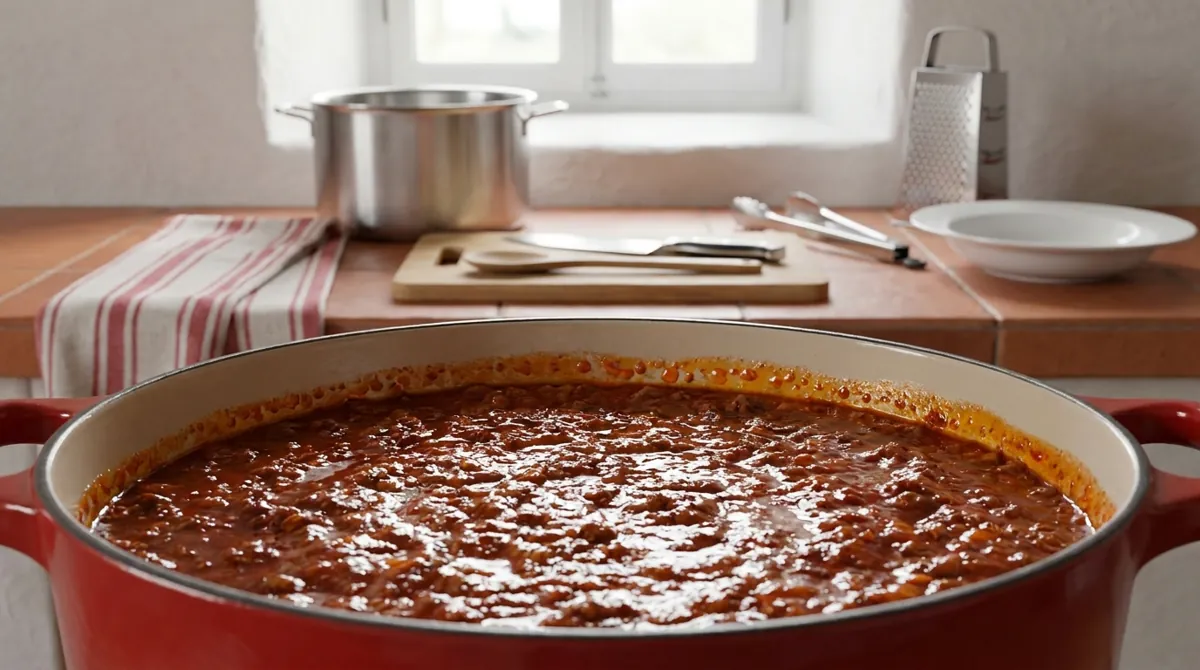
Stir in the passata, tomato paste and 1 cup of hot broth. Bring to a bare simmer, cover with the lid slightly ajar and cook on the lowest heat about 2 1/2 hours, adding a splash of broth whenever it looks dry. Halfway through, stir in the milk and simmer uncovered until it is absorbed. The ragù is done when it is thick, glossy and deep red-brown, with fat beading at the edges. Season with salt and pepper.
✓ What it should look like - Step 6
Cook the spaghetti in a big pot of well-salted boiling water until just al dente. Drain, saving a cup of the water. Toss the spaghetti in the pot with about two thirds of the ragù and a splash of the pasta water until coated, then serve topped with the rest of the ragù and the Parmigiano.
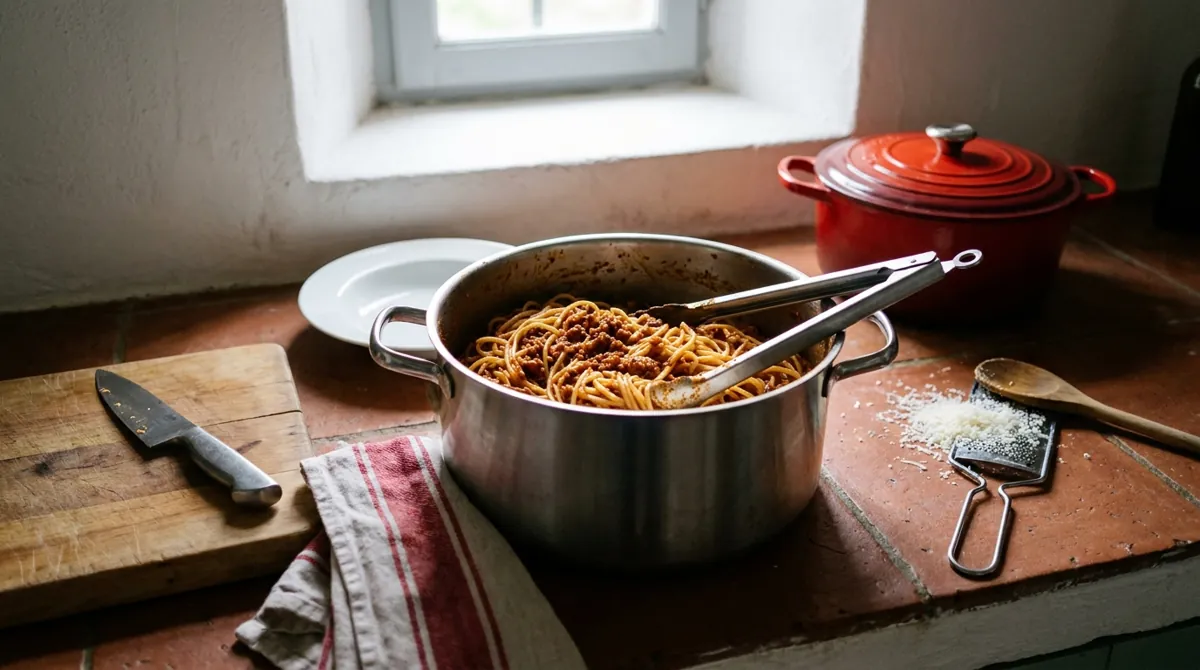
Spaghetti Bolognese
Serves 4 to 6 · about 5 cups of ragù and 1 lb of spaghetti · 3 hr 20 min total
Ragù
- 3 tbsp extra virgin olive oil (40 g)
- 5 oz fresh pork belly or pancetta, finely chopped (150 g)
- 1/2 medium onion, finely chopped (60 g)
- 1 small carrot, finely chopped (60 g)
- 1 celery stalk, finely chopped (60 g)
- 1 lb coarsely ground beef chuck, 85 percent lean (454 g)
- 3/4 cup dry white or red wine (175 g)
- 3/4 cup tomato passata or puree (200 g)
- 1 tbsp tomato paste (16 g)
- 2 cups low-sodium beef broth, hot, as needed (480 g)
- 1 cup whole milk (244 g)
- Salt and black pepper
To serve
- 1 lb dried spaghetti (454 g)
- 1/2 cup finely grated Parmigiano-Reggiano (50 g), plus more at the table
Equipment: 5-quart Dutch oven, Large pot, Chef's knife and cutting board, Measuring cups and spoons
Method
- Chop the onion, carrot and celery very fine with a chef's knife on a cutting board, keeping them in one pile, and chop the pork belly fine in a separate pile.
- Warm the olive oil in a heavy 5 to 6 quart Dutch oven over medium-low heat. Add the pork belly and cook about 5 minutes, until the fat runs and it turns translucent. Add the chopped vegetables and cook gently, stirring now and then, 8 to 10 minutes, until soft and golden but not brown.
- Raise the heat to medium-high, add the beef and break it up with a wooden spoon. Cook 10 to 15 minutes, until all the liquid has cooked off, no pink is left, the meat sizzles in its fat and it has begun to brown.
- Pour in the wine and cook, stirring, until it has evaporated completely and the pot smells of meat again, not alcohol, about 5 minutes.
- Stir in the passata, tomato paste and 1 cup of hot broth. Bring to a bare simmer, cover with the lid slightly ajar and cook on the lowest heat about 2 1/2 hours, adding a splash of broth whenever it looks dry. Halfway through, stir in the milk and simmer uncovered until it is absorbed. The ragù is done when it is thick, glossy and deep red-brown, with fat beading at the edges. Season with salt and pepper.
- Cook the spaghetti in a big pot of well-salted boiling water until just al dente. Drain, saving a cup of the water. Toss the spaghetti in the pot with about two thirds of the ragù and a splash of the pasta water until coated, then serve topped with the rest of the ragù and the Parmigiano.
Americanized house recipe, written for this site, following the Accademia's 2023 method. History: Wikipedia, "Bolognese sauce" (French ragout roots, Alberto Alvisi in Imola in the late 18th century, the 1982 and 2023 Accademia recipes, tagliatelle in Bologna, spaghetti bolognese abroad and Cuniberti's 1917 book, the 2010 International Day of Italian Cuisines). Official recipe: Accademia Italiana della Cucina, "Ragù alla bolognese, updated recipe, 20 April 2023" (PDF); side-by-side 1982 and 2023 comparison (400 g beef, 150 g pork belly, 60 g each of onion, carrot and celery, a glass of wine, 200 g passata plus a spoon of paste, milk optional, about 2 hours covered), Stefan Gourmet, "The New Official Recipe for Ragù alla Bolognese". en.wikipedia.org. Ingredient list follows the source; the method is in our own words.
Tips
- For the Bologna version, serve it with fresh egg tagliatelle or pappardelle instead of spaghetti.
- The ragù is better the next day and freezes for 3 months.
- No pork belly? Use pancetta (the 1982 recipe) or replace 40 percent of the beef with ground pork, both allowed by the 2023 recipe.
- Toss the pasta with the sauce in the pot rather than spooning sauce on top of plain spaghetti; it coats every strand.
The rules people argue about
What the sources agree on, what they don't, and what is just a good story.
- Real bolognese needs milk. Disputed: milk was in the 1982 recipe and is optional, though still advised, in 2023.
Meatballs of the World

Italian-American Meatballs
Big, tender meatballs braised for an hour in red sauce over spaghetti. The one most Americans grew up with.

Pallottine (Abruzzo Meatballs)
Tiny meatballs, smaller than a marble, tossed right through square spaghetti alla chitarra. No bread at all.

Swedish Meatballs (Köttbullar)
Small, soft meatballs browned in butter, in a cream sauce made from the same pan, with lingonberry jam on the plate.

Danish Frikadeller
Pork meatballs shaped with a spoon and fried slowly in butter, crusty outside and soft in the middle.

Königsberger Klopse
German meatballs that are never fried: poached, then served in a creamy white sauce with capers.

Spanish Albóndigas in Almond Saffron Sauce
The tapas bar classic: small meatballs in a golden sauce thickened with fried almonds and bread.

Mexican Albóndigas with Chipotle and Mint
Soft meatballs with rice and fresh mint inside, simmered in a smoky tomato and chipotle broth.

Izgara Köfte (Turkish Grilled Meatballs)
Small, flat meatballs kneaded hard, rested cold, and charred on a hot grill pan.

Lion's Head Meatballs
Big, soft pork meatballs, stirred into a sticky paste, fried to set, then braised in a savory sauce.

Chicken Tsukune
Japan's chicken meatball: kneaded sticky, grilled on skewers, glazed with sweet soy tare, dipped in egg yolk.