
Split Pea Soup
A thick, savory green soup of split peas simmered with a smoky ham hock, onion, carrot and celery until it falls apart into a spoon-coating purée.
🍳Cook alongOne move at a time, with real timers
 Edited by JP Lambiase
Change the estimate
Swaps change the price only: cook any meat to its own safe temperature. Where these numbers come from
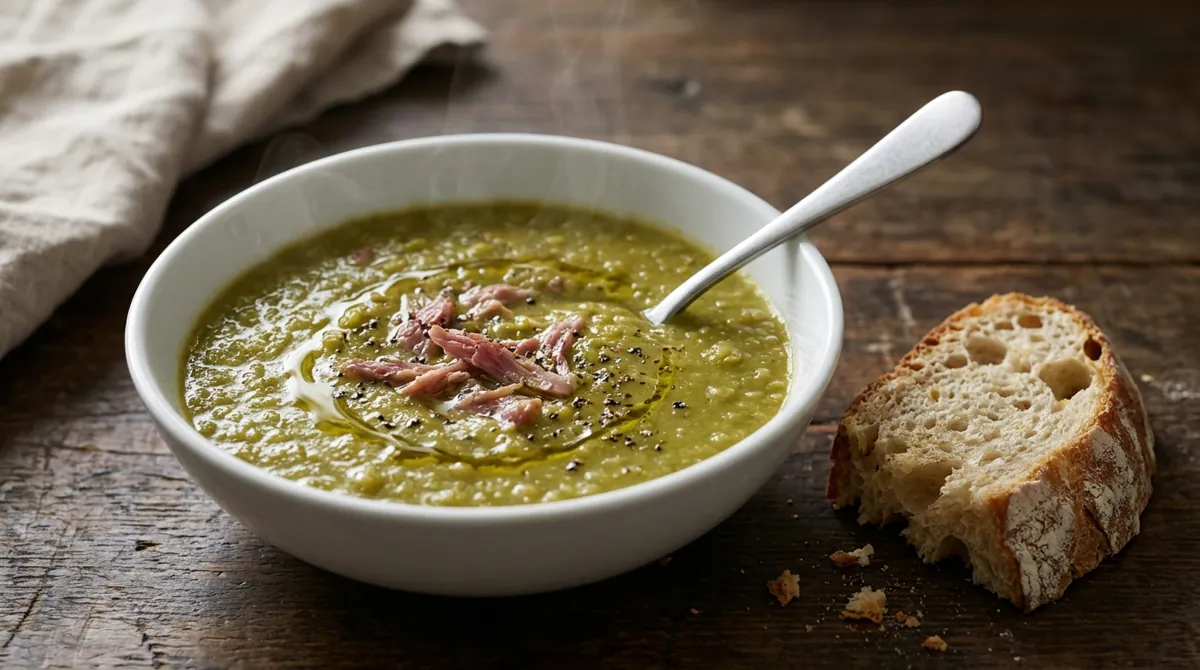
Pea soup is one of the oldest soups in Europe. The Greek playwright Aristophanes mentions it in The Birds (5th century BC); a claim that Athenian street vendors sold it hot rests on a weak source, so treat that as unproven. In Sweden and Finland it has been eaten since at least the 13th century and is traditionally served on Thursdays, usually explained as a hearty meal before Friday fasting; Wikipedia presents that explanation as "said to be", not proven. In Britain pea soup grew out of salt pork cooked with peas for sailors, and yellow pea soup was nicknamed "London particular" after the city's thick smog.
In the United States, split pea soup, thinner than a plain purée, with ham and visible peas, became a roadside and diner standard. The best-known American origin story is Andersen's in Buellton, California: Danish-born Anton Andersen and his French-born wife Juliette opened it in 1924 as Andersen's Electrical Cafe and added pea soup from Juliette's family recipe about three months later. It became the main attraction, and by 1947 the restaurant was called Pea Soup Andersen's, with cartoon mascots "Hap-pea" and "Pea-wee".
Why it works the kitchen science
Split peas break down on their own
No blender needed, the halved peas fall apart after about an hour and a half and thicken the soup.
The ham hock
Bone, skin and smoked meat give body and savory flavor that water alone cannot.
Salt last, vinegar at the end
The hock salts the pot as it cooks, and a little acid at the end brightens the heavy soup.
🧰 You'll need 3 items
Everything the steps call for. Tick off what you have before you start.
Pans and pots
Tools
Step by step
- Step 1
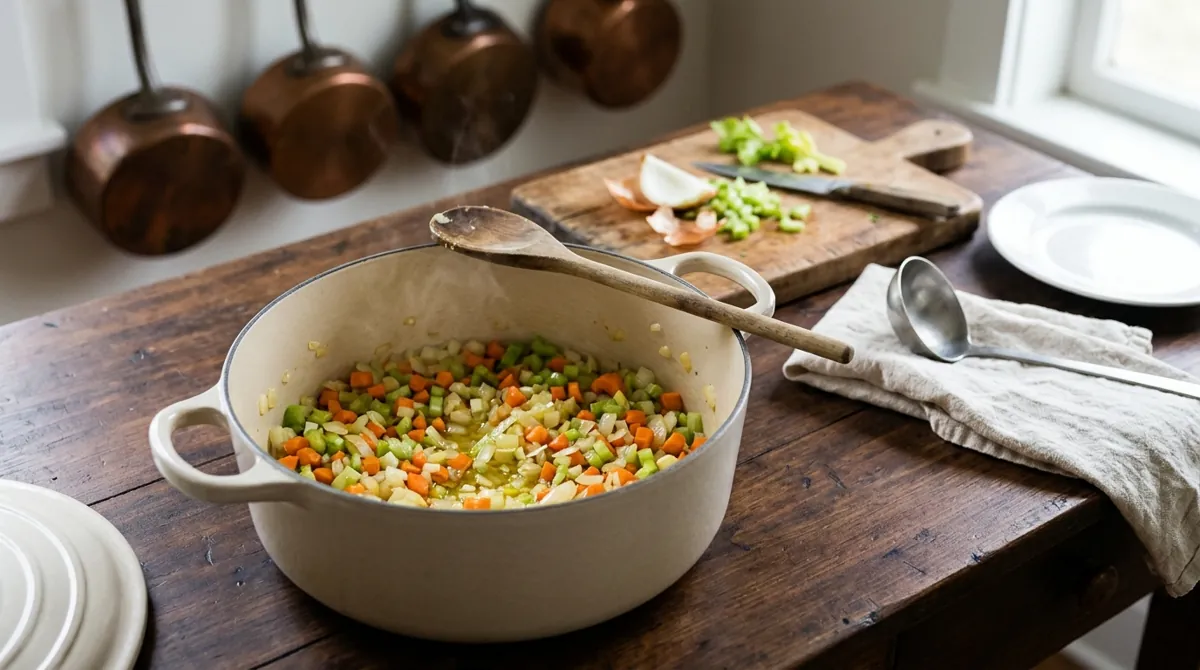
Heat the oil in a large heavy Dutch oven over medium heat. Cook the onion, carrots and celery with a pinch of salt for 7 to 8 minutes, until soft and the onion is translucent. Add the garlic for 30 seconds.
- Step 2
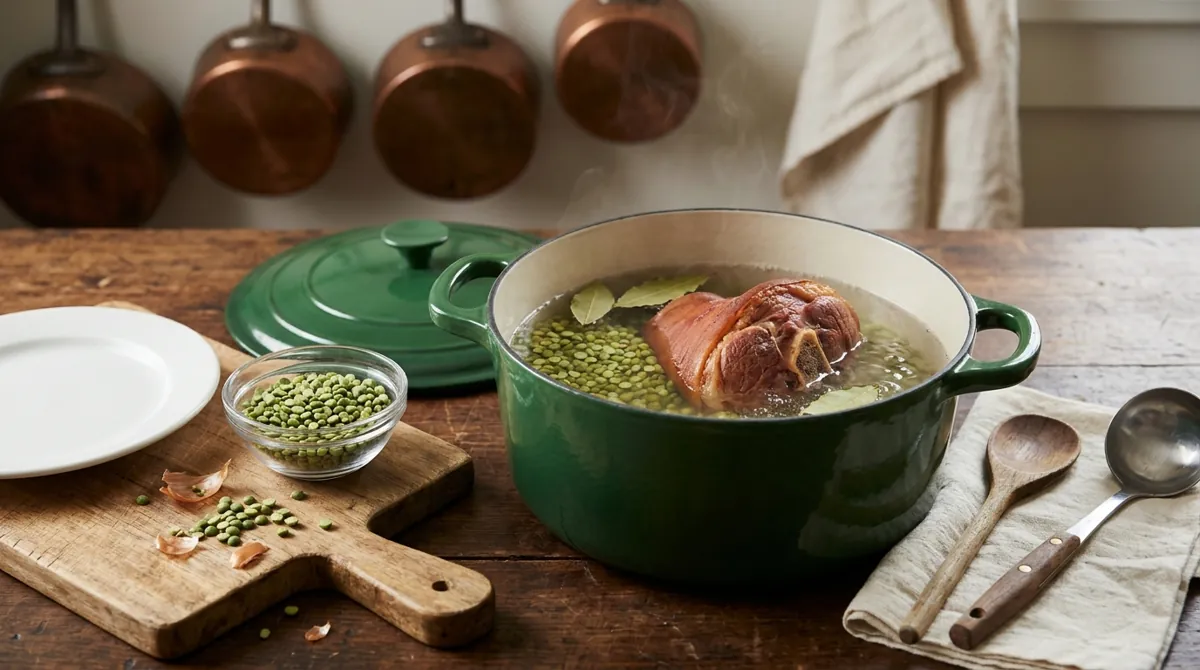
Add the split peas, ham hock, bay leaves, thyme, pepper and the water. Bring to a boil, then skim off any foam and turn the heat to low.
- Step 3
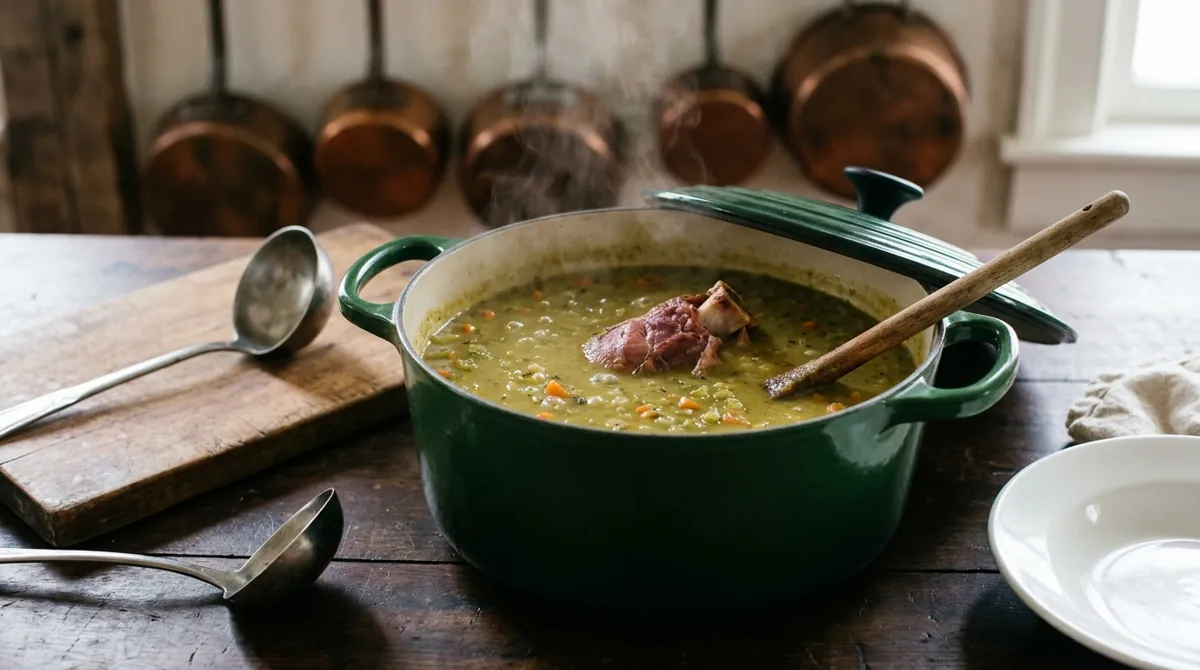
Simmer partly covered for 1 1/2 hours, stirring every 15 minutes and scraping the bottom, until the peas have broken down into a thick, creamy soup. Add a splash of water if it gets too thick.
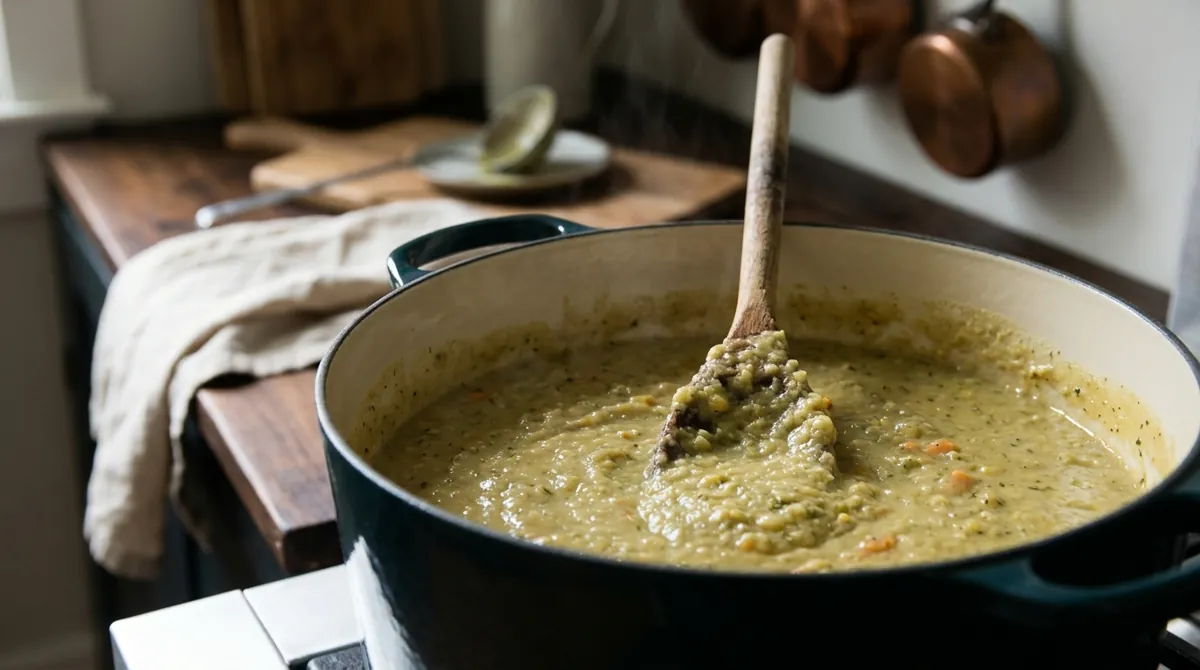
✓ What it should look like - Step 4
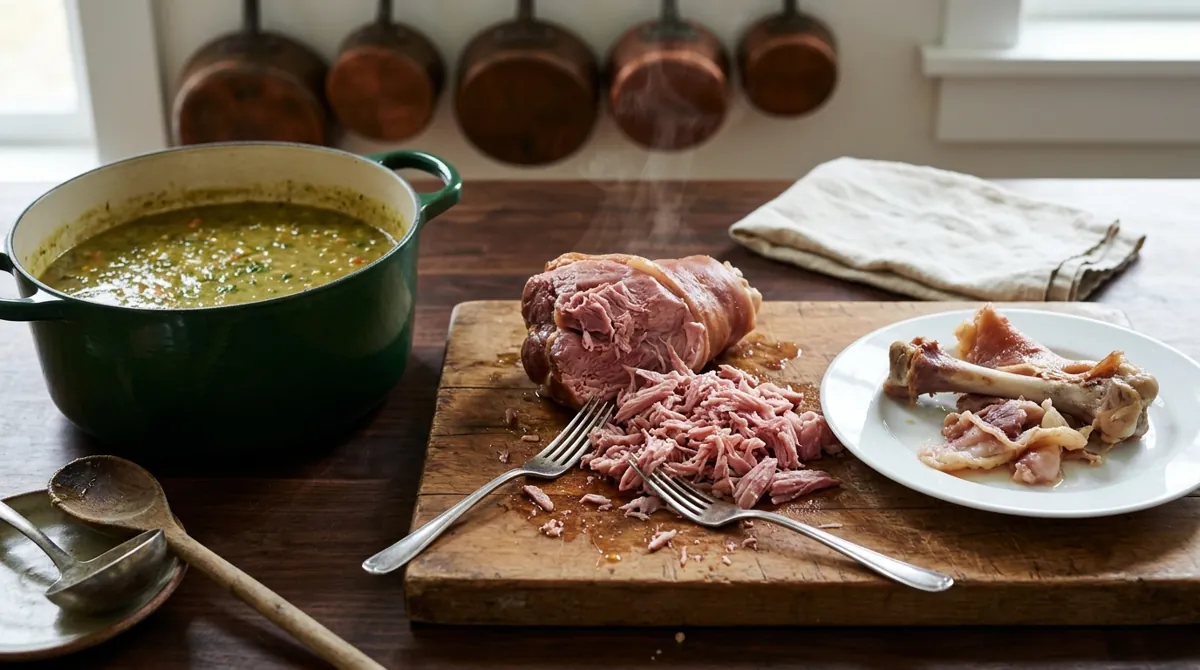
Move the hock to a plate. When it is cool enough to handle, pull the meat off, shred it and discard the skin, bone and bay leaves.
- Step 5
Stir the shredded meat back in. Taste and season with salt (the hock is salty, so wait until now) and a splash of cider vinegar. Simmer 5 more minutes.
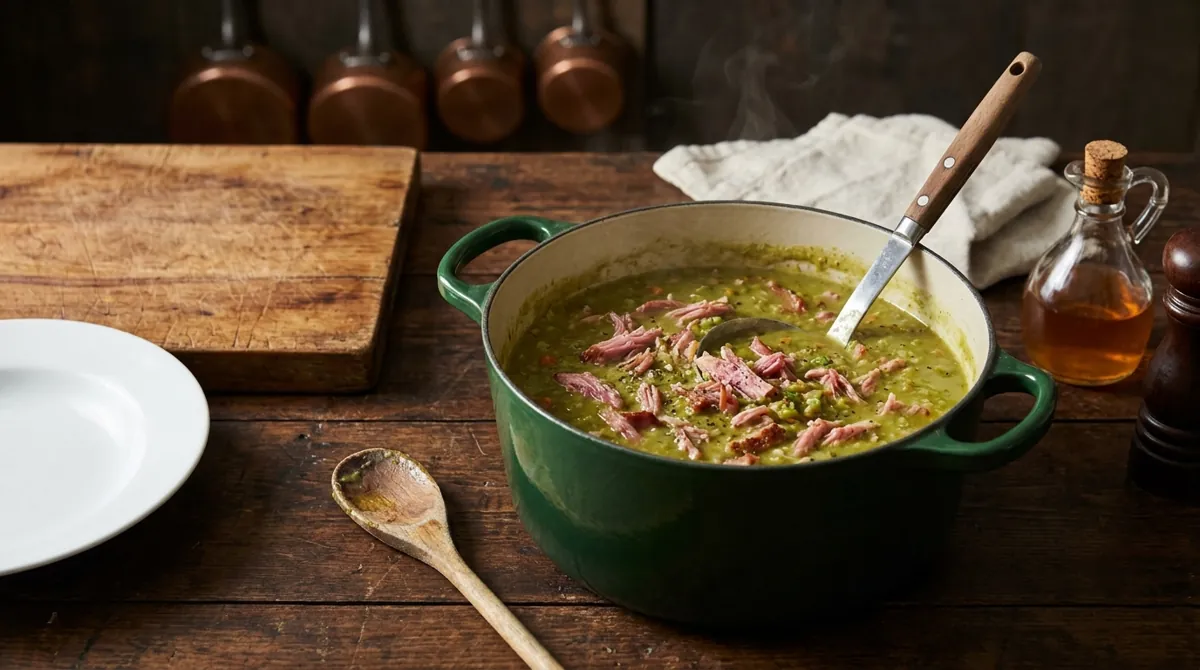
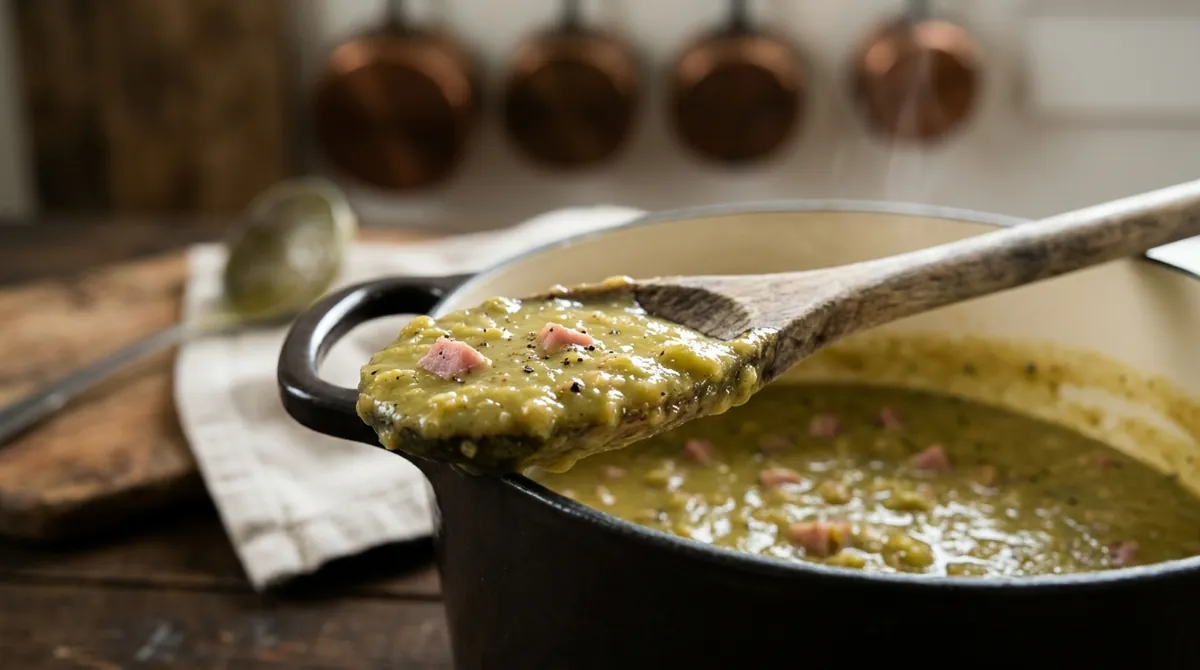
✓ What it should look like - Step 6
Serve hot with black pepper and crusty bread or croutons.
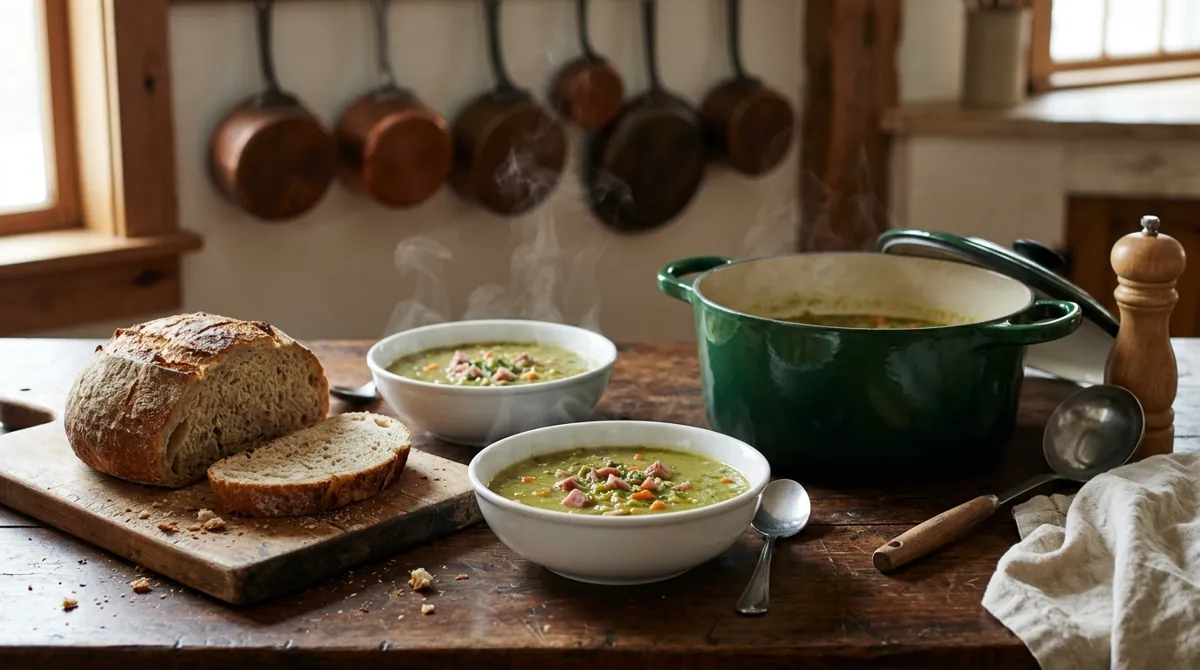
Split Pea Soup
Serves 6 · about 2 quarts · 2 hr 5 min total
- 1 lb dried green split peas (454 g), rinsed and picked over
- 1 smoked ham hock (about 1 lb, 450 g)
- 2 tbsp olive oil (28 g)
- 1 large yellow onion (200 g), diced
- 2 medium carrots (150 g), diced
- 2 ribs celery (100 g), diced
- 3 cloves garlic (9 g), minced
- 2 bay leaves and 1 tsp dried thyme
- 8 cups water (1.9 L), plus more as needed
- 1/2 tsp black pepper; salt and a splash of cider vinegar to finish
Equipment: Dutch oven, Chef's knife and cutting board, Measuring cups and spoons
Method
- Heat the oil in a large heavy Dutch oven over medium heat. Cook the onion, carrots and celery with a pinch of salt for 7 to 8 minutes, until soft and the onion is translucent. Add the garlic for 30 seconds.
- Add the split peas, ham hock, bay leaves, thyme, pepper and the water. Bring to a boil, then skim off any foam and turn the heat to low.
- Simmer partly covered for 1 1/2 hours, stirring every 15 minutes and scraping the bottom, until the peas have broken down into a thick, creamy soup. Add a splash of water if it gets too thick.
- Move the hock to a plate. When it is cool enough to handle, pull the meat off, shred it and discard the skin, bone and bay leaves.
- Stir the shredded meat back in. Taste and season with salt (the hock is salty, so wait until now) and a splash of cider vinegar. Simmer 5 more minutes.
- Serve hot with black pepper and crusty bread or croutons.
Americanized house recipe, written for this site, within the common ratios of American recipes (1 pound split peas to 8 to 10 cups liquid, a meaty ham hock, mirepoix, a simmer of 1 1/2 to 2 hours unsoaked). History: Wikipedia, "Pea soup"; Wikipedia, "Pea Soup Andersen's". deliciousmagazine.co.uk. Ingredient list follows the source; the method is in our own words.
Tips
- Stir and scrape the bottom often; thick pea soup scorches easily.
- It thickens a lot in the fridge. Thin leftovers with a splash of water when you reheat.
- It keeps 4 days in the fridge or 3 months in the freezer.
- No ham hock? Use a ham bone, or 8 oz diced ham added at the end.
The rules people argue about
What the sources agree on, what they don't, and what is just a good story.
- Split peas must be soaked overnight. Disputed: soaking cuts the simmer to about an hour; many cooks skip it, saying the longer simmer gives more flavor from the bone. Modern split peas do not need soaking.
- Pea soup began in ancient Athens with street vendors. Disputed: Aristophanes mentions it, but the vendor claim rests on a weak source.
- Split pea soup should be smooth. Disputed: Wikipedia notes that plain "pea soup" is usually a smooth purée while American split pea soup is thinner with visible peas and ham; either is traditional.
Meatballs of the World

Italian-American Meatballs
Big, tender meatballs braised for an hour in red sauce over spaghetti. The one most Americans grew up with.

Pallottine (Abruzzo Meatballs)
Tiny meatballs, smaller than a marble, tossed right through square spaghetti alla chitarra. No bread at all.

Swedish Meatballs (Köttbullar)
Small, soft meatballs browned in butter, in a cream sauce made from the same pan, with lingonberry jam on the plate.

Danish Frikadeller
Pork meatballs shaped with a spoon and fried slowly in butter, crusty outside and soft in the middle.

Königsberger Klopse
German meatballs that are never fried: poached, then served in a creamy white sauce with capers.

Spanish Albóndigas in Almond Saffron Sauce
The tapas bar classic: small meatballs in a golden sauce thickened with fried almonds and bread.

Mexican Albóndigas with Chipotle and Mint
Soft meatballs with rice and fresh mint inside, simmered in a smoky tomato and chipotle broth.

Izgara Köfte (Turkish Grilled Meatballs)
Small, flat meatballs kneaded hard, rested cold, and charred on a hot grill pan.

Lion's Head Meatballs
Big, soft pork meatballs, stirred into a sticky paste, fried to set, then braised in a savory sauce.

Chicken Tsukune
Japan's chicken meatball: kneaded sticky, grilled on skewers, glazed with sweet soy tare, dipped in egg yolk.