
Sticky Toffee Pudding
A moist, dark date sponge baked in one pan and drowned in hot buttery toffee sauce: the British pudding that a Lake District hotel made famous and whose true origin is still argued over.
🍳Cook alongOne move at a time, with real timers
 Edited by JP Lambiase
Change the estimate
Swaps change the price only: cook any meat to its own safe temperature. Where these numbers come from
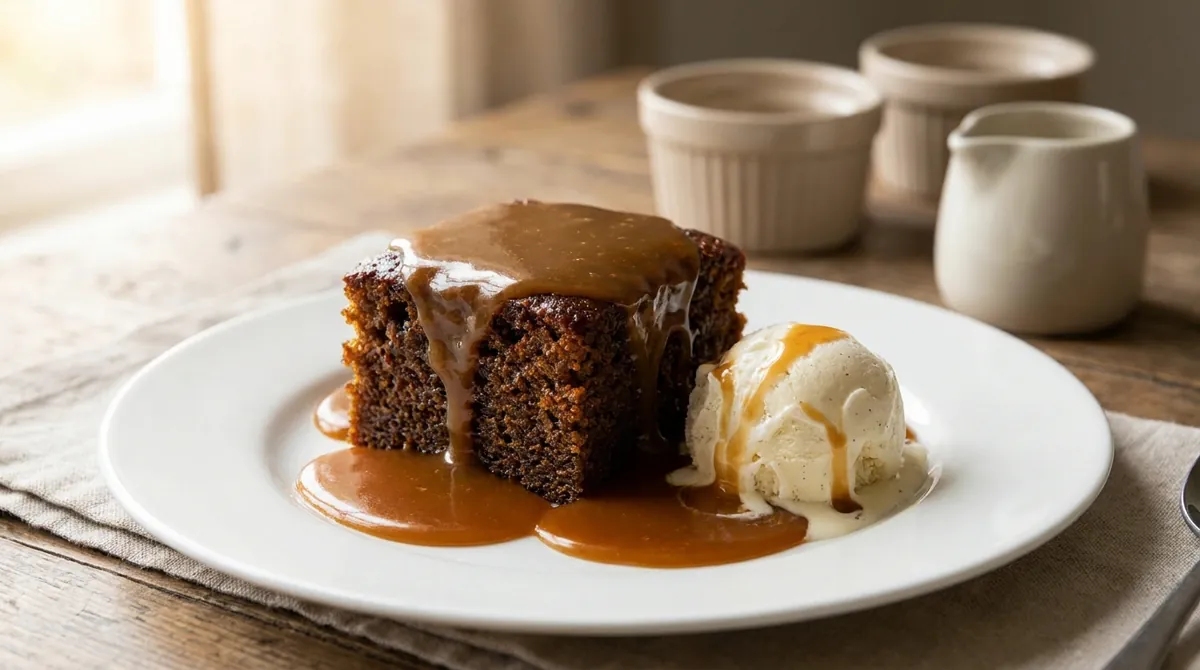
Sticky toffee pudding is a warm, very moist sponge cake made with chopped dates and covered in a toffee sauce of butter, brown sugar and cream. It became a British restaurant and pub standard from the 1970s, and the hotel most often credited with making it famous is Sharrow Bay Country House in the Lake District, where Francis Coulson and Robert Lee popularised it in the 1970s.
Where the recipe came from first is disputed. Brian Sack, a former co-owner of Sharrow Bay, said the toffee sauce drew on Canadian maple syrup recipes, which is the thread behind the Canadian claim. David Naylor, a former Sharrow Bay chef, said it was adapted from a traditional date sponge. Other places claim earlier dates: the Gait Inn in Millington, East Riding of Yorkshire, to 1907, and the Udny Arms Hotel in Newburgh, Aberdeenshire, to the 1960s. The Cartmel Village Shop, often mixed up in the story, developed its take-home version in 1989.
Why it works the kitchen science
Dates plus baking soda
The soda softens the date skins so they break down into a sweet, dark, sticky paste that runs through the whole cake.
A thin batter
The extra water makes a very moist crumb that stays tender after soaking up sauce.
Dark brown sugar and molasses
They stand in for the deep, caramel flavor of British black treacle and demerara.
Sauce poured on while the cake is warm
It soaks in rather than sitting on top.
🧰 You'll need 8 items
Everything the steps call for. Tick off what you have before you start.
Appliances
Pans and pots
Tools
Supplies
Step by step
- Step 1
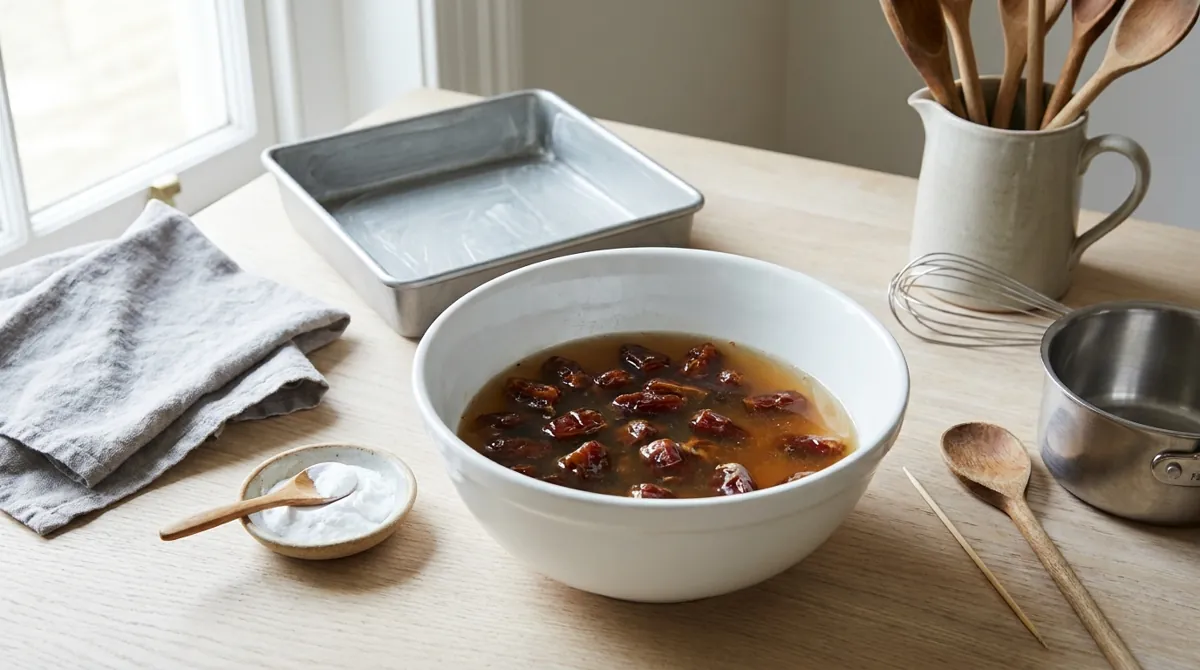
Heat the oven to 350°F. Butter a 9 inch square pan. Put the chopped dates in a bowl, pour over the boiling water, stir in the baking soda and leave 15 minutes while you work.
- Step 2
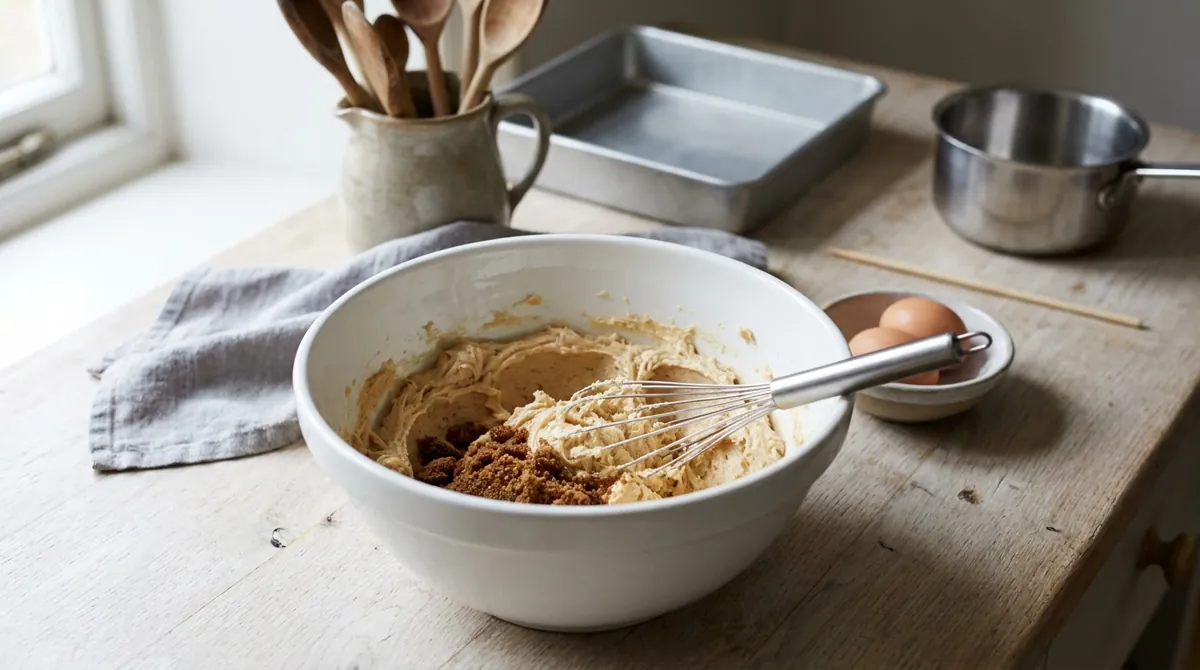
Beat the softened butter and the 3/4 cup of brown sugar with a whisk or mixer until pale and fluffy, 2 to 3 minutes. Beat in the eggs one at a time, then the vanilla.
- Step 3
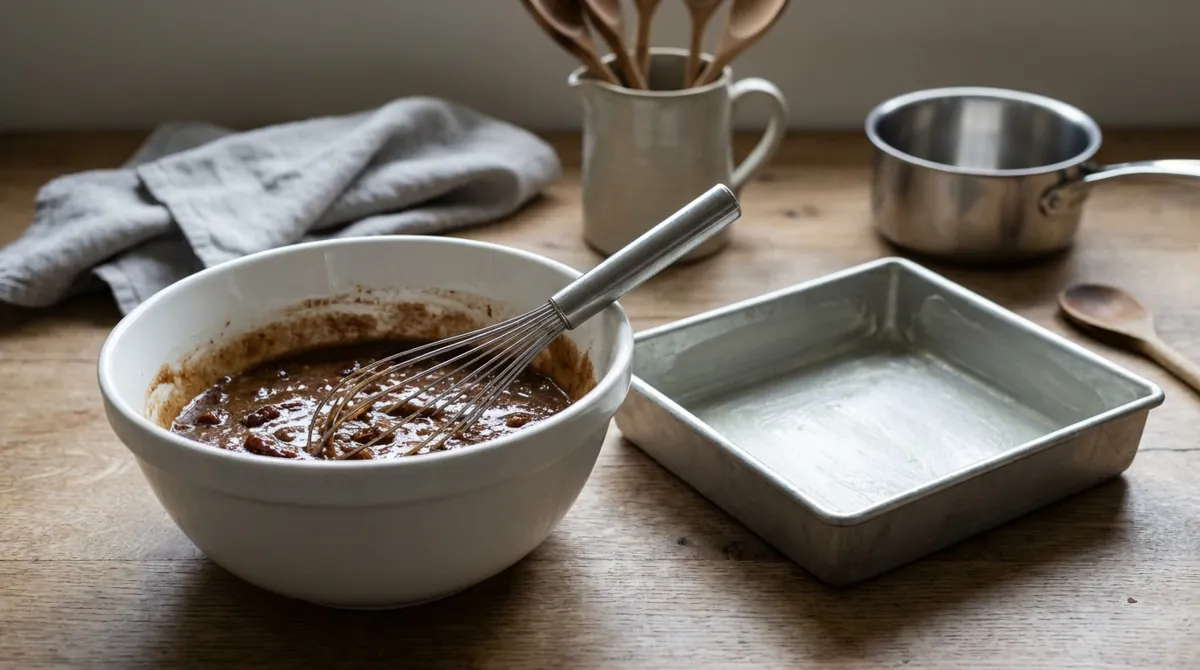
Whisk the flour, baking powder and salt together, stir them into the butter mixture, then stir in the date mixture, water and all. The batter will be thin; that is right.
- Step 4
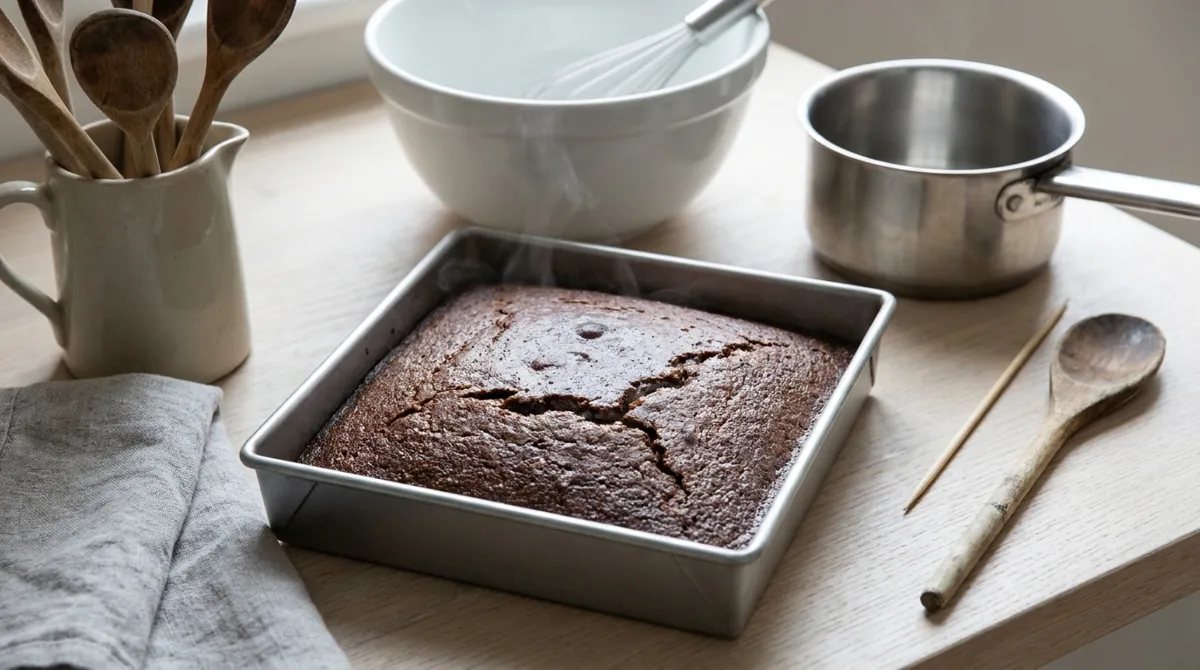
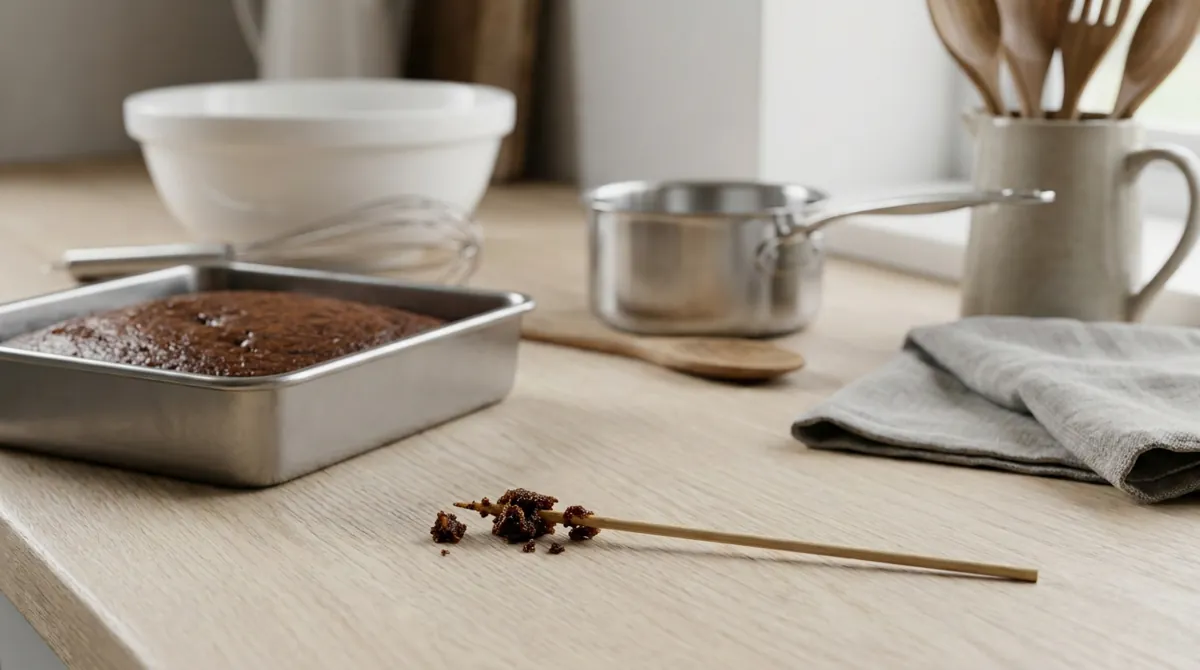
Pour the batter into the pan and bake 35 to 40 minutes, until the top is set and springs back and a skewer in the center comes out with a few moist crumbs.
✓ What it should look like - Step 5
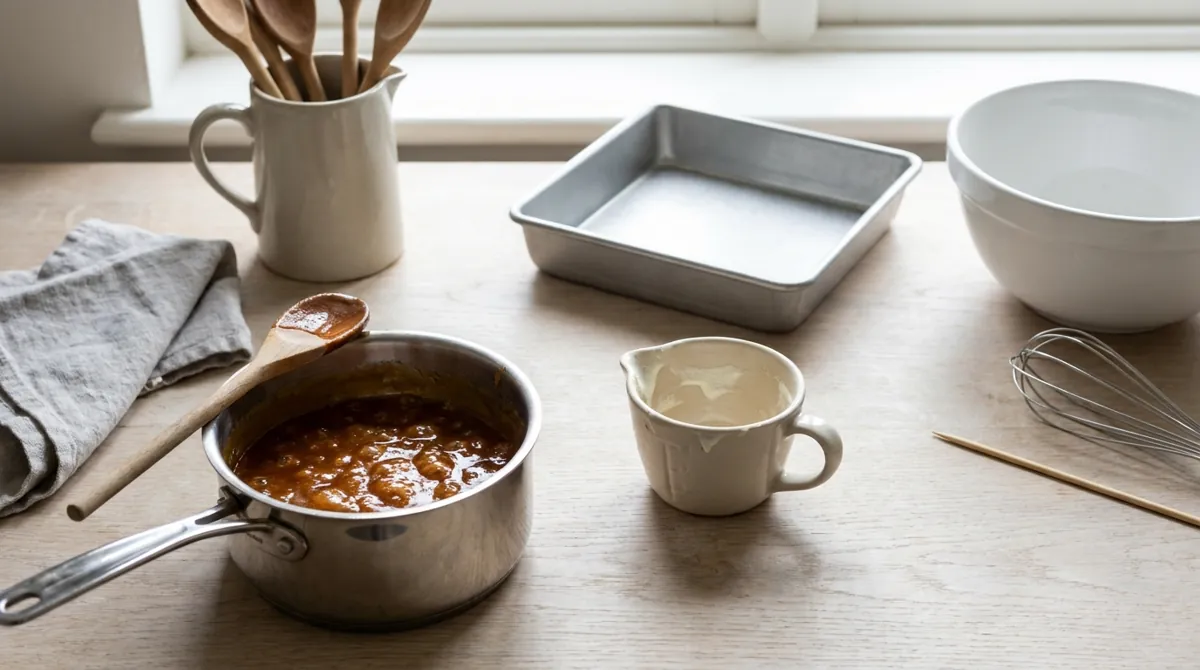
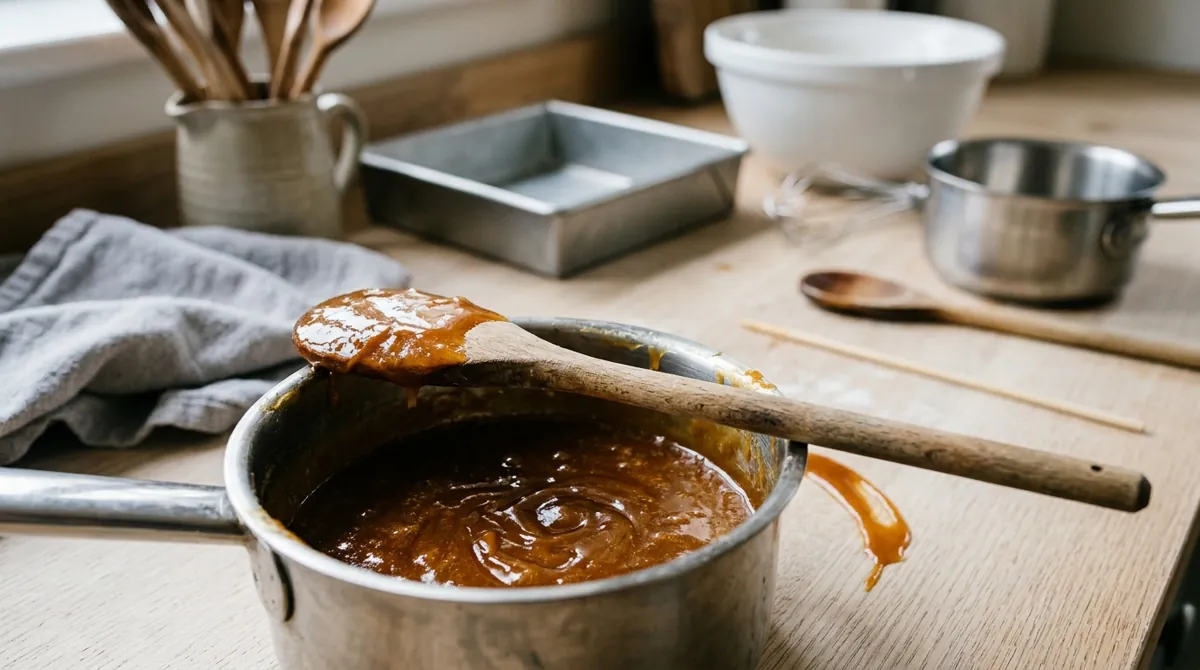
While it bakes, make the sauce: melt the butter in a saucepan, stir in the sugar and molasses until it dissolves, add the cream and simmer 3 to 5 minutes, until it is glossy and coats the back of a spoon.
✓ What it should look like - Step 6
Pour about a third of the sauce over the warm pudding in the pan and let it soak in for 5 minutes. Cut into 8 squares and serve with the rest of the sauce, and vanilla ice cream if you like.
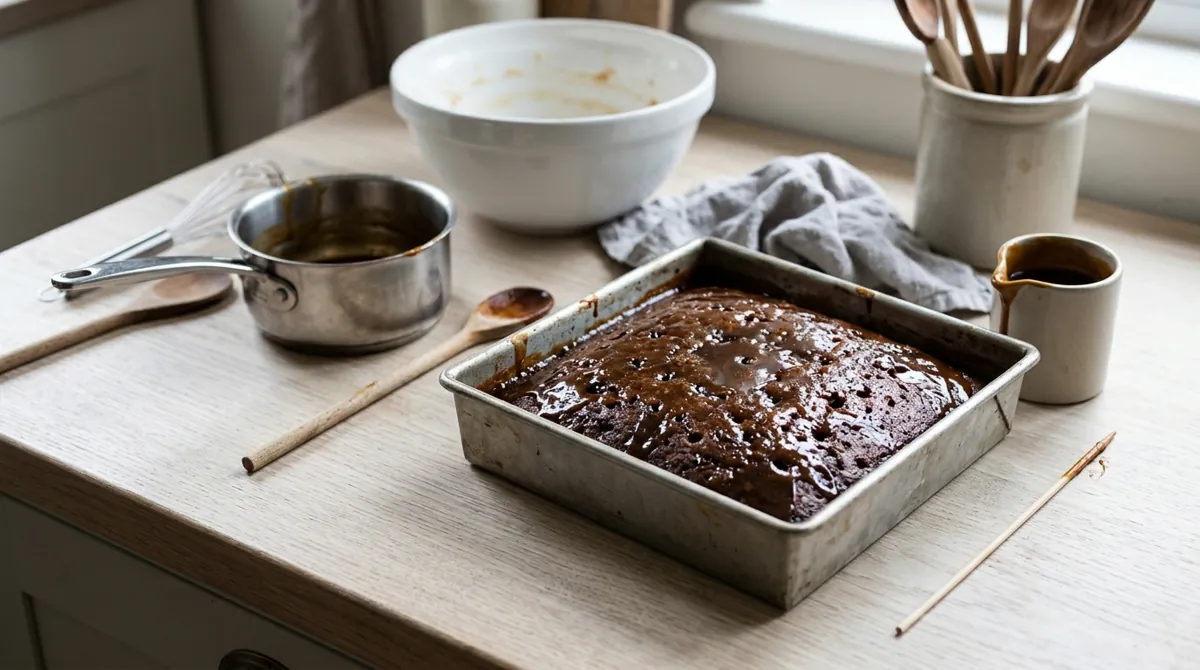
Sticky Toffee Pudding
Serves 8 squares · one 9 inch square pudding · 1 hr 5 min total
Pudding
- 1 1/4 cups chopped pitted dates (225 g)
- 1 cup boiling water (240 g)
- 1 tsp baking soda
- 6 tbsp unsalted butter, softened (85 g), plus a little for the pan
- 3/4 cup packed dark brown sugar (150 g)
- 2 large eggs (100 g)
- 1 1/2 cups all-purpose flour (190 g)
- 2 tsp baking powder
- 1/2 tsp fine salt
- 1 tsp vanilla extract
Toffee sauce
- 1/2 cup unsalted butter (113 g)
- 1 cup packed dark brown sugar (200 g)
- 1 cup heavy cream (240 g)
- 1 tbsp molasses (20 g), in place of British black treacle
Equipment: Oven, Hand or stand mixer, Saucepan, Chef's knife and cutting board, Measuring cups and spoons, Mixing bowls, Whisk, Skewers
Method
- Heat the oven to 350°F. Butter a 9 inch square pan. Put the chopped dates in a bowl, pour over the boiling water, stir in the baking soda and leave 15 minutes while you work.
- Beat the softened butter and the 3/4 cup of brown sugar with a whisk or mixer until pale and fluffy, 2 to 3 minutes. Beat in the eggs one at a time, then the vanilla.
- Whisk the flour, baking powder and salt together, stir them into the butter mixture, then stir in the date mixture, water and all. The batter will be thin; that is right.
- Pour the batter into the pan and bake 35 to 40 minutes, until the top is set and springs back and a skewer in the center comes out with a few moist crumbs.
- While it bakes, make the sauce: melt the butter in a saucepan, stir in the sugar and molasses until it dissolves, add the cream and simmer 3 to 5 minutes, until it is glossy and coats the back of a spoon.
- Pour about a third of the sauce over the warm pudding in the pan and let it soak in for 5 minutes. Cut into 8 squares and serve with the rest of the sauce, and vanilla ice cream if you like.
Americanized house recipe, written for this site. History: Wikipedia, "Sticky toffee pudding" (Sharrow Bay, Coulson and Lee, the Canadian maple syrup remark, the Gait Inn and Udny Arms claims, Cartmel 1989). Method: the standard home method of soaking dates in hot water with baking soda. en.wikipedia.org. Ingredient list follows the source; the method is in our own words.
All sources (1)
Tips
- Make the sauce ahead and rewarm it gently; it keeps 5 days in the fridge.
- Leftover pudding squares keep 3 days and freeze for 3 months; rewarm them with a spoonful of sauce.
- Pitted Medjool dates work, but chop them well and use about the same weight.
The rules people argue about
What the sources agree on, what they don't, and what is just a good story.
- Sticky toffee pudding was invented at Sharrow Bay. Disputed: Sharrow Bay popularised it in the 1970s, but the Gait Inn (to 1907) and the Udny Arms (1960s) claim earlier origins.
- It came from Canada. Disputed: a former Sharrow Bay co-owner credited Canadian maple syrup recipes for the sauce; a former chef called it an adapted traditional date sponge. Neither is documented firmly.
- Cartmel invented it. Folklore: the Cartmel Village Shop only developed its take-home version in 1989.
Meatballs of the World

Italian-American Meatballs
Big, tender meatballs braised for an hour in red sauce over spaghetti. The one most Americans grew up with.

Pallottine (Abruzzo Meatballs)
Tiny meatballs, smaller than a marble, tossed right through square spaghetti alla chitarra. No bread at all.

Swedish Meatballs (Köttbullar)
Small, soft meatballs browned in butter, in a cream sauce made from the same pan, with lingonberry jam on the plate.

Danish Frikadeller
Pork meatballs shaped with a spoon and fried slowly in butter, crusty outside and soft in the middle.

Königsberger Klopse
German meatballs that are never fried: poached, then served in a creamy white sauce with capers.

Spanish Albóndigas in Almond Saffron Sauce
The tapas bar classic: small meatballs in a golden sauce thickened with fried almonds and bread.

Mexican Albóndigas with Chipotle and Mint
Soft meatballs with rice and fresh mint inside, simmered in a smoky tomato and chipotle broth.

Izgara Köfte (Turkish Grilled Meatballs)
Small, flat meatballs kneaded hard, rested cold, and charred on a hot grill pan.

Lion's Head Meatballs
Big, soft pork meatballs, stirred into a sticky paste, fried to set, then braised in a savory sauce.

Chicken Tsukune
Japan's chicken meatball: kneaded sticky, grilled on skewers, glazed with sweet soy tare, dipped in egg yolk.