
Strawberry Shortcake
Tender, buttery cream biscuits split and piled with juicy sugared strawberries and softly whipped cream: the early-summer American dessert.
🍳Cook alongOne move at a time, with real timers
 Edited by JP Lambiase
Change the estimate
Swaps change the price only: cook any meat to its own safe temperature. Where these numbers come from
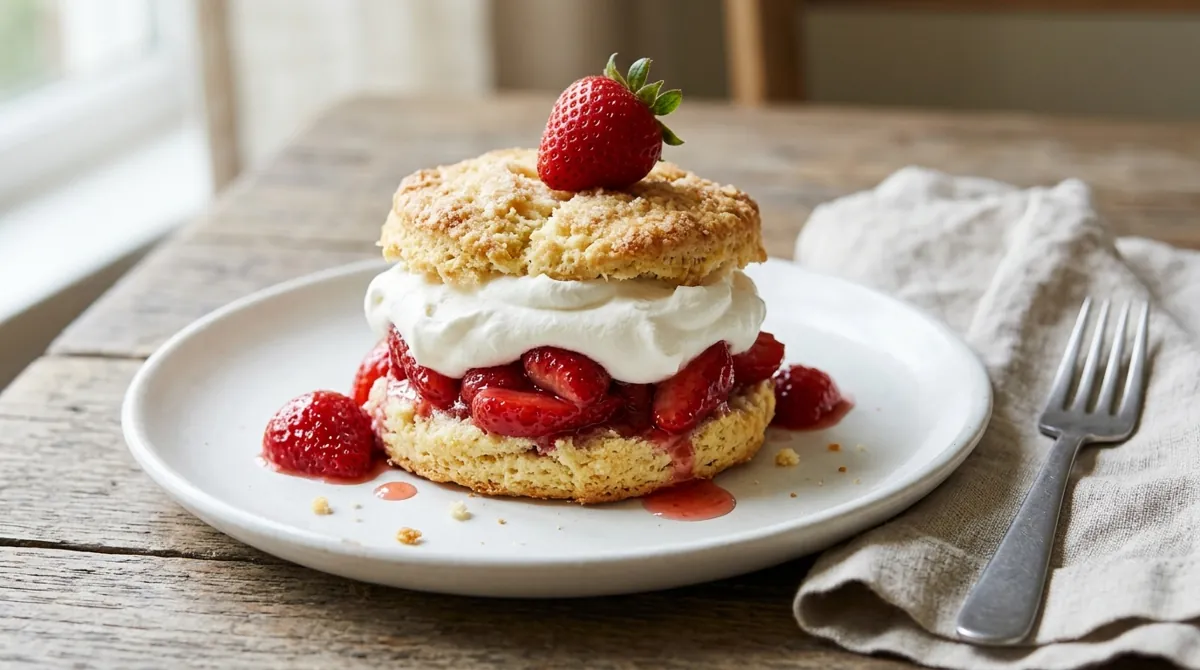
Strawberry shortcake is a split, tender biscuit or cake layered with sugared strawberries and cream. "Shortcake" is an old English baking word: "short" meant crumbly and rich with fat. The dessert is often traced back to a 1588 English reference to a "short cake"; that date is commonly cited but we could not confirm it from a primary source, so treat it as DISPUTED.
What is documented is the American version. Wikipedia's article cites an 1845 "Strawberry Cakes" recipe in The Ohio Cultivator and Eliza Leslie's 1847 version of split, unleavened shortcrust rounds with sugared strawberries. By the 1860s a large baking-soda biscuit split and filled with berries and heavy cream was standard, and strawberry shortcake parties and church socials celebrated the first summer berries. By 1876 The Home Cook Book gave whipped cream and small sponge cakes as alternatives.
The great argument is the base. Biscuit shortcake is the older, more Southern and Midwestern form; sponge or pound cake versions caught on in the North, and a 1909 Georgia cookbook already called the sponge version "New England Strawberry Shortcake." This page makes the biscuit version.
Why it works the kitchen science
Cold butter and cold cream
The butter melts in the oven and leaves flaky, tender layers instead of a dense bread.
Handling the dough as little as possible
Overworking builds gluten and makes tough shortcakes.
Crushing some of the berries
The juice and sugar make a syrup that soaks into the biscuit without turning it to mush.
A hot 425°f oven
Fast steam and baking powder lift give a tall rise and a crisp top.
🧰 You'll need 9 items
Everything the steps call for. Tick off what you have before you start.
Appliances
Pans and pots
Tools
Supplies
Step by step
- Step 1
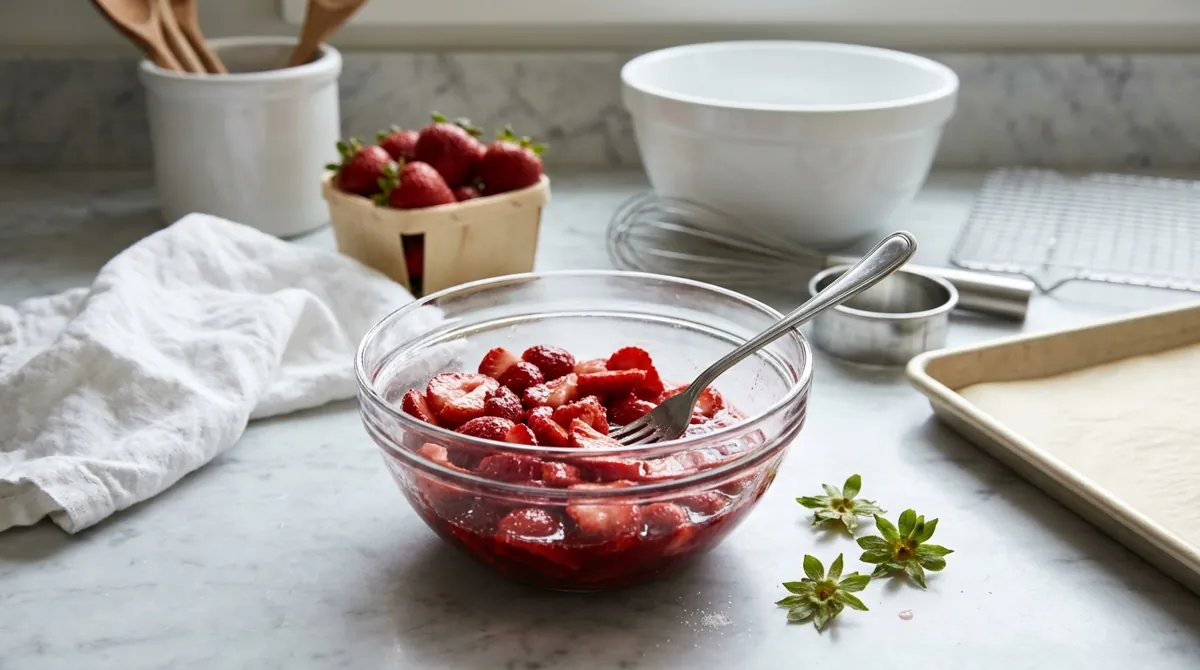
Hull and slice the strawberries. Crush a third of them lightly with a fork in a bowl, stir in the other slices and 1/4 cup sugar, and leave them 30 minutes at room temperature until syrupy.
- Step 2
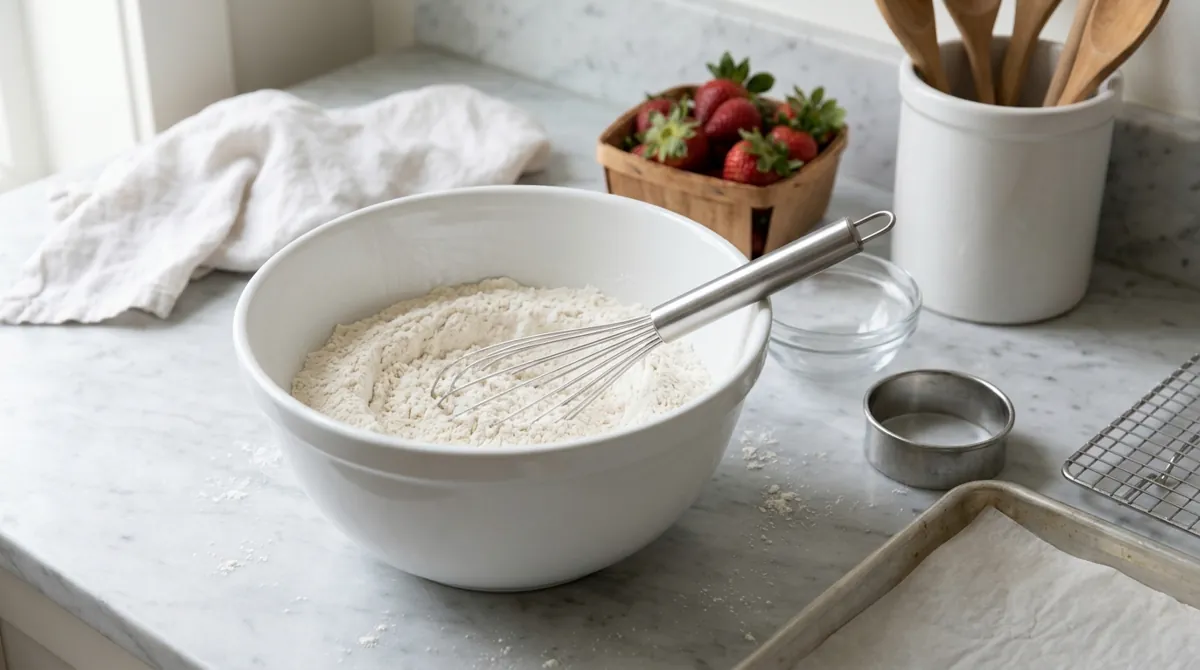
Heat the oven to 425°F and line a sheet pan with parchment. Whisk the flour, 1/4 cup sugar, baking powder and salt in a large bowl.
- Step 3
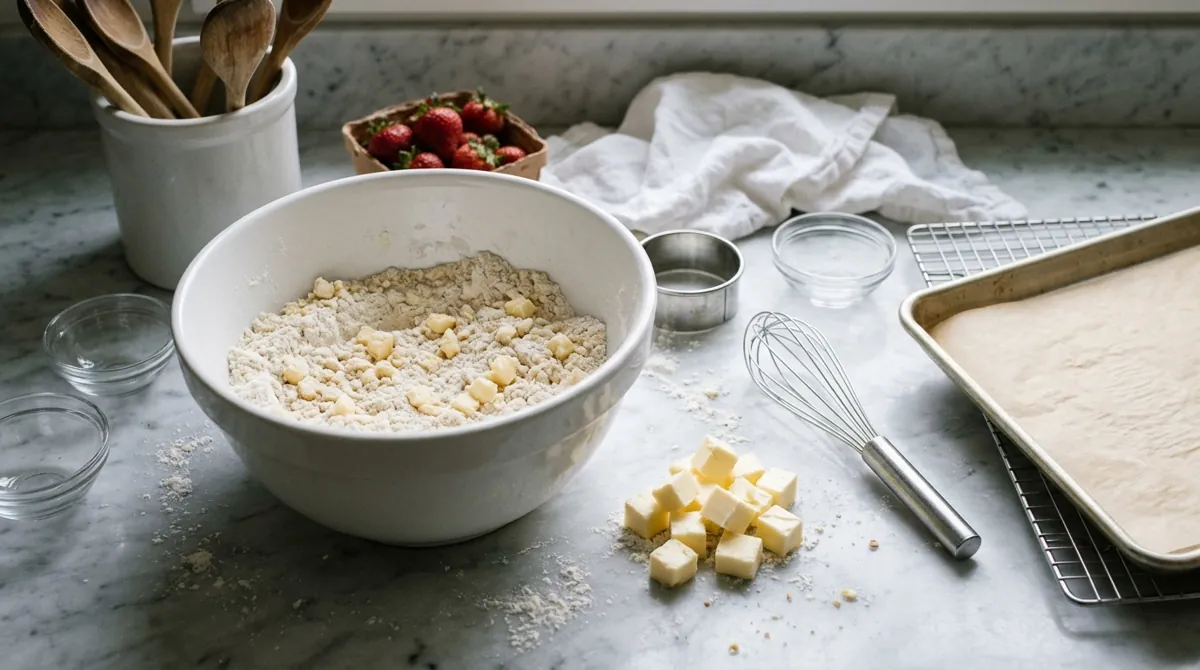
Rub the cold butter into the flour with your fingertips until it looks like coarse crumbs with some pea-size pieces left.
- Step 4
Stir in the cold cream with a fork just until a shaggy dough forms, then press it together once. Pat it into a 3/4 inch thick round, stamp out 6 rounds with a 3 inch cutter, and set them on the pan. Brush the tops with milk.
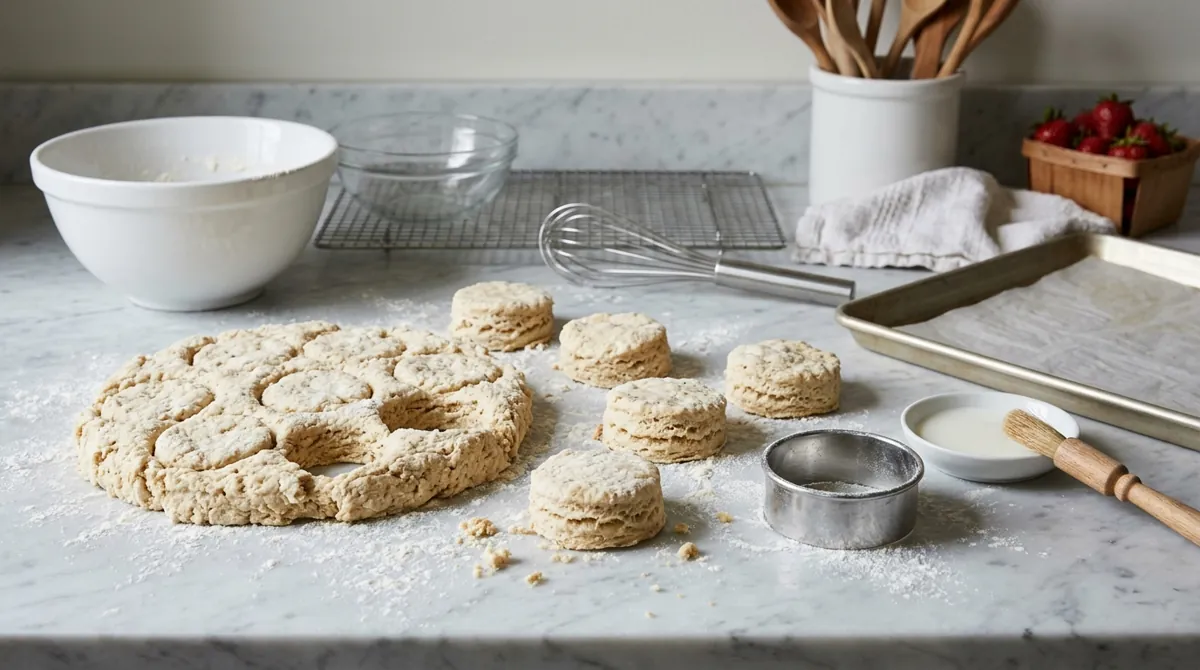
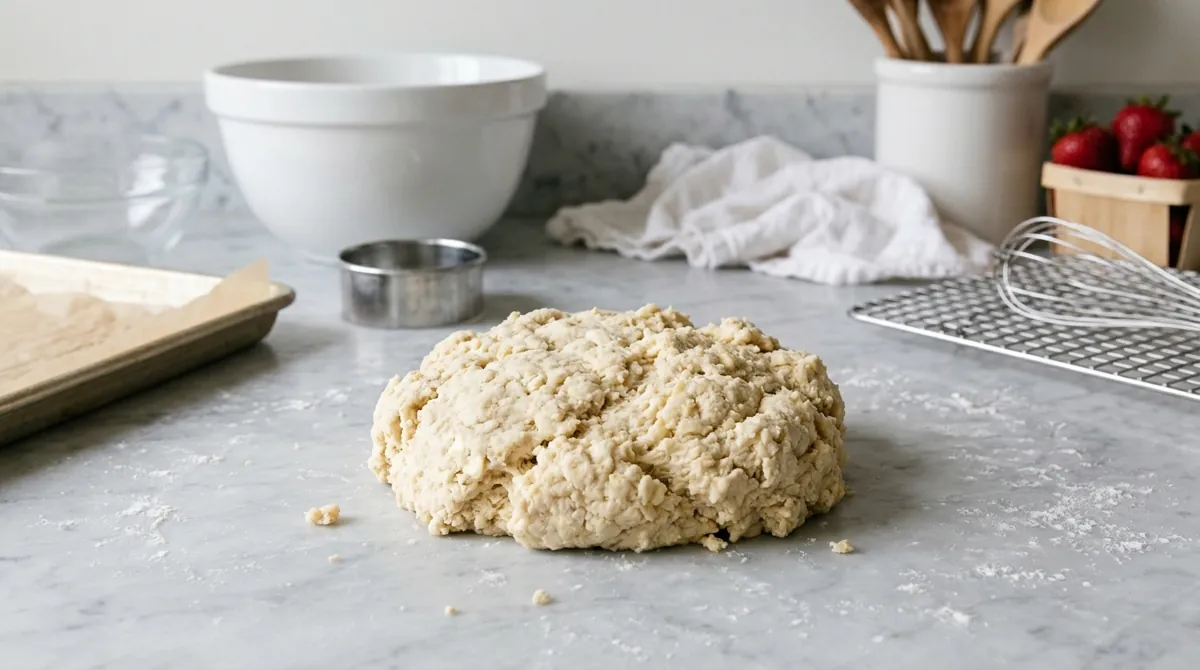
✓ What it should look like - Step 5
Bake 15 to 18 minutes, until the tops are deep golden and the biscuits have risen about double. Cool on a rack at least 10 minutes.
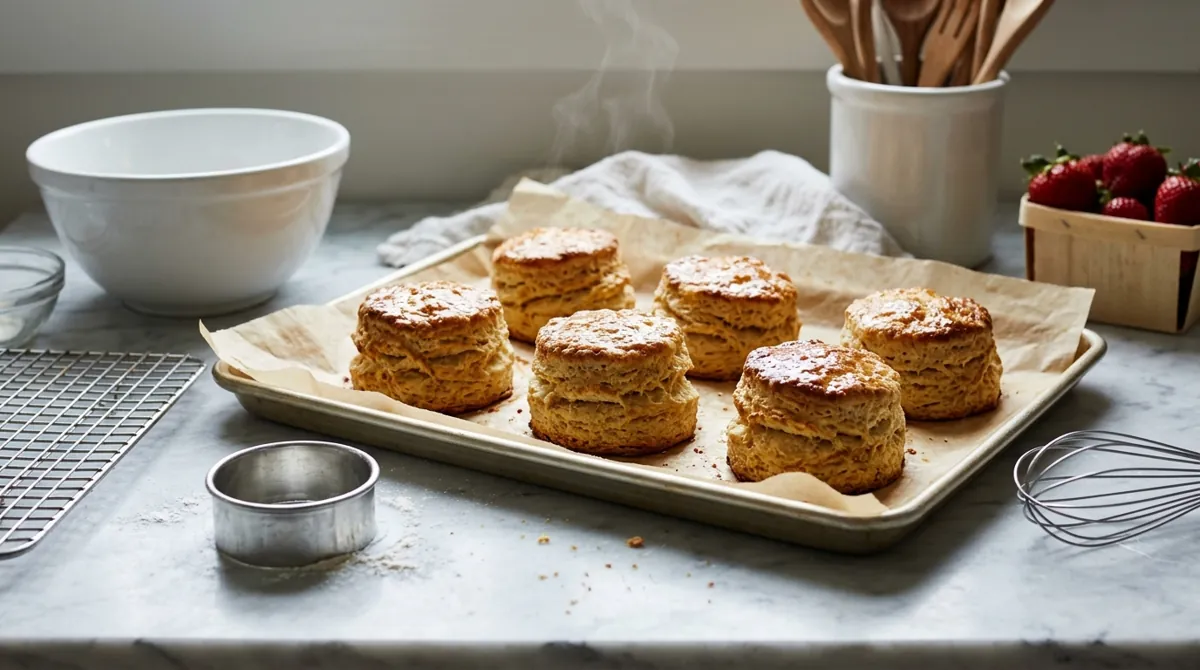
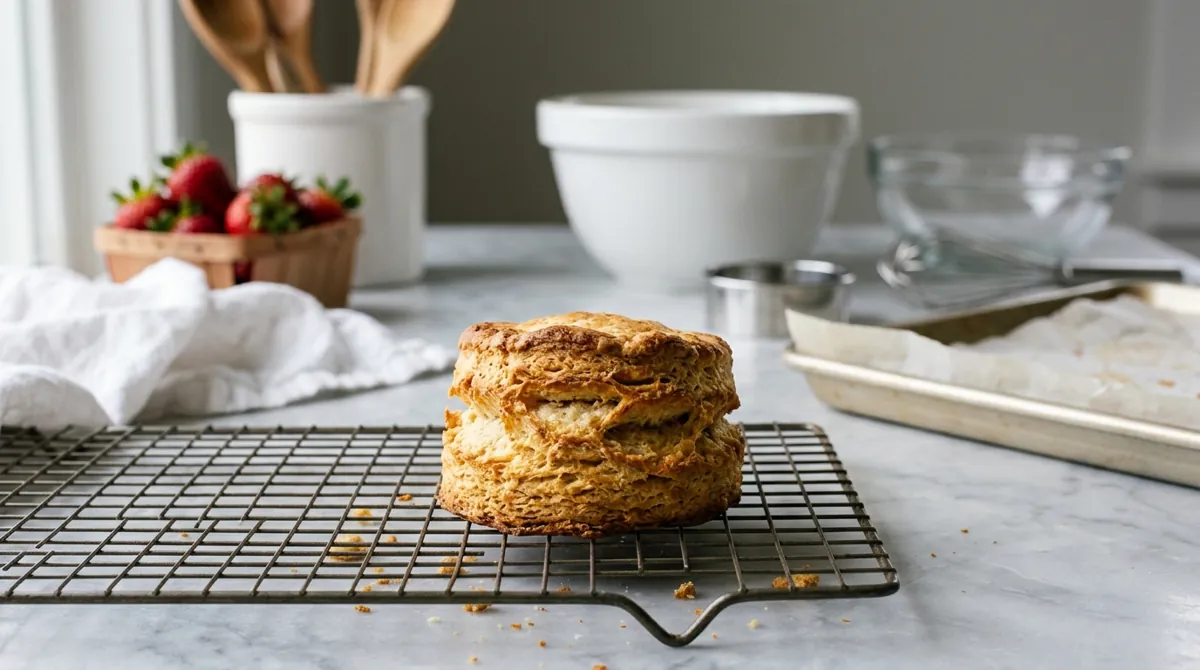
✓ What it should look like - Step 6
Whip the cream, sugar and vanilla in a chilled bowl to soft peaks. Split each shortcake, set the bottom on a plate, spoon on strawberries and syrup and cream, add the top and finish with more berries and cream.
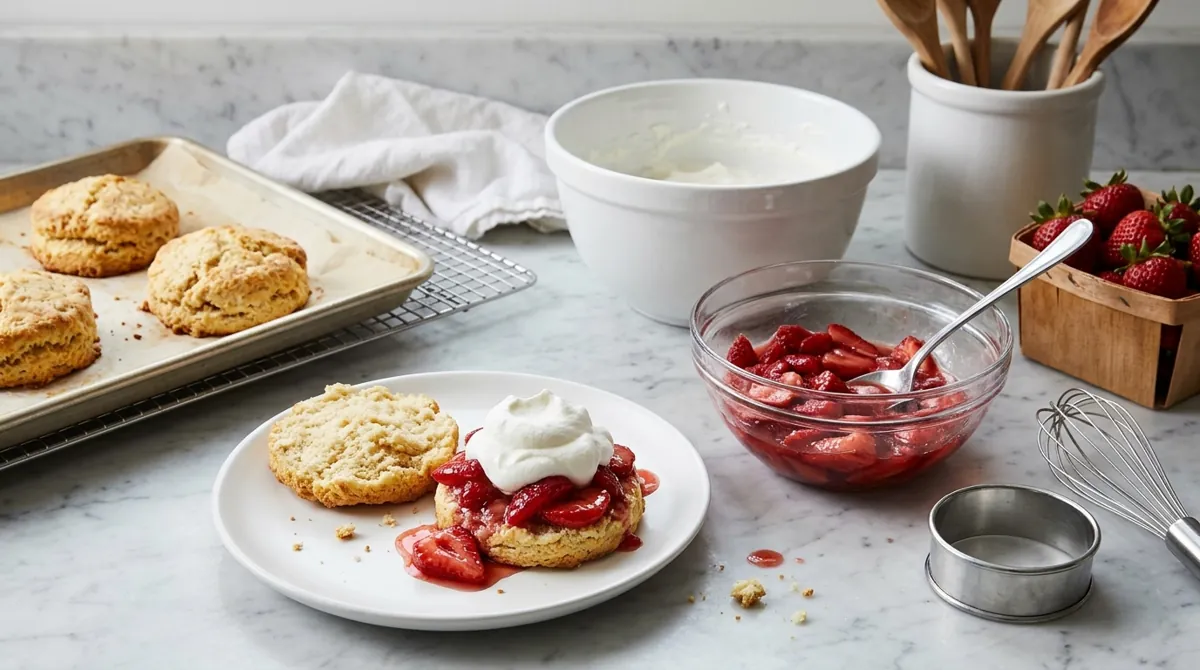
Strawberry Shortcake
Serves 6 · 6 shortcakes · 1 hr total
Biscuits
- 2 cups all-purpose flour (250 g)
- 1/4 cup granulated sugar (50 g)
- 1 tablespoon baking powder
- 1/2 tsp fine salt
- 6 tablespoons cold unsalted butter (85 g), cut into small cubes
- 3/4 cup cold heavy cream (180 g), plus a splash of milk for brushing
Berries
- 1 1/2 lb ripe strawberries (about 680 g), hulled
- 1/4 cup granulated sugar (50 g)
Whipped cream
- 1 cup cold heavy cream (240 g)
- 2 tablespoons granulated sugar (25 g)
- 1 tsp vanilla extract
Equipment: Oven, Rimmed baking sheet, Chef's knife and cutting board, Measuring cups and spoons, Mixing bowls, Whisk, Biscuit or cookie cutter, Pastry brush, Parchment paper
Method
- Hull and slice the strawberries. Crush a third of them lightly with a fork in a bowl, stir in the other slices and 1/4 cup sugar, and leave them 30 minutes at room temperature until syrupy.
- Heat the oven to 425°F and line a sheet pan with parchment. Whisk the flour, 1/4 cup sugar, baking powder and salt in a large bowl.
- Rub the cold butter into the flour with your fingertips until it looks like coarse crumbs with some pea-size pieces left.
- Stir in the cold cream with a fork just until a shaggy dough forms, then press it together once. Pat it into a 3/4 inch thick round, stamp out 6 rounds with a 3 inch cutter, and set them on the pan. Brush the tops with milk.
- Bake 15 to 18 minutes, until the tops are deep golden and the biscuits have risen about double. Cool on a rack at least 10 minutes.
- Whip the cream, sugar and vanilla in a chilled bowl to soft peaks. Split each shortcake, set the bottom on a plate, spoon on strawberries and syrup and cream, add the top and finish with more berries and cream.
Americanized house recipe, written for this site, using standard cream-biscuit ratios (about 2 cups flour to 3/4 cup cream and 6 tablespoons butter, a hot 425°F oven). History: Wikipedia, "Strawberry shortcake (dessert)" (1845 Ohio Cultivator, Eliza Leslie 1847, 1860s biscuit version, 1876 Home Cook Book, sponge versus biscuit, 1909 "New England Strawberry Shortcake")); the 1588 English reference is commonly cited but unverified here. en.wikipedia.org. Ingredient list follows the source; the method is in our own words.
All sources (1)
Tips
- Do not macerate longer than about an hour; the berries turn soft and watery.
- Biscuits are best the day they are baked. Keep the berries and cream separate until serving.
- Short on time? Drop spoonfuls of the dough on the pan instead of cutting rounds.
The rules people argue about
What the sources agree on, what they don't, and what is just a good story.
- Shortcake dates to 1588 England. Disputed: commonly cited, but we could not trace it to a primary source; the American strawberry recipes are documented from the 1840s on.
- Shortcake means a biscuit. Disputed by region: biscuit shortcake is the older American form, but sponge and pound cake versions are standard in much of the North, and a 1901 article already complained that it "requires some imagination to call sponge cakes short."
- Strawberry shortcake parties began in the 1850s. Folklore as a date: strawberry shortcake socials are well documented in the 19th century, but we found no source for a specific 1850s start.
Meatballs of the World

Italian-American Meatballs
Big, tender meatballs braised for an hour in red sauce over spaghetti. The one most Americans grew up with.

Pallottine (Abruzzo Meatballs)
Tiny meatballs, smaller than a marble, tossed right through square spaghetti alla chitarra. No bread at all.

Swedish Meatballs (Köttbullar)
Small, soft meatballs browned in butter, in a cream sauce made from the same pan, with lingonberry jam on the plate.

Danish Frikadeller
Pork meatballs shaped with a spoon and fried slowly in butter, crusty outside and soft in the middle.

Königsberger Klopse
German meatballs that are never fried: poached, then served in a creamy white sauce with capers.

Spanish Albóndigas in Almond Saffron Sauce
The tapas bar classic: small meatballs in a golden sauce thickened with fried almonds and bread.

Mexican Albóndigas with Chipotle and Mint
Soft meatballs with rice and fresh mint inside, simmered in a smoky tomato and chipotle broth.

Izgara Köfte (Turkish Grilled Meatballs)
Small, flat meatballs kneaded hard, rested cold, and charred on a hot grill pan.

Lion's Head Meatballs
Big, soft pork meatballs, stirred into a sticky paste, fried to set, then braised in a savory sauce.

Chicken Tsukune
Japan's chicken meatball: kneaded sticky, grilled on skewers, glazed with sweet soy tare, dipped in egg yolk.