
Stuffed Cabbage Rolls
Tender cabbage leaves wrapped around beef, pork, rice and soft onion, baked slowly in a sweet and tangy tomato sauce: the dish Poles call golabki, Ukrainians holubtsi and the Balkans sarma, carried to America by its immigrants.
🍳Cook alongOne move at a time, with real timers
 Edited by JP Lambiase
Change the estimate
Swaps change the price only: cook any meat to its own safe temperature. Where these numbers come from
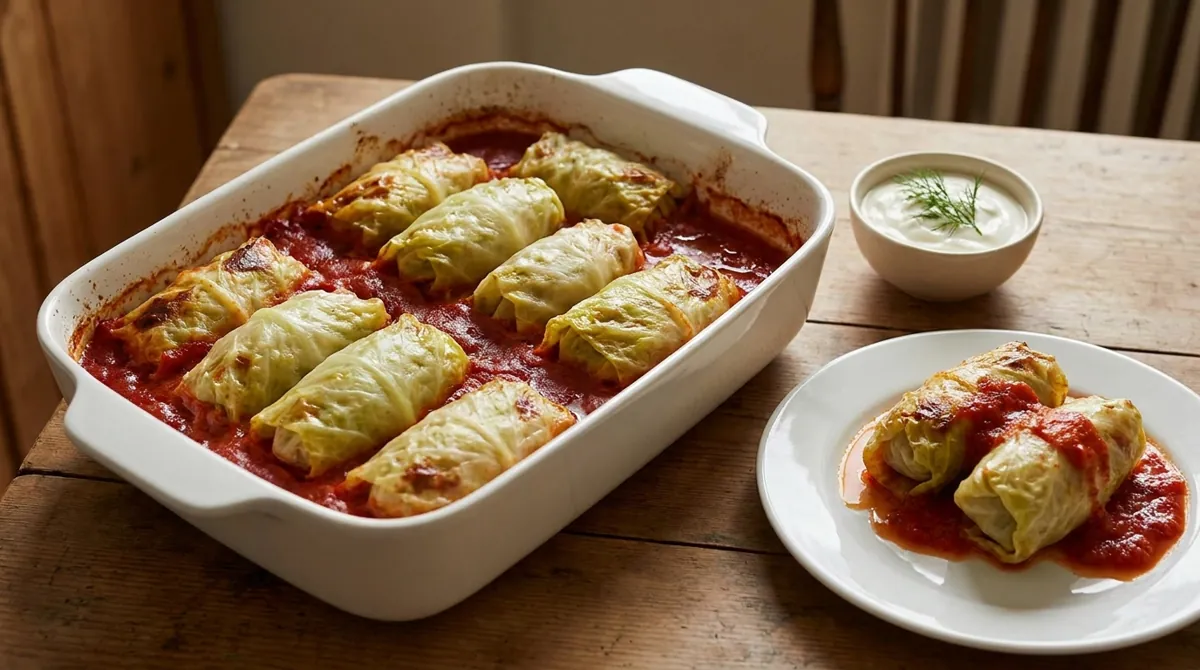
Nobody owns the cabbage roll. Leaves wrapped around a filling of meat and grain are cooked from the Balkans and the Middle East to Scandinavia, and cookbook author Nancy Krcek suggests several peoples may have come up with it at once. Cabbage grew everywhere in Central and Eastern Europe, and the dish is usually credited to the poor cooks of those countries, who stretched a little meat with rice, kasha or potatoes. In Hungary rolled cabbage is mentioned in a book by Miklos Totfalusi Kis in 1695.
Every country has a name for it. In Poland they are golabki, "little pigeons," in Ukraine holubtsi, in the Czech and Slovak lands holubky, in Serbia, Croatia and Bulgaria sarma, among Ashkenazi Jews holishkes, eaten on Simchat Torah. Sweden has kaldolmar, "cabbage dolmas," and a story to go with it: after Charles XII lost the Battle of Poltava in 1709 he spent years in the Ottoman town of Bender, and Ottoman creditors and their cooks followed him home. The first Swedish recipe, in Cajsa Warg's cookbook of 1765, suggests cabbage leaves for cooks who cannot afford vine leaves.
Eastern European Jewish immigrants made it a New York dish, known there as "Jewish cabbage," and Polish neighborhoods in Chicago, Detroit and Pennsylvania made golabki, "golumpki" on American tongues, a church supper and holiday standard. It became popular across the country in the 1970s.
This version is the American family style: beef and pork with rice, baked in a sweet and sour tomato sauce.
Why it works the kitchen science
Boiling the head whole
The outer leaves soften and come away one at a time without tearing, and shaving the rib lets them roll without cracking.
Half-cooked rice
It finishes cooking in the rolls by soaking up meat juices and sauce, so the filling is tender, not soggy or crunchy.
Beef and pork
Beef for flavor, pork for fat and softness.
Foil first
The covered bake steams the leaves tender and keeps them from splitting (America's Test Kitchen's method), then uncovering thickens the sauce.
Chopped cabbage underneath
It keeps the rolls off the hot bottom of the dish and melts into the sauce.
🧰 You'll need 12 items
Everything the steps call for. Tick off what you have before you start.
Appliances
Pans and pots
Tools
Supplies
Step by step
- Step 1
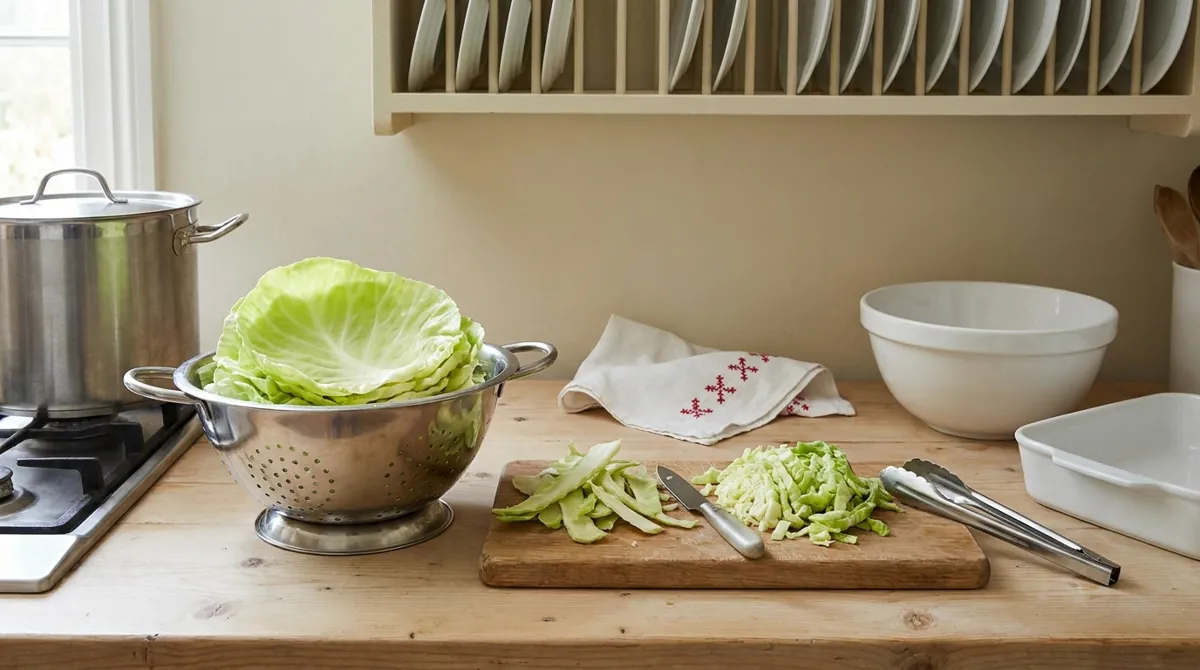
Bring a large pot of salted water to a boil. Cut deeply around the core of the cabbage with a paring knife and set the whole head in the water, core side down. As the outer leaves soften and loosen, after 2 to 3 minutes, peel them off with tongs and set them in a colander. Keep going until you have 16 large leaves, then take out the rest of the head. With the paring knife, shave the thick rib on the back of each leaf flush with the leaf. Chop about 2 cups of the leftover cabbage.
- Step 2
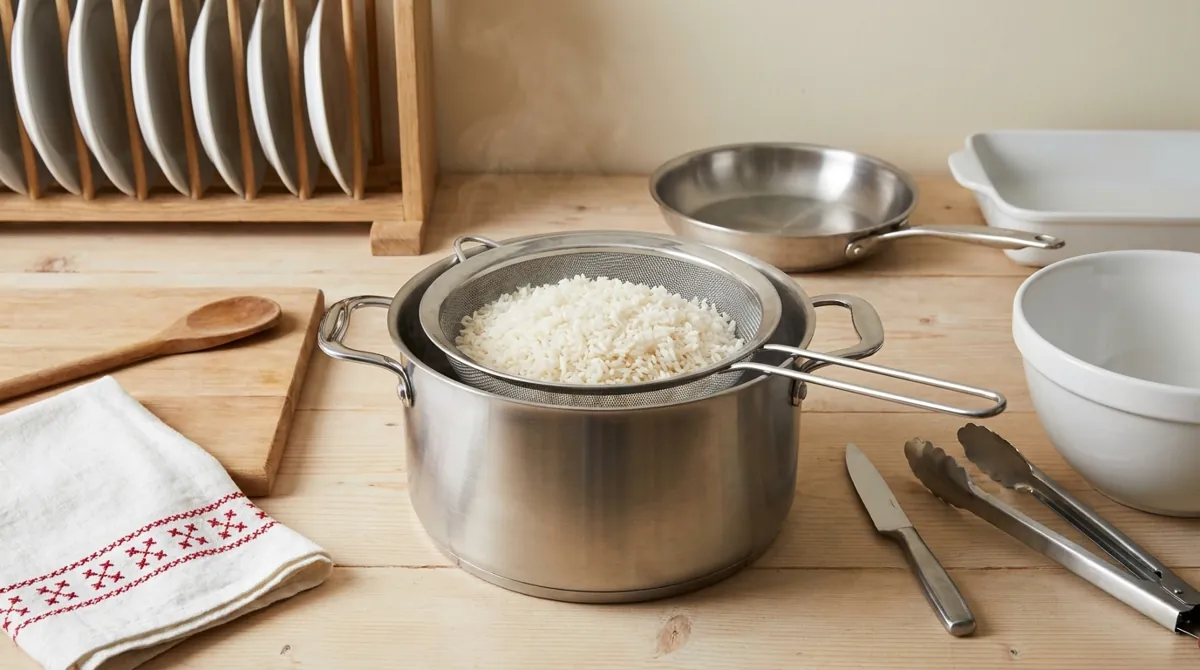
Boil the rice in the same water for 5 minutes, then drain it. It will be only half cooked.
- Step 3
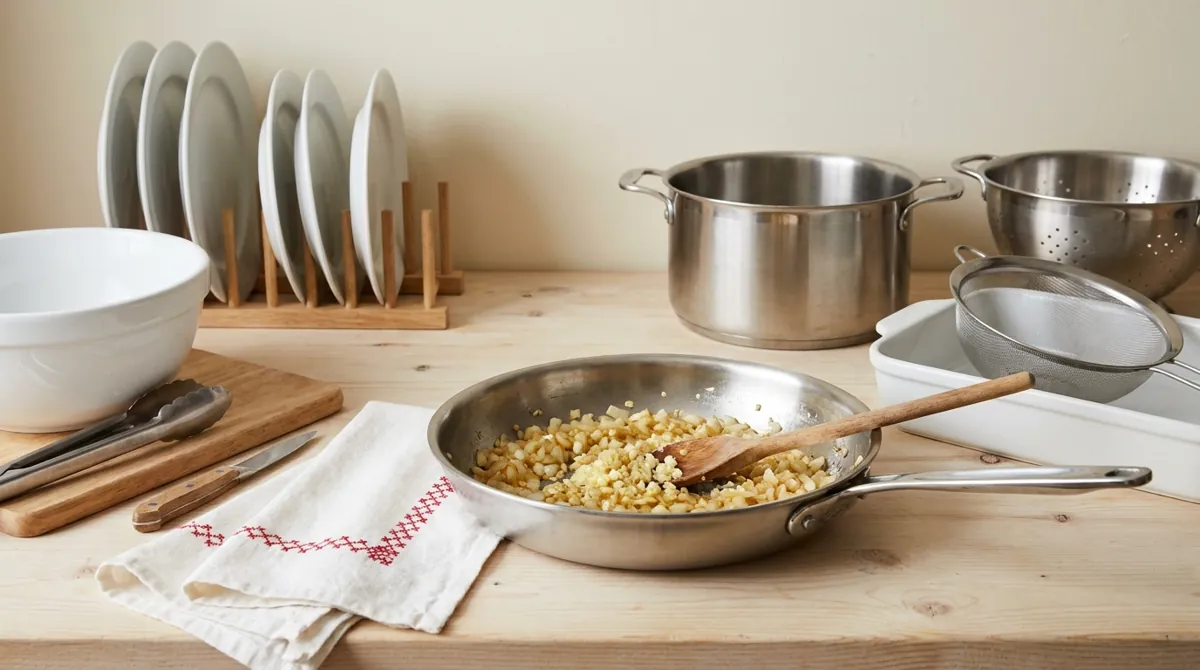
Melt the butter in a skillet over medium heat and cook the onion until soft and golden, 6 to 8 minutes. Add the garlic for 30 seconds and let it cool a few minutes. Heat the oven to 350°F.
- Step 4
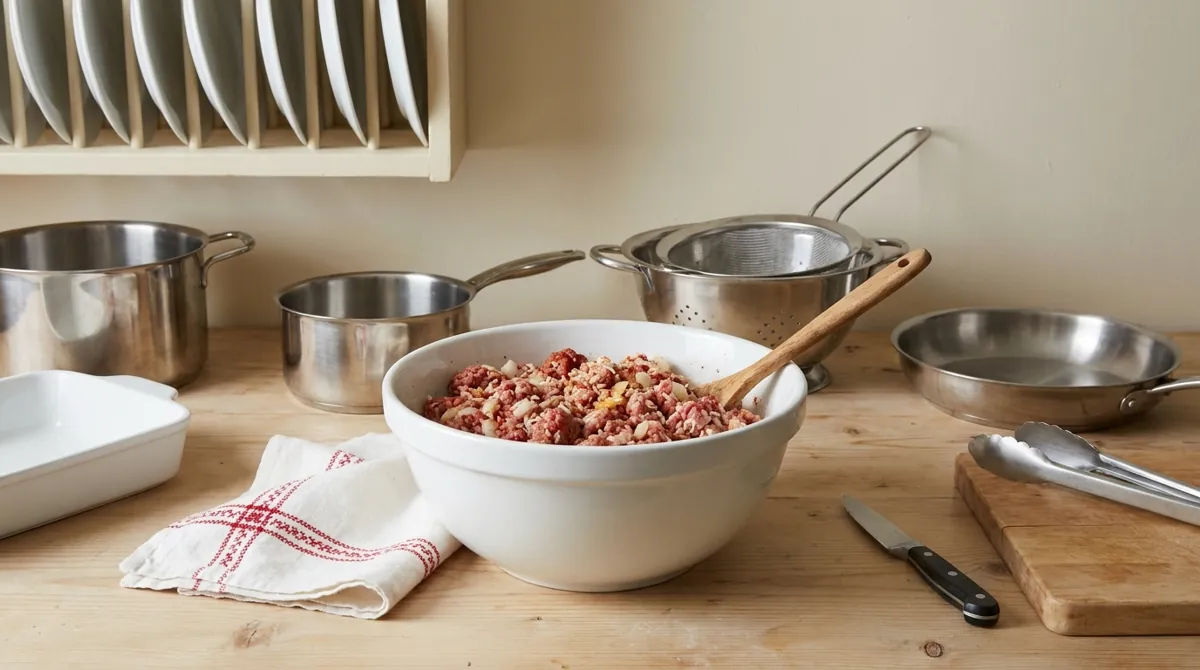
In a large bowl, mix the beef, pork, rice, onion, egg, salt, pepper and paprika just until evenly combined.
- Step 5
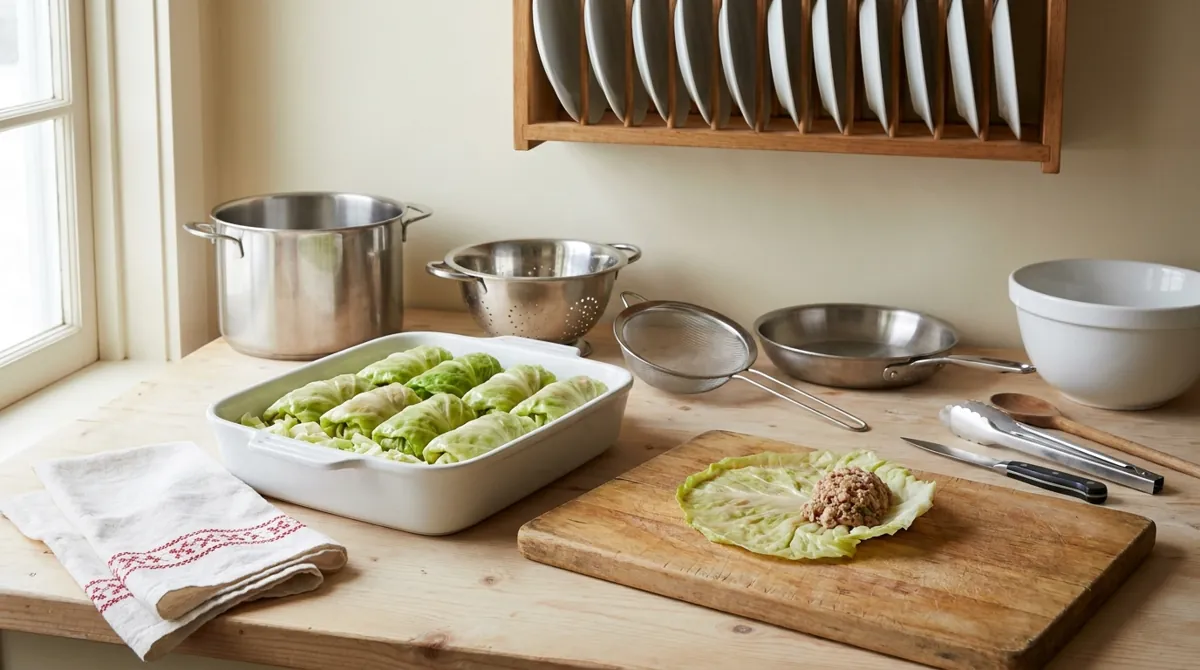
Spread the chopped cabbage over the bottom of a 13 by 9 inch baking dish. Lay a leaf flat, rib end toward you, put about 1/3 cup filling near the rib end, fold the sides over it and roll it up snugly. Set the rolls seam side down in the dish, packed close together.
- Step 6
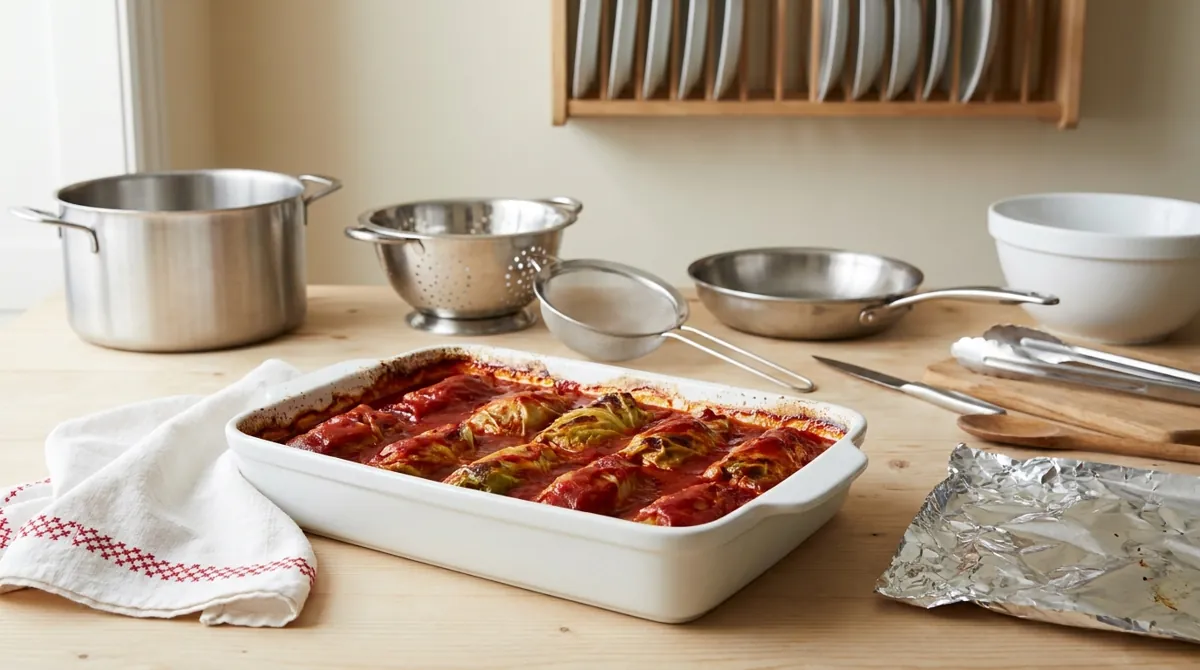
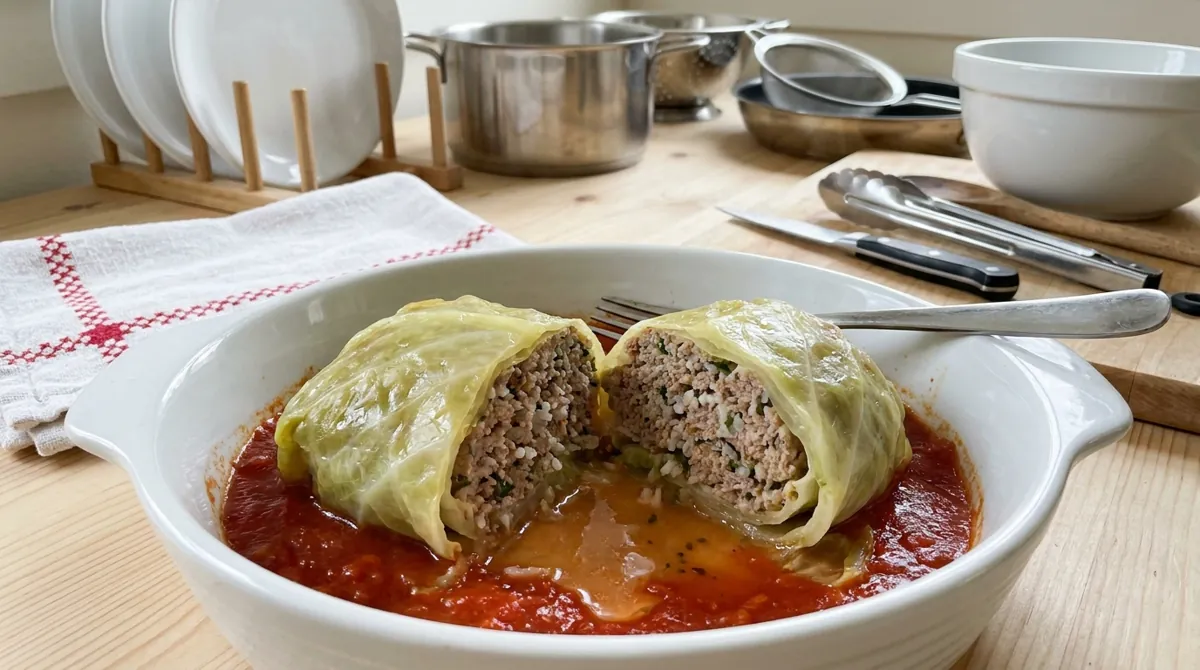
Whisk the tomato sauce, water, brown sugar, vinegar and salt and pour it evenly over the rolls. Cover tightly with foil and bake 75 minutes. Uncover and bake 15 to 20 minutes more, until the sauce is bubbling and slightly thickened, the leaves are tender enough to cut with a fork and the center of a roll reads 160°F.
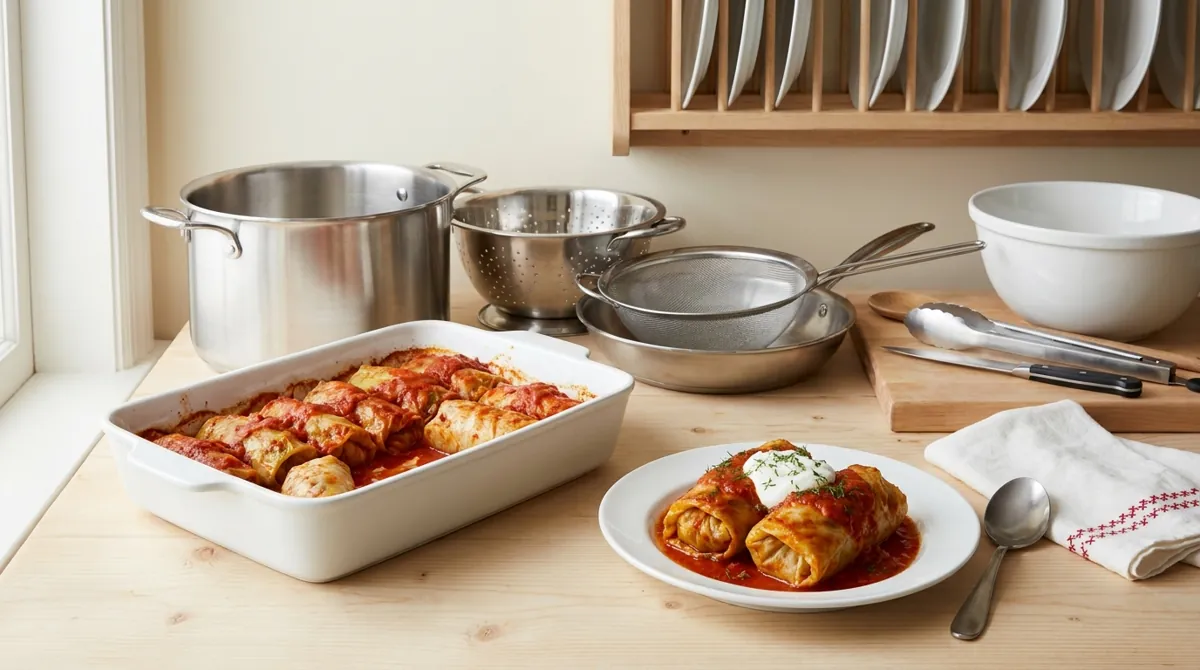
✓ What it should look like - Step 7
Rest 10 minutes. Serve 2 or 3 rolls each with plenty of sauce, and sour cream and dill if you like.
Stuffed Cabbage Rolls
Serves 6 · about 16 rolls, one 13 by 9 inch baking dish · 2 hr 35 min total
Cabbage
- 1 large head green cabbage (about 3 lb, 1360 g), cored; you will use about 900 g of it
Filling
- 3/4 cup long-grain white rice (140 g)
- 1 tbsp unsalted butter (14 g)
- 1 medium onion, finely chopped (150 g)
- 2 garlic cloves, minced (6 g)
- 1 lb 80/20 ground beef (454 g)
- 1/2 lb ground pork (227 g)
- 1 large egg (50 g)
- 1 1/2 tsp fine salt
- 1/2 tsp black pepper
- 1 tsp sweet paprika
Sauce
- 1 can (28 oz) tomato sauce (794 g)
- 1/2 cup water
- 2 tbsp packed light brown sugar (26 g)
- 2 tbsp cider vinegar (30 g)
- 1/2 tsp fine salt
To serve
- Sour cream and chopped dill, optional
Equipment: Oven, Baking dish, Large pot, Skillet, Instant-read thermometer, Chef's knife and cutting board, Measuring cups and spoons, Mixing bowls, Whisk, Tongs, Colander, Aluminum foil
Method
- Bring a large pot of salted water to a boil. Cut deeply around the core of the cabbage with a paring knife and set the whole head in the water, core side down. As the outer leaves soften and loosen, after 2 to 3 minutes, peel them off with tongs and set them in a colander. Keep going until you have 16 large leaves, then take out the rest of the head. With the paring knife, shave the thick rib on the back of each leaf flush with the leaf. Chop about 2 cups of the leftover cabbage.
- Boil the rice in the same water for 5 minutes, then drain it. It will be only half cooked.
- Melt the butter in a skillet over medium heat and cook the onion until soft and golden, 6 to 8 minutes. Add the garlic for 30 seconds and let it cool a few minutes. Heat the oven to 350°F.
- In a large bowl, mix the beef, pork, rice, onion, egg, salt, pepper and paprika just until evenly combined.
- Spread the chopped cabbage over the bottom of a 13 by 9 inch baking dish. Lay a leaf flat, rib end toward you, put about 1/3 cup filling near the rib end, fold the sides over it and roll it up snugly. Set the rolls seam side down in the dish, packed close together.
- Whisk the tomato sauce, water, brown sugar, vinegar and salt and pour it evenly over the rolls. Cover tightly with foil and bake 75 minutes. Uncover and bake 15 to 20 minutes more, until the sauce is bubbling and slightly thickened, the leaves are tender enough to cut with a fork and the center of a roll reads 160°F.
- Rest 10 minutes. Serve 2 or 3 rolls each with plenty of sauce, and sour cream and dill if you like.
Americanized house recipe, written for this site. History: Wikipedia, "Cabbage roll" (Krcek on unclear and possibly simultaneous origins, Caprari crediting the poorer people of Central and Eastern Europe, the 1695 Hungarian mention, the names, holishkes on Simchat Torah and the sweet-sour against savory split in holishkes, Charles XII, Bender and the Ottoman creditors, Cajsa Warg's 1765 recipe, "Jewish cabbage" in New York, Polish neighborhoods, nationwide popularity in the 1970s); Wikipedia, "Golabki" (the diminutive of golab, pigeon, Vasmer's shape explanation against Stachowski's loanword theory from Persian kalam or Old Armenian kalamb, cabbage; fillings of pork or beef with rice, kasha or potatoes; "golumpki" in the US); Bialystok University of Technology, "Golabki" (no consensus among linguists, the borrowed-from-East-Slavic and French stuffed-pigeon theories, simmered or baked, thick tomato sauce most typical, dill and cream, garlic and roast sauces too, rice or millet, barley or buckwheat groats). Technique: America's Test Kitchen, "Stuffed Cabbage Rolls" (softened outer leaves, tough ribs trimmed, rolls seam side down in a 13 by 9 inch dish, canned tomato sauce with brown sugar and vinegar, covered with foil first so the leaves do not split, then uncovered to thicken). Safety: FoodSafety.gov (US Department of Health and Human Services), "Safe Minimum Internal Temperatures" (ground beef and pork 160°F). en.wikipedia.org. Ingredient list follows the source; the method is in our own words.
Tips
- Freezing the whole cored head overnight and thawing it softens the leaves with no boiling at all.
- Make them a day ahead; like most stews, they taste better reheated. They freeze well, sauce and all, for 3 months.
- For a savory Polish-style sauce, skip the brown sugar and vinegar and use 2 cups of broth with 1/2 cup tomato paste.
- For the Balkan sarma style, use sour cabbage leaves from a jar and add a layer of sauerkraut under the rolls.
The rules people argue about
What the sources agree on, what they don't, and what is just a good story.
- Cabbage rolls are a Polish dish. Disputed: Polish, Ukrainian, Hungarian, Balkan, Jewish, Swedish and Middle Eastern cooks all have one; Wikipedia says the origin is unclear and may be several places at once.
- Golabki means "little pigeons" because the rolls look like pigeons. Disputed: the word does mean little pigeons, and Max Vasmer accepted the shape explanation, but linguist Marek Stachowski calls it doubtful and suggests a borrowing from Persian or Armenian words for cabbage.
- The sauce should be sweet and sour. Disputed by region: for Jewish holishkes, Wikipedia says northern Poland favors savory sauces while Galicia, Hungary and Ukraine favor sweet and sour; in Poland thick tomato sauce is most typical, but dill and cream, garlic and roast sauces are traditional too.
Meatballs of the World

Italian-American Meatballs
Big, tender meatballs braised for an hour in red sauce over spaghetti. The one most Americans grew up with.

Pallottine (Abruzzo Meatballs)
Tiny meatballs, smaller than a marble, tossed right through square spaghetti alla chitarra. No bread at all.

Swedish Meatballs (Köttbullar)
Small, soft meatballs browned in butter, in a cream sauce made from the same pan, with lingonberry jam on the plate.

Danish Frikadeller
Pork meatballs shaped with a spoon and fried slowly in butter, crusty outside and soft in the middle.

Königsberger Klopse
German meatballs that are never fried: poached, then served in a creamy white sauce with capers.

Spanish Albóndigas in Almond Saffron Sauce
The tapas bar classic: small meatballs in a golden sauce thickened with fried almonds and bread.

Mexican Albóndigas with Chipotle and Mint
Soft meatballs with rice and fresh mint inside, simmered in a smoky tomato and chipotle broth.

Izgara Köfte (Turkish Grilled Meatballs)
Small, flat meatballs kneaded hard, rested cold, and charred on a hot grill pan.

Lion's Head Meatballs
Big, soft pork meatballs, stirred into a sticky paste, fried to set, then braised in a savory sauce.

Chicken Tsukune
Japan's chicken meatball: kneaded sticky, grilled on skewers, glazed with sweet soy tare, dipped in egg yolk.