
Sugar Cookies
Butter, sugar, one egg and vanilla, rolled a quarter inch thick between parchment, chilled, cut into shapes and baked just until the edges turn pale gold, then glazed: the holiday cut-out cookie Americans have baked since the 1800s, with an old Pennsylvania story attached.
🍳Cook alongOne move at a time, with real timers
 Edited by JP Lambiase
Change the estimate
Swaps change the price only: cook any meat to its own safe temperature. Where these numbers come from
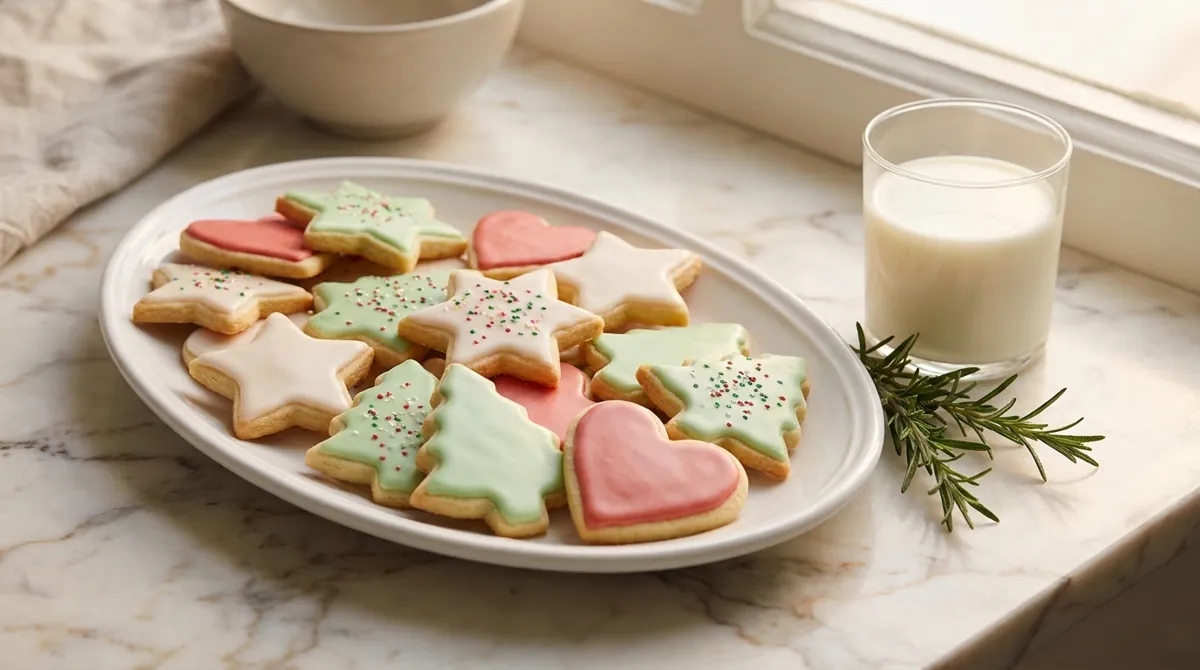
The sugar cookie has no inventor. Its earliest relative is the jumble, a small sugared biscuit flavored with spices such as aniseed, coriander, fennel and nutmeg, and in England sugar cookies were long called sugar biscuits. Printed American recipes start appearing in the 1800s, some made with sour cream or a lot of milk; in 1885 the Boston Globe printed one with baking powder, no liquid dairy and one cup of sugar to half a cup of butter, close to today's cookie. In the late 1950s Pillsbury began selling refrigerated sugar cookie dough in grocery stores, and the cookie became an everyday one.
The American story people like best is Pennsylvania's. Nazareth, Pennsylvania, was founded in 1740 by ethnically German Moravian immigrants, and the old name "Nazareth cookie" is credited to the German settlers there. Food writers say those settlers baked a plain, crumbly sugar cookie in the 1700s, sometimes cut into the shape of a keystone, but the details are not well documented; even the writers who tell it admit the exact start is hard to pin down. The Nazareth sugar cookie is often called Pennsylvania's state cookie. It is not: a bill to name it (House Bill 219) stalled in a fight with the chocolate chip and oatmeal chocolate chip cookies, and Pennsylvania has no official state food besides milk.
This is a home cut-out version: all butter, no leavening so the shapes stay sharp, rolled before chilling so you never fight a cold disk of dough.
Why it works the kitchen science
No baking powder or soda
Unleavened dough spreads less, so the cut edges stay sharp.
Rolling before chilling
Soft dough rolls easily, and between parchment it needs no extra flour, which would make the cookies tough.
Chilling the rolled sheets
Firm butter holds the shapes in the oven instead of melting flat.
Pulling them at pale gold
The cookies keep cooking on the hot pan, and a pale edge means a soft, buttery middle.
🧰 You'll need 11 items
Everything the steps call for. Tick off what you have before you start.
Appliances
Pans and pots
Tools
Supplies
Step by step
- Step 1
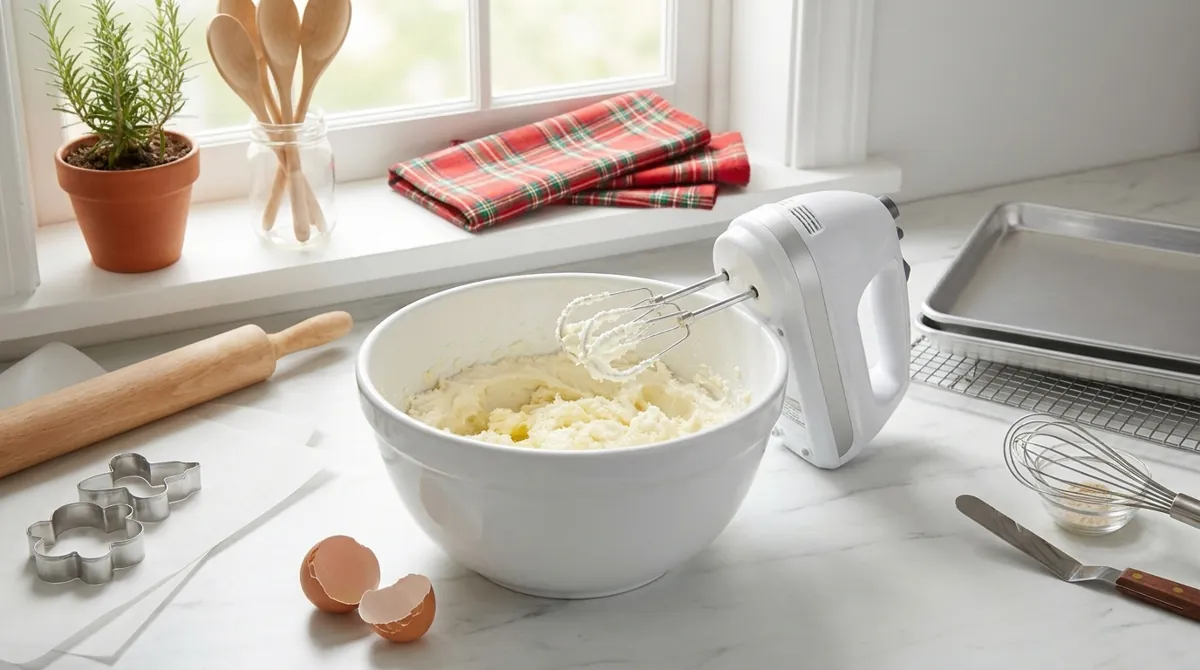
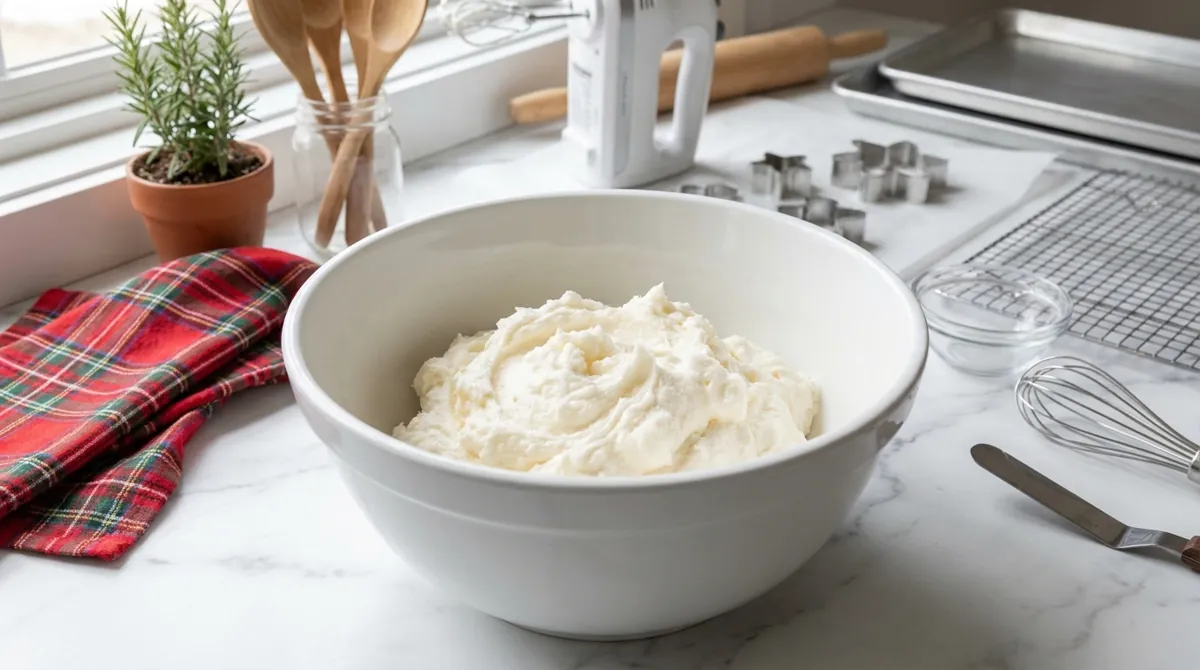
In a large bowl, beat the butter, sugar and salt with a hand mixer on medium speed for about 3 minutes, until pale and fluffy. Beat in the egg and vanilla until smooth.
✓ What it should look like - Step 2
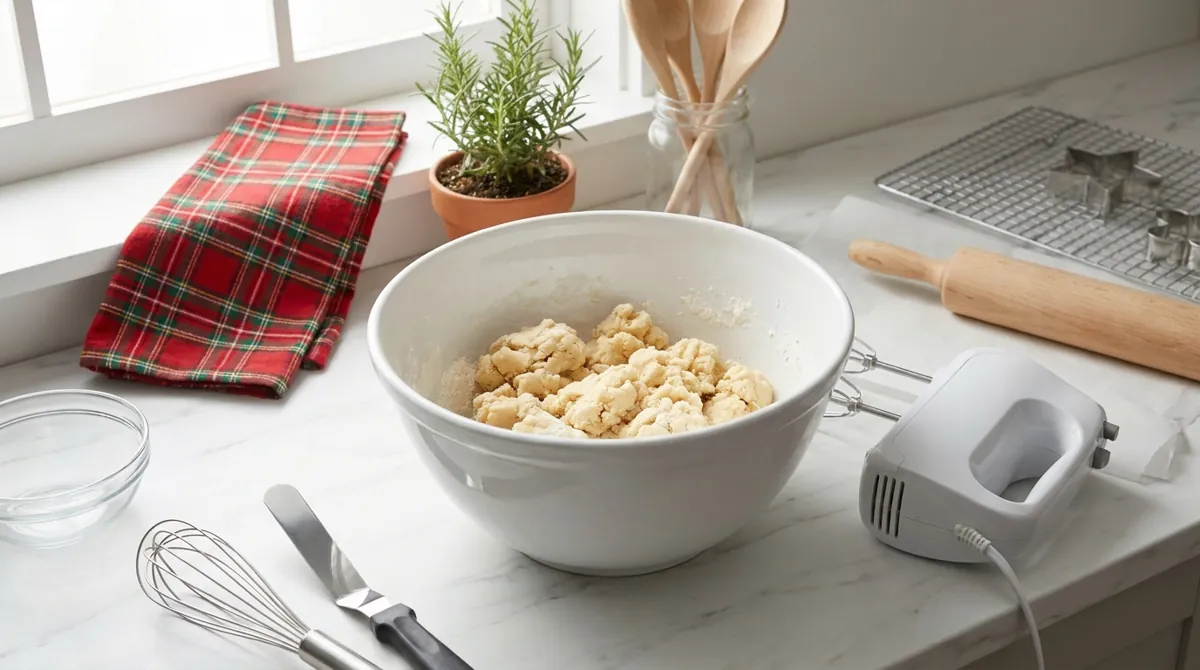
Add the flour and mix on low speed just until no dry flour remains and the dough clumps together.
- Step 3
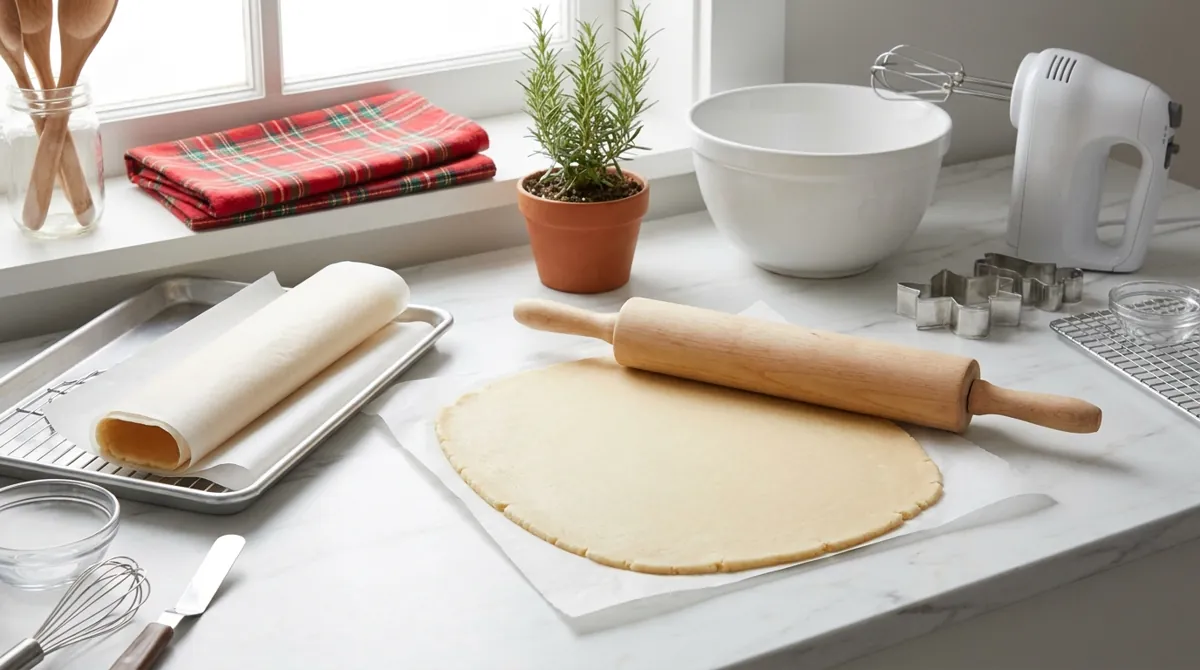
Divide the dough in half. Roll each half between two sheets of parchment to an even 1/4 inch thick. Stack the sheets on a sheet pan and refrigerate at least 1 hour, until firm.
- Step 4
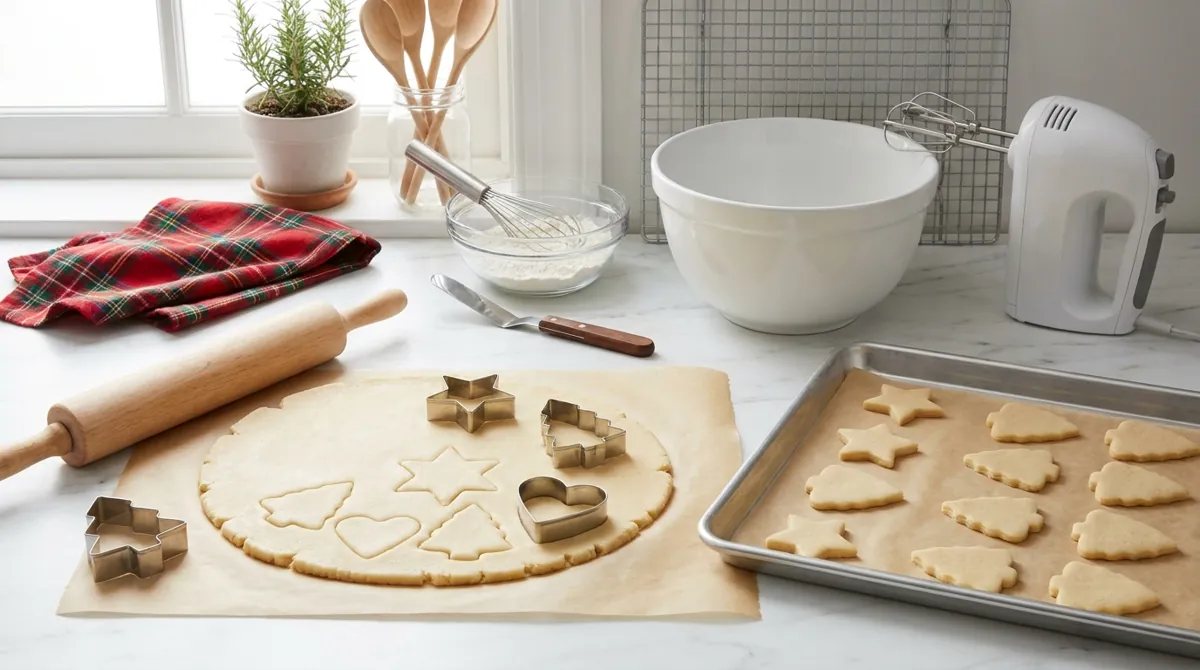
Heat the oven to 350°F with a rack in the middle. Line two rimmed half sheet pans with parchment. Peel the top parchment off one dough sheet, cut out shapes, and move them to the pans 1 inch apart. Press the scraps together, roll and chill them once more.
- Step 5
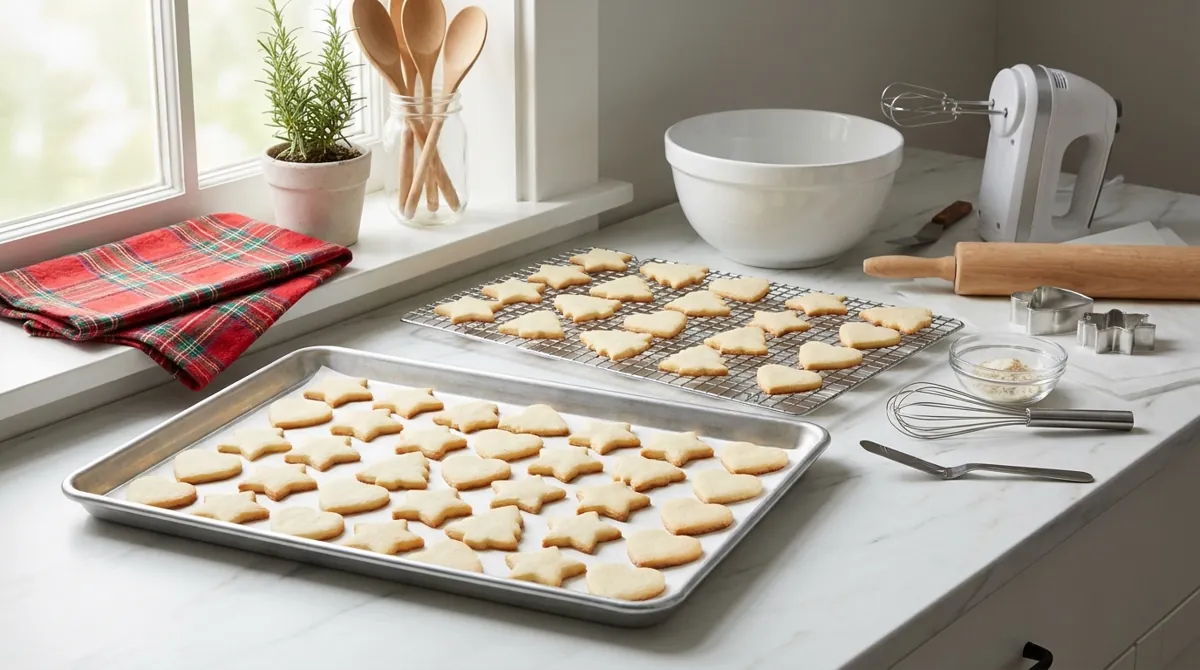
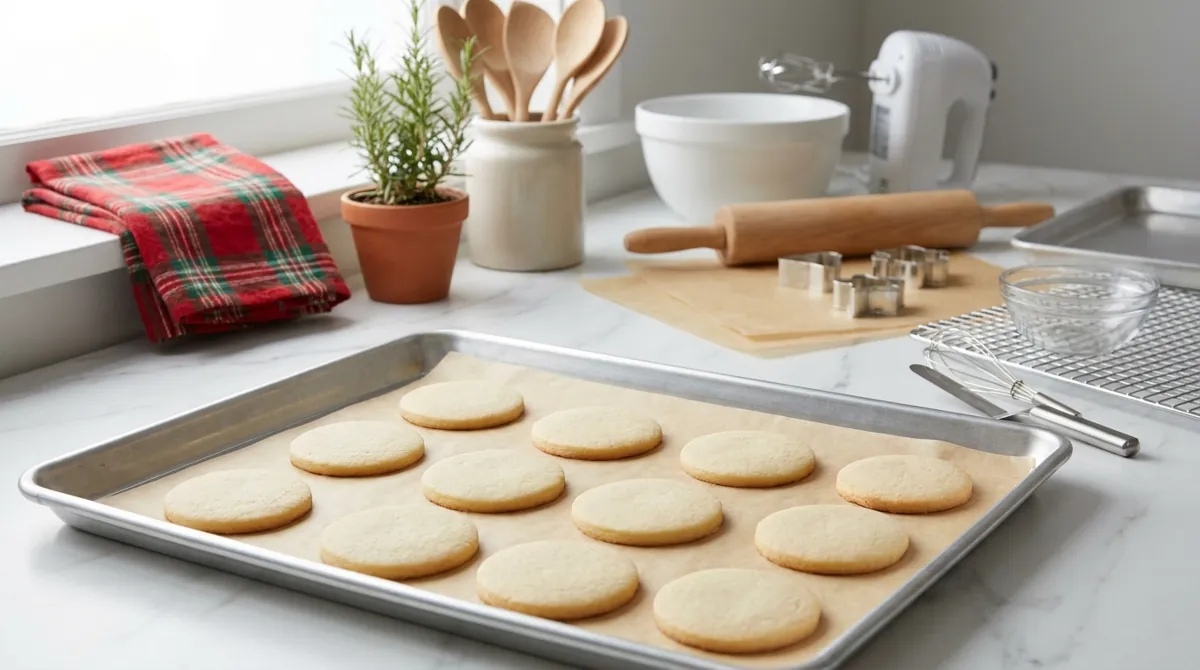
Bake one pan at a time for 10 to 12 minutes, until the tops look dry and set and the edges are just turning pale gold. Cool 5 minutes on the pan, then move the cookies to a wire rack and cool completely, about 20 minutes.
✓ What it should look like - Step 6
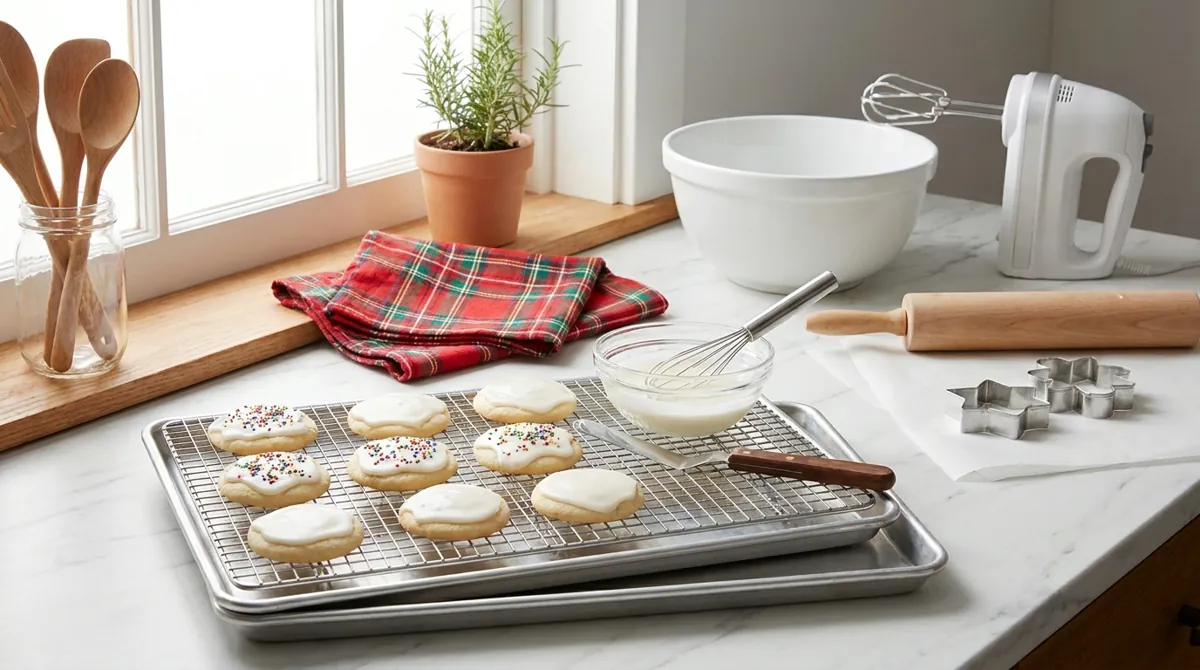
Whisk the powdered sugar, milk and vanilla until thick and smooth, tint it if you like, and spread it on the cooled cookies with a small offset spatula. Add sprinkles while the glaze is wet and let it set.
Sugar Cookies
Serves 30 cookies (about) · about 30 cookies, 3 inches across · 2 hr 15 min total
Dough
- 1 cup unsalted butter (227 g), softened until it dents easily but is still cool
- 1 cup granulated sugar (200 g)
- 1/2 tsp fine salt
- 1 large egg, at room temperature
- 2 tsp vanilla extract
- 2 3/4 cups all-purpose flour (345 g)
Glaze
- 2 cups powdered sugar (240 g)
- 3 tbsp whole milk (45 g), plus a few drops more if needed
- 1/2 tsp vanilla extract
- Food coloring and sprinkles, optional
Equipment: Oven, Hand or stand mixer, Rimmed baking sheet, Wire rack, Chef's knife and cutting board, Measuring cups and spoons, Mixing bowls, Whisk, Spatula, Rolling pin, Parchment paper
Method
- In a large bowl, beat the butter, sugar and salt with a hand mixer on medium speed for about 3 minutes, until pale and fluffy. Beat in the egg and vanilla until smooth.
- Add the flour and mix on low speed just until no dry flour remains and the dough clumps together.
- Divide the dough in half. Roll each half between two sheets of parchment to an even 1/4 inch thick. Stack the sheets on a sheet pan and refrigerate at least 1 hour, until firm.
- Heat the oven to 350°F with a rack in the middle. Line two rimmed half sheet pans with parchment. Peel the top parchment off one dough sheet, cut out shapes, and move them to the pans 1 inch apart. Press the scraps together, roll and chill them once more.
- Bake one pan at a time for 10 to 12 minutes, until the tops look dry and set and the edges are just turning pale gold. Cool 5 minutes on the pan, then move the cookies to a wire rack and cool completely, about 20 minutes.
- Whisk the powdered sugar, milk and vanilla until thick and smooth, tint it if you like, and spread it on the cooled cookies with a small offset spatula. Add sprinkles while the glaze is wet and let it set.
Americanized house recipe, written for this site. History: Wikipedia, "Sugar cookie" (jumbles and their spices, sugar biscuits in England, 1800s recipes with sour cream or milk, the 1885 Boston Globe recipe, Pillsbury refrigerated dough in the late 1950s, the "Nazareth cookie" name from Nazareth's German settlers); Wikipedia, "Nazareth, Pennsylvania" (founded 1740 by ethnically German Moravian immigrants, land bought in 1741); Tasting Table, "The 17th-Century Origins Of Sugar Cookies" (German Protestant settlers in Nazareth, the keystone shape, "hard to pin down"); Mashed, "The Sweet Origins Of Sugar Cookies" (Nazareth cookies, 18th century, keystone shape); State Symbols USA, Pennsylvania state cookie (stalled bills: chocolate chip, Nazareth sugar cookie House Bill 219, oatmeal chocolate chip House Bill 2479; the 1996 Caln Elementary chocolate chip campaign); Wikipedia, "List of U.S. state foods" (Pennsylvania has no official state foods besides milk; North Carolina's Moravian cookie); Wikipedia, "Moravian spice cookies" (thin molasses and spice cookie, North Carolina state cookie in 2026). Technique: King Arthur Baking, "Rollout sugar cookie tips" (no leavening holds shape, roll between parchment instead of on flour, 1/4 inch for sturdy cookies and 1/8 inch for delicate). en.wikipedia.org. Ingredient list follows the source; the method is in our own words.
Tips
- For crisp cookies to hang or mail, roll to 1/8 inch and bake 7 to 9 minutes.
- If the cut shapes go soft on a warm day, put the whole pan in the freezer for 10 minutes before baking.
- Let the glaze set at least 1 hour, uncovered, before stacking.
- Baked and unglazed, they keep 1 week in an airtight tin or 3 months in the freezer. The rolled, wrapped dough keeps 3 days in the fridge.
The rules people argue about
What the sources agree on, what they don't, and what is just a good story.
- German Moravian settlers in Nazareth created the American sugar cookie. Disputed: Nazareth really was founded by German Moravians in 1740, and the "Nazareth cookie" name is credited to its German settlers, but some food sites say only "German Protestants", the 1700s recipe is not documented, and English jumbles and sugar biscuits are older ancestors.
- The original was shaped like a keystone. Folklore, maybe true: food writers repeat it, with no primary source given.
- Butter or shortening. Disputed: King Arthur says shortening holds intricate shapes a little better; butter tastes better, and chilling makes up most of the difference.
Meatballs of the World

Italian-American Meatballs
Big, tender meatballs braised for an hour in red sauce over spaghetti. The one most Americans grew up with.

Pallottine (Abruzzo Meatballs)
Tiny meatballs, smaller than a marble, tossed right through square spaghetti alla chitarra. No bread at all.

Swedish Meatballs (Köttbullar)
Small, soft meatballs browned in butter, in a cream sauce made from the same pan, with lingonberry jam on the plate.

Danish Frikadeller
Pork meatballs shaped with a spoon and fried slowly in butter, crusty outside and soft in the middle.

Königsberger Klopse
German meatballs that are never fried: poached, then served in a creamy white sauce with capers.

Spanish Albóndigas in Almond Saffron Sauce
The tapas bar classic: small meatballs in a golden sauce thickened with fried almonds and bread.

Mexican Albóndigas with Chipotle and Mint
Soft meatballs with rice and fresh mint inside, simmered in a smoky tomato and chipotle broth.

Izgara Köfte (Turkish Grilled Meatballs)
Small, flat meatballs kneaded hard, rested cold, and charred on a hot grill pan.

Lion's Head Meatballs
Big, soft pork meatballs, stirred into a sticky paste, fried to set, then braised in a savory sauce.

Chicken Tsukune
Japan's chicken meatball: kneaded sticky, grilled on skewers, glazed with sweet soy tare, dipped in egg yolk.