
Tabbouleh
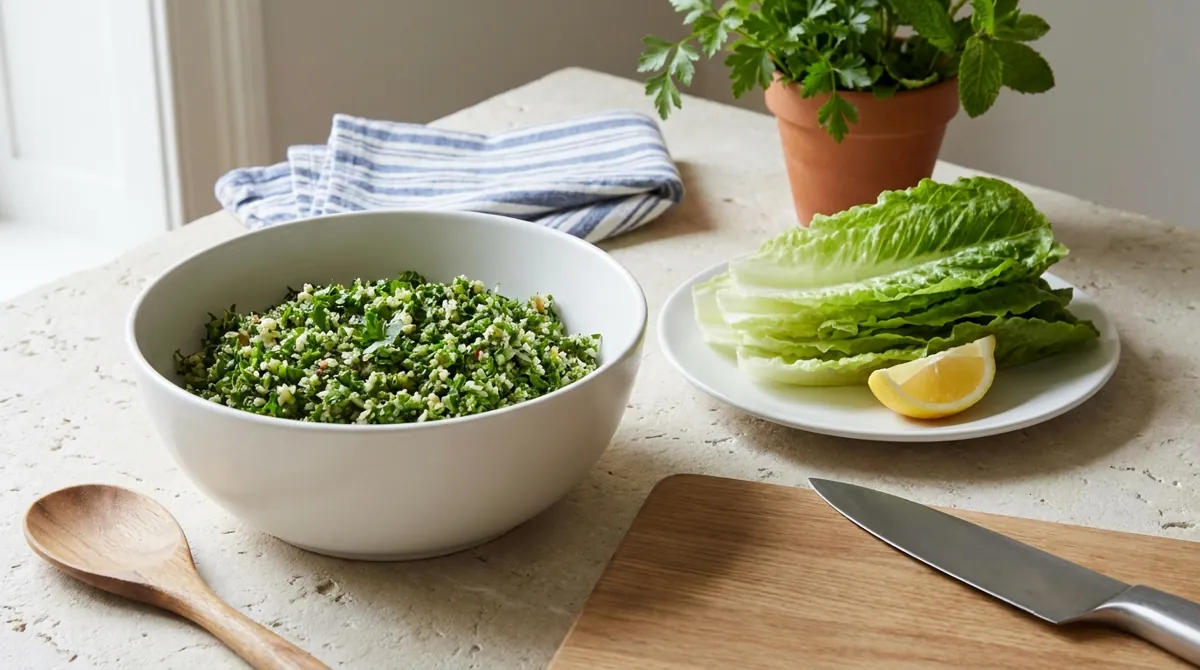
A bright, green Lebanese salad that is mostly parsley, with a little fine bulgur, ripe tomato, mint and a lot of lemon.
🍳Cook alongOne move at a time, with real timers
 Edited by JP Lambiase
Change the estimate
Swaps change the price only: cook any meat to its own safe temperature. Where these numbers come from
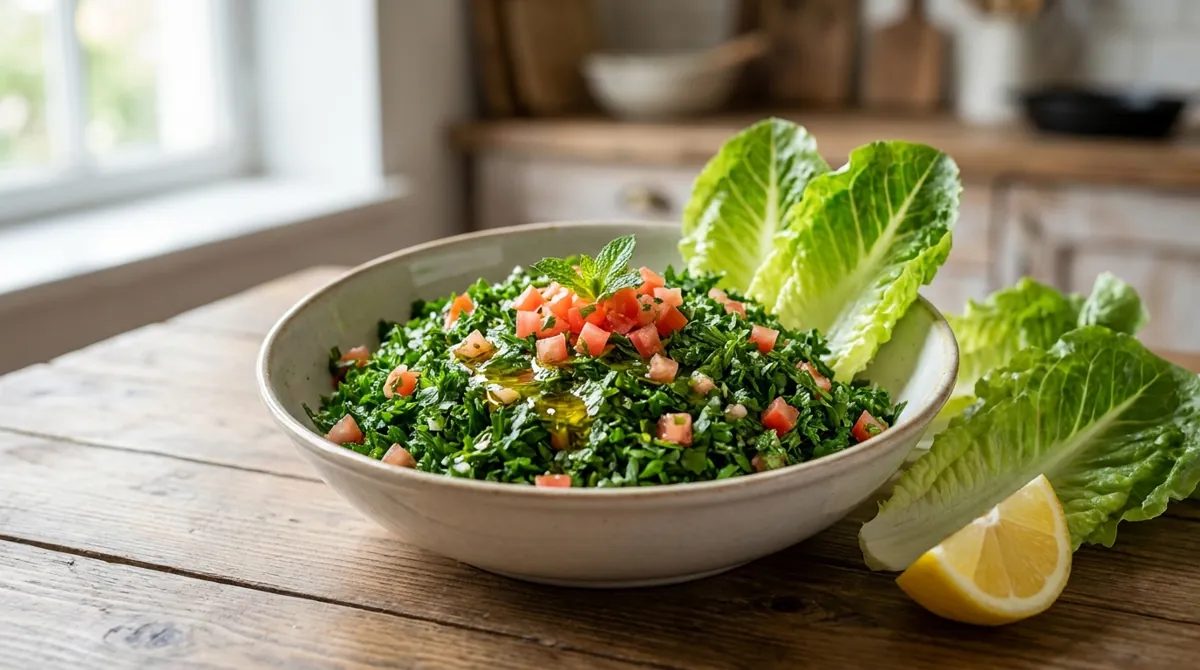
Tabbouleh is a salad of finely chopped parsley, tomato, mint, onion and a small amount of bulgur, dressed with olive oil, lemon juice and salt. Wikipedia places its origin in the mountains of Lebanon and Syria, and it is now one of the most popular salads of the Middle East. Lebanon has held a National Tabbouleh Day since 2001, on the first Saturday of July.
The name comes from the Levantine Arabic tabbule, linked to an Arabic word for "seasoning." The key point of the traditional version is the ratio: Syrian and Lebanese tabbouleh has far more parsley than bulgur, while the bulgur-heavy style that spread to Israel and the United States in the 1970s, and most Western versions, flip it so the grain leads.
Why it works the kitchen science
Fine bulgur soaked in lemon
It softens without cooking and takes on the lemon, so it is a seasoning grain rather than a filler.
Dry herbs, chopped with a sharp knife
A clean cut keeps the parsley bright and fluffy; wet or bruised leaves go dark and soggy.
Dressing at the last minute
Lemon and salt pull water out of the tomatoes and soften the parsley over time.
🧰 You'll need 5 items
Everything the steps call for. Tick off what you have before you start.
Tools
Step by step
- Step 1
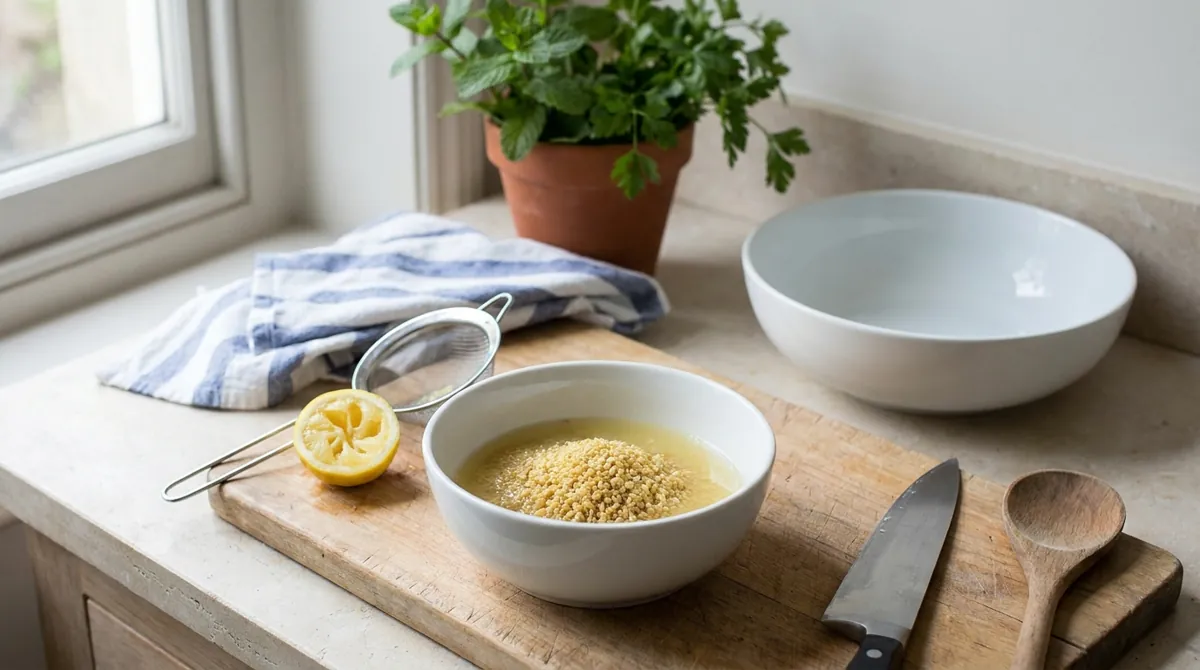
Rinse the bulgur in a fine strainer, drain well, and put it in a small bowl with 1/4 cup of the lemon juice. Leave it 20 minutes, until tender.
- Step 2
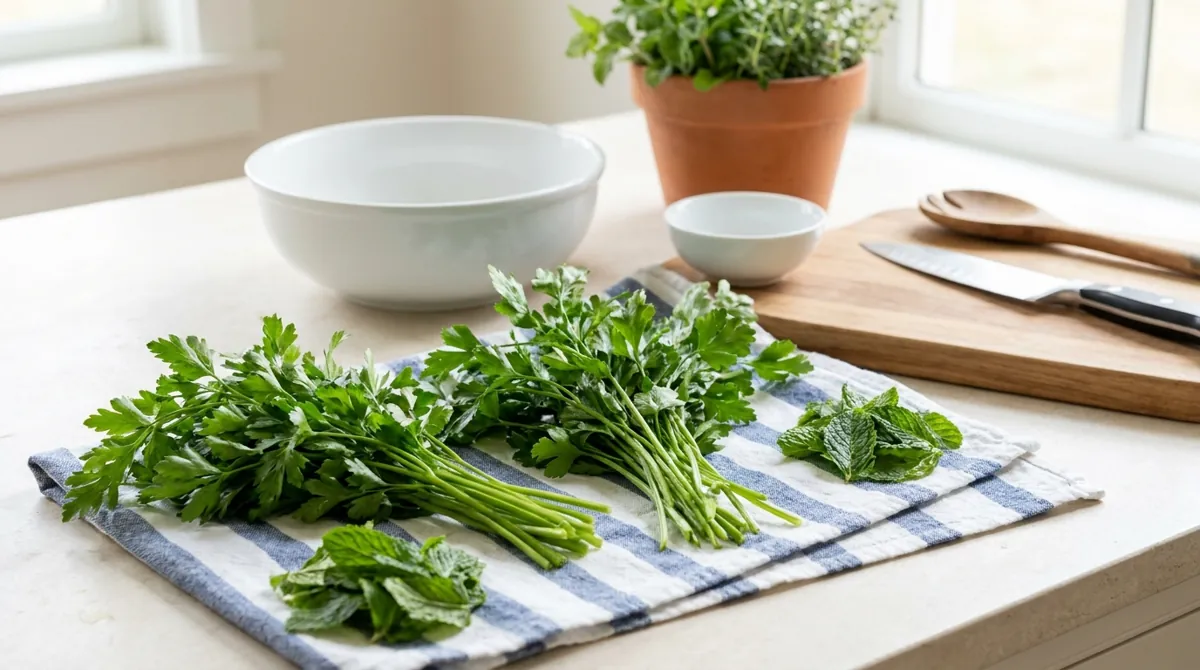
Wash the parsley and mint and dry them completely in a salad spinner and then on towels. Wet herbs turn the salad to mush.
- Step 3
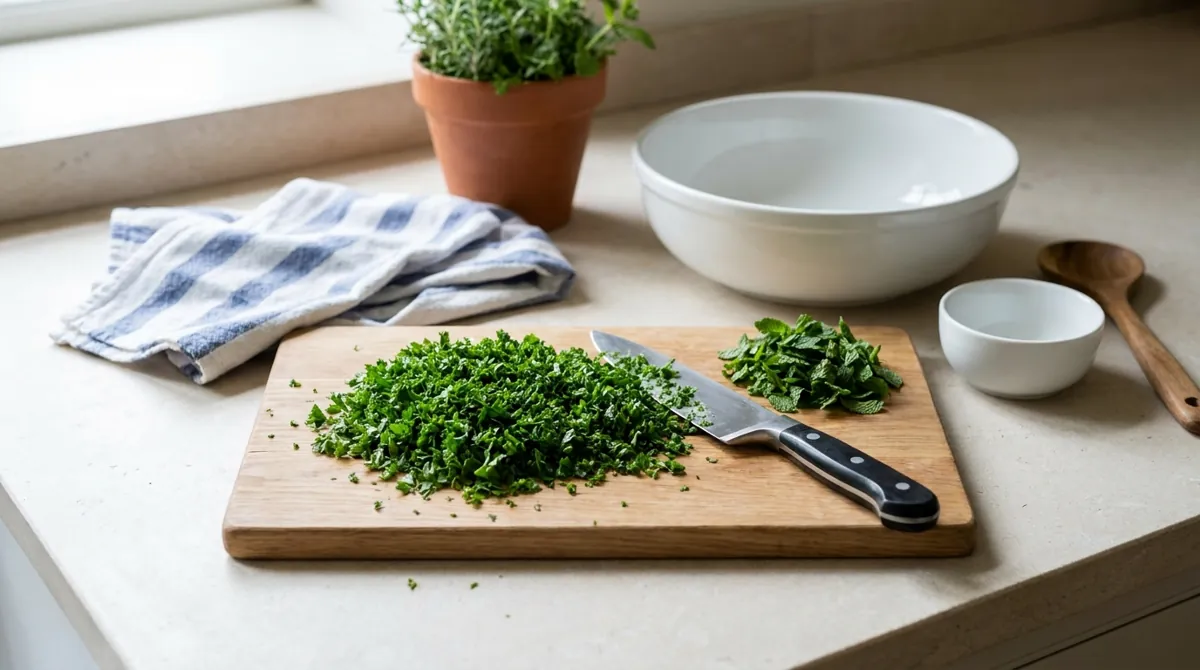
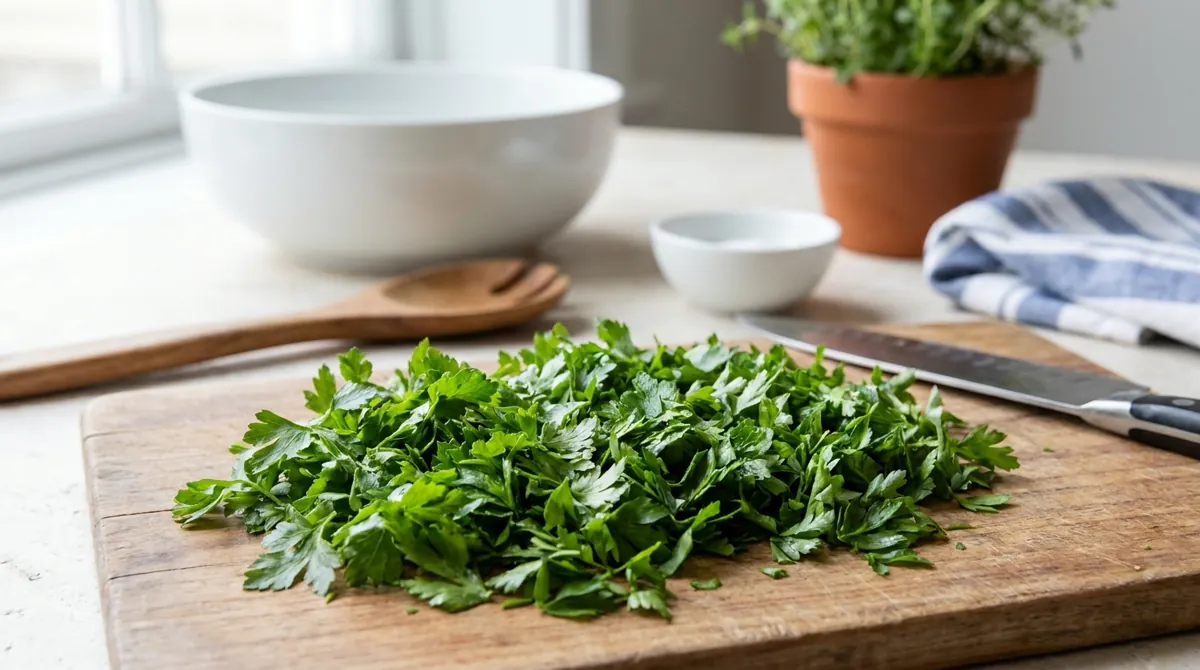
Pick off the thick stems and chop the parsley very fine with a sharp knife, then the mint. Use a gentle rocking cut rather than mashing.
✓ What it should look like - Step 4
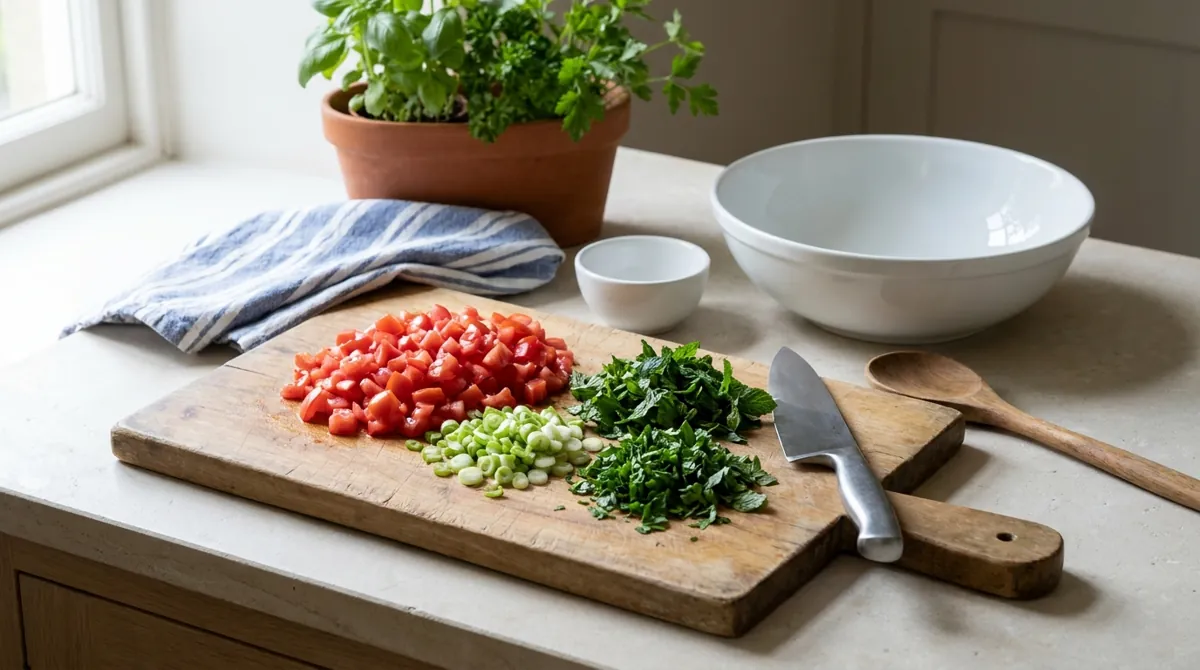
Dice the tomatoes small and chop the scallions fine. Salt the tomatoes lightly and let the juice drain a few minutes.
- Step 5
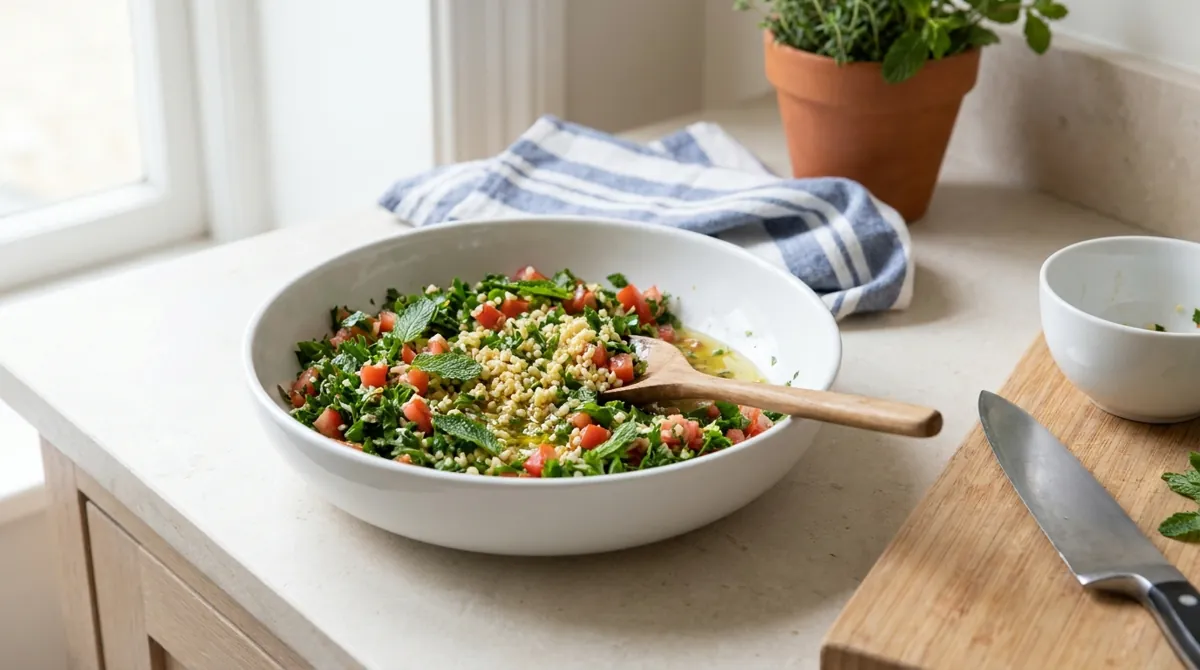
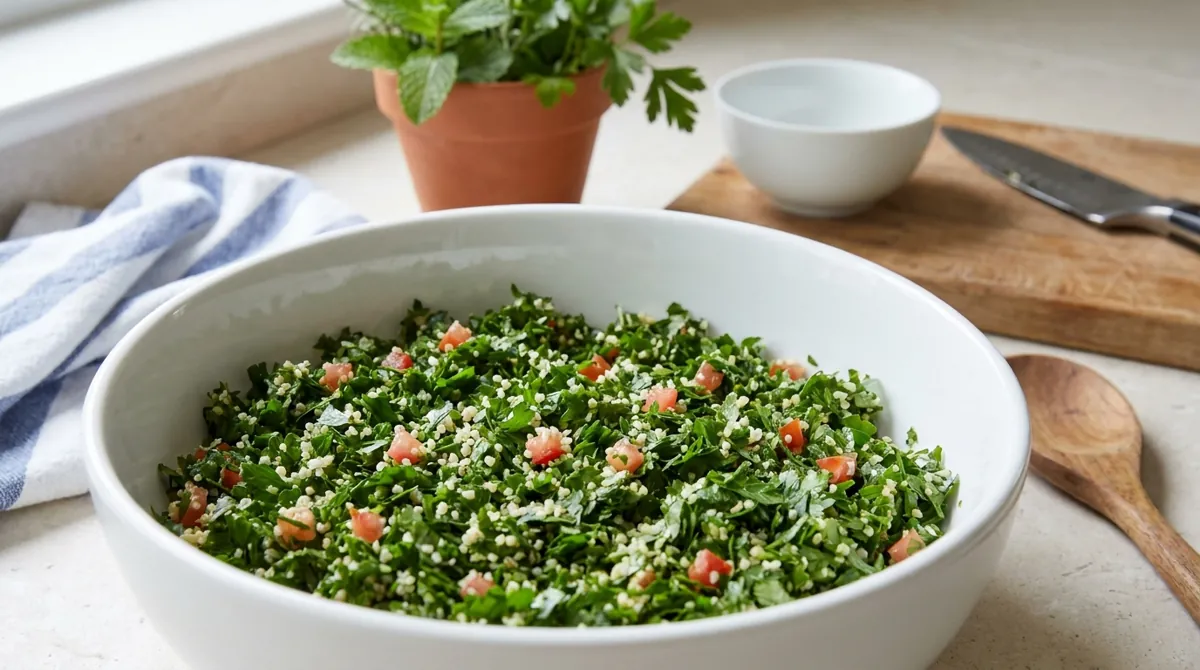
Put the parsley, mint, scallions, tomatoes and the soaked bulgur in a wide bowl. Add the olive oil, the remaining lemon juice, the salt and the allspice, and toss. Taste and add lemon or salt until it is sharp and bright.
✓ What it should look like - Step 6
Serve right away with romaine leaves to scoop it up.
Tabbouleh
Serves 4 · about 5 cups · 40 min total
- 1/4 cup fine bulgur (#1), about 40 g
- 3 large bunches flat-leaf parsley (about 300 g of leaves and tender stems)
- 3 ripe tomatoes, about 400 g
- 4 scallions, about 50 g
- 1/2 cup fresh mint leaves, packed, about 15 g
- 1/3 cup lemon juice, from 2 to 3 lemons (about 80 g)
- 1/3 cup extra-virgin olive oil (about 70 g)
- 1 1/4 tsp fine salt
- 1/4 tsp ground allspice, optional
- Romaine lettuce leaves, to serve
Equipment: Chef's knife and cutting board, Measuring cups and spoons, Mixing bowls, Fine-mesh strainer, Colander
Method
- Rinse the bulgur in a fine strainer, drain well, and put it in a small bowl with 1/4 cup of the lemon juice. Leave it 20 minutes, until tender.
- Wash the parsley and mint and dry them completely in a salad spinner and then on towels. Wet herbs turn the salad to mush.
- Pick off the thick stems and chop the parsley very fine with a sharp knife, then the mint. Use a gentle rocking cut rather than mashing.
- Dice the tomatoes small and chop the scallions fine. Salt the tomatoes lightly and let the juice drain a few minutes.
- Put the parsley, mint, scallions, tomatoes and the soaked bulgur in a wide bowl. Add the olive oil, the remaining lemon juice, the salt and the allspice, and toss. Taste and add lemon or salt until it is sharp and bright.
- Serve right away with romaine leaves to scoop it up.
Americanized house recipe, written for this site, in the traditional parsley-forward proportions. History: Wikipedia, "Tabbouleh" (mountains of Lebanon and Syria, etymology, parsley-to-bulgur ratio, National Tabbouleh Day). Technique checked against: NoRecipes, "Tabouleh" (soak the bulgur in the dressing so it takes up the lemon; dry the parsley well); The Kitchn, "How to Make the Best Tabbouleh Salad"; America's Test Kitchen, "Spiced Tabbouleh". en.wikipedia.org. Ingredient list follows the source; the method is in our own words.
Tips
- Keep the dressed salad no longer than 2 to 3 hours. For a make-ahead, keep the chopped herbs, tomatoes and bulgur separate and toss them together just before serving.
- No fine bulgur? Use medium (#2) and soak it 30 minutes, or soak it in hot water for 10 minutes.
- Gluten-free: replace the bulgur with cooked, cooled quinoa, a clear change from the traditional recipe.
The rules people argue about
What the sources agree on, what they don't, and what is just a good story.
- Tabbouleh is a grain salad. Disputed: the traditional Syrian and Lebanese version is mainly parsley, with a small amount of bulgur; the bulgur-heavy version popular in Israel and the US is a later style, and Turkish kisir and Armenian eetch are separate bulgur-forward dishes.
- Tabbouleh is thousands of years old. Folklore as stated: its origin is placed in the mountains of Lebanon and Syria, but we found no source that dates the dish; the English word only appears in the 1950s.
Meatballs of the World

Italian-American Meatballs
Big, tender meatballs braised for an hour in red sauce over spaghetti. The one most Americans grew up with.

Pallottine (Abruzzo Meatballs)
Tiny meatballs, smaller than a marble, tossed right through square spaghetti alla chitarra. No bread at all.

Swedish Meatballs (Köttbullar)
Small, soft meatballs browned in butter, in a cream sauce made from the same pan, with lingonberry jam on the plate.

Danish Frikadeller
Pork meatballs shaped with a spoon and fried slowly in butter, crusty outside and soft in the middle.

Königsberger Klopse
German meatballs that are never fried: poached, then served in a creamy white sauce with capers.

Spanish Albóndigas in Almond Saffron Sauce
The tapas bar classic: small meatballs in a golden sauce thickened with fried almonds and bread.

Mexican Albóndigas with Chipotle and Mint
Soft meatballs with rice and fresh mint inside, simmered in a smoky tomato and chipotle broth.

Izgara Köfte (Turkish Grilled Meatballs)
Small, flat meatballs kneaded hard, rested cold, and charred on a hot grill pan.

Lion's Head Meatballs
Big, soft pork meatballs, stirred into a sticky paste, fried to set, then braised in a savory sauce.

Chicken Tsukune
Japan's chicken meatball: kneaded sticky, grilled on skewers, glazed with sweet soy tare, dipped in egg yolk.