
Tiramisu
Crisp ladyfingers dipped in strong espresso, layered with a mascarpone and egg-yolk cream and dusted with cocoa: the "pick me up" dessert from northeast Italy that two regions still claim.
🍳Cook alongOne move at a time, with real timers
 Edited by JP Lambiase
Change the estimate
Swaps change the price only: cook any meat to its own safe temperature. Where these numbers come from
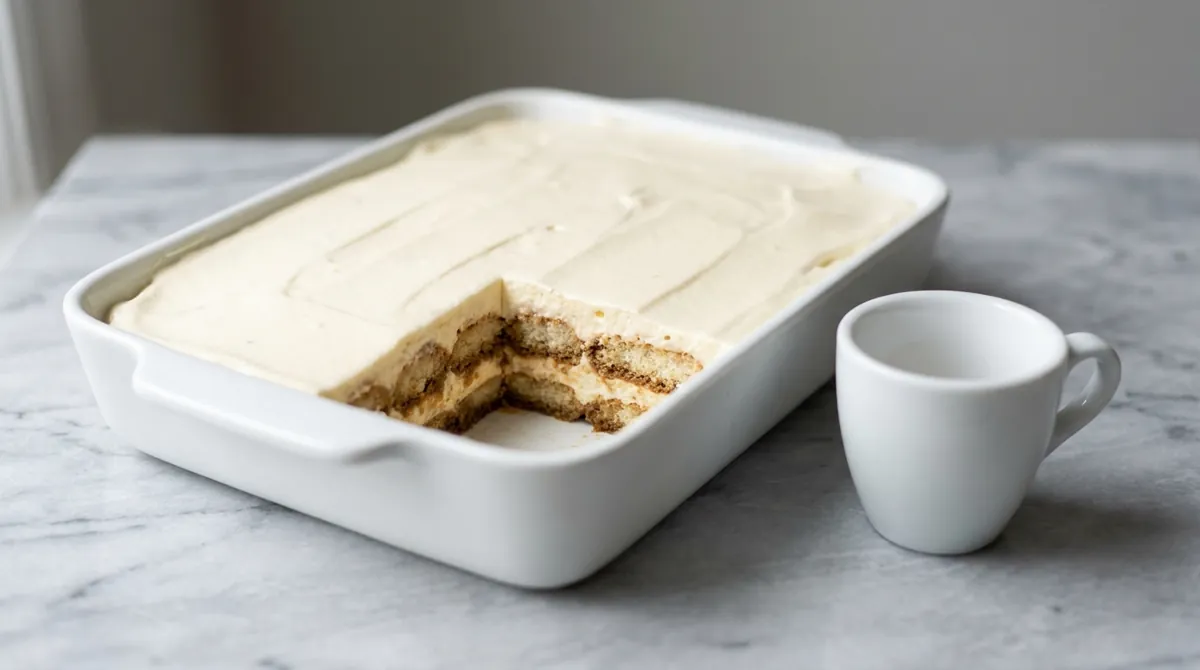
Tiramisu is a young dessert with an old fight attached. The name is Italian for "pick me up" (tirami su), and modern-style recipes do not show up in cookbooks before the 1960s. It reached an Italian dictionary in 1980 and English in 1982.
The best-known claim belongs to Le Beccherie, a restaurant in Treviso run by Ado Campeol and Alba Di Pillo. Their pastry chef Roberto Linguanotto is credited with making it, by the restaurant's account on 24 December 1969, and it went on the menu in 1972. Friuli-Venezia Giulia, next door, has a rival story: Mario Cosolo served a layered "Coppa Vetturino" of sponge, cream and Marsala at his restaurant in Pieris from 1939, reportedly renamed "Tirime su" in 1945, with a 1948 photo of a poster carrying the name. In 2017 the Italian agriculture ministry listed tiramisu as a traditional food of Friuli-Venezia Giulia, which did not end the argument in Treviso.
The building blocks are older than either claim: savoiardi biscuits, egg-yolk creams like zabaglione, and mascarpone, made industrially in Treviso province from 1933.
Why it works the kitchen science
A quick dip is enough
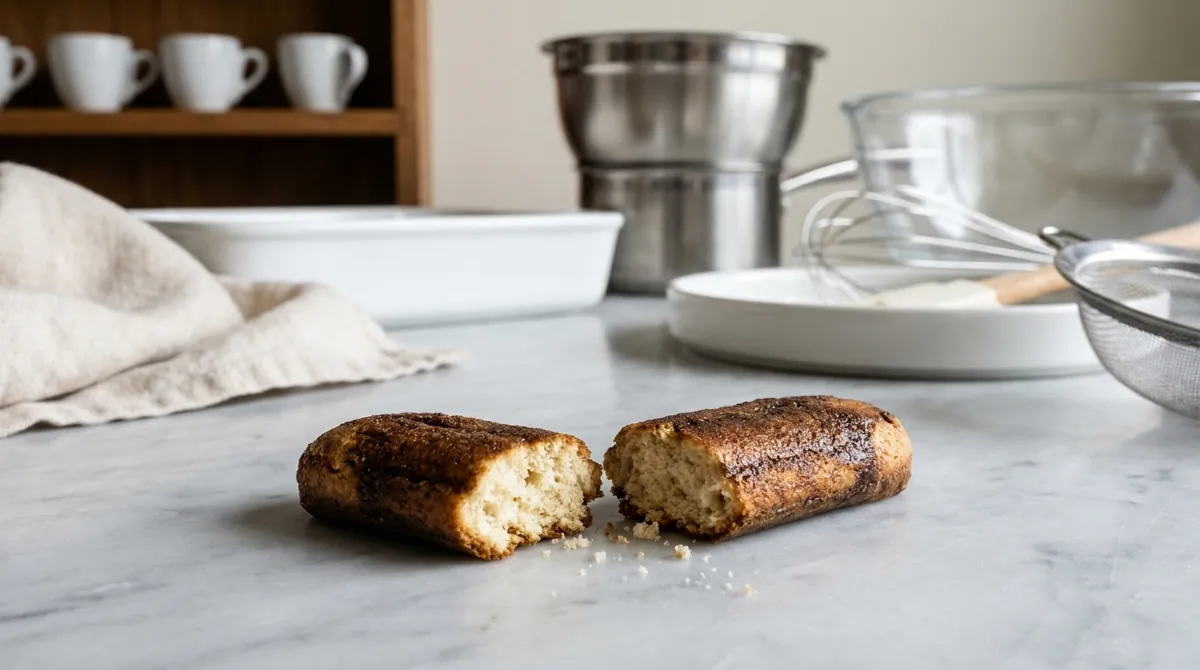
Crisp savoiardi keep drinking coffee from the cream as they chill, so a long soak turns them to mush.
🧰 You'll need 7 items
Everything the steps call for. Tick off what you have before you start.
Pans and pots
Tools
Step by step
- Step 1
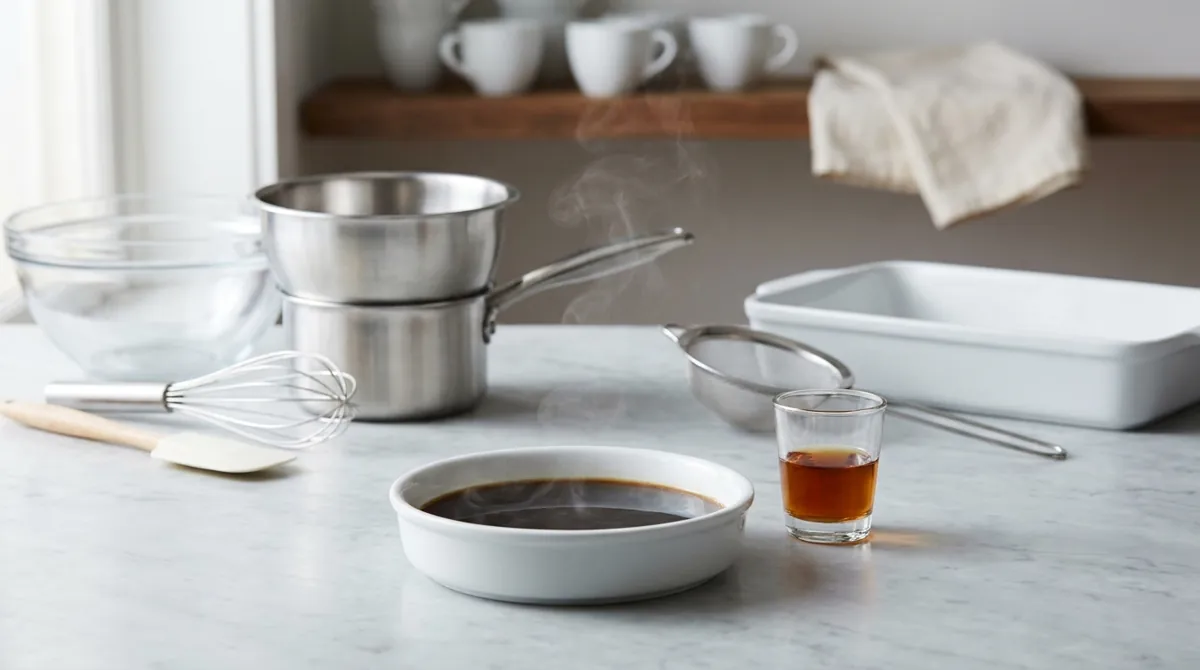
Brew the coffee, stir in the Marsala if using, and pour it into a shallow dish to cool completely.
- Step 2
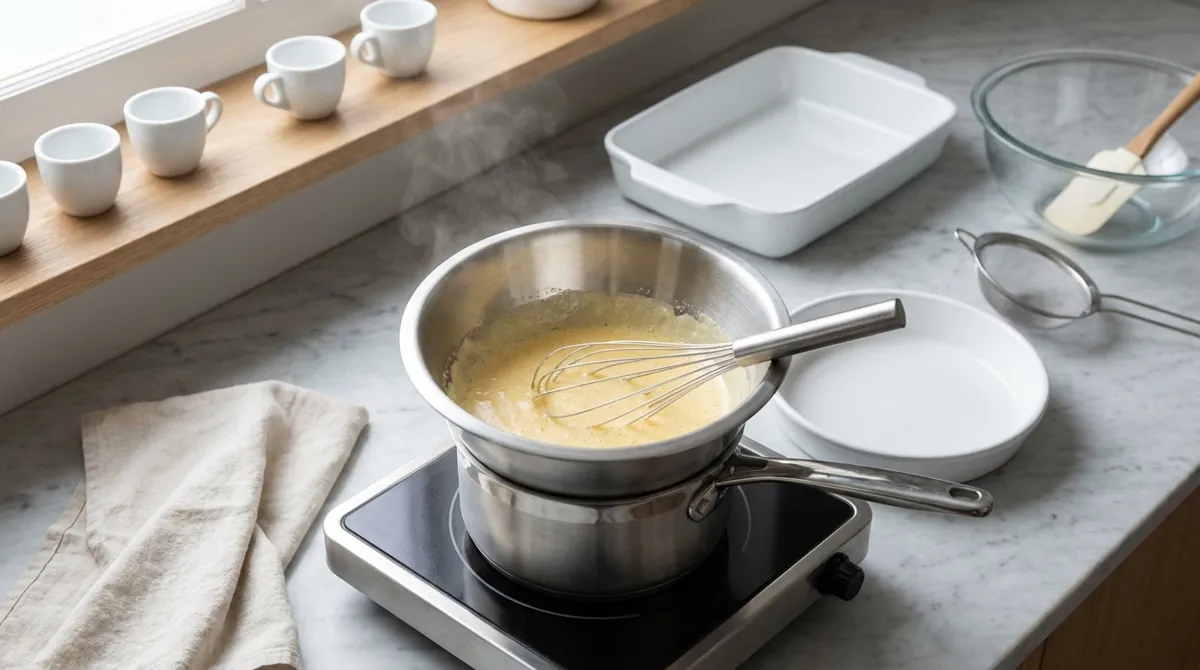
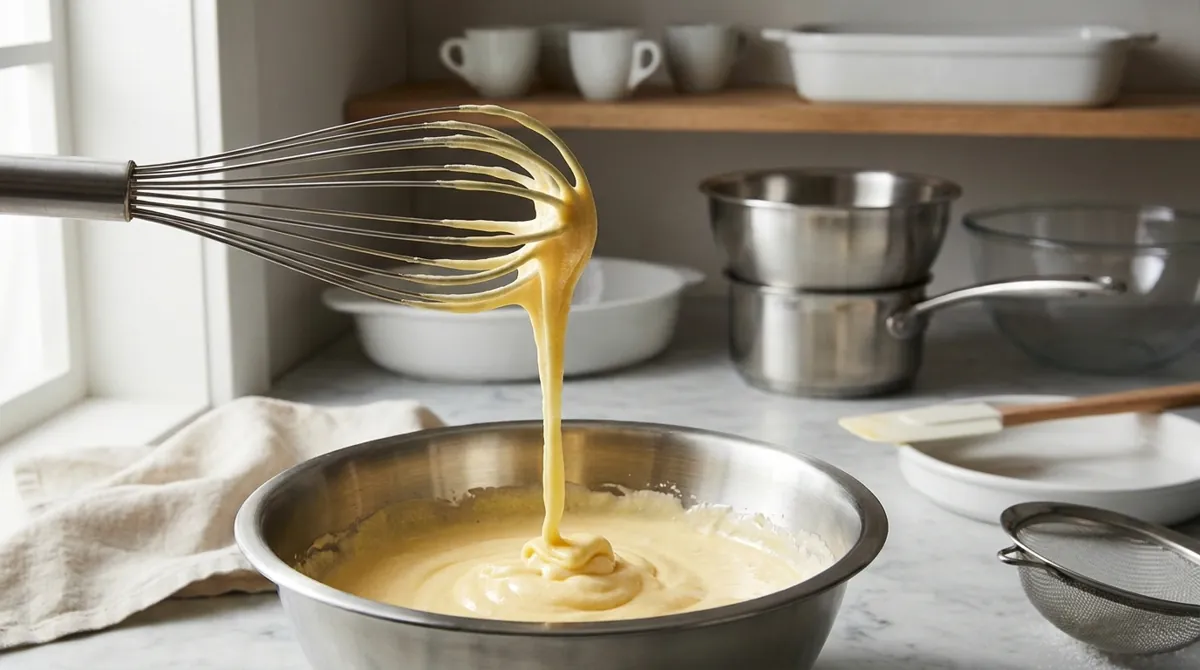
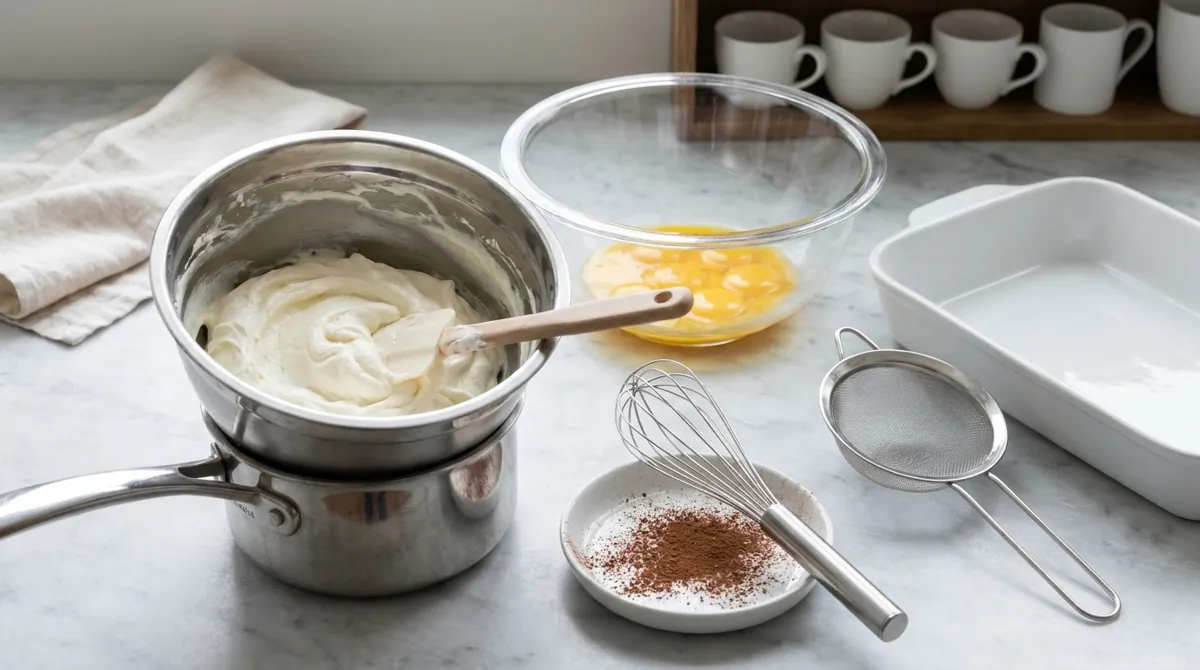
Whisk the egg yolks and sugar in a heatproof bowl set over a saucepan of barely simmering water until thick, pale and warm, 5 to 8 minutes, when the mixture falls from the whisk in a slow ribbon and reads 160°F. Take the bowl off the heat and let it cool for 10 minutes.
✓ What it should look like - Step 3
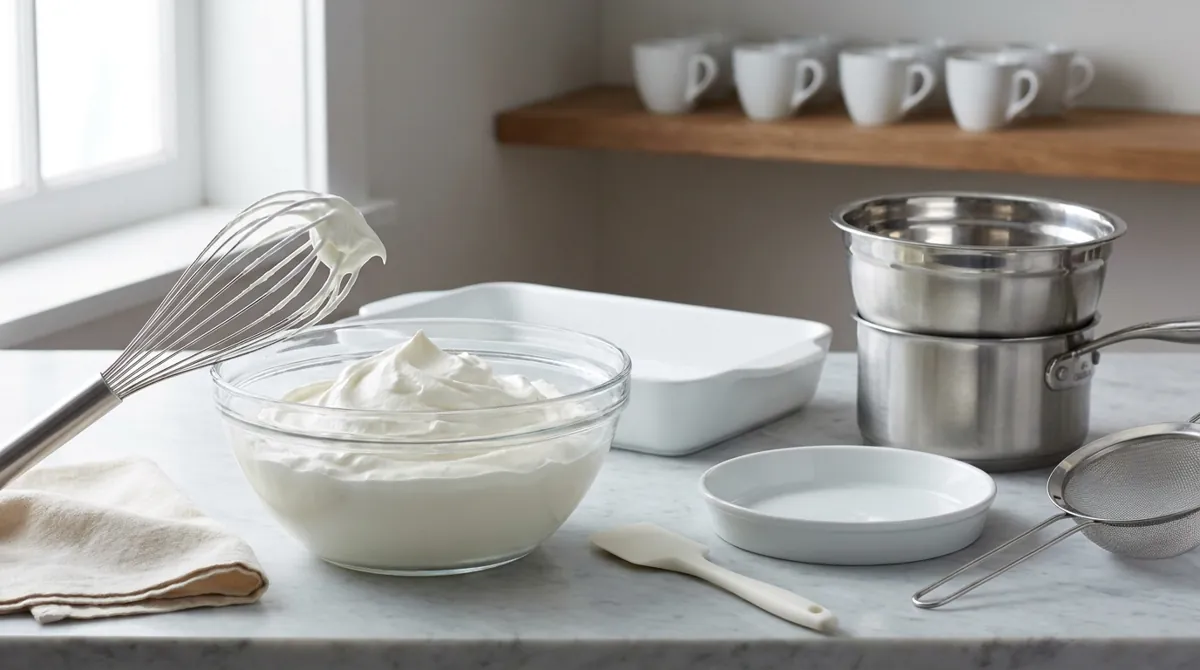
In a second bowl, whip the cold cream to soft, floppy peaks.
- Step 4
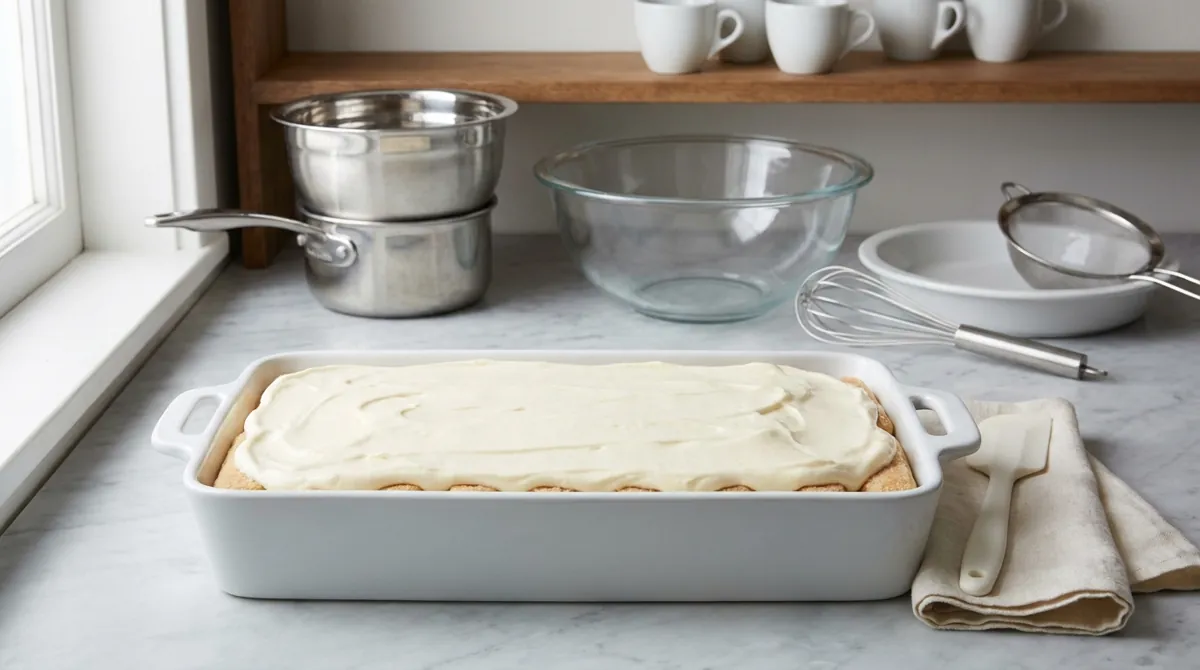
Beat the cold mascarpone into the cooled yolk mixture until smooth, then fold in the whipped cream with a spatula until no streaks remain.
- Step 5
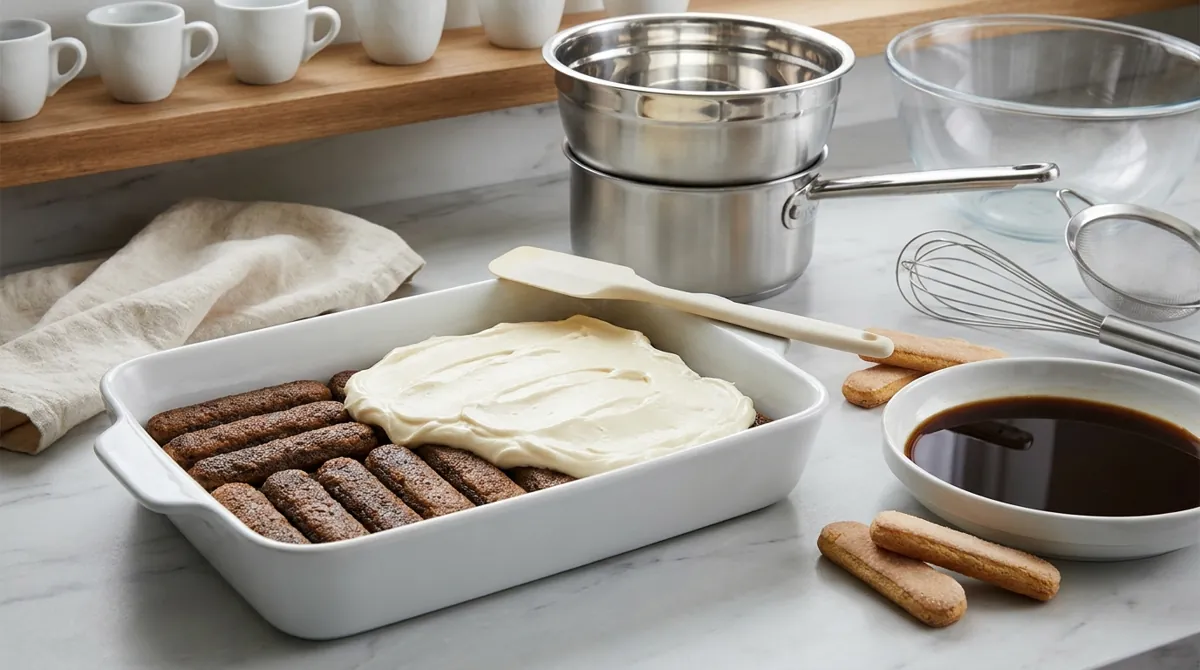
Dip each ladyfinger in the coffee for 1 to 2 seconds, turning it once, and lay it in the 9 by 13 inch dish, packing them in a single tight layer. Spread half the cream over the top.
✓ What it should look like - Step 6
Dip and lay a second layer of ladyfingers the same way and spread the rest of the cream over it, smoothing the top. Cover and chill at least 6 hours, ideally overnight.
- Step 7
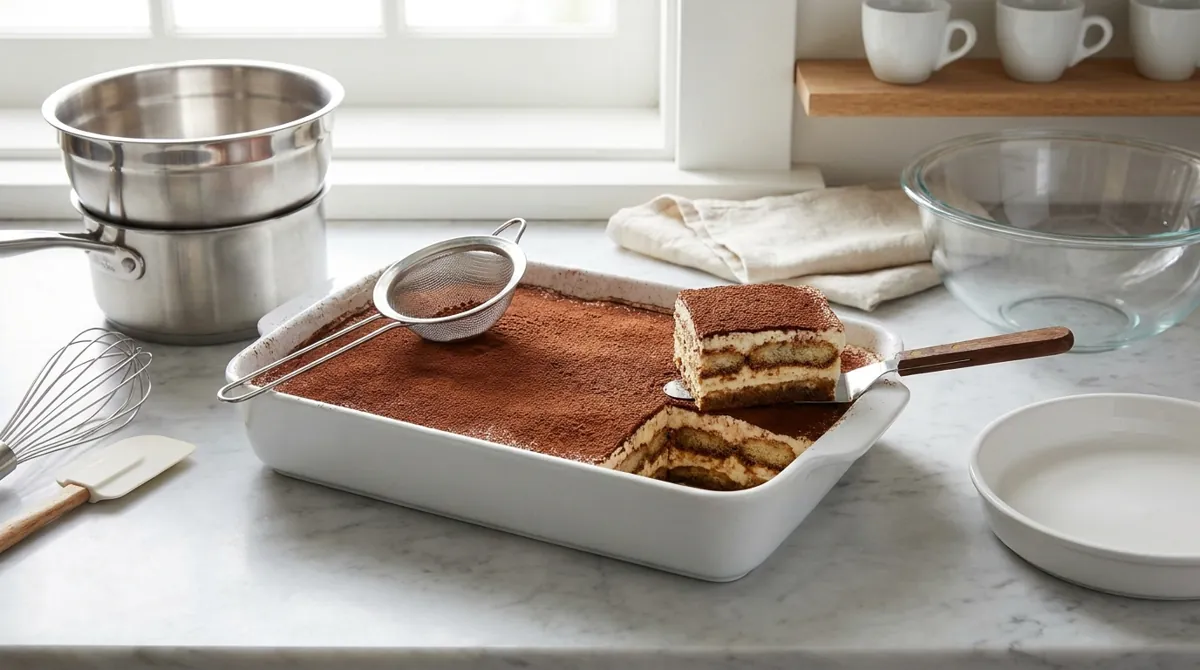
Just before serving, sift the cocoa evenly over the top. Cut into squares with a sharp knife wiped clean between cuts.
Tiramisu
Serves 12 · one 9 by 13 inch dish · 6 hr 50 min total
Cream
- 6 large egg yolks (100 g)
- 3/4 cup granulated sugar (150 g)
- 1 lb mascarpone (454 g), cold
- 1 cup heavy cream (240 g), cold
Layers
- 1 1/2 cups strong espresso or very strong coffee (360 g), cooled
- 3 tbsp Marsala or dark rum (45 g), optional
- Two 7 oz packages crisp Italian savoiardi ladyfingers (about 400 g, about 40 biscuits)
- 2 tbsp unsweetened cocoa powder (10 g)
Equipment: Saucepan, Instant-read thermometer, Chef's knife and cutting board, Measuring cups and spoons, Mixing bowls, Whisk, Spatula
Method
- Brew the coffee, stir in the Marsala if using, and pour it into a shallow dish to cool completely.
- Whisk the egg yolks and sugar in a heatproof bowl set over a saucepan of barely simmering water until thick, pale and warm, 5 to 8 minutes, when the mixture falls from the whisk in a slow ribbon and reads 160°F. Take the bowl off the heat and let it cool for 10 minutes.
- In a second bowl, whip the cold cream to soft, floppy peaks.
- Beat the cold mascarpone into the cooled yolk mixture until smooth, then fold in the whipped cream with a spatula until no streaks remain.
- Dip each ladyfinger in the coffee for 1 to 2 seconds, turning it once, and lay it in the 9 by 13 inch dish, packing them in a single tight layer. Spread half the cream over the top.
- Dip and lay a second layer of ladyfingers the same way and spread the rest of the cream over it, smoothing the top. Cover and chill at least 6 hours, ideally overnight.
- Just before serving, sift the cocoa evenly over the top. Cut into squares with a sharp knife wiped clean between cuts.
Americanized house recipe, written for this site, after the six-ingredient Treviso style (yolks, sugar, mascarpone, savoiardi, coffee, cocoa) with whipped cream added for a steadier set. History: Wikipedia, "Tiramisu" (name, 1960s cookbooks, 1980 and 1982 dictionary dates, Le Beccherie, Linguanotto, 1969 and 1972, Cosolo and Coppa Vetturino 1939, "Tirime su" 1945, 1948 poster, 2017 ministry listing, 1933 mascarpone, pasteurized yolk cream). Egg safety: cooking the yolks to 160°F follows USDA egg guidance. en.wikipedia.org. Ingredient list follows the source; the method is in our own words.
All sources (1)
Tips
- Cold mascarpone, cold cream: warm mascarpone beaten hard can split and turn grainy.
- Use crisp Italian savoiardi, not soft sponge ladyfingers; soft ones collapse.
- It keeps 3 days covered in the fridge and tastes best on day two. Dust the cocoa only when serving so it does not go damp.
- For no alcohol, leave out the Marsala; the Treviso style uses coffee alone.
The rules people argue about
What the sources agree on, what they don't, and what is just a good story.
- Tiramisu was invented at Le Beccherie in Treviso. Disputed: Treviso's claim is the most famous, but Friuli-Venezia Giulia points to Mario Cosolo's "Tirime su" from the 1940s, and Italy's agriculture ministry listed it as a Friulian traditional food in 2017.
- Tiramisu was created in a 19th-century Treviso brothel as a pick-me-up. Folklore: a story repeated by some tiramisu enthusiasts, with no documents behind it in the published histories.
- Real tiramisu has no cream. Disputed: the Treviso six-ingredient version has none, but plenty of Italian home recipes fold in whipped cream or whipped egg whites. Cream makes it lighter and steadier.
Meatballs of the World

Italian-American Meatballs
Big, tender meatballs braised for an hour in red sauce over spaghetti. The one most Americans grew up with.

Pallottine (Abruzzo Meatballs)
Tiny meatballs, smaller than a marble, tossed right through square spaghetti alla chitarra. No bread at all.

Swedish Meatballs (Köttbullar)
Small, soft meatballs browned in butter, in a cream sauce made from the same pan, with lingonberry jam on the plate.

Danish Frikadeller
Pork meatballs shaped with a spoon and fried slowly in butter, crusty outside and soft in the middle.

Königsberger Klopse
German meatballs that are never fried: poached, then served in a creamy white sauce with capers.

Spanish Albóndigas in Almond Saffron Sauce
The tapas bar classic: small meatballs in a golden sauce thickened with fried almonds and bread.

Mexican Albóndigas with Chipotle and Mint
Soft meatballs with rice and fresh mint inside, simmered in a smoky tomato and chipotle broth.

Izgara Köfte (Turkish Grilled Meatballs)
Small, flat meatballs kneaded hard, rested cold, and charred on a hot grill pan.

Lion's Head Meatballs
Big, soft pork meatballs, stirred into a sticky paste, fried to set, then braised in a savory sauce.

Chicken Tsukune
Japan's chicken meatball: kneaded sticky, grilled on skewers, glazed with sweet soy tare, dipped in egg yolk.