
Tom Yum Soup
A fragrant Thai hot and sour soup of shrimp, lemongrass, galangal, kaffir lime and chilies, ready in 30 minutes.
🍳Cook alongOne move at a time, with real timers
 Edited by JP Lambiase
Change the estimate
Swaps change the price only: cook any meat to its own safe temperature. Where these numbers come from
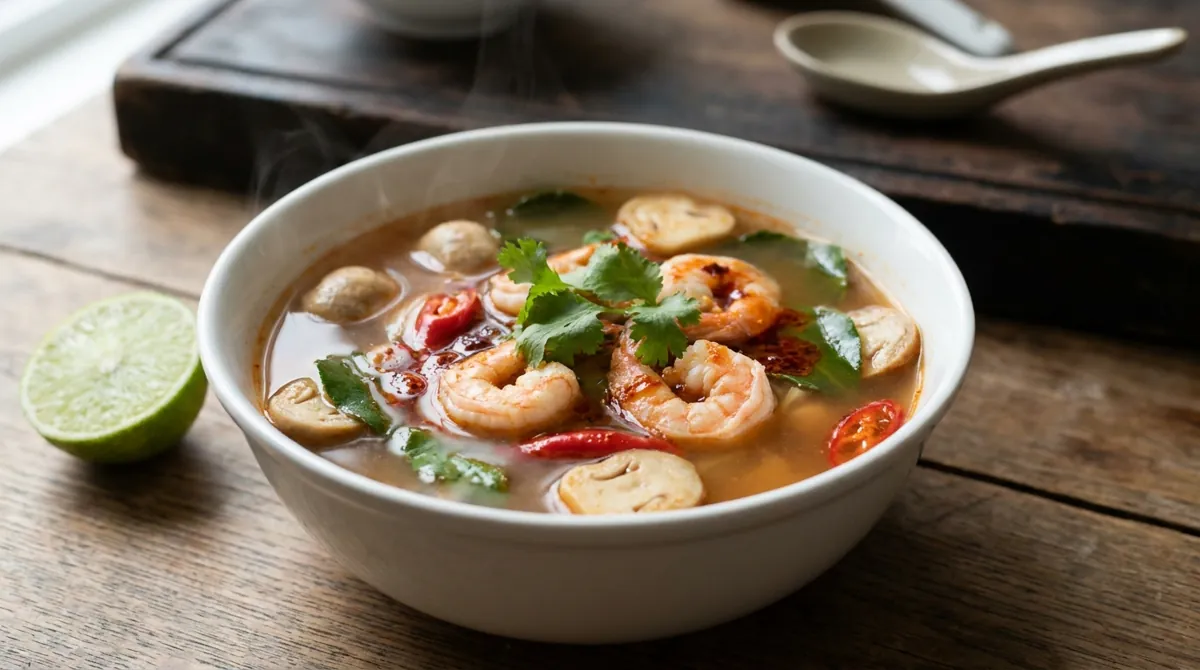
Tom yum is a family of hot and sour Thai soups. The name joins tom, "to boil," with yam, glossed as "mixed," the word for Thai spicy-sour salads. Wikipedia gives Central Thailand as the place of origin; the best known version, tom yum goong (shrimp), is dated to the Rattanakosin period, and a recipe from 1890 for a snakehead fish version is cited.
The flavor comes from lemongrass, galangal and kaffir lime leaves simmered in stock, then fish sauce, lime juice and fresh chilies at the end. Two main styles exist: nam sai, a clear broth, and nam khon, a creamy one made with evaporated milk or non-dairy creamer and described as a more recent variation from the 1980s. This recipe is the clear style.
Why it works the kitchen science
Bruised aromatics, simmered
Crushing lemongrass, galangal and chilies releases their oils into the stock.
Shrimp shells in the stock
The shells add a deep shrimp flavor for no extra cost.
Lime juice off the heat
Boiled lime juice turns bitter and loses its fresh smell.
🧰 You'll need 6 items
Everything the steps call for. Tick off what you have before you start.
Pans and pots
Tools
Step by step
- Step 1
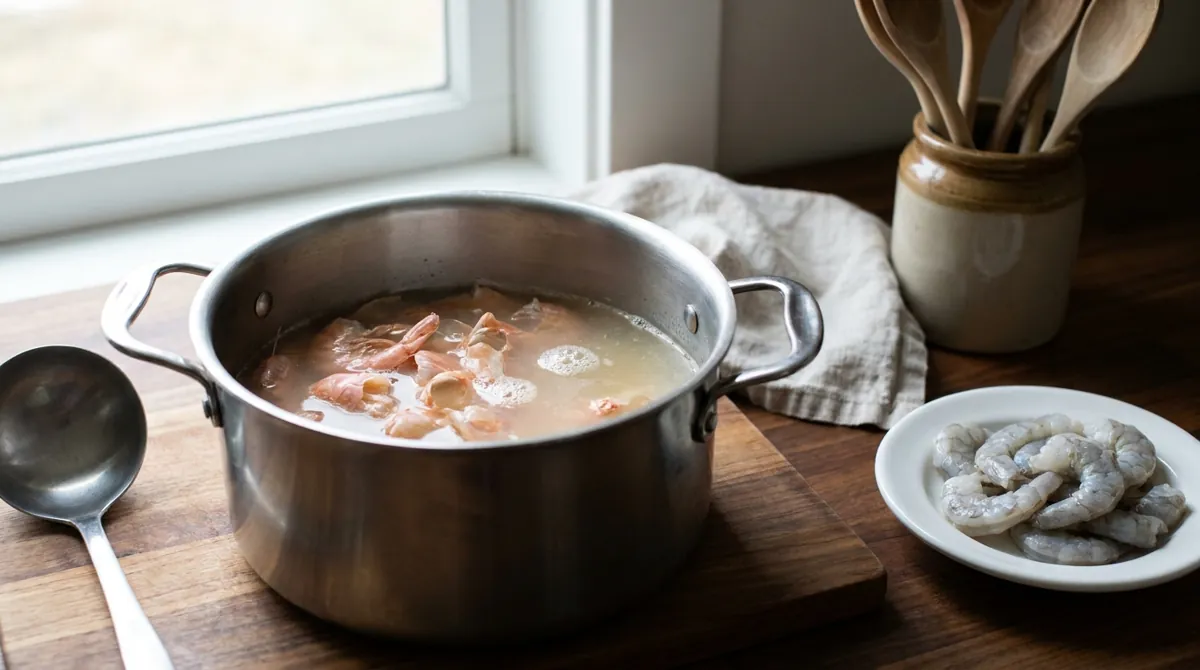
Put the shrimp shells and the stock in a pot, simmer 10 minutes, then strain out the shells and return the stock to the pot.
- Step 2
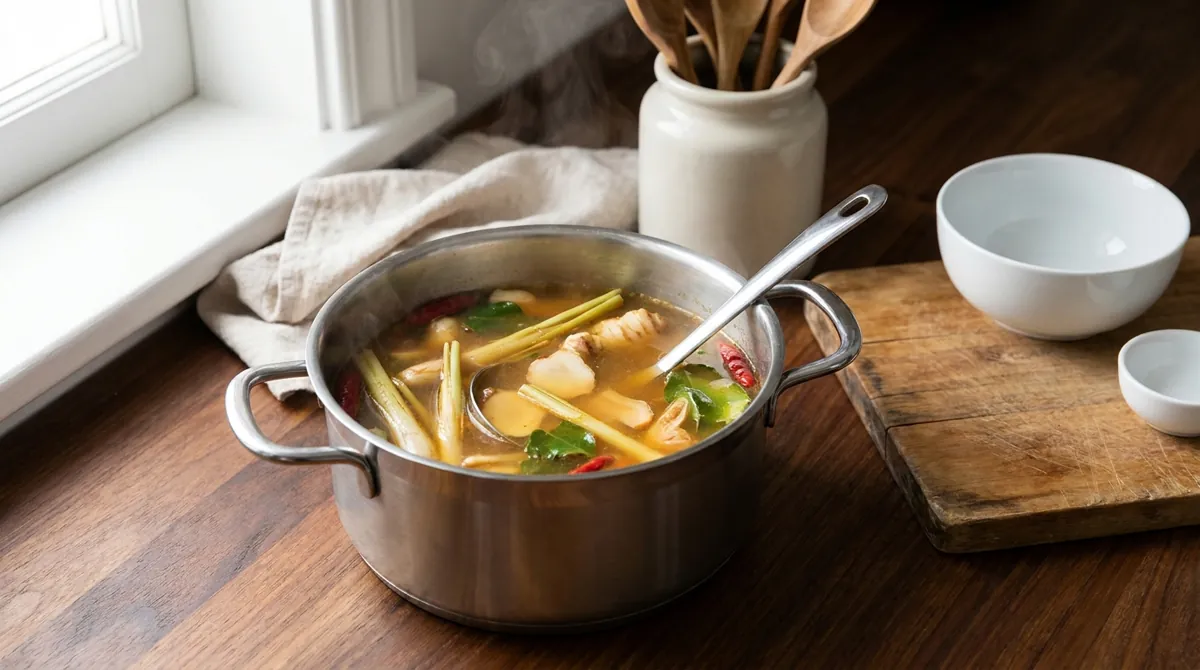
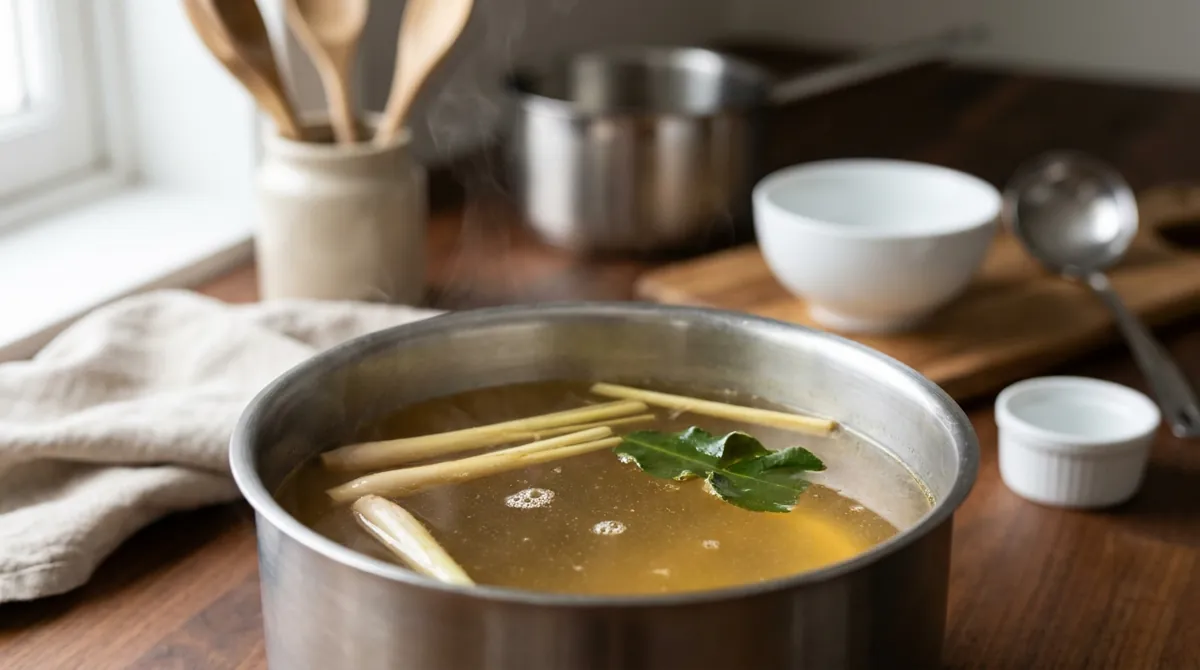
Add the lemongrass, galangal, lime leaves and chilies. Simmer 5 minutes, until the broth smells strongly of lemongrass.
✓ What it should look like - Step 3
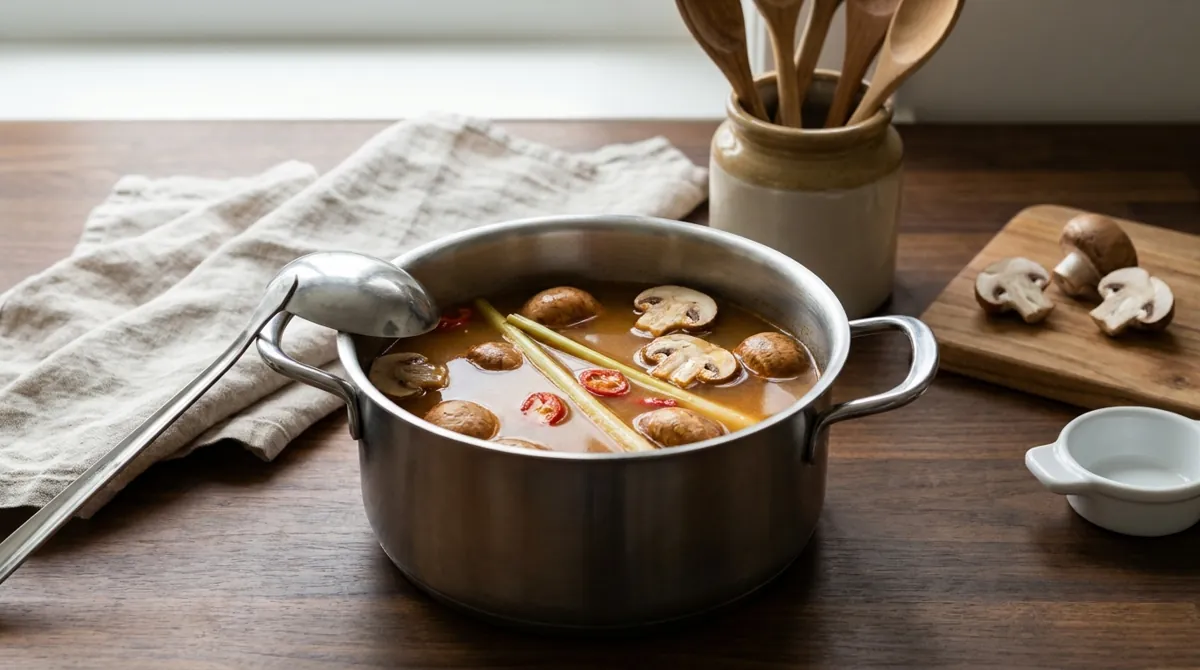
Add the mushrooms and simmer 3 minutes.
- Step 4
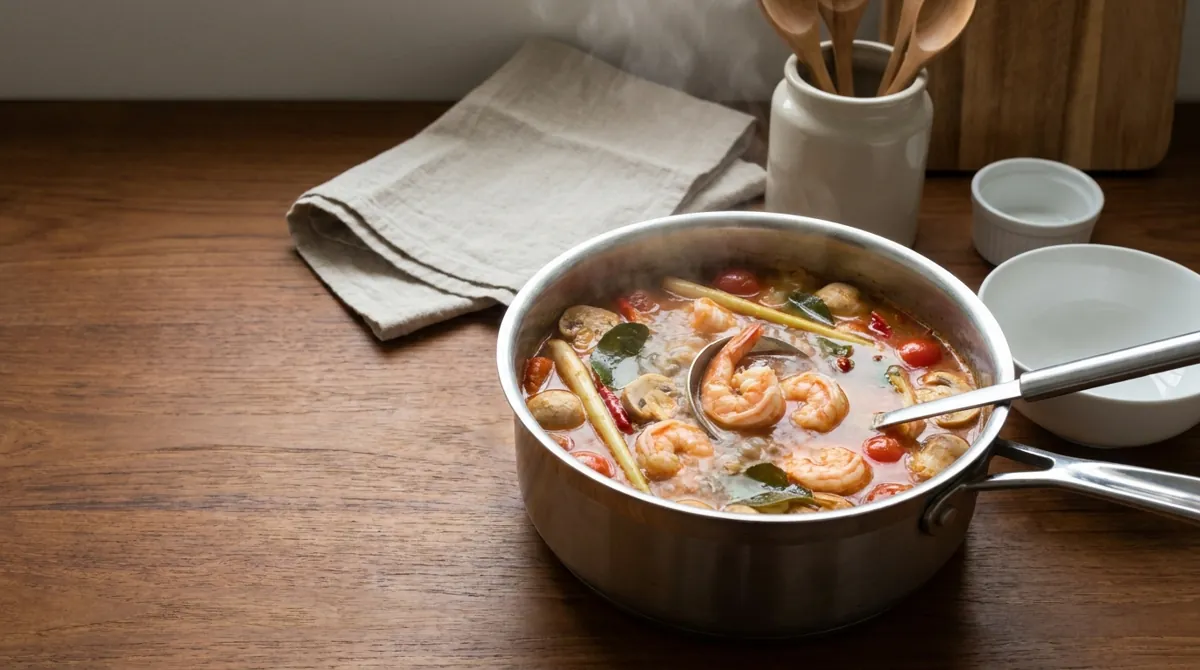
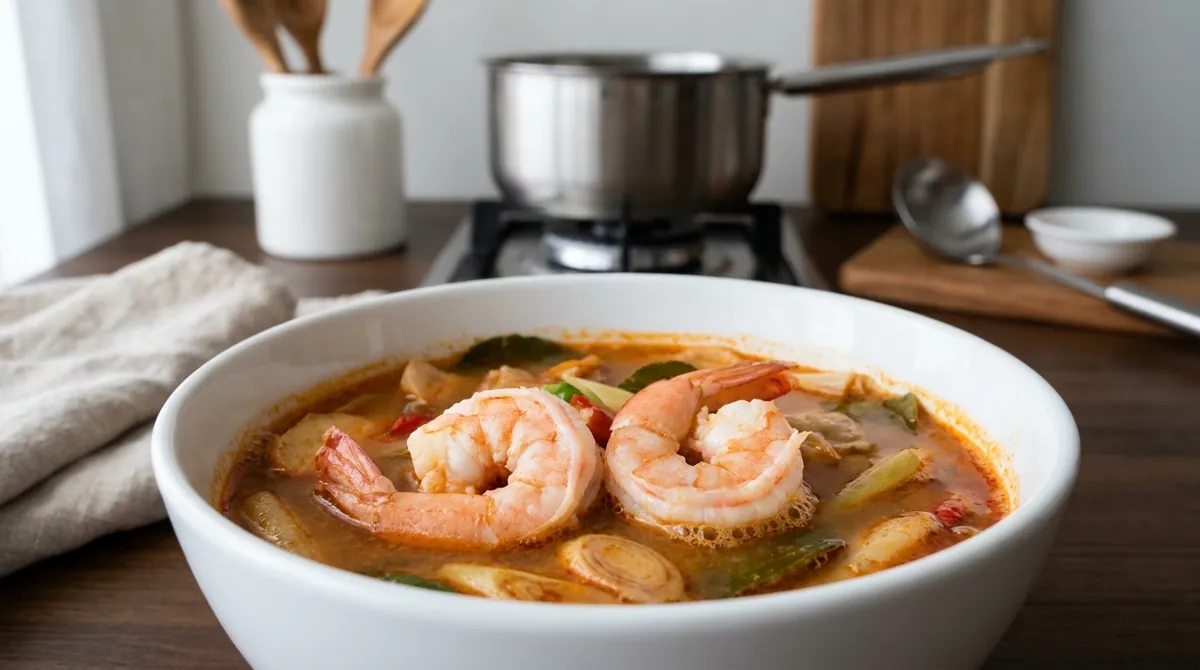
Add the shrimp and cook 2 to 3 minutes, just until they curl and turn pink and opaque.
✓ What it should look like - Step 5
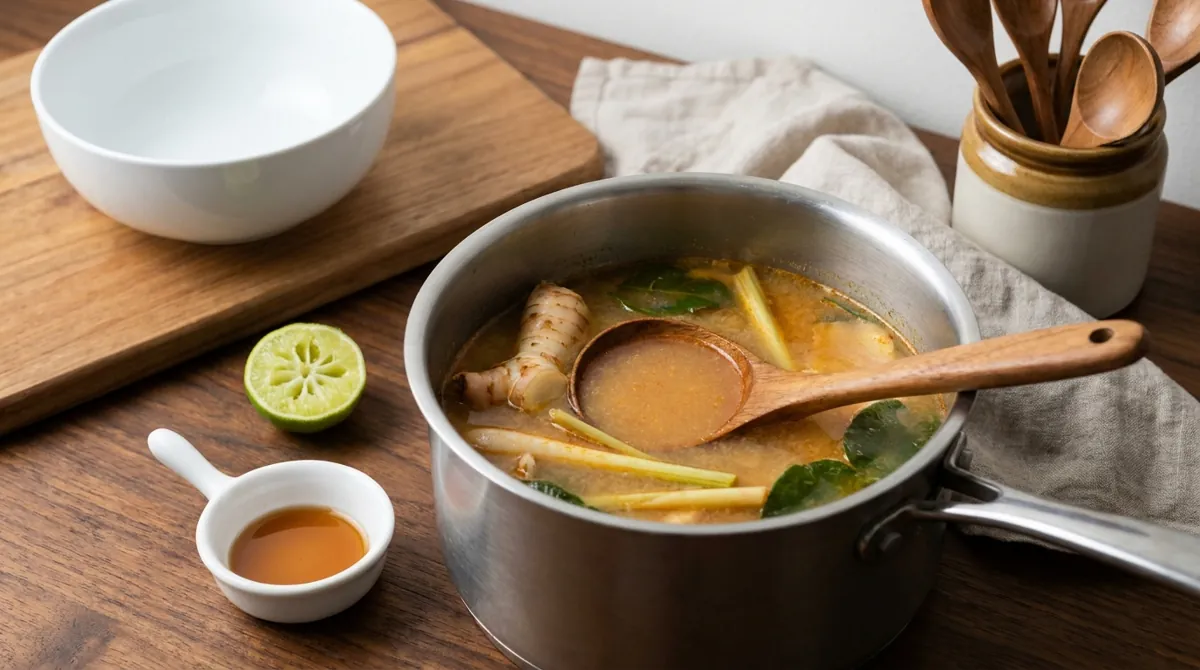
Take the pot off the heat. Add the fish sauce, then the lime juice, and the nam prik pao if you like. Taste: it should be sour, salty and hot in balance.
- Step 6
Ladle into bowls, scatter with cilantro, and eat the shrimp and mushrooms, leaving the lemongrass, galangal and lime leaves on the side.
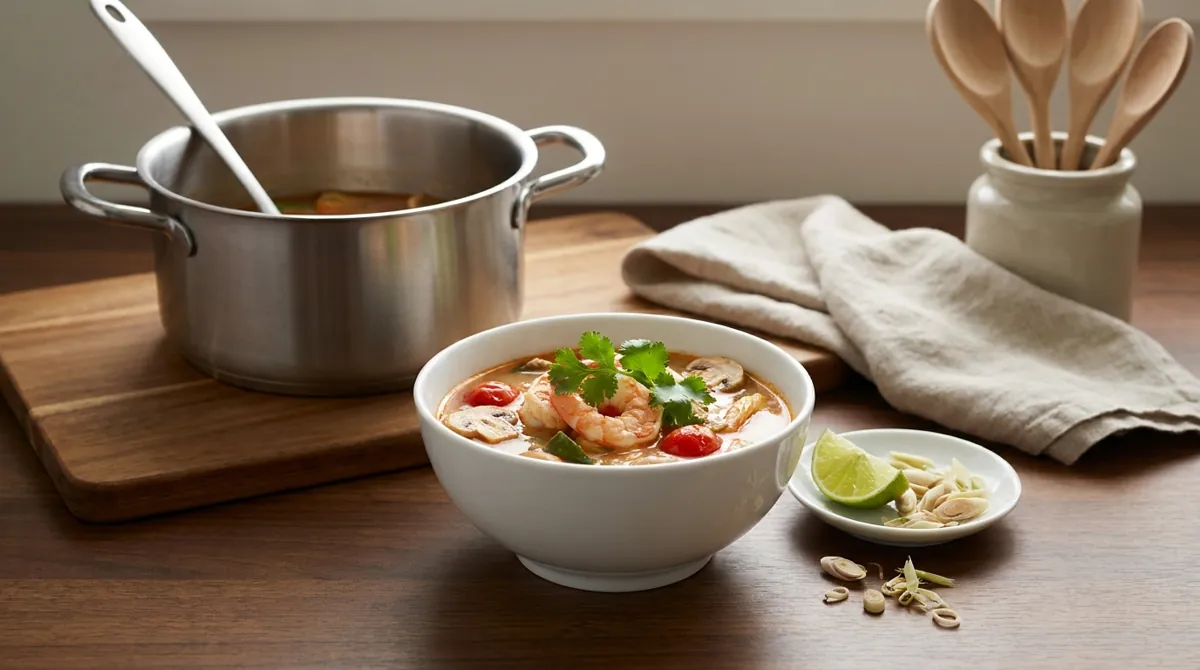
Tom Yum Soup
Serves 4 · about 5 cups · 30 min total
- 4 cups chicken stock (about 950 g), ideally made with the shrimp shells
- 2 stalks lemongrass (about 60 g), bruised and cut into 2 inch lengths
- 6 thin slices galangal (about 20 g)
- 5 kaffir lime leaves, torn
- 3 to 5 Thai bird's eye chilies, bruised (about 10 g)
- 150 g (5 oz) cremini or straw mushrooms, halved
- 340 g (12 oz) large shrimp, peeled and deveined, shells saved
- 2 1/2 tbsp fish sauce (about 45 g)
- 3 tbsp fresh lime juice (about 45 g)
- 1 tbsp nam prik pao (Thai chili paste in oil), optional
- A handful of cilantro leaves (about 10 g)
Equipment: Pot, Chef's knife and cutting board, Measuring cups and spoons, Mixing bowls, Ladle, Fine-mesh strainer
Method
- Put the shrimp shells and the stock in a pot, simmer 10 minutes, then strain out the shells and return the stock to the pot.
- Add the lemongrass, galangal, lime leaves and chilies. Simmer 5 minutes, until the broth smells strongly of lemongrass.
- Add the mushrooms and simmer 3 minutes.
- Add the shrimp and cook 2 to 3 minutes, just until they curl and turn pink and opaque.
- Take the pot off the heat. Add the fish sauce, then the lime juice, and the nam prik pao if you like. Taste: it should be sour, salty and hot in balance.
- Ladle into bowls, scatter with cilantro, and eat the shrimp and mushrooms, leaving the lemongrass, galangal and lime leaves on the side.
Americanized house recipe, written for this site. History: Wikipedia, "Tom yum" (name, Central Thailand, nam sai and nam khon, 1890 recipe, typical ingredients). Technique checked against: The Woks of Life, "Tom Yum Soup"; Real Thai Recipes, "Hot and Sour Soup with Shrimp"; SBS Food, "Tom Yum Goong", (aromatics simmered about 10 minutes; ginger is not a close galangal substitute; shrimp heads and shells add flavor). en.wikipedia.org. Ingredient list follows the source; the method is in our own words.
Tips
- No galangal? Fresh ginger is a common substitute, but it tastes warmer and less piney.
- Reheat gently: boiling the leftover soup toughens the shrimp. Keeps 2 days refrigerated.
- For the creamy nam khon style, stir in 2 to 3 tablespoons of evaporated milk at the end with the lime juice.
The rules people argue about
What the sources agree on, what they don't, and what is just a good story.
- Tom yum is a very old royal dish. Folklore as stated: Wikipedia gives Central Thailand as the origin, tom yum goong to the Rattanakosin period and an 1890 recipe; it does not support a royal origin.
- Tom yum comes from India. Disputed: historian Giles Milton traces its roots to an Indian hot and sour shrimp soup, which Thai sources do not accept in the same way; we found no document either way.
- Creamy tom yum is the real one. Disputed: nam sai (clear) is treated as the original style; nam khon is described as a variation from the 1980s.
Meatballs of the World

Italian-American Meatballs
Big, tender meatballs braised for an hour in red sauce over spaghetti. The one most Americans grew up with.

Pallottine (Abruzzo Meatballs)
Tiny meatballs, smaller than a marble, tossed right through square spaghetti alla chitarra. No bread at all.

Swedish Meatballs (Köttbullar)
Small, soft meatballs browned in butter, in a cream sauce made from the same pan, with lingonberry jam on the plate.

Danish Frikadeller
Pork meatballs shaped with a spoon and fried slowly in butter, crusty outside and soft in the middle.

Königsberger Klopse
German meatballs that are never fried: poached, then served in a creamy white sauce with capers.

Spanish Albóndigas in Almond Saffron Sauce
The tapas bar classic: small meatballs in a golden sauce thickened with fried almonds and bread.

Mexican Albóndigas with Chipotle and Mint
Soft meatballs with rice and fresh mint inside, simmered in a smoky tomato and chipotle broth.

Izgara Köfte (Turkish Grilled Meatballs)
Small, flat meatballs kneaded hard, rested cold, and charred on a hot grill pan.

Lion's Head Meatballs
Big, soft pork meatballs, stirred into a sticky paste, fried to set, then braised in a savory sauce.

Chicken Tsukune
Japan's chicken meatball: kneaded sticky, grilled on skewers, glazed with sweet soy tare, dipped in egg yolk.