
Tteokbokki
Chewy rice cakes simmered in a sweet, spicy, glossy red gochujang sauce with fish cakes and scallions: Korea's favorite street food and late-night comfort.
🍳Cook alongOne move at a time, with real timers
 Edited by JP Lambiase
Change the estimate
Swaps change the price only: cook any meat to its own safe temperature. Where these numbers come from
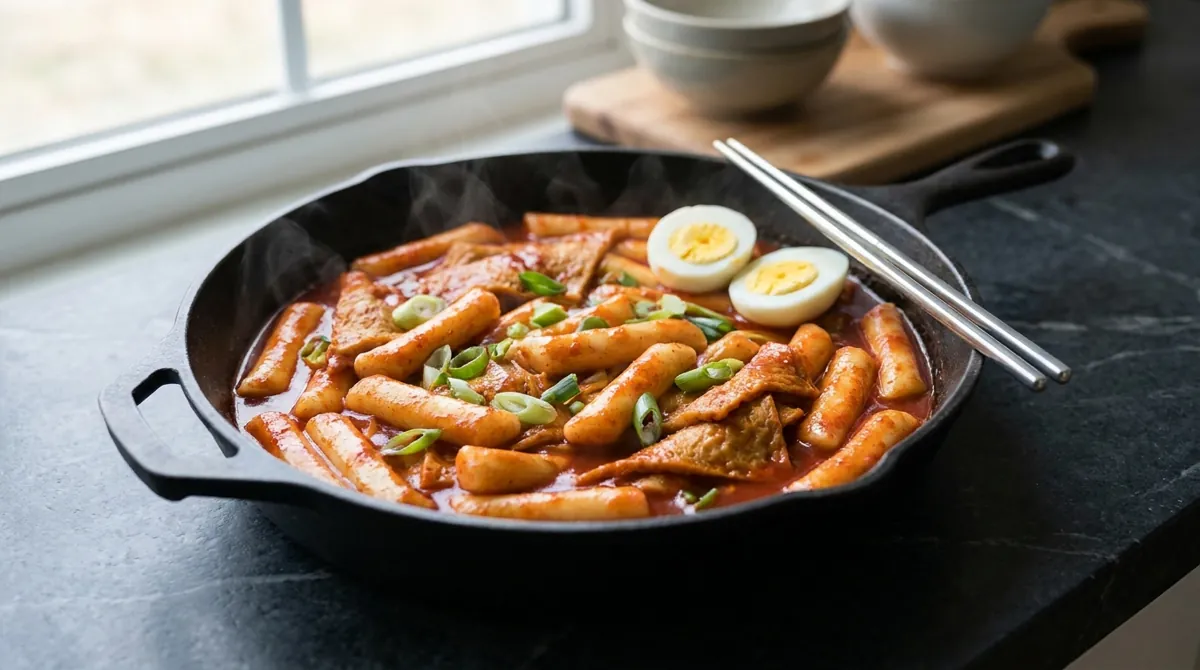
Tteokbokki is two dishes with one name. The older one is a royal court dish, recorded in the 19th-century cookbook Siuijeonseo as "steokbokgi": white rice cakes stir-fried with beef, vegetables, soy sauce, sesame oil and pine nuts, with no red pepper at all. It predates the arrival of chili peppers in Korea, which came in the mid-Joseon period.
The red, spicy version Koreans mean today is much younger and is often credited to Ma Bok-rim of Sindang-dong, Seoul, in 1953. In the story, she was handed rice cakes at a Korean-Chinese restaurant opening, dropped them into a bowl of jajangmyeon, liked the result and started selling rice cakes seasoned with gochujang. Sindang-dong still has a "tteokbokki town" street. The 1953 date and the Ma Bok-rim account rest on newspaper features and are hedged by Wikipedia, so treat them as the accepted story and not a proven record.
Why it works the kitchen science
Anchovy and kelp stock
It gives a deep savory base that water cannot, so the sauce tastes round instead of just hot.
Gochujang plus a little sugar and soy
Gochujang is fermented, salty and sweet; sugar and soy balance its heat.
Simmering, not boiling hard
The rice cakes soften evenly and the sauce reduces and thickens from the rice starch released.
Stirring often
Rice cakes are starchy and stick to the pan and to each other.
🧰 You'll need 3 items
Everything the steps call for. Tick off what you have before you start.
Pans and pots
Tools
Step by step
- Step 1
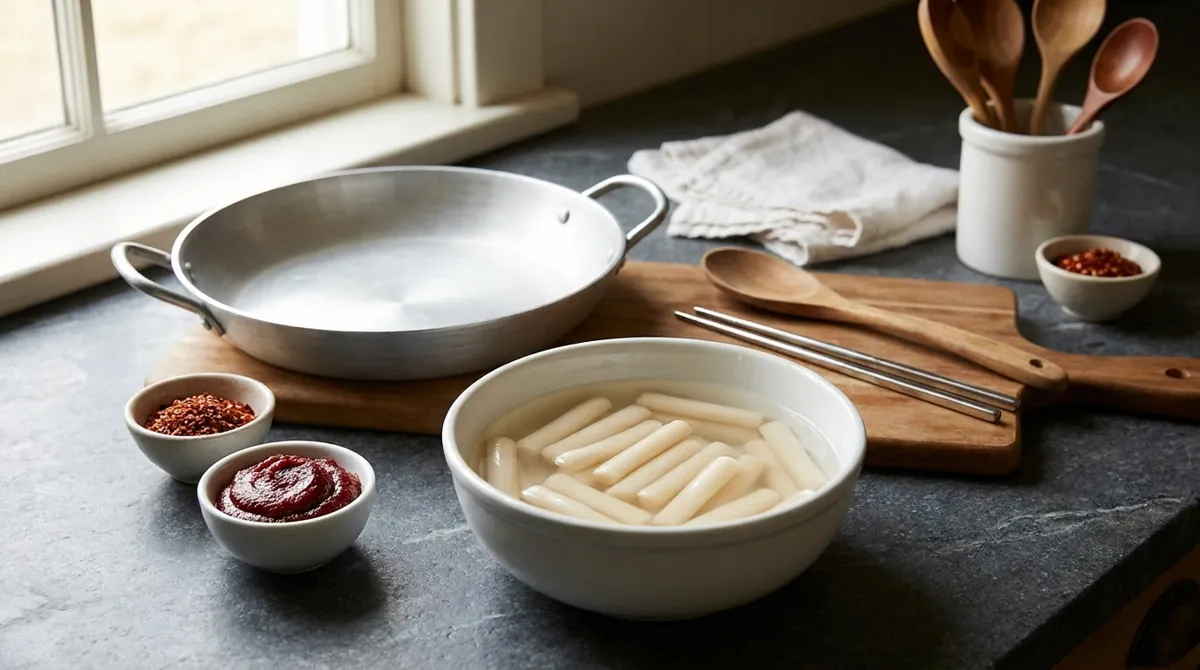
Soak the rice cakes in cold water for 10 minutes if they are hard or refrigerated, then drain. Separate any that stick together.
- Step 2
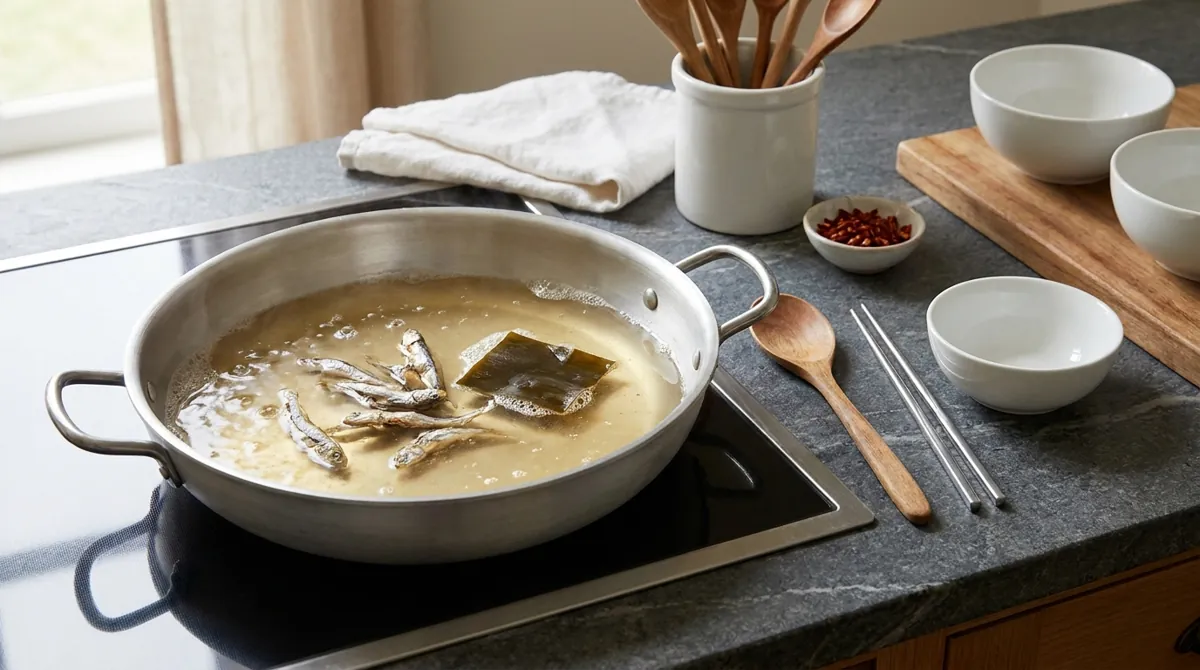
Make the stock: simmer the water with the anchovies and kelp in a wide, deep skillet for 10 minutes, then take out the anchovies and kelp.
- Step 3
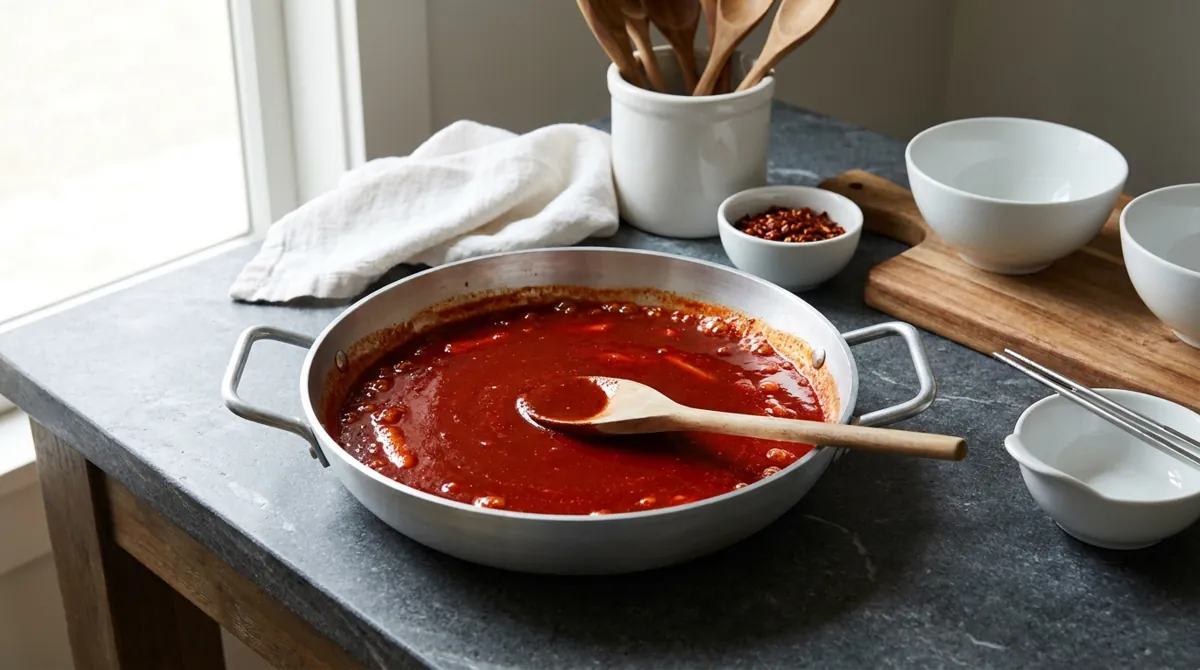
Stir the gochujang, gochugaru, sugar and soy sauce into the stock until dissolved and bring to a boil.
- Step 4
Add the rice cakes and simmer on medium heat 8 to 10 minutes, stirring often so they do not stick, until they are soft and chewy and the sauce has thickened to coat them.
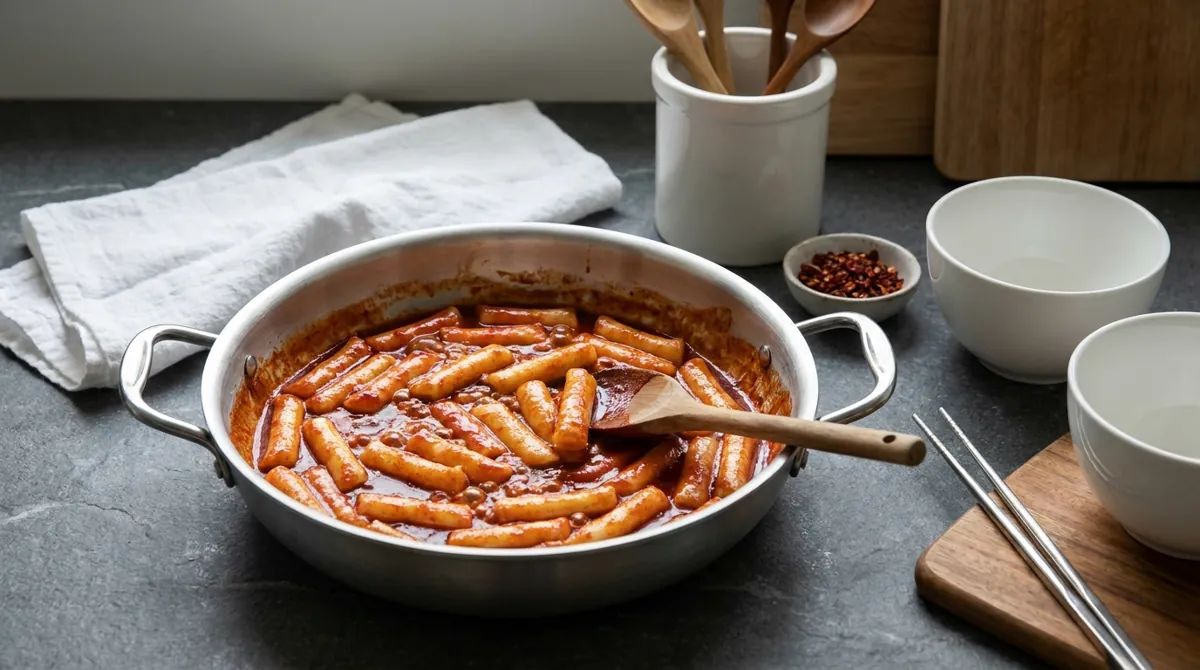
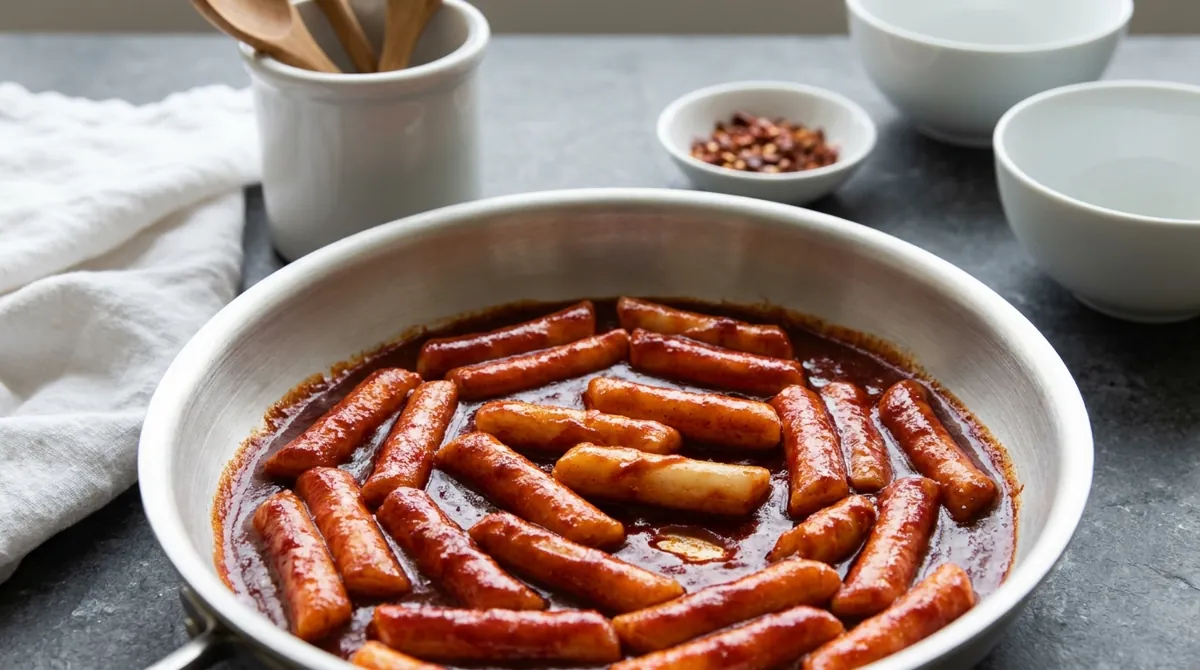
✓ What it should look like - Step 5
Add the fish cakes, scallions and eggs and simmer 2 to 3 minutes more, until the fish cakes are soft and the sauce is glossy and clings.
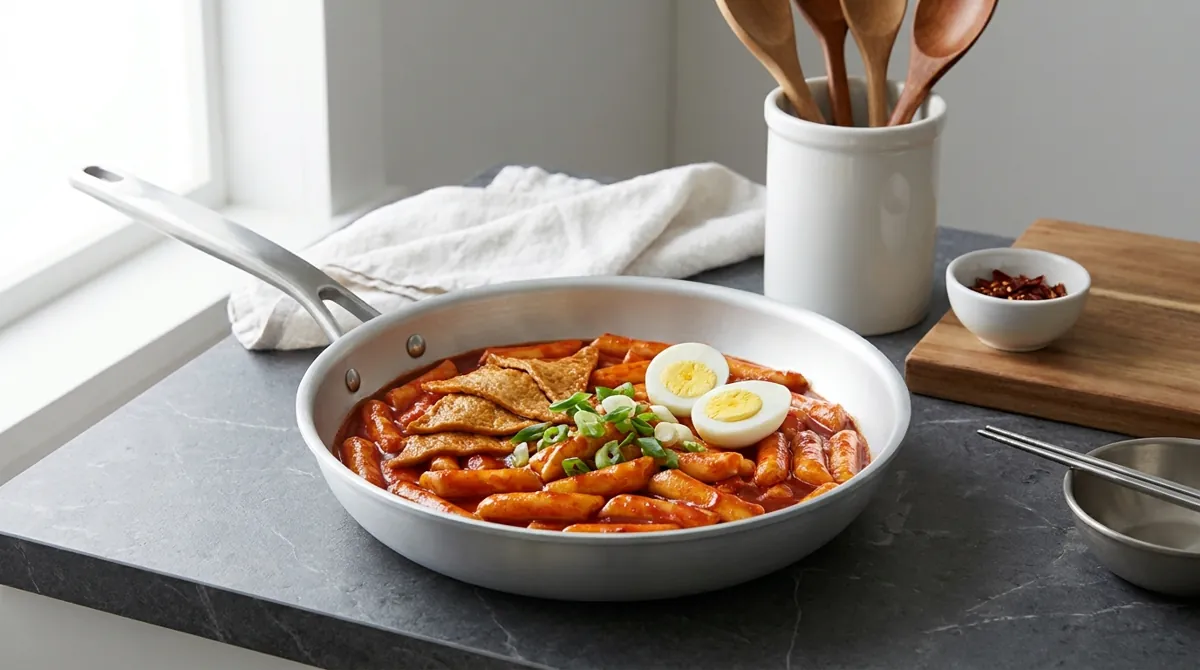
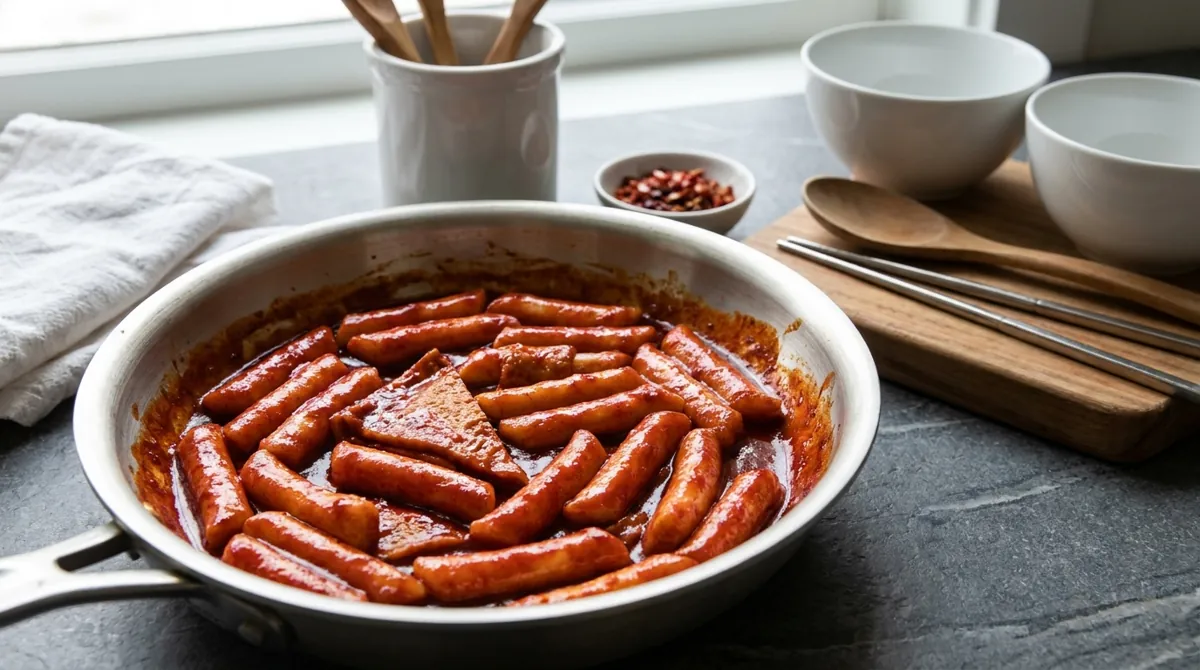
✓ What it should look like - Step 6
Serve hot straight from the skillet.
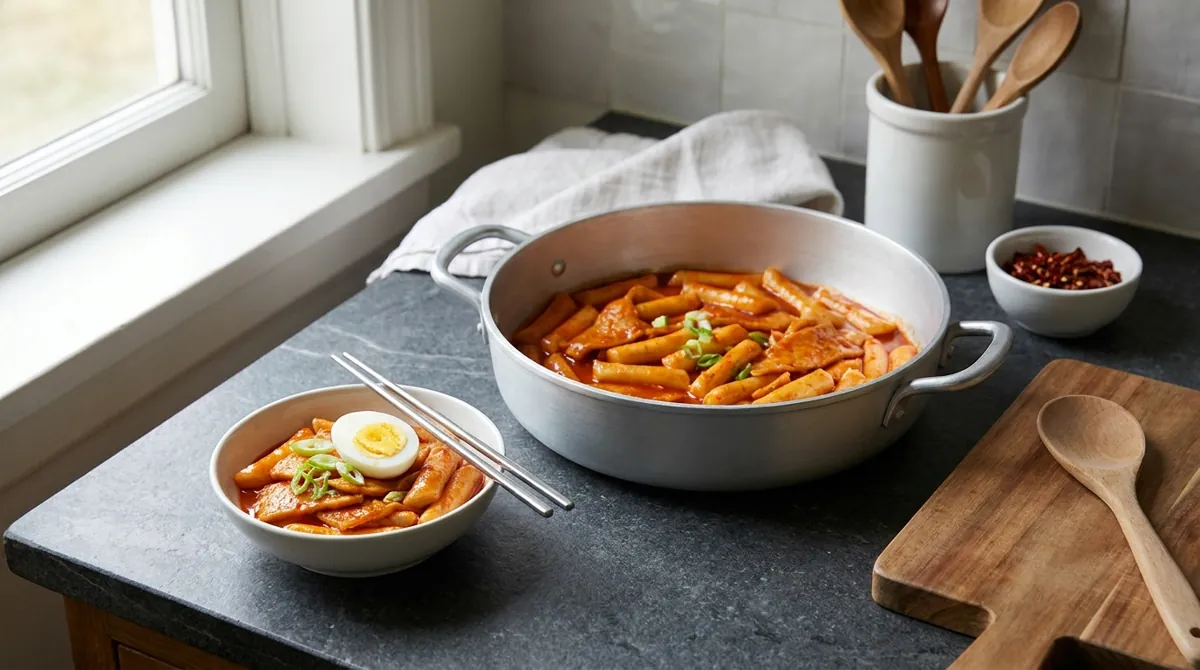
Tteokbokki
Serves 3 · one large skillet · 45 min total
Stock
- 3 cups water (720 ml)
- 6 dried anchovies, heads and guts removed
- 1 piece dried kelp, about 4 by 4 inches
Sauce
- 3 tbsp gochujang (Korean red pepper paste, about 57 g)
- 1 to 2 tsp gochugaru (Korean red pepper flakes), to taste
- 1 tbsp granulated sugar (12 g)
- 1 tbsp soy sauce (18 g)
Everything else
- 1 pound (450 g) cylinder rice cakes (garaetteok), fresh or refrigerated
- 3 sheets flat fish cake (about 100 g), cut into triangles
- 2 scallions (30 g), cut into 2 inch lengths
- 2 hard-boiled eggs (about 100 g), peeled
Equipment: Deep skillet, Chef's knife and cutting board, Measuring cups and spoons
Method
- Soak the rice cakes in cold water for 10 minutes if they are hard or refrigerated, then drain. Separate any that stick together.
- Make the stock: simmer the water with the anchovies and kelp in a wide, deep skillet for 10 minutes, then take out the anchovies and kelp.
- Stir the gochujang, gochugaru, sugar and soy sauce into the stock until dissolved and bring to a boil.
- Add the rice cakes and simmer on medium heat 8 to 10 minutes, stirring often so they do not stick, until they are soft and chewy and the sauce has thickened to coat them.
- Add the fish cakes, scallions and eggs and simmer 2 to 3 minutes more, until the fish cakes are soft and the sauce is glossy and clings.
- Serve hot straight from the skillet.
Americanized house recipe, written for this site, within the common ratios of Korean home cooks for 1 pound of rice cakes (3 to 5 tablespoons gochujang, up to 1 tablespoon gochugaru, 1 to 2 tablespoons sugar, 2 to 3 cups anchovy-kelp stock), as compared across Korean Bapsang, and Happy Spicy Hour, "Tteokbokki Sauce Recipe: Amounts from 7 Korean Cooks". Maangchi's tteokbokki, could not be fetched. History: Wikipedia, "Tteokbokki" (royal Siuijeonseo version without chili, the 1953 Ma Bok-rim gochujang story). Korean Bapsang. Ingredient list follows the source; the method is in our own words.
Tips
- Frozen rice cakes need 20 to 30 minutes in warm water to thaw. Hard, dry ones from the shelf may need longer.
- For milder heat use 2 tablespoons gochujang and skip the gochugaru; for more heat, use 2 teaspoons.
- No dried anchovies? Use plain water and add a splash more soy sauce, or use a low-sodium chicken broth.
- Add a handful of ramen noodles or sliced cheese for rabokki or cheese tteokbokki, popular modern versions.
- Best eaten right away: leftovers harden as the rice cakes cool.
The rules people argue about
What the sources agree on, what they don't, and what is just a good story.
- Tteokbokki is a royal court dish. Disputed: the court version in the Siuijeonseo is a soy-based dish with beef and no chili, a different dish with the same name; the red gochujang dish came centuries later.
- Ma Bok-rim of Sindang-dong invented the red version in 1953. Disputed: it is the most repeated story, but the date is hedged ("is believed") and rests on a newspaper account.
- It must be made with anchovy stock. Disputed: most Korean home cooks use it, but plain water works and street stalls vary.
Meatballs of the World

Italian-American Meatballs
Big, tender meatballs braised for an hour in red sauce over spaghetti. The one most Americans grew up with.

Pallottine (Abruzzo Meatballs)
Tiny meatballs, smaller than a marble, tossed right through square spaghetti alla chitarra. No bread at all.

Swedish Meatballs (Köttbullar)
Small, soft meatballs browned in butter, in a cream sauce made from the same pan, with lingonberry jam on the plate.

Danish Frikadeller
Pork meatballs shaped with a spoon and fried slowly in butter, crusty outside and soft in the middle.

Königsberger Klopse
German meatballs that are never fried: poached, then served in a creamy white sauce with capers.

Spanish Albóndigas in Almond Saffron Sauce
The tapas bar classic: small meatballs in a golden sauce thickened with fried almonds and bread.

Mexican Albóndigas with Chipotle and Mint
Soft meatballs with rice and fresh mint inside, simmered in a smoky tomato and chipotle broth.

Izgara Köfte (Turkish Grilled Meatballs)
Small, flat meatballs kneaded hard, rested cold, and charred on a hot grill pan.

Lion's Head Meatballs
Big, soft pork meatballs, stirred into a sticky paste, fried to set, then braised in a savory sauce.

Chicken Tsukune
Japan's chicken meatball: kneaded sticky, grilled on skewers, glazed with sweet soy tare, dipped in egg yolk.