
Tuna Salad
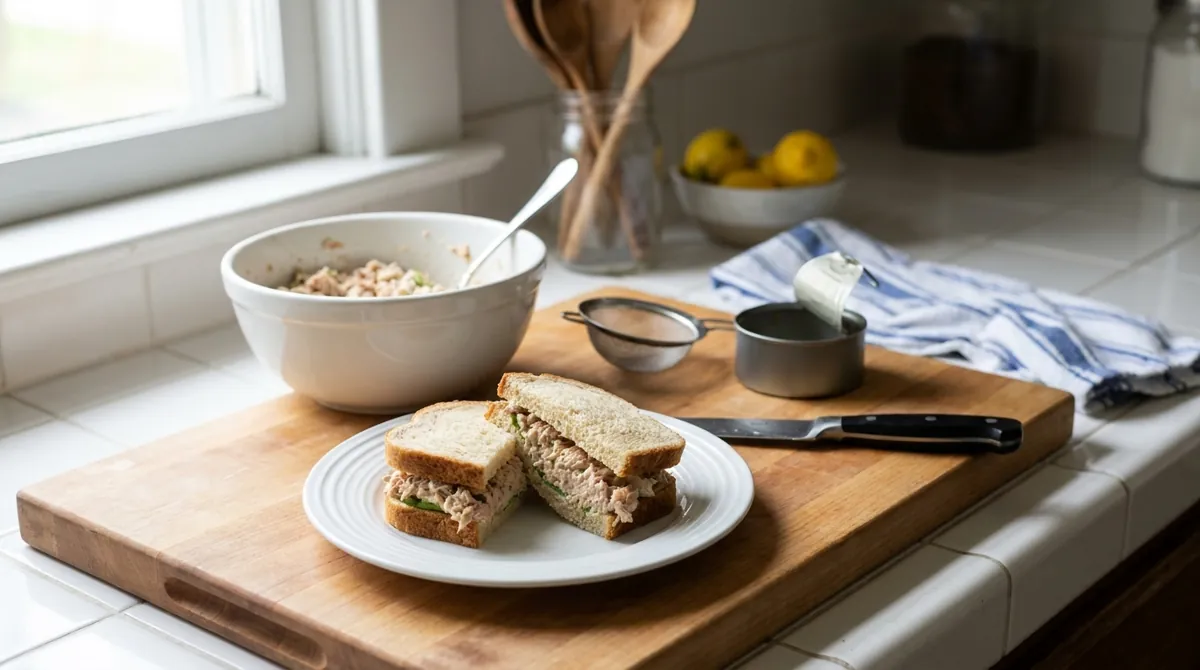
Flaked canned tuna, mayonnaise, crunchy celery and a little onion and lemon, piled on soft bread: the picnic and lunch-counter sandwich that made canned tuna a pantry staple.
🍳Cook alongOne move at a time, with real timers
 Edited by JP Lambiase
Change the estimate
Swaps change the price only: cook any meat to its own safe temperature. Where these numbers come from
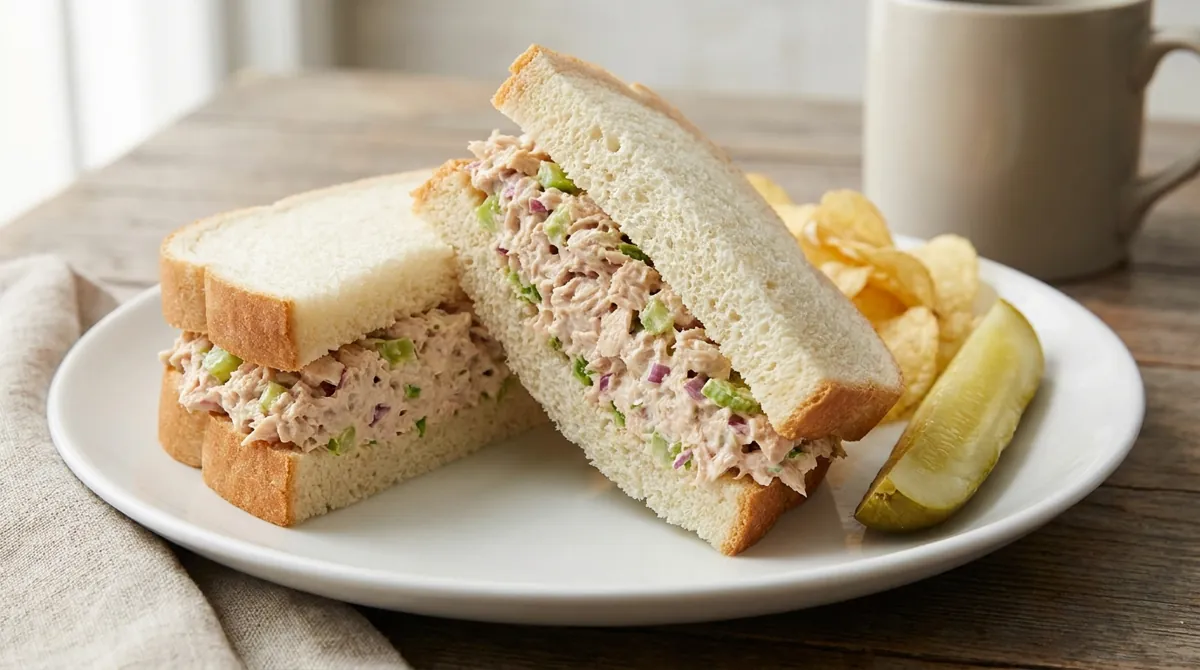
Tuna salad is a pantry dish built on two products that spread across American kitchens in the early 1900s: canned tuna and jarred mayonnaise. Canning of tuna began in the United States around 1904, and Richard Hellmann started making mayonnaise in New York City around 1905 and sold it in glass jars by 1912. A tuna sandwich recipe using imported tuna turns up in an 1893 cookbook, and by the 1920s cheap canned tuna had taken the place of canned salmon in many homes.
It was always a cousin of chicken salad: cold flaked protein, mayonnaise and something crunchy, easy to carry. Sliced white bread, sold nationally from the late 1920s, made it the lunch sandwich it still is.
Why it works the kitchen science
Draining the tuna twice
Extra liquid makes the salad watery and the bread soggy.
Celery and onion
Fine dice adds crunch and bite against the soft fish.
Lemon and mustard
Acid cuts the richness of the mayonnaise.
The chill
The vegetables soften into the dressing and it holds together on bread.
🧰 You'll need 4 items
Everything the steps call for. Tick off what you have before you start.
Tools
Step by step
- Step 1
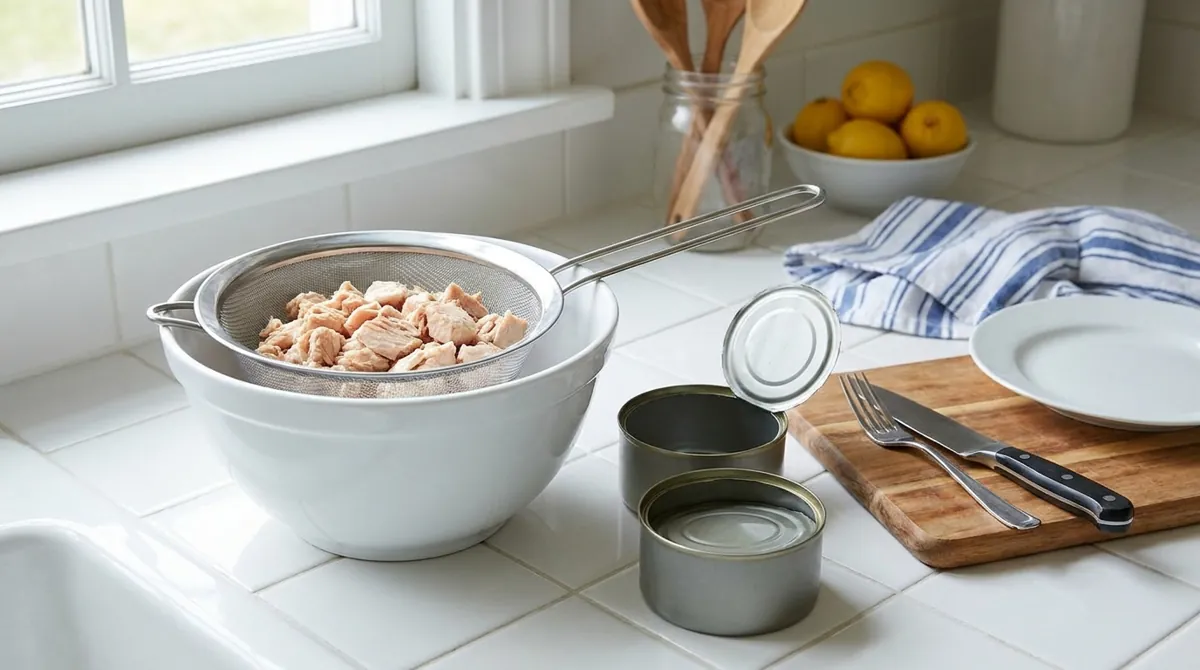
Open the cans and press the lids down hard to squeeze out all the liquid, then drain the tuna again in a sieve.
- Step 2
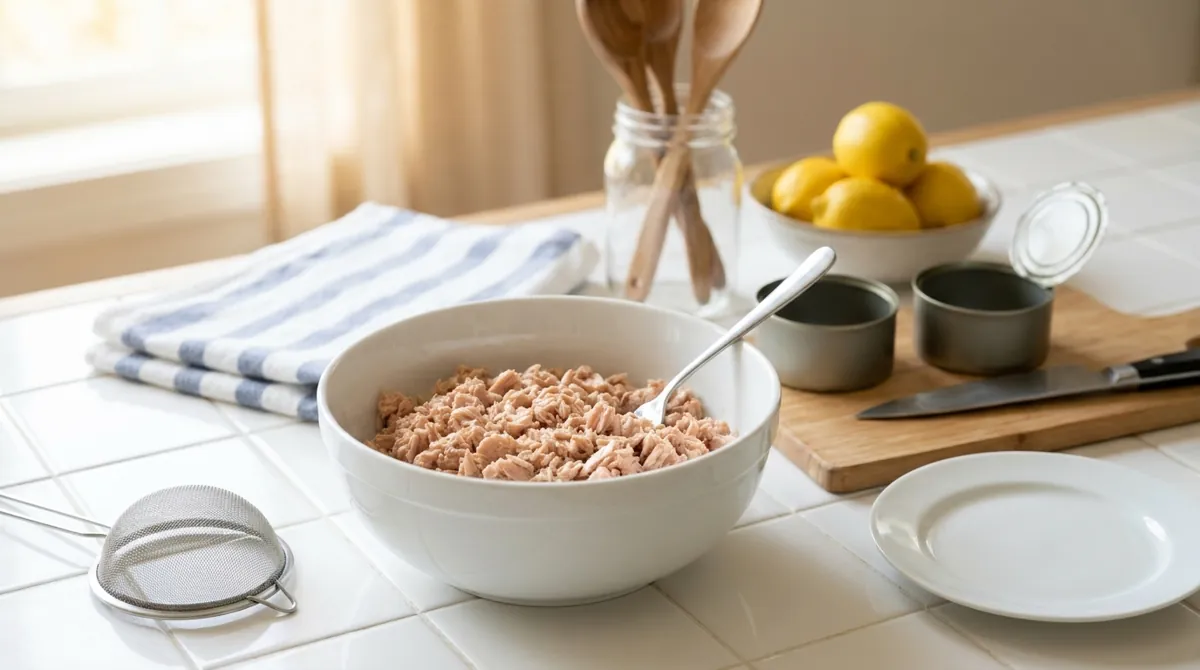
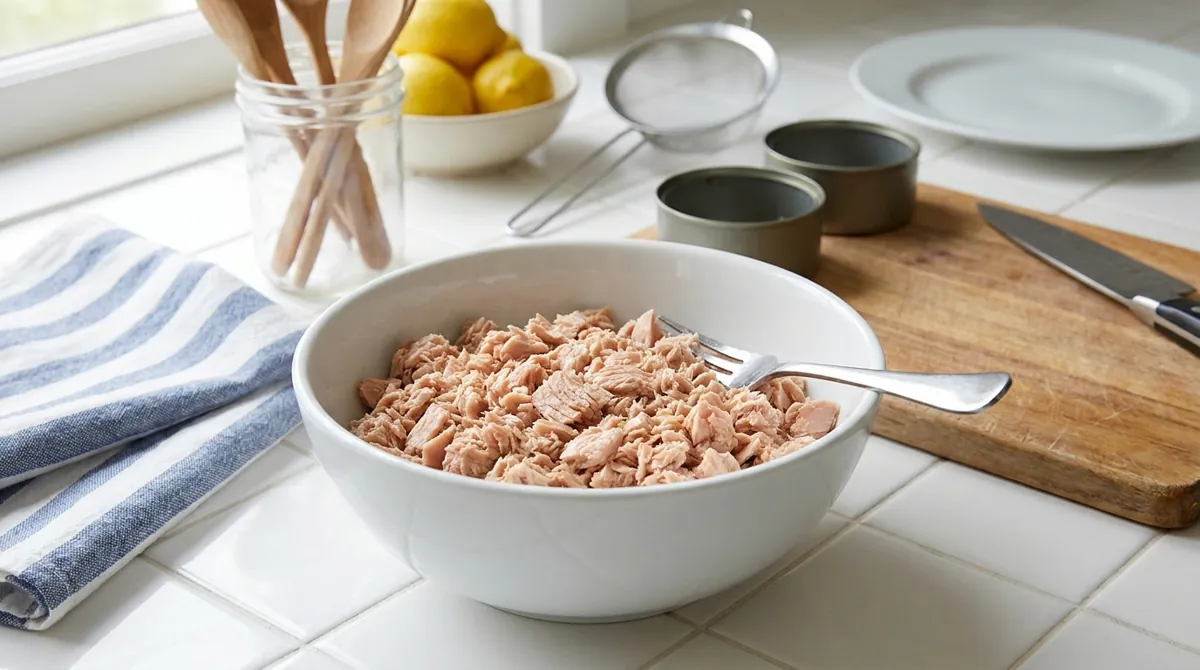
Flake the tuna into a medium bowl with a fork until there are no large chunks.
✓ What it should look like - Step 3
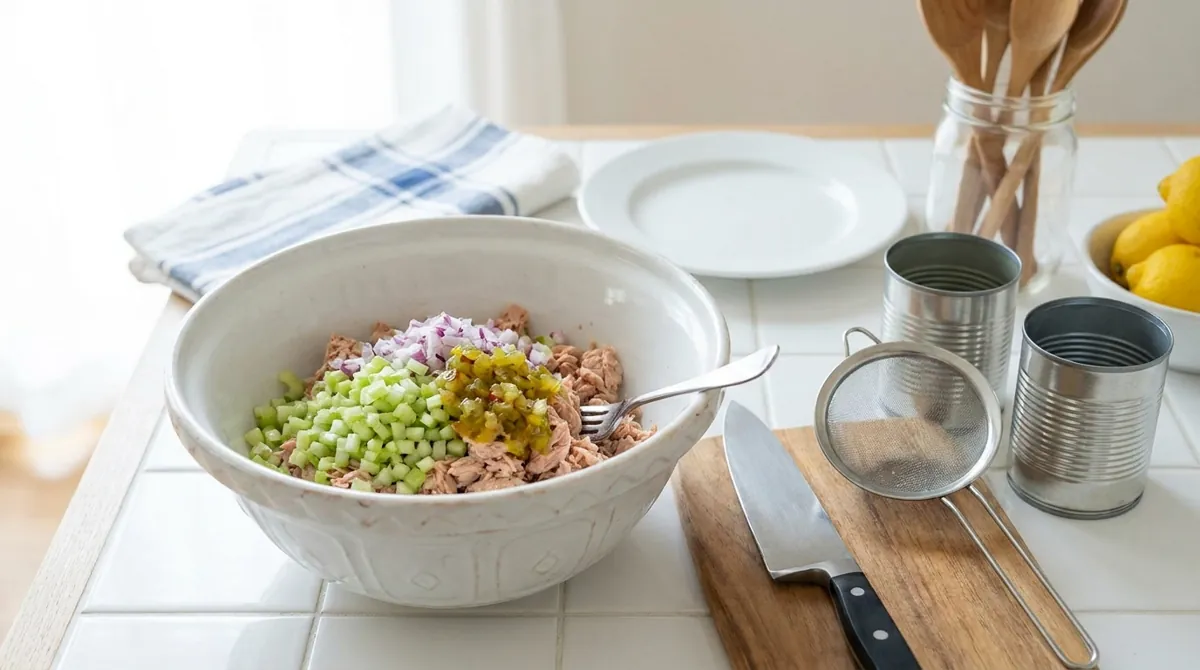
Add the celery, onion and relish.
- Step 4
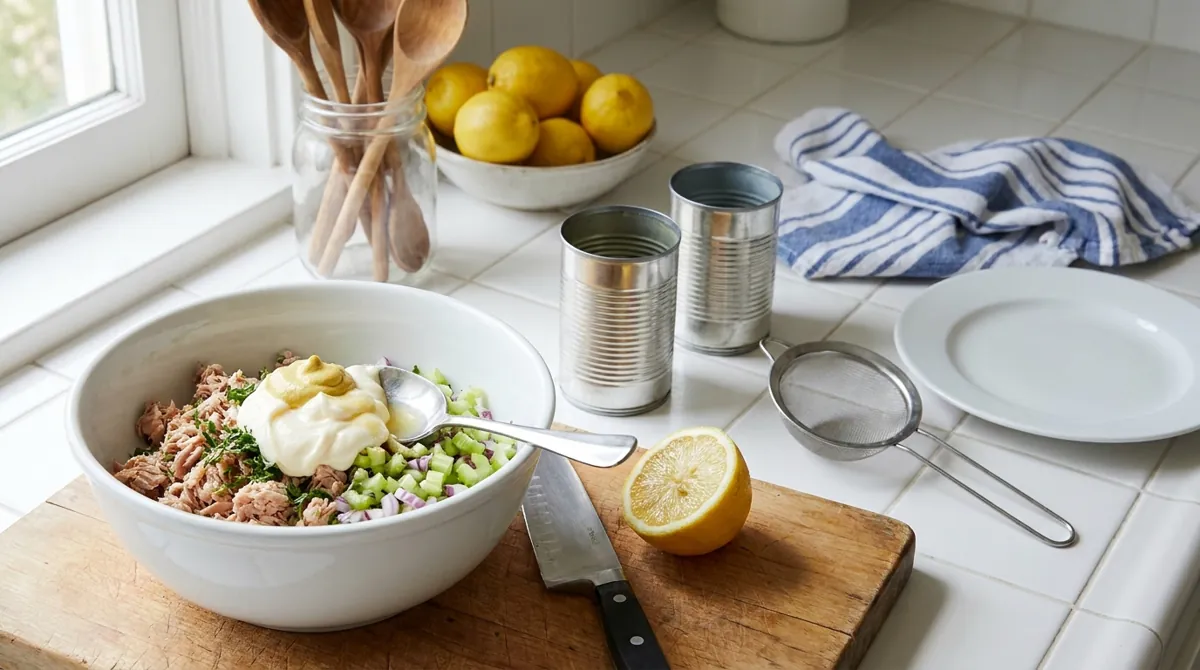
Add the mayonnaise, lemon juice, mustard and pepper.
- Step 5
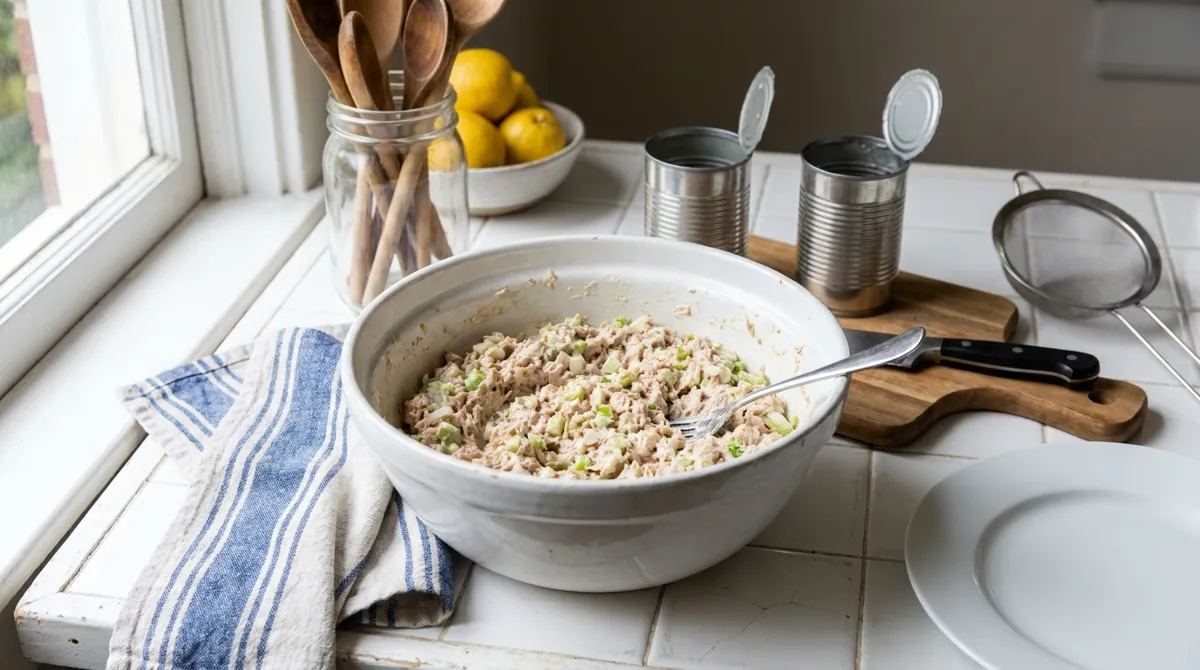
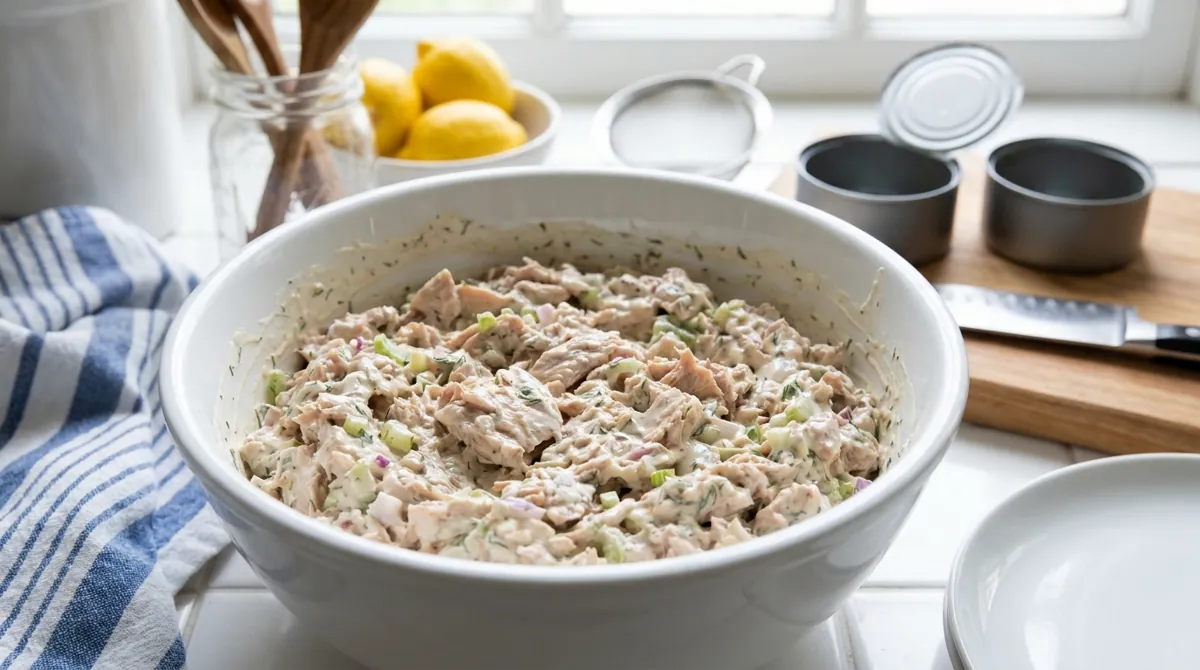
Stir until just combined, taste and add salt if needed. Chill 30 minutes so the flavors settle.
✓ What it should look like - Step 6
Pile onto 4 slices of bread, top with the other 4 and cut in half.
Tuna Salad
Serves 4 sandwiches · about 2 cups of salad · 45 min total
- 2 cans (5 oz each) tuna, drained very well (about 225 g drained)
- 1/2 cup mayonnaise (110 g)
- 1/2 cup finely diced celery (60 g), about 1 stalk
- 2 tbsp finely diced red or yellow onion (20 g)
- 1 tbsp sweet pickle relish (15 g), optional
- 1 tbsp fresh lemon juice (15 g)
- 1 tsp yellow mustard (5 g)
- 1/4 tsp black pepper, and salt to taste
- 8 slices sandwich bread (about 224 g), toasted if you like
Equipment: Chef's knife and cutting board, Measuring cups and spoons, Mixing bowls, Fine-mesh strainer
Method
- Open the cans and press the lids down hard to squeeze out all the liquid, then drain the tuna again in a sieve.
- Flake the tuna into a medium bowl with a fork until there are no large chunks.
- Add the celery, onion and relish.
- Add the mayonnaise, lemon juice, mustard and pepper.
- Stir until just combined, taste and add salt if needed. Chill 30 minutes so the flavors settle.
- Pile onto 4 slices of bread, top with the other 4 and cut in half.
Americanized house recipe, written for this site, following the standard method (drained canned tuna, mayonnaise, celery, onion, lemon; see Serious Eats and America's Test Kitchen tuna salad recipes for a second opinion on ratios). History: Wikipedia, "Tuna fish sandwich" (1893 cookbook recipe, tuna canning in the US around 1904, Hellmann's mayonnaise 1905 and 1912, 1917 and 1920s recipes); Wikipedia, "Tuna salad" (earliest written reference, add-ins). en.wikipedia.org. Ingredient list follows the source; the method is in our own words.
All sources (2)
Tips
- Tuna packed in oil gives a richer salad; tuna packed in water is lighter. Solid white albacore flakes in larger pieces than chunk light.
- Start with 1/3 cup mayonnaise and add more to taste; it should coat the tuna, not drown it.
- Keeps 3 days covered in the refrigerator. Do not leave out in the heat for more than 2 hours at a picnic.
- Good extras: chopped hard-boiled egg, dill, capers, or diced apple.
The rules people argue about
What the sources agree on, what they don't, and what is just a good story.
- Tuna salad was invented in California in the early 1900s. Disputed: US tuna canning began around 1904, but tuna sandwiches appear in 1893 and the earliest written tuna salad reference cited by Wikipedia is Russian, from 1876; no single inventor is documented.
Meatballs of the World

Italian-American Meatballs
Big, tender meatballs braised for an hour in red sauce over spaghetti. The one most Americans grew up with.

Pallottine (Abruzzo Meatballs)
Tiny meatballs, smaller than a marble, tossed right through square spaghetti alla chitarra. No bread at all.

Swedish Meatballs (Köttbullar)
Small, soft meatballs browned in butter, in a cream sauce made from the same pan, with lingonberry jam on the plate.

Danish Frikadeller
Pork meatballs shaped with a spoon and fried slowly in butter, crusty outside and soft in the middle.

Königsberger Klopse
German meatballs that are never fried: poached, then served in a creamy white sauce with capers.

Spanish Albóndigas in Almond Saffron Sauce
The tapas bar classic: small meatballs in a golden sauce thickened with fried almonds and bread.

Mexican Albóndigas with Chipotle and Mint
Soft meatballs with rice and fresh mint inside, simmered in a smoky tomato and chipotle broth.

Izgara Köfte (Turkish Grilled Meatballs)
Small, flat meatballs kneaded hard, rested cold, and charred on a hot grill pan.

Lion's Head Meatballs
Big, soft pork meatballs, stirred into a sticky paste, fried to set, then braised in a savory sauce.

Chicken Tsukune
Japan's chicken meatball: kneaded sticky, grilled on skewers, glazed with sweet soy tare, dipped in egg yolk.