
Turkey Korokke (Japanese Potato Croquettes)
Japan's home-style croquette with Thanksgiving leftovers inside: fluffy mashed russet potatoes folded with leftover turkey and slowly cooked onion, shaped into ovals, rolled in flour, egg and panko and fried golden, with tonkatsu sauce.
 Edited by JP Lambiase
Change the estimate
Swaps change the price only: cook any meat to its own safe temperature. Where these numbers come from
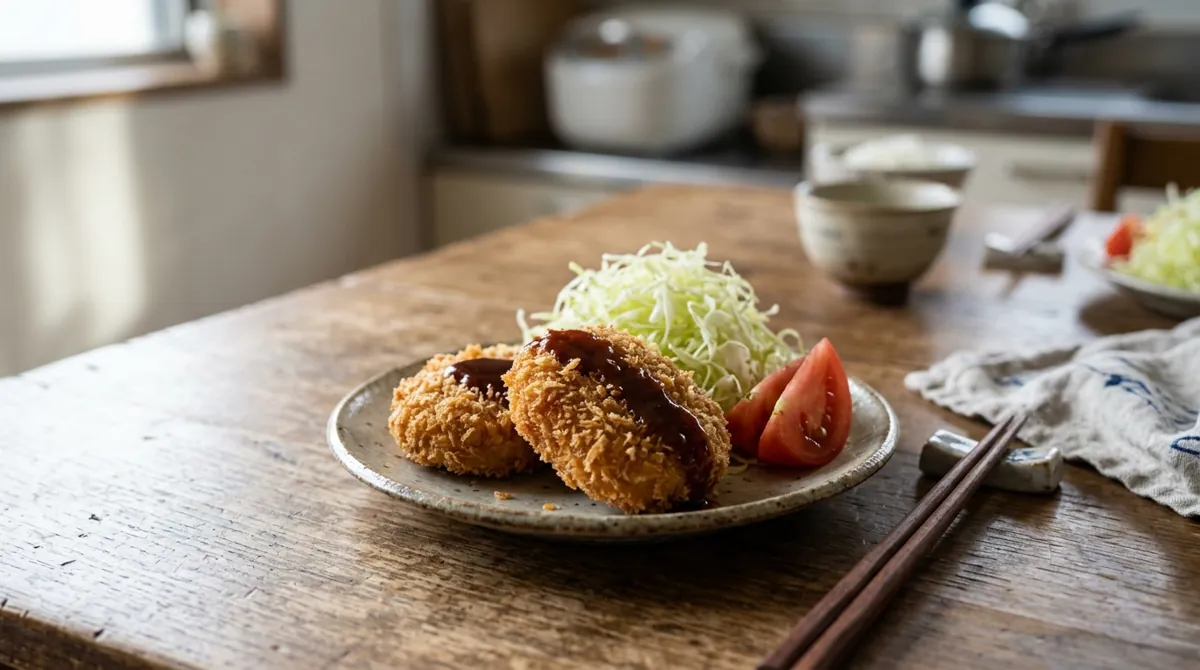
Korokke is the Japanese name for the croquette, a yoshoku (Western-style) dish. Wikipedia says the French croquette was introduced to Japan in 1887 and that the potato version was probably invented because dairy processing was not yet common in Japan, so mashed potato took the place of the creamy French binder. Just One Cookbook's Namiko Hirasawa Chen writes that by the early 1900s potato korokke was one of the top three yoshoku dishes, alongside beefsteak and breaded pork cutlets, and that today it is sold at street stalls, butcher shops, markets and convenience stores. Japan also makes a bechamel "cream korokke", much closer to the Spanish croqueta (our Croquetas de Pavo recipe); the everyday family korokke is the potato one, which is why it suits a fridge full of mashed potatoes and turkey.
🎬 The full story: 10 Leftover Turkey Recipes From Around the World (One Is a Sitcom Sandwich)
Why it works the kitchen science
Dry the potatoes
Shaking the drained potatoes over low heat steams off water, so the mash stays firm enough to shape and doesn't burst in the oil.
Everything inside is already cooked
The frying only has to crisp the panko and heat the center, which is why 2 to 3 minutes is enough.
🧰 You'll need 10 items
Everything the steps call for. Tick off what you have before you start.
Pans and pots
Tools
Supplies
Step by step
- Step 1
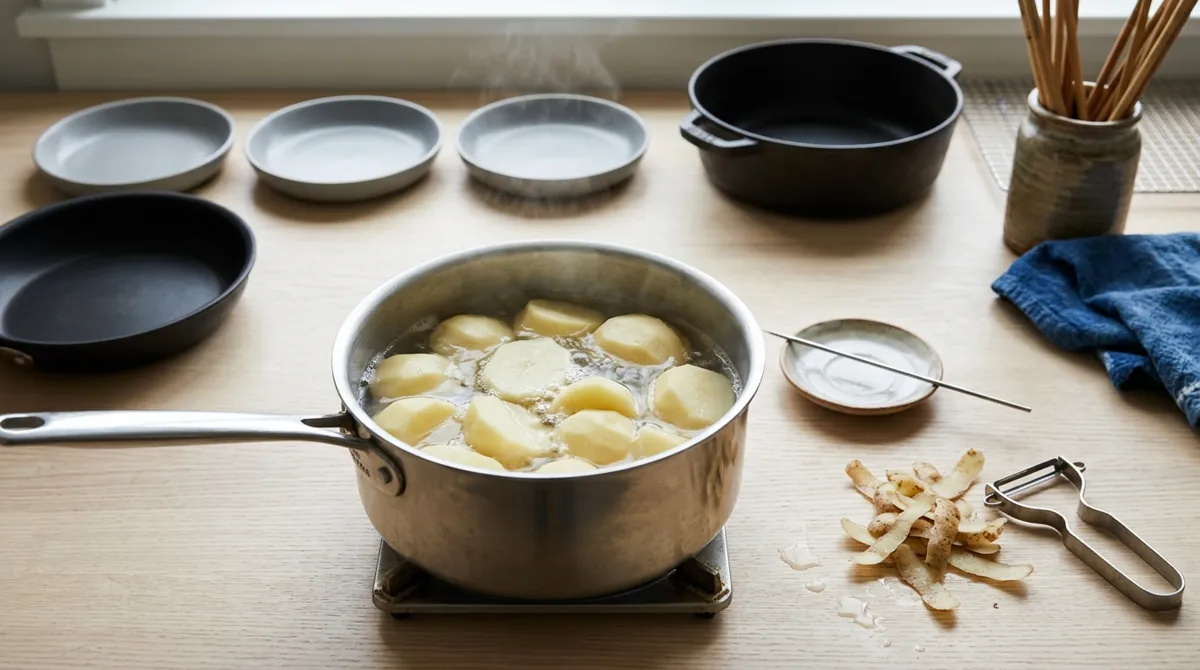
Peel the potatoes, cut them into quarters and put them in a saucepan of cold water. Bring to a boil over medium heat and simmer gently 15 to 20 minutes, until a skewer slides in easily.
- Step 2
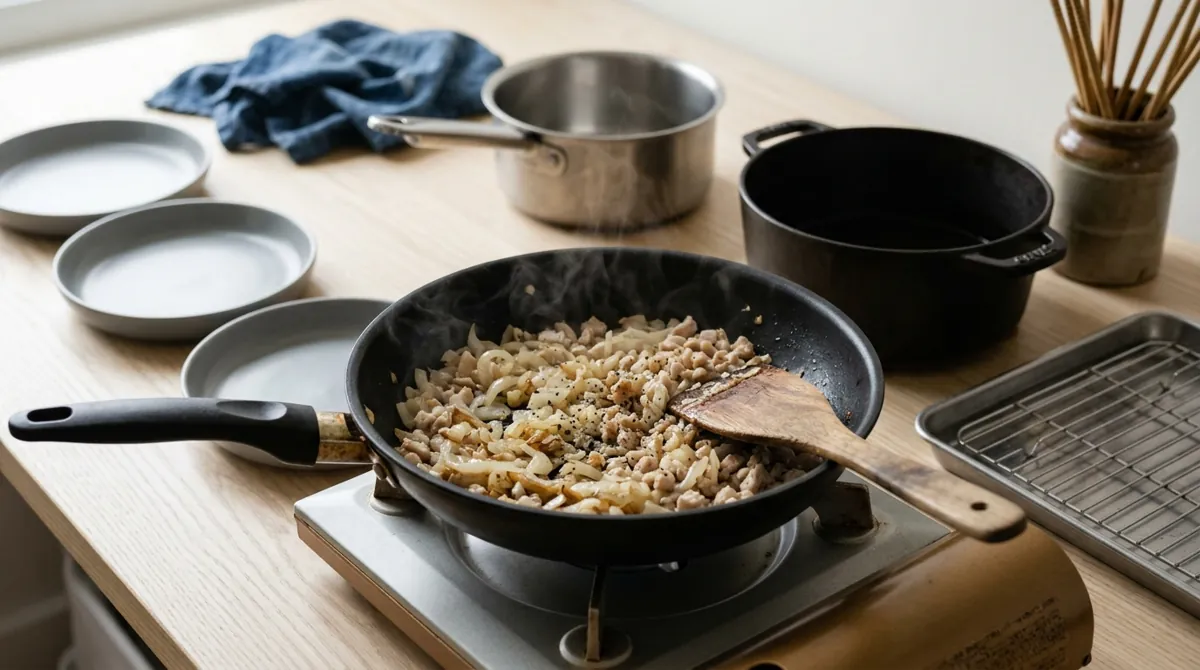
Meanwhile, cook the onion in the oil in a skillet over medium heat 12 to 15 minutes, until soft and translucent with a few lightly charred edges. Add the turkey and half the salt and pepper and cook 2 to 3 minutes, until hot.
- Step 3
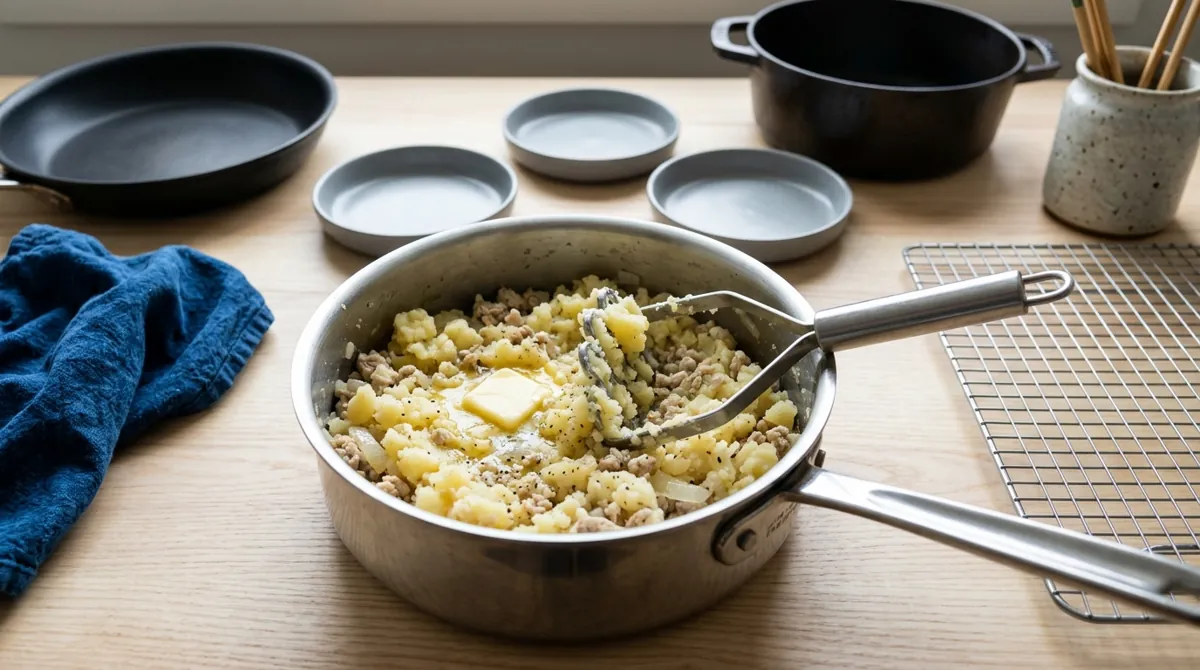
Drain the potatoes well, return them to the pot over low heat and shake 1 to 2 minutes, until dry and powdery on the outside. Mash while hot, leaving some small chunks, then stir in the butter and the rest of the salt and pepper. Fold in the turkey mixture.
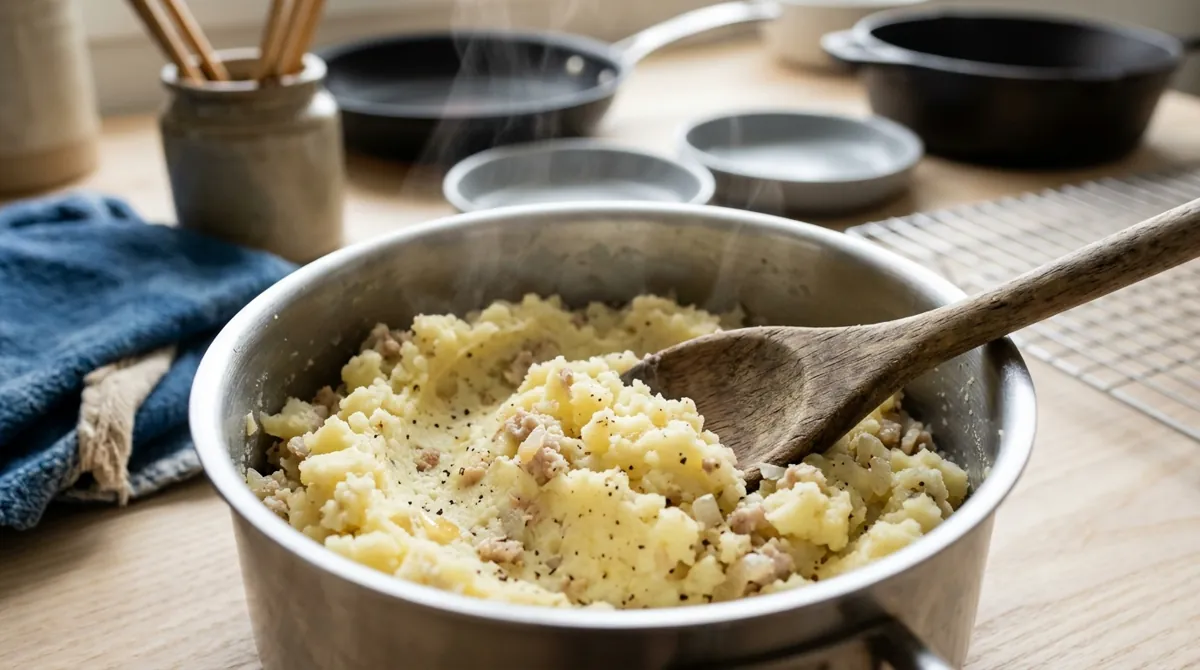
✓ What it should look like - Step 4
While the mixture is warm, shape it into 8 ovals about 3 inches long, pressing out air pockets. Cool to room temperature, then refrigerate 15 to 30 minutes.
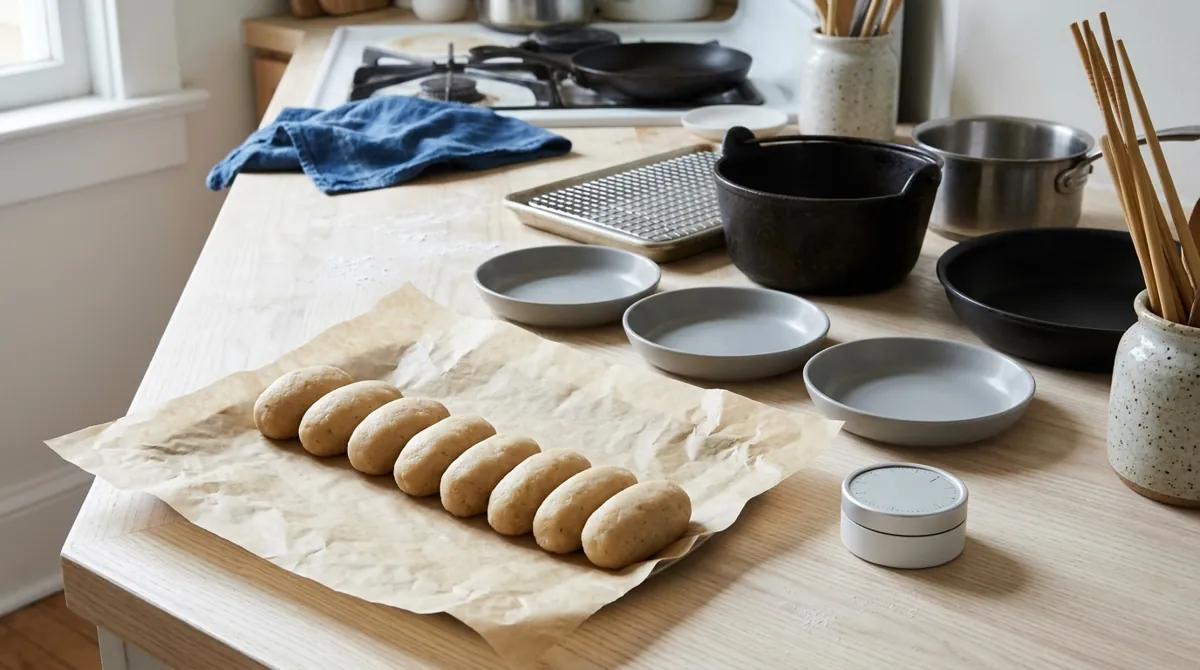
- Step 5
Set out the flour, beaten eggs and panko in three shallow dishes. Coat each oval in flour, then egg, then panko, pressing gently so the crumbs stick.
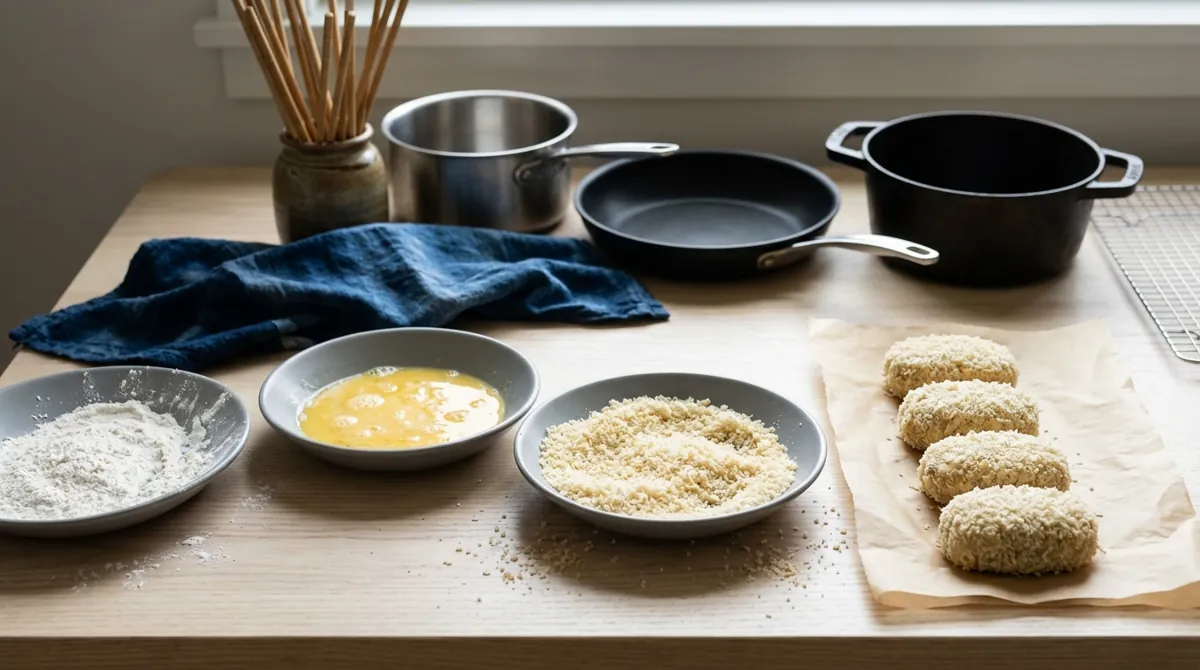
- Step 6
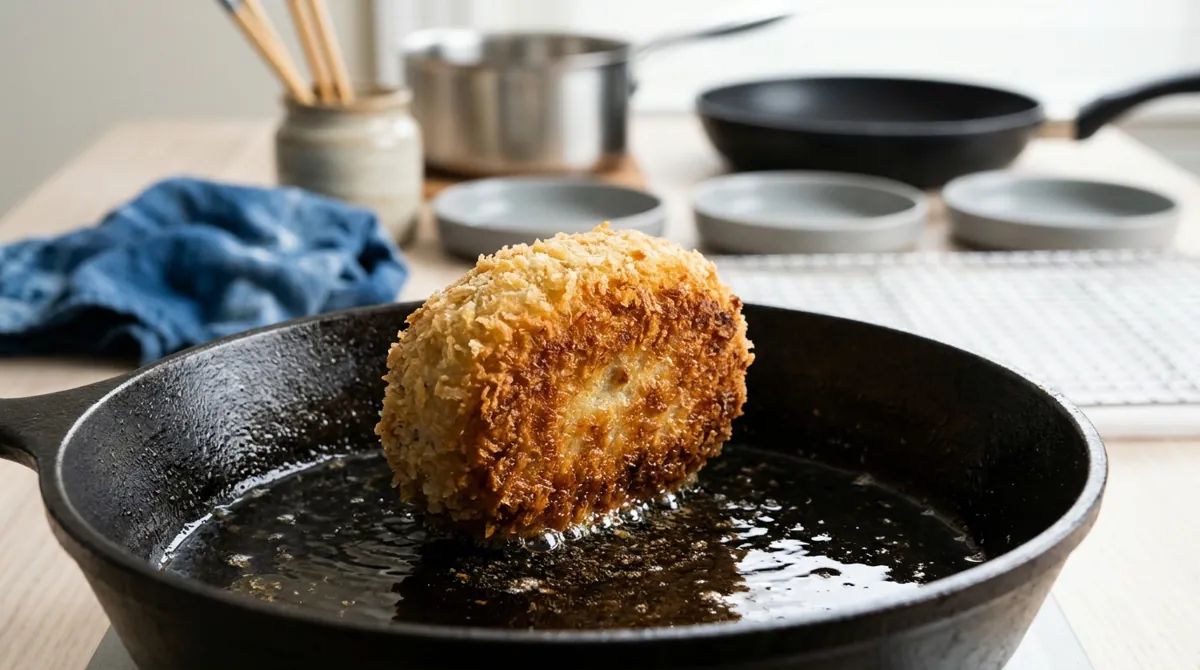
Heat 2 inches of oil in a heavy pot to 340°F to 350°F over medium heat. Fry 2 or 3 korokke at a time 2 to 3 minutes, without moving them until the bottom is golden, then turn and fry the other side. Drain on a wire rack.
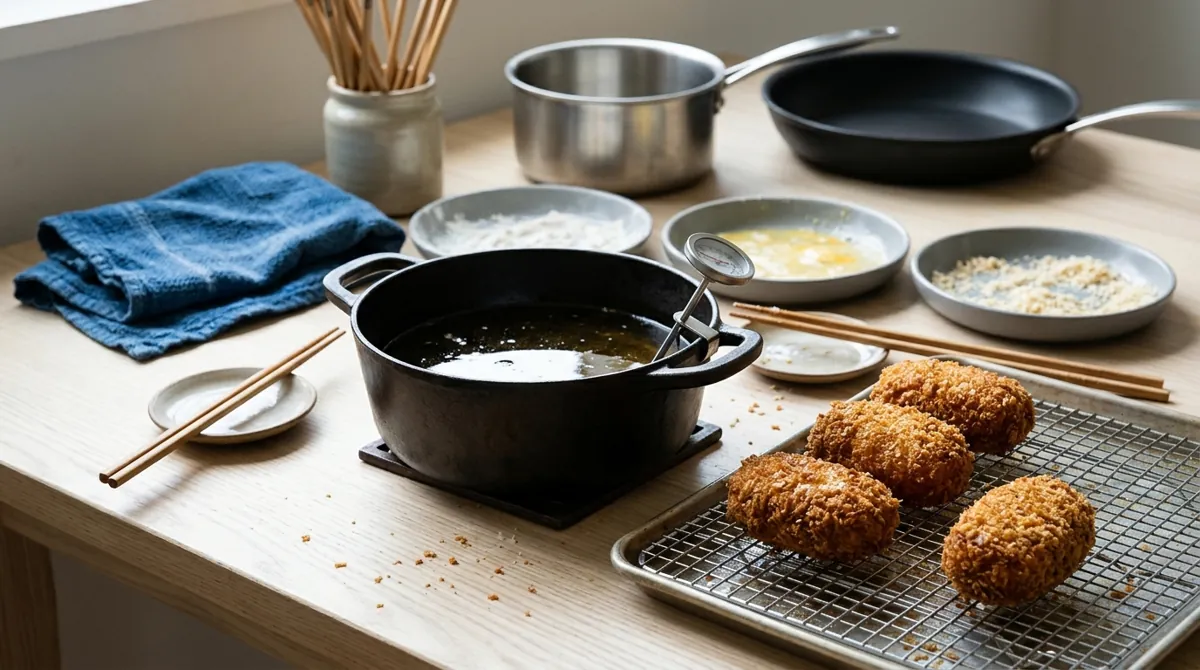
✓ What it should look like - Step 7
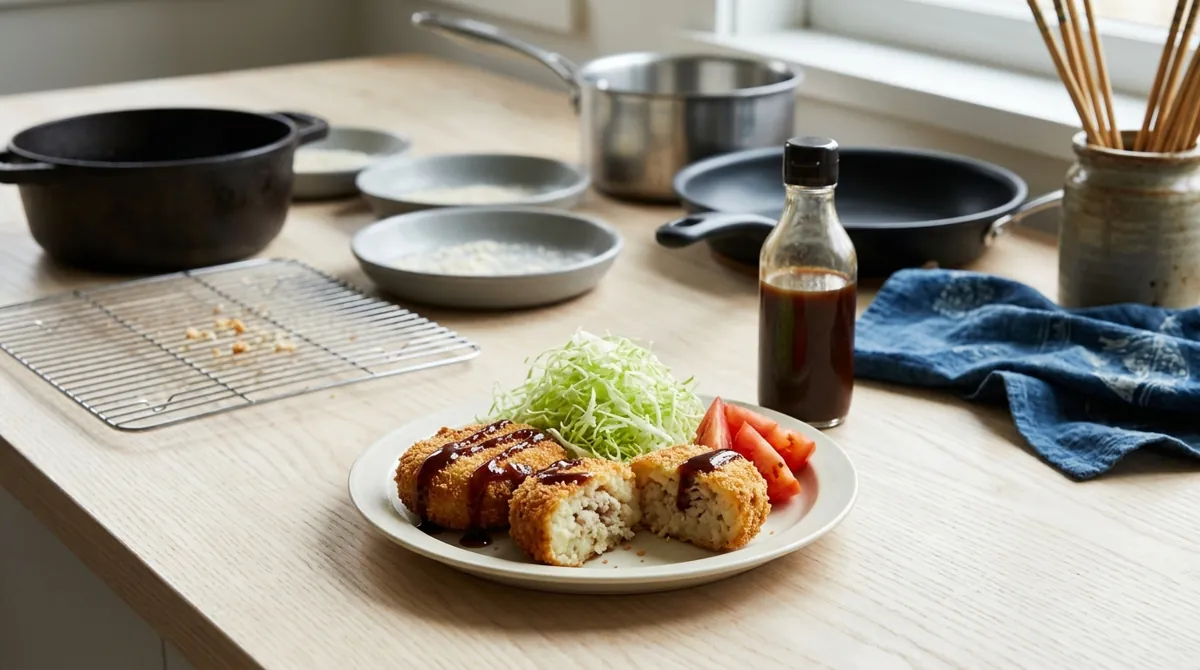
Serve hot with tonkatsu sauce, shredded cabbage and tomato wedges.
Turkey Korokke (Japanese Potato Croquettes)
Serves 4 · 8 croquettes · 1 hr 10 min total
Filling
- 1 lb russet potatoes (about 2)
- 1/2 yellow onion, finely minced
- 1/2 tbsp neutral oil
- 6 oz leftover roast turkey, finely chopped (about 1 1/4 cups)
- 1/2 tsp Diamond Crystal kosher salt, divided
- 1/4 tsp black pepper, divided
- 1/2 tbsp unsalted butter
Breading and frying
- 1/4 cup all-purpose flour
- 2 large eggs, beaten
- 1 cup panko
- About 3 cups neutral oil (2 inches deep)
To serve
- Tonkatsu sauce, finely shredded cabbage and tomato wedges
Equipment: Wire rack, Large pot, Saucepan, Skillet, Deep-fry or candy thermometer, Chef's knife and cutting board, Measuring cups and spoons, Colander, Vegetable peeler, Skewers
Method
- Peel the potatoes, cut them into quarters and put them in a saucepan of cold water. Bring to a boil over medium heat and simmer gently 15 to 20 minutes, until a skewer slides in easily.
- Meanwhile, cook the onion in the oil in a skillet over medium heat 12 to 15 minutes, until soft and translucent with a few lightly charred edges. Add the turkey and half the salt and pepper and cook 2 to 3 minutes, until hot.
- Drain the potatoes well, return them to the pot over low heat and shake 1 to 2 minutes, until dry and powdery on the outside. Mash while hot, leaving some small chunks, then stir in the butter and the rest of the salt and pepper. Fold in the turkey mixture.
- While the mixture is warm, shape it into 8 ovals about 3 inches long, pressing out air pockets. Cool to room temperature, then refrigerate 15 to 30 minutes.
- Set out the flour, beaten eggs and panko in three shallow dishes. Coat each oval in flour, then egg, then panko, pressing gently so the crumbs stick.
- Heat 2 inches of oil in a heavy pot to 340°F to 350°F over medium heat. Fry 2 or 3 korokke at a time 2 to 3 minutes, without moving them until the bottom is golden, then turn and fry the other side. Drain on a wire rack.
- Serve hot with tonkatsu sauce, shredded cabbage and tomato wedges.
Adapted from Just One Cookbook, "Japanese Croquettes (Mom's Korokke)" by Namiko Hirasawa Chen (first published March 26, 2012, republished April 23, 2025), halved from 16 croquettes to 8, with leftover roast turkey in place of the 85% lean ground beef. Her recipe browns 1 lb raw beef for 16; we use 6 oz cooked turkey for 8, since cooked meat has already shrunk. The 165°F check is ours, from UGA Extension. Just One Cookbook. Ingredient list follows the source; the method is in our own words.
All sources (2)
Tips
- Using leftover mashed potatoes? Use about 2 cups; they are softer than plain mash because of the milk and butter, so chill the shaped ovals the full 30 minutes, and skip the butter.
- Just One Cookbook freezes cooked korokke up to a month and reheats them at 350°F, 15 to 20 minutes thawed or about 45 minutes frozen.
- Leftover korokke between two slices of bread is a korokke sando (Wikipedia).
The rules people argue about
What the sources agree on, what they don't, and what is just a good story.
- Japan used potatoes because it had no dairy. Disputed: Wikipedia says "it is thought" that potato was used because dairy processing was not yet popular; Just One Cookbook says the same. It is a likely explanation, not a documented one.
- The croquette arrived in Japan in 1887. Disputed wording: Wikipedia gives 1887; Just One Cookbook says the late 1800s.
- Korokke is a croqueta. Disputed: Wikipedia calls it a dish related to the French croquette; the common Japanese version is potato-based, while croquetas in Spain are bechamel. Japan's cream korokke is the bechamel cousin.
- Korokke with mostly meat is still korokke. Documented as false in Japan: Wikipedia says croquettes made mainly of meat are called menchi katsu.
Every other leftover turkey recipe
Scalloped Turkey (Fannie Farmer, 1896)
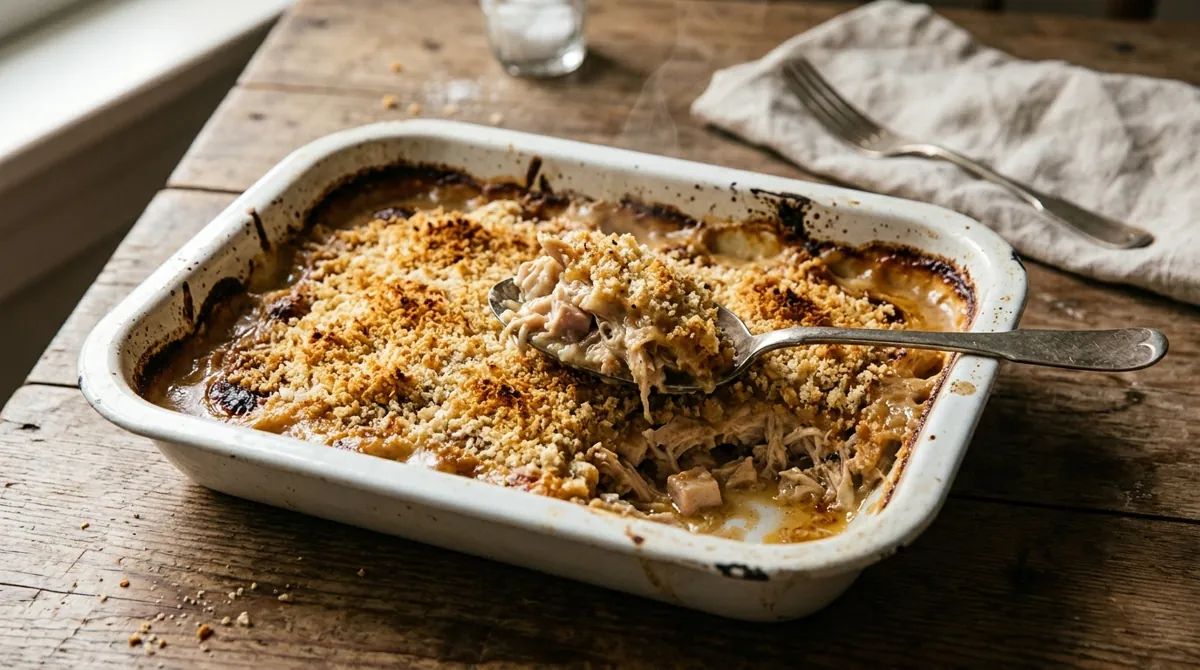
The oldest American leftover-turkey casserole we found in print: cold roast turkey in a simple white sauce made with stock from the bones, between layers of buttered cracker crumbs, baked in a hot oven until brown.
The Moist Maker Leftover Turkey Sandwich
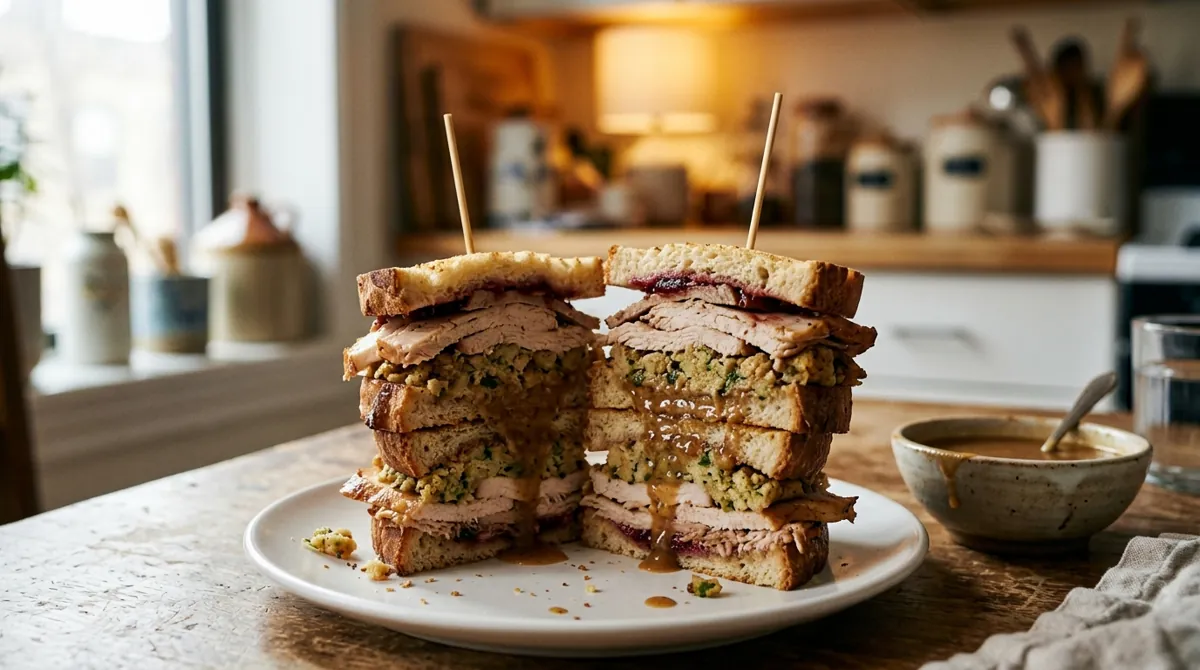
A double-decker of turkey, stuffing and cranberry sauce with an extra slice of bread soaked in hot gravy hidden in the middle. Inspired by a 1998 sitcom episode, not official.
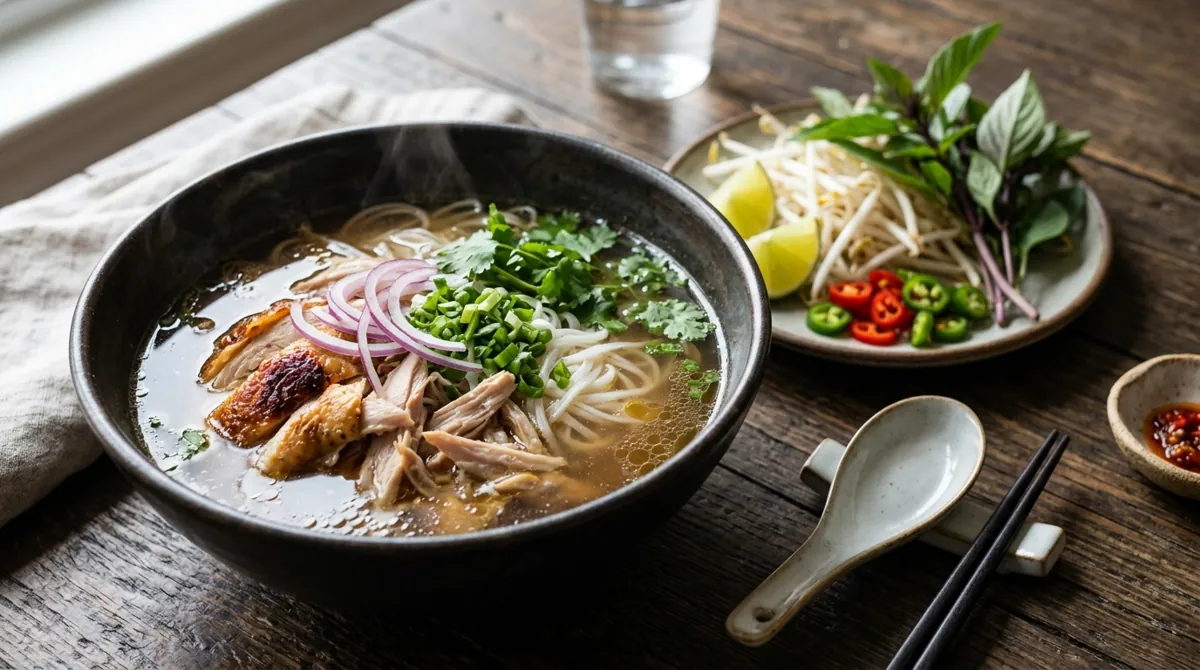
Leftover Turkey Pho
The day-after carcass becomes pho: toasted star anise, cloves, coriander and cinnamon, charred-sweet onion and ginger, a little apple and cabbage, simmered into a clear broth and ladled over rice noodles, sliced turkey and fresh herbs.
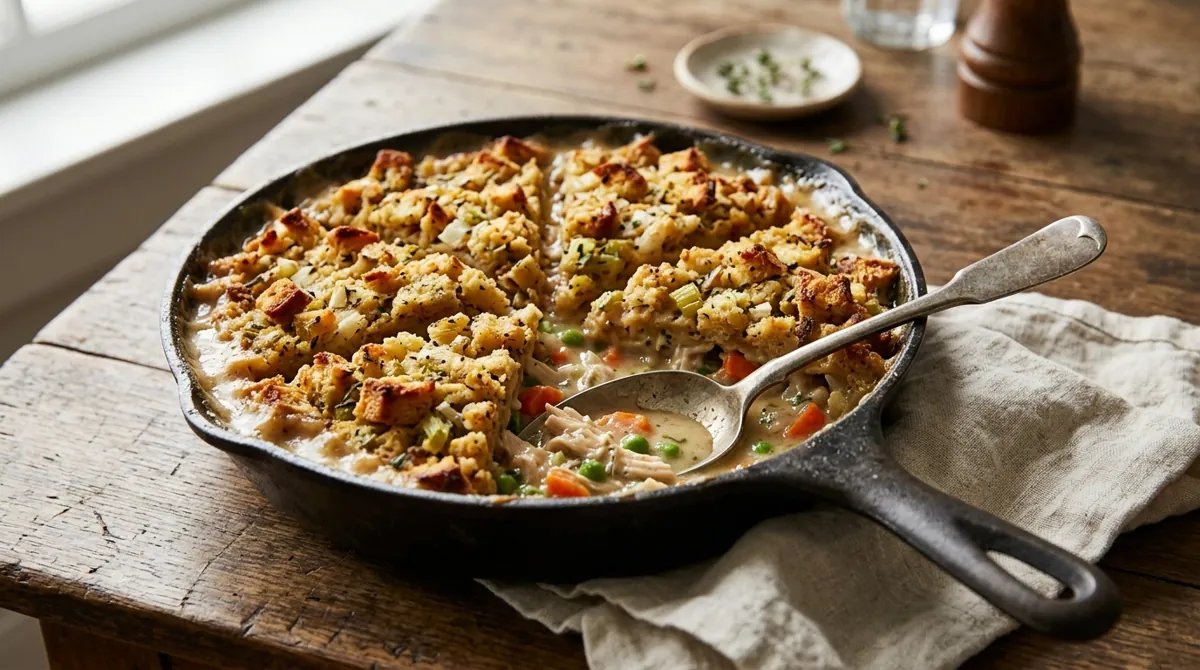
Turkey Pot Pie with a Stuffing Crust
A creamy skillet filling of leftover turkey, onion, celery, peas and carrots, topped with wedges of leftover stuffing bound with an egg and baked crisp at 475°F, in about half an hour and one pan.
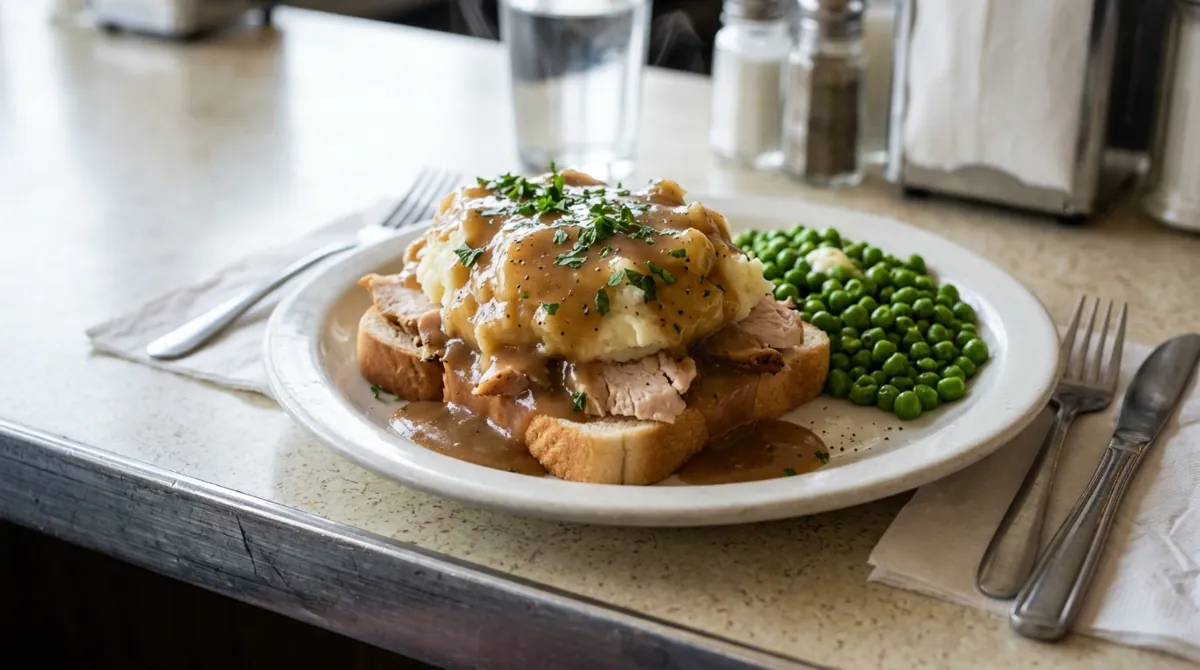
Diner Hot Turkey Sandwich with Gravy
The diner classic, open-faced: toasted white bread, leftover turkey warmed in stock, a scoop of mashed potatoes and a peppery, egg-enriched gravy ladled over everything.
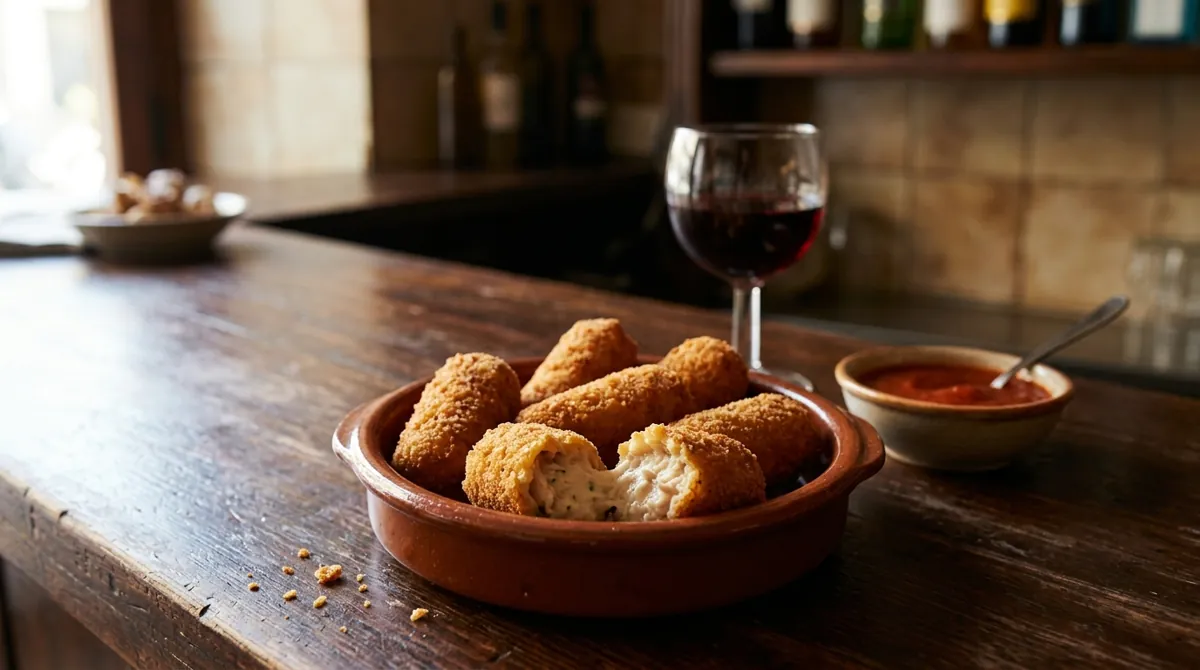
Croquetas de Pavo (Spanish Turkey Croquettes)
Spain's favorite way to stretch leftover meat: finely chopped turkey cooked into a very thick bechamel of milk and turkey broth, chilled, shaped into little logs, coated in egg and crumbs and fried until crisp outside and creamy inside.
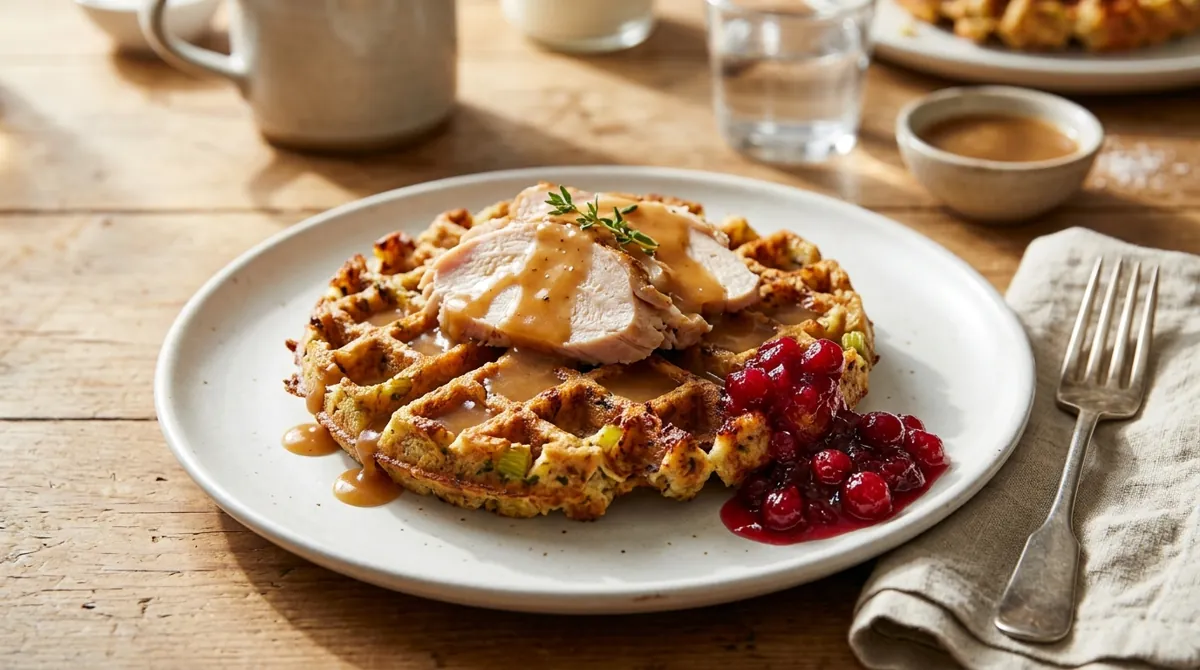
Stuffing Waffles with Turkey and Gravy
Leftover stuffing bound with egg and parsley, pressed into a hot waffle iron until crisp in every square, then topped with turkey warmed right in the iron, hot gravy and cranberry sauce.
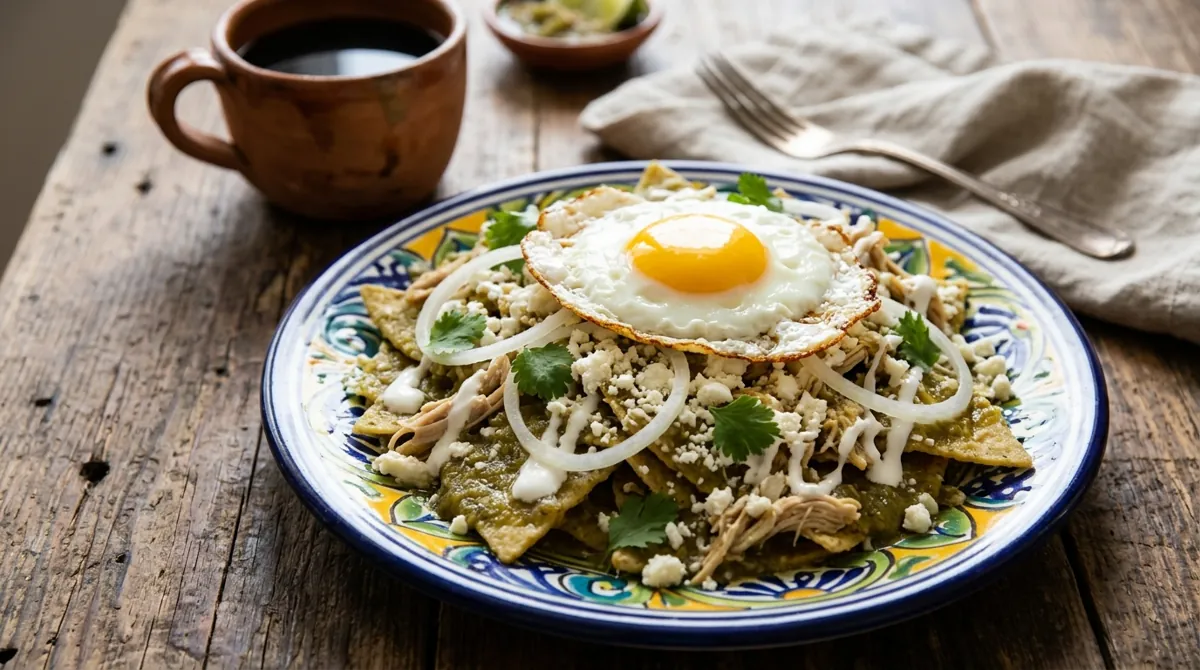
Turkey Chilaquiles Verdes
Mexico's own leftover rescue with turkey: a broiled tomatillo and serrano salsa simmered with broth and shredded turkey, tortilla chips stirred in and softened for 4 minutes, finished with crema, aged cheese, onion, cilantro and a fried egg.
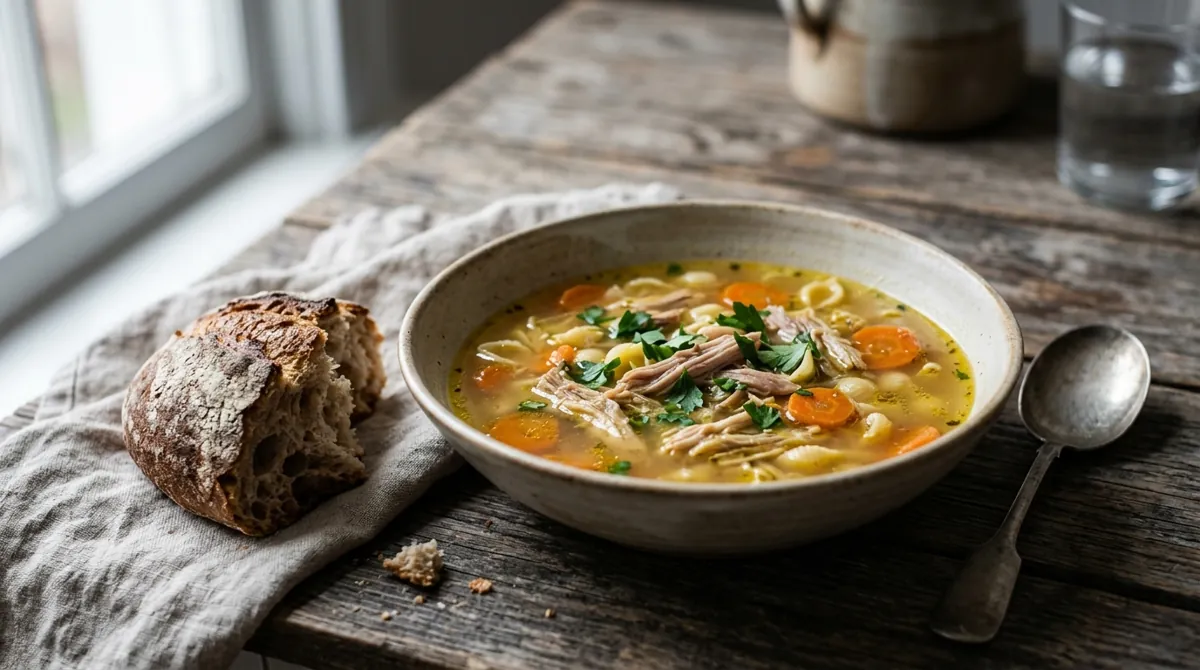
Turkey Carcass Noodle Soup
The last thing the bird gives you: the roast turkey carcass simmered four hours with onion, carrot, celery, garlic, white wine and herbs into a rich stock, then made into soup with fresh vegetables, pasta shells and the meat picked from the bones.
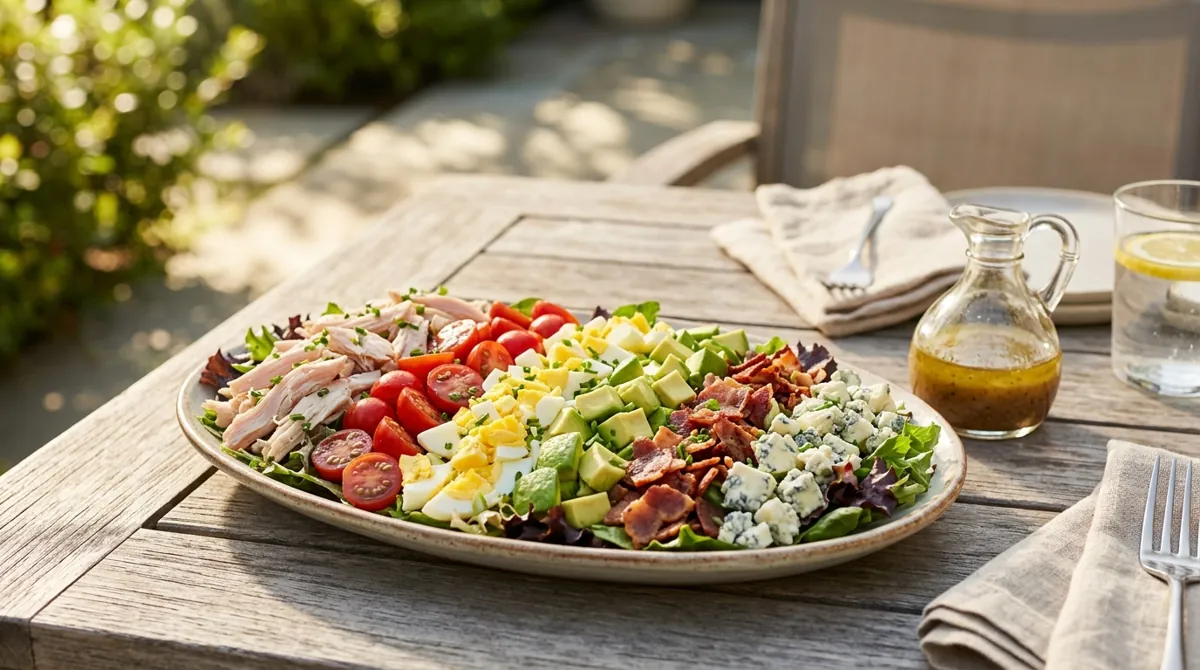
Turkey Cobb Salad
Cubed leftover turkey breast in neat rows with chopped egg, avocado, crisp bacon, grape tomatoes, blue cheese and chives on romaine and watercress, every part tossed in its own share of a mustardy red wine vinaigrette.
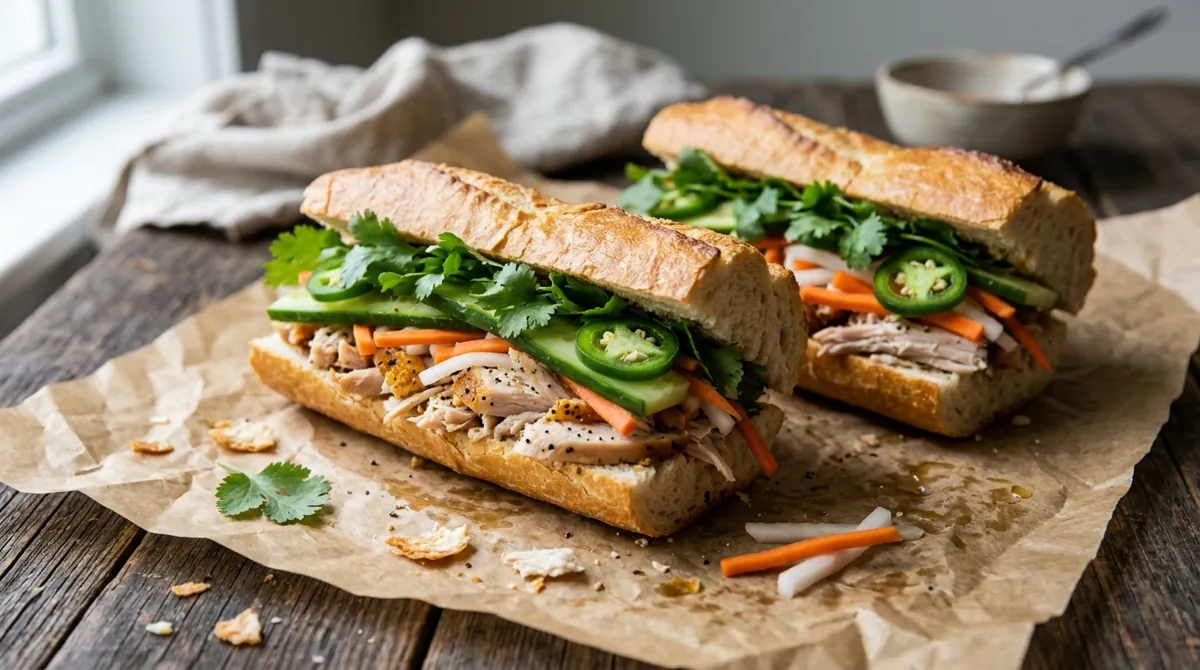
Leftover Turkey Banh Mi
Twenty minutes to a Vietnamese-American holiday snack: crisp warm baguette spread with mayo and a splash of Maggi or soy, filled with peppery reheated turkey, tangy daikon and carrot pickle, cucumber, cilantro and jalapeño.
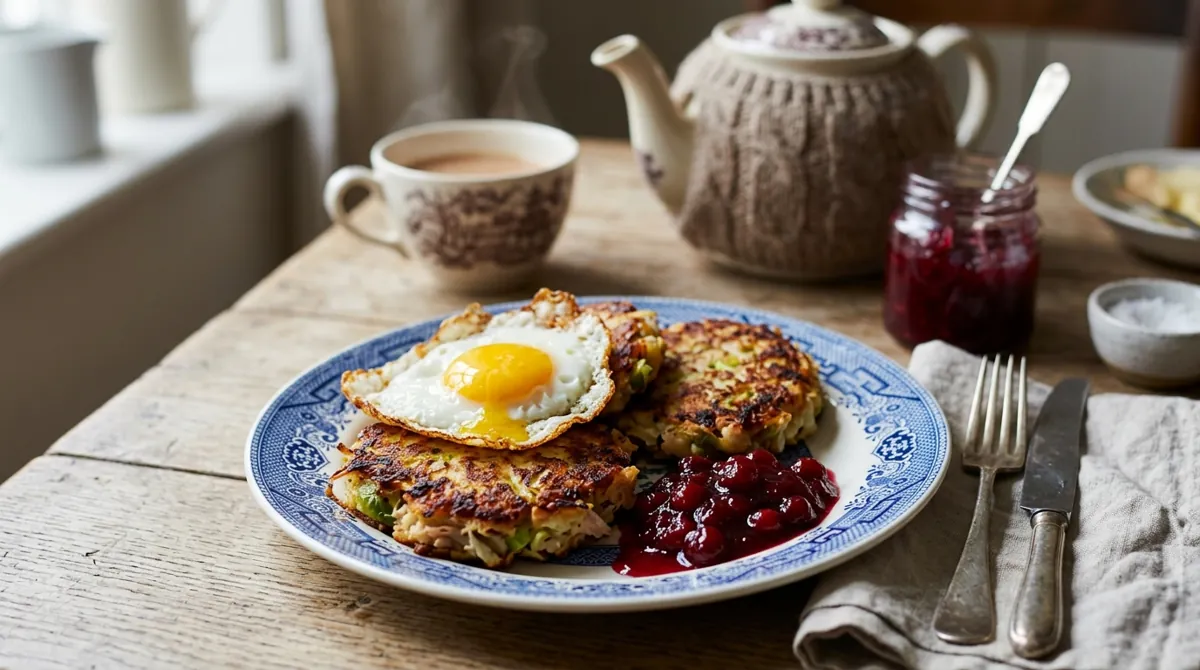
Turkey Bubble and Squeak
Britain's day-after fry-up with turkey: leftover mashed potatoes, chopped Brussels sprouts and shredded turkey bound with egg yolk, pan-fried in oil and butter until browned on both sides and finished in the oven.
Meatballs of the World

Italian-American Meatballs
Big, tender meatballs braised for an hour in red sauce over spaghetti. The one most Americans grew up with.

Pallottine (Abruzzo Meatballs)
Tiny meatballs, smaller than a marble, tossed right through square spaghetti alla chitarra. No bread at all.

Swedish Meatballs (Köttbullar)
Small, soft meatballs browned in butter, in a cream sauce made from the same pan, with lingonberry jam on the plate.

Danish Frikadeller
Pork meatballs shaped with a spoon and fried slowly in butter, crusty outside and soft in the middle.

Königsberger Klopse
German meatballs that are never fried: poached, then served in a creamy white sauce with capers.

Spanish Albóndigas in Almond Saffron Sauce
The tapas bar classic: small meatballs in a golden sauce thickened with fried almonds and bread.

Mexican Albóndigas with Chipotle and Mint
Soft meatballs with rice and fresh mint inside, simmered in a smoky tomato and chipotle broth.

Izgara Köfte (Turkish Grilled Meatballs)
Small, flat meatballs kneaded hard, rested cold, and charred on a hot grill pan.

Lion's Head Meatballs
Big, soft pork meatballs, stirred into a sticky paste, fried to set, then braised in a savory sauce.

Chicken Tsukune
Japan's chicken meatball: kneaded sticky, grilled on skewers, glazed with sweet soy tare, dipped in egg yolk.