
🌍 Where is it from?
Arroz Chaufa: How Fried Rice Became a Peruvian Classic
It looks like takeout fried rice, and it nearly is. But this plate comes from Peru, where Chinese cooking and Peruvian tastes have been mixing in the same wok since the 1800s.
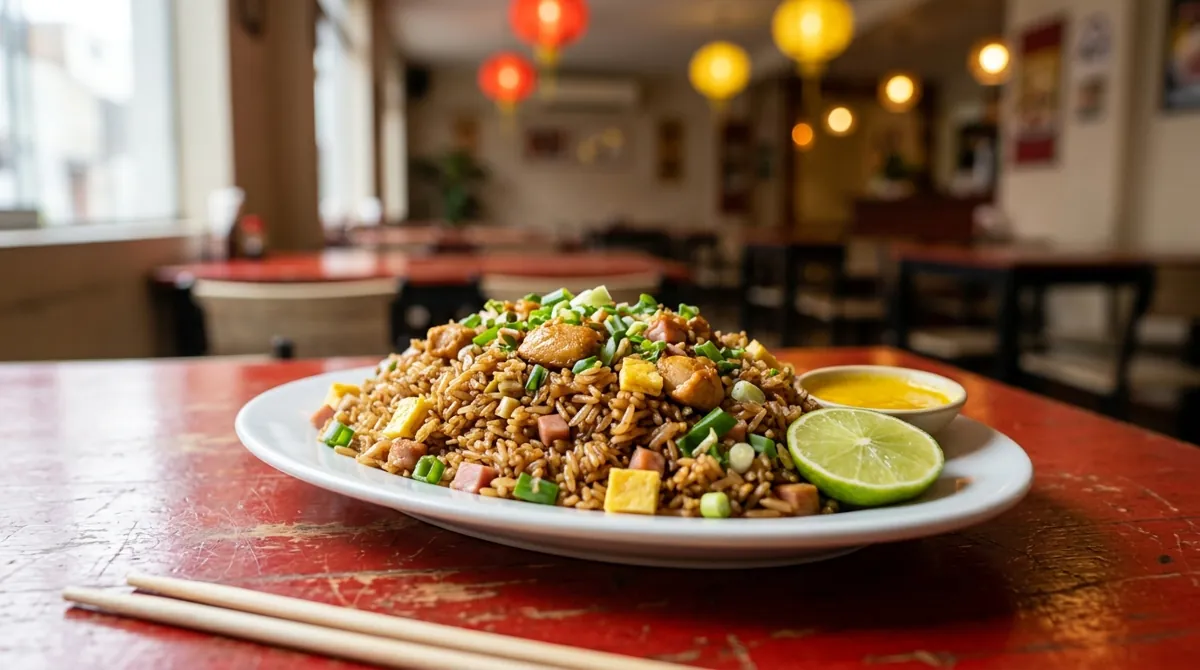
It's arroz chaufa, from Peru. Chinese contract workers began arriving in Peru in 1849, and their fried rice became part of chifa, the Chinese-Peruvian cooking that grew up around Lima's Barrio Chino. The name comes from the Chinese chǎofàn, fried rice. Peru's tourism board calls it one of the country's most popular fusion dishes.
Not China, not Japan: Peru
Arroz chaufa is day-old rice stir-fried hard and fast with egg, green onions, ginger and soy sauce, usually with chicken or pork mixed in. If you have eaten fried rice anywhere, you would recognize it on sight. That is the trick of this one.
In Peru it is everywhere: chifa restaurants, home kitchens and delivery menus. Peru's state news agency, Andina, describes it as one of the country's most popular and emblematic dishes, and Peru's official tourism site calls it the signature dish of chifa.
How Chinese cooking reached Peru
The story starts in 1849. Peru needed labor on its coastal sugar and cotton estates, and from 1849 to 1874 roughly 92,000 Chinese workers arrived under contract, almost all of them men from Guangdong province. The San Marcos University historian Humberto Rodríguez Pastor describes them as contracted semi-slaves, bound to eight years of work and traded between employers. Other estimates of the total run as high as 100,000.
Food was part of the deal. According to Peruvian accounts, the workers were paid partly in a daily ration of rice, and they fried it, along with the previous day's leftovers, using soy sauce and ginger they had brought from China. Fresh ginger, called kion in Peru, is still central to chifa cooking.
From fondas to chifa
When their contracts ended, many of the workers moved to Lima. They settled first around Billinghurst Street and then Calle Capón, which became the Barrio Chino, and some opened small eateries called fondas. Peruvians took to the food, and the cooking slowly bent toward local ingredients and tastes.
That blend came to be called chifa. The word is usually traced to a Chinese phrase for eating rice, though the exact path is debated, and Wikipedia's sources place its rise in Lima in the 1930s. Today chifa restaurants turn up in small towns in the Andes and the Amazon, and Peru counts chifa as part of its national cuisine.
What makes it different from other fried rice
Compared with the Yangzhou fried rice of eastern China, which is seasoned with salt and kept white, chaufa leans on soy sauce and fresh ginger. Peruvians also serve it with lime and an ají chile sauce, and regional cooks make versions with seafood, quinoa or, in the Amazon, dried meat and sweet plantains.
Our arroz chaufa follows a Lima-style home recipe: chicken marinated in garlic, ginger and soy, diced ham, squares of thin omelet and plenty of green onion. You can line it up against a dozen other versions, from Indonesia to Hawaii, in our fried rice hub.
Questions people ask
What does chaufa mean?
Chaufa comes from the Chinese chǎofàn, which means fried rice. Peruvian Spanish adopted it as the name of the dish, and a cook who specializes in it is sometimes called a chaufero.
What is chifa?
Chifa is Chinese-Peruvian cooking, and also the name for the restaurants that serve it. It grew out of the Chinese community that formed in Lima after 1849, and arroz chaufa is its best-known dish.
What is an aeropuerto in Peru?
Aeropuerto, airport, is a chifa order that piles arroz chaufa and stir-fried noodles (tallarín saltado) on the same plate. It is a popular way to get both at once.
Parts of this history are disputed. Where sources disagree, we say so.
Sources
- PromPerú, peru.travel, "Cómo surge el arroz chaufa, uno de los platos fusión más populares en Perú" (2021)
- Humberto Rodríguez Pastor, "Chinese and Japanese emigrants," Discover Nikkei (2007)
- Andina (Peru state news agency), "New York Times: arroz chaufa tiene origen peruano" (June 21, 2023)
- La República, "¿Cómo se originó el arroz chaufa y la palabra chifa?" (July 2, 2022)
- Alice Y. C. Wong, "From 'Authentic Chinese' to 'Authentic Peruvian-Chinese'," Melbourne Asia Review (2025)
- Layla Pujol, "Arroz Chaufa: Peruvian Fried Rice," Laylita's Recipes
- Wikipedia, "Arroz chaufa" and "Chifa" (used as leads to sources)
More food facts
Cook it
Arroz Chaufa (Peruvian Chinese Fried Rice)
The fried rice of Peru's chifa restaurants: chilled rice stir-fried with garlic and ginger-marinated chicken, ham, squares of thin omelet and green onions, seasoned with soy sauce and served with lime and ají.
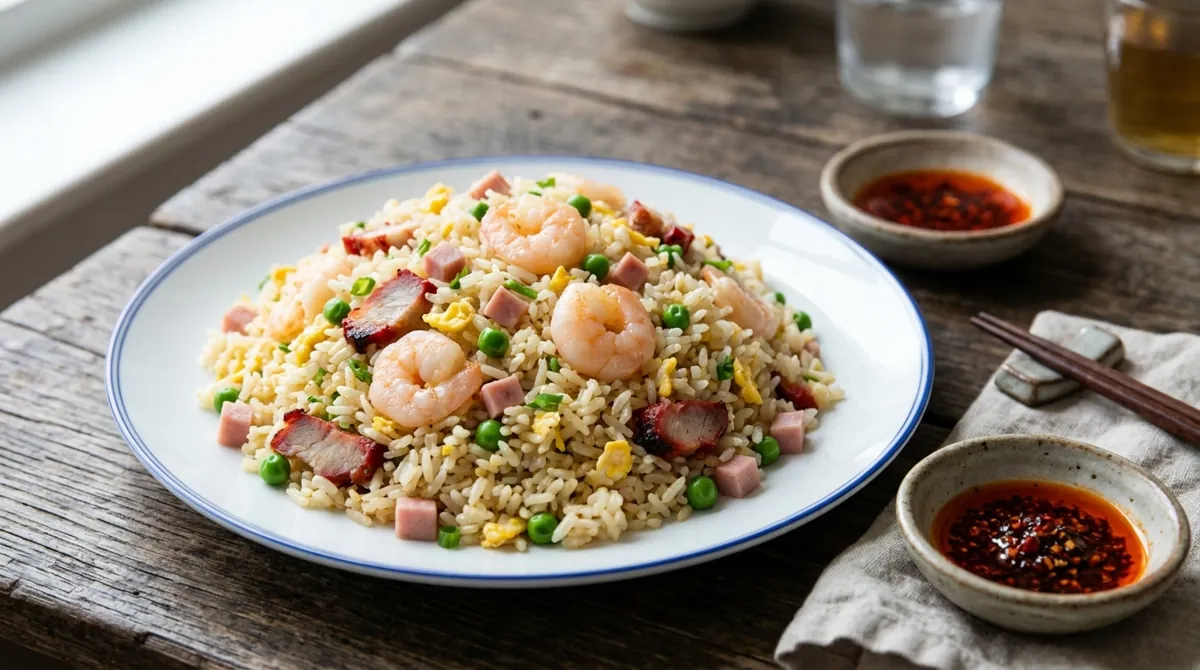
Yangzhou Fried Rice (Young Chow Fried Rice)
China's most famous fried rice: day-old rice stir-fried with egg, shrimp, ham, roast pork, onion and peas, seasoned with salt, a pinch of sugar and Shaoxing wine instead of soy sauce, and finished with crisp lettuce and scallions.
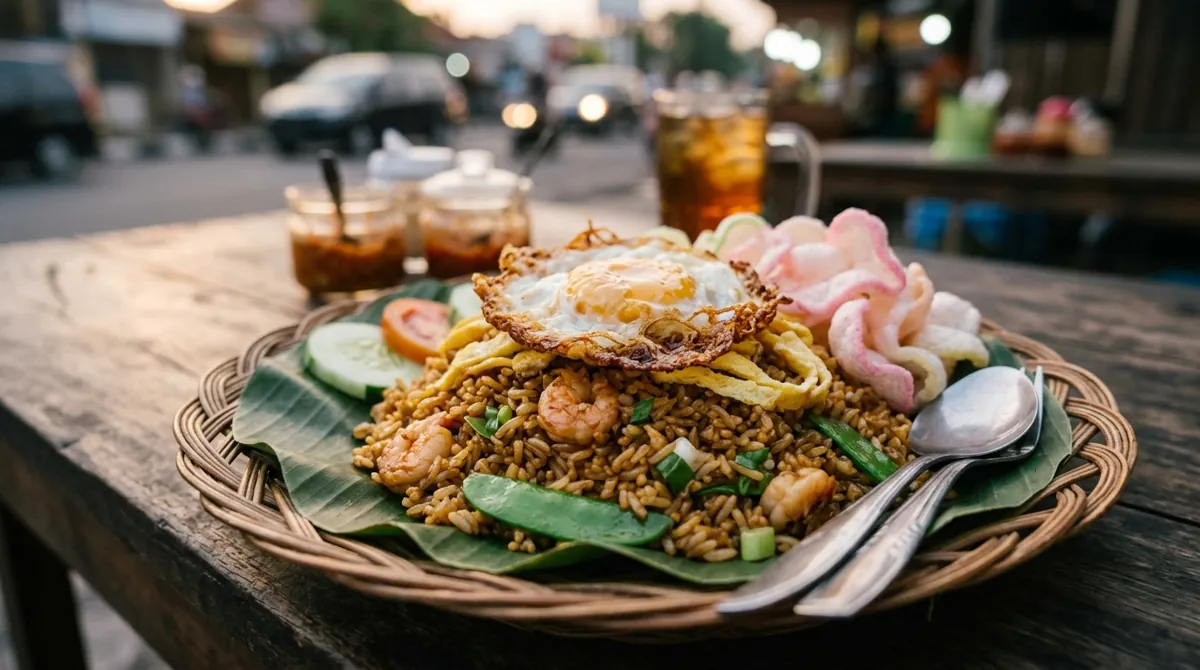
Nasi Goreng (Indonesian Fried Rice with Shrimp and a Fried Egg)
Cold rice fried with shallots, garlic, shrimp paste, coriander and cumin, shrimp, snow peas and bean sprouts, darkened and sweetened with kecap manis and sambal, then topped with omelet strips and a fried egg.
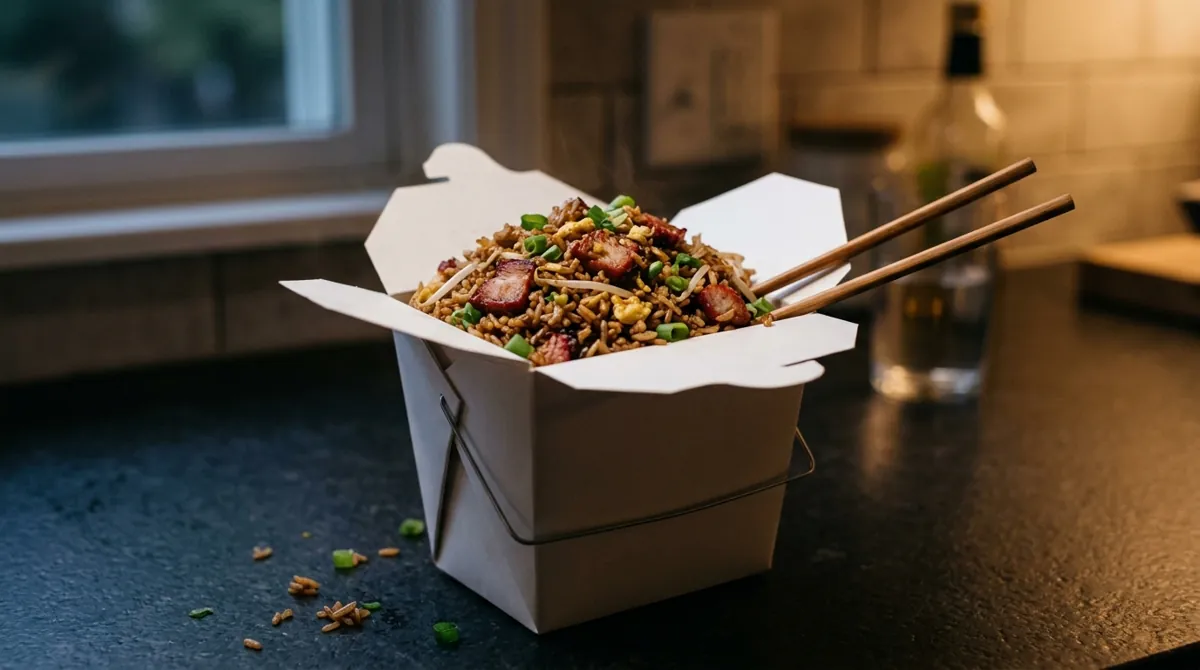
Chinese-American Pork Fried Rice
The takeout classic: jasmine rice darkened with soy and dark soy sauce, honey, sesame oil and Shaoxing wine, tossed with a full pound of red-edged char siu, onion, bean sprouts, scrambled egg and scallions.
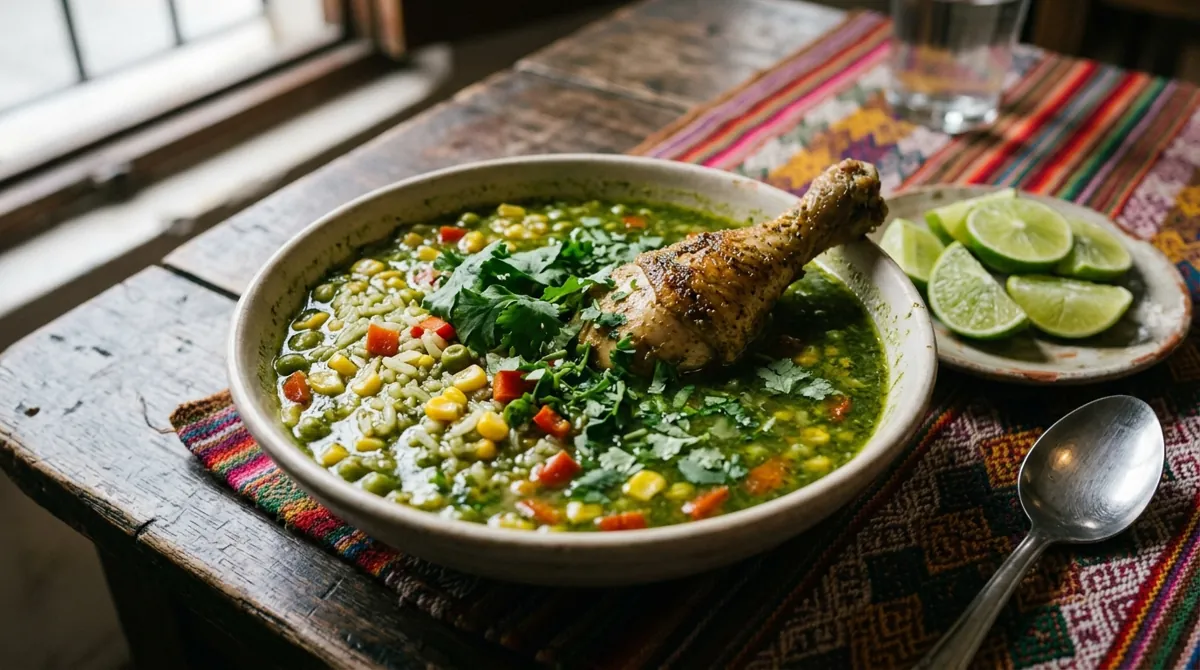
Aguadito de Pollo (Peruvian Cilantro Chicken and Rice Soup)
Browned bone-in chicken thighs and drumsticks simmered with onion, red bell pepper, cumin and rice in broth blended with cilantro, serrano and garlic, then brightened with a second fresh cilantro puree, sweet corn and lots of lime.