
🌍 Where is it from?
Khinkali: Georgia's Soup Dumplings and How to Eat Them
Big, pleated, twisted at the top and full of hot broth. These dumplings come from the Caucasus, and eating one properly takes a little technique.
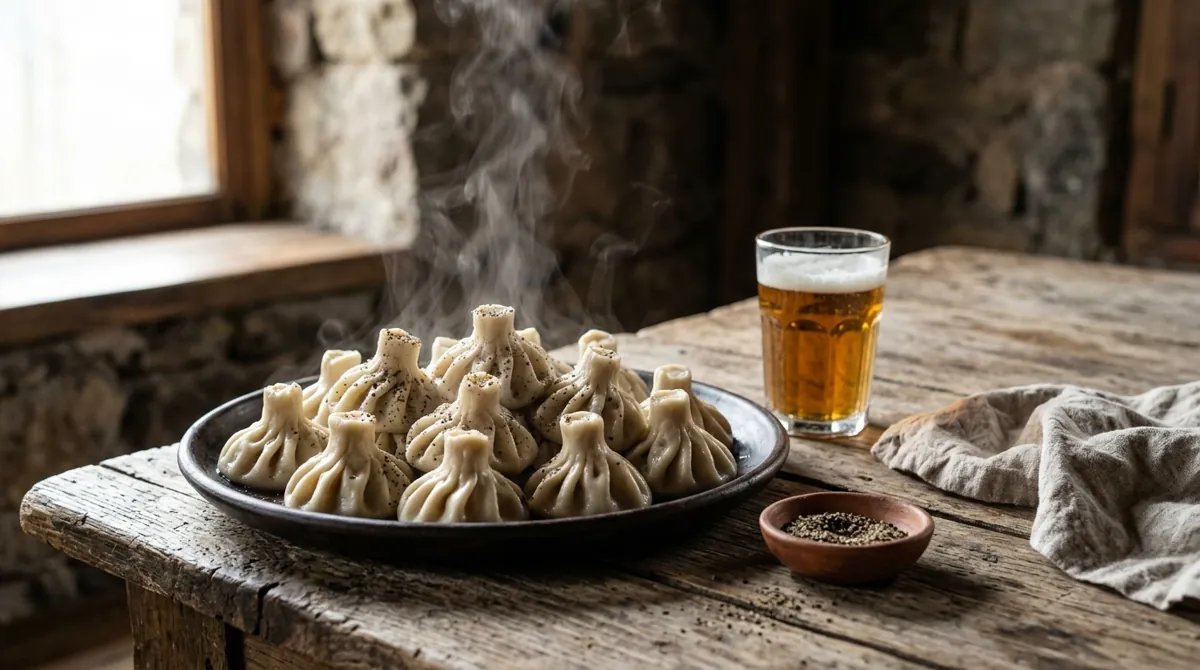
These are khinkali, from the country of Georgia in the Caucasus. Georgia's national tourism agency names the mountain regions of Pshavi and Tusheti as their homeland. You hold one by its twisted knot, bite a small hole, sip the broth, then eat the rest and leave the knot on the plate.
Georgia, not the state
Khinkali come from the high mountains of eastern Georgia, the country between the Black Sea and the Caspian. The Georgian National Tourism Administration says Pshavi and Tusheti are considered their homeland, and that the dish spread from there to the rest of the country. Today you will find them almost everywhere in Georgia.
The origin is not entirely settled. The tourism agency mentions theories that the idea arrived with the Mongols or has links to dumplings elsewhere, and Wikipedia records a 13th-century story about Mongol riders wrapping meat in dough. Georgian sources treat khinkali as their own, and VOA, reporting from Tbilisi, notes that regions still argue over who invented them and who makes them best.
Mountain style and city style
According to the tourism agency, the first khinkali were made with mutton and served very hot through cold mountain winters. In the mountains they were made on Sundays and holidays, and people believe a proper one has 28 folds, one for each year of the solar cycle. Treat that number as tradition rather than a rule; other sources give quite different counts.
When the dish moved down into the valleys and cities, pork and beef replaced the mutton. The city version, kalakuri, adds herbs such as cilantro and parsley, while the plainer mountain fillings stick to meat, onion, chile and cumin. Our khinkali, adapted from Carla Capalbo's book Tasting Georgia via Saveur, use beef, pork, cilantro and spices.
Where the broth comes from
There is no gelatin trick here. The raw meat filling is loosened with liquid, and the tourism agency's own method says to add water until a spoon can sink gently to the bottom. Our recipe stirs in a cup of stock and melted butter. Inside the sealed dumpling, that liquid and the meat juices turn into broth as it boils.
The knot does the sealing. The pleats are gathered and twisted tight at the top, so the broth stays put in the boiling water and the cook gets a sturdy handle for the eater.
How to eat khinkali
Use your hands. Pick one up by the knot, turn it over, and bite a small hole in the side. Sip the hot broth first, carefully, so it does not spill onto the plate, then eat the dough and filling. Georgia's tourism agency calls slurping out the juice without spilling it essential.
Leave the knot. It is thick, doughy and usually left on the plate, where the pile of knots shows how many each person ate. Black pepper is the usual seasoning, and one dumpling expert told VOA that anything beyond pepper is forbidden, only half joking. A fork tends to pierce the dumpling and lose the broth, which is why locals skip it.
Questions people ask
Are khinkali the same as soup dumplings like xiao long bao?
They work on a similar idea, a sealed wrapper holding meat and broth, but khinkali are much bigger, have a thick twisted knot instead of a fine pleated top, and are boiled rather than steamed. They are eaten by hand rather than with a spoon.
Do you eat the top of a khinkali?
Usually not. The knot where the pleats meet is dense and chewy, so it is left on the plate and the knots are used to count how many you ate.
What else goes inside khinkali?
Georgia's tourism agency lists versions filled with cheese, cottage cheese, potato and mushroom, plus modern shrimp. Their cousins, from Turkish manti to Siberian pelmeni, are in our dumplings collection.
Parts of this history are disputed. Where sources disagree, we say so.
Sources
- Georgian National Tourism Administration (georgia.travel), Khinkali
- VOA Learning English, How to Eat Dumplings in Georgia (April 16, 2023)
- Madloba (Georgian places catalog), Khinkali: how to eat and where
- Carla Capalbo, Meat-Filled Khinkali Dumplings, adapted from Tasting Georgia, Saveur (February 15, 2018)
- Wikipedia, Khinkali
More food facts
Cook it
Khinkali (Georgian Soup Dumplings)
Big pleated dumplings twisted into a knot at the top, filled with beef and pork loosened with stock and butter and spiced with cilantro, chile, caraway, coriander and cumin, boiled so the filling turns to broth inside, then eaten by hand with black pepper.
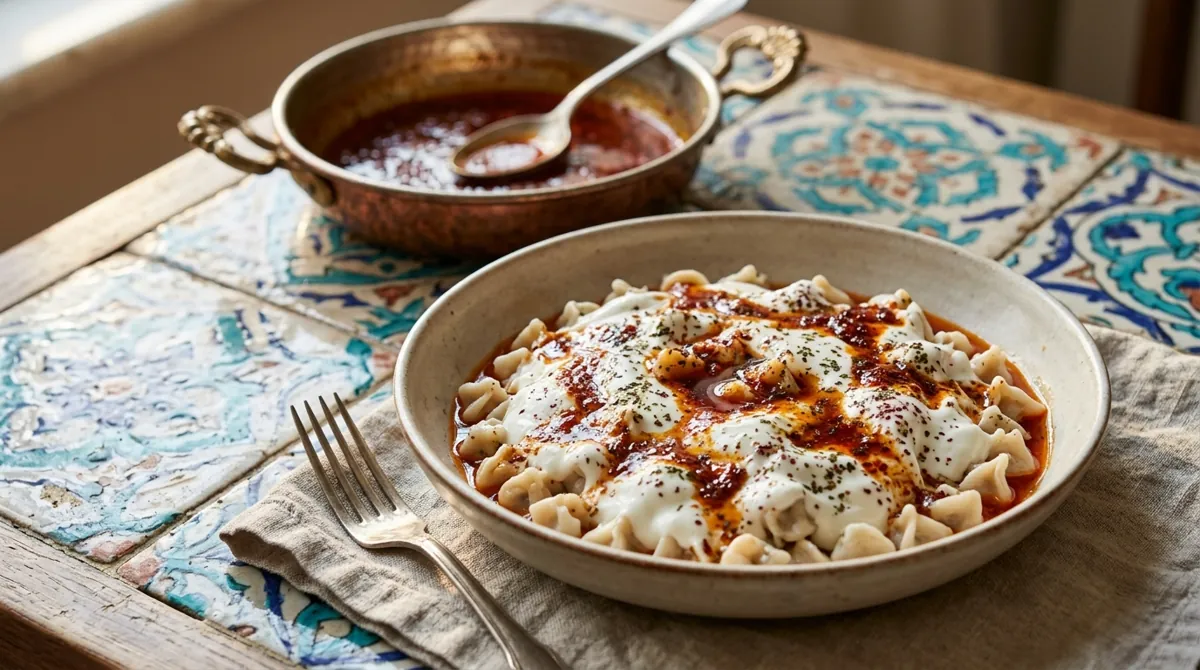
Kayseri Manti (Turkish Dumplings with Garlic Yogurt)
Tiny squares of egg dough pinched around a spoonful of spiced ground beef and onion, boiled, simmered with a tomato butter sauce, and served under cold garlic yogurt with dried mint, sumac and red pepper.
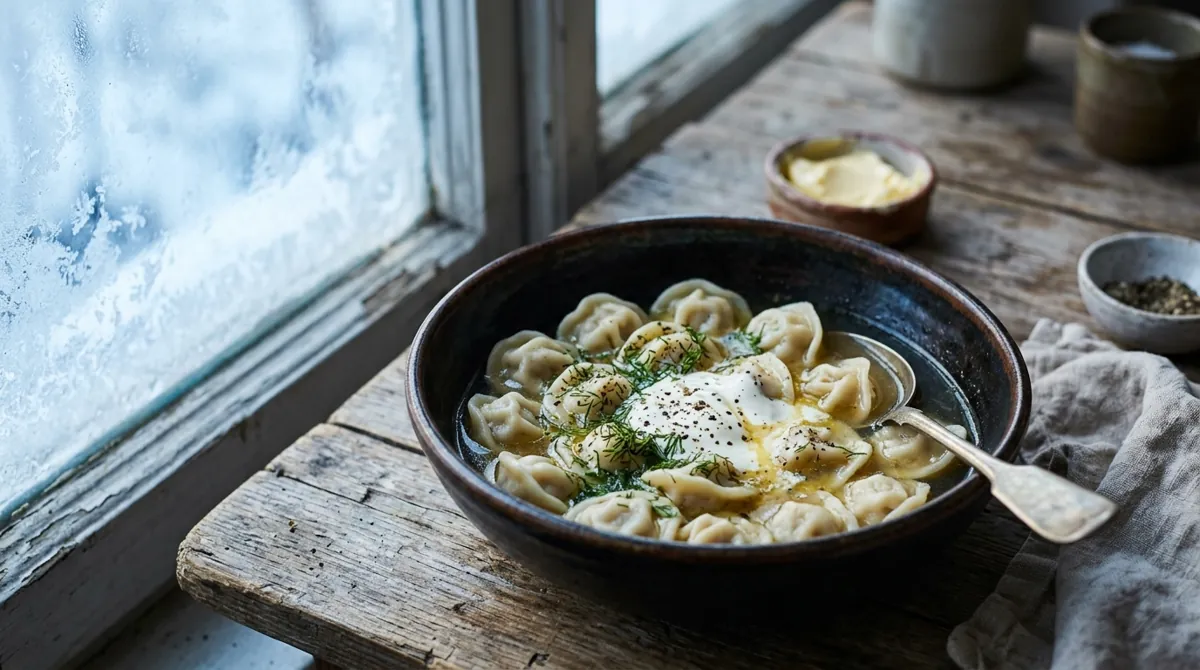
Pelmeni (Siberian Pork and Beef Dumplings)
Tiny dumplings of thin egg dough folded around raw ground pork, beef and onion with plenty of black pepper, boiled in bay-scented broth and served with butter, sour cream, fresh herbs and more pepper.
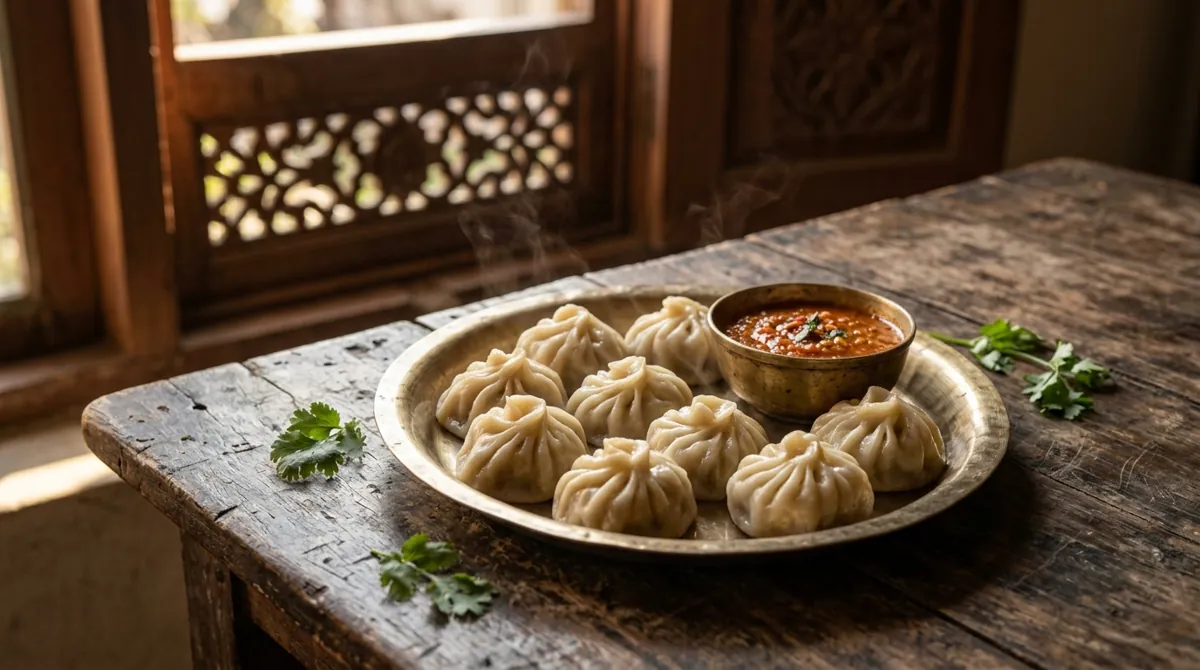
Nepali Momos with Tomato-Cilantro Achar
Round wrappers gathered into topknots around ground turkey spiced with coriander, cumin, cardamom, cinnamon and nutmeg, steamed and served with a smoky blender sauce of charred tomatoes, cilantro and Sichuan peppercorns.
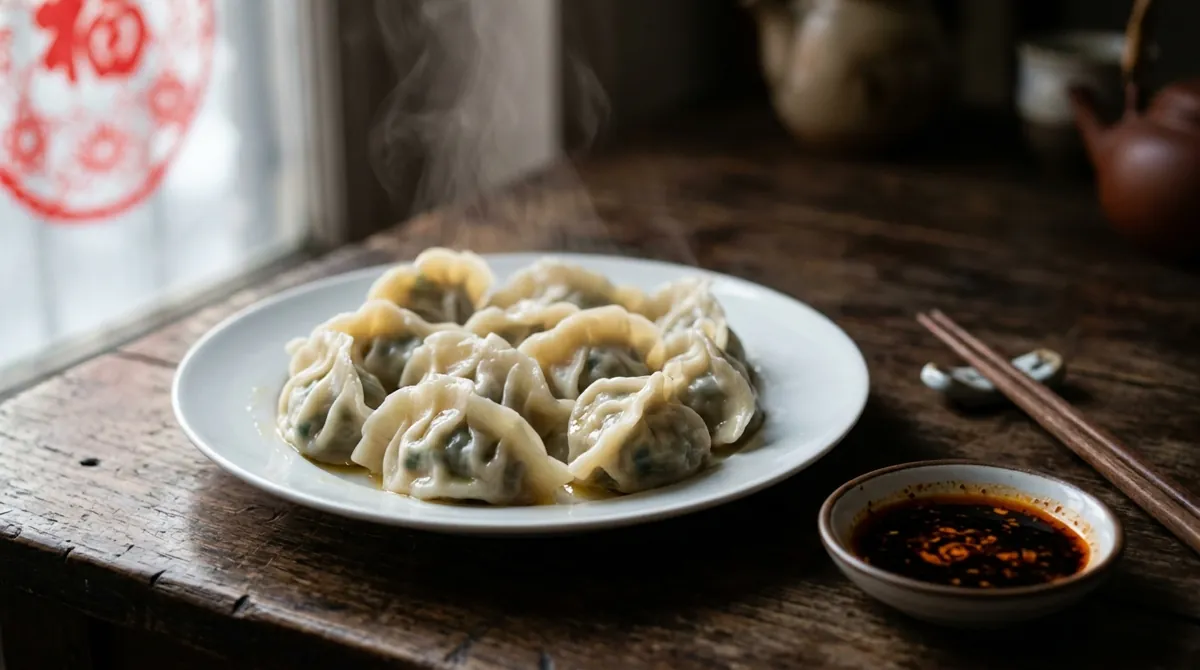
Jiaozi (Boiled Pork and Napa Cabbage Dumplings)
Hand-rolled wheat wrappers pleated around a silky filling of ground pork, blanched napa cabbage, Shaoxing wine and sesame oil, boiled in a big pot and served with black vinegar and soy sauce for dipping.