
📖 Food facts
How to Make Turkey Gravy Ahead of Time
The stock and the roux don't need the roast turkey, so the gravy doesn't either. The drippings go in at the end.
 By Americanized · Edited by JP Lambiase · October 19, 2026
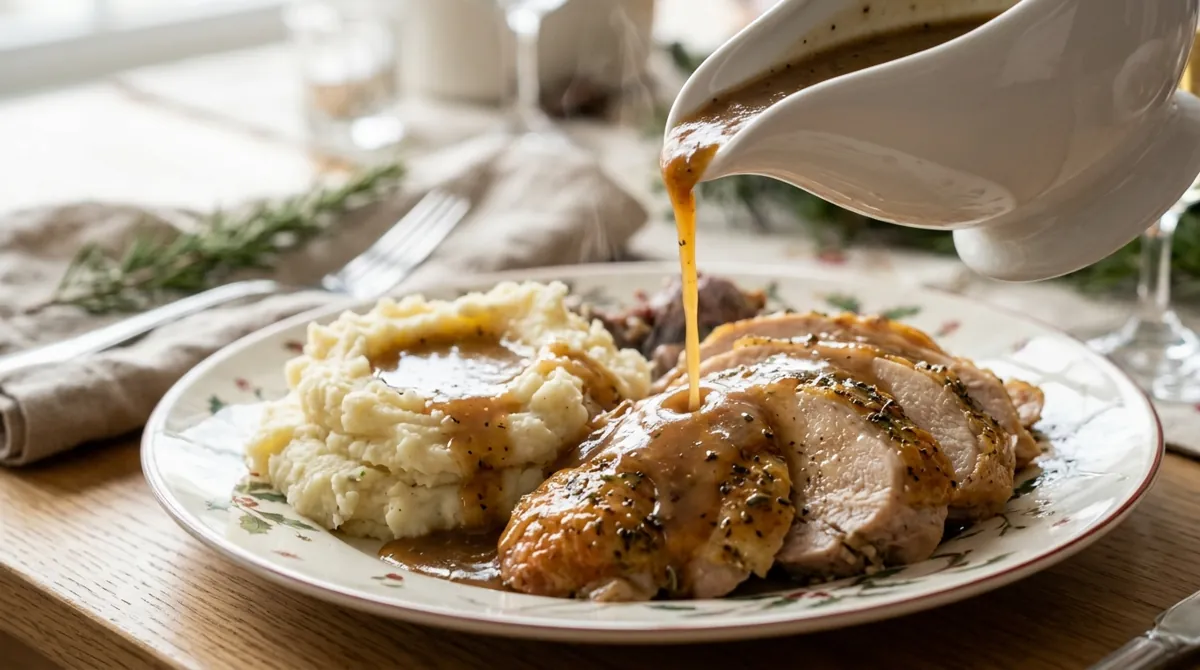
Roast turkey wings, necks or thighs, simmer them into stock and thicken it with a roux up to 2 days ahead. Refrigerate the gravy within 2 hours, or freeze it. On the day, bring it to a rolling boil, as USDA advises for reheated gravy, then whisk in the skimmed drippings from the roasting pan.
Why it works
Gravy is stock thickened with flour cooked in fat, and neither needs the finished bird. America's Test Kitchen's make-ahead gravy for a crowd builds everything from 6 turkey drumsticks, thighs or wings plus the neck and giblets, and saves the roasting pan drippings for a last-minute boost. More birds and sides are in our turkey hub.
The method, from wings or necks
ATK roasts the turkey parts with chopped carrots, celery, onions and a halved head of garlic at 450°F for 1 to 1 1/2 hours, until well browned. Everything goes into a pot with 10 cups of chicken broth, 2 cups of dry white wine and thyme, and simmers until reduced by half, about 1 1/2 hours. Strain it and chill it at least 2 hours, until the fat sets on top.
Lift off about 1/2 cup of that fat, cook it with 1/2 cup of flour for about 2 minutes until honey colored, gradually whisk in the stock and simmer about 10 minutes. That makes about 2 quarts. Our turkey giblet pan gravy works the same way on a smaller scale: the giblet broth and a dark roux are made before the turkey comes out, and the broth can be refrigerated within 2 hours if you make it a day early.
How long it keeps
Sources disagree. ATK says its gravy keeps 3 days in the refrigerator, and USDA's Food Safety and Inspection Service (FSIS) says to use refrigerated turkey, stuffing and gravy within 3 to 4 days. The Minnesota Department of Health says gravy should be used within 1 to 2 days. We go with the shorter time: make it no more than 2 days ahead.
Freezing buys more time. FSIS's freezer chart puts meat or poultry gravy at 2 to 3 months for best quality, and ATK says up to 2 months.
To serve, FSIS says to reheat sauces, soups and gravies by bringing them to a rolling boil. Then stir in the defatted drippings and simmer about 2 minutes, as ATK does in its make-ahead giblet gravy. If it's thicker than you like, whisk in warm broth a little at a time, then pour it over classic American mashed potatoes. Our Thanksgiving planner can build the whole cook-day timeline around it.
Fixing lumpy, thin or greasy gravy
Lumpy: pour it through a fine-mesh strainer, pressing on the solids, as both ATK and our recipe do. Next time, add the stock to the roux gradually, whisking.
Thin: simmer it uncovered so the extra liquid cooks off, or whisk in a little flour stirred into cold liquid outside the pot, which helps it go in without clumps, then bring it back to a simmer. Cornstarch thickens about twice as much as flour: Utah State University Extension's substitution chart swaps 1 tablespoon of cornstarch for 2 of flour.
Greasy: fat rises. For the day's drippings, ATK pours them through a fat separator before they go in. For make-ahead stock, chilling does the work: the fat hardens on top and lifts right off.
Questions people ask
How long can gravy sit out?
FSIS says to throw away turkey, stuffing and gravy left at room temperature for more than 2 hours, or 1 hour above 90°F.
Can I make gravy without drippings?
Yes. ATK's make-ahead gravy for a crowd is complete before the turkey is roasted; the drippings are optional, stirred in just before serving for deeper flavor.
Should the liver go in?
ATK leaves the liver out of its giblet gravy and uses the neck, heart and gizzard. Our giblet gravy does the same.
Parts of this history are disputed. Where sources disagree, we say so.
Sources
- America's Test Kitchen, "Make-Ahead Turkey Gravy for a Crowd" (July 28, 2011)
- America's Test Kitchen, "Make-Ahead Giblet Turkey Gravy" (November 8, 2011)
- USDA FSIS, "Leftovers and Food Safety" (Internet Archive copy, October 8, 2026)
- USDA FSIS, "Let's Talk Turkey: A Consumer Guide to Safely Roasting a Turkey" (Internet Archive copy, September 23, 2026)
- USDA FSIS, "Freezing and Food Safety" (Internet Archive copy, October 4, 2026)
- Minnesota Department of Health, "Turkey: Safe Thawing and Cooking" fact sheet (modified 2025)
- Georgia C. Lauritzen, Utah State University Extension, "Ingredient Substitution" (FN 255, 1992)
- Haldan Kirsch, "The Simple Way To Thicken Runny Gravy", Tasting Table (September 18, 2022)
More food facts
Cook it
Turkey Giblet Pan Gravy
Real gravy from the bird: a giblet broth made while the turkey roasts, a nutty brown roux, and the roasting pan deglazed with white wine so every browned bit ends up in the sauce.
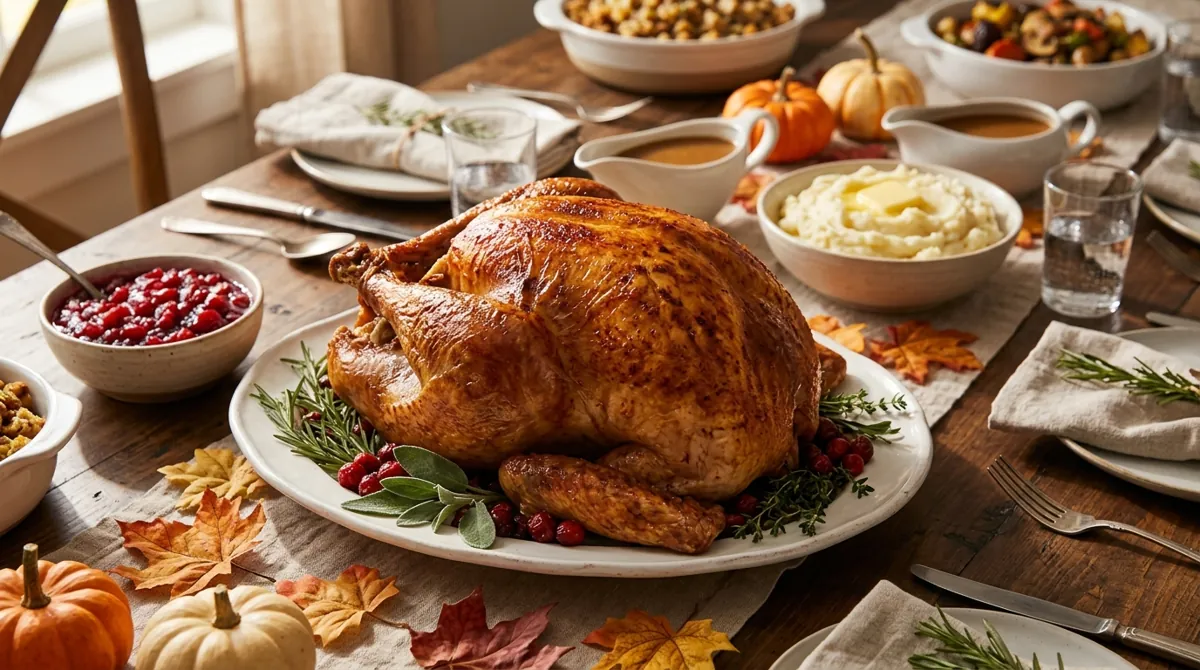
Classic Roast Thanksgiving Turkey
The plain American centerpiece: a buttered, salted and peppered turkey roasted breast side down first, flipped, and finished breast side up until the thermometer reads 165°F. No basting, no fuss.
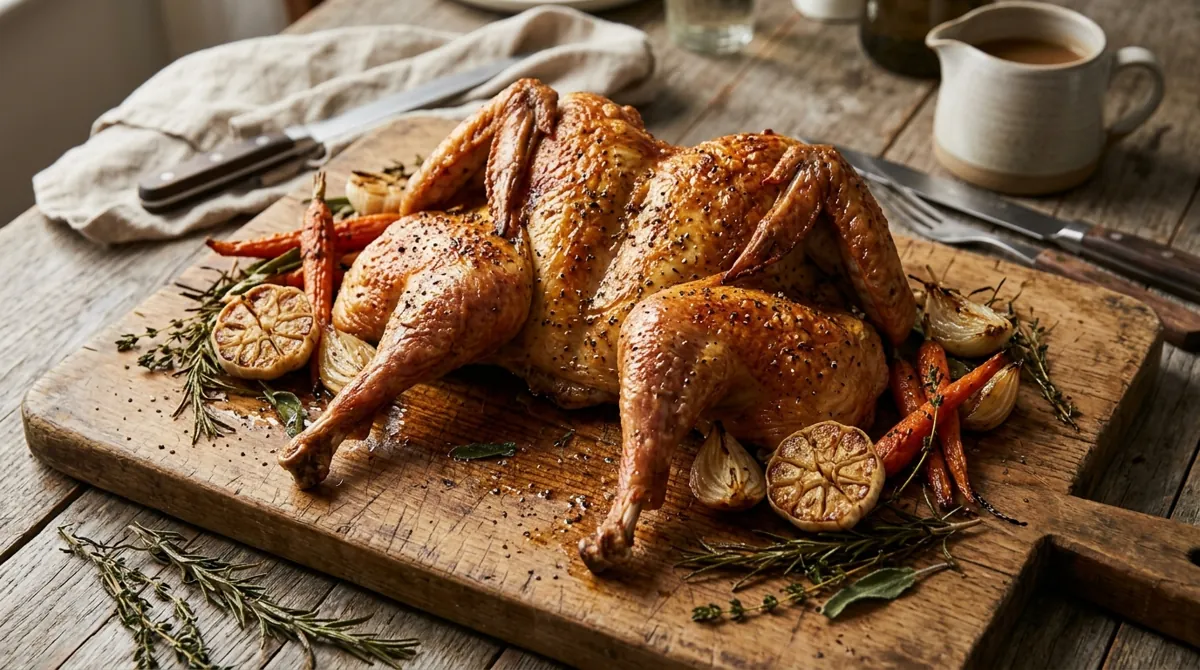
Spatchcocked Roast Turkey
Cut out the backbone, press the bird flat and roast it hot: a 12 to 14 lb turkey is done in about 80 minutes, with crisp skin all over and breast and legs finishing together.
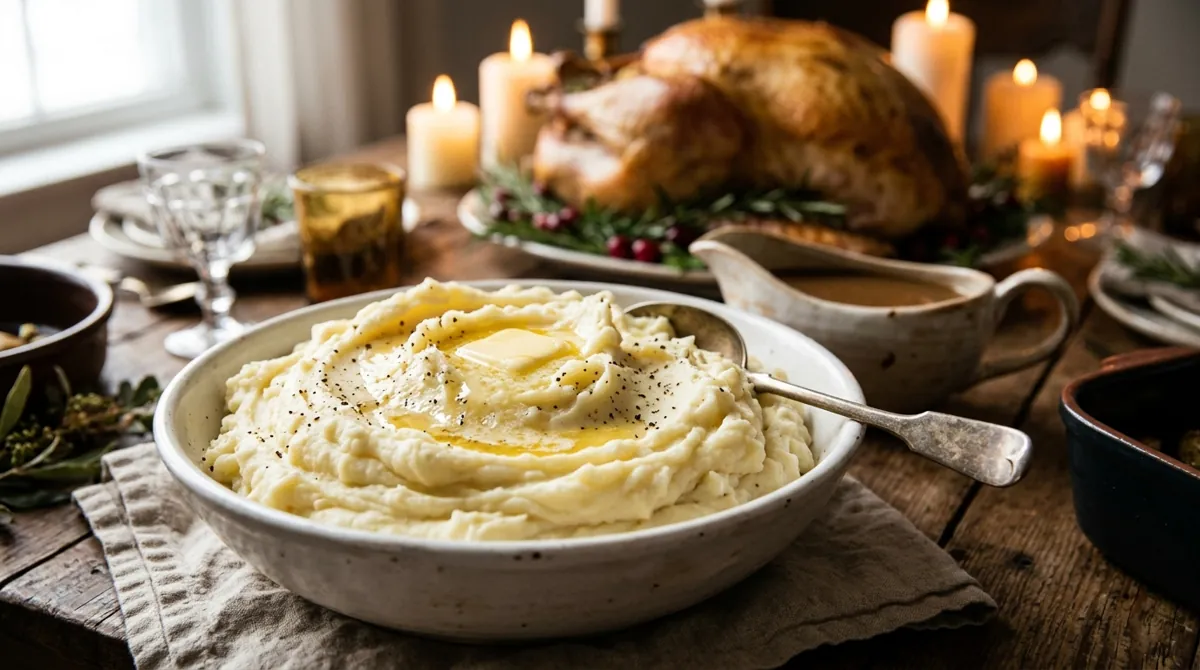
Classic American Mashed Potatoes
Whole russets simmered in their skins, peeled hot and riced, then stirred with melted butter first and warm half-and-half second for a fluffy, creamy holiday mash.
Dry-Brined Turkey (the Judy Bird)
The Los Angeles Times' famous no-bucket brine: a few tablespoons of salt rubbed on three days ahead, the bird kept in a bag in the refrigerator, then dried uncovered so the skin roasts crisp.