
🧐 What's wrong with this picture?
Are Beignets Doughnuts? What the French Word Really Means
The French Quarter's powdered-sugar square has a French name, but for most of its life in New Orleans it was simply called a doughnut. The word means something broader in France.
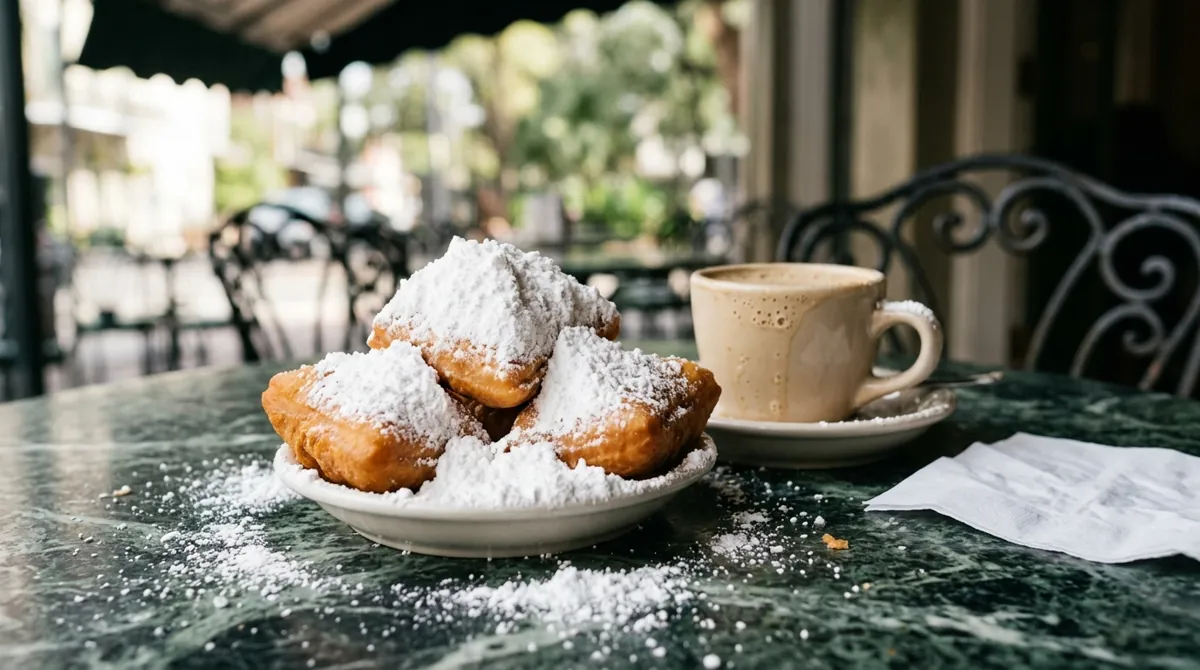
In New Orleans, yes. The powdered-sugar square sold in the French Quarter is a yeast-raised dough fried in oil, and the coffee stands sold it as a "doughnut" until around mid-century. In France the word is broader: a beignet is almost anything fried in a coat of batter or dough, from apple fritters to puffs of cream puff pastry.
What the French mean by beignet
The Larousse dictionary defines a beignet as a fried preparation in which batter coats a savory or sweet ingredient, with apple and eggplant beignets as its examples. The word comes from beigne, an old word for a swelling, and 64 Parishes, Louisiana's humanities encyclopedia, suggests the name fits because the dough puffs up in hot oil.
In France today, 64 Parishes notes, beignet most often means a puffed fritter of pâte à choux, the same dough used for cream puffs. So a French beignet is usually closer to a fritter than to anything in a doughnut case. Food historian Cathy Kaufman traces the word as a cooking term back to a French text from 1314.
In New Orleans it was sold as a doughnut
The New Orleans version is a different dough: a very wet, yeast-raised dough rolled thin, cut into squares, fried and buried in powdered sugar. America's Test Kitchen explains that all that water turns to steam in the oil, which blows each square into a hollow pillow with a honeycombed inside. Our New Orleans beignets use that method.
For a long time nobody in town called them beignets. Kaufman points to an 1885 New Orleans cookbook whose yeast recipe is titled "Doughnuts," while the Picayune Creole Cook Book of 1900 filed its beignets under fritters. According to 64 Parishes, by the 1920s both French Market coffee stands, Café du Monde (opened by Fred Koeniger in 1862) and Morning Call (founded by Joseph Jurisich in 1870), sold the squares as doughnuts. The stands switched to the French name around mid-century, as tourism grew.
Who brought them? Nobody really knows
The usual explanation is that French-speaking colonists brought fried dough to Louisiana in the 18th century. New Orleans & Company, the city's tourism office, credits French-Creole colonists, while the state tourism site says it is believed Acadian settlers brought the tradition. 64 Parishes says the colonists could have come from France, French Canada or the Caribbean, and calls further claims about local origins conjecture.
The most romantic version says the Ursuline nuns carried the recipe from France in 1727. The nuns really did arrive in New Orleans that year, but no document ties them to beignets. Kaufman's verdict on nun origin stories: "the culinary fakelore antennae should be on high alert."
The state doughnut nobody can find
You will read almost everywhere that Louisiana made the beignet its official state doughnut in 1986. The state tourism site says the legislature had declared it by 1986, and a children's activity book from the Louisiana Legislature's communications office calls the beignet the State Donut.
The law itself is harder to find. CooksInfo says it could not locate the designation in the state's records, StateSymbolsUSA gives no act number, and our own search of the Legislature's website turned up only that activity book. Call it Louisiana's state doughnut by popular agreement. Either way, the beignet sits in our doughnuts of the world lineup next to the hole-less Portuguese malasadas and the Dutch oliebollen.
Questions people ask
What is the difference between a beignet and a doughnut?
In New Orleans, mostly shape and finish: the beignet is a square of very wet yeast dough with no hole, puffed hollow in the fryer and covered in powdered sugar. In France, beignet is a wider word that also covers fruit fritters, savory fritters and choux puffs.
Are French beignets made with yeast?
Not usually. 64 Parishes says the most common French beignet is a choux pastry puff, and Larousse's definition covers anything fried in batter. The yeast-raised square is the New Orleans style.
Did the Ursuline nuns bring beignets to New Orleans?
That is a popular story, not documented history. The Ursulines arrived in 1727, but historians have found no record linking them to the recipe, and 64 Parishes calls local origin claims conjecture.
Parts of this history are disputed. Where sources disagree, we say so.
Sources
- Rien Fertel, 64 Parishes (Louisiana Endowment for the Humanities), Beignets (2022, updated 2023)
- Larousse, Dictionnaire de français, beignet
- Dictionary.com (Random House Unabridged), beignet
- Cathy Kaufman, Beignets and Luqam (on Rachel Laudan's site, from IACP's Prandial Post, 2009)
- America's Test Kitchen (Cook's Country), Beignets
- New Orleans & Company, Beignets
- Louisiana Office of Tourism (Explore Louisiana), Louisiana Beignets
- Louisiana Legislature, Legislative Communications Office, Coloring and Activity Book
- CooksInfo, Beignets
- StateSymbolsUSA, Beignet (Louisiana state doughnut)
- New Orleans Historical (University of New Orleans), Old Ursuline Convent
- Café du Monde, History
- Culinary Historians of New York, Cathy Kaufman (bio)
More food facts
Cook it
New Orleans Beignets
Squares of a very wet, eggy yeast dough fried until they balloon, then buried in powdered sugar, the French Quarter coffee-stand doughnut, made at home.
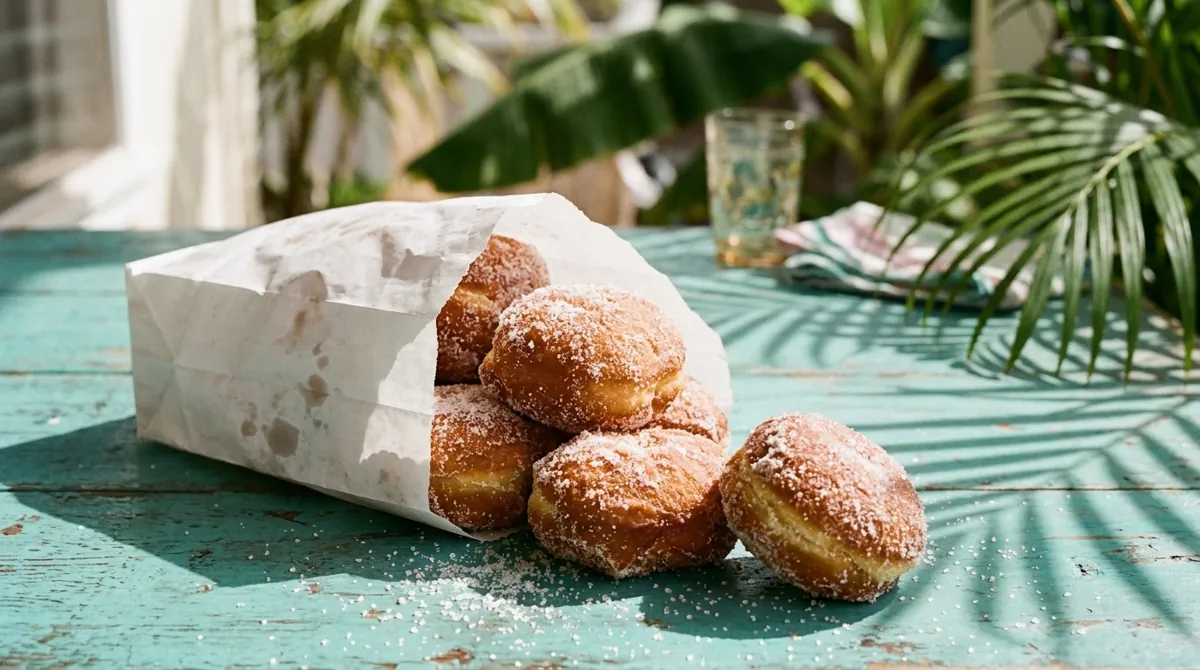
Portuguese Malasadas (and Hawaii's Malasada Day)
Hole-less yeast doughnuts made with bread flour, milk and eggs, patted into disks, fried golden and tossed in sugar while hot: the Portuguese Shrove Tuesday treat that became Hawaii's Malasada Day.
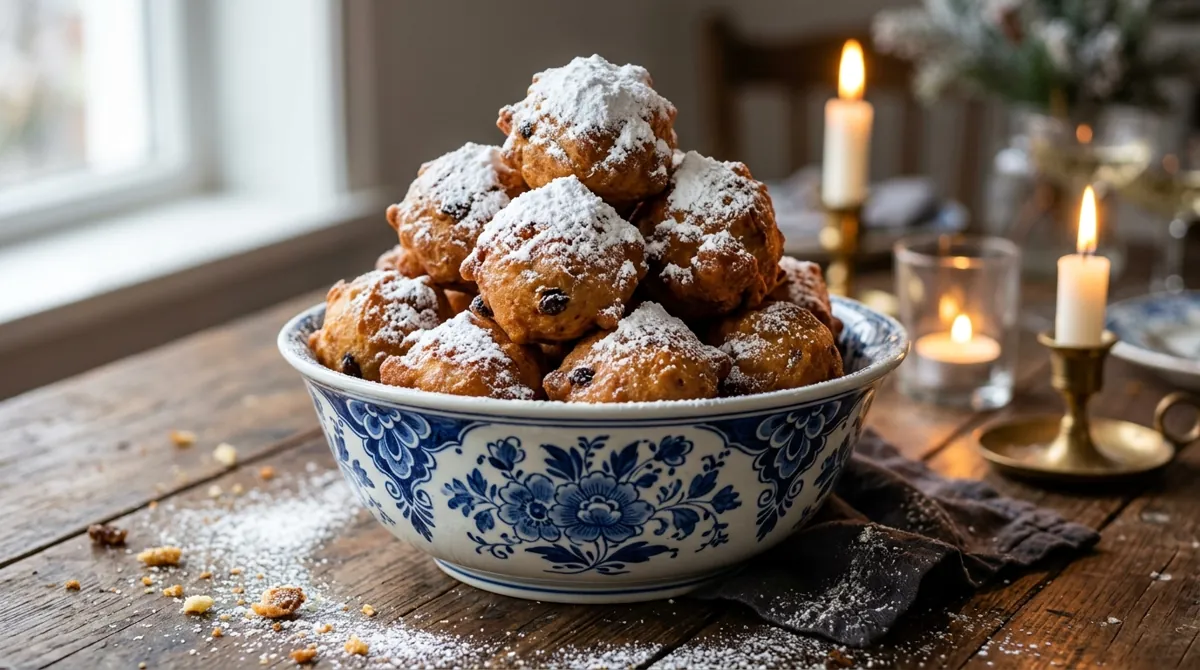
Dutch Oliebollen (New Year's Eve Doughnuts)
Scoops of soft yeast batter studded with raisins and currants, fried round and golden and buried in powdered sugar, the Dutch New Year's Eve treat and a cousin of the olykoeks the Dutch made in old New York.
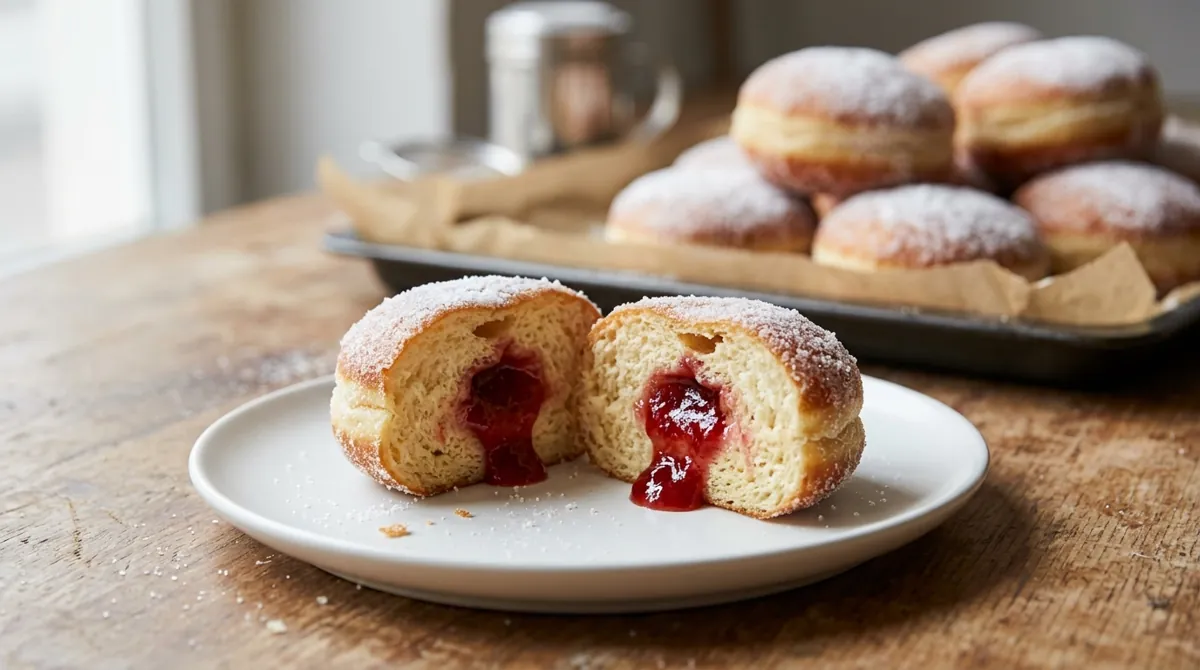
German Berliner (Jam-Filled Krapfen)
Soft balls of butter-and-egg yeast dough fried with their pale "collar", rolled in sugar and piped full of jam: the German jelly doughnut, called Berliner, Pfannkuchen, Krapfen or Kreppel depending on where you buy it.
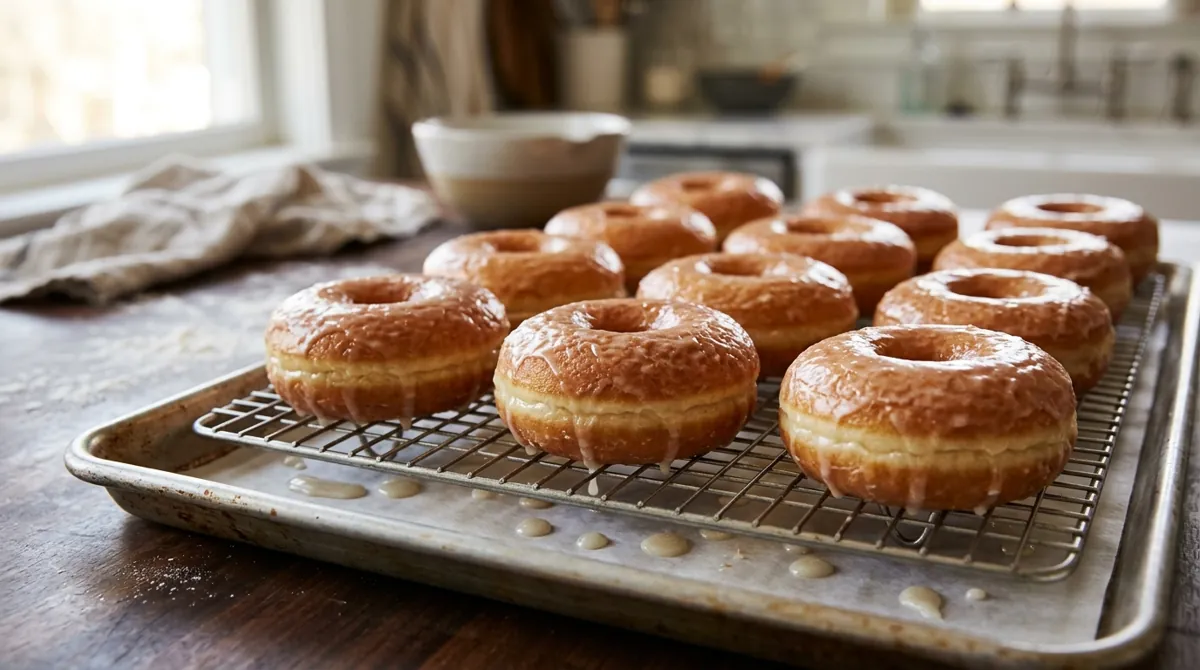
Classic Yeast-Raised Glazed Doughnuts
Tall, airy ring doughnuts from a buttery dough that rests overnight in the fridge, proofed in a steamy oven, fried golden and dipped in a sheer vanilla glaze that sets matte and crackly.