
American Takeout Kung Pao Chicken
Big cubes of velveted chicken breast stir-fried with blanched celery, bell peppers, carrot and broccoli stems, shallots, garlic and a few dried chiles in a sweeter, milder brown sauce of oyster sauce, soy, ground bean sauce and chili sauce, topped with fried peanuts.
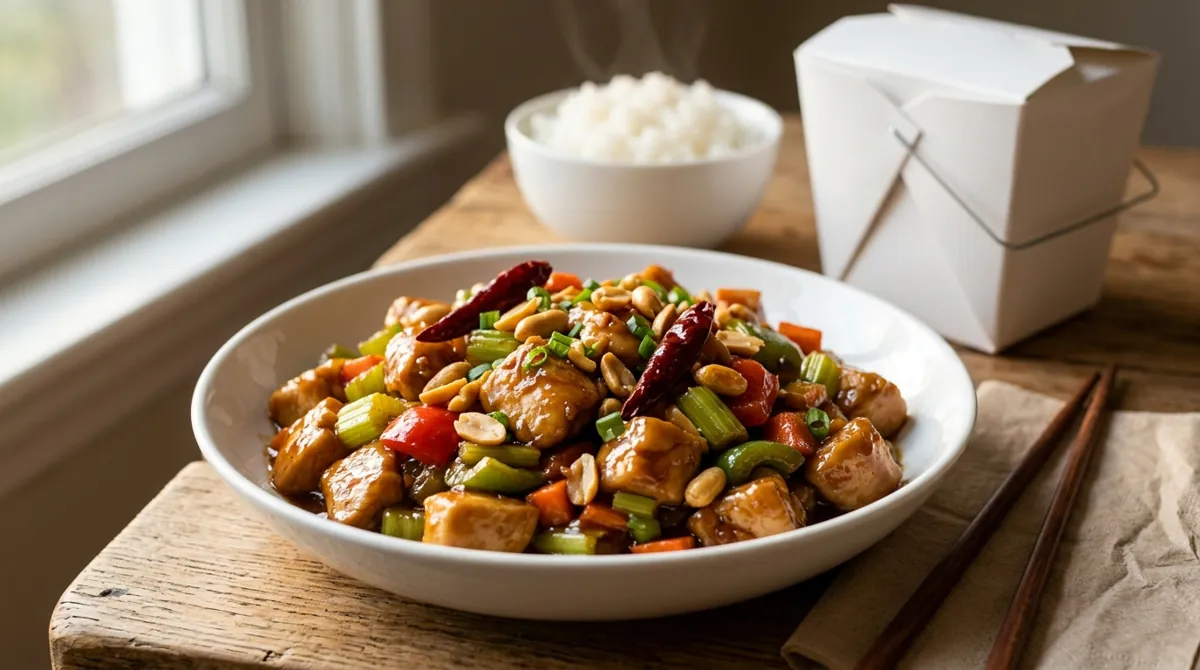
Kung pao chicken in an American takeout box is a different dish from the one in Sichuan, and Made With Lau says so plainly: their "sweeter, milder version is the product of the Cantonese immigrant legacy," made when Chinese Americans adapted Chinese dishes to American produce and taste buds, and every version "is authentic, with its own history". Wikipedia's description of the Western dish lists what changed: onion, bell pepper and carrots in the wok, roasted peanuts on top, and other proteins (pork, shrimp, tofu) swapped in.
One thing America was missing for decades was the spice that makes the Sichuan original tingle. Wikipedia says the US Food and Drug Administration banned imports of Sichuan peppercorns from 1968 to 2005, because they could carry citrus canker, a bacterial disease of citrus trees; the ban was only loosely enforced until 2002, heat-treated peppercorns were allowed in from 2005 and the ban fully ended in 2007. This version has none. Daddy Lau gets his flavor from ground bean sauce and chili sauce instead, and his son notes that most restaurants use thigh meat; his family likes breast.
🇺🇸 This one is American
Big cubes of velveted chicken breast stir-fried with blanched celery, bell peppers, carrot and broccoli stems, shallots, garlic and a few dried chiles in a sweeter, milder brown sauce of oyster sauce, soy, ground bean sauce and chili sauce, topped with fried peanuts.
🇨🇳 The original
In Sichuan, gong bao ji ding is small cubes of chicken stir-fried with dried chiles, numbing Sichuan pepper and peanuts in a sweet, sour and savory sauce. See the Gong Bao Ji Ding (Sichuan Kung Pao Chicken) recipe.
Why it works the kitchen science
Blanching the hard vegetables
A minute or so in salted boiling water makes celery, carrot and broccoli stems tender-crisp and bright, so the final stir-fry only has to heat them, not cook them, and the chicken doesn't overcook waiting.
Ground bean sauce and chili sauce
Made With Lau calls the pair essential to the typical kung pao flavor; the fermented bean sauce brings deep savory sweetness that replaces the Sichuan pepper and black vinegar of the original.
Step by step
- Step 1
Mix the marinade ingredients in a bowl, then toss with the chicken cubes. Cut the vegetables, and stir the sauce ingredients together in one bowl and the slurry in another.
- Step 2
Heat a wok over medium heat, add 1 tbsp oil, then turn the heat to low. Add the peanuts and fry about 2 minutes, stirring now and then, until lightly golden. Scoop them out; they crisp as they cool.
- Step 3
Turn the heat to high, add 1 tbsp oil and heat until it ripples. Add the chicken, let it release from the wok, then flip and stir 40 to 50 seconds, until the outside is opaque. Scoop it out; it finishes cooking later.
- Step 4
Bring about 4 cups of water and 1/2 tsp salt to a boil in the wok, covered. Add the carrots for 30 to 40 seconds, then the celery and broccoli stems for about 1 1/2 minutes, then the peppers for about 1 minute. Drain.
- Step 5
Wipe the wok dry and set it over high heat with 1 tbsp oil. Fry the dried chiles a few seconds, push them aside, add the shallots, then the garlic, and stir 30 seconds, until fragrant.
- Step 6
Add the chicken and the blanched vegetables and stir-fry 30 seconds on high heat. Pour in the sauce and toss 30 seconds, then add the 3 tbsp water and keep tossing about 1 minute, until the largest cube of chicken reads 165°F.
- Step 7
Turn the heat to low and stir in the slurry gradually, until the sauce is smooth and glossy. Drizzle in the sesame oil, turn off the heat, plate and scatter the peanuts on top.
American Takeout Kung Pao Chicken
Serves 4 · 1 large platter · 45 min total
Chicken and marinade
- 1 lb boneless, skinless chicken breast, cut into 1-inch cubes
- 1/2 tsp salt
- 1 tsp sugar
- 1 tbsp oyster sauce
- 1 tbsp light soy sauce
- 1/2 tsp dark soy sauce (or tamari)
- 1 tbsp Shaoxing wine or other cooking wine
- 1/2 tsp white pepper
- 1 tbsp cornstarch
- 1 tbsp water
Vegetables
- 4 oz broccoli stems, peeled and cubed
- 5 oz celery, cubed
- 2 oz carrot, cubed
- 2 oz each red and green bell pepper, cubed
- 5 shallots, peeled and smashed
- 4 garlic cloves, minced
- 4 dried red chiles, stems removed
- 1/2 tsp salt, for the blanching water
- 1 handful shelled raw peanuts (about 1/3 cup)
- 3 tbsp cooking oil, divided
Sauce and finish
- 1/2 tsp salt
- 1 tsp sugar
- 1 tbsp oyster sauce
- 1 tbsp light soy sauce
- 1/2 tsp dark soy sauce
- 1 tbsp Shaoxing wine
- 1 tsp ground bean sauce
- 1 tbsp chili sauce
- 1/2 tbsp cornstarch mixed with 2 tbsp water
- 3 tbsp water
- 1 tbsp toasted sesame oil
Method
- Mix the marinade ingredients in a bowl, then toss with the chicken cubes. Cut the vegetables, and stir the sauce ingredients together in one bowl and the slurry in another.
- Heat a wok over medium heat, add 1 tbsp oil, then turn the heat to low. Add the peanuts and fry about 2 minutes, stirring now and then, until lightly golden. Scoop them out; they crisp as they cool.
- Turn the heat to high, add 1 tbsp oil and heat until it ripples. Add the chicken, let it release from the wok, then flip and stir 40 to 50 seconds, until the outside is opaque. Scoop it out; it finishes cooking later.
- Bring about 4 cups of water and 1/2 tsp salt to a boil in the wok, covered. Add the carrots for 30 to 40 seconds, then the celery and broccoli stems for about 1 1/2 minutes, then the peppers for about 1 minute. Drain.
- Wipe the wok dry and set it over high heat with 1 tbsp oil. Fry the dried chiles a few seconds, push them aside, add the shallots, then the garlic, and stir 30 seconds, until fragrant.
- Add the chicken and the blanched vegetables and stir-fry 30 seconds on high heat. Pour in the sauce and toss 30 seconds, then add the 3 tbsp water and keep tossing about 1 minute, until the largest cube of chicken reads 165°F.
- Turn the heat to low and stir in the slurry gradually, until the sauce is smooth and glossy. Drizzle in the sesame oil, turn off the heat, plate and scatter the peanuts on top.
Adapted from Made With Lau (Daddy Lau and Randy Lau), "Kung Pao Chicken" (published September 2022, updated October 2026), serves 4. We follow it as written: 1 lb chicken breast in 1-inch cubes with a marinade of salt, sugar, oyster sauce, light and dark soy sauce, cooking wine, white pepper, cornstarch and water; 4 oz broccoli stems, 5 oz celery, 2 oz carrot, 2 oz each red and green bell pepper, 5 shallots, 4 garlic cloves and 4 dried chiles; peanuts fried 2 minutes over low heat; the chicken seared 40 to 50 seconds; the vegetables blanched (carrots 30 to 40 seconds, then celery and broccoli about 1 1/2 minutes, then peppers about 1 minute); and the sauce of salt, sugar, oyster sauce, both soy sauces, cooking wine, ground bean sauce and chili sauce. Made With Lau says "1 handful" of peanuts; the 1/3 cup is ours. Its chicken is seared only partly and finished in the sauce; the extra minute of tossing to 165°F is ours. Made With Lau. Ingredient list follows the source; the method is in our own words.
All sources (3)
Tips
- No ground bean sauce? Made With Lau says hoisin works but is sweeter, so cut the sugar.
- Peanut allergy: cashews or almonds work, or leave the nuts out; the vegetables already crunch.
- Shock the blanched vegetables in cold water if you won't stir-fry them right away.
- Use chicken thighs if you prefer; Made With Lau says most restaurants do.
The rules people argue about
What the sources agree on, what they don't, and what is just a good story.
- American kung pao is not authentic. Disputed: Made With Lau calls every version authentic, with its own history; Fuchsia Dunlop's Sichuan recipe (see Gong Bao Ji Ding) has no vegetables but scallion.
- Kung pao lost its tingle because of the peppercorn ban. Folklore: the 1968 to 2005 ban is documented (Wikipedia), but we found no source tying it to the American recipe.
- Western kung pao uses orange juice. Disputed: Wikipedia's description of the Western version includes orange or orange juice; Made With Lau's restaurant version uses none.
- Restaurants use thigh meat. Documented as Made With Lau's statement.
Every other takeout classic
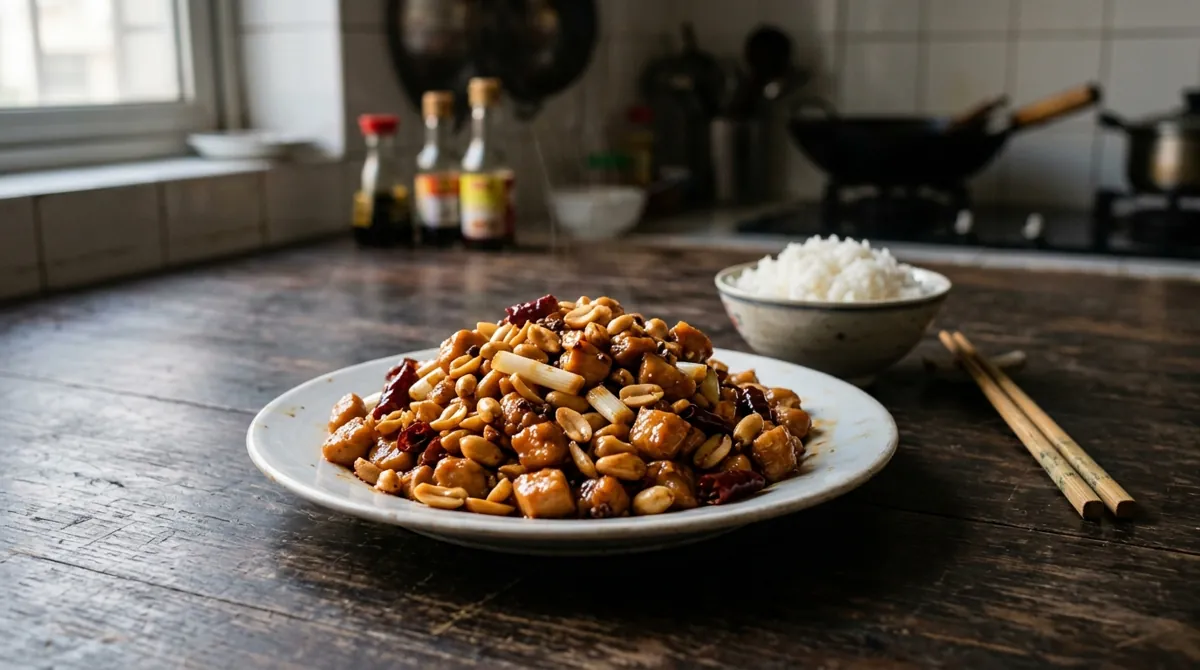
Gong Bao Ji Ding (Sichuan Kung Pao Chicken)
Small cubes of marinated chicken stir-fried over high heat with dried red chiles and whole Sichuan pepper, garlic, ginger and scallion, glazed in a light sweet-sour sauce with black vinegar and finished with crisp roasted peanuts.
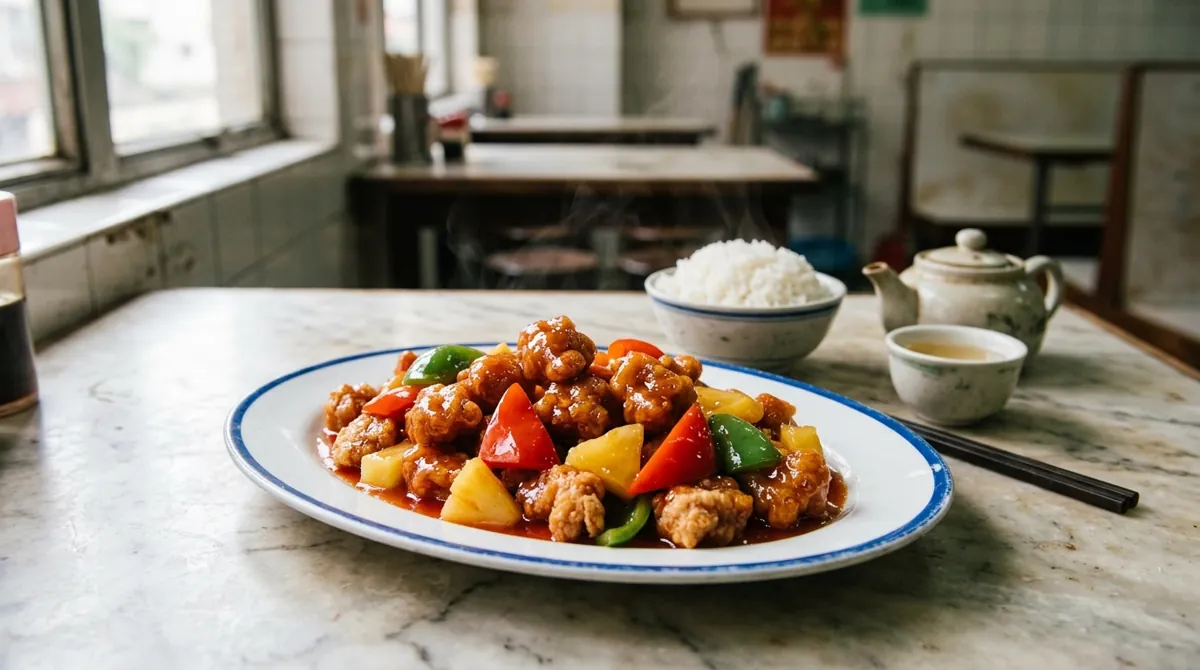
Gu Lou Yuk (Cantonese Sweet and Sour Pork)
Bite-size pork shoulder marinated with soy and egg, dry-coated in flour and cornstarch and fried twice until crunchy, then tossed in a glossy ketchup, brown sugar and vinegar sauce with a few peppers, onion and pineapple.
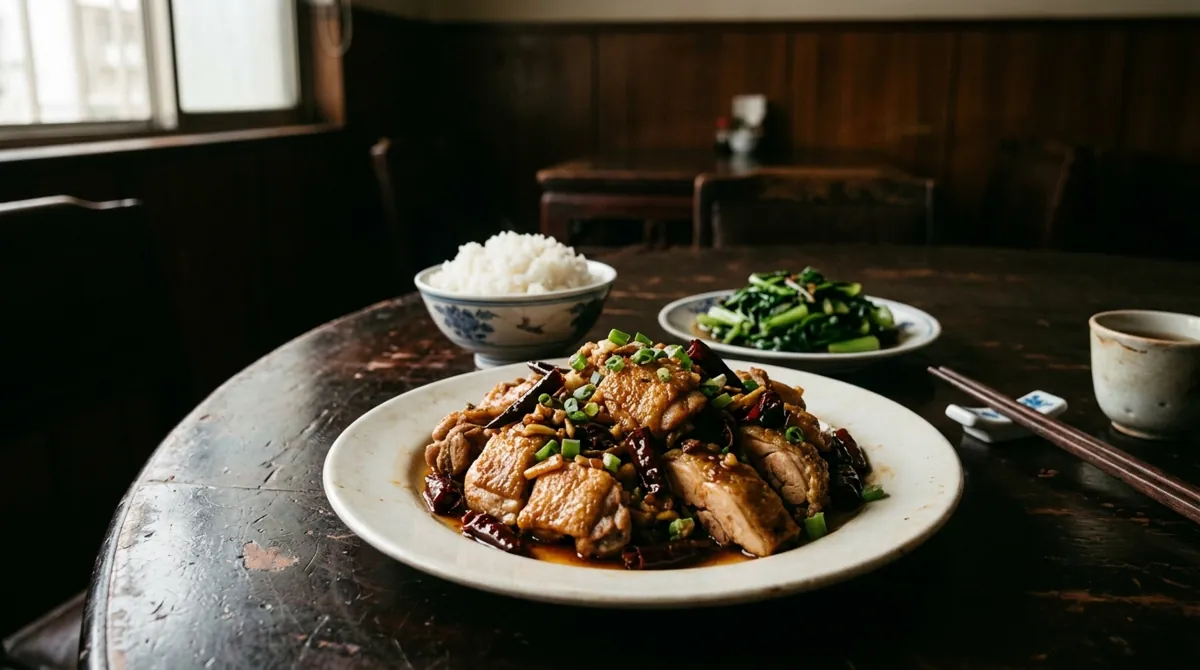
General Tso's Chicken, Peng Chang-kuei's Taipei Version (Hot and Sour, No Sugar)
Thin slices of skin-on chicken thigh in an egg-yolk and starch marinade, deep-fried crisp, then tossed with dried chiles, ginger and garlic in a hot and sour sauce of tomato paste, soy and rice vinegar, with no sugar at all.
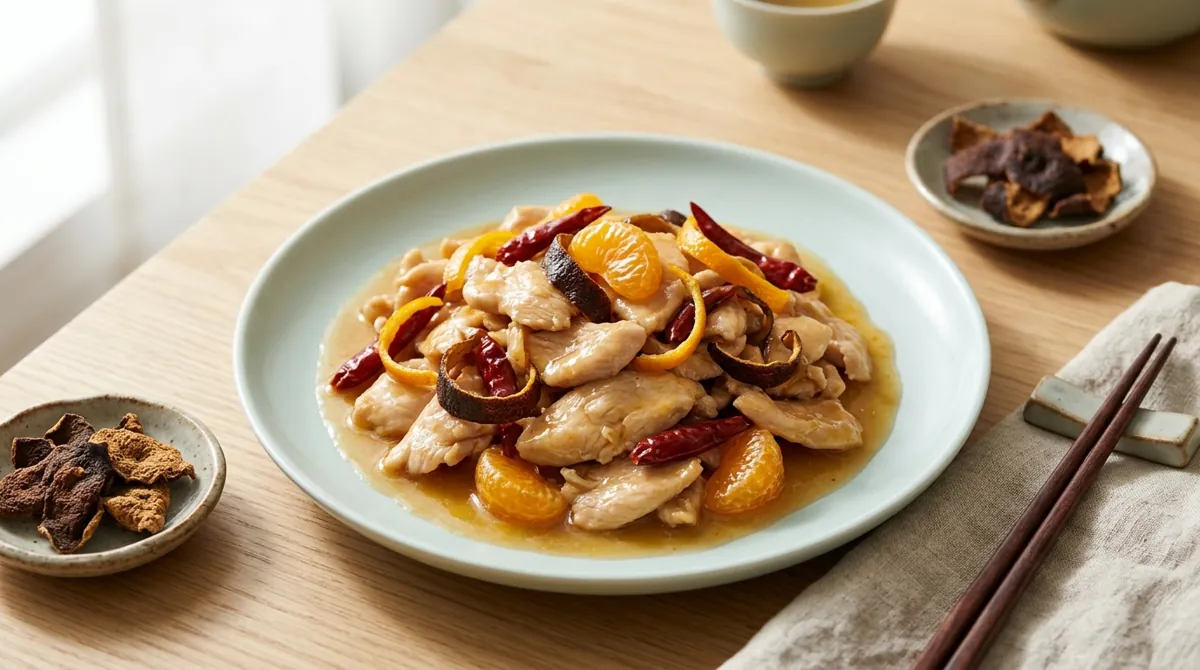
Tangerine Peel Chicken (Chenpi Chicken)
Sliced chicken breast stir-fried with dried red chiles, ginger and onion, then tossed with soaked dried tangerine peel, fresh tangerine peel and segments in a light sauce of orange juice, lager, soy and a little sugar, with no batter and no deep fryer.
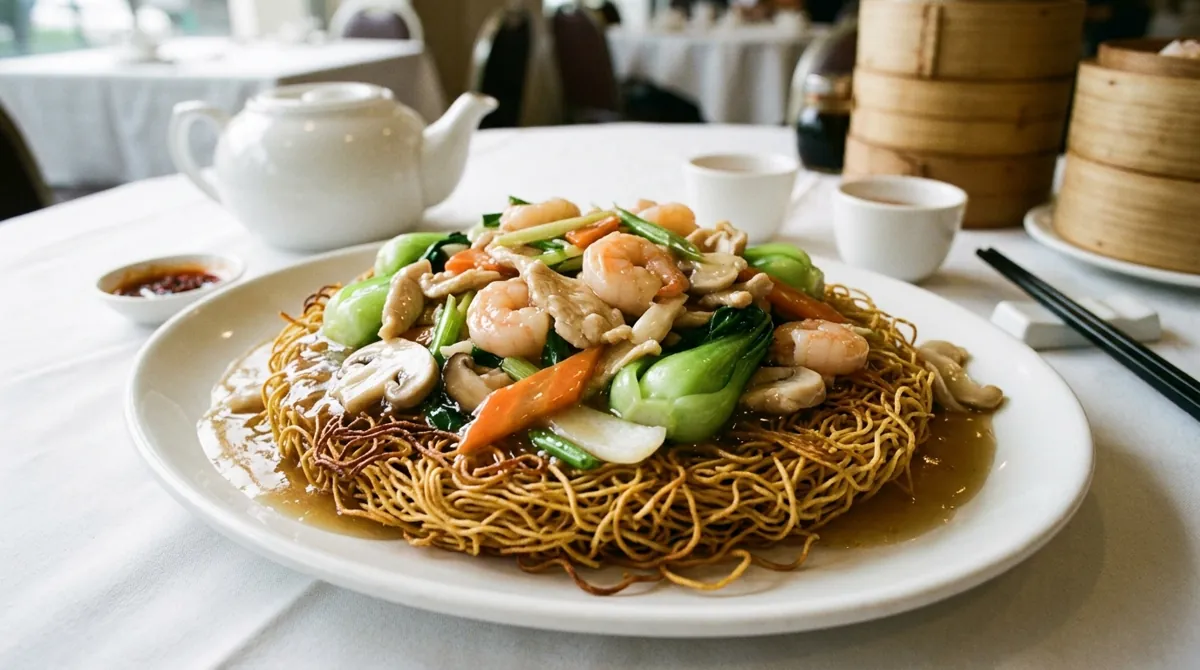
Hong Kong-Style Chow Mein (Golden Pan-Fried Noodles with Chicken and Shrimp)
Thin egg noodles steamed, then pan-fried slowly into one cake that is golden and crisp on both sides, topped with chicken, shrimp, bok choy, mushrooms and carrot in a light oyster sauce gravy.
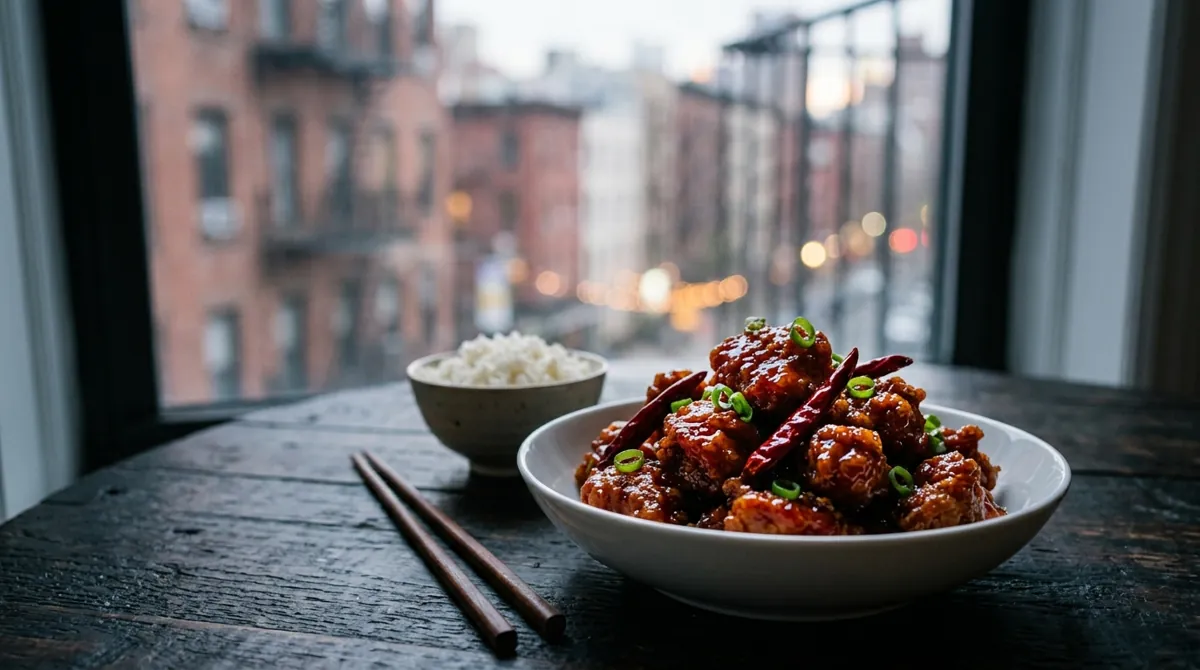
New York-Style General Tso's Chicken
Chicken thigh pieces in a soy, egg and cornstarch batter, deep-fried crisp at 375°F, then tossed in a glossy, sweet and spicy sauce of chicken stock, Shaoxing wine, rice vinegar, tomato paste and apricot jam with ginger, garlic and dried chiles.
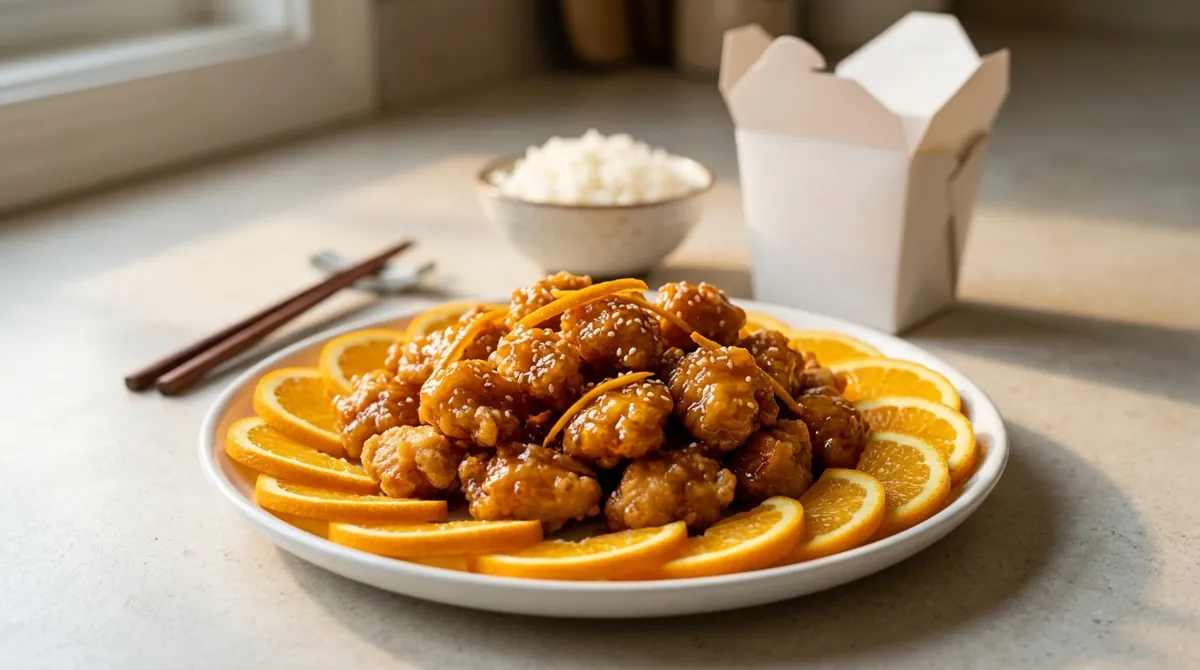
American Orange Chicken
Strips of chicken breast in a light, crisp batter, fried twice, then tossed in a bright sweet-and-sour sauce of fresh orange juice, sugar, vinegar and oyster sauce with thin strips of orange peel, on a plate ringed with orange slices.
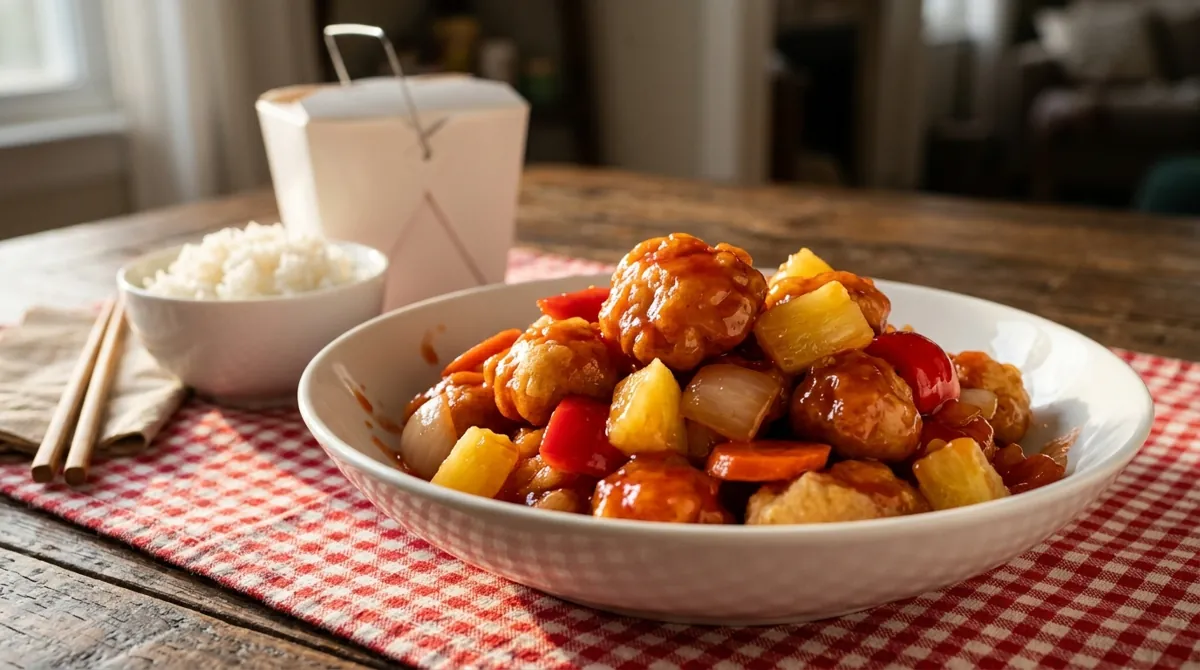
Takeout Sweet and Sour Chicken with Pineapple and Peppers
Chicken breast chunks in a puffy wet batter, fried twice, then folded into a bright red sauce of ketchup, red and rice vinegar and sugar with flash-fried red pepper, onion and carrot and slices of fresh pineapple.
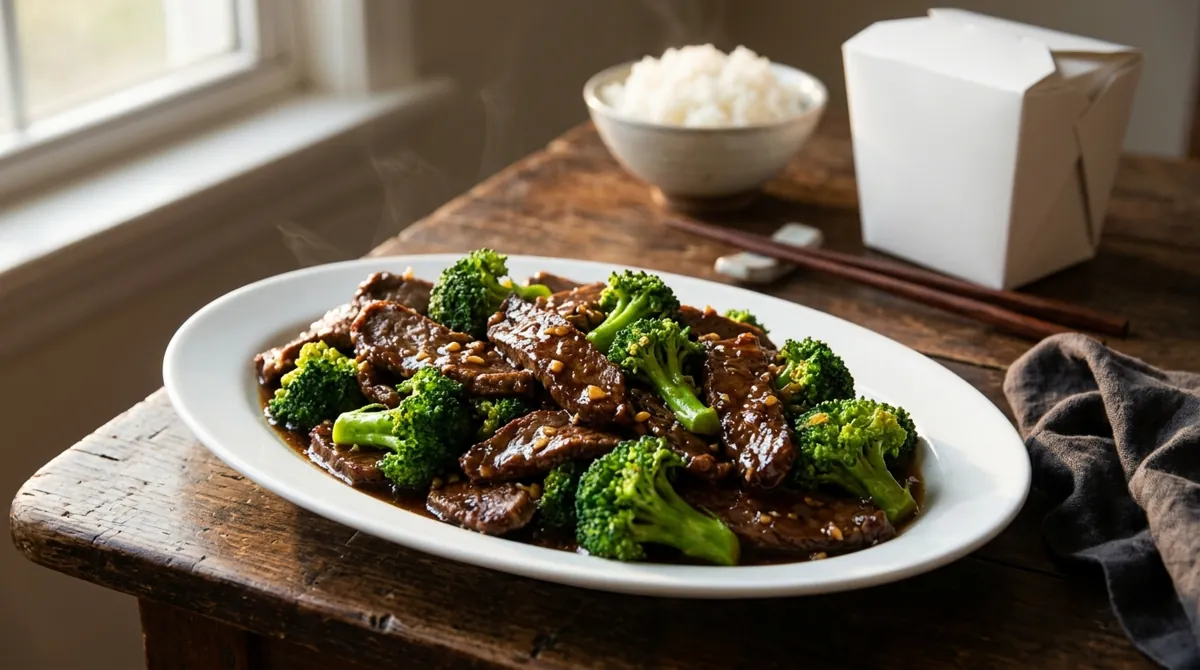
Beef and Broccoli
Thin slices of velveted flank steak seared in a smoking-hot wok, tossed with blanched broccoli florets, garlic and ginger in a glossy brown sauce of chicken stock, oyster sauce, soy sauce and a little sugar.
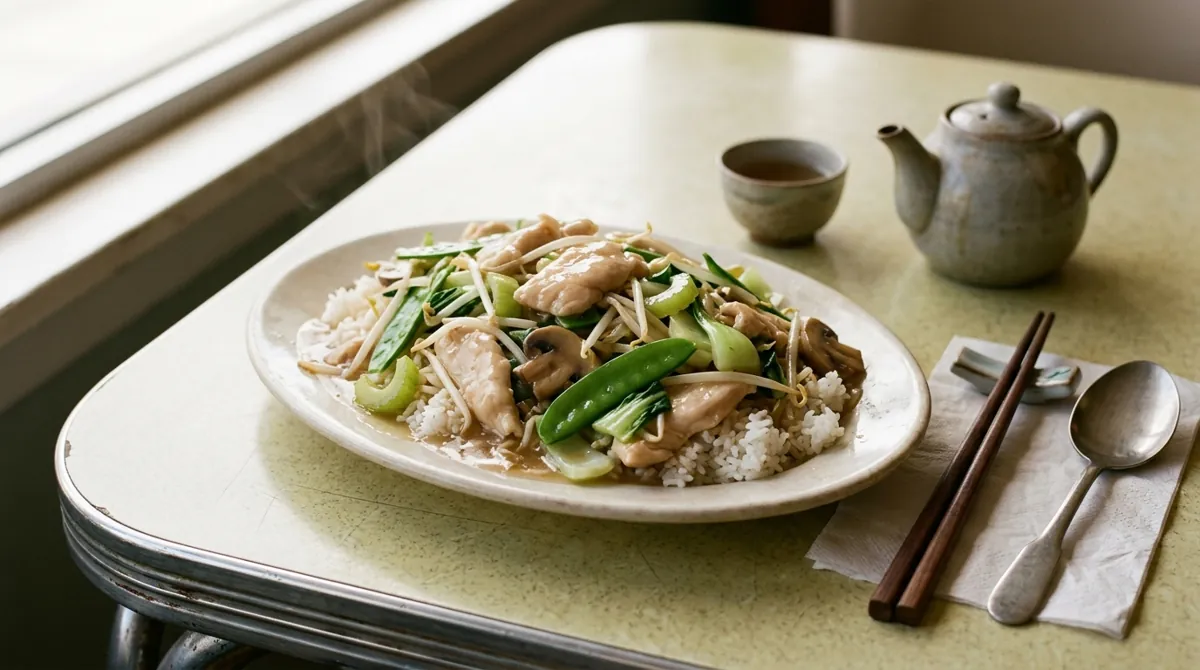
Chicken Chop Suey
Velveted chicken breast stir-fried with mushrooms, carrot, celery, bok choy, bean sprouts and snow peas in a light, savory sauce of chicken stock, oyster sauce and soy sauce, thickened at the last second and served over rice.
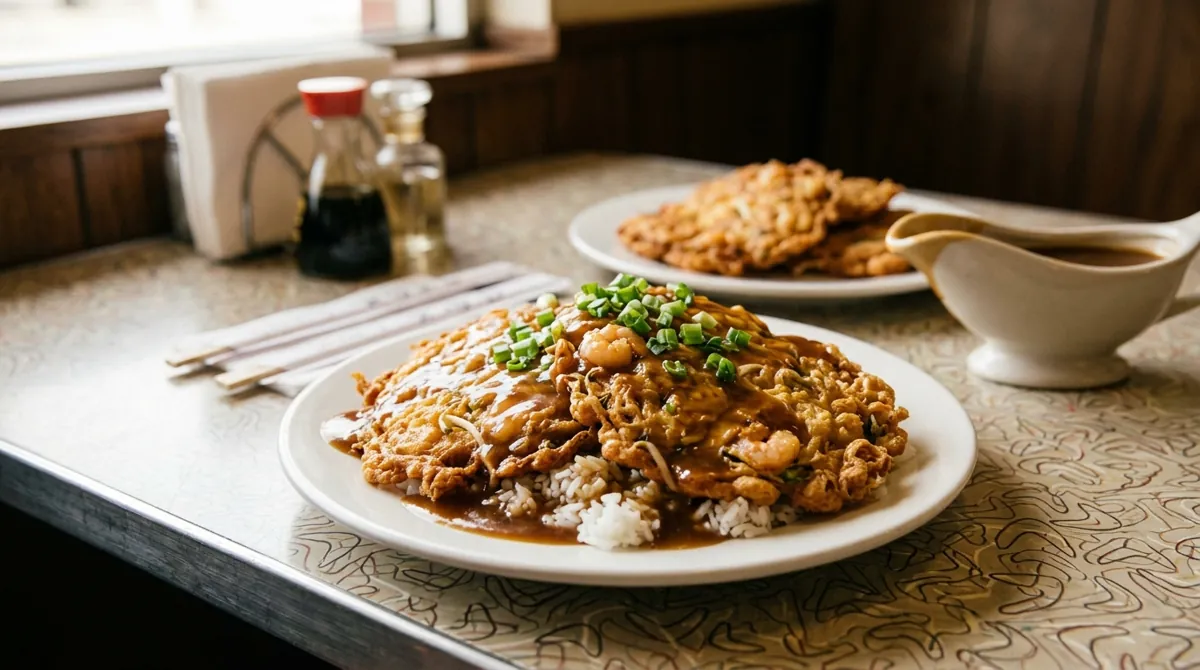
Shrimp Egg Foo Young with Brown Gravy
Puffy, golden omelet patties of eggs, chopped shrimp, onion and bean sprouts, deep-fried at 325°F and served over rice under a savory brown gravy made from a turmeric and paprika roux, chicken stock and oyster sauce.
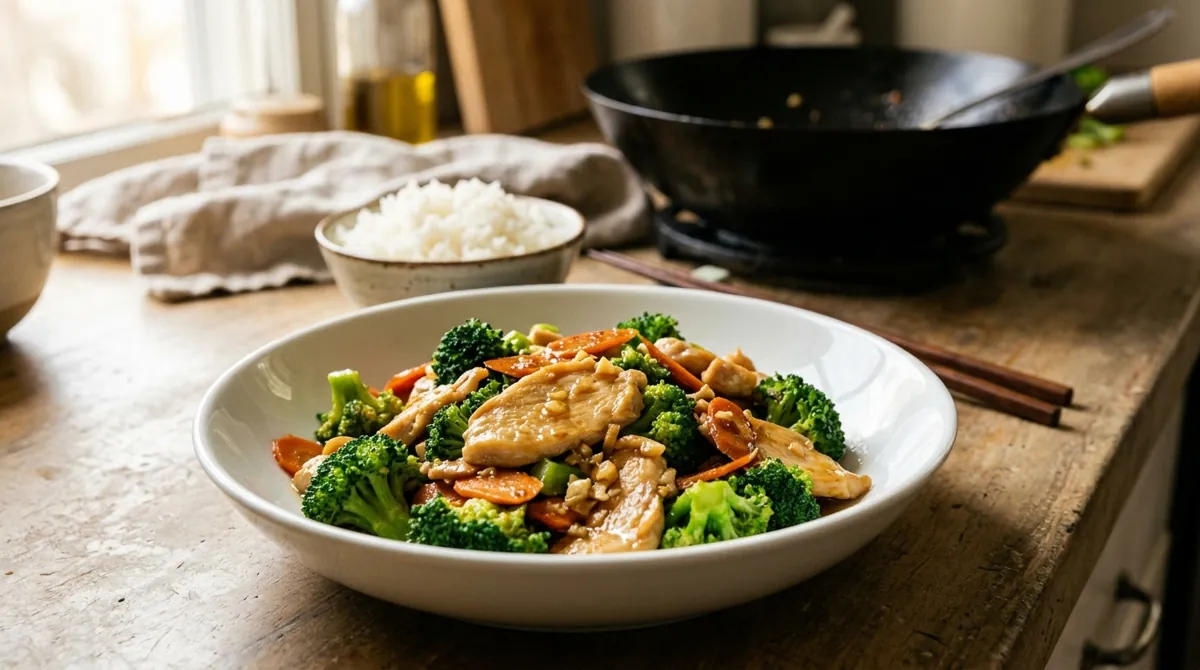
25-Minute Chicken and Broccoli Stir-Fry
The takeout template in 25 minutes: velveted chicken breast browned in a hot wok, tossed with blanched broccoli, carrot, garlic, ginger and scallion in a quick oyster sauce and soy sauce glaze.
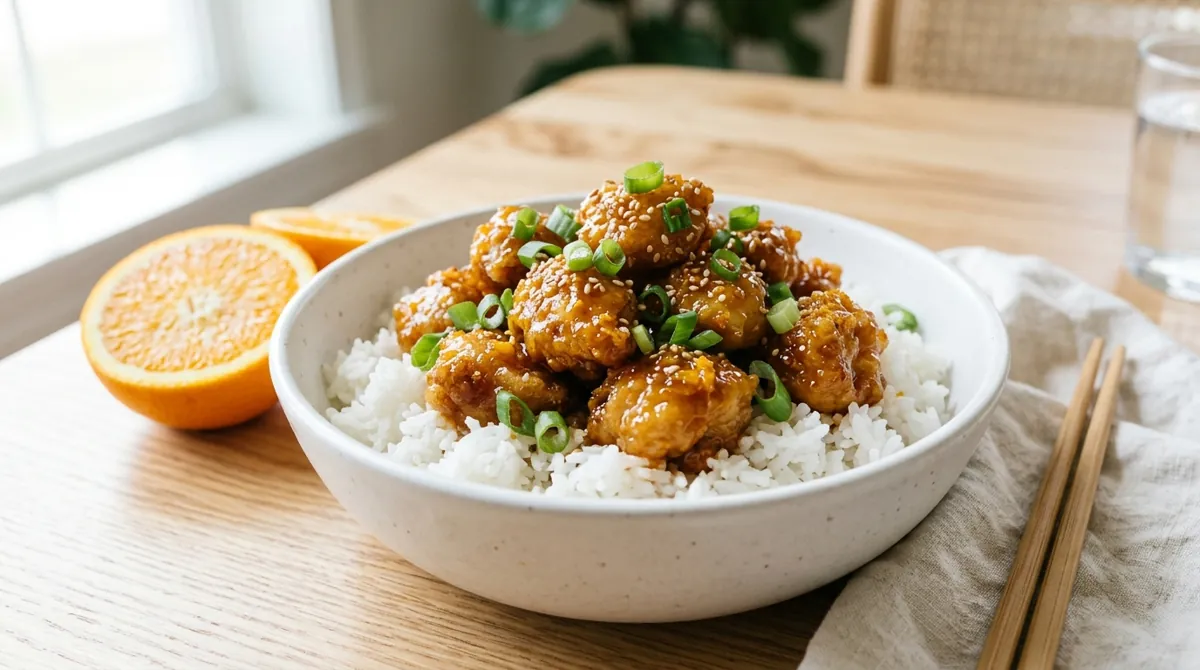
Copycat Orange Chicken, Inspired by Panda Express
Chicken thighs soaked in a sparkling-water batter, deep-fried golden at 350°F and tossed in a sticky, sweet and spicy sauce of orange juice and zest, two sugars, rice vinegar, soy sauce, garlic, ginger and red pepper flakes. Inspired by, not official.
Meatballs of the World

Italian-American Meatballs
Big, tender meatballs braised for an hour in red sauce over spaghetti. The one most Americans grew up with.

Pallottine (Abruzzo Meatballs)
Tiny meatballs, smaller than a marble, tossed right through square spaghetti alla chitarra. No bread at all.

Swedish Meatballs (Köttbullar)
Small, soft meatballs browned in butter, in a cream sauce made from the same pan, with lingonberry jam on the plate.

Danish Frikadeller
Pork meatballs shaped with a spoon and fried slowly in butter, crusty outside and soft in the middle.

Königsberger Klopse
German meatballs that are never fried: poached, then served in a creamy white sauce with capers.

Spanish Albóndigas in Almond Saffron Sauce
The tapas bar classic: small meatballs in a golden sauce thickened with fried almonds and bread.

Mexican Albóndigas with Chipotle and Mint
Soft meatballs with rice and fresh mint inside, simmered in a smoky tomato and chipotle broth.

Izgara Köfte (Turkish Grilled Meatballs)
Small, flat meatballs kneaded hard, rested cold, and charred on a hot grill pan.

Lion's Head Meatballs
Big, soft pork meatballs, stirred into a sticky paste, fried to set, then braised in a savory sauce.

Chicken Tsukune
Japan's chicken meatball: kneaded sticky, grilled on skewers, glazed with sweet soy tare, dipped in egg yolk.