
General Tso's Chicken, Peng Chang-kuei's Taipei Version (Hot and Sour, No Sugar)
Thin slices of skin-on chicken thigh in an egg-yolk and starch marinade, deep-fried crisp, then tossed with dried chiles, ginger and garlic in a hot and sour sauce of tomato paste, soy and rice vinegar, with no sugar at all.
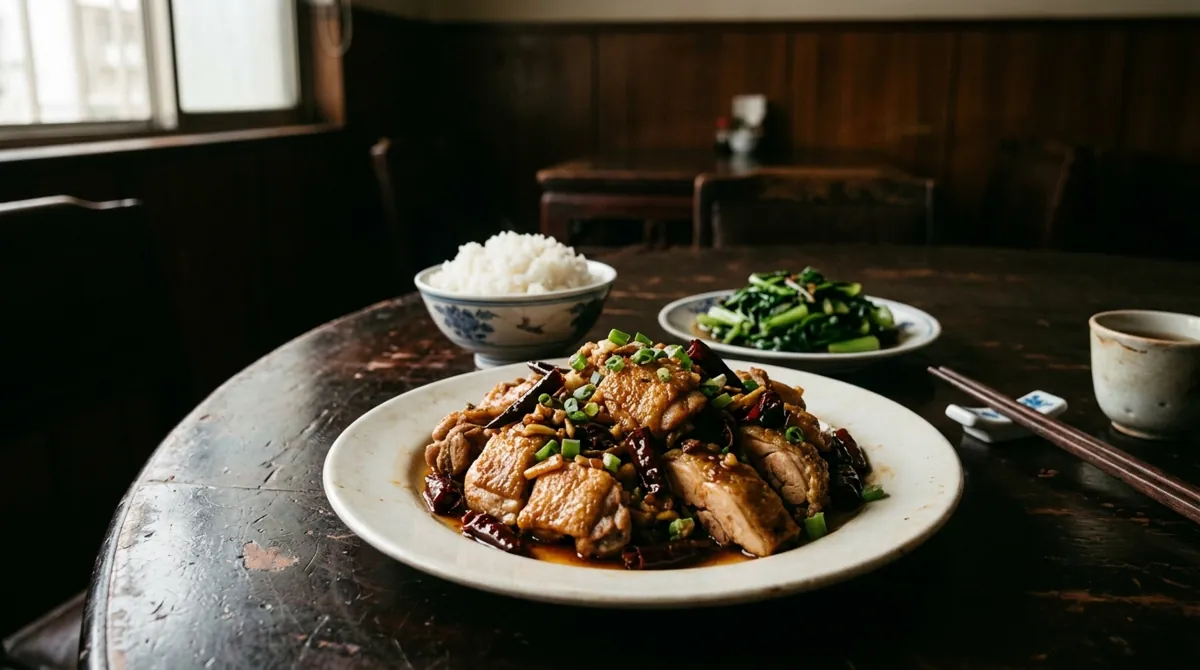
General Tso's chicken is named after Zuo Zongtang (once spelled Tso Tsung-t'ang, 1812 to 1885), a Hunanese general of the Qing dynasty, but the dish is not from his era. Fuchsia Dunlop, who lived in Hunan in 2003, says she never found it on a menu there and that no one she met had heard of it; she calls it "virtually unknown in Hunan itself" (NPR:). Its real roots, she writes, are in Taiwan. Peng Chang-kuei, born in Changsha in 1919 and trained under the famous chef Cao Jingchen, was in charge of Nationalist government banquets by the end of World War II and fled to Taiwan with them in 1949, where he cooked for presidential feasts and visiting VIPs.
When Dunlop met him in Taipei in 2004, he could no longer remember exactly when he first cooked General Tso's chicken, only that it was sometime in the 1950s. He told her the flavors were "typically Hunanese," and that the original "was Hunanese in taste and made without sugar." This recipe is the version Dunlop learned in the kitchen of Peng's restaurant in Taipei, then still run by Peng and his son, and she calls it hot and sour, without the sweetness of the American version (NPR:). Peng's own later account, filmed for the 2014 documentary The Search for General Tso, put the first General Tso's chicken at a 1952 banquet for the visiting American admiral Arthur W. Radford; Wikipedia notes that US diplomatic records place Radford's visit in June 1953.
🇹🇼 The original
Thin slices of skin-on chicken thigh in an egg-yolk and starch marinade, deep-fried crisp, then tossed with dried chiles, ginger and garlic in a hot and sour sauce of tomato paste, soy and rice vinegar, with no sugar at all.
🇺🇸 The American version
New York made it crunchy and sweet: battered dark meat in a glossy sugar, soy and vinegar glaze with dried chiles, now the most famous dish on the takeout menu. See the New York-Style General Tso's Chicken recipe.
Why it works the kitchen science
Skin-on thigh, sliced thin
The skin fries crisp and the dark meat stays juicy, and thin, scored slices cook through in the few minutes the coating needs to turn golden.
Tomato paste instead of sugar
The paste gives the sauce its red color, body and a little fruitiness, so the dish tastes sour, salty and hot without tasting sweet, the profile Peng called Hunanese.
Step by step
- Step 1
Lay the thighs skin side down and unfold them. Slice any very thick parts in half horizontally, make a few shallow crisscross cuts in the meat, then cut each thigh into bite-size slices about 1/4 inch thick.
- Step 2
Mix the chicken with both soy sauces and the egg yolk, then the starch, then the oil. Set aside about 10 minutes while you make the sauce.
- Step 3
Stir the sauce ingredients together in a small bowl. Snip the chiles into 3/4-inch pieces and shake out as many seeds as you can.
- Step 4
Heat 2 to 3 inches of peanut oil in a wok or heavy pot to 350°F. Deep-fry the chicken in batches, about 3 to 4 minutes per batch, until crisp and golden and the thickest slice reads 165°F. Lift it out with a slotted spoon. Pour the oil into a heatproof container to cool and wipe the wok if needed.
- Step 5
Return the wok to high heat with 2 to 3 tbsp peanut oil. Add the chiles and stir-fry 10 to 15 seconds, until fragrant and just changing color; do not let them burn. Add the ginger and garlic for a few seconds, until fragrant.
- Step 6
Stir the sauce, add it and stir about 30 seconds as it thickens.
- Step 7
Return the chicken and toss vigorously about 30 seconds to coat. Take the wok off the heat, stir in the sesame oil and serve sprinkled with scallion greens.
General Tso's Chicken, Peng Chang-kuei's Taipei Version (Hot and Sour, No Sugar)
Serves 2 · 1 platter · 35 min total
Chicken and marinade
- 4 boned chicken thighs with skin (about 12 oz total)
- 2 tsp light soy sauce
- 1/2 tsp dark soy sauce
- 1 egg yolk
- 2 tbsp potato starch (or cornstarch)
- 2 tsp peanut oil
Sauce
- 1 tbsp double-concentrate tomato paste mixed with 1 tbsp water
- 1/2 tsp potato starch (or cornstarch)
- 1/2 tsp dark soy sauce
- 1 1/2 tsp light soy sauce
- 1 tbsp clear rice vinegar
- 3 tbsp chicken stock or water
Stir-fry
- Peanut oil for deep-frying, plus 2 to 3 tbsp for the wok
- 6 to 10 dried red chiles
- 2 tsp finely chopped fresh ginger
- 2 tsp finely chopped garlic
- 2 tsp toasted sesame oil
- Thinly sliced scallion greens, to garnish
Method
- Lay the thighs skin side down and unfold them. Slice any very thick parts in half horizontally, make a few shallow crisscross cuts in the meat, then cut each thigh into bite-size slices about 1/4 inch thick.
- Mix the chicken with both soy sauces and the egg yolk, then the starch, then the oil. Set aside about 10 minutes while you make the sauce.
- Stir the sauce ingredients together in a small bowl. Snip the chiles into 3/4-inch pieces and shake out as many seeds as you can.
- Heat 2 to 3 inches of peanut oil in a wok or heavy pot to 350°F. Deep-fry the chicken in batches, about 3 to 4 minutes per batch, until crisp and golden and the thickest slice reads 165°F. Lift it out with a slotted spoon. Pour the oil into a heatproof container to cool and wipe the wok if needed.
- Return the wok to high heat with 2 to 3 tbsp peanut oil. Add the chiles and stir-fry 10 to 15 seconds, until fragrant and just changing color; do not let them burn. Add the ginger and garlic for a few seconds, until fragrant.
- Stir the sauce, add it and stir about 30 seconds as it thickens.
- Return the chicken and toss vigorously about 30 seconds to coat. Take the wok off the heat, stir in the sesame oil and serve sprinkled with scallion greens.
Adapted from Fuchsia Dunlop, Revolutionary Chinese Cookbook (W.W. Norton), "General Tso's Chicken (Zuo Zong Tang Ji)," as printed by NPR (February 28, 2007): with the history from Dunlop's essay printed by NPR the same day. We follow it as written: 4 boned, skin-on chicken thighs (about 12 oz), scored and sliced about 1/4 inch thick; a marinade of light and dark soy sauce, egg yolk, potato starch and peanut oil; a sauce of double-concentrate tomato paste, potato starch, both soy sauces, clear rice vinegar and stock; oil for deep-frying at 350°F to 400°F; then 2 to 3 tbsp peanut oil for the chiles, ginger and garlic, and sesame oil off the heat. Dunlop gives no servings, no frying time and no marinating time; the 2 servings, the 3 to 4 minute fry at 350°F, the 10-minute marinade and the 165°F check are ours. NPR. Ingredient list follows the source; the method is in our own words.
All sources (3)
Tips
- Dunlop says chicken breast works instead of thigh if you prefer.
- If your wok holds only a little oil, fry in small batches so the oil stays hot.
- Chinese clear rice vinegar is milder than distilled white vinegar; use a little less if you substitute.
- Serve it with plain rice and a green vegetable; there is very little sauce, by design.
The rules people argue about
What the sources agree on, what they don't, and what is just a good story.
- The original General Tso's chicken had no sugar. Documented as Peng's own words to Dunlop (NPR); Wikipedia adds that in Taiwan the dish is not served sweet and is cooked with skin.
- Peng invented it at a 1952 banquet for Admiral Radford. Disputed: that is Peng's 2008 account in The Search for General Tso; Wikipedia notes US records put Radford's visit in June 1953, and Peng told Dunlop in 2004 only "sometime in the 1950s."
- General Zuo ate this dish. Folklore: Dunlop finds no dish named after him in the classic Hunanese texts; the dish was invented decades after his death.
- It is a Hunanese dish. Disputed: Peng was Hunanese and called the flavors Hunanese; Dunlop says it is virtually unknown in Hunan and that some Hunan chefs adopted it only after it was famous abroad.
- The name honors General Zuo. Disputed: Wikipedia records the chef Eileen Yin-Fei Lo's theory that "Zongtang" may instead be a homophone for "hall of the ancestors."
Every other takeout classic
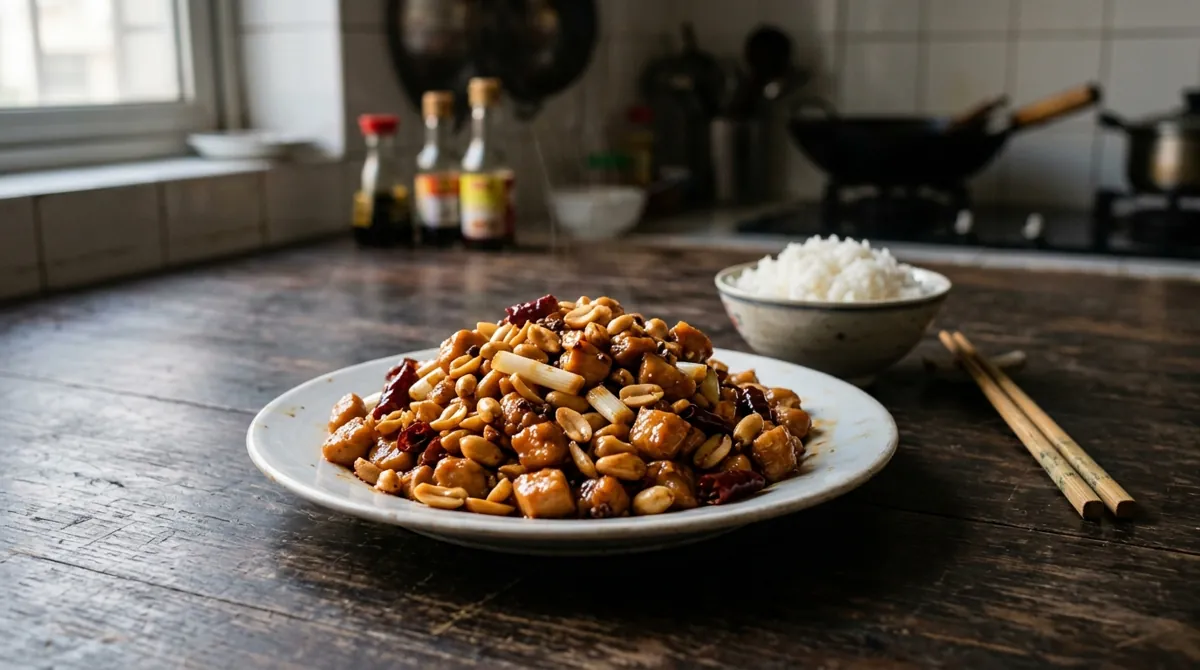
Gong Bao Ji Ding (Sichuan Kung Pao Chicken)
Small cubes of marinated chicken stir-fried over high heat with dried red chiles and whole Sichuan pepper, garlic, ginger and scallion, glazed in a light sweet-sour sauce with black vinegar and finished with crisp roasted peanuts.
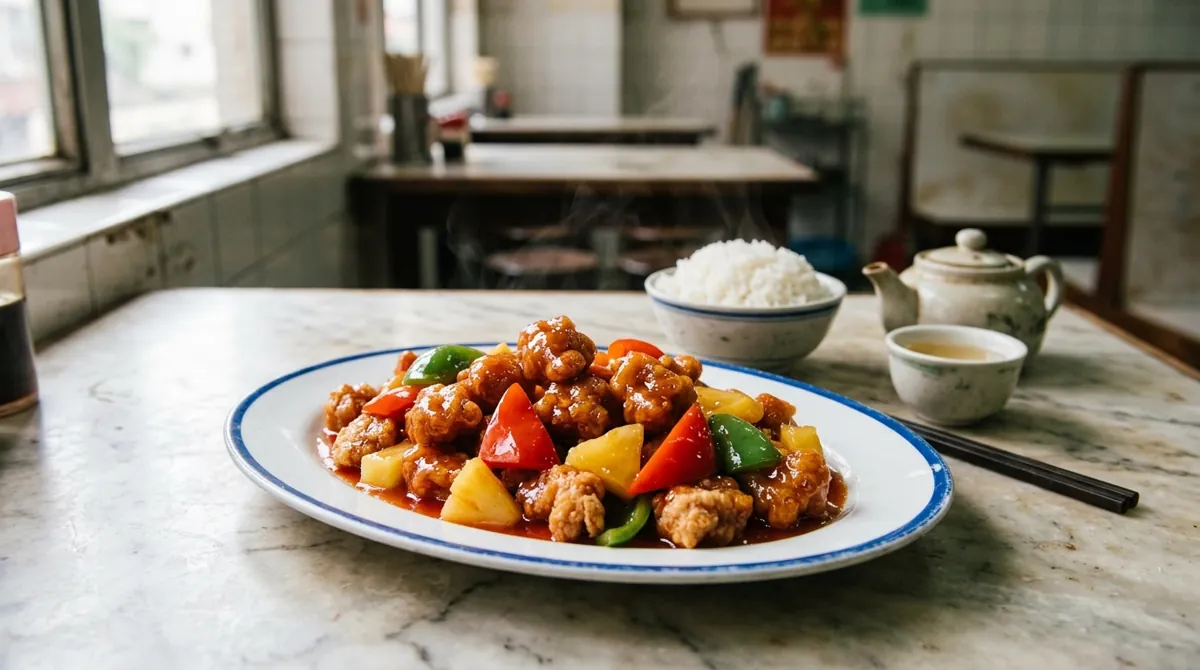
Gu Lou Yuk (Cantonese Sweet and Sour Pork)
Bite-size pork shoulder marinated with soy and egg, dry-coated in flour and cornstarch and fried twice until crunchy, then tossed in a glossy ketchup, brown sugar and vinegar sauce with a few peppers, onion and pineapple.
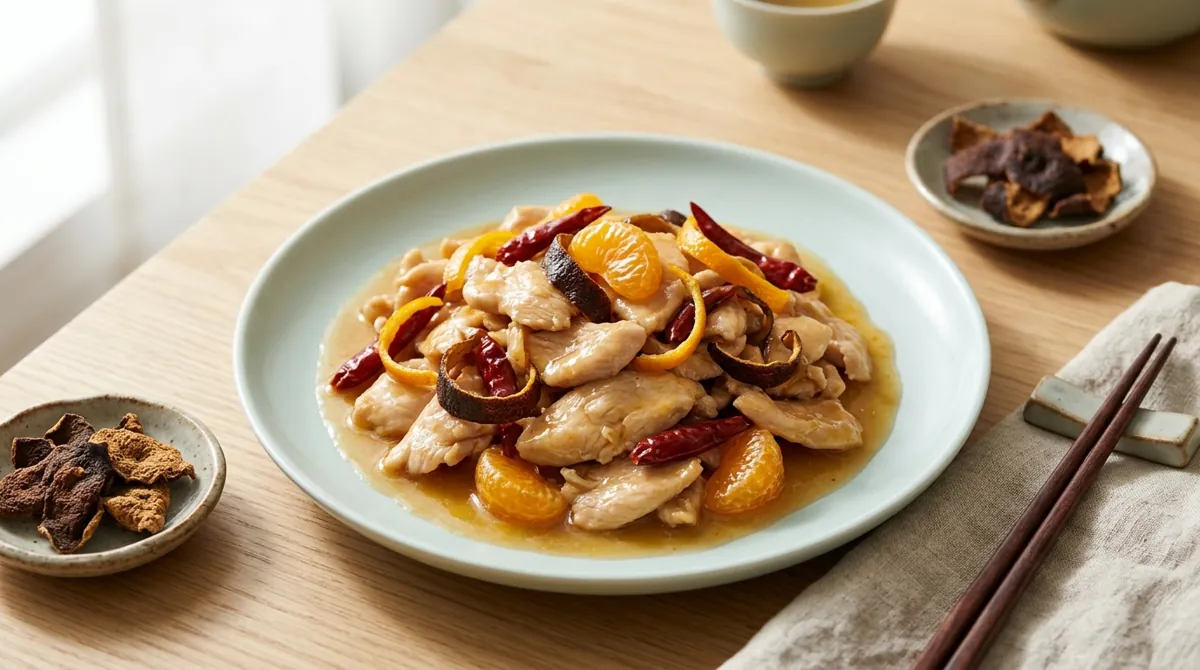
Tangerine Peel Chicken (Chenpi Chicken)
Sliced chicken breast stir-fried with dried red chiles, ginger and onion, then tossed with soaked dried tangerine peel, fresh tangerine peel and segments in a light sauce of orange juice, lager, soy and a little sugar, with no batter and no deep fryer.
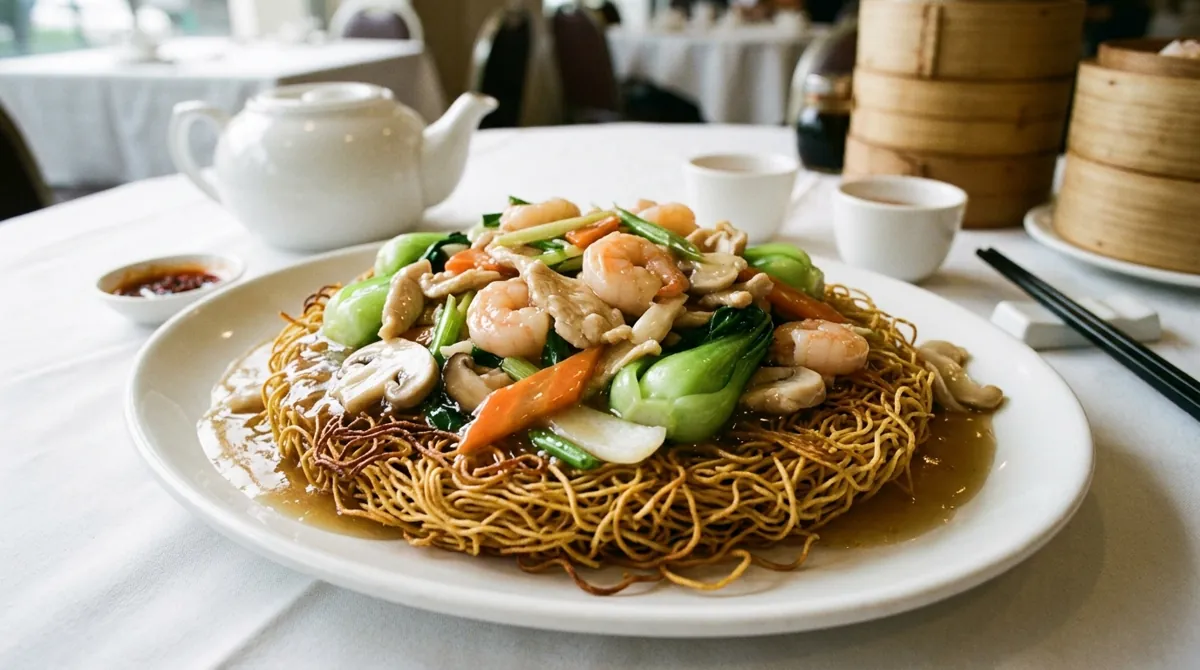
Hong Kong-Style Chow Mein (Golden Pan-Fried Noodles with Chicken and Shrimp)
Thin egg noodles steamed, then pan-fried slowly into one cake that is golden and crisp on both sides, topped with chicken, shrimp, bok choy, mushrooms and carrot in a light oyster sauce gravy.
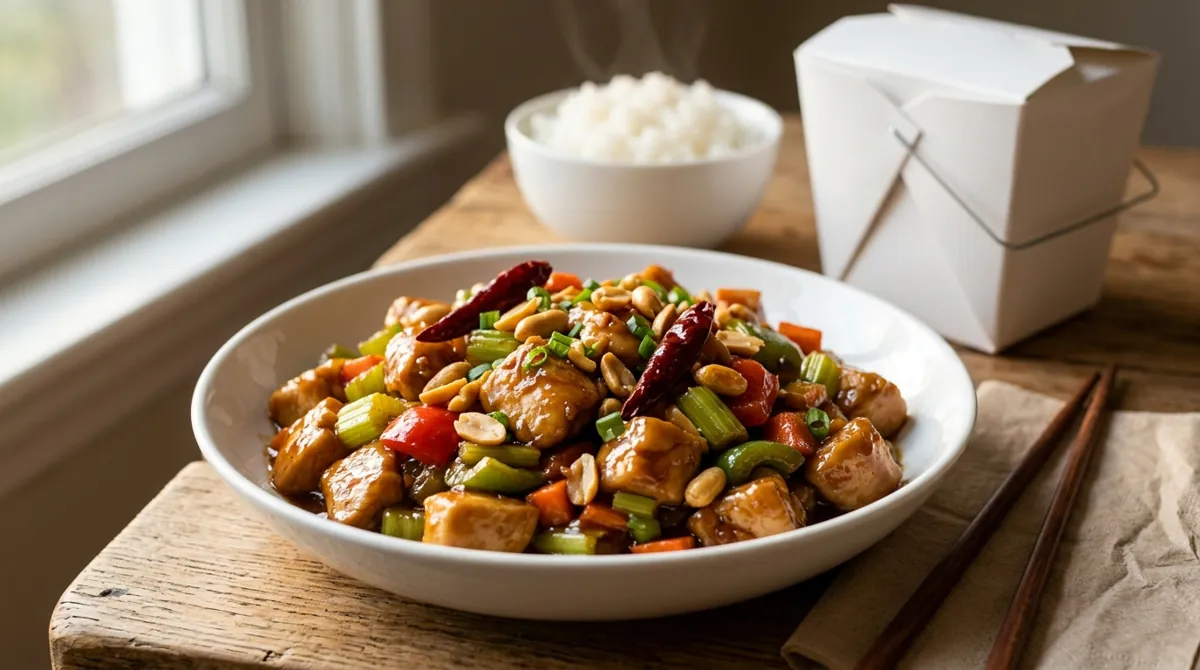
American Takeout Kung Pao Chicken
Big cubes of velveted chicken breast stir-fried with blanched celery, bell peppers, carrot and broccoli stems, shallots, garlic and a few dried chiles in a sweeter, milder brown sauce of oyster sauce, soy, ground bean sauce and chili sauce, topped with fried peanuts.
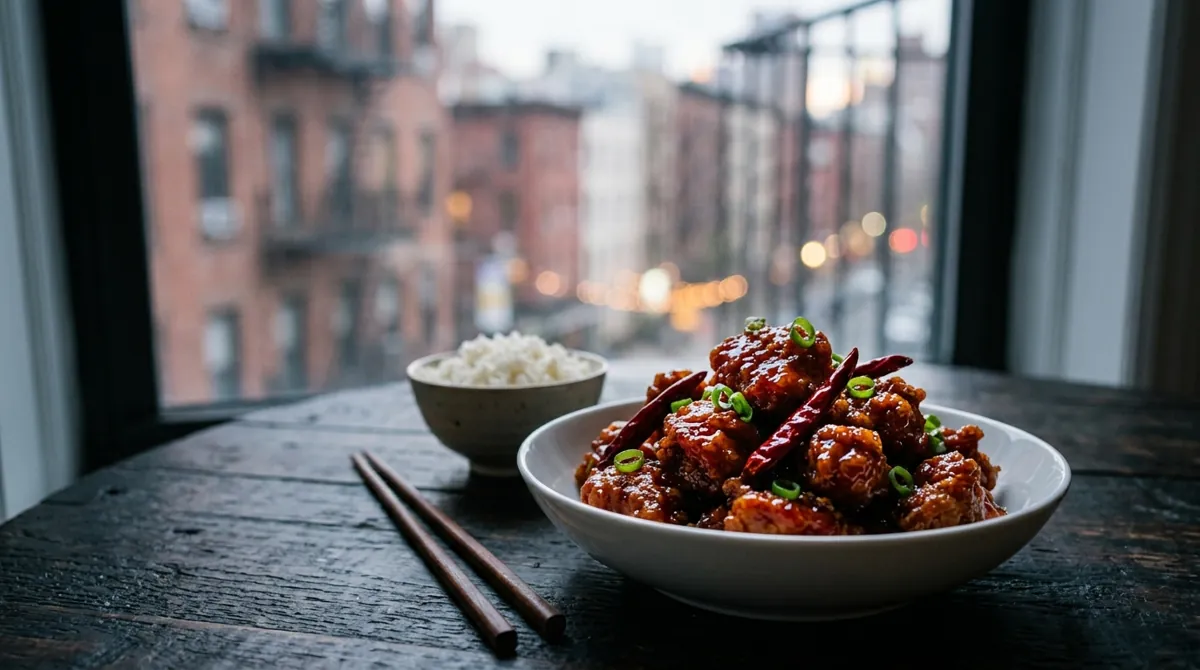
New York-Style General Tso's Chicken
Chicken thigh pieces in a soy, egg and cornstarch batter, deep-fried crisp at 375°F, then tossed in a glossy, sweet and spicy sauce of chicken stock, Shaoxing wine, rice vinegar, tomato paste and apricot jam with ginger, garlic and dried chiles.
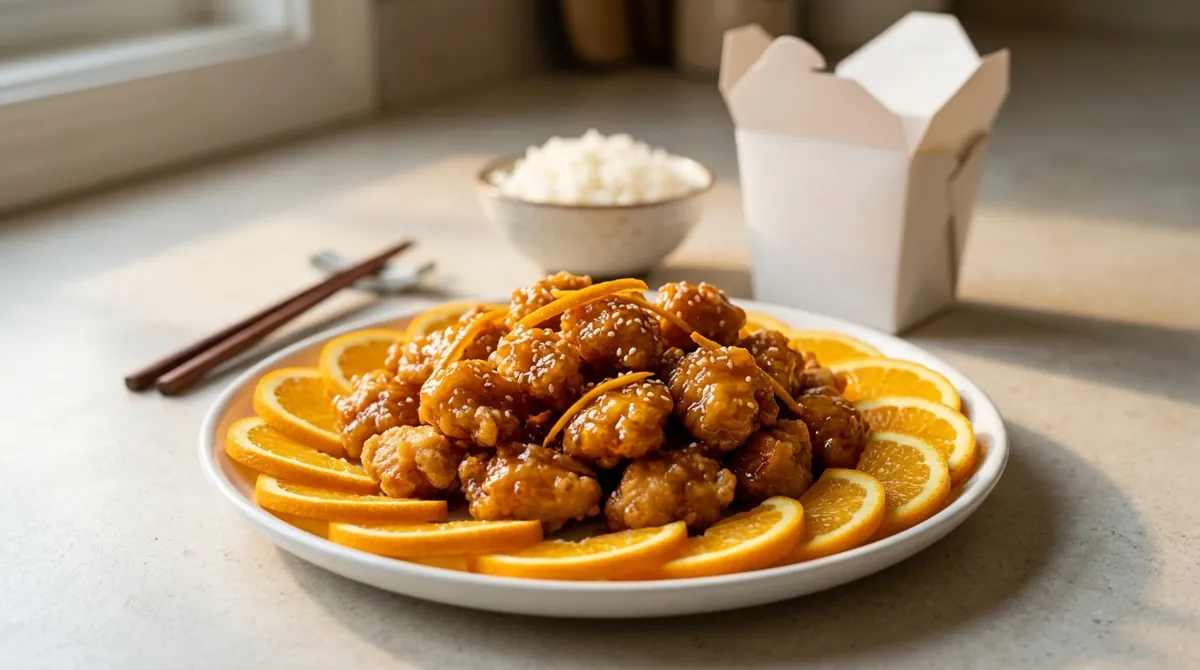
American Orange Chicken
Strips of chicken breast in a light, crisp batter, fried twice, then tossed in a bright sweet-and-sour sauce of fresh orange juice, sugar, vinegar and oyster sauce with thin strips of orange peel, on a plate ringed with orange slices.
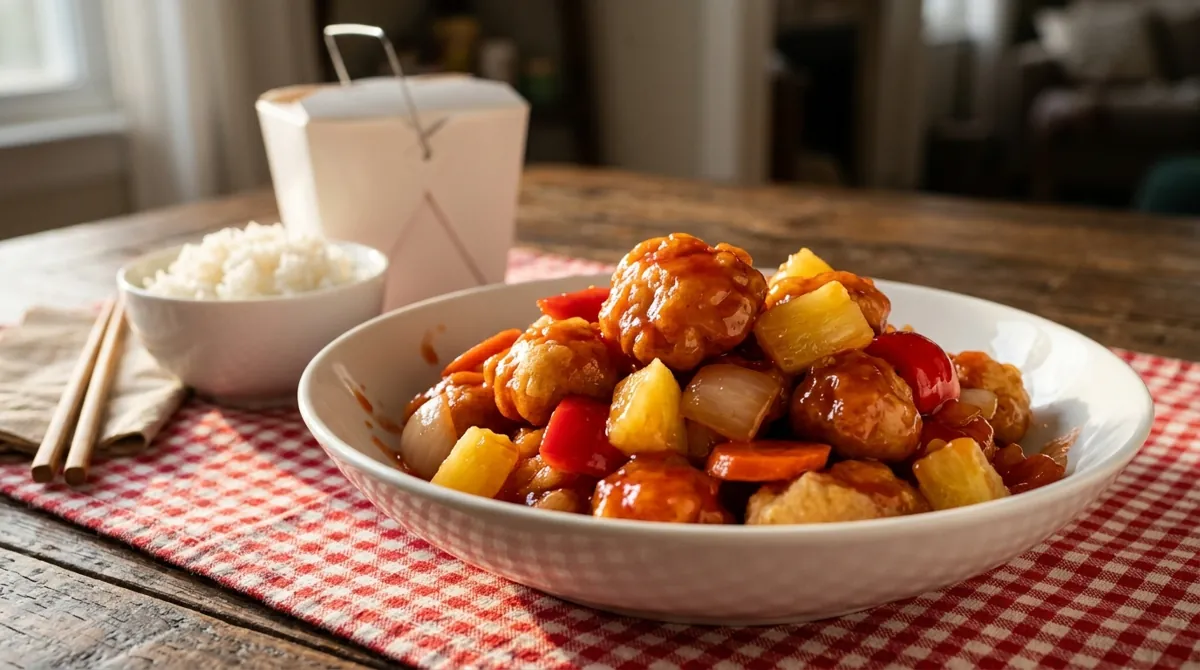
Takeout Sweet and Sour Chicken with Pineapple and Peppers
Chicken breast chunks in a puffy wet batter, fried twice, then folded into a bright red sauce of ketchup, red and rice vinegar and sugar with flash-fried red pepper, onion and carrot and slices of fresh pineapple.
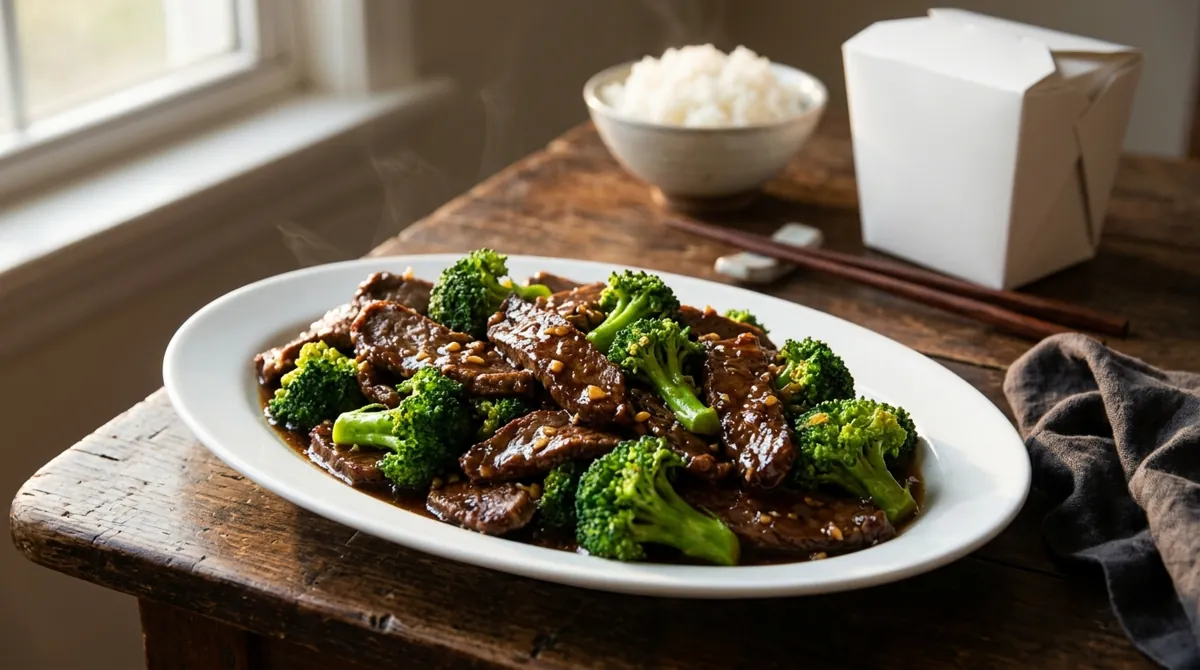
Beef and Broccoli
Thin slices of velveted flank steak seared in a smoking-hot wok, tossed with blanched broccoli florets, garlic and ginger in a glossy brown sauce of chicken stock, oyster sauce, soy sauce and a little sugar.
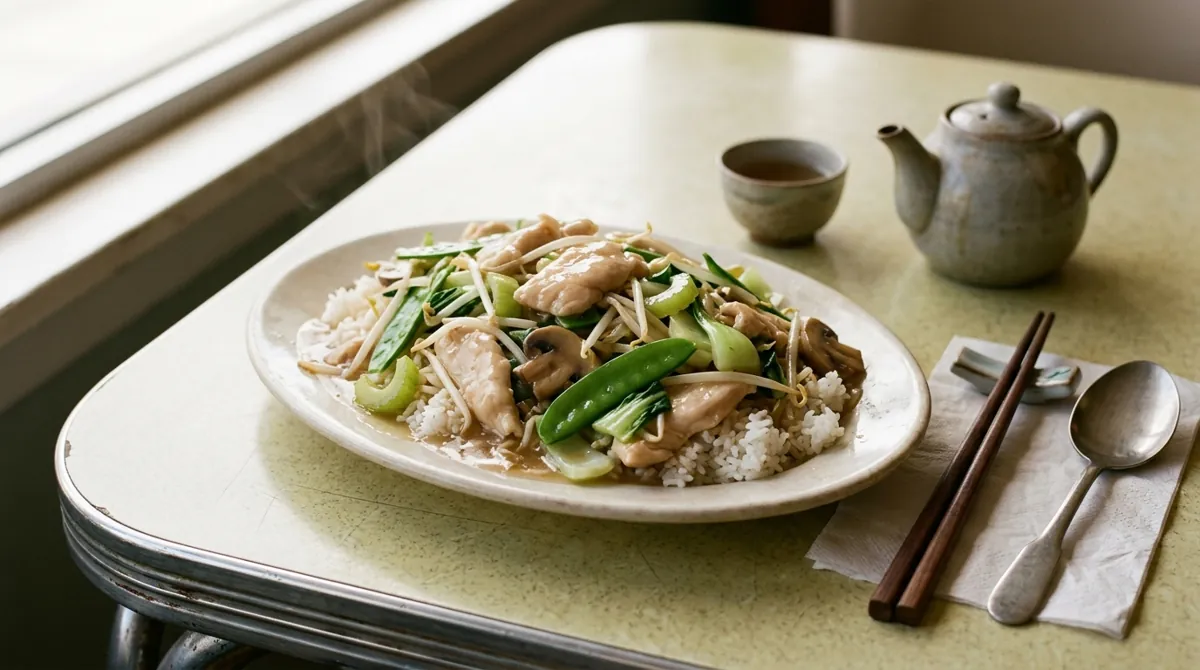
Chicken Chop Suey
Velveted chicken breast stir-fried with mushrooms, carrot, celery, bok choy, bean sprouts and snow peas in a light, savory sauce of chicken stock, oyster sauce and soy sauce, thickened at the last second and served over rice.
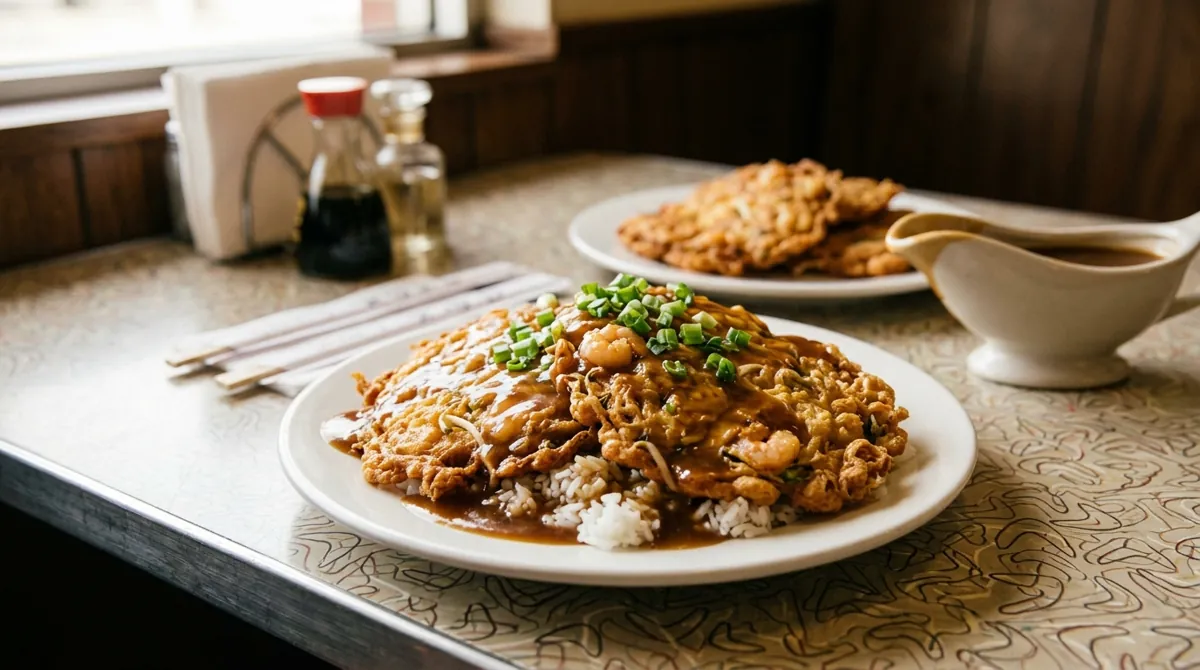
Shrimp Egg Foo Young with Brown Gravy
Puffy, golden omelet patties of eggs, chopped shrimp, onion and bean sprouts, deep-fried at 325°F and served over rice under a savory brown gravy made from a turmeric and paprika roux, chicken stock and oyster sauce.
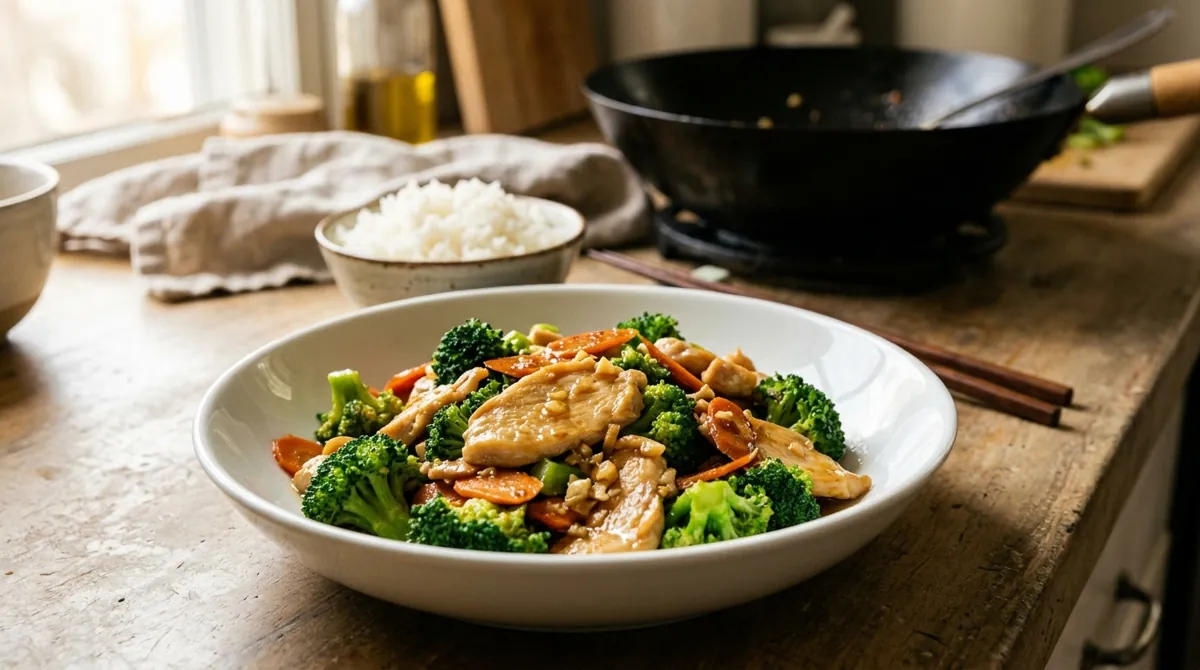
25-Minute Chicken and Broccoli Stir-Fry
The takeout template in 25 minutes: velveted chicken breast browned in a hot wok, tossed with blanched broccoli, carrot, garlic, ginger and scallion in a quick oyster sauce and soy sauce glaze.
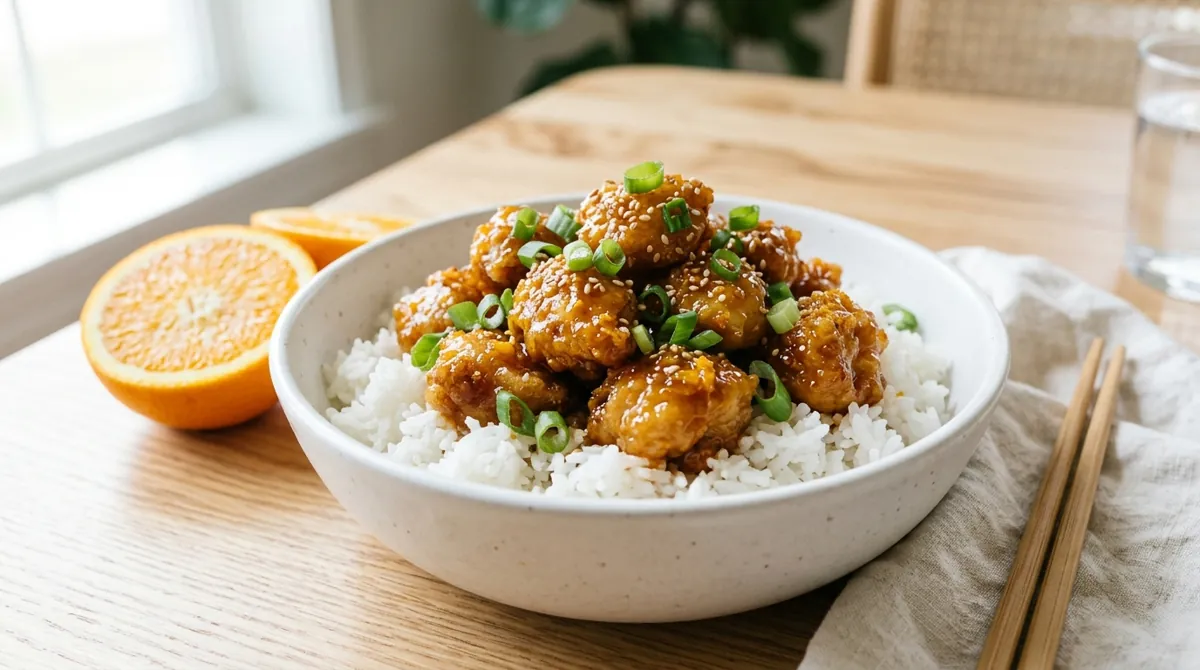
Copycat Orange Chicken, Inspired by Panda Express
Chicken thighs soaked in a sparkling-water batter, deep-fried golden at 350°F and tossed in a sticky, sweet and spicy sauce of orange juice and zest, two sugars, rice vinegar, soy sauce, garlic, ginger and red pepper flakes. Inspired by, not official.
Meatballs of the World

Italian-American Meatballs
Big, tender meatballs braised for an hour in red sauce over spaghetti. The one most Americans grew up with.

Pallottine (Abruzzo Meatballs)
Tiny meatballs, smaller than a marble, tossed right through square spaghetti alla chitarra. No bread at all.

Swedish Meatballs (Köttbullar)
Small, soft meatballs browned in butter, in a cream sauce made from the same pan, with lingonberry jam on the plate.

Danish Frikadeller
Pork meatballs shaped with a spoon and fried slowly in butter, crusty outside and soft in the middle.

Königsberger Klopse
German meatballs that are never fried: poached, then served in a creamy white sauce with capers.

Spanish Albóndigas in Almond Saffron Sauce
The tapas bar classic: small meatballs in a golden sauce thickened with fried almonds and bread.

Mexican Albóndigas with Chipotle and Mint
Soft meatballs with rice and fresh mint inside, simmered in a smoky tomato and chipotle broth.

Izgara Köfte (Turkish Grilled Meatballs)
Small, flat meatballs kneaded hard, rested cold, and charred on a hot grill pan.

Lion's Head Meatballs
Big, soft pork meatballs, stirred into a sticky paste, fried to set, then braised in a savory sauce.

Chicken Tsukune
Japan's chicken meatball: kneaded sticky, grilled on skewers, glazed with sweet soy tare, dipped in egg yolk.