
Chicago Deep-Dish Pizza
A tall, flaky, buttery crust baked in a round pan, filled with a thick layer of mozzarella and topped with a chunky tomato sauce and Parmesan. Eat it with a knife and fork.
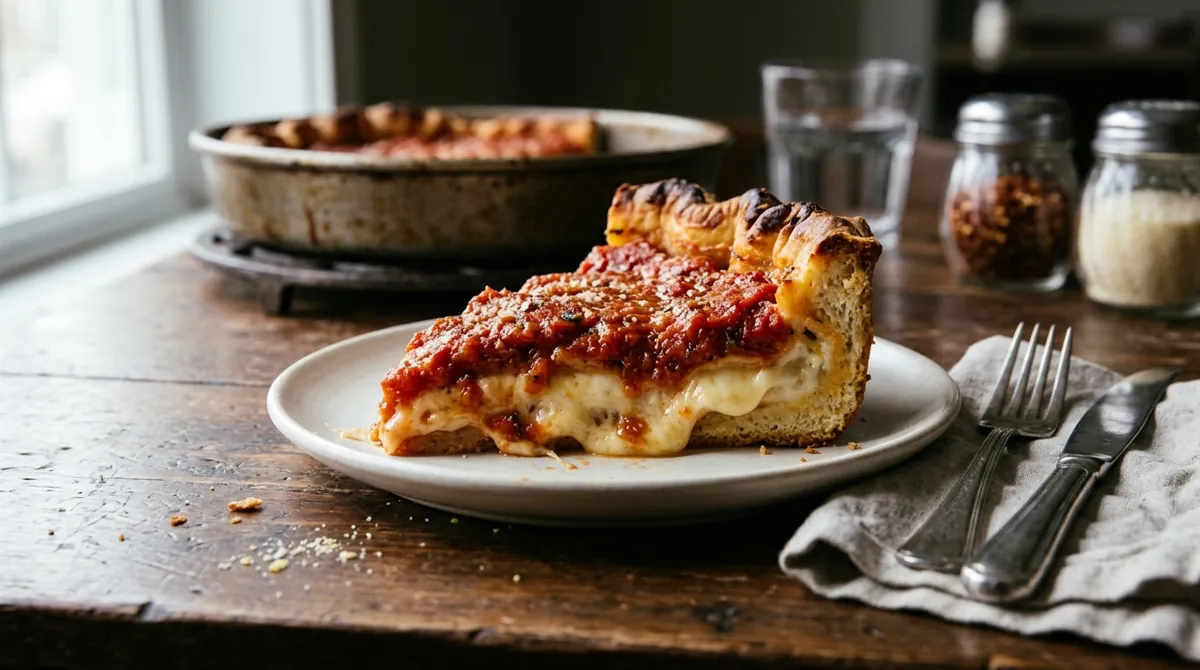
Pizzeria Uno says its story began in 1943, at Ohio and Wabash in Chicago, and credits Ike Sewell with developing deep dish. Historians now give most of the credit to Sewell's partner Ric Riccardo: Peter Regas's research, summarized by the Culinary Historians of Chicago, finds that "The Pizzeria" opened in December 1943 and that Sewell came in through a 1944 partnership. Lou Malnati, whose father Rudy managed the original pizzeria, opened his own place in Lincolnwood in 1971. Who invented deep dish is DISPUTED (see Rules).
🇺🇸 This one is American
A tall, flaky, buttery crust baked in a round pan, filled with a thick layer of mozzarella and topped with a chunky tomato sauce and Parmesan. Eat it with a knife and fork.
🇮🇹 The original
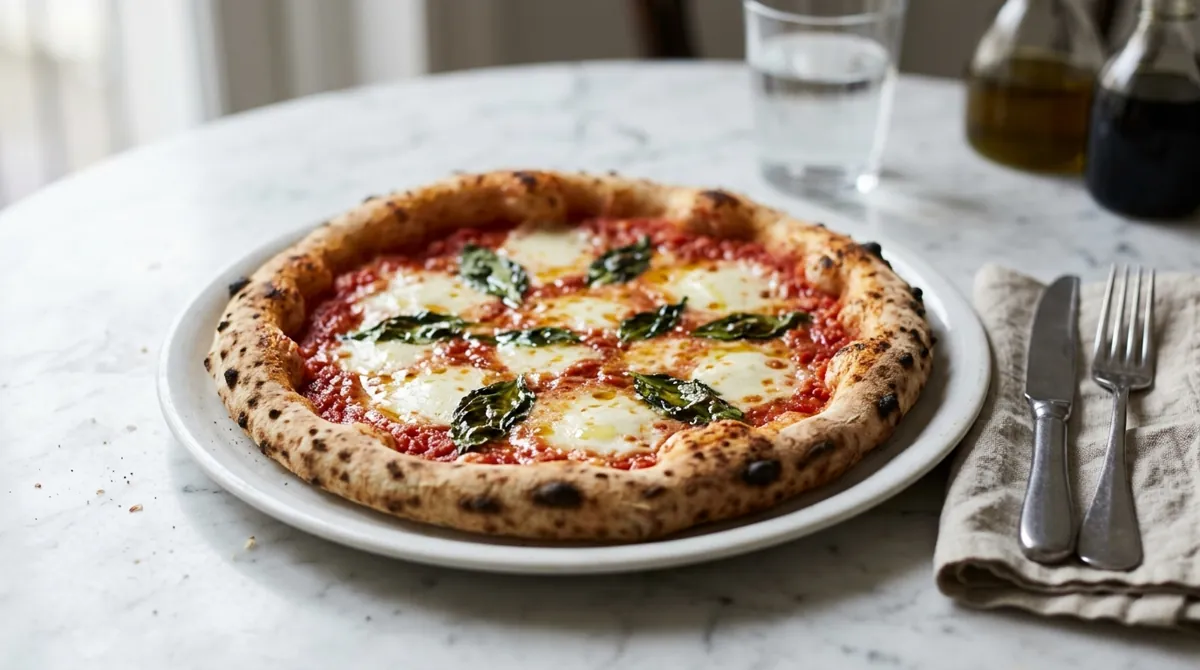
In Naples, pizza is a soft, thin-centered disc with a puffy, blistered rim, topped with tomato, mozzarella and basil and baked in about 90 seconds in a wood-fired oven. See the Pizza Napoletana Margherita recipe.
Why it works the kitchen science
Butter rolled into the dough
Spreading butter over the dough and folding it makes thin layers that bake up flaky, more like a pie crust than bread, and the chill keeps the butter from melting into it before the oven.
Cheese under the sauce
In a 20 to 30 minute bake, a top layer of mozzarella would burn. Underneath, it melts into a thick layer, and the sauce on top reduces and browns a little instead.
Step by step
- Step 1
Mix the flour, cornmeal, salt, sugar and yeast in a stand mixer with the dough hook on low. Add the water and melted butter and mix 1 to 2 minutes, then knead on medium 4 to 5 minutes, until smooth. Turn into a bowl greased with 1 tsp oil, cover and let rise 45 to 60 minutes, until nearly doubled.
- Step 2
Meanwhile melt 2 tbsp butter in a saucepan over medium heat, add the onion, oregano and salt and cook 5 minutes, until soft. Add the garlic for 30 seconds, then the tomatoes and sugar, and simmer 25 to 30 minutes, until reduced to about 2 1/2 cups. Off the heat stir in the basil and 1 tbsp oil.
- Step 3
Roll the dough to a 15 x 12-inch rectangle and spread the softened butter over it, leaving a 1/2-inch border. Roll it up tightly from a short side, flatten the log into an 18 x 4-inch strip and cut it in half. Fold each half in thirds, pinch into a ball and refrigerate, covered, 40 to 50 minutes.
- Step 4
Set a rack in the lower position and heat the oven to 425°F. Coat two 9-inch round cake pans with 2 tbsp oil each.
- Step 5
Roll each ball to a 13-inch round about 1/4 inch thick, lay it in a pan and press it into the corners and 1 inch up the sides.
- Step 6
Fill each pan with 2 cups mozzarella, spread 1 1/4 cups sauce over the cheese right to the edge, and sprinkle with 2 tbsp Parmesan.
- Step 7
Bake 20 to 30 minutes, until the crust is golden brown. Rest 10 minutes in the pans, then lift out with a spatula and cut each pie into 6 wedges.
Chicago Deep-Dish Pizza
Serves 6 (2 wedges each) · two 9-inch deep-dish pizzas · 3 hr 5 min total
Dough
- 3 1/4 cups (461 g) all-purpose flour
- 1/2 cup (78 g) yellow cornmeal
- 1 1/2 tsp table salt
- 2 tsp sugar
- 2 1/4 tsp instant yeast
- 1 1/4 cups (283 g) room-temperature water
- 3 tbsp unsalted butter, melted, plus 4 tbsp softened
- 1 tsp olive oil, plus 1/4 cup for the pans
Sauce
- 2 tbsp unsalted butter
- 1/4 cup grated onion
- 1/4 tsp dried oregano
- 1/2 tsp table salt
- 2 cloves garlic, minced
- 1 can (28 oz) crushed tomatoes
- 1/4 tsp sugar
- 2 tbsp chopped fresh basil
- 1 tbsp olive oil
Cheese
- 1 lb low-moisture whole-milk mozzarella, shredded (4 cups)
- 1/4 cup (1/2 oz) grated Parmesan
Method
- Mix the flour, cornmeal, salt, sugar and yeast in a stand mixer with the dough hook on low. Add the water and melted butter and mix 1 to 2 minutes, then knead on medium 4 to 5 minutes, until smooth. Turn into a bowl greased with 1 tsp oil, cover and let rise 45 to 60 minutes, until nearly doubled.
- Meanwhile melt 2 tbsp butter in a saucepan over medium heat, add the onion, oregano and salt and cook 5 minutes, until soft. Add the garlic for 30 seconds, then the tomatoes and sugar, and simmer 25 to 30 minutes, until reduced to about 2 1/2 cups. Off the heat stir in the basil and 1 tbsp oil.
- Roll the dough to a 15 x 12-inch rectangle and spread the softened butter over it, leaving a 1/2-inch border. Roll it up tightly from a short side, flatten the log into an 18 x 4-inch strip and cut it in half. Fold each half in thirds, pinch into a ball and refrigerate, covered, 40 to 50 minutes.
- Set a rack in the lower position and heat the oven to 425°F. Coat two 9-inch round cake pans with 2 tbsp oil each.
- Roll each ball to a 13-inch round about 1/4 inch thick, lay it in a pan and press it into the corners and 1 inch up the sides.
- Fill each pan with 2 cups mozzarella, spread 1 1/4 cups sauce over the cheese right to the edge, and sprinkle with 2 tbsp Parmesan.
- Bake 20 to 30 minutes, until the crust is golden brown. Rest 10 minutes in the pans, then lift out with a spatula and cut each pie into 6 wedges.
Adapted from Cook's Illustrated / America's Test Kitchen, "Chicago-Style Deep-Dish Pizza" (2013, serves 4 to 6, two 9-inch cake pans). The layering of mozzarella under the sauce matches Lou Malnati's description. For an older, thinner take, NYT Cooking's Eric Kim published a recipe based on the earliest known deep-dish recipe, which Riccardo gave a newspaper columnist in 1945. America's Test Kitchen. Ingredient list follows the source; the method is in our own words.
Tips
- Shred your own mozzarella from a block; America's Test Kitchen says to avoid pre-shredded cheese and prefers whole-milk mozzarella.
- For a sausage pie, press 8 oz raw bulk Italian sausage in a thin layer over the cheese before the sauce, the way Lou Malnati's tops its sausage pie with a whole disc of sausage (Serious Eats). It must reach 160°F.
- Dark metal pans give a browner, crisper bottom than glass or shiny pans.
The rules people argue about
What the sources agree on, what they don't, and what is just a good story.
- Cheese under the sauce. Documented (Lou Malnati's; Cook's Illustrated; Serious Eats).
- Eaten with a knife and fork. Documented as the usual way (Lou Malnati's).
- Who invented it. Disputed: Uno credits Ike Sewell; the Culinary Historians of Chicago, National Geographic and historian Tim Samuelson credit Ric Riccardo; Lou Malnati's says Grandpa Malnati "helped create" it in 1943. The Culinary Historians say there is no primary evidence Rudy Malnati created it.
- Alice Mae Redmond changed the dough. Disputed on the date: National Geographic says the cook introduced today's richer dough in the 1950s; the Culinary Historians call it "certainly possible" she modified it from the late 1940s.
- Cornmeal in the crust. Disputed: Cook's Illustrated uses it; the 1945-based NYT recipe and America's Test Kitchen's 2023 My Pi-style recipe use none. We found no authoritative source on what the restaurants use.
- Buttery crust. Documented as the house style at Uno and Lou Malnati's ("buttery"); the 1945 recipe uses milk and a little butter, and National Geographic credits Redmond with adding oil.
- Cooked or uncooked sauce. Disputed: Cook's Illustrated cooks it; Lou Malnati's, the NYT 1945-based recipe and America's Test Kitchen's 2023 version use chunky uncooked tomatoes.
- Chicagoans don't really eat it. Disputed: see our Chicago Tavern-Style Thin-Crust Pizza recipe.
Every other pizza
Pizza Napoletana Margherita
The Naples original: a soft, hand-stretched dough with a puffy, charred rim, topped with hand-crushed tomatoes, fresh mozzarella, basil and olive oil, and nothing else.
Pizza Marinara
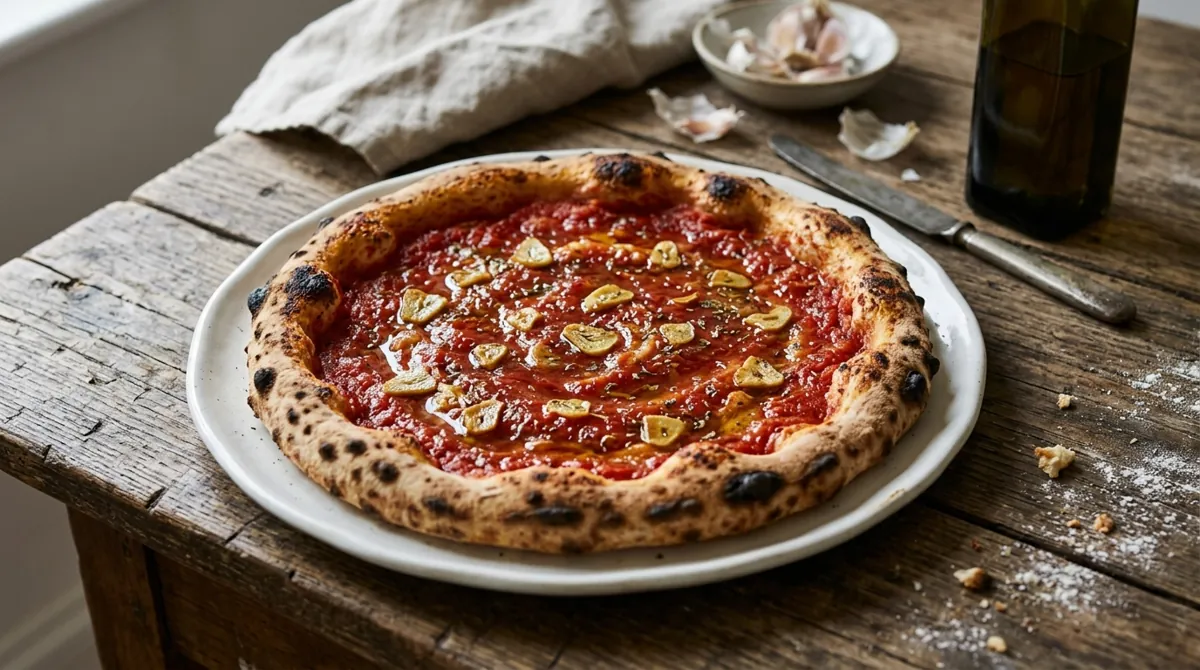
Naples' other classic, and the older idea: tomato, sliced garlic, oregano and olive oil on a soft, charred crust. No cheese, and no seafood either.
Sfincione (Palermo-Style Sicilian Pizza)
Palermo's tall, spongy pan pizza: cheese and anchovies pressed into the dough, a sweet onion and tomato sauce on top, and a crunchy blanket of oregano and toasted breadcrumbs.
Roman Pizza al Taglio with Potato and Rosemary
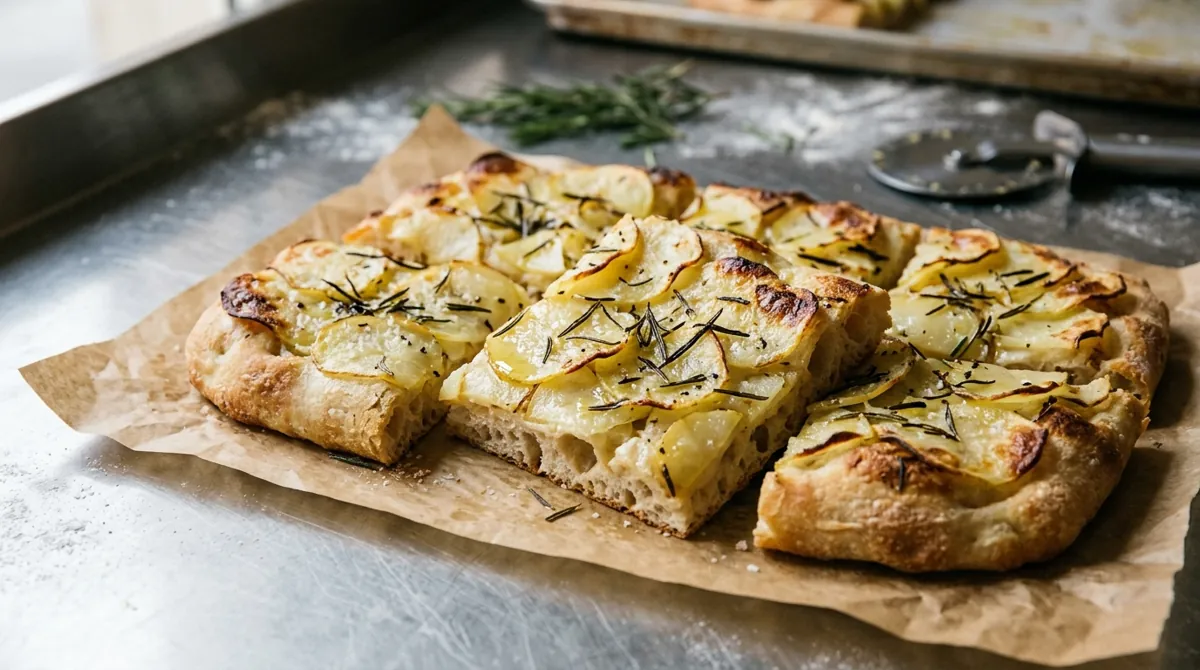
Rome's sheet-pan pizza by the slice: a very wet dough, cold-risen for a day, baked airy and crisp, topped with paper-thin potatoes, rosemary and olive oil, and cut into rectangles with scissors.
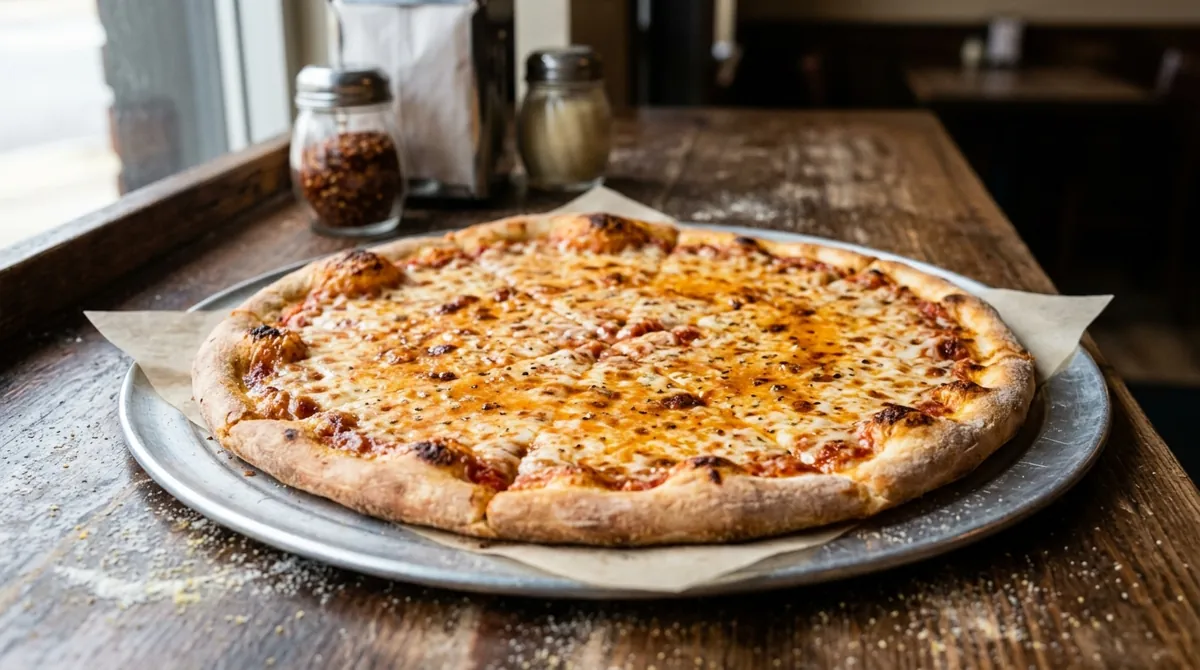
New York-Style Pizza
The big, thin, foldable slice: a cold-fermented bread-flour dough with a little sugar and oil, a smooth cooked tomato sauce and grated low-moisture mozzarella, baked hot and long until the cheese spots brown.
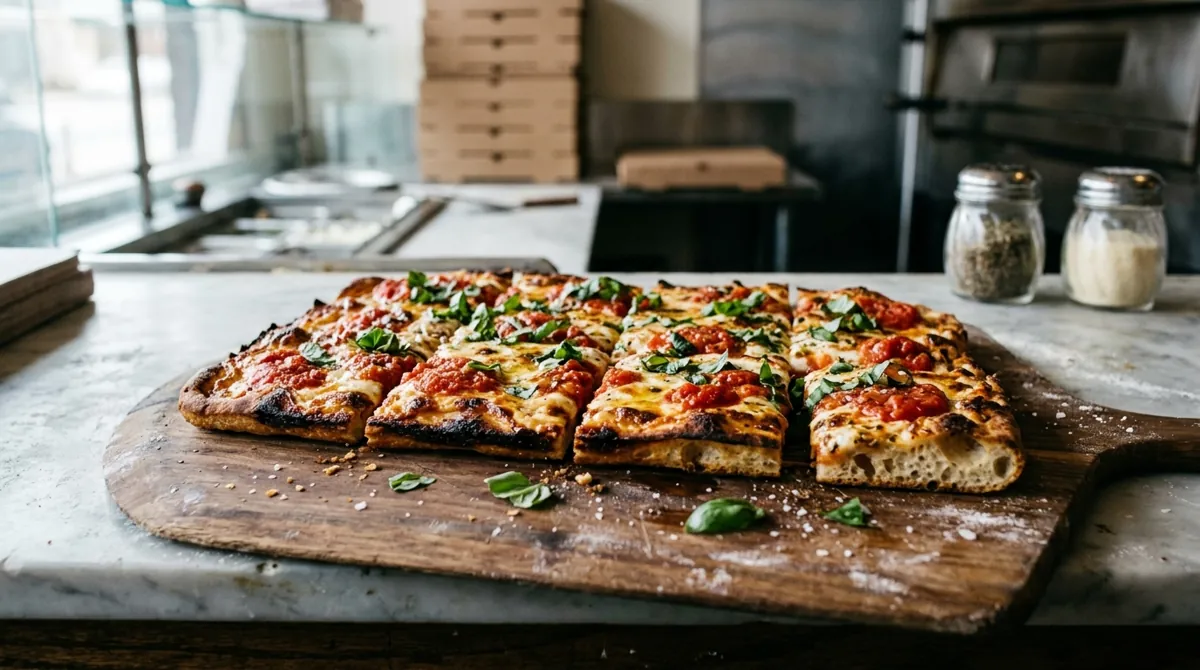
Grandma Pizza
Long Island's thin square pan pie: an oiled sheet-pan crust, mozzarella first, then raw tomatoes tossed with garlic, olive oil and oregano spooned on top.
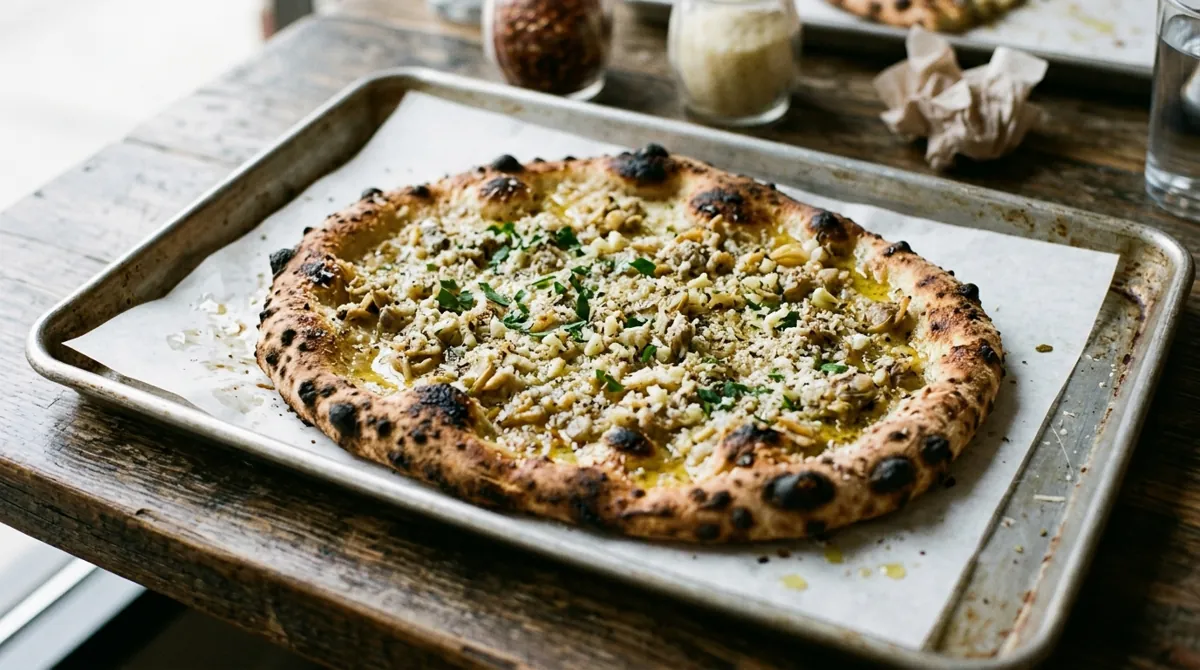
New Haven White Clam Pizza
New Haven's famous "apizza": a thin, charred crust with olive oil, garlic, oregano, grated Pecorino Romano and fresh littleneck clams, and no mozzarella.
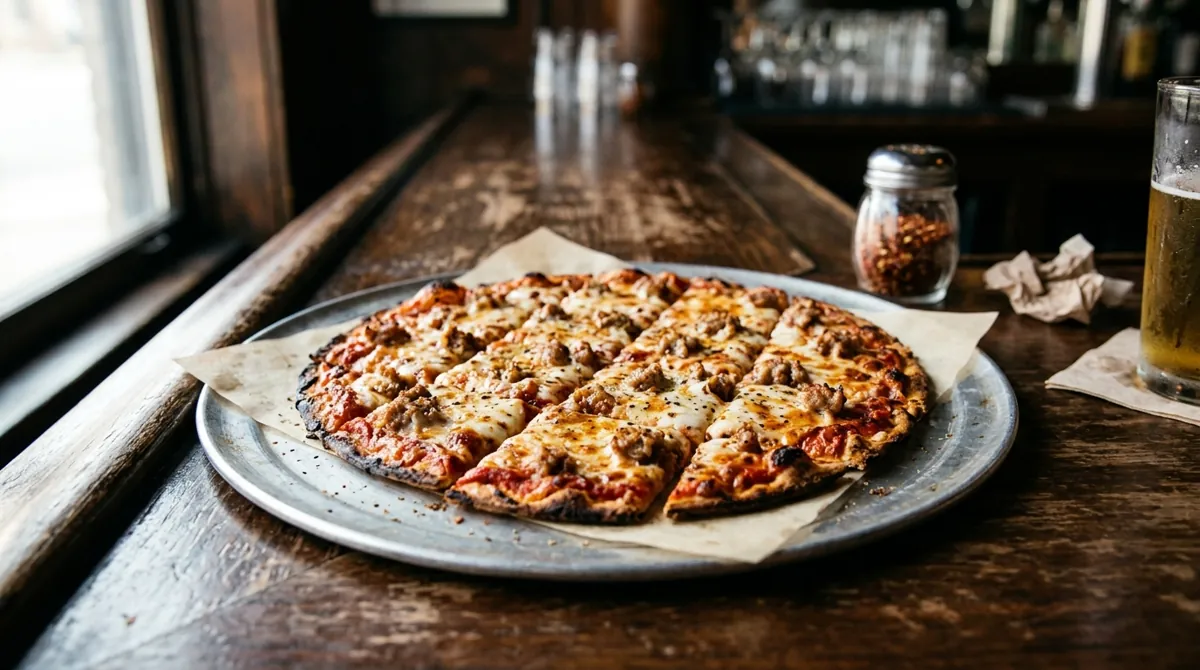
Chicago Tavern-Style Thin-Crust Pizza
Chicago's everyday pizza: a cracker-thin crust, a sweet herby sauce to the very edge, fennel-flecked sausage and mozzarella to the rim, cut into little squares.
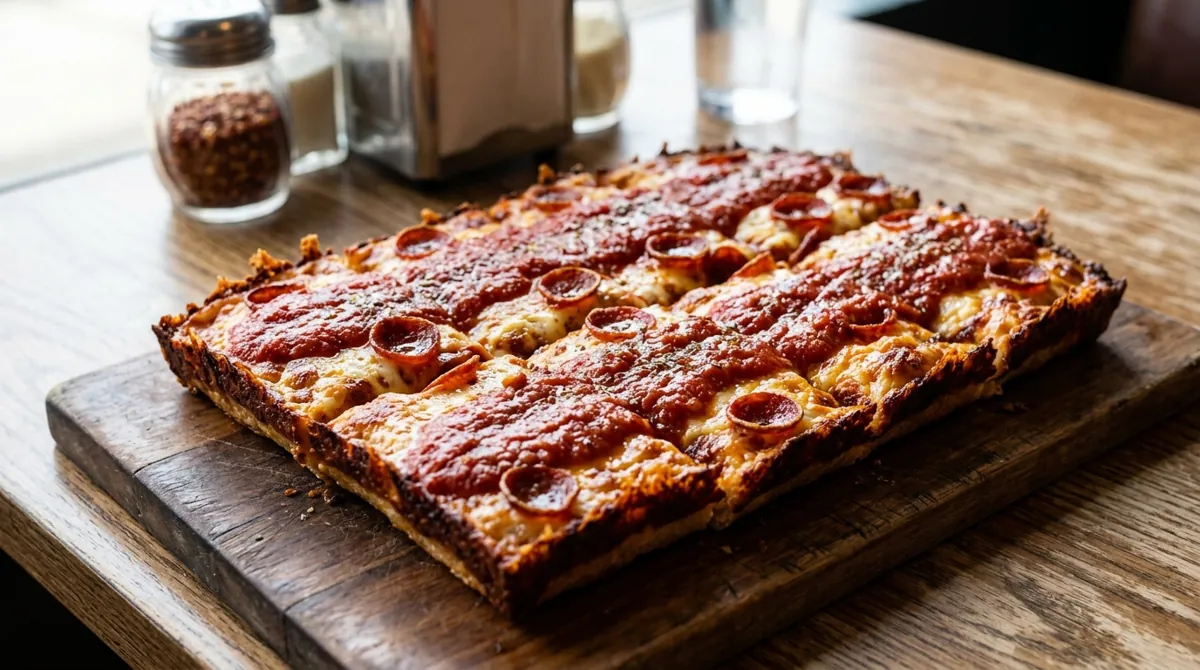
Detroit-Style Pizza
A thick, airy rectangle baked in a well-oiled steel pan, with pepperoni under Wisconsin brick cheese spread to the very edge so it fries into a dark, crispy crown, and sauce spooned on top in stripes.
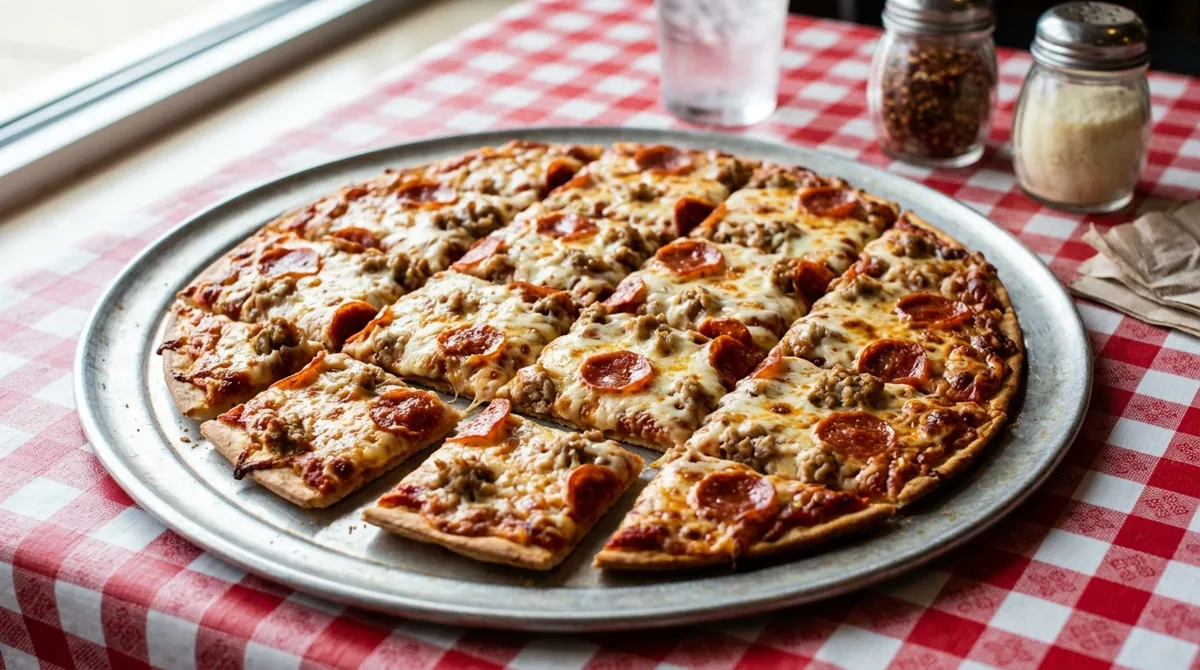
St. Louis-Style Pizza
A cracker-thin crust rolled out with a pin, a sweet oregano sauce, toppings to the edge and gooey, smoky Provel cheese, cut into squares.
California-Style BBQ Chicken Pizza
The pizza that told America anything goes: barbecue sauce instead of tomato, smoky gouda and mozzarella, roasted chicken, red onion and fresh cilantro.
Weeknight Skillet Pizza
Store-bought dough crisped in a skillet on the stove, then finished under the broiler: a crackly-bottomed cheese pizza in about 35 minutes, no stone and no preheating.
Pan Pizza, Inspired by Pizza Hut
Inspired by Pizza Hut's Pan Pizza, not an official recipe: a thick, no-knead dough that rises in an oiled cast-iron skillet and bakes with a golden, almost fried bottom and cheese right to the edge.
Meatballs of the World

Italian-American Meatballs
Big, tender meatballs braised for an hour in red sauce over spaghetti. The one most Americans grew up with.

Pallottine (Abruzzo Meatballs)
Tiny meatballs, smaller than a marble, tossed right through square spaghetti alla chitarra. No bread at all.

Swedish Meatballs (Köttbullar)
Small, soft meatballs browned in butter, in a cream sauce made from the same pan, with lingonberry jam on the plate.

Danish Frikadeller
Pork meatballs shaped with a spoon and fried slowly in butter, crusty outside and soft in the middle.

Königsberger Klopse
German meatballs that are never fried: poached, then served in a creamy white sauce with capers.

Spanish Albóndigas in Almond Saffron Sauce
The tapas bar classic: small meatballs in a golden sauce thickened with fried almonds and bread.

Mexican Albóndigas with Chipotle and Mint
Soft meatballs with rice and fresh mint inside, simmered in a smoky tomato and chipotle broth.

Izgara Köfte (Turkish Grilled Meatballs)
Small, flat meatballs kneaded hard, rested cold, and charred on a hot grill pan.

Lion's Head Meatballs
Big, soft pork meatballs, stirred into a sticky paste, fried to set, then braised in a savory sauce.

Chicken Tsukune
Japan's chicken meatball: kneaded sticky, grilled on skewers, glazed with sweet soy tare, dipped in egg yolk.