
Pizza Napoletana Margherita
The Naples original: a soft, hand-stretched dough with a puffy, charred rim, topped with hand-crushed tomatoes, fresh mozzarella, basil and olive oil, and nothing else.
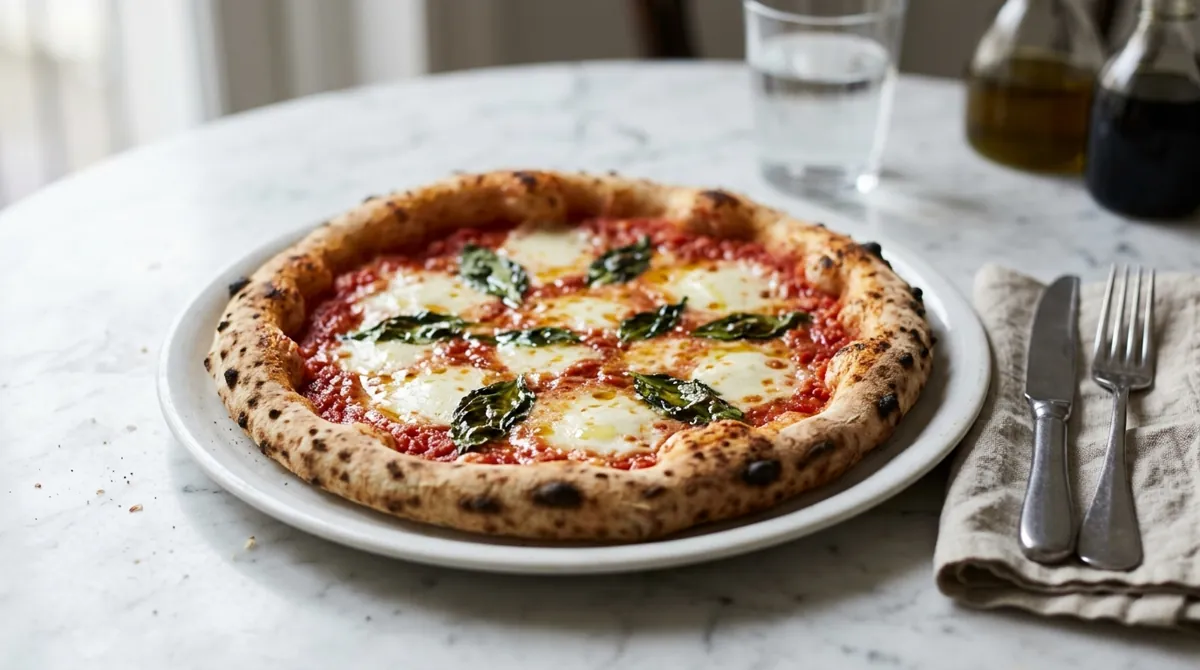
Pizza Napoletana is one of the few dishes with a legal definition. In 2010 the European Union registered it as a Traditional Speciality Guaranteed, on an application from the Associazione Verace Pizza Napoletana (AVPN) and the Associazione Pizzaiuoli Napoletani. The specification sets the dough, the toppings and the bake: a wood-fired oven, a floor around 485°C (about 905°F) and no more than 60 to 90 seconds (Commission Regulation (EU) No 97/2010). The AVPN keeps its own, stricter-in-places rulebook, first written in 1984.
In 2017 UNESCO added the "Art of Neapolitan 'Pizzaiuolo'" to its Representative List of the Intangible Cultural Heritage of Humanity. It is the craft that is listed, not the pizza. Naples was topping pizza with cheese and basil well before the famous royal story: an 1850s chapter on the city's pizza makers, signed by Emmanuele Rocco in De Bourcard's "Usi e costumi di Napoli e contorni", describes pizzas with grated cheese, lard and basil, sometimes with thin slices of mozzarella. The story that the pizza was named for Queen Margherita in 1889 is DISPUTED (see Rules).
🇮🇹 The original
The Naples original: a soft, hand-stretched dough with a puffy, charred rim, topped with hand-crushed tomatoes, fresh mozzarella, basil and olive oil, and nothing else.
🇺🇸 The American version
New York made it bigger, thinner and crisper, baked longer in a gas deck oven, and sold it by the foldable slice. See the New York-Style Pizza recipe.
Why it works the kitchen science
Long, slow rise
A tiny amount of yeast over half a day gives the dough flavor and makes it stretchy enough to open by hand without tearing.
Steel plus broiler
A preheated steel sends heat into the base while the broiler blasts the top, which is the closest a home oven gets to a wood oven's floor and dome.
Step by step
- Step 1
Stir the salt into the water until it dissolves. Add about a tenth of the flour and the yeast, then the rest of the flour a handful at a time, and knead 10 minutes by hand, until smooth and slightly tacky.
- Step 2
Cover the bowl and let the dough rise at cool room temperature (65°F to 75°F) for 12 to 16 hours.
- Step 3
Divide the dough into 4 pieces of about 230 g, shape each into a tight ball and set them in a lightly floured covered tray. Rest 1 hour.
- Step 4
Meanwhile put a baking steel or stone on the center rack, at least 8 inches below the broiler, and heat the oven to its highest setting (500°F to 550°F) for 45 minutes. Crush the tomatoes by hand with the 1/2 tsp salt. Slice the mozzarella and drain it on paper towels 15 minutes.
- Step 5
Press one ball from the center outward with your fingertips, leaving a 3/4-inch rim untouched, then stretch it to about 10 inches. No rolling pin. Lay it on a semolina-dusted peel.
- Step 6
Spread a quarter of the tomatoes in a spiral, leaving the rim bare. Add a quarter of the mozzarella and 4 basil leaves (tuck a couple under the cheese so they don't burn), then spiral 1/2 tbsp olive oil from the center out.
- Step 7
Slide the pizza onto the steel and bake 6 minutes (7 minutes on a stone). Switch to the broiler and cook 2 to 3 minutes more, until the rim is puffed and spotted with char. Let the steel reheat 5 minutes in bake mode before the next pizza.
- Step 8
Serve each pizza whole, right away, with a knife and fork.
Pizza Napoletana Margherita
Serves 4 (1 pizza each) · 4 pizzas, about 10 inches each · 14 hr 10 min total
Dough
- 4 3/4 cups (560 g) Italian "00" pizza flour (or all-purpose flour)
- About 1 1/2 cups (340 g) lukewarm water, about 105°F
- 1 tbsp (17 g) fine sea salt
- 1/4 tsp instant or active dry yeast
- Semolina or flour, for the peel
Topping
- 1 can (14 oz) whole peeled tomatoes, drained (about 1 1/4 cups, 280 g, after crushing)
- 1/2 tsp fine sea salt, for the tomatoes
- 12 oz (360 g) fresh mozzarella (fior di latte) or buffalo mozzarella
- 16 fresh basil leaves
- 2 tbsp extra-virgin olive oil
Method
- Stir the salt into the water until it dissolves. Add about a tenth of the flour and the yeast, then the rest of the flour a handful at a time, and knead 10 minutes by hand, until smooth and slightly tacky.
- Cover the bowl and let the dough rise at cool room temperature (65°F to 75°F) for 12 to 16 hours.
- Divide the dough into 4 pieces of about 230 g, shape each into a tight ball and set them in a lightly floured covered tray. Rest 1 hour.
- Meanwhile put a baking steel or stone on the center rack, at least 8 inches below the broiler, and heat the oven to its highest setting (500°F to 550°F) for 45 minutes. Crush the tomatoes by hand with the 1/2 tsp salt. Slice the mozzarella and drain it on paper towels 15 minutes.
- Press one ball from the center outward with your fingertips, leaving a 3/4-inch rim untouched, then stretch it to about 10 inches. No rolling pin. Lay it on a semolina-dusted peel.
- Spread a quarter of the tomatoes in a spiral, leaving the rim bare. Add a quarter of the mozzarella and 4 basil leaves (tuck a couple under the cheese so they don't burn), then spiral 1/2 tbsp olive oil from the center out.
- Slide the pizza onto the steel and bake 6 minutes (7 minutes on a stone). Switch to the broiler and cook 2 to 3 minutes more, until the rim is puffed and spotted with char. Let the steel reheat 5 minutes in bake mode before the next pizza.
- Serve each pizza whole, right away, with a knife and fork.
Dough ratios and toppings follow the AVPN International Regulations, 2024 English edition and the EU TSG specification. The home-oven method (overnight room-temperature rise, steel or stone on the center rack, then the broiler) is adapted from King Arthur Baking's "Neapolitan-Style Pizza Crust", scaled from 2 pizzas to 4. Our changes: we use the AVPN hydration (about 61%) instead of King Arthur's wetter 73%, and we leave out King Arthur's 1/2 tsp sugar because the AVPN bans sugar and fat in the dough. Topping weights per pizza are inside the AVPN ranges (tomato 60 to 80 g, mozzarella 80 to 100 g, oil 6 to 7 g). pizzanapoletana.org. Ingredient list follows the source; the method is in our own words.
Tips
- In Naples the oven does this in 60 to 90 seconds at around 905°F. At home, expect 8 to 10 minutes and a paler, crisper base.
- Drain the mozzarella well. Wet cheese floods the center, which is already only about 1/8 inch thick.
- King Arthur adds 1/2 tsp sugar to help a home oven brown the crust. If your oven tops out at 500°F, you can add it; the AVPN would not.
The rules people argue about
What the sources agree on, what they don't, and what is just a good story.
- No rolling pin. Documented: both the EU specification and the AVPN ban rolling pins and mechanical presses. Rocco's 1850s text says pizza makers once used a rolling pin too, so the rule is newer than the pizza.
- Wood-fired oven only. Disputed: the EU specification says wood only; the AVPN's 2024 rules allow certified gas and electric ovens.
- Buffalo mozzarella vs fior di latte. Disputed: the EU specification names only Mozzarella di Bufala Campana DOP or Mozzarella STG; the AVPN allows cow's-milk fior di latte.
- San Marzano tomatoes required. Folklore: neither text requires them. The EU says peeled tomatoes and/or small fresh tomatoes; the AVPN lists San Marzano DOP first but allows Italian Roma-type tomatoes.
- No sugar or fat in the dough. Documented (AVPN).
- Grated hard cheese on a Margherita. Disputed: the AVPN allows 5 to 7 g as an option; the EU specification doesn't include it.
- Folded or knife and fork. Documented both ways: at the table it is eaten whole with a knife and fork; on the street a smaller pizza is folded in four "a portafoglio" (La Cucina Italiana). The EU text says the pizza must fold into four.
- Named for Queen Margherita in 1889. Disputed: the EU text and the AVPN repeat the story that Raffaele Esposito made it for the queen in the colors of the flag. Historian Zachary Nowak argues the thank-you letter at Pizzeria Brandi is not in the palace archives and that the legend was built in the 1930s ("Folklore, Fakelore, History", Food, Culture & Society, 2014; BBC Food, 2012). Wikipedia says the story and name were promoted in the 1930s and 1940s.
- Dates in the EU text itself. Disputed: the regulation dates the Margherita to 1796 to 1810 and cites no source for it.
Every other pizza
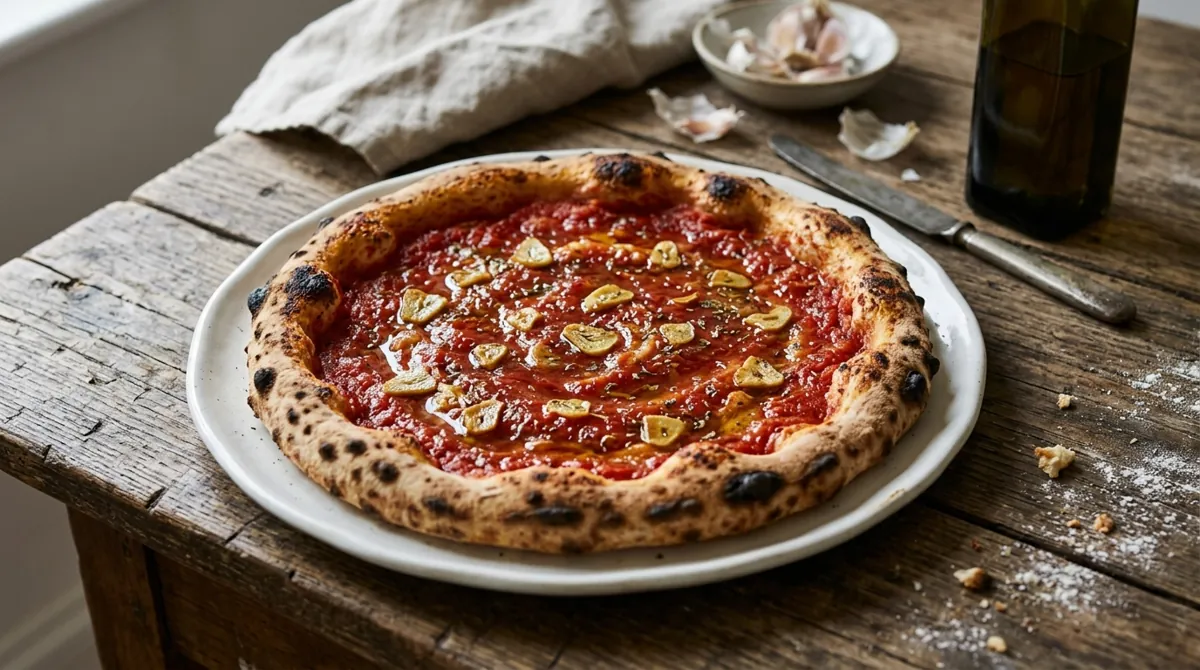
Pizza Marinara
Naples' other classic, and the older idea: tomato, sliced garlic, oregano and olive oil on a soft, charred crust. No cheese, and no seafood either.
Sfincione (Palermo-Style Sicilian Pizza)
Palermo's tall, spongy pan pizza: cheese and anchovies pressed into the dough, a sweet onion and tomato sauce on top, and a crunchy blanket of oregano and toasted breadcrumbs.
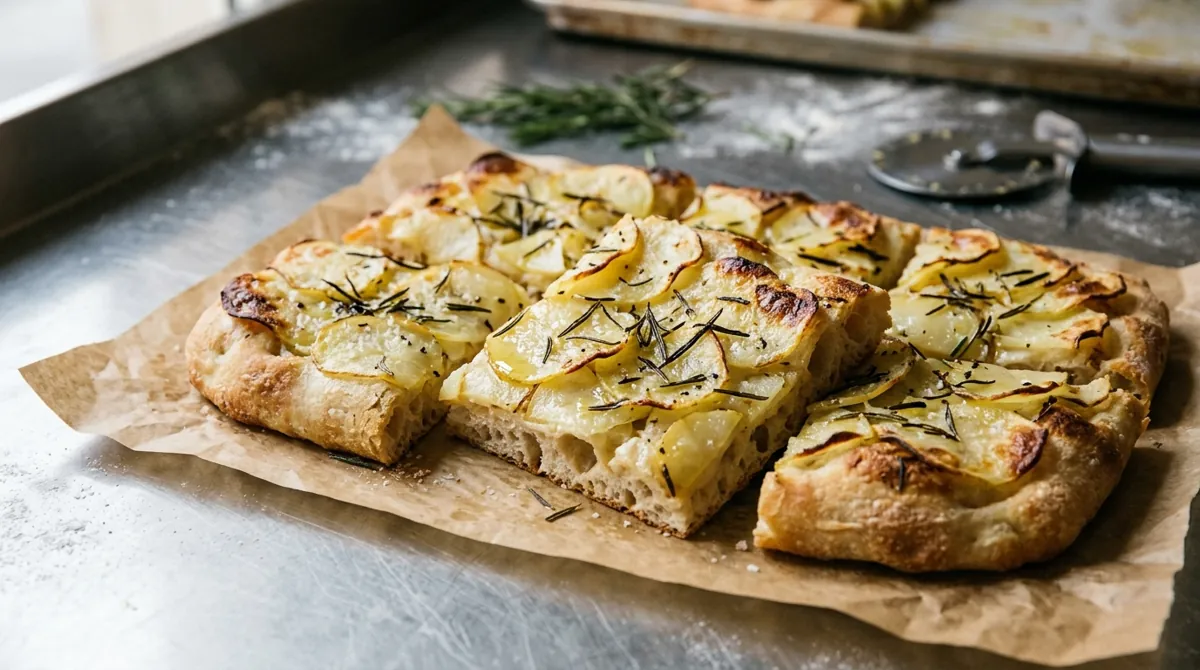
Roman Pizza al Taglio with Potato and Rosemary
Rome's sheet-pan pizza by the slice: a very wet dough, cold-risen for a day, baked airy and crisp, topped with paper-thin potatoes, rosemary and olive oil, and cut into rectangles with scissors.
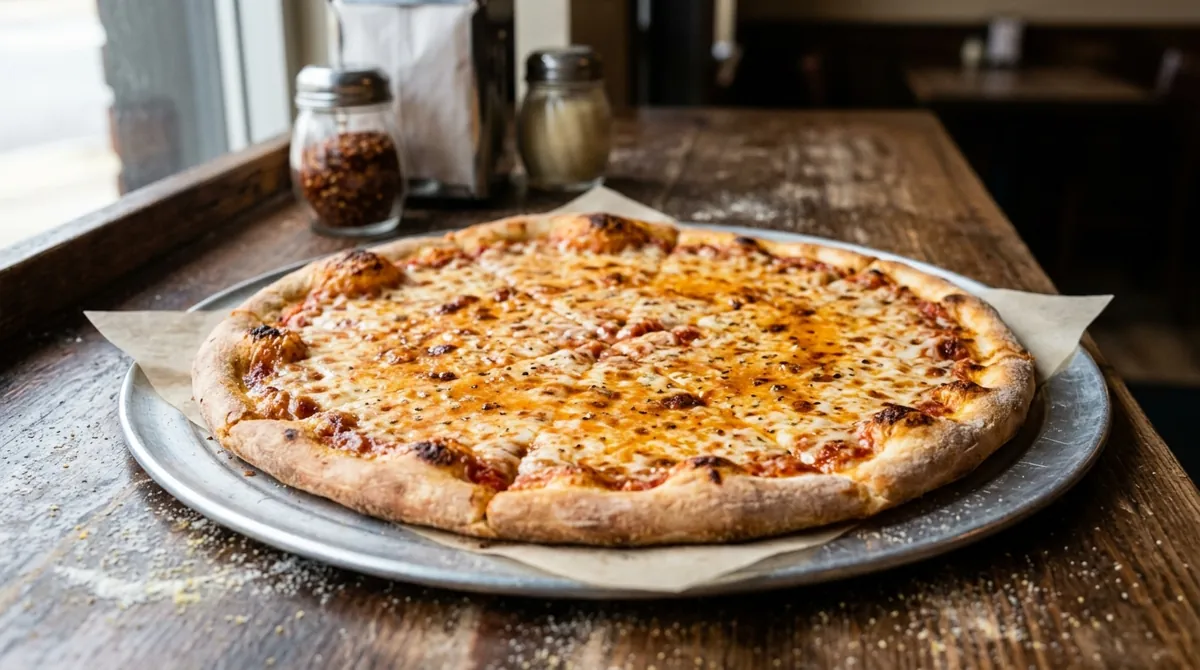
New York-Style Pizza
The big, thin, foldable slice: a cold-fermented bread-flour dough with a little sugar and oil, a smooth cooked tomato sauce and grated low-moisture mozzarella, baked hot and long until the cheese spots brown.
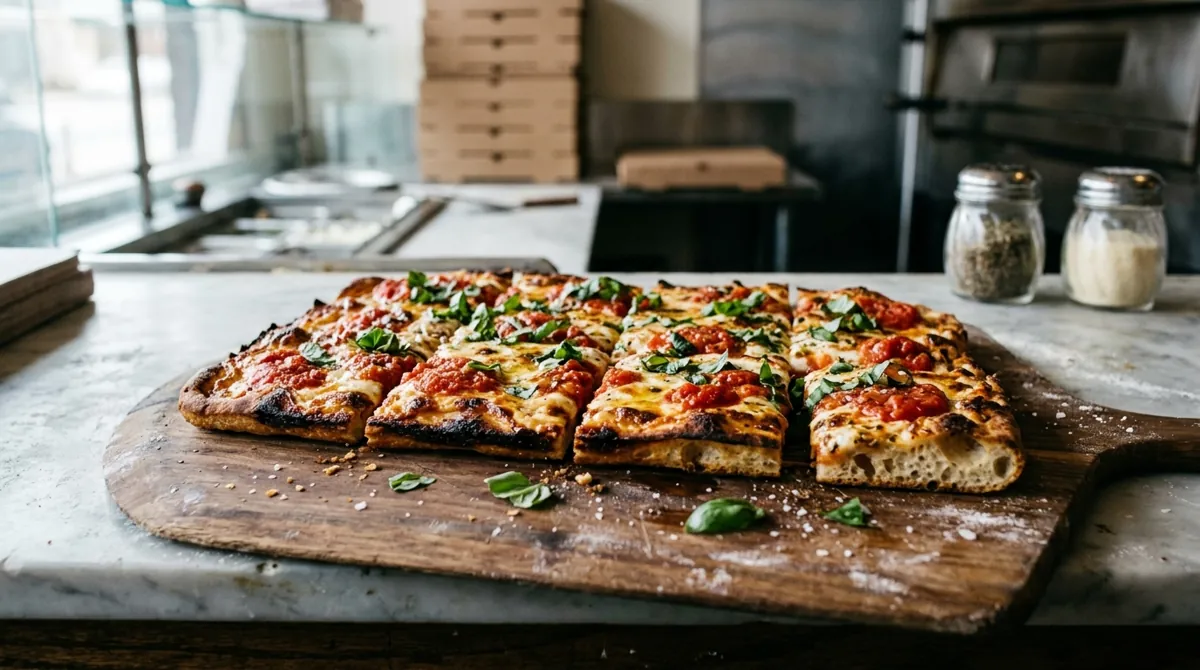
Grandma Pizza
Long Island's thin square pan pie: an oiled sheet-pan crust, mozzarella first, then raw tomatoes tossed with garlic, olive oil and oregano spooned on top.
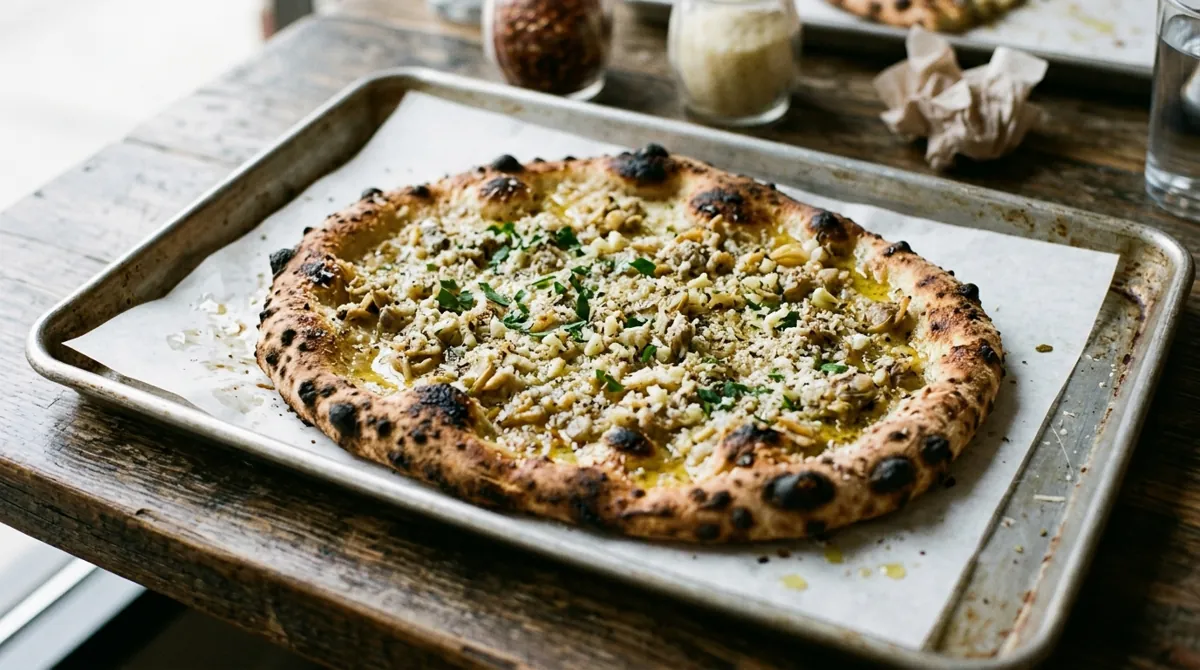
New Haven White Clam Pizza
New Haven's famous "apizza": a thin, charred crust with olive oil, garlic, oregano, grated Pecorino Romano and fresh littleneck clams, and no mozzarella.
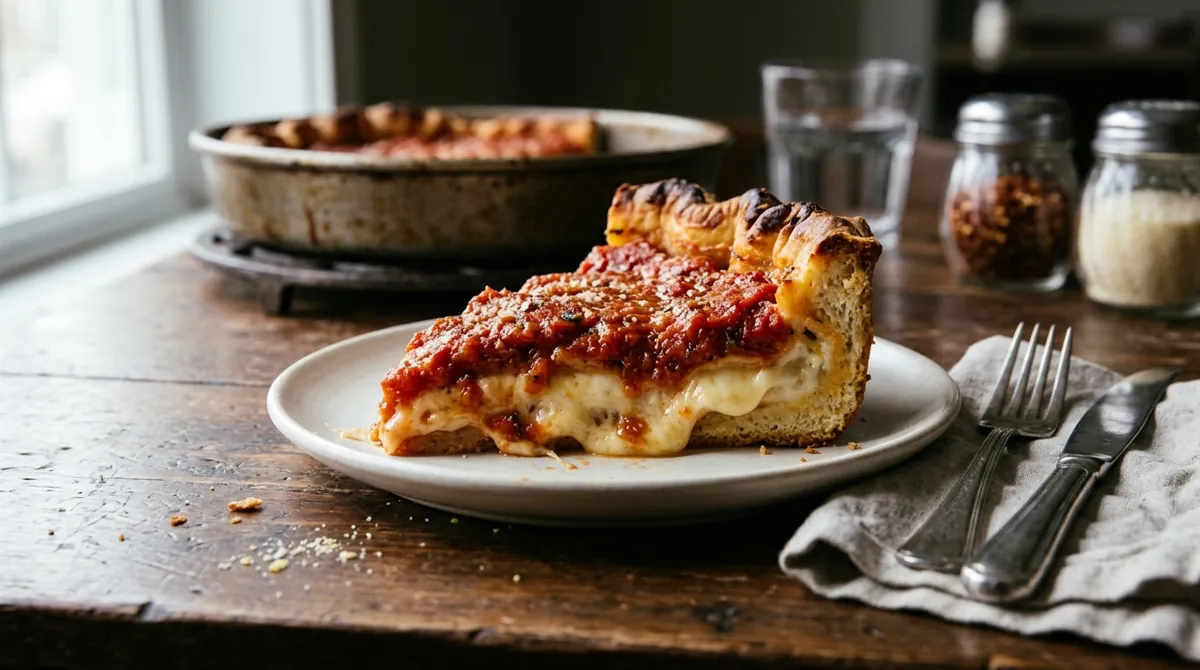
Chicago Deep-Dish Pizza
A tall, flaky, buttery crust baked in a round pan, filled with a thick layer of mozzarella and topped with a chunky tomato sauce and Parmesan. Eat it with a knife and fork.
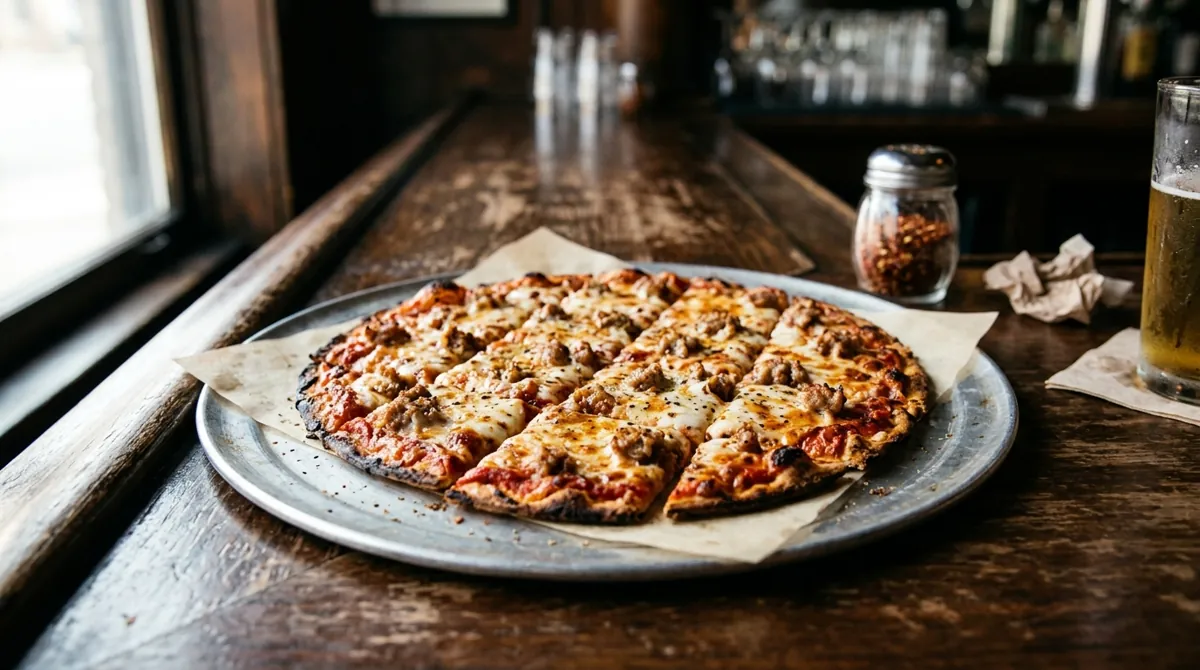
Chicago Tavern-Style Thin-Crust Pizza
Chicago's everyday pizza: a cracker-thin crust, a sweet herby sauce to the very edge, fennel-flecked sausage and mozzarella to the rim, cut into little squares.
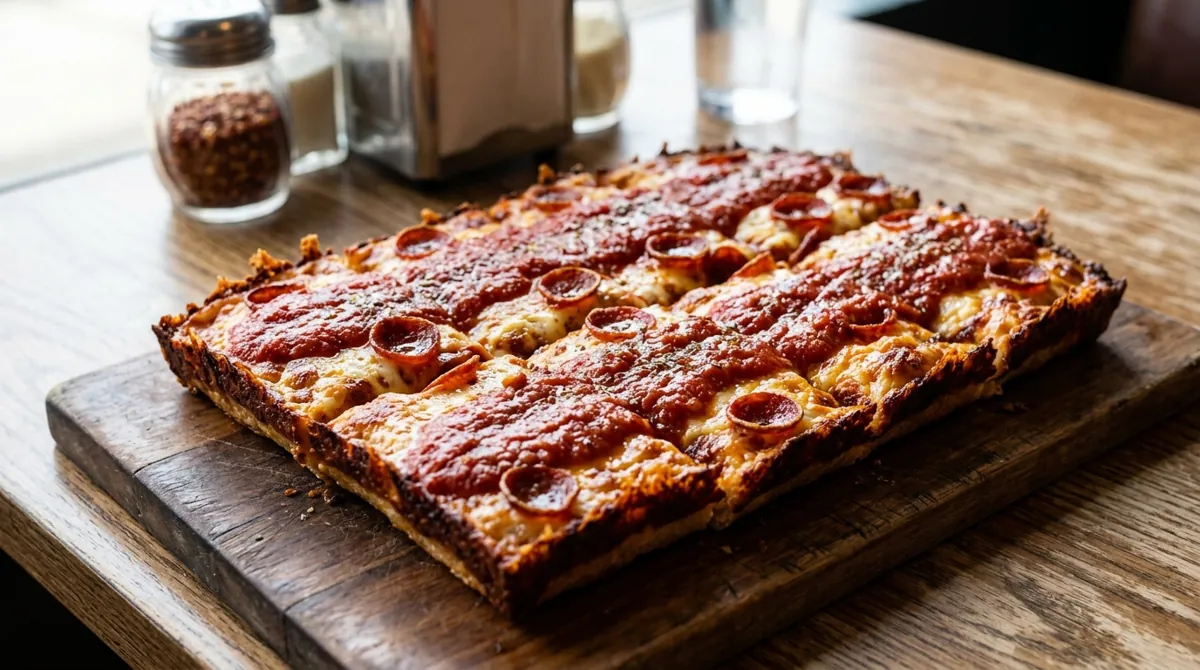
Detroit-Style Pizza
A thick, airy rectangle baked in a well-oiled steel pan, with pepperoni under Wisconsin brick cheese spread to the very edge so it fries into a dark, crispy crown, and sauce spooned on top in stripes.
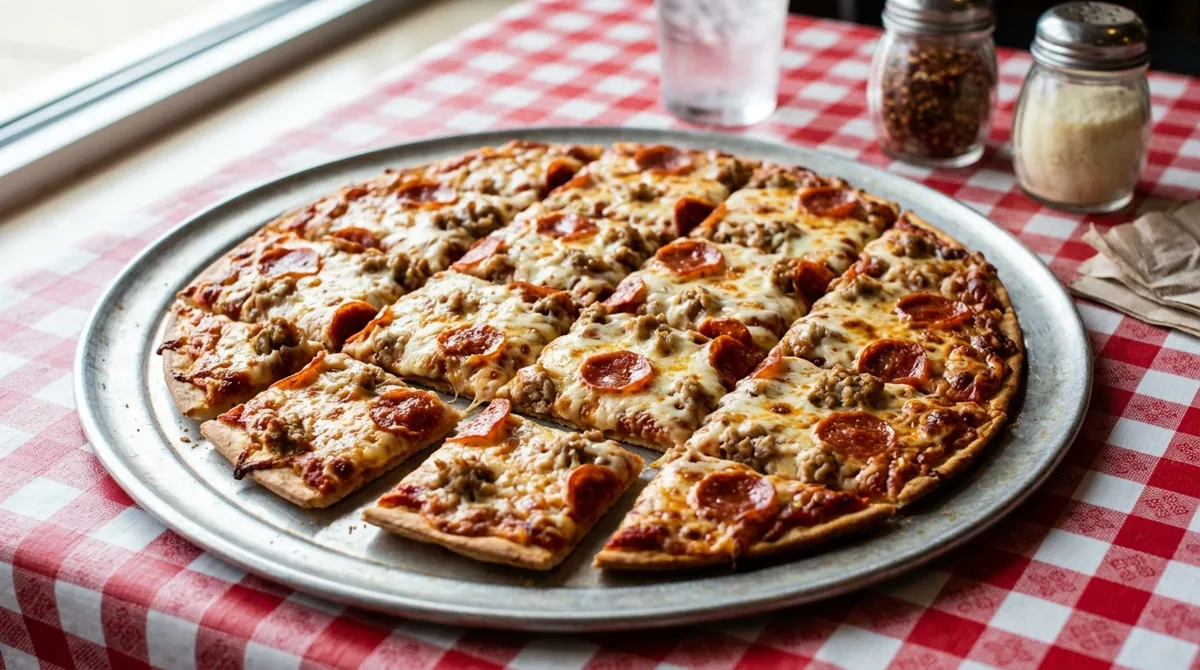
St. Louis-Style Pizza
A cracker-thin crust rolled out with a pin, a sweet oregano sauce, toppings to the edge and gooey, smoky Provel cheese, cut into squares.
California-Style BBQ Chicken Pizza
The pizza that told America anything goes: barbecue sauce instead of tomato, smoky gouda and mozzarella, roasted chicken, red onion and fresh cilantro.
Weeknight Skillet Pizza
Store-bought dough crisped in a skillet on the stove, then finished under the broiler: a crackly-bottomed cheese pizza in about 35 minutes, no stone and no preheating.
Pan Pizza, Inspired by Pizza Hut
Inspired by Pizza Hut's Pan Pizza, not an official recipe: a thick, no-knead dough that rises in an oiled cast-iron skillet and bakes with a golden, almost fried bottom and cheese right to the edge.
Meatballs of the World

Italian-American Meatballs
Big, tender meatballs braised for an hour in red sauce over spaghetti. The one most Americans grew up with.

Pallottine (Abruzzo Meatballs)
Tiny meatballs, smaller than a marble, tossed right through square spaghetti alla chitarra. No bread at all.

Swedish Meatballs (Köttbullar)
Small, soft meatballs browned in butter, in a cream sauce made from the same pan, with lingonberry jam on the plate.

Danish Frikadeller
Pork meatballs shaped with a spoon and fried slowly in butter, crusty outside and soft in the middle.

Königsberger Klopse
German meatballs that are never fried: poached, then served in a creamy white sauce with capers.

Spanish Albóndigas in Almond Saffron Sauce
The tapas bar classic: small meatballs in a golden sauce thickened with fried almonds and bread.

Mexican Albóndigas with Chipotle and Mint
Soft meatballs with rice and fresh mint inside, simmered in a smoky tomato and chipotle broth.

Izgara Köfte (Turkish Grilled Meatballs)
Small, flat meatballs kneaded hard, rested cold, and charred on a hot grill pan.

Lion's Head Meatballs
Big, soft pork meatballs, stirred into a sticky paste, fried to set, then braised in a savory sauce.

Chicken Tsukune
Japan's chicken meatball: kneaded sticky, grilled on skewers, glazed with sweet soy tare, dipped in egg yolk.