
Creole Chicken and Sausage Jambalaya
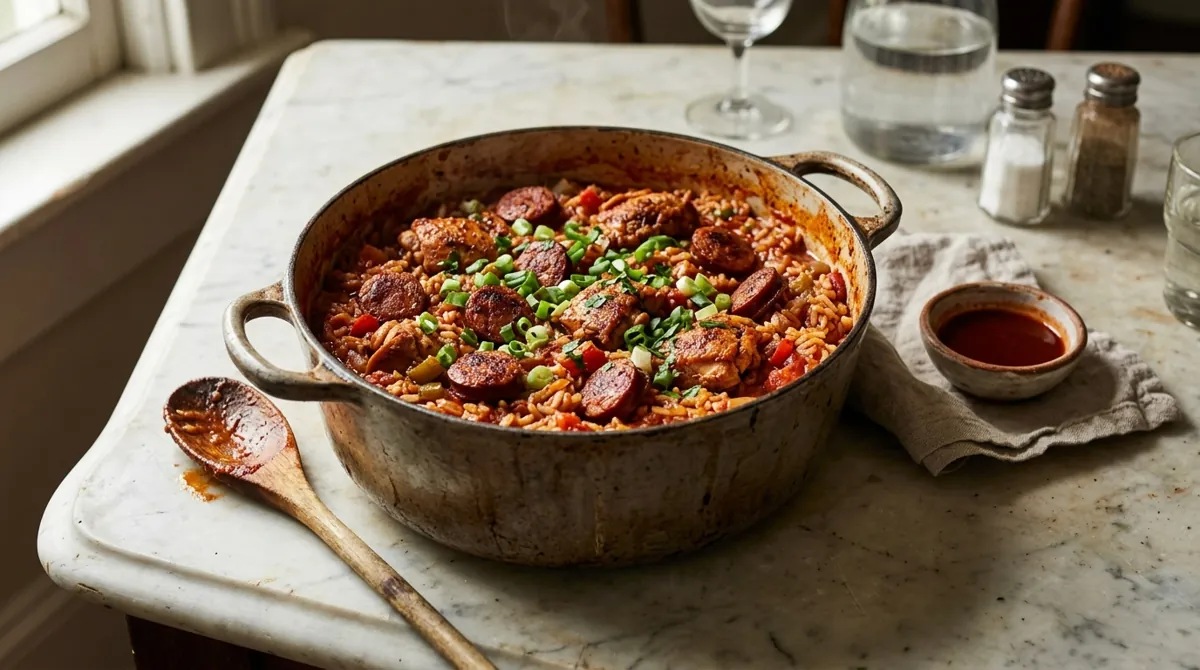
New Orleans' "red" jambalaya: browned chicken thighs, smoked sausage, the trinity and crushed tomatoes simmered with long-grain rice in one Dutch oven, then finished in the oven so the bottom never scorches.
 Edited by JP Lambiase
Change the estimate
Swaps change the price only: cook any meat to its own safe temperature. Where these numbers come from
Jambalaya is a Creole and Cajun rice dish from colonial French Louisiana, and the two styles look different: Creole jambalaya from New Orleans is "red" because it has tomatoes, while Cajun jambalaya from the countryside has none and gets its brown color from meat browned hard on the bottom of the pot (Wikipedia:). The roots are argued over. Wikipedia calls it a blend of West African, French and Spanish influences; some historians point to West African jollof rice (our Nigerian Jollof Rice with Chicken recipe), others to Valencian paella. The name is just as unsettled: the Oxford English Dictionary traces it to the Provençal *jambalaia*, a mishmash, first printed in an 1837 poem; chef John Folse proposes *jambon à la yaya*, "ham with rice"; the popular jamón-plus-paella idea has thin support (all via Wikipedia). The first English-language mention, in the May 1849 *American Agriculturalist*, is a recipe for "Hopping Johnny (jambalaya)," a mix-up with Hoppin' John (our Hoppin' John recipe); the first cookbook recipe is "JAM BOLAYA" in the *Gulf City Cook Book* of 1878. In 1968 Louisiana's governor proclaimed Gonzales "the Jambalaya capital of the world," and the town still holds a Jambalaya Festival every spring (Wikipedia).
🇺🇸 This one is American
New Orleans' "red" jambalaya: browned chicken thighs, smoked sausage, the trinity and crushed tomatoes simmered with long-grain rice in one Dutch oven, then finished in the oven so the bottom never scorches.
🇳🇬 The original
West Africa's jollof cooks rice in a red pepper and tomato base, the rice pot jambalaya is often linked to. See the Nigerian Jollof Rice with Chicken recipe.
Why it works the kitchen science
The oven, not the burner
Baking covered at 325°F heats the pot from all sides, so the rice cooks evenly and the bottom layer does not scorch the way it can over a flame.
Fond for flavor
Browning the chicken, then the sausage, then scraping the vegetables across the same bottom builds the deep, browned base that Cajun cooks get from their tomato-free "brown" version.
🧰 You'll need 6 items
Everything the steps call for. Tick off what you have before you start.
Appliances
Pans and pots
Tools
Step by step
- Step 1
Drain the tomatoes into a 4-cup measure. Tear each tomato open over a bowl to release its juice, strain that juice into the measure, crush the tomatoes by hand in the bowl, and top up the measure with broth to 4 cups. Heat the oven to 325°F.
- Step 2
Season the chicken with salt and pepper. Heat the oil in a 6- to 7-quart Dutch oven over medium-high heat until shimmering, add the chicken in one layer and brown without stirring 4 minutes, then turn and brown 4 minutes more. Move it to a plate.
- Step 3
Add the sausage to the pot and cook, stirring, 3 minutes, until it starts to darken; lower the heat or add a little oil if the bottom threatens to burn.
- Step 4
Add the onion, peppers, celery and garlic and cook, scraping up the browned bits, about 8 minutes, until the vegetables just turn golden. Stir in the tomato paste and cook 1 minute.
- Step 5
Add the hot sauce, thyme, oregano, cayenne, garlic powder and plenty of black pepper, then the crushed tomatoes, the 4 cups of tomato liquid, the chicken with its juices and the bay leaves. Bring to a simmer and taste the liquid; it should be well salted.
- Step 6
Stir in the rice, return to a simmer, cover and move the pot to the oven. Bake 40 minutes, until the liquid is absorbed and the rice is tender.
- Step 7
Stir in the scallions, cover and let rest on the stovetop 15 minutes. Remove the bay leaves and serve with more hot sauce.
Creole Chicken and Sausage Jambalaya
Serves 8 · about 12 cups · 1 hr 50 min total
Liquid
- 1 can (28 oz) whole peeled tomatoes in juice
- About 2 1/2 cups low-sodium chicken broth, to bring the tomato juices to 4 cups
Meat
- 1 1/2 lb boneless, skinless chicken thighs (680 g), cut into 1-inch chunks
- Kosher salt and black pepper
- 1 tbsp vegetable oil, plus more if needed
- 12 oz andouille or other smoked sausage (340 g), sliced into thin rounds
Vegetables and seasoning
- 1 medium yellow onion (8 oz, 225 g), diced
- 2 medium green bell peppers (10 oz, 280 g), diced
- 4 ribs celery (6 oz, 170 g), diced
- 4 cloves garlic, minced
- 1 tsp tomato paste
- 1 tbsp Louisiana-style hot sauce, plus more to serve
- 1 tsp dried thyme
- 1 tsp dried oregano
- 1/4 tsp cayenne
- 1/4 tsp garlic powder
- 2 bay leaves
Rice and finish
- 2 cups long-grain white rice (12 oz, 370 g)
- 6 scallions, white and light green parts, thinly sliced
Equipment: Oven, 7-quart Dutch oven, Chef's knife and cutting board, Measuring cups and spoons, Mixing bowls, Fine-mesh strainer
Method
- Drain the tomatoes into a 4-cup measure. Tear each tomato open over a bowl to release its juice, strain that juice into the measure, crush the tomatoes by hand in the bowl, and top up the measure with broth to 4 cups. Heat the oven to 325°F.
- Season the chicken with salt and pepper. Heat the oil in a 6- to 7-quart Dutch oven over medium-high heat until shimmering, add the chicken in one layer and brown without stirring 4 minutes, then turn and brown 4 minutes more. Move it to a plate.
- Add the sausage to the pot and cook, stirring, 3 minutes, until it starts to darken; lower the heat or add a little oil if the bottom threatens to burn.
- Add the onion, peppers, celery and garlic and cook, scraping up the browned bits, about 8 minutes, until the vegetables just turn golden. Stir in the tomato paste and cook 1 minute.
- Add the hot sauce, thyme, oregano, cayenne, garlic powder and plenty of black pepper, then the crushed tomatoes, the 4 cups of tomato liquid, the chicken with its juices and the bay leaves. Bring to a simmer and taste the liquid; it should be well salted.
- Stir in the rice, return to a simmer, cover and move the pot to the oven. Bake 40 minutes, until the liquid is absorbed and the rice is tender.
- Stir in the scallions, cover and let rest on the stovetop 15 minutes. Remove the bay leaves and serve with more hot sauce.
Adapted from Daniel Gritzer, "Creole-Style Red Jambalaya With Chicken, Sausage, and Shrimp," Serious Eats (March 9, 2017; serves 8). Changes: the shrimp are left out to keep it under budget (we add 1/4 lb more chicken instead, 1 1/2 lb in all), the chicken is cut into chunks before browning instead of browned whole and cut on a board, and a 12 oz smoked sausage stands in for andouille or chaurice if that is what the store has. His oven method (325°F, covered, about 40 minutes) is kept, in the same Dutch oven. Estimated cost: about $18.60 for the pot, about $2.32 a serving. Serious Eats. Ingredient list follows the source; the method is in our own words.
All sources (2)
Tips
- Estimated cost: about $2.32 a serving, about $18.60 for the pot. Add the original 3/4 lb shrimp for the last 5 minutes in the oven if the budget allows.
- Chicken thighs must reach 165°F; after 40 minutes in the oven they are well past it.
- Cajun-style: leave out the tomatoes and use 4 cups broth, and brown the meat harder in step 2 and 3.
- Rice leftovers: cool in shallow containers and refrigerate within an hour; reheat to 165°F.
The rules people argue about
What the sources agree on, what they don't, and what is just a good story.
- Creole jambalaya has tomatoes; Cajun has none. Documented as the usual distinction (Wikipedia: Creole "red", Cajun brown from browned meat).
- Jambalaya descends from West African jollof. Disputed: Ozoz Sokoh (The Splendid Table, 2025, our Nigerian Jollof Rice with Chicken recipe) says jambalaya is a descendant of jollof via the transatlantic slave trade; Wikipedia says "some historians suggest" it, and others point to Valencian paella.
- Where the word comes from. Disputed: Provençal *jambalaia*, "mishmash" (Oxford English Dictionary via Wikipedia); *jambon à la yaya*, "ham with rice" (John Folse via Wikipedia); the jamón-and-paella story has thin evidence (Wikipedia).
- Gonzales is the Jambalaya Capital of the World. Documented as a 1968 governor's proclamation (Wikipedia).
- Never stir jambalaya once the rice is in. Folklore as a rule; Gritzer avoids the problem by baking it covered.
Every other one-pot meal
One-Pot Red Beans and Rice
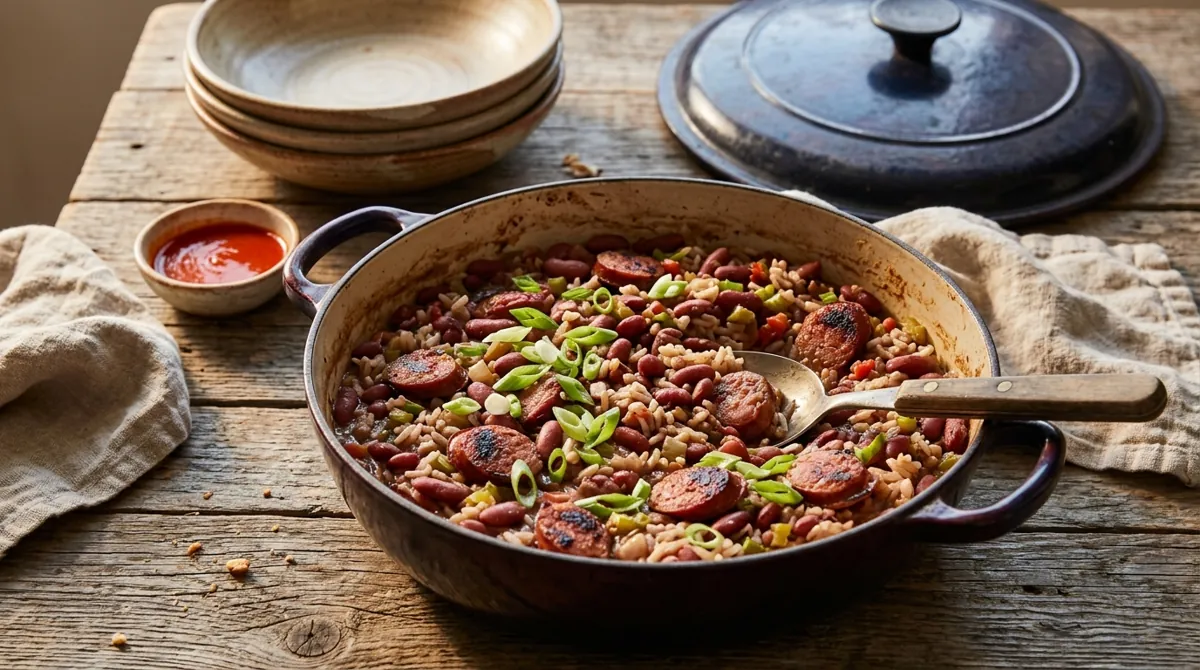
New Orleans' Monday classic made for a weeknight: smoked sausage, the onion, pepper and celery "trinity," canned red beans and long-grain rice all simmered together in one Dutch oven, ready in an hour.
Nigerian Jollof Rice with Chicken
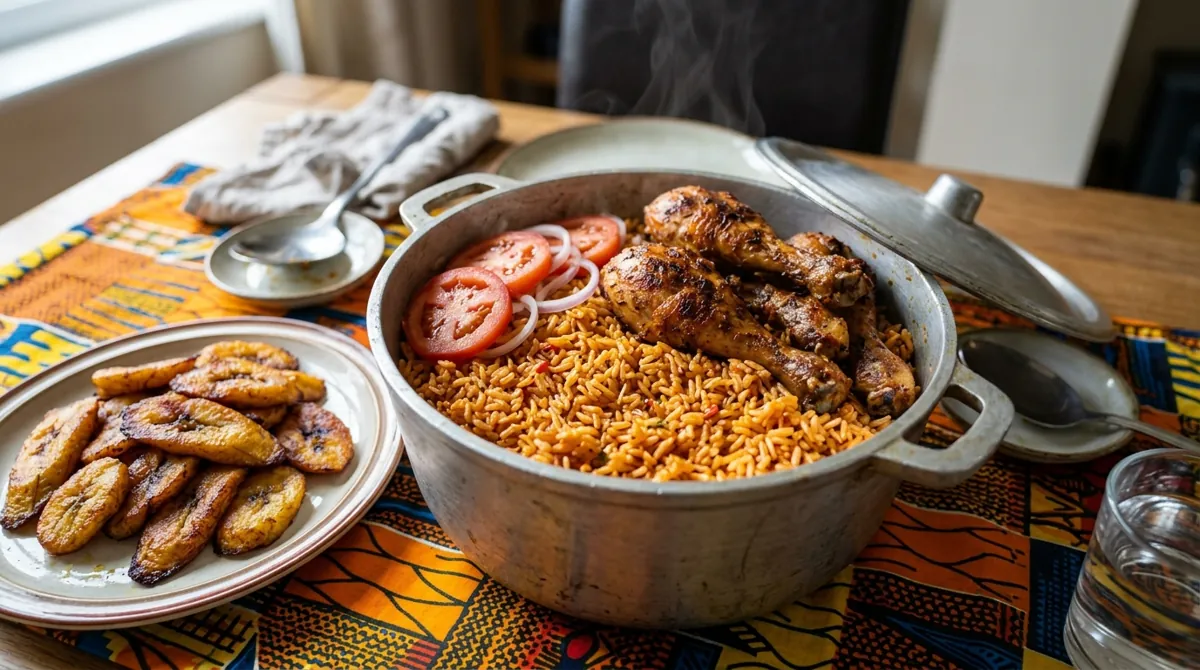
West Africa's famous party rice: parboiled rice simmered in a fried pepper and tomato base with curry powder, thyme and bay, sealed under foil, with browned chicken drumsticks steaming on top in the same pot.
Hoppin' John (Lowcountry Peas and Rice)
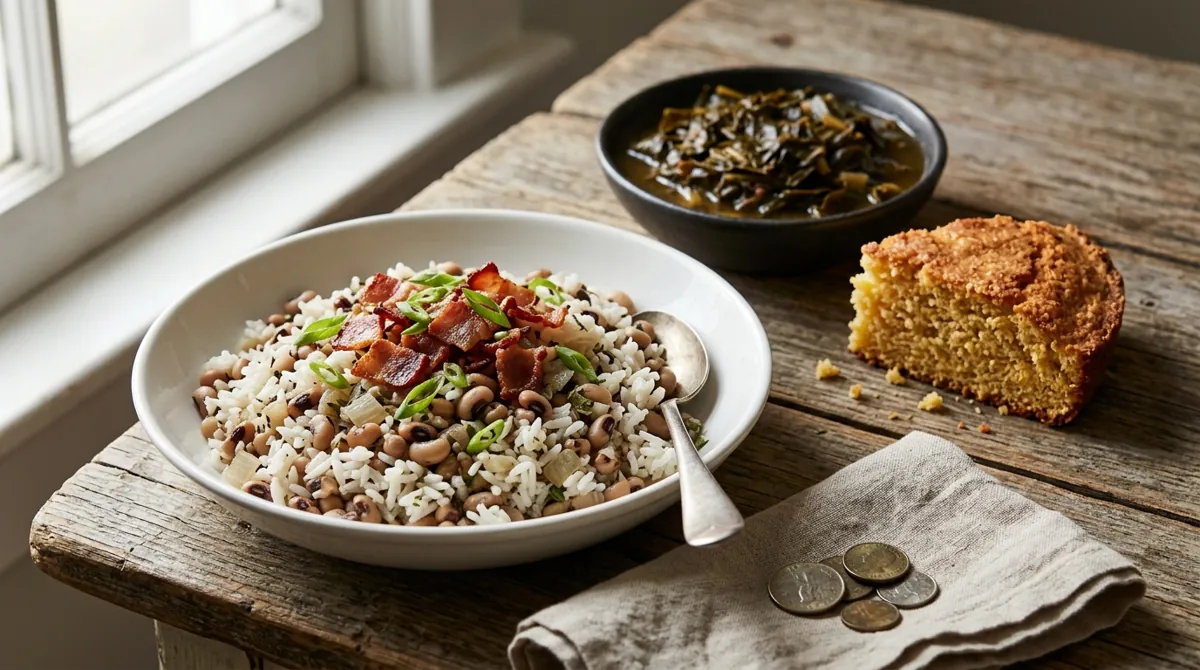
The South's New Year's Day pot, made the old Charleston way: dried peas simmered with smoky bacon, then raw rice cooked right in the bean broth and steamed until every grain is seasoned. Three ingredients, about a dollar a serving.
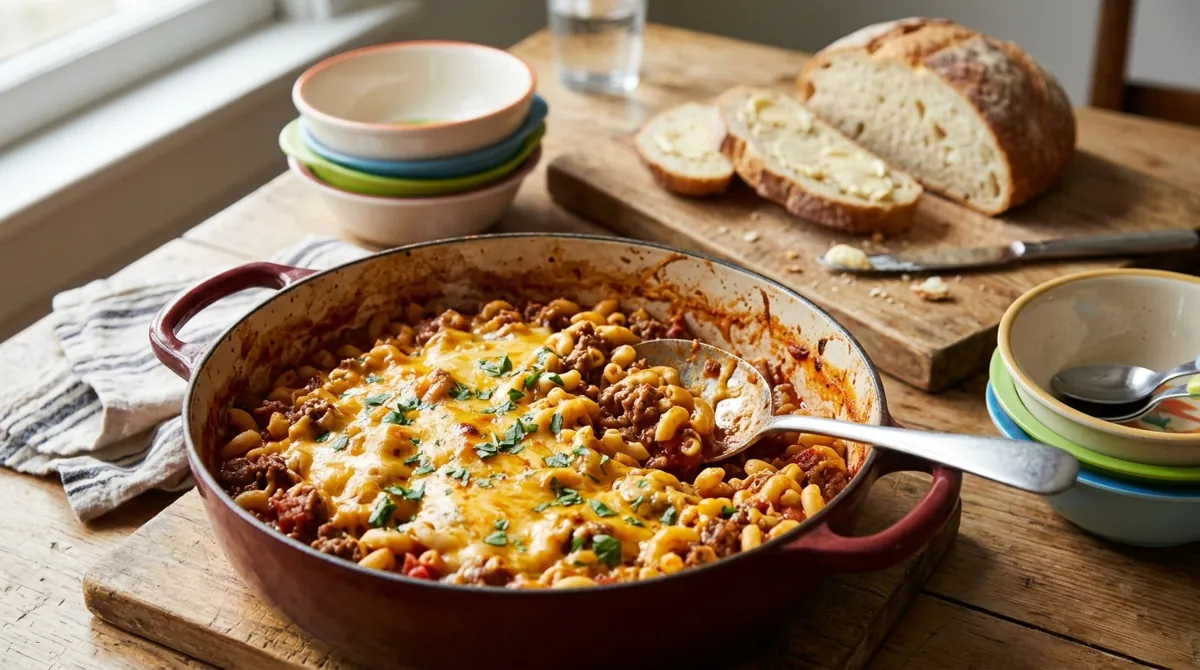
American Goulash (One-Pot Macaroni and Beef)
The school-cafeteria favorite made at home in one pot: ground beef, peppers and onion in a tomato sauce with a little paprika, uncooked elbow macaroni simmered right in it, and cheddar melted over the top. Forty minutes.
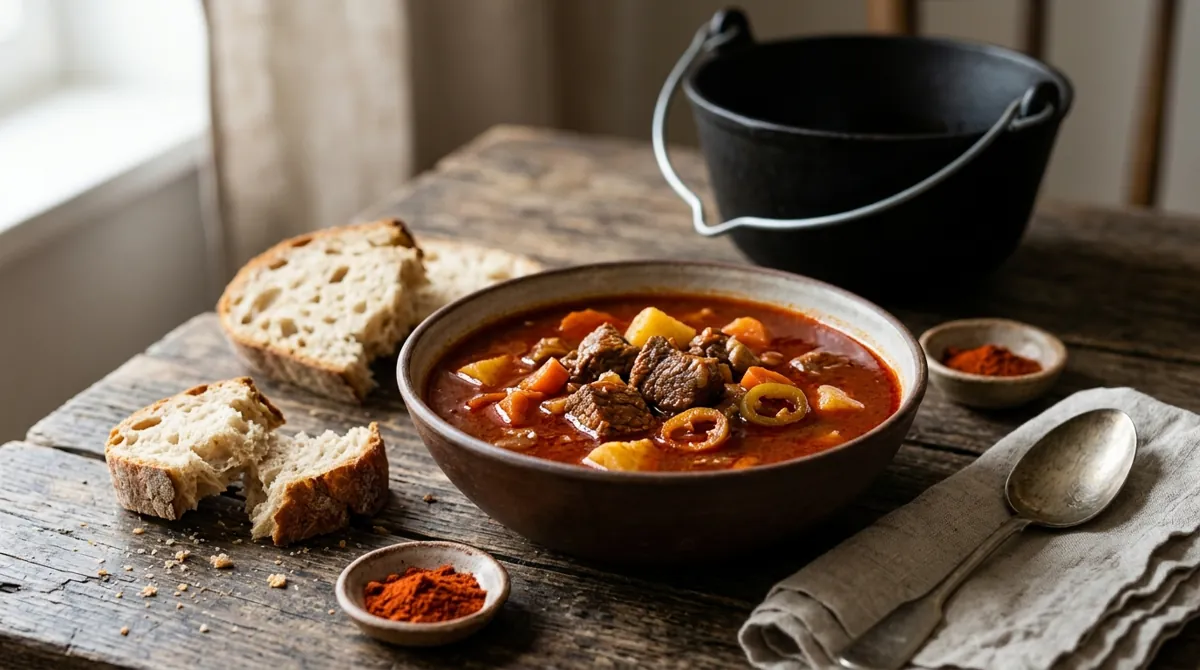
Hungarian Gulyás (Goulash Soup)
The real goulash, the herdsmen's soup: beef chuck sweated with onions in lard, seasoned with Hungarian paprika, garlic and caraway, simmered in water with peppers, tomato, carrots and potatoes until tender. No pasta, no flour.
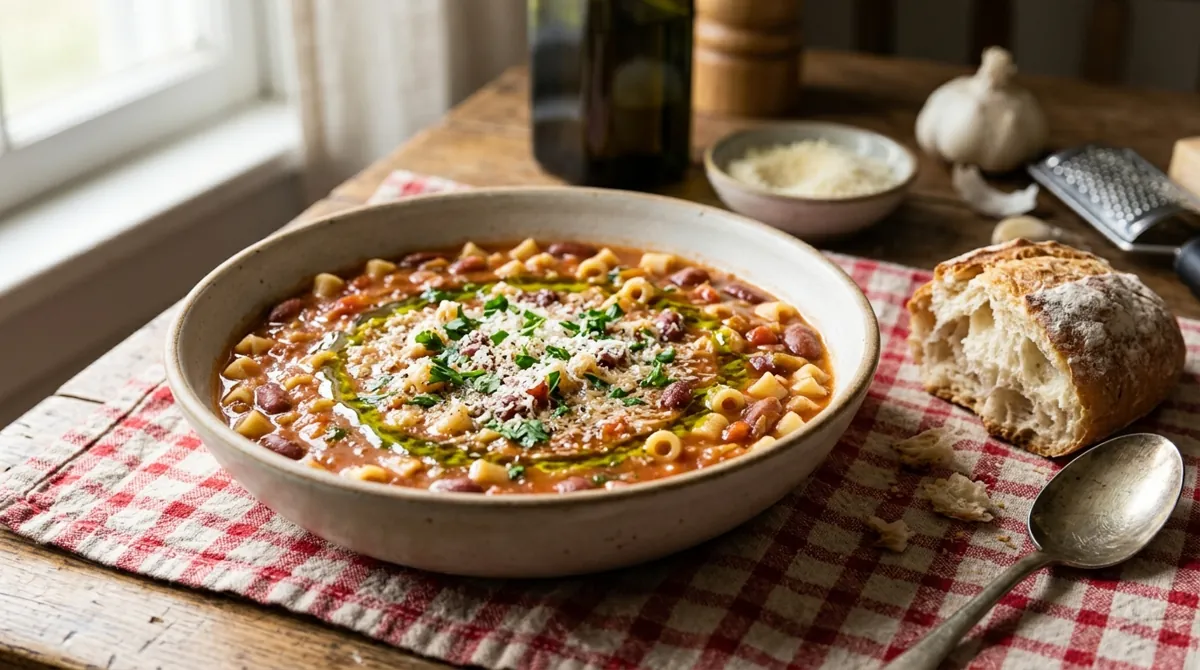
Pasta e Fagioli (Pasta Fazool)
Italy's poor man's pasta and bean soup the Italian-American way: onion, garlic, oregano and chile in olive oil and butter, hand-crushed tomatoes, broth and red kidney beans, with small pasta cooked right in the pot. Done in 45 minutes.
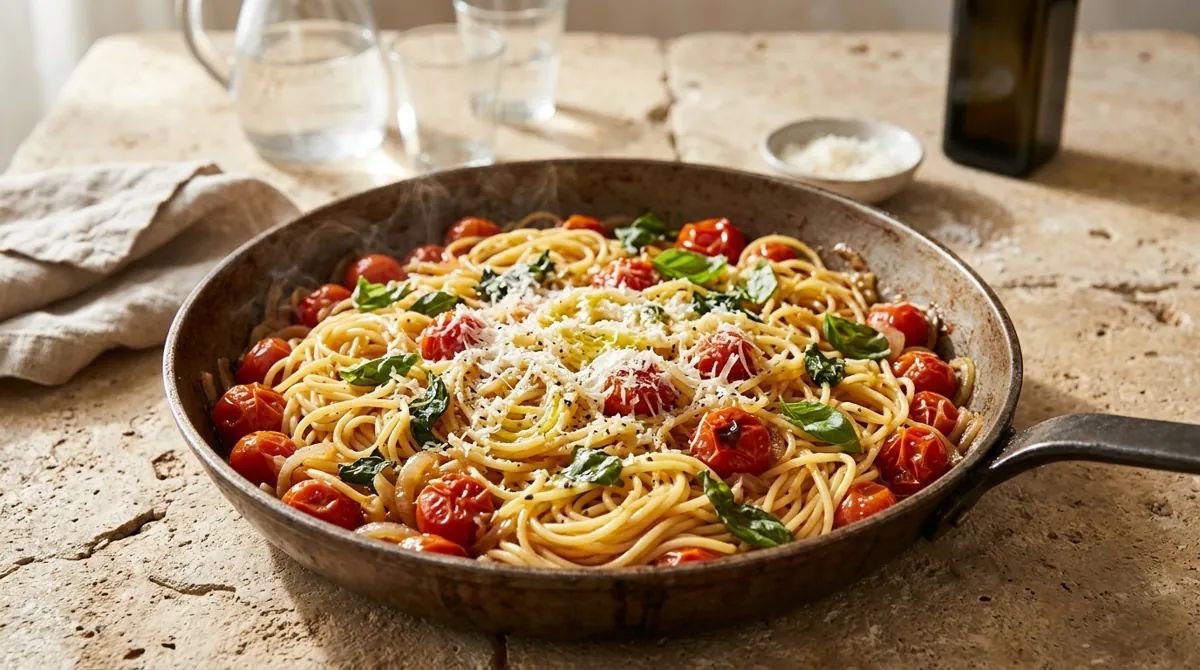
One-Pan Spaghetti with Cherry Tomatoes and Basil
The pasta that made "one-pot" famous: dry spaghetti, halved cherry tomatoes, sliced onion, garlic, basil and olive oil all go into one wide pan with cold water and boil for about 10 minutes into their own glossy sauce. Meatless, 25 minutes.
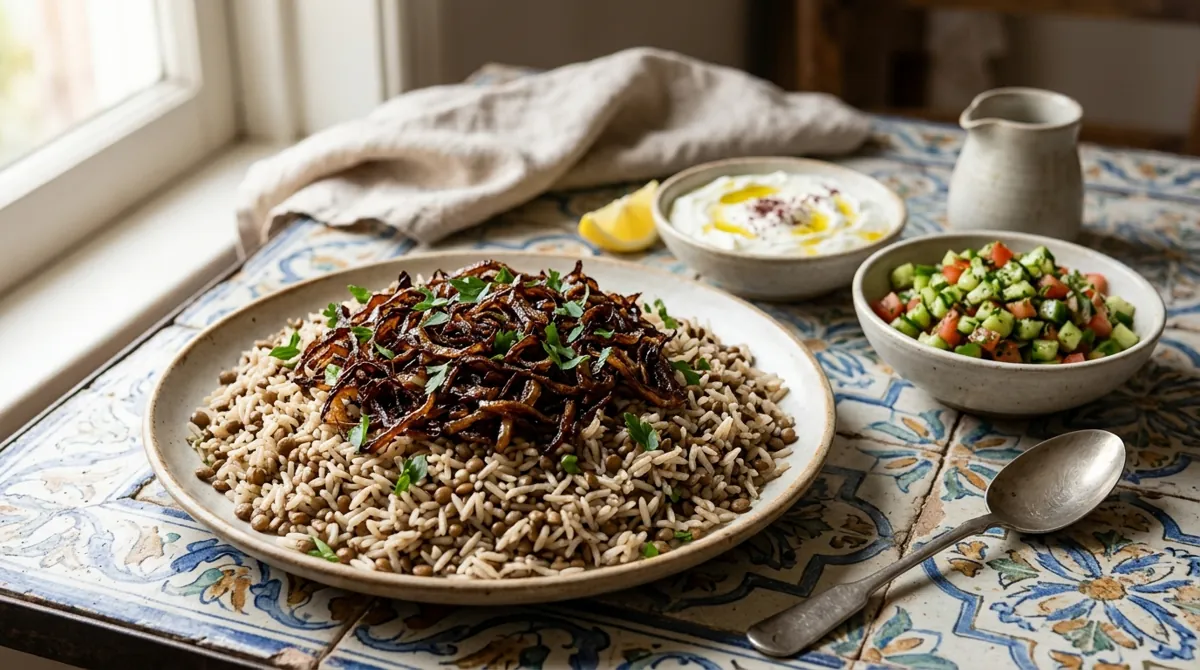
Mujaddara (Lentils and Rice with Browned Onions)
The Levant's thrifty lentil and rice pilaf in one pot: a mountain of onions browned slowly in olive oil, half saved for the top, the rest cooked with cumin, coriander, brown lentils and rice. Meatless, with a cool lemon yogurt on the side.
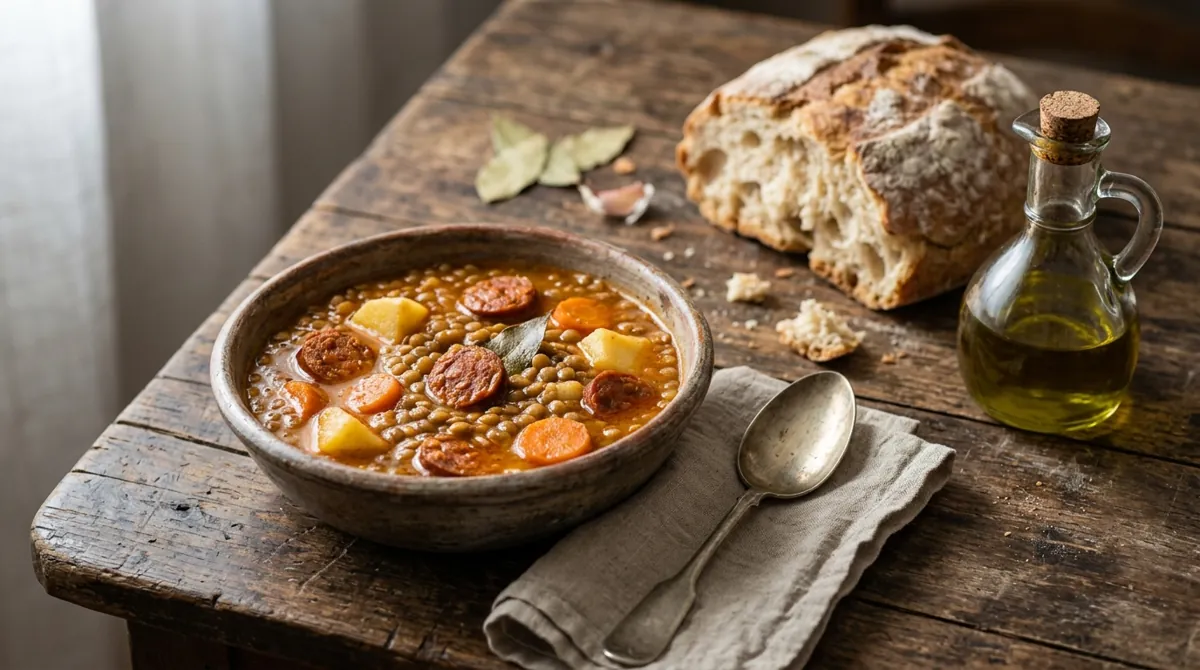
Spanish Lentejas with Chorizo (Lentil Stew)
Spain's everyday lentil stew, the dish Don Quixote ate on Fridays: a grated sofrito of onion, carrot, tomato and garlic in olive oil, brown lentils and potatoes simmered with bay, then slices of chorizo and sweet pimentón stirred in at the end.
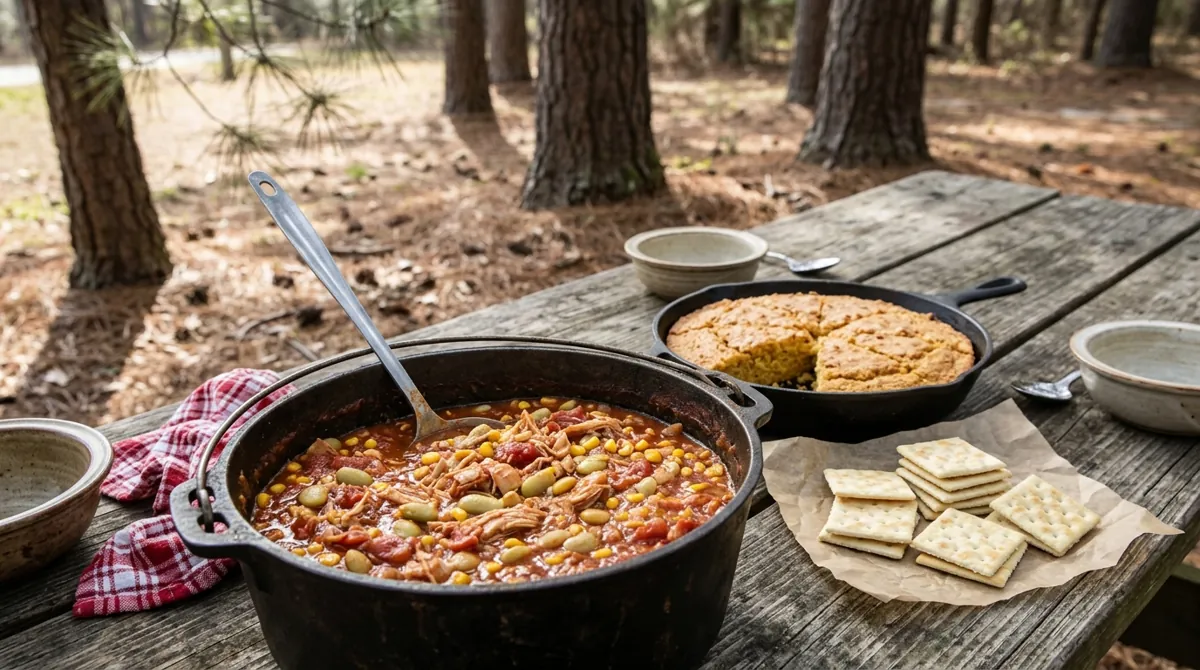
Virginia Brunswick Stew
The thick Southern tomato stew two states claim: bacon, onions, potatoes, butter beans and corn simmered with chicken thighs until the potatoes melt and the chicken shreds, all in one pot, with crackers or cornbread alongside.
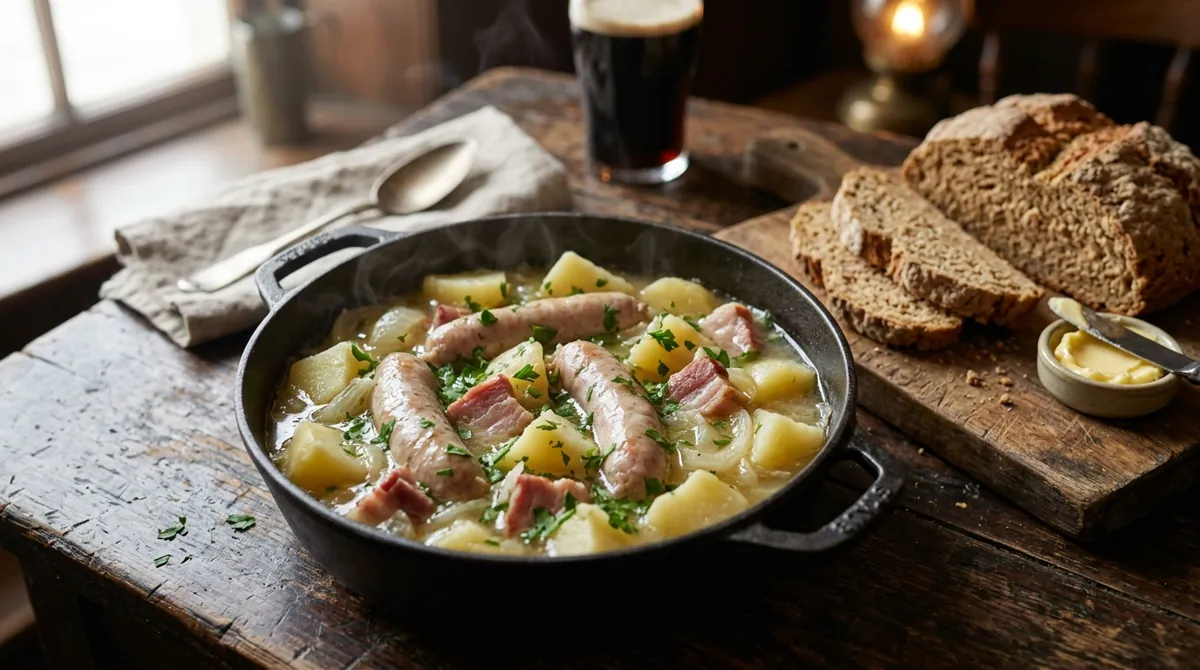
Dublin Coddle
Dublin's Saturday-night pot: browned pork sausages and thick bacon layered with sliced onions, parsley and potatoes, covered with stock and left to braise low and slow in the oven in the same pot until everything is meltingly soft.
Meatballs of the World

Italian-American Meatballs
Big, tender meatballs braised for an hour in red sauce over spaghetti. The one most Americans grew up with.

Pallottine (Abruzzo Meatballs)
Tiny meatballs, smaller than a marble, tossed right through square spaghetti alla chitarra. No bread at all.

Swedish Meatballs (Köttbullar)
Small, soft meatballs browned in butter, in a cream sauce made from the same pan, with lingonberry jam on the plate.

Danish Frikadeller
Pork meatballs shaped with a spoon and fried slowly in butter, crusty outside and soft in the middle.

Königsberger Klopse
German meatballs that are never fried: poached, then served in a creamy white sauce with capers.

Spanish Albóndigas in Almond Saffron Sauce
The tapas bar classic: small meatballs in a golden sauce thickened with fried almonds and bread.

Mexican Albóndigas with Chipotle and Mint
Soft meatballs with rice and fresh mint inside, simmered in a smoky tomato and chipotle broth.

Izgara Köfte (Turkish Grilled Meatballs)
Small, flat meatballs kneaded hard, rested cold, and charred on a hot grill pan.

Lion's Head Meatballs
Big, soft pork meatballs, stirred into a sticky paste, fried to set, then braised in a savory sauce.

Chicken Tsukune
Japan's chicken meatball: kneaded sticky, grilled on skewers, glazed with sweet soy tare, dipped in egg yolk.