
İskender Kebab (Bursa Döner over Pide with Tomato Butter and Yogurt)
Rib-eye marinated in milk, garlic, red pepper and thyme, rolled into a log, frozen and shaved paper-thin like döner, then piled on cubes of pide under a hot butter and tomato sauce with thick yogurt and blistered peppers on the side.
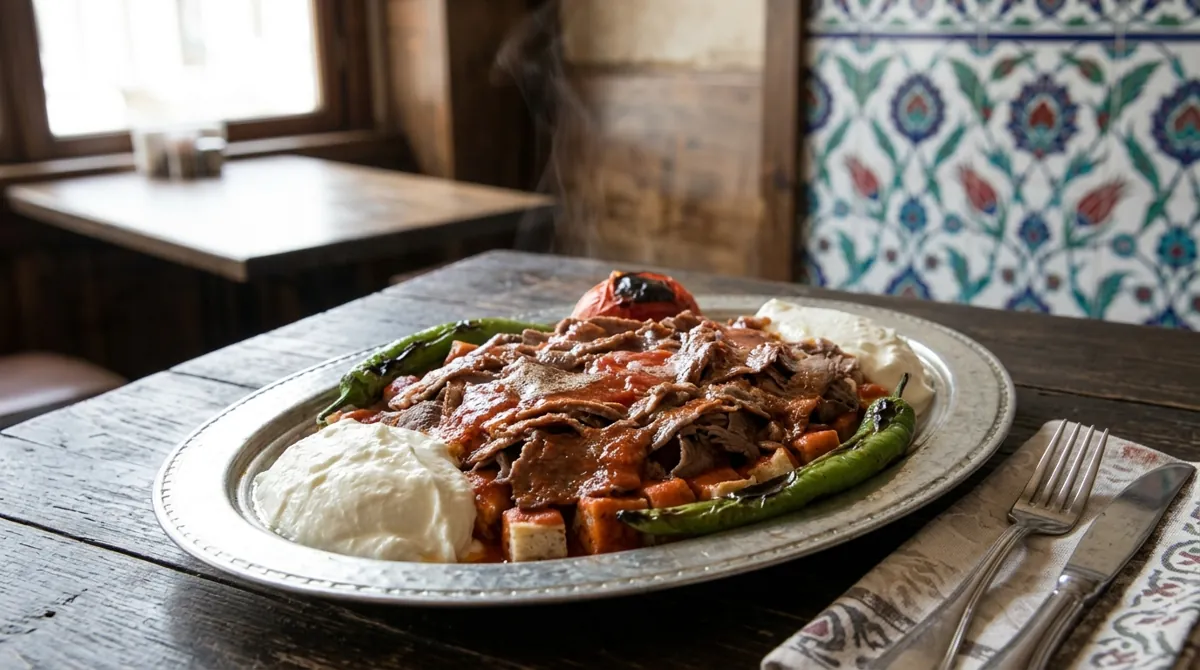
Döner kebab means "turning kebab," and the turning is the whole story. Wikipedia says stacks of seasoned sliced meat were roasted on a horizontal spit in the Ottoman Empire at least as far back as the 17th century, that the vertical spit appeared no later than the mid-19th century, and that Bursa is often considered the birthplace of the vertically roasted döner. The earliest known photograph of döner was taken by James Robertson in 1855.
Bursa's claim belongs to one family. Wikipedia's İskender kebap article says the dish is named after its inventor, İskender, who lived in Bursa in the late 19th century, and that "Kebapçı İskender" is trademarked by the İskenderoğlu family, who still run the restaurant there. The plate is thin-cut grilled meat over pieces of bread, hot tomato sauce, melted butter (usually poured at the table) and yogurt. A rival claimant, Hamdi Usta of Kastamonu, may have roasted meat vertically around 1830, before İskender (see Rules). This home version comes from the Turkish recipe site Yemek.com, which credits the dish to İskender Efendi of 19th-century Bursa. Without a spit, it freezes a log of marinated steak and shaves it thin, the same trick the Berlin döner uses later in this hub.
Why it works the kitchen science
Freezing the log
Frozen marinated steak can be shaved as thin as meat off a spit, and thin slices cook in minutes, so a skillet stands in for the rotisserie.
Bread that drinks the sauce
The pide cubes soak up butter, tomato and meat juices, and the cold, sour yogurt cuts through all that richness.
Step by step
- Step 1
The day before: stir together the milk, honey, garlic, red pepper, olive oil, thyme, black pepper and salt. Add the steak and onion rings, turn to coat, cover and refrigerate at least 6 hours, ideally 24.
- Step 2
Lift the steak out of the marinade (discard the marinade and onion), pat it dry, lay it on a sheet of plastic wrap and roll it into a tight log like a salami. Twist the ends and freeze overnight.
- Step 3
Let the log sit on the counter 10 minutes, just until a sharp knife goes in, then shave it into paper-thin slices. Cook the slices right away.
- Step 4
Melt 1 tbsp butter in a large skillet over medium-high heat. Add the slices in batches and cook, stirring, 3 to 4 minutes, until they release their juices, the juices cook back in and the edges brown. Probe a stack of slices: 145°F. Rest off the heat 3 minutes. Push the meat to one side and blister the peppers and tomato halves in the same pan, 4 to 5 minutes.
- Step 5
For the sauce, melt 2 tbsp butter in a small saucepan over medium heat. Add the tomato paste and red pepper and fry, stirring, 1 to 2 minutes. Pour in the boiling water, season with salt and pepper and boil 2 minutes.
- Step 6
Cut the pide into 1-inch cubes and divide among 4 plates. Spoon a little sauce over the bread to warm and soften it, pile on the meat, and finish with the rest of the sauce. Serve with the yogurt, peppers and tomatoes alongside.
İskender Kebab (Bursa Döner over Pide with Tomato Butter and Yogurt)
Serves 4 · 4 plates · 1 hr total
Meat and marinade
- 1.1 lb (500 g) boneless rib-eye steak
- 3/4 cup plus 1 tbsp (about 200 ml) milk
- 1 tsp honey (optional)
- 1 onion, sliced into rings
- 4 garlic cloves, crushed
- 2 tsp ground red pepper (Turkish pul biber or sweet paprika)
- 2 tbsp olive oil
- 2 tsp dried thyme
- 1 tsp black pepper
- 1 tsp salt
- 1 tbsp butter, for frying
Sauce
- 2 tbsp butter
- 1 tbsp tomato paste
- 2 tsp ground red pepper
- 3/4 cup plus 1 tbsp (about 200 ml) boiling water
- Salt and black pepper
To serve
- 2 tırnak pide (Turkish flatbread), or 4 pocketless pitas (about 8 oz)
- 1/2 cup (8 tbsp) thick yogurt, such as Greek yogurt
- 4 long green peppers (Italian frying peppers or Anaheims)
- 2 tomatoes, halved
Method
- The day before: stir together the milk, honey, garlic, red pepper, olive oil, thyme, black pepper and salt. Add the steak and onion rings, turn to coat, cover and refrigerate at least 6 hours, ideally 24.
- Lift the steak out of the marinade (discard the marinade and onion), pat it dry, lay it on a sheet of plastic wrap and roll it into a tight log like a salami. Twist the ends and freeze overnight.
- Let the log sit on the counter 10 minutes, just until a sharp knife goes in, then shave it into paper-thin slices. Cook the slices right away.
- Melt 1 tbsp butter in a large skillet over medium-high heat. Add the slices in batches and cook, stirring, 3 to 4 minutes, until they release their juices, the juices cook back in and the edges brown. Probe a stack of slices: 145°F. Rest off the heat 3 minutes. Push the meat to one side and blister the peppers and tomato halves in the same pan, 4 to 5 minutes.
- For the sauce, melt 2 tbsp butter in a small saucepan over medium heat. Add the tomato paste and red pepper and fry, stirring, 1 to 2 minutes. Pour in the boiling water, season with salt and pepper and boil 2 minutes.
- Cut the pide into 1-inch cubes and divide among 4 plates. Spoon a little sauce over the bread to warm and soften it, pile on the meat, and finish with the rest of the sauce. Serve with the yogurt, peppers and tomatoes alongside.
Adapted from Yemek.com, "İskender Tarifi" (editor evdekendinpisir, September 17, 2025), 4 servings, in Turkish. We follow it as written: 500 g antrikot (rib-eye) marinated at least 6 hours, ideally a day, in milk, onion, garlic, ground red pepper, olive oil, thyme, black pepper, salt and optional honey; rolled tight in plastic wrap and frozen at least overnight; sliced thin while partly frozen and cooked in butter until the meat gives up its juices and takes them back; a sauce of butter, tomato paste and red pepper with a glass of boiling water; and cubes of tırnak pide under the meat. We converted Turkish household measures (1 su bardağı is about 200 ml; 1 tatlı kaşığı about 2 teaspoons). The butter for frying the slices, the pepper and tomato amounts on the side, the 145°F check and the 10-minute softening before slicing are ours. For comparison, Özlem Warren's home-style İskender (Özlem's Turkish Table, December 14, 2015) pounds thin slices and sears them 2 minutes a side. Yemek.com. Ingredient list follows the source; the method is in our own words.
Tips
- Yemek.com says you can make the log ahead, keep it frozen and slice off what you need.
- For a richer döner, Yemek.com suggests ground beef or lamb with a little tail fat instead of steak.
- A little garlic and a splash of grape vinegar in the sauce is Yemek.com's variation.
- Ramazan pide can stand in for tırnak pide.
- Wikipedia notes that the melted butter is usually poured over at the table; bring the sauce to the table sizzling.
The rules people argue about
What the sources agree on, what they don't, and what is just a good story.
- İskender Efendi invented the vertical döner in Bursa. Disputed: the claim comes from his grandson Yavuz İskenderoğlu (Wikipedia marks it as needing a non-family source); Wikipedia also says Hamdi Usta of Kastamonu may have preceded him around 1830.
- Bursa is the birthplace of döner. Disputed wording: Wikipedia says it is "often considered" the birthplace, not that it is proven.
- Only the İskenderoğlu family can call it İskender. Documented in part: Wikipedia says "Kebapçı İskender" is their trademark; elsewhere the dish is also sold as Bursa kebabı or under other names.
- The butter must be sheep's milk butter. Documented as Wikipedia's description of the restaurant dish; home recipes, including Yemek.com's, use ordinary butter.
- Real İskender is lamb. Folklore: Wikipedia names lamb (or chicken); Yemek.com uses beef rib-eye and suggests beef or lamb mince.
Every other kebab
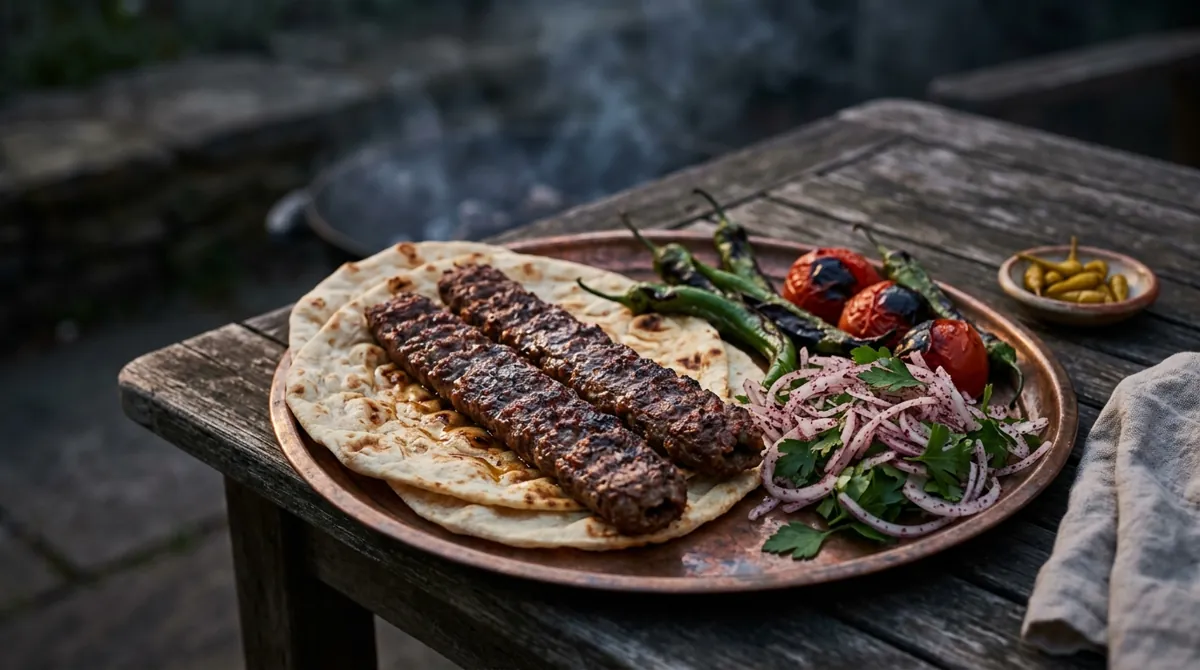
Adana Kebab (Hand-Kneaded Ground Lamb Skewers)
Ground lamb kneaded with salt, cumin, sumac and Urfa pepper until sticky, pressed flat around wide metal skewers and grilled hard over charcoal, then served on warm lavash with sumac onions, parsley, tomatoes and pickled peppers.
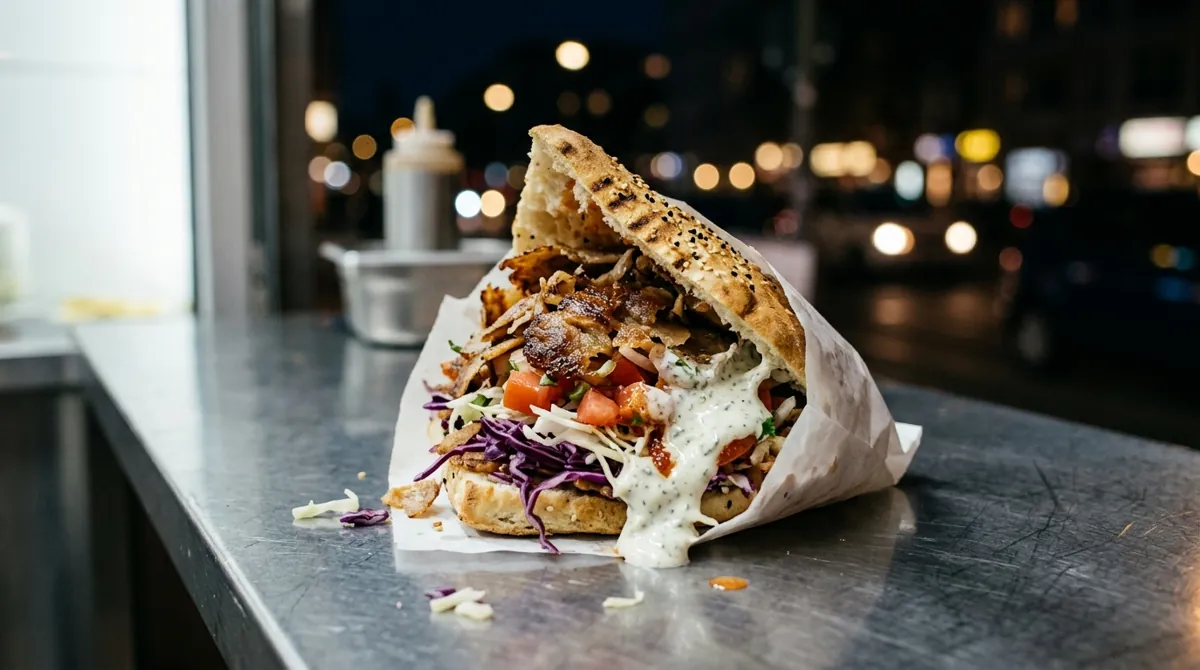
Berlin Döner (German Döner Kebab in Flatbread with Cabbage and Döner Sauce)
A log of ground beef and lamb seasoned with onion, garlic, yogurt, paprika and pul biber, frozen and shaved thin into a hot pan, then stuffed into toasted Turkish flatbread with white and red cabbage, lettuce, tomato, onion, cucumber and a garlicky yogurt and mayonnaise döner sauce.
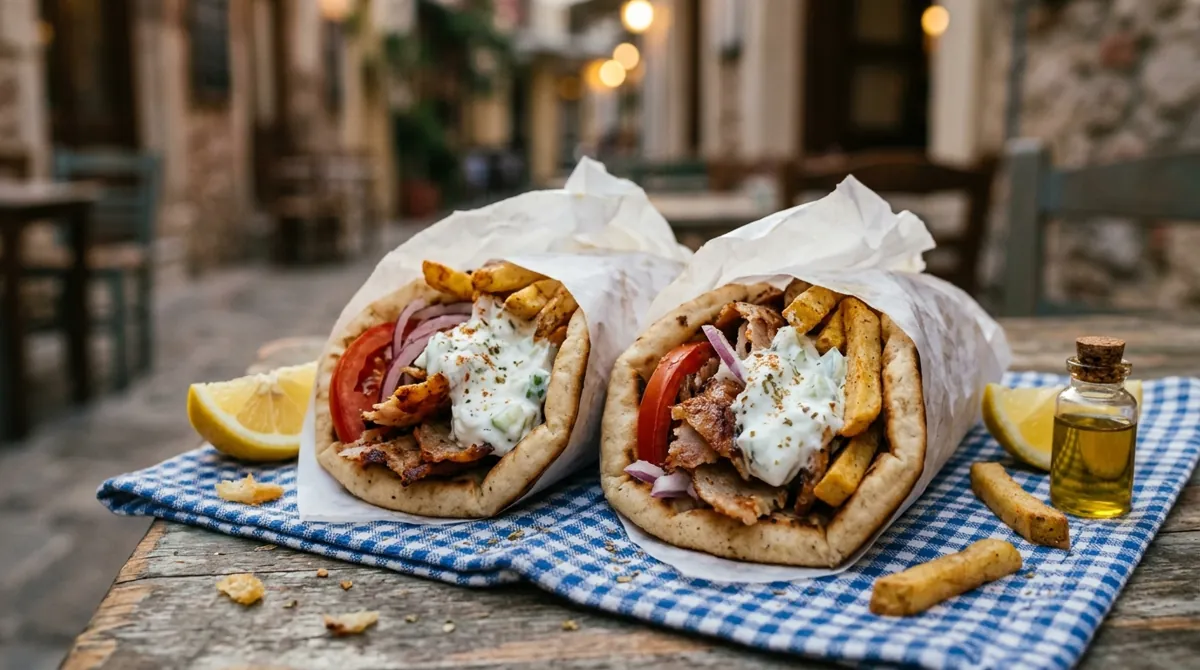
Greek Pork Gyros Pita (Gyros Souvlaki with Tzatziki and Fries)
Strips of pork tenderloin marinated in olive oil, red wine vinegar, onion, garlic, oregano, thyme, rosemary and honey, seared crisp in a very hot pan and wrapped in an oiled, baked pita with tzatziki, tomato, red onion and fries.
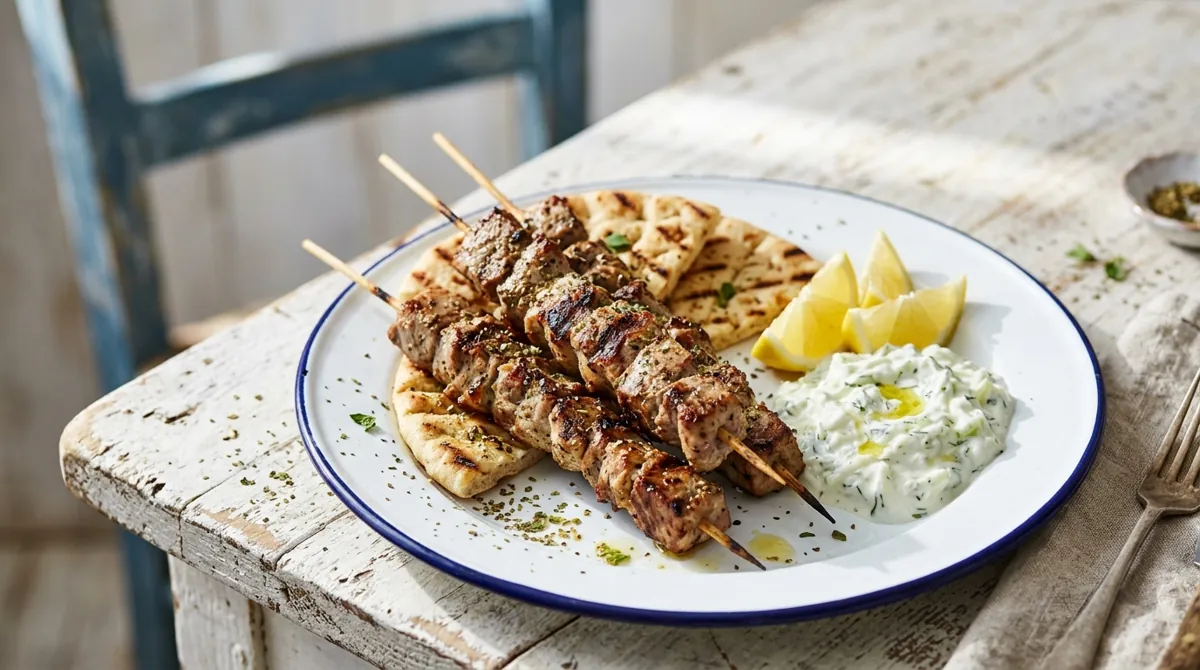
Pork Souvlaki (Greek Lemon-Oregano Pork Skewers with Tzatziki)
Cubes of pork loin marinated in olive oil, red onion, garlic, lemon, red wine vinegar and Greek oregano, grilled hot on skewers and served on grilled pita with a thick, garlicky cucumber tzatziki.
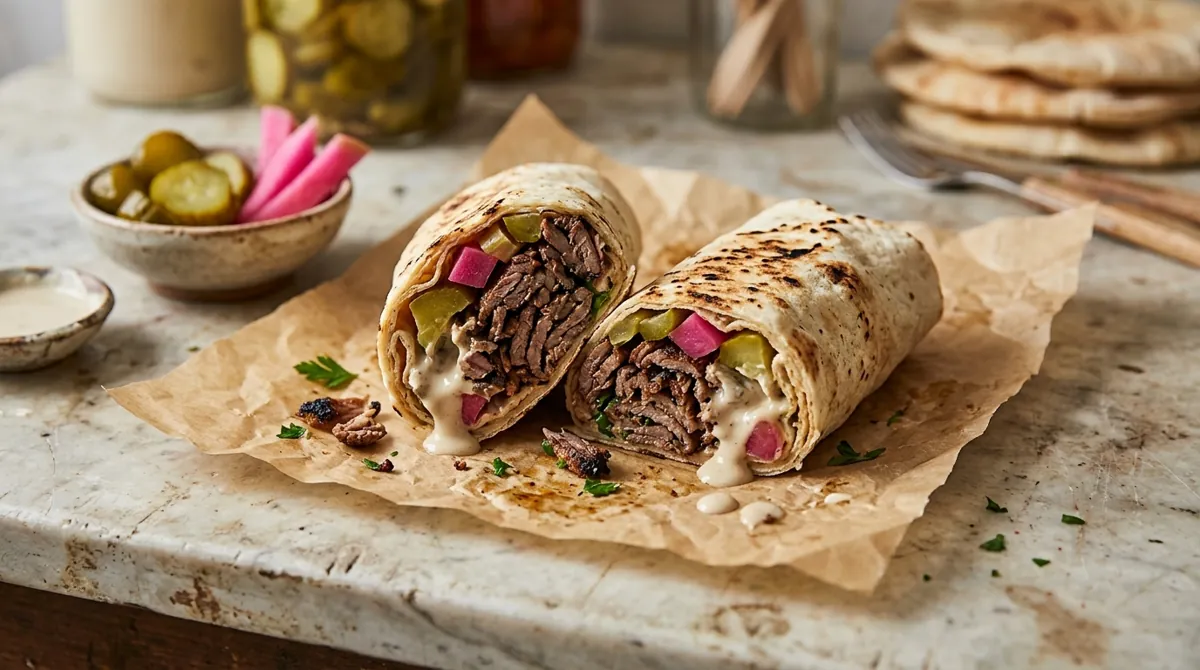
Levantine Beef Shawarma (with Tahini Sauce and Pickles)
Paper-thin flank steak marinated in onion juice, yogurt, vinegar, lime, garlic and a toasted shawarma spice blend, seared hard in lamb fat with tomato, onion and parsley, and wrapped in warm bread with tahini sauce and pickles.
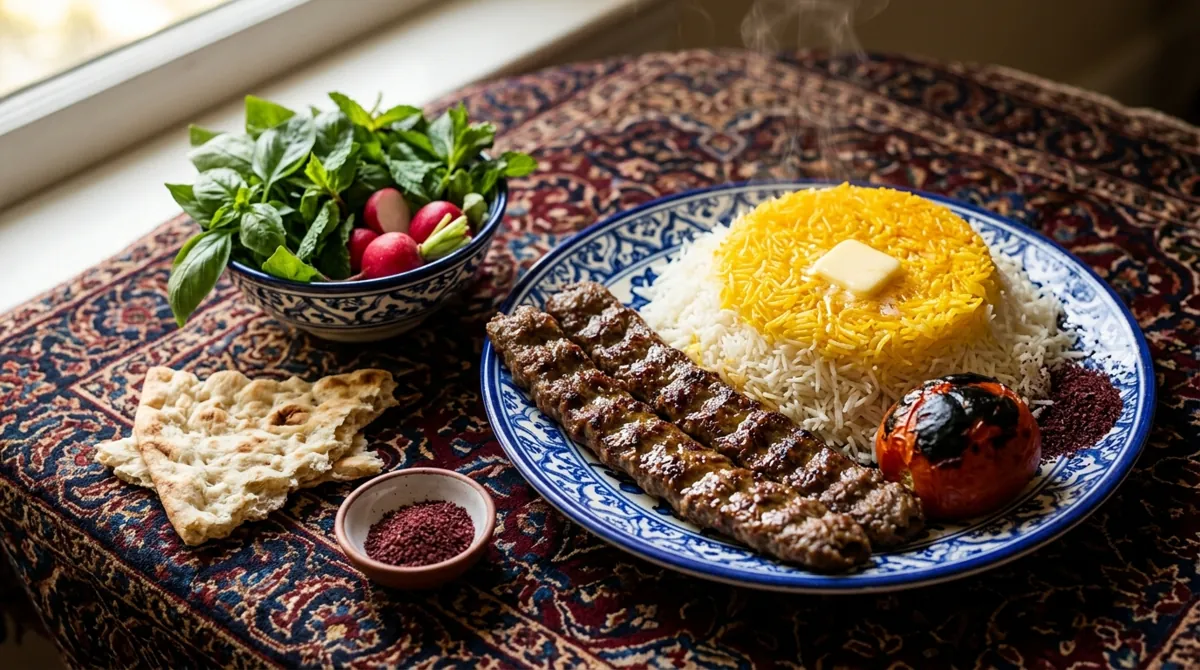
Kabab Koobideh (Persian Ground Lamb and Beef Kebabs)
Ground lamb and beef kneaded with grated, squeezed onion, salt, pepper and saffron until it turns to paste, molded in long ridged kebabs on wide skewers and grilled fast over hot coals with whole tomatoes, served with lavash, rice and herbs.
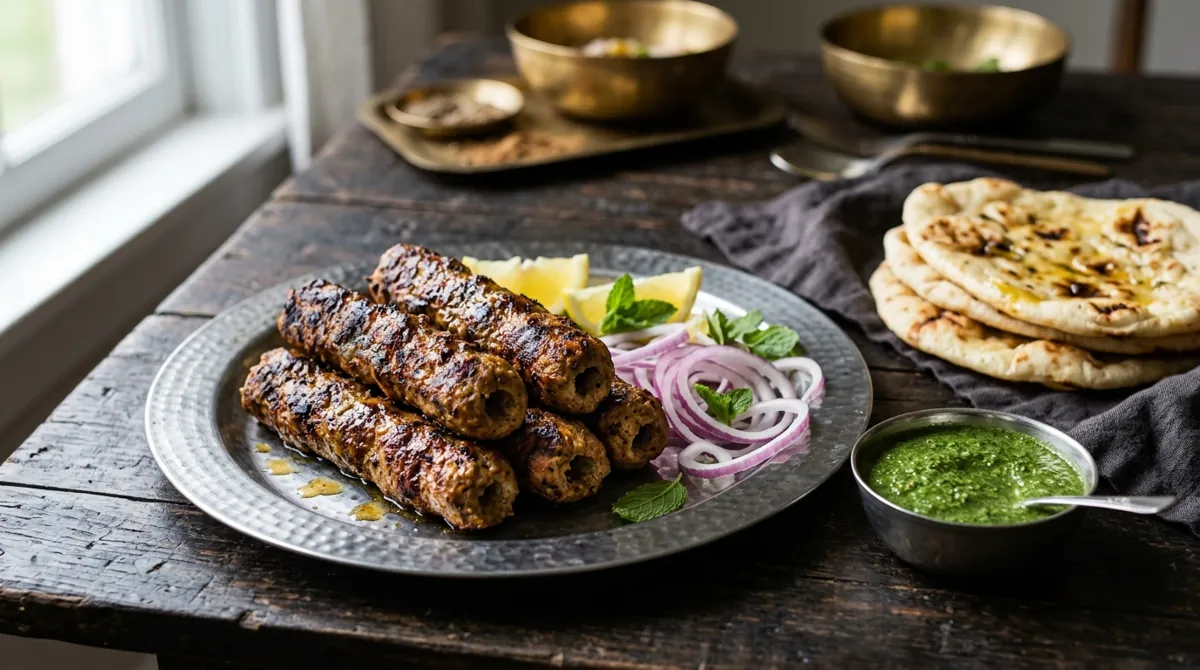
Seekh Kebab (Spiced Lamb Skewers with Mint Chutney)
Ground lamb and lamb fat ground smooth with onion, green chiles and cilantro, seasoned with garlic, ginger, roasted cumin, garam masala and Kashmiri chili, pressed onto skewers, roasted in a very hot oven with butter and finished with chaat masala, lemon and mint chutney.
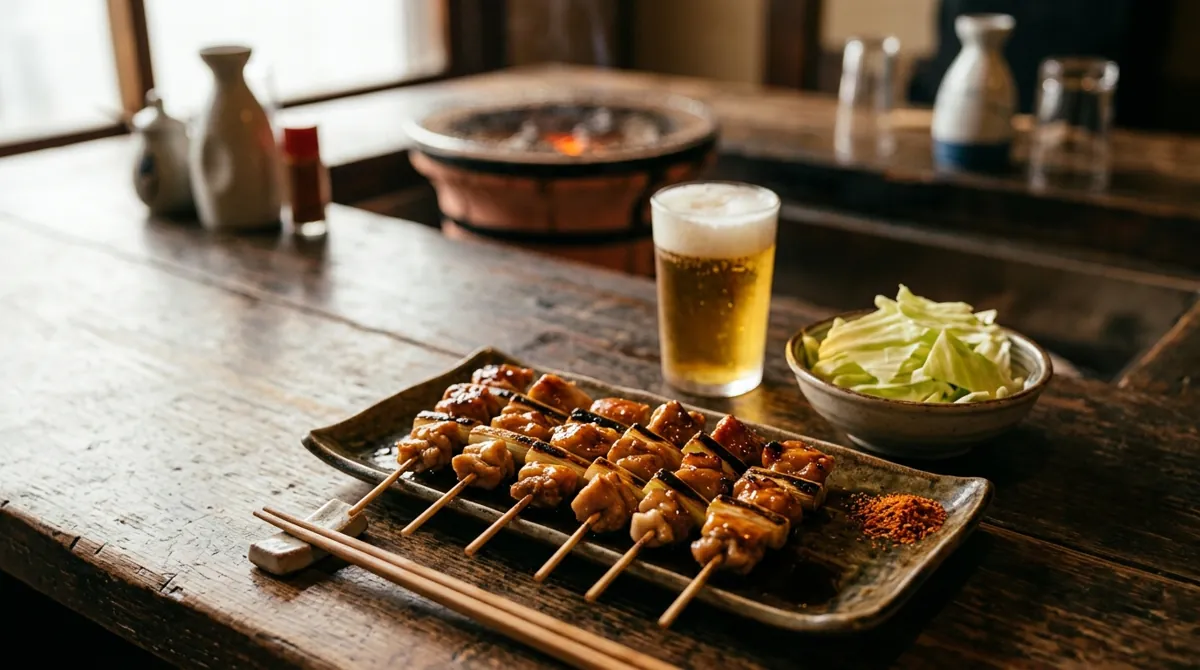
Yakitori (Japanese Chicken and Scallion Skewers with Tare)
Bite-size chicken thigh threaded with pieces of Tokyo negi on small skewers, broiled hot and brushed three times with a homemade tare of soy sauce, mirin, sake and brown sugar reduced to a glossy glaze.
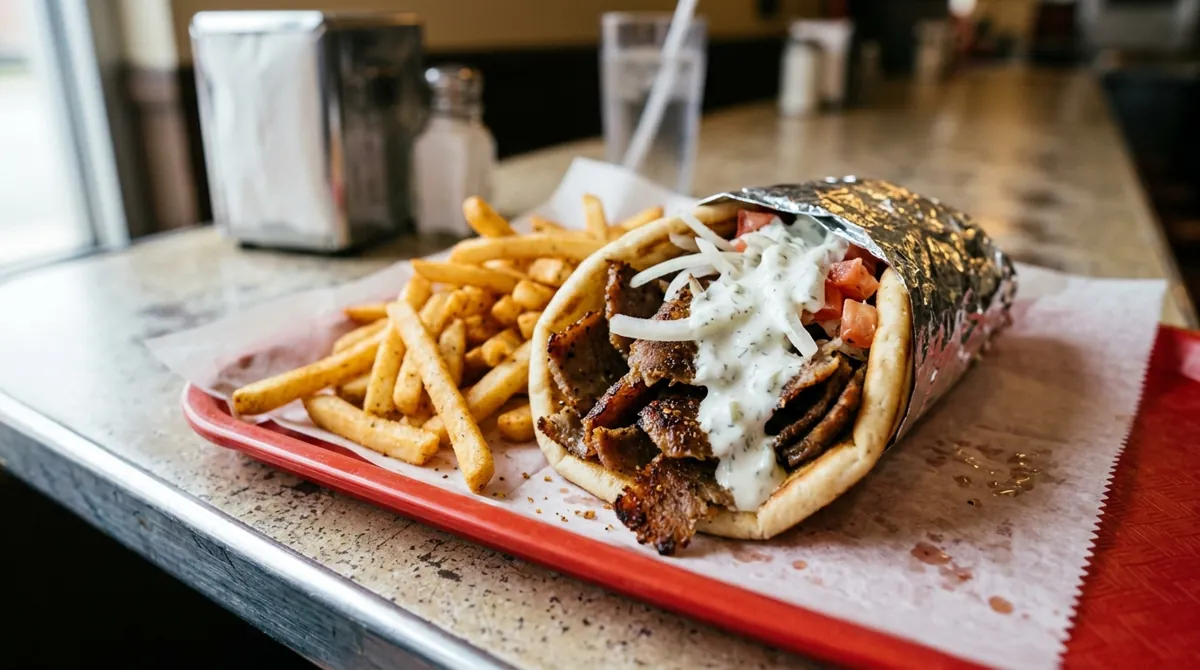
Chicago-Style Gyro (Home Oven Beef and Lamb Gyro Loaf)
Ground lamb and beef salted ahead, puréed with onion, garlic, oregano and bacon into a springy sausage-like loaf, baked low, sliced thin and broiled crisp, then piled into soft pita with a yogurt, mayonnaise and garlic sauce, tomato, onion and cucumber.
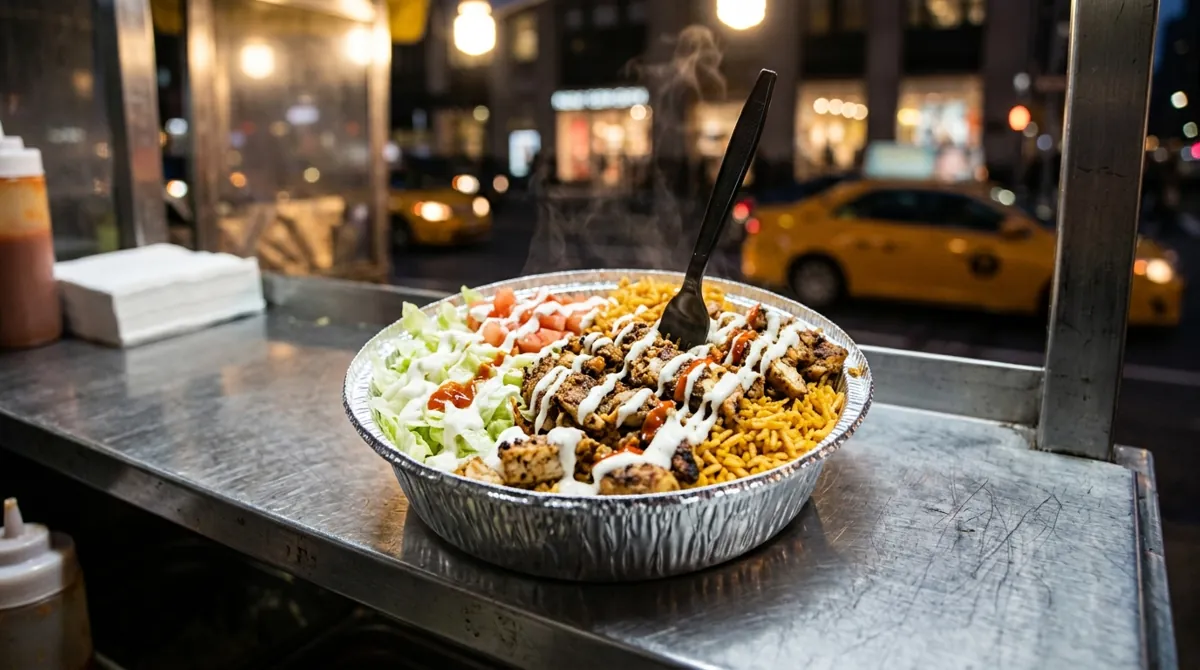
New York Halal Cart Chicken and Rice (with White Sauce)
Chicken thighs marinated in lemon, oregano, coriander and garlic, seared and chopped, piled on turmeric and cumin rice with shredded iceberg, tomato and buttered pita, and drowned in a tangy white sauce of mayonnaise, yogurt, vinegar and black pepper, with hot sauce on top.
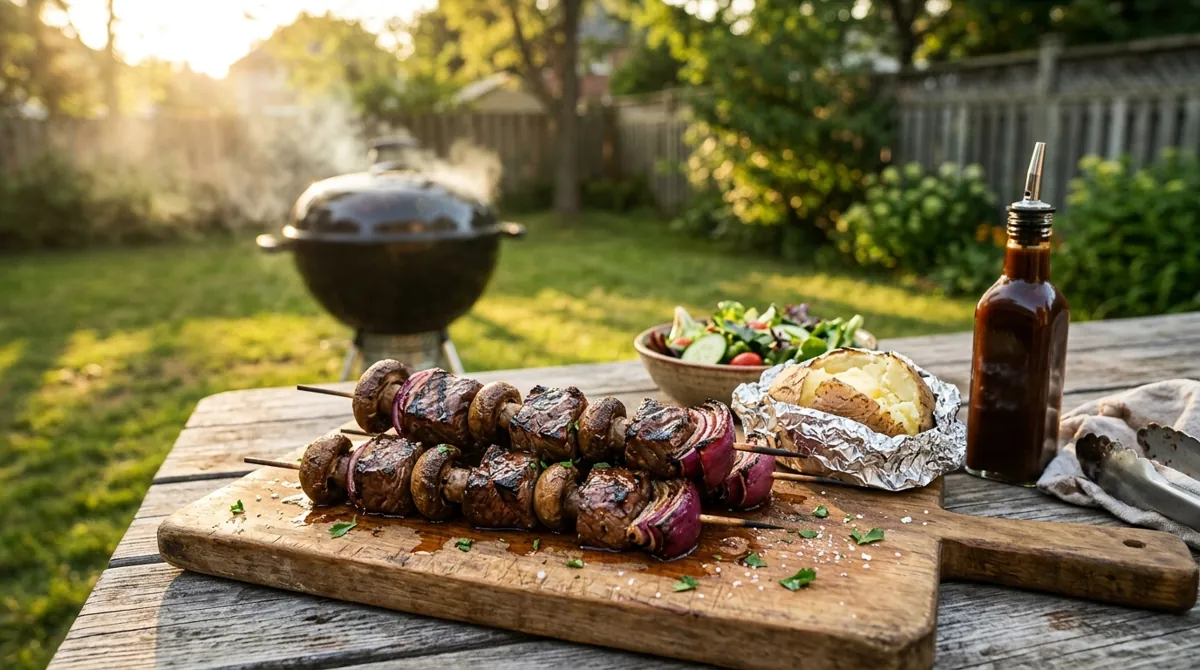
Backyard Beef Kebabs (Steakhouse-Style Sirloin, Mushroom and Onion Skewers)
Cubes of sirloin tip and cremini mushrooms marinated in olive oil, Worcestershire, soy sauce, lemon, Dijon, garlic, brown sugar and black pepper, threaded with chunks of red onion and seared hard over a hot charcoal fire.
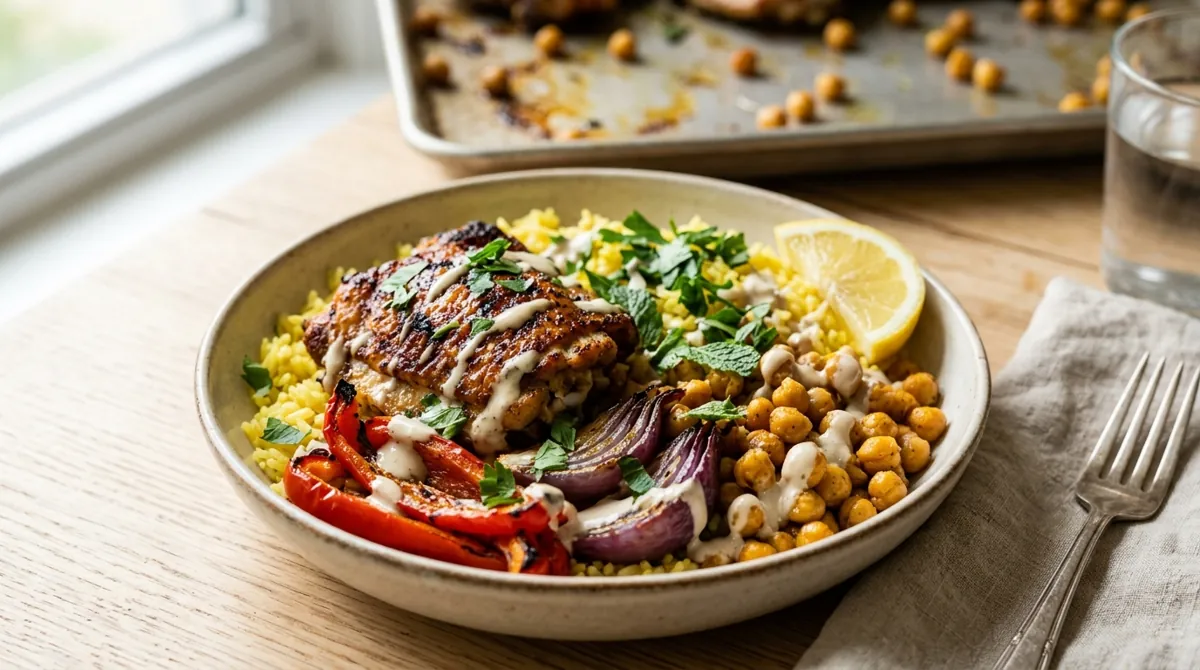
Sheet-Pan Chicken Shawarma (with Chickpeas, Peppers and Tahini-Yogurt Sauce)
Bone-in chicken thighs rubbed with a shawarma-style spice mix, lemon and garlic and roasted at 475°F on one sheet pan with red onion, chickpeas that turn crunchy and red peppers added late, then spooned over rice with a lemony tahini-yogurt sauce and herbs.
Meatballs of the World

Italian-American Meatballs
Big, tender meatballs braised for an hour in red sauce over spaghetti. The one most Americans grew up with.

Pallottine (Abruzzo Meatballs)
Tiny meatballs, smaller than a marble, tossed right through square spaghetti alla chitarra. No bread at all.

Swedish Meatballs (Köttbullar)
Small, soft meatballs browned in butter, in a cream sauce made from the same pan, with lingonberry jam on the plate.

Danish Frikadeller
Pork meatballs shaped with a spoon and fried slowly in butter, crusty outside and soft in the middle.

Königsberger Klopse
German meatballs that are never fried: poached, then served in a creamy white sauce with capers.

Spanish Albóndigas in Almond Saffron Sauce
The tapas bar classic: small meatballs in a golden sauce thickened with fried almonds and bread.

Mexican Albóndigas with Chipotle and Mint
Soft meatballs with rice and fresh mint inside, simmered in a smoky tomato and chipotle broth.

Izgara Köfte (Turkish Grilled Meatballs)
Small, flat meatballs kneaded hard, rested cold, and charred on a hot grill pan.

Lion's Head Meatballs
Big, soft pork meatballs, stirred into a sticky paste, fried to set, then braised in a savory sauce.

Chicken Tsukune
Japan's chicken meatball: kneaded sticky, grilled on skewers, glazed with sweet soy tare, dipped in egg yolk.