
Molten Chocolate Lava Cakes
The 1990s restaurant dessert at home: individual chocolate cakes baked hot and fast so the outside sets and the center flows when you cut in, with a make-ahead option.
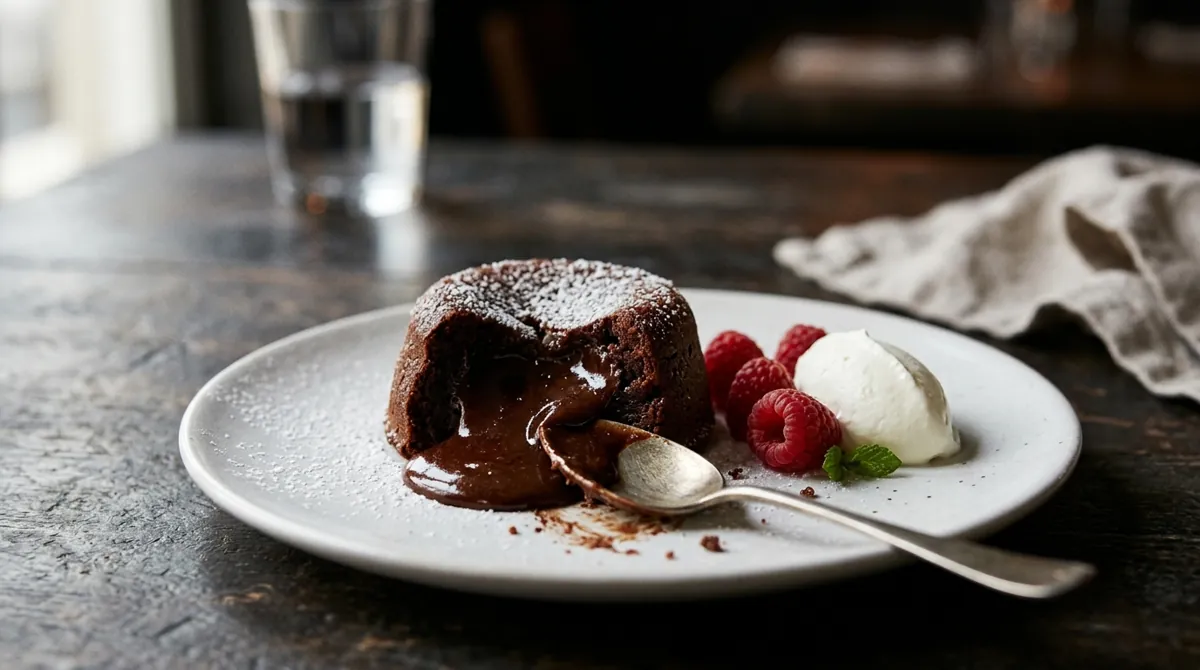
The lava cake has two inventors and one argument. Jean-Georges Vongerichten says he invented it in New York City in 1987, when he pulled a chocolate sponge cake out of the oven too early and found the center runny but warm and good, Wikipedia reports, citing the food writer Sandra Machlin. He is credited with making it a fixture of American restaurant dessert menus in the 1990s. In France, the chef Michel Bras dates his coulant au chocolat to 1981, after a family ski day and more than two years of testing, and the Michelin Guide tells that story. Bras's version is built differently, with a frozen ganache core hidden in the batter, according to his restaurant's site as cited by Wikipedia, and the pastry chef Jacques Torres has said such a dessert already existed in France in the 1980s. Wikipedia adds that the two recipes are very different, and that the easier American one spread further. Compare France's whole-cake mi-cuit in our French Mi-Cuit Chocolate Cake recipe.
🇺🇸 This one is American
The 1990s restaurant dessert at home: individual chocolate cakes baked hot and fast so the outside sets and the center flows when you cut in, with a make-ahead option.
🇦🇹 The original
Vienna's original is a dense chocolate sponge spread with apricot jam under a hard, glossy chocolate glaze, served with unsweetened whipped cream. See the Sachertorte (Viennese Chocolate Apricot Torte) recipe.
📖 Origin story: Who Invented Molten Chocolate Lava Cake? Two Chefs Claim It →
Why it works the kitchen science
Eggs whipped to a ribbon
The air beaten into the eggs gives the cakes a light, set shell even though there are only 2 tbsp of flour.
High heat, short time
At 400°F the outside sets in 12 to 15 minutes while the middle never gets hot enough to firm, which is the whole trick.
Step by step
- Step 1
Mix the softened butter and cocoa into a paste and brush it inside eight 6-ounce ramekins. Heat the oven to 400°F with a rack in the middle.
- Step 2
Melt the chocolate and butter in a heatproof bowl over barely simmering water, stirring until smooth. Take it off the heat.
- Step 3
Beat the eggs, yolk, vanilla, salt and sugar on high speed until nearly tripled, very pale and falling from the whisk in a thick ribbon, about 5 minutes in a stand mixer or 10 with a hand mixer.
- Step 4
Scrape the eggs onto the chocolate, sprinkle the flour over and fold gently until evenly colored. Divide among the ramekins. (Make-ahead: wrap each in plastic and foil and refrigerate up to 8 hours or freeze up to 1 month.)
- Step 5
Set the ramekins on a rimmed baking sheet and bake 12 to 15 minutes (11 to 14 if refrigerated; bake frozen ones without thawing), until puffed about 1/2 inch above the rims with a thin crust and a center that jiggles slightly when you gently shake one.
- Step 6
Serve in the ramekins, or run a paring knife around each, turn it out onto a plate, wait 1 minute and lift off the ramekin. Serve right away with whipped cream or berries.
Molten Chocolate Lava Cakes
Serves 8 · 8 individual cakes · 35 min total
Ramekins
- 1 tbsp unsalted butter, softened
- 1 tbsp cocoa
Cakes
- 8 oz (227 g) semisweet chocolate, chopped coarse
- 8 tbsp (1 stick) unsalted butter
- 4 large eggs
- 1 large egg yolk
- 1 tsp vanilla extract
- 1/4 tsp salt
- 1/2 cup (99 g) granulated sugar
- 2 tbsp all-purpose flour
To serve
- Lightly sweetened whipped cream, berries or powdered sugar
Method
- Mix the softened butter and cocoa into a paste and brush it inside eight 6-ounce ramekins. Heat the oven to 400°F with a rack in the middle.
- Melt the chocolate and butter in a heatproof bowl over barely simmering water, stirring until smooth. Take it off the heat.
- Beat the eggs, yolk, vanilla, salt and sugar on high speed until nearly tripled, very pale and falling from the whisk in a thick ribbon, about 5 minutes in a stand mixer or 10 with a hand mixer.
- Scrape the eggs onto the chocolate, sprinkle the flour over and fold gently until evenly colored. Divide among the ramekins. (Make-ahead: wrap each in plastic and foil and refrigerate up to 8 hours or freeze up to 1 month.)
- Set the ramekins on a rimmed baking sheet and bake 12 to 15 minutes (11 to 14 if refrigerated; bake frozen ones without thawing), until puffed about 1/2 inch above the rims with a thin crust and a center that jiggles slightly when you gently shake one.
- Serve in the ramekins, or run a paring knife around each, turn it out onto a plate, wait 1 minute and lift off the ramekin. Serve right away with whipped cream or berries.
Adapted from America's Test Kitchen's "Individual Molten Chocolate Cakes". Amounts, the eight 6-ounce ramekins, 400°F, the timing, the jiggle test and the make-ahead method are America's Test Kitchen's. This is a modern home recipe, not Vongerichten's or Bras's; neither chef's recipe was available to us. America's Test Kitchen. Ingredient list follows the source; the method is in our own words.
All sources (3)
Tips
- Watch the jiggle, not the clock. A minute too long and the center sets; if it does, you have a very good chocolate cake.
- Serve them right away. The center keeps cooking from the heat of the cake.
- The cocoa-butter paste helps them release cleanly when you unmold them.
- Soft center, raw eggs: see the Food safety baseline.
The rules people argue about
What the sources agree on, what they don't, and what is just a good story.
- Jean-Georges Vongerichten invented the lava cake in 1987. Disputed: he says so (Wikipedia, citing Machlin 2011); Michel Bras dates his coulant to 1981 (Michelin Guide), and Jacques Torres says the dessert existed in France in the 1980s.
- It was invented by accident. Disputed: Vongerichten's accident story is his own account; Bras says his took two years of deliberate testing.
- The center is just raw batter. Folklore: in the American style it is underbaked batter; in Bras's style it is a separate ganache core (Wikipedia). Both are deliberately soft, so see the Food safety baseline.
- Lava cakes can't be made ahead. Documented as false by America's Test Kitchen: refrigerate the batter up to 8 hours or freeze up to a month.
Every other chocolate cake
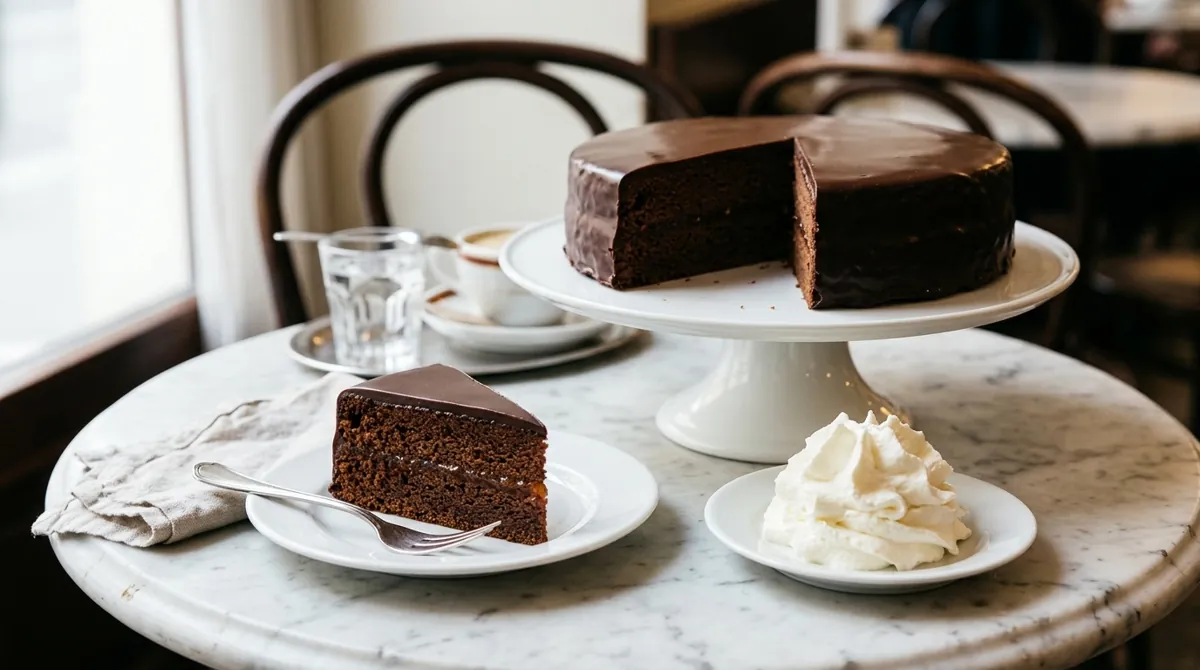
Sachertorte (Viennese Chocolate Apricot Torte)
Vienna's famous chocolate torte: a light, dark chocolate sponge split and filled with apricot jam, brushed with more jam and covered in a glossy poured chocolate glaze, served with unsweetened whipped cream.
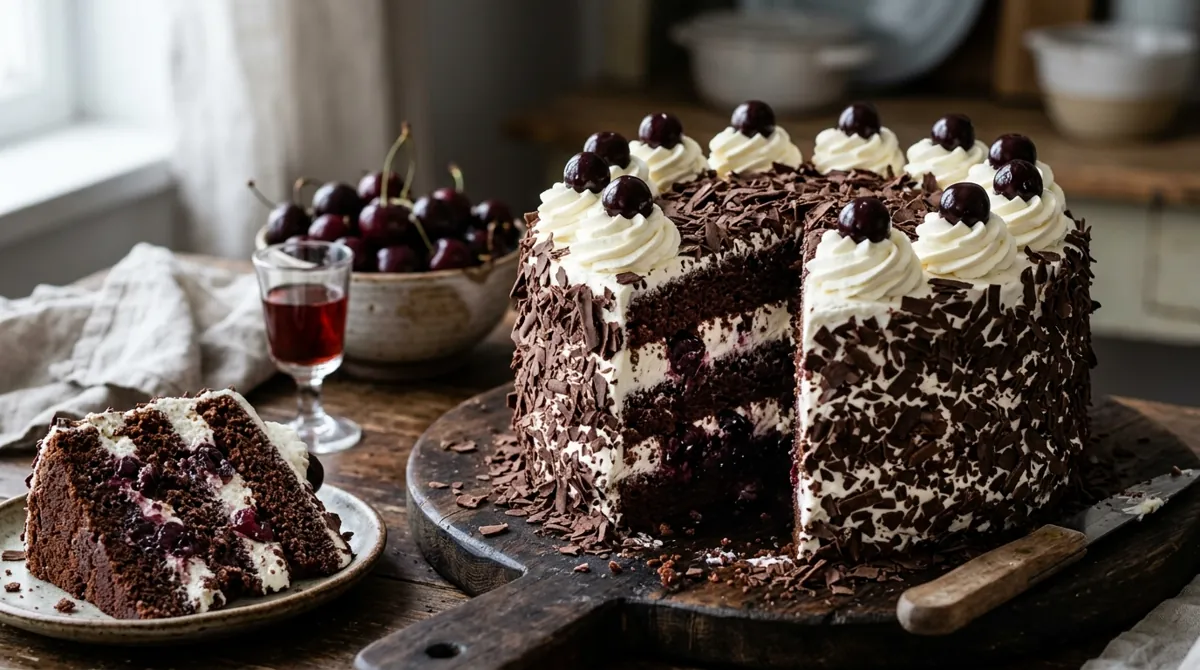
Schwarzwälder Kirschtorte (Black Forest Cake)
The real Black Forest cake: three layers of chocolate sponge brushed with kirsch, sour cherries and a light vanilla cream, covered in cream and dark chocolate shavings, the way the Black Forest's own tourism board makes it.
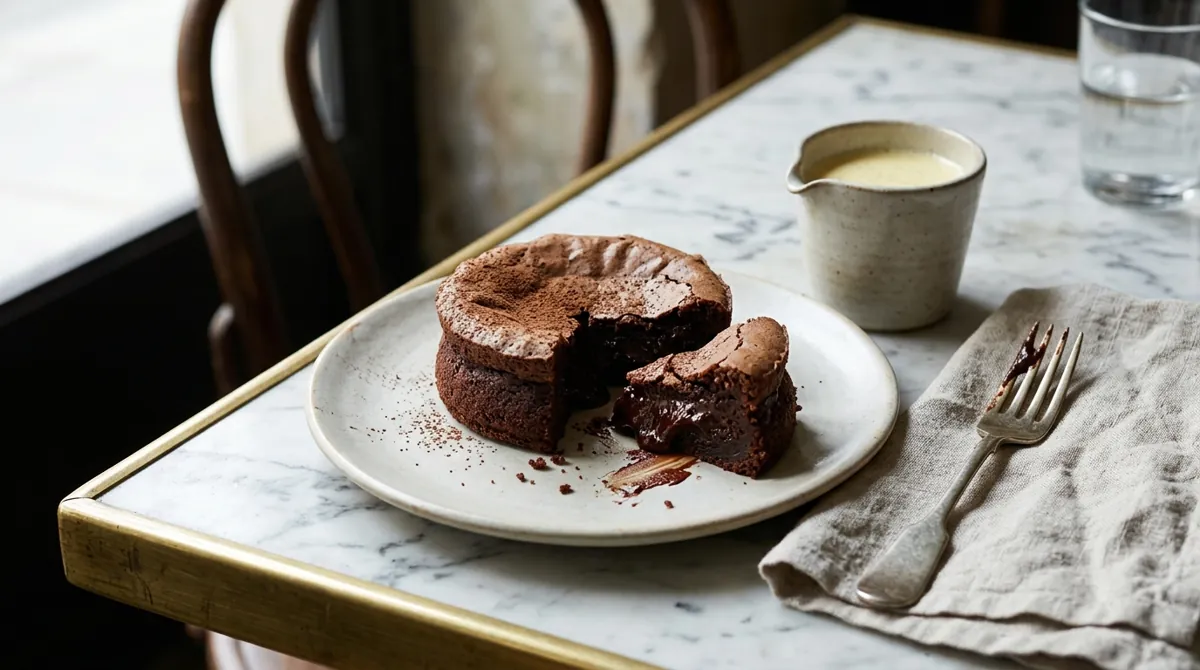
French Mi-Cuit Chocolate Cake (Pierre Hermé's Five-Ingredient Fondant)
France's soft-centered chocolate cake, the way pastry chef Pierre Hermé shared it in 2020: butter, sugar, eggs, a little flour and a lot of dark chocolate, baked until the edges set and the middle stays fudgy.
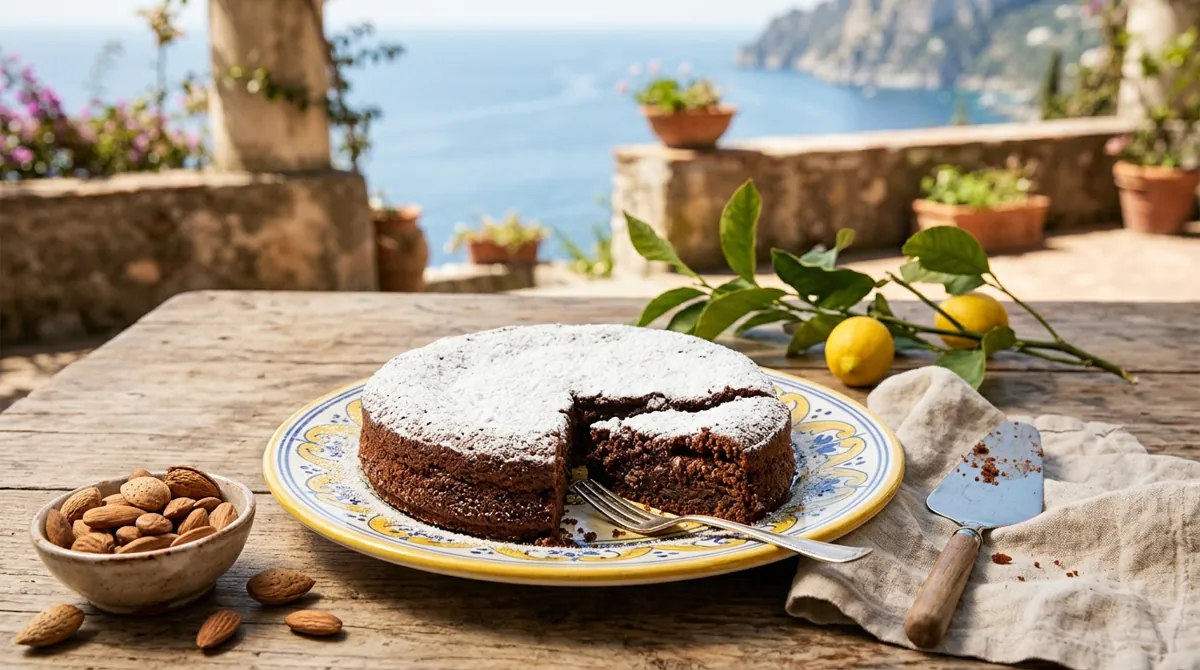
Torta Caprese (Italian Chocolate Almond Cake from Capri)
Capri's chocolate cake made with ground almonds instead of wheat flour: dark chocolate, butter and whipped egg whites baked into a cake with a crackly top and a dense, moist middle.
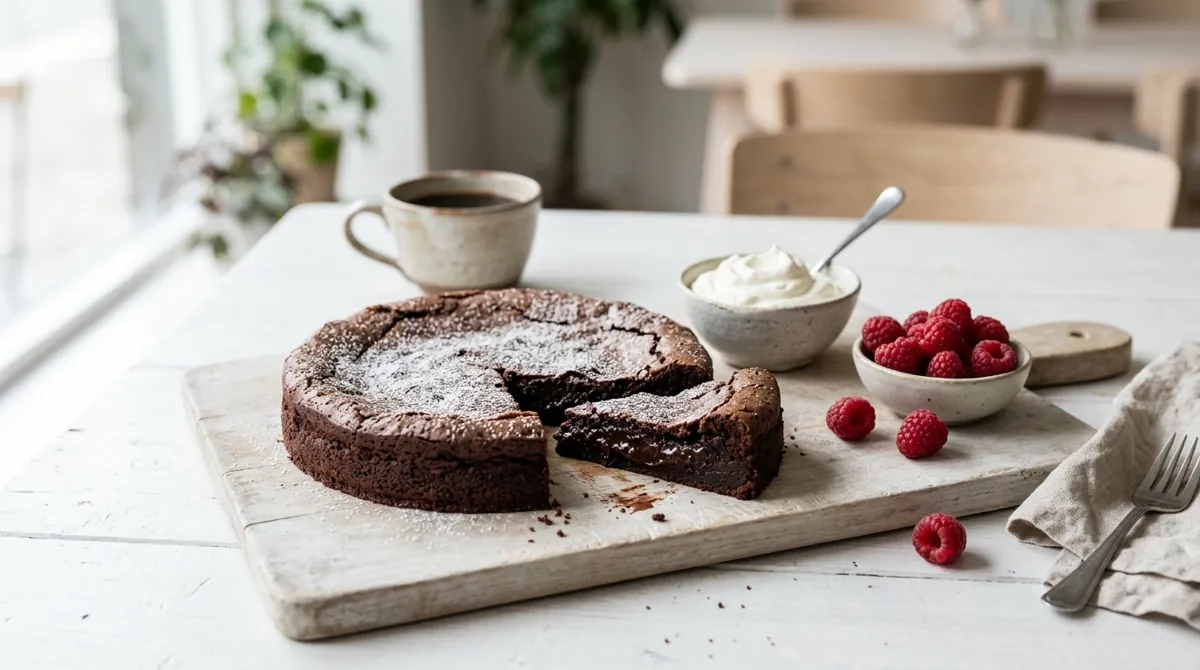
Kladdkaka (Swedish Sticky Chocolate Cake)
Sweden's café favorite: a quick chocolate cake with no rising agent, baked just long enough to set the crust while the center stays gooey and sticky, served with whipped cream and berries.
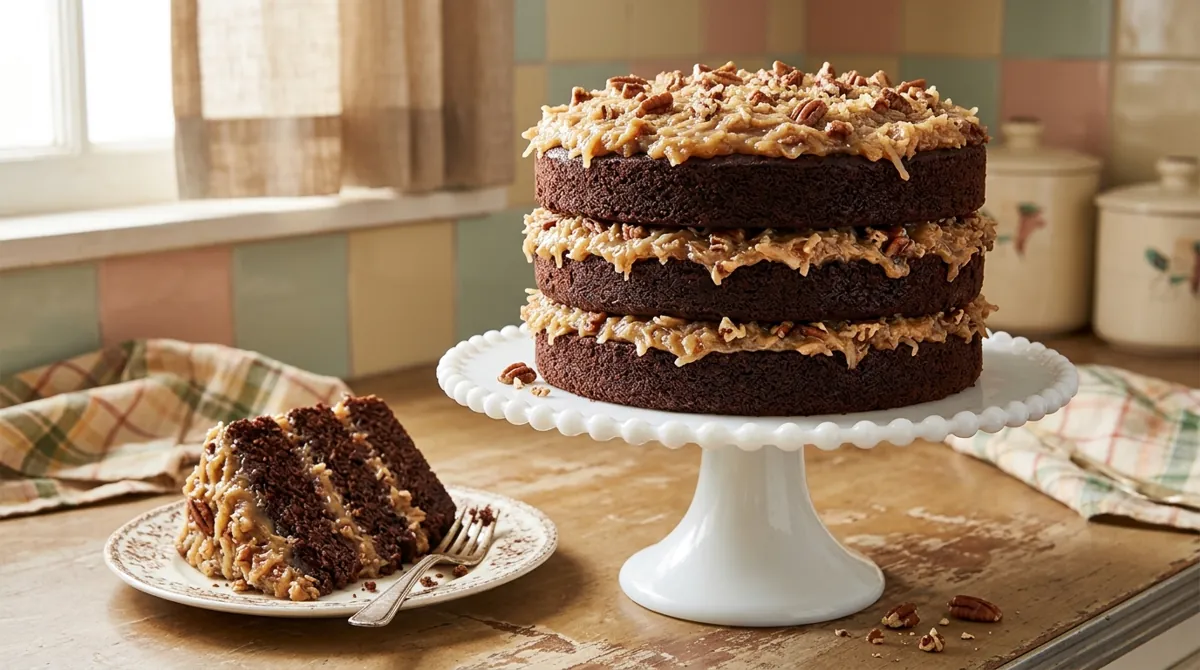
German Chocolate Cake (Coconut-Pecan Frosting)
Not from Germany at all: three light layers made with sweet baking chocolate and buttermilk, stacked with a cooked coconut-pecan custard frosting, the cake a 1957 Dallas newspaper recipe made famous.
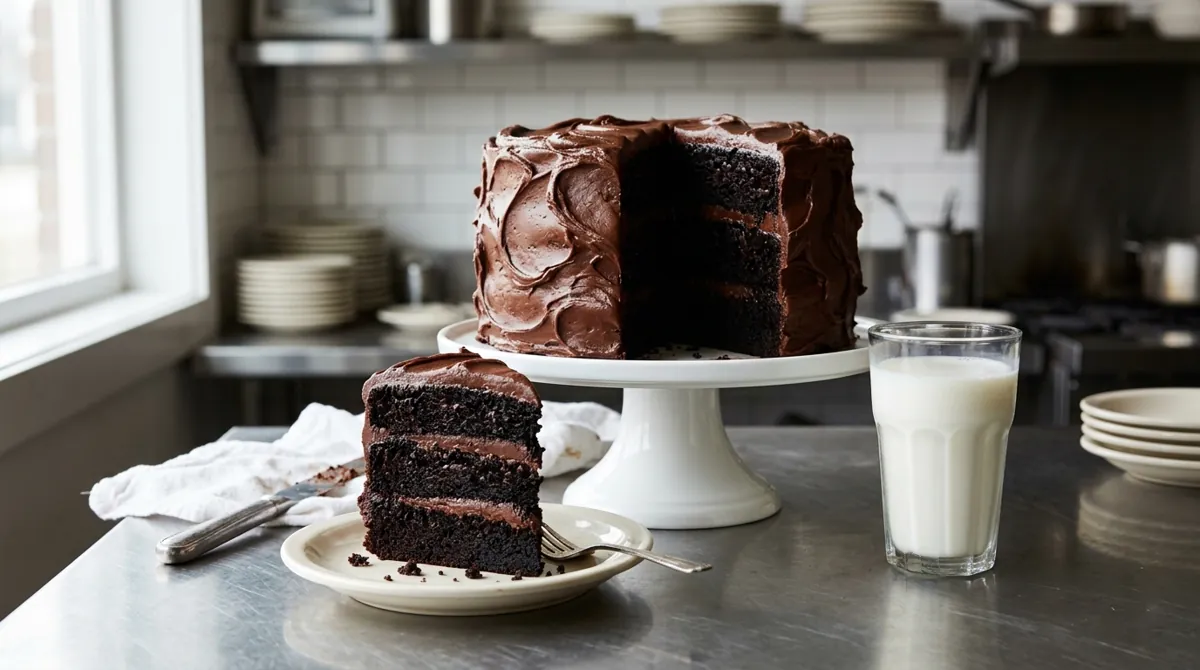
Devil's Food Cake
America's dark chocolate layer cake, the opposite of angel food: a dense, moist cocoa cake in two layers with a rich, fudgy chocolate frosting.
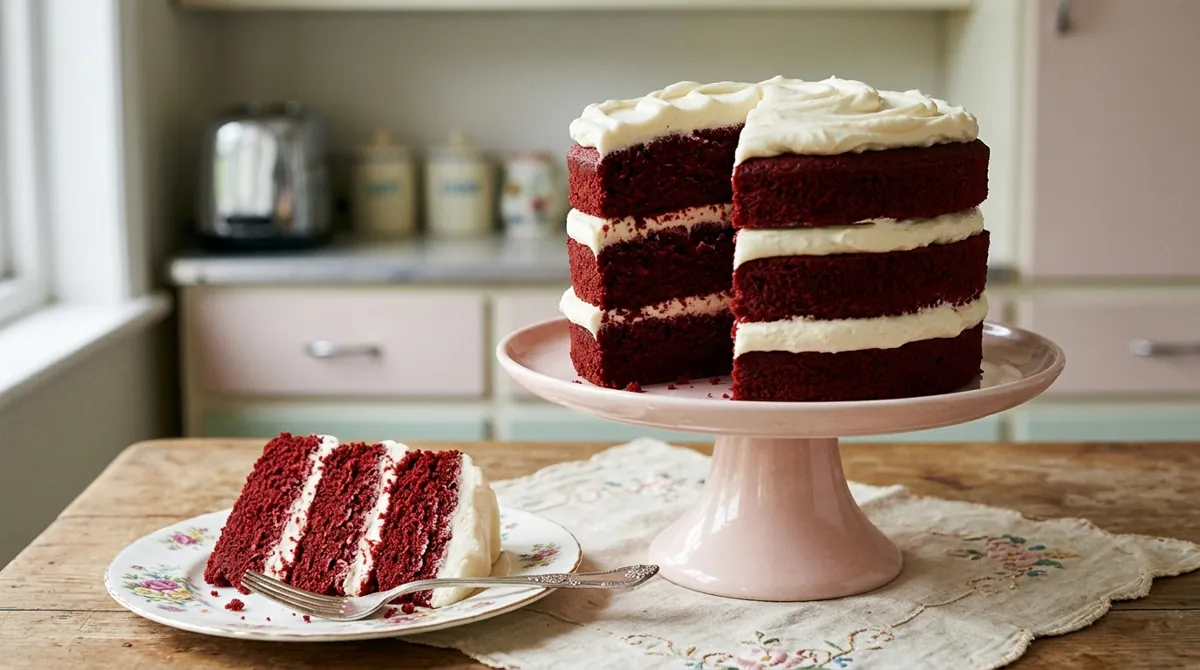
Red Velvet Cake
The burgundy-red, mildly chocolate layer cake with buttermilk and a touch of vinegar, stacked four layers high with a fluffy white frosting the 1950s way.
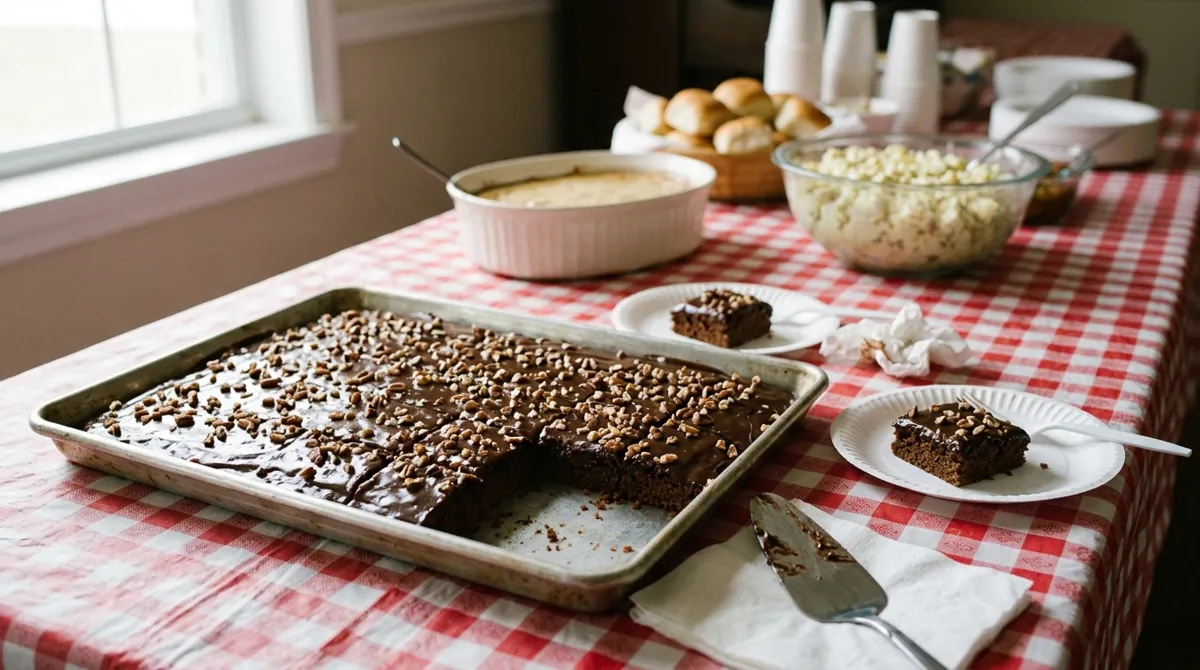
Texas Sheet Cake
A big, thin chocolate buttermilk cake baked in a half-sheet pan and covered with a fudgy chocolate icing, the cake for church suppers, funerals and crowds.
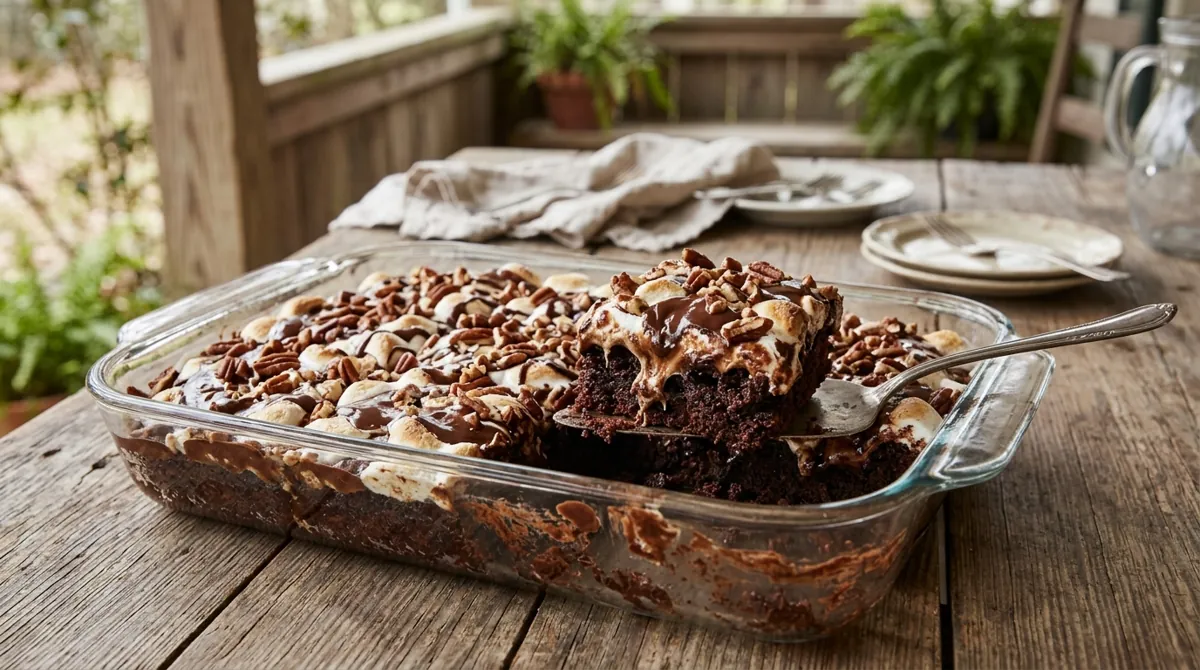
Mississippi Mud Cake
A dense, dark cocoa sheet cake spread hot with marshmallow, drizzled with chocolate ganache and covered with toasted pecans: messy, rich and built for a crowd.
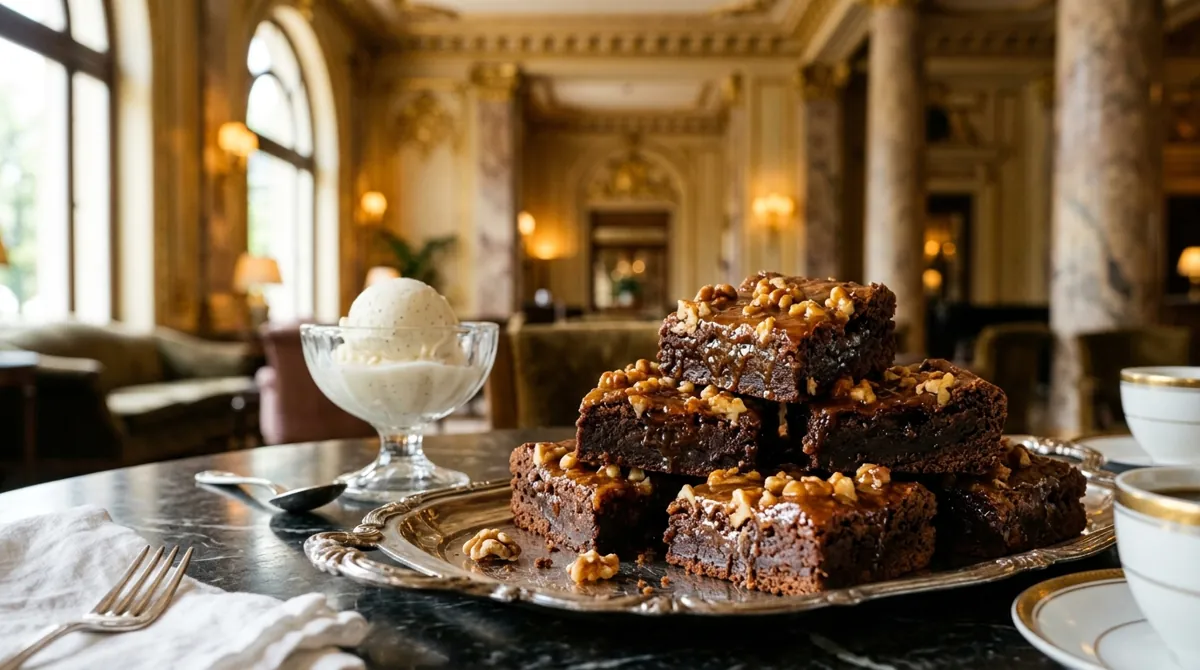
Palmer House Brownies (Walnut and Apricot Glaze)
The fudgy, walnut-topped chocolate bars Chicago's Palmer House hotel says it first made for the 1893 World's Fair, finished with a thin, shiny apricot glaze.
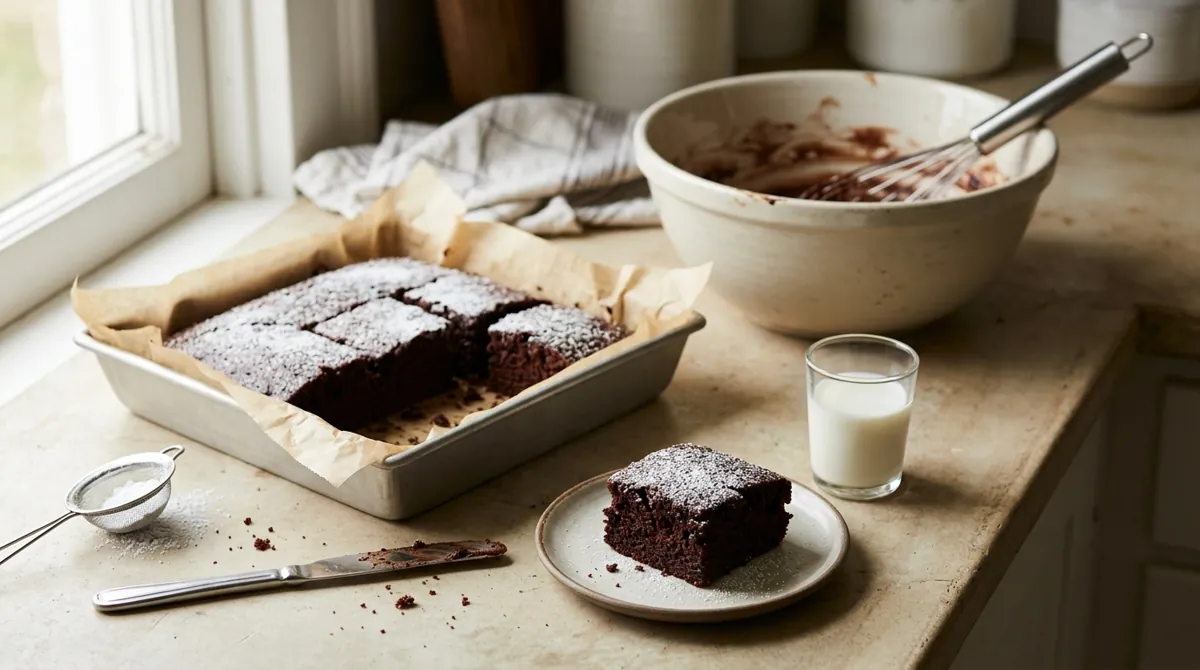
One-Bowl Chocolate Mayonnaise Cake (Weeknight)
A moist, tender chocolate snack cake mixed in one bowl in 10 minutes, with mayonnaise standing in for both the eggs and the oil, ready to eat in about 45 minutes with a dusting of powdered sugar.
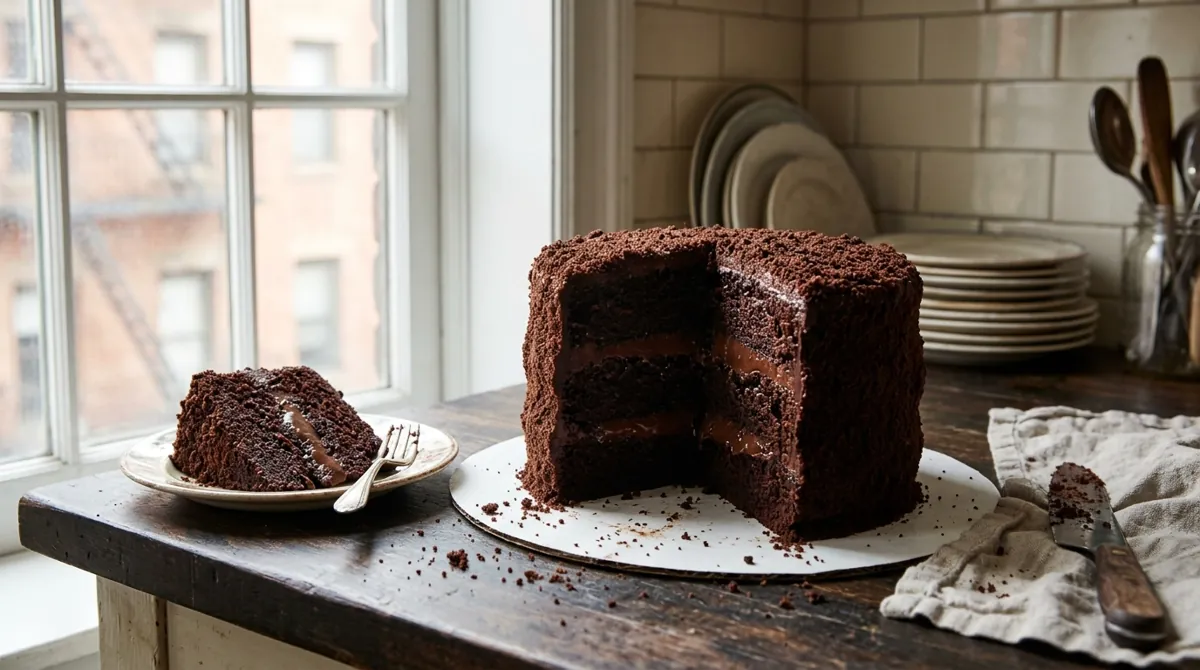
Brooklyn Blackout Cake (Inspired by Ebinger's, Not Official)
Inspired by, not official: a homage to the lost Ebinger's bakery's famous cake, with dark chocolate layers, a thick chocolate pudding filling, fudgy icing and a coat of chocolate cake crumbs.
Meatballs of the World

Italian-American Meatballs
Big, tender meatballs braised for an hour in red sauce over spaghetti. The one most Americans grew up with.

Pallottine (Abruzzo Meatballs)
Tiny meatballs, smaller than a marble, tossed right through square spaghetti alla chitarra. No bread at all.

Swedish Meatballs (Köttbullar)
Small, soft meatballs browned in butter, in a cream sauce made from the same pan, with lingonberry jam on the plate.

Danish Frikadeller
Pork meatballs shaped with a spoon and fried slowly in butter, crusty outside and soft in the middle.

Königsberger Klopse
German meatballs that are never fried: poached, then served in a creamy white sauce with capers.

Spanish Albóndigas in Almond Saffron Sauce
The tapas bar classic: small meatballs in a golden sauce thickened with fried almonds and bread.

Mexican Albóndigas with Chipotle and Mint
Soft meatballs with rice and fresh mint inside, simmered in a smoky tomato and chipotle broth.

Izgara Köfte (Turkish Grilled Meatballs)
Small, flat meatballs kneaded hard, rested cold, and charred on a hot grill pan.

Lion's Head Meatballs
Big, soft pork meatballs, stirred into a sticky paste, fried to set, then braised in a savory sauce.

Chicken Tsukune
Japan's chicken meatball: kneaded sticky, grilled on skewers, glazed with sweet soy tare, dipped in egg yolk.