
Quesadilla
A flour tortilla, a generous handful of melty cheese and ten minutes in a dry skillet: the crisp, golden, stretchy quesadilla, plus the Mexico City argument over whether it needs cheese at all.
🍳Cook alongOne move at a time, with real timers
 Edited by JP Lambiase
Change the estimate
Swaps change the price only: cook any meat to its own safe temperature. Where these numbers come from
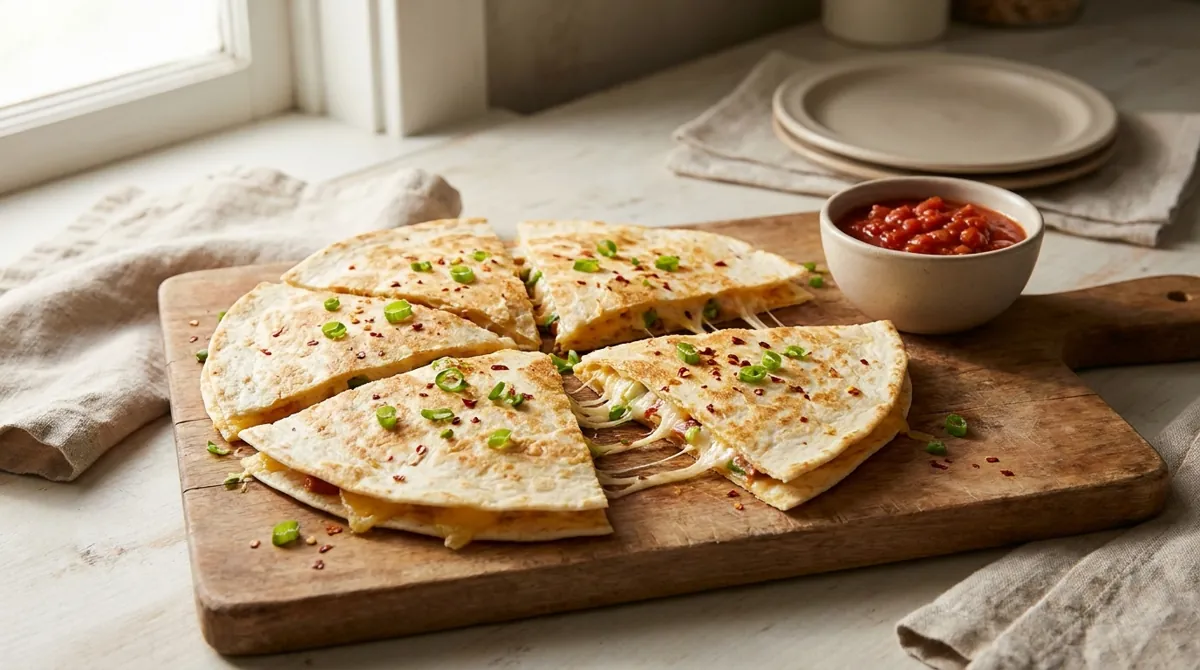
The name is simple: queso plus tortilla, a tortilla with cheese. The quesadilla has its origins in colonial Mexico, and the version most Americans know, a big flour tortilla stuffed with melting cheese and crisped in a pan, is a northern-Mexican and Tex-Mex shape that spread through American restaurants and home kitchens.
In Mexico City the dish splits in two. Wikipedia notes that there, quesadillas are not assumed to come with cheese unless requested, and that this habit cannot be traced to a single origin. Street vendors there sell fried or griddled masa turnovers filled with things like squash blossoms, mushrooms, potato or huitlacoche, and many will ask whether you want cheese, because it is not assumed. In much of the rest of Mexico, and everywhere in the United States, a quesadilla with no cheese would be a mistake.
Why it works the kitchen science
Block cheese, shredded at home
Packaged shreds carry anti-caking starch that keeps them from melting into one smooth, stretchy layer.
Medium heat, not high
The tortilla toasts at the same pace the cheese melts. High heat burns the outside before the middle is hot.
A dry pan, or just a film of butter
The tortilla fries in its own surface and crisps without turning greasy.
🧰 You'll need 3 items
Everything the steps call for. Tick off what you have before you start.
Pans and pots
Tools
Step by step
- Step 1
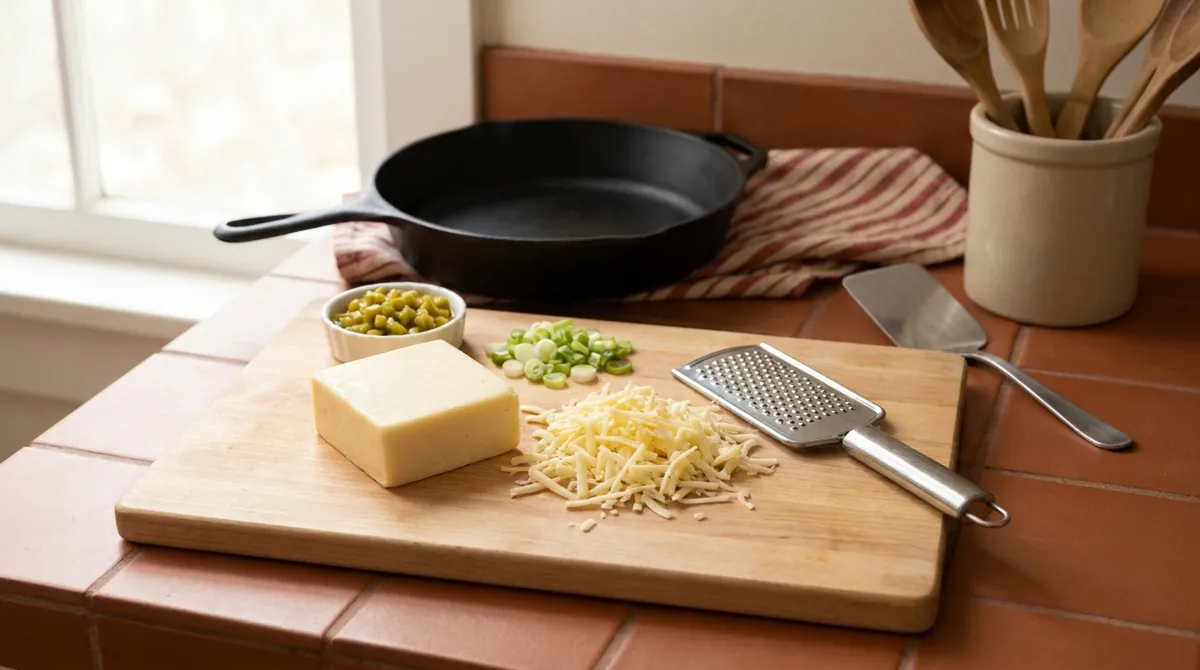
Shred the cheese yourself from a block and slice the scallions. Drain the green chilies.
- Step 2
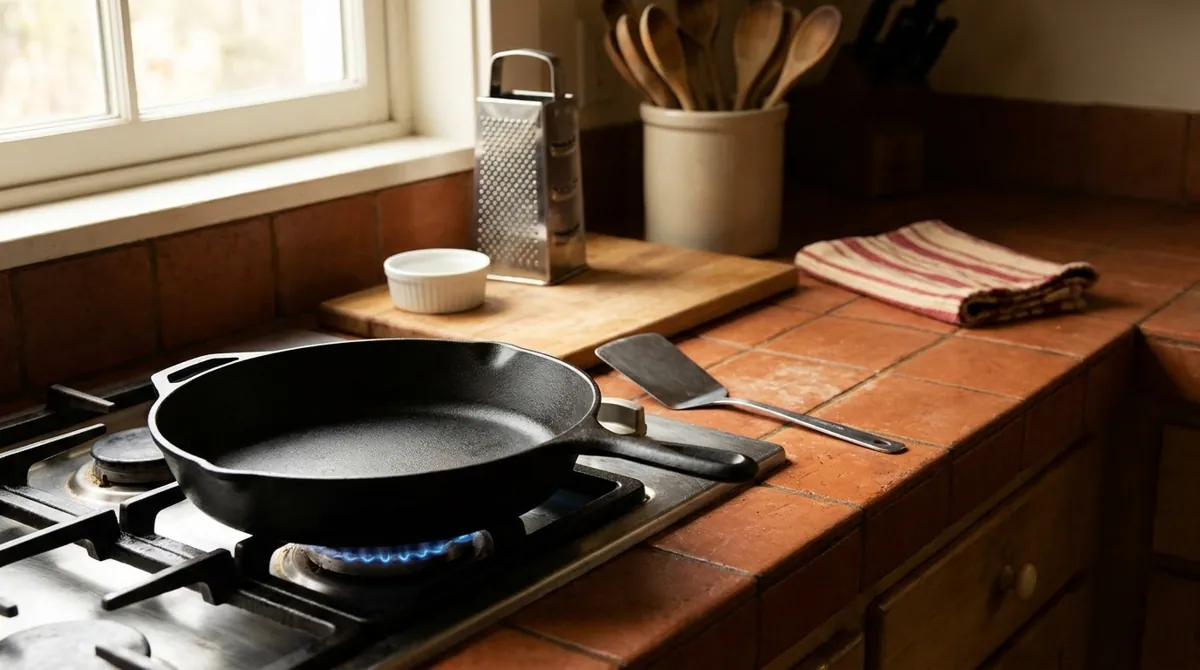
Heat a large dry skillet over medium heat for 2 minutes.
- Step 3
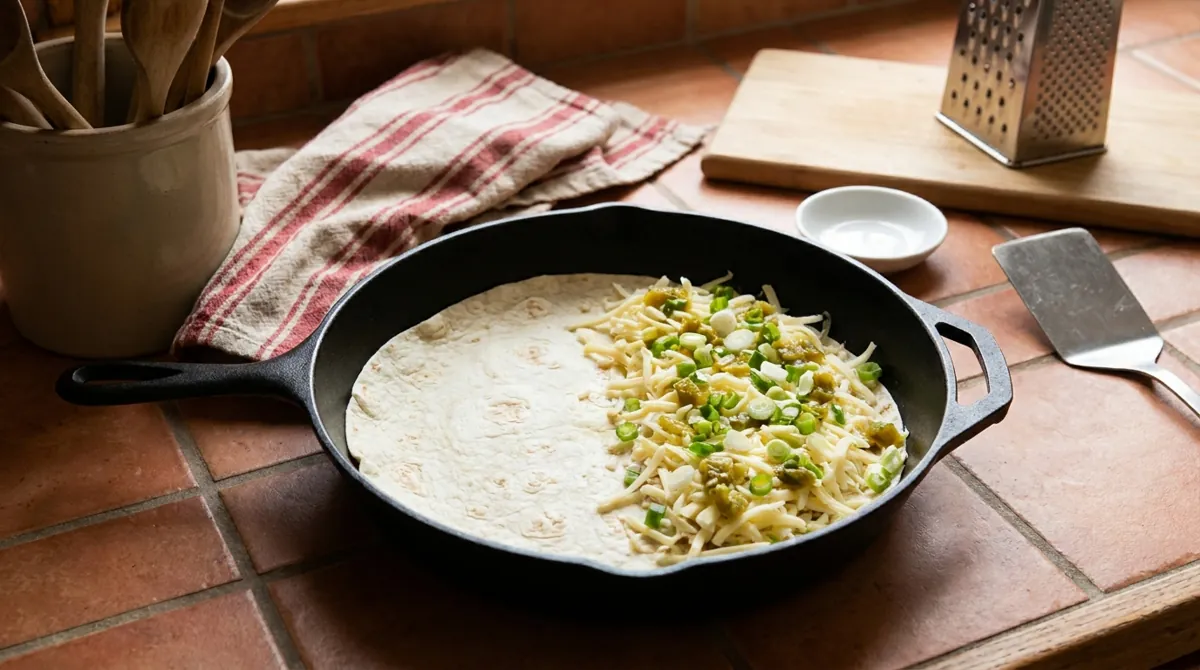
Lay one tortilla in the skillet. Scatter half the cheese over one half of it, then the scallions and chilies, and fold the other half over the top.
- Step 4
Cook 2 to 3 minutes, until the underside is golden brown with toasted spots and the cheese is starting to melt.
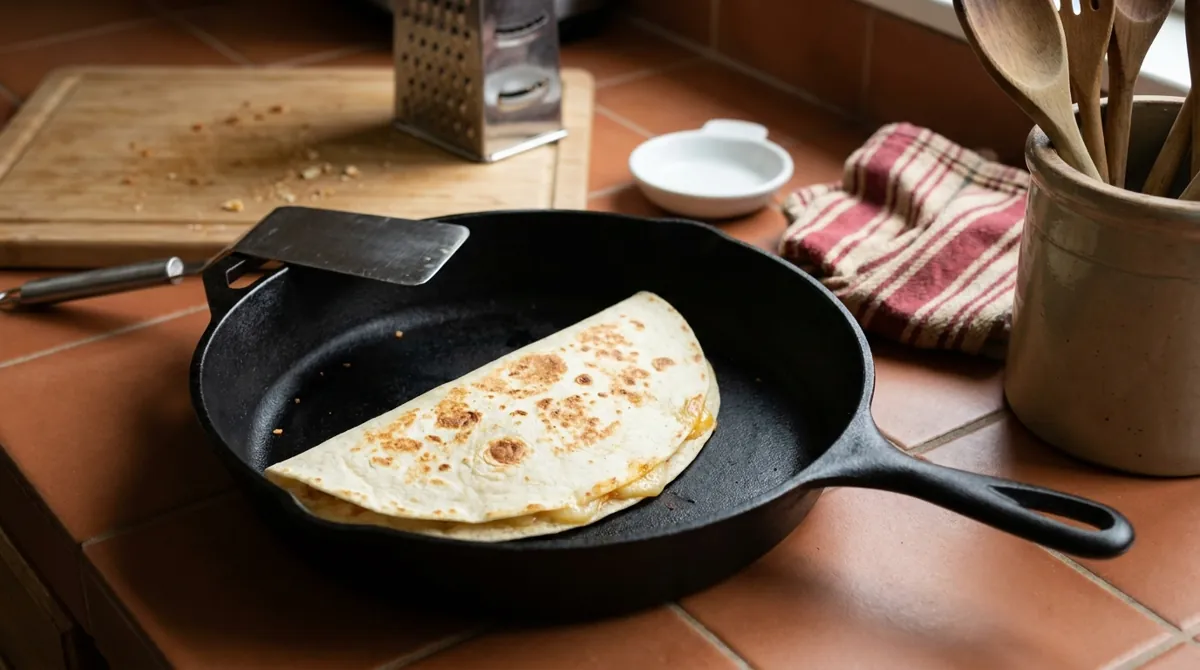
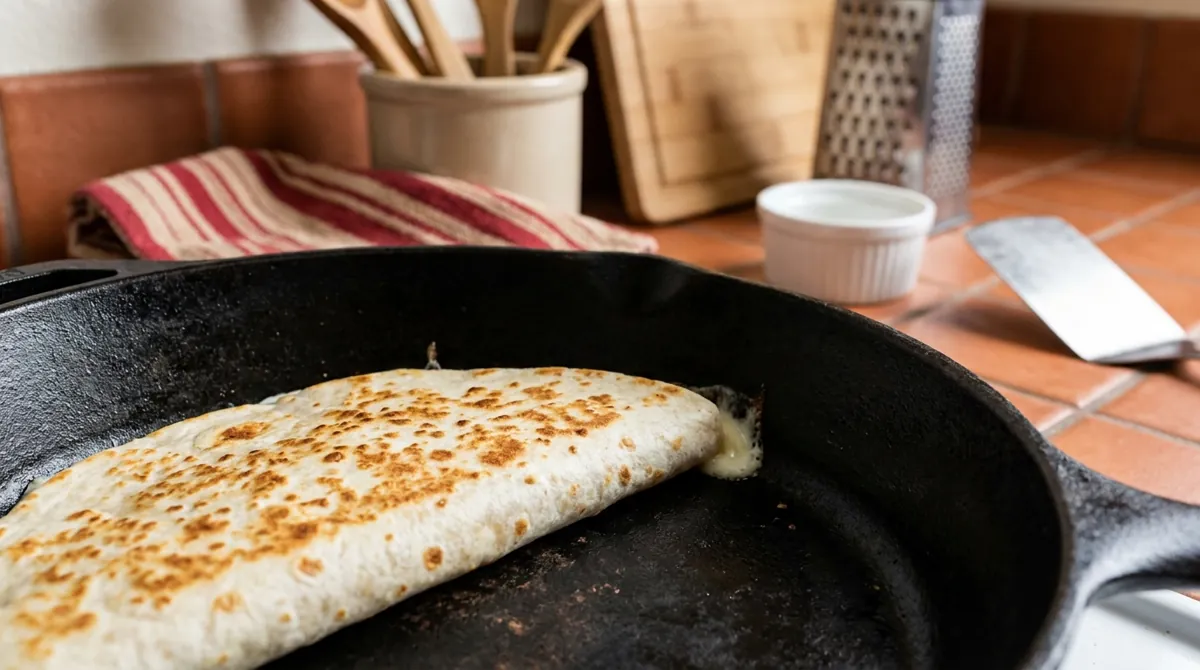
✓ What it should look like - Step 5
Flip and cook 2 more minutes, until the second side is golden and cheese is oozing at the edges. Repeat with the second tortilla, brushing the pan with the butter first.
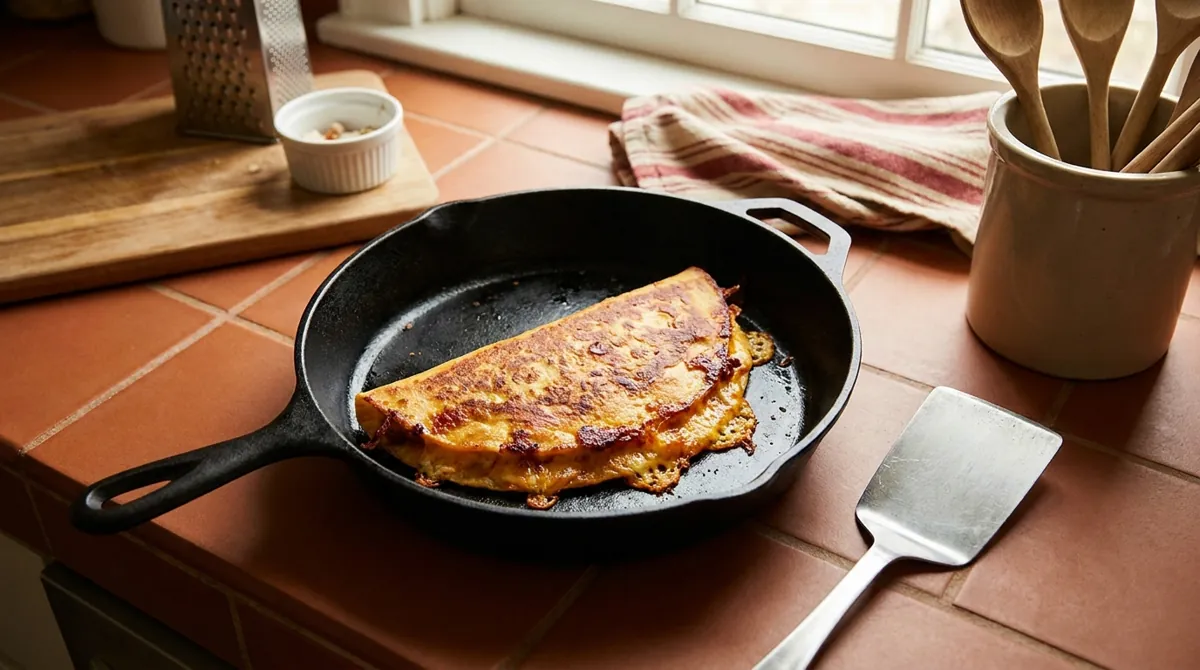
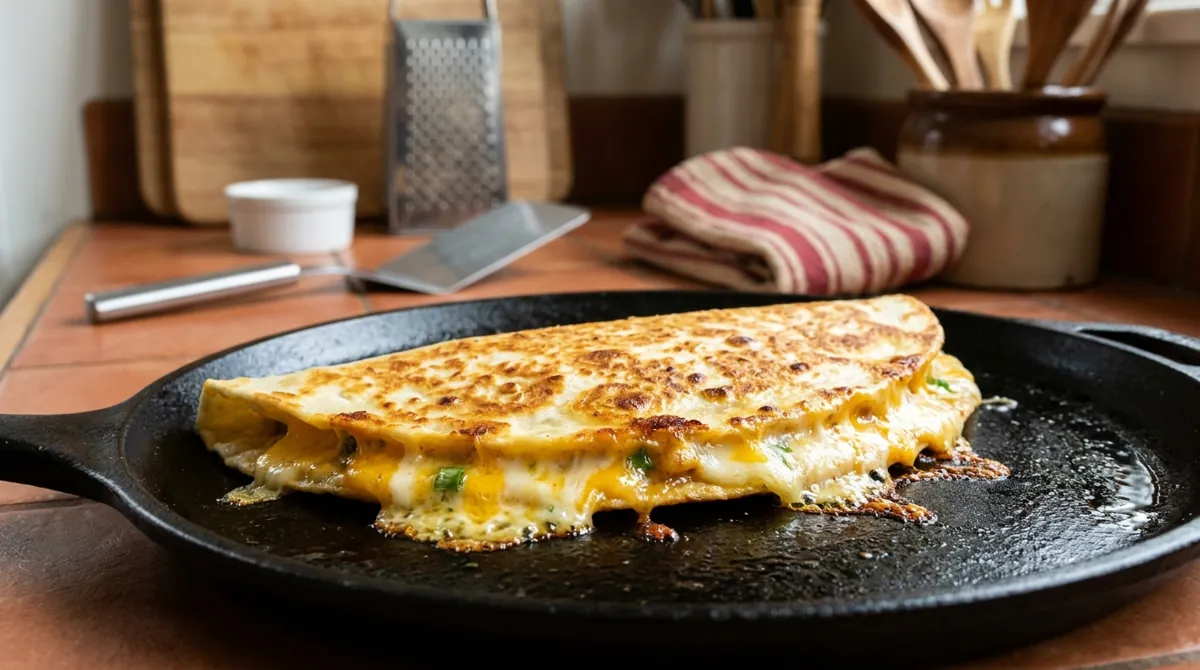
✓ What it should look like - Step 6
Rest 1 minute on a cutting board, then cut each into 4 wedges.
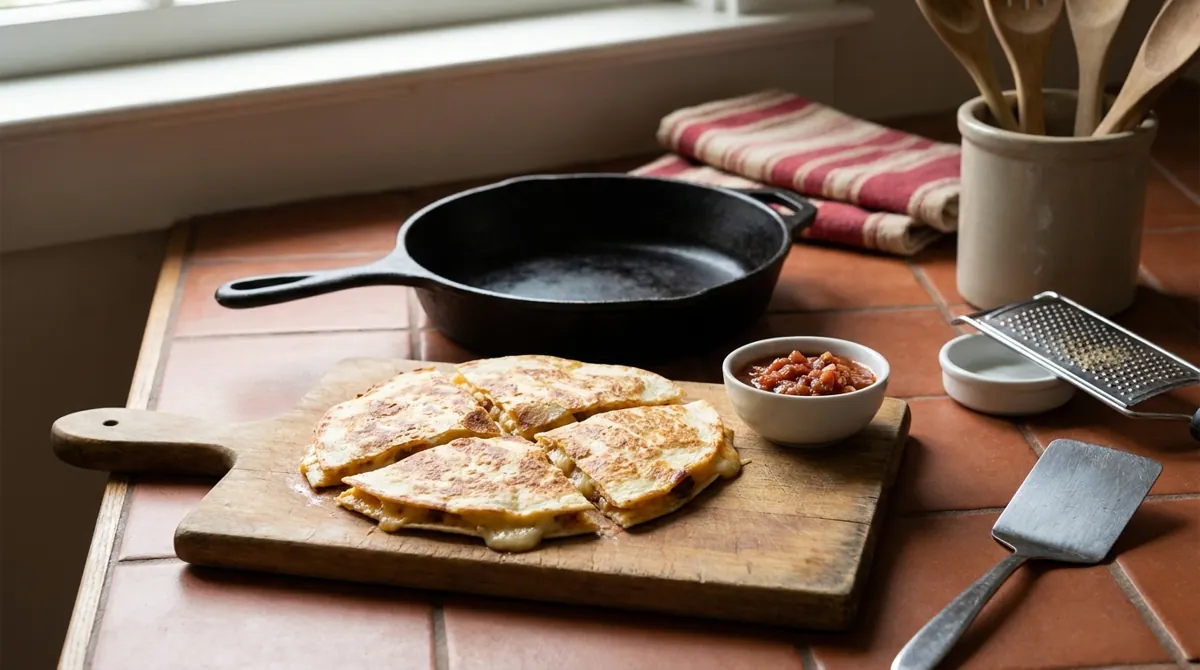
Quesadilla
Serves 2 quesadillas (4 wedges each) · two 10 inch quesadillas · 20 min total
- 2 large flour tortillas, 10 inch (about 144 g total)
- 1 1/2 cups shredded Monterey Jack (170 g), or half Jack and half mild cheddar
- 2 scallions, thinly sliced (30 g)
- 2 tbsp canned diced mild green chilies, drained (30 g)
- 1 tbsp butter (14 g)
- Salsa, sour cream or guacamole, to serve
Equipment: Skillet, Chef's knife and cutting board, Measuring cups and spoons
Method
- Shred the cheese yourself from a block and slice the scallions. Drain the green chilies.
- Heat a large dry skillet over medium heat for 2 minutes.
- Lay one tortilla in the skillet. Scatter half the cheese over one half of it, then the scallions and chilies, and fold the other half over the top.
- Cook 2 to 3 minutes, until the underside is golden brown with toasted spots and the cheese is starting to melt.
- Flip and cook 2 more minutes, until the second side is golden and cheese is oozing at the edges. Repeat with the second tortilla, brushing the pan with the butter first.
- Rest 1 minute on a cutting board, then cut each into 4 wedges.
Americanized house recipe, written for this site. History and the Mexico City cheese question: Wikipedia, "Quesadilla"; The same page covers flour tortillas in northern Mexico and the Southwestern U.S.. Cheese choice is a house choice: Monterey Jack melts well. en.wikipedia.org. Ingredient list follows the source; the method is in our own words.
All sources (1)
Tips
- Cut after a one-minute rest; straight off the heat the cheese runs everywhere.
- Add leftover chicken, black beans or sauteed peppers on top of the cheese; keep the filling thin so the tortilla still closes.
- Corn tortillas make a more traditional version; warm them first so they do not crack when folded.
The rules people argue about
What the sources agree on, what they don't, and what is just a good story.
- A quesadilla must have cheese. Disputed: in most of Mexico and the United States, yes; in Mexico City many vendors sell cheese-free quesadillas and add it only if you ask.
Meatballs of the World

Italian-American Meatballs
Big, tender meatballs braised for an hour in red sauce over spaghetti. The one most Americans grew up with.

Pallottine (Abruzzo Meatballs)
Tiny meatballs, smaller than a marble, tossed right through square spaghetti alla chitarra. No bread at all.

Swedish Meatballs (Köttbullar)
Small, soft meatballs browned in butter, in a cream sauce made from the same pan, with lingonberry jam on the plate.

Danish Frikadeller
Pork meatballs shaped with a spoon and fried slowly in butter, crusty outside and soft in the middle.

Königsberger Klopse
German meatballs that are never fried: poached, then served in a creamy white sauce with capers.

Spanish Albóndigas in Almond Saffron Sauce
The tapas bar classic: small meatballs in a golden sauce thickened with fried almonds and bread.

Mexican Albóndigas with Chipotle and Mint
Soft meatballs with rice and fresh mint inside, simmered in a smoky tomato and chipotle broth.

Izgara Köfte (Turkish Grilled Meatballs)
Small, flat meatballs kneaded hard, rested cold, and charred on a hot grill pan.

Lion's Head Meatballs
Big, soft pork meatballs, stirred into a sticky paste, fried to set, then braised in a savory sauce.

Chicken Tsukune
Japan's chicken meatball: kneaded sticky, grilled on skewers, glazed with sweet soy tare, dipped in egg yolk.