
Roman Fettuccine Alfredo (Fettuccine al Burro)
Fresh pasta, butter and Parmigiano. No cream, no garlic, no chicken, and somehow creamier than ours.
🍳Cook alongOne move at a time, with real timers
 Edited by JP Lambiase
Change the estimate
Swaps change the price only: cook any meat to its own safe temperature. Where these numbers come from
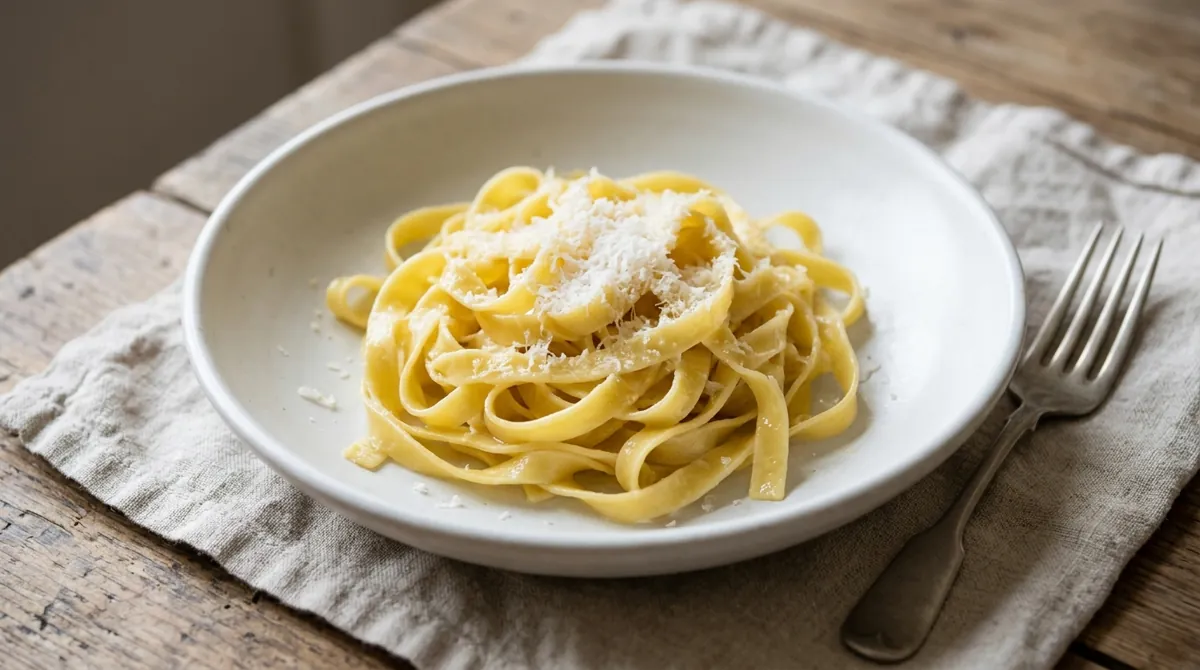
This is the original from Rome. Alfredo di Lelio made it for his wife Ines around 1908, and later tossed it at every table in his restaurant until the noodles turned glossy. Most Romans just call it fettuccine al burro.
The trick is the pasta water. Its starch turns butter and cheese into a sauce that's creamier than cream, in about a minute of tossing.
🎬 The full story: Fettuccine Alfredo in Rome Has No Cream (Here's the Real One)
🇮🇹 The original
Fresh pasta, butter and Parmigiano. No cream, no garlic, no chicken, and somehow creamier than ours.
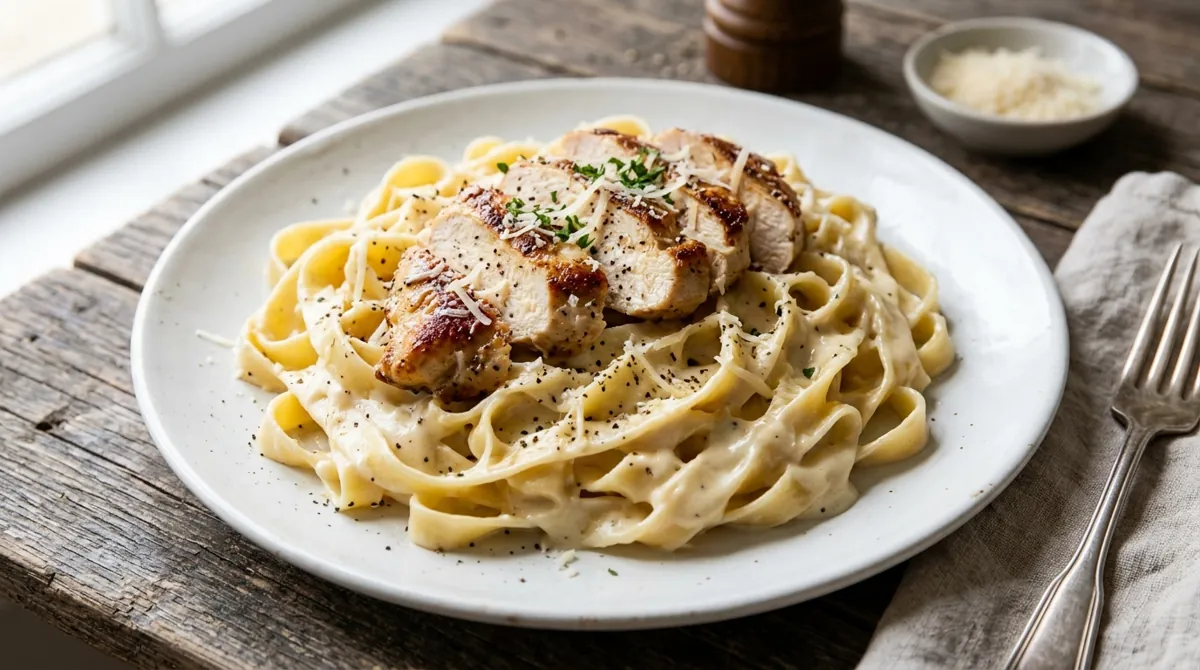
🇺🇸 The American version
The American version swaps the pasta-water trick for heavy cream, adds garlic, and usually piles on chicken. See the American Fettuccine Alfredo recipe.
🗳️ Cream or no cream? Vote: American Alfredo vs Roman original →
📖 Myth check: Is Heavy Cream Bad for You? The Numbers Behind Two Alfredos → 📖 Myth check: Is MSG Bad for You? What the Research Actually Says →
Why it works the kitchen science
Pasta water
Boiling pasta sheds starch into the water. That starch, with the cheese proteins, coats tiny drops of butter and holds them in the water: an emulsion, like mayonnaise.
Tossing
Every lift and fold breaks the butter into smaller drops, which is what makes the sauce glossy.
Watch it made
🧰 You'll need 6 items
Everything the steps call for. Tick off what you have before you start.
Pans and pots
Tools
Step by step
- Step 1
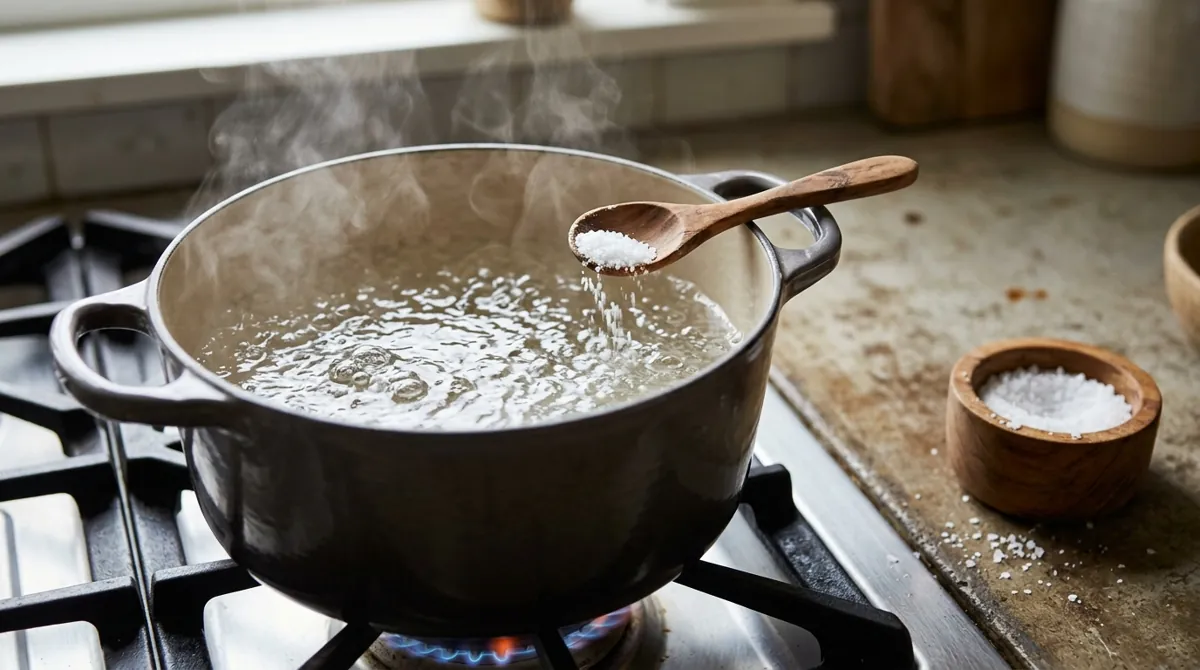
Bring a pot of water to a boil and salt it lightly. Use less water than usual, so it gets starchy.
- Step 2
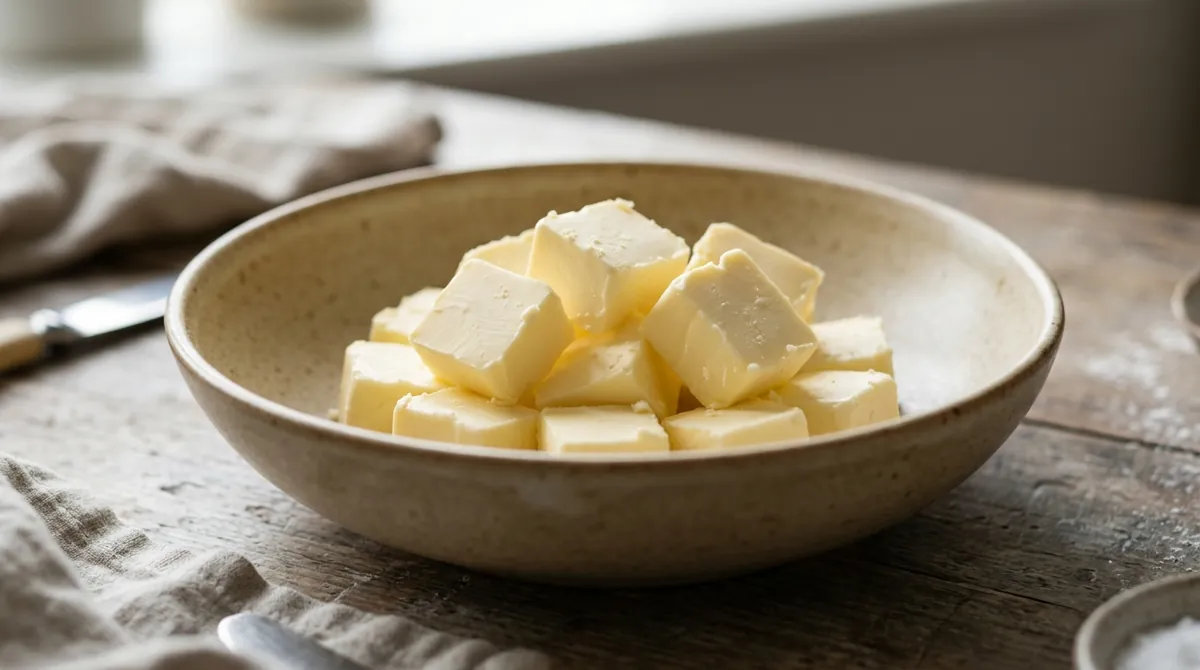
Put the softened butter in a wide pan or a warm bowl.
- Step 3
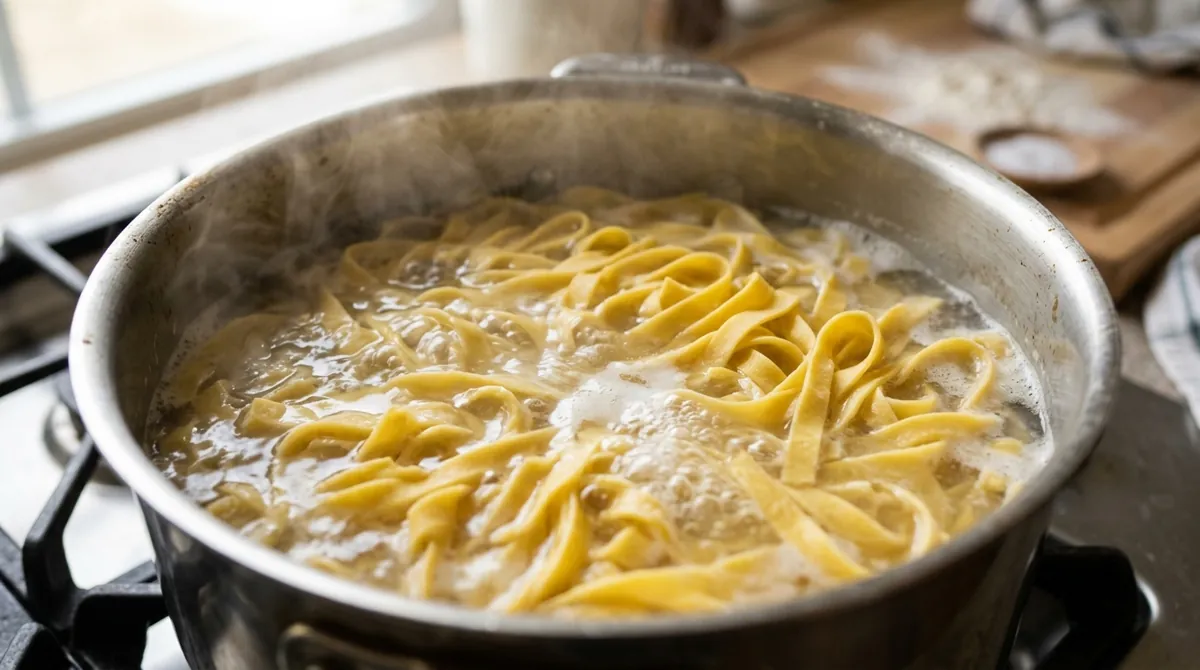
Cook the fresh fettuccine for just 2 to 3 minutes and pull it a little before it's done. With dried pasta, pull it a minute short of the package time.
- Step 4
Move the pasta straight into the butter with tongs, and bring a ladle of the cloudy pasta water with it.
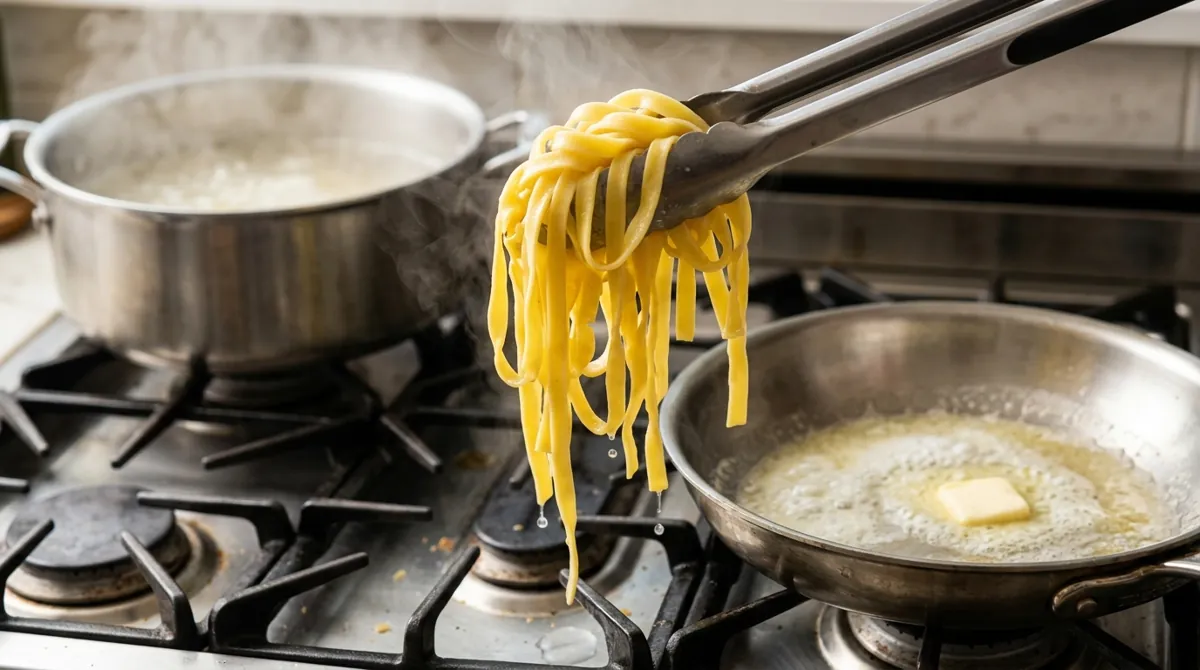
- Step 5
Toss. Keep tossing. Lift and fold the noodles until the butter melts into the water.
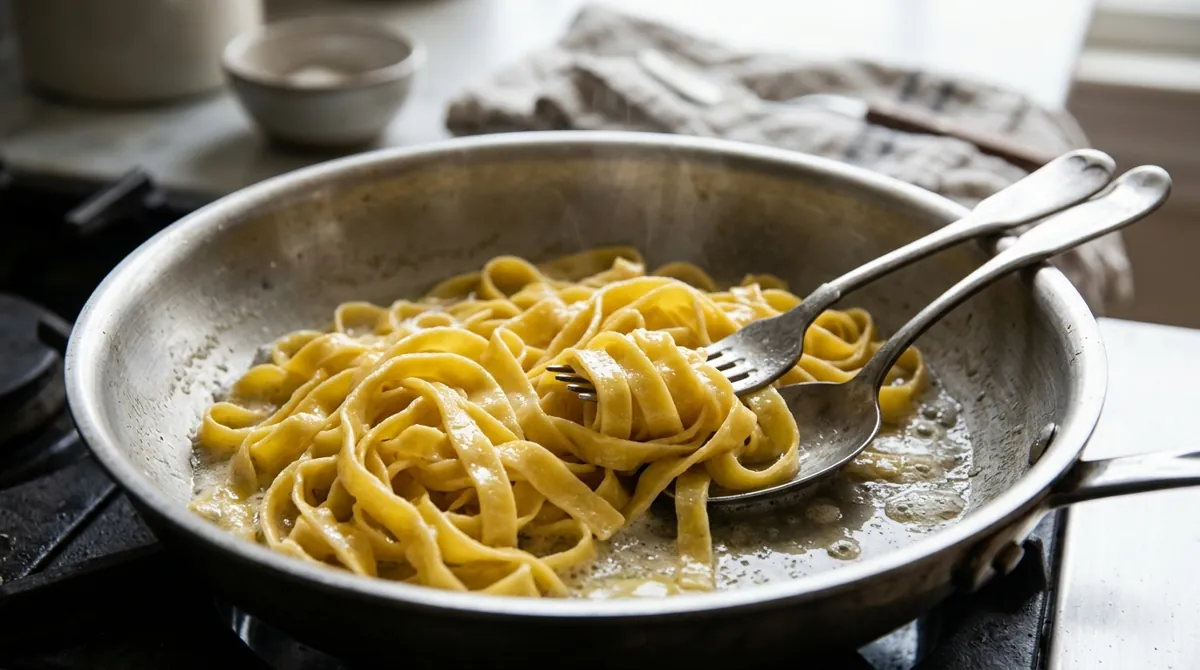
- Step 6
Add the cheese a little at a time, with another splash of pasta water, and keep tossing. In about a minute it turns into a smooth, glossy sauce. Serve right away.
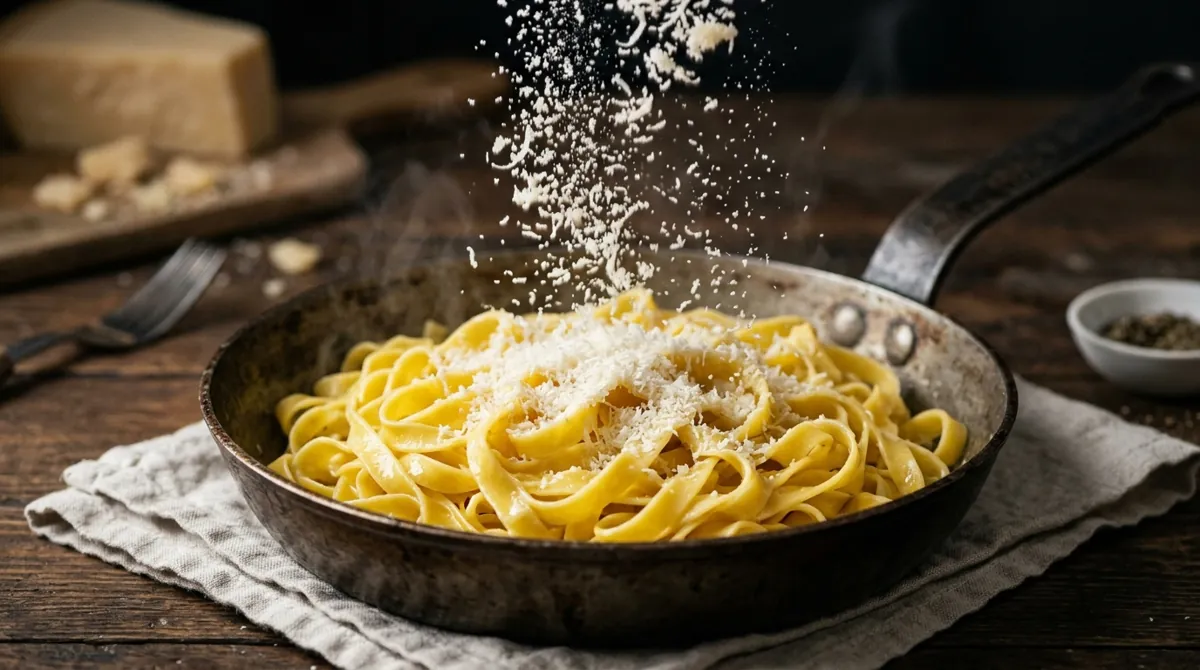
Roman Fettuccine Alfredo (Fettuccine al Burro)
Serves 2 · 15 min total
Pasta
- 8 oz fresh egg fettuccine
- 4 tbsp good unsalted butter, cut into pieces and softened
- 1 cup Parmigiano Reggiano, grated as finely as you can
- Salt, for the water
Equipment: Pot, Chef's knife and cutting board, Measuring cups and spoons, Mixing bowls, Tongs, Ladle
Method
- Bring a pot of water to a boil and salt it lightly. Use less water than usual, so it gets starchy.
- Put the softened butter in a wide pan or a warm bowl.
- Cook the fresh fettuccine for just 2 to 3 minutes and pull it a little before it's done. With dried pasta, pull it a minute short of the package time.
- Move the pasta straight into the butter with tongs, and bring a ladle of the cloudy pasta water with it.
- Toss. Keep tossing. Lift and fold the noodles until the butter melts into the water.
- Add the cheese a little at a time, with another splash of pasta water, and keep tossing. In about a minute it turns into a smooth, glossy sauce. Serve right away.
Our synthesis of Katie Parla's, Giadzy's and Milk Street's Roman fettuccine Alfredo. Katie Parla, Giadzy and Milk Street. Ingredient list follows the source; the method is in our own words.
Tips
- Three things make it go wrong: a pan that's too hot clumps the cheese, letting it sit makes it stiff, and rinsing the pasta washes the starch away.
- Save a cup of pasta water before you drain. It fixes a thin sauce, a thick sauce and a broken one.
Serve it with
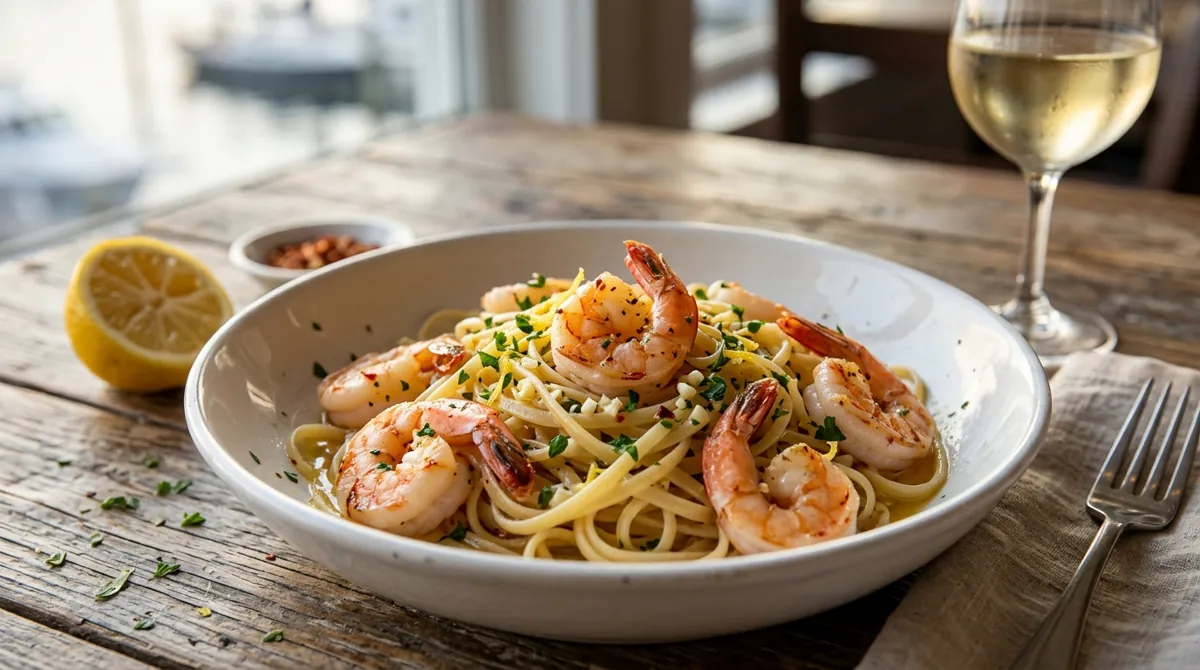
Shrimp Scampi with Linguine
Shrimp quickly brined and seared, then tossed back into linguine with a silky sauce of olive oil, a lot of garlic, chile, dry vermouth, butter and lemon, finished with parsley.
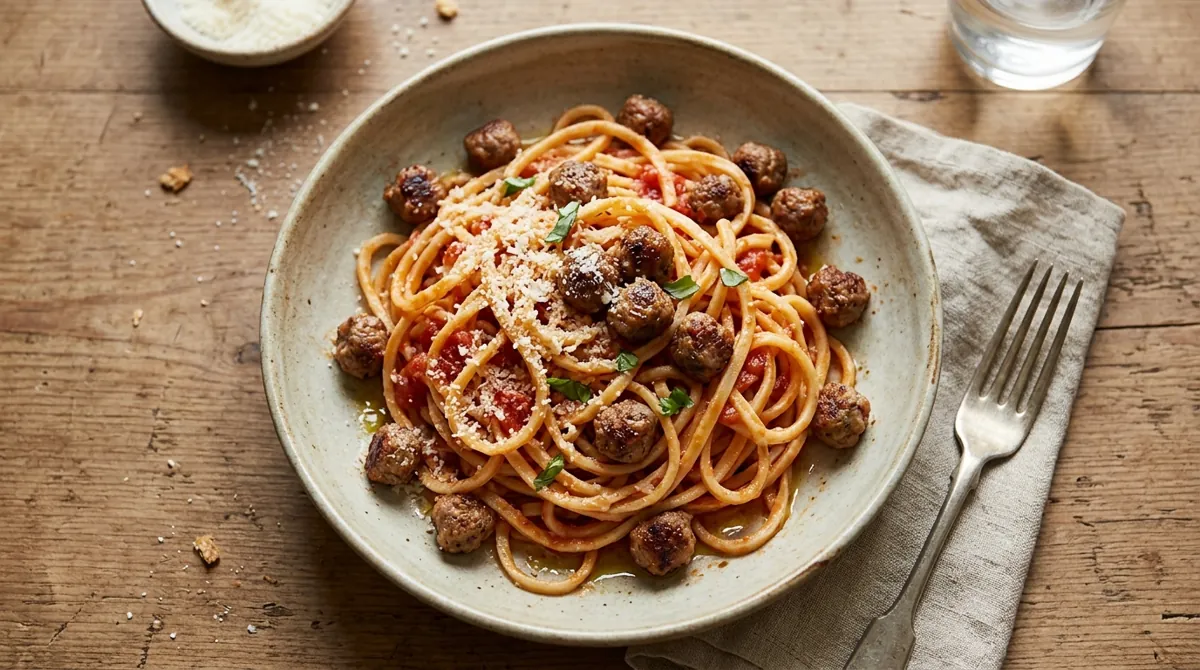
Pallottine (Abruzzo Meatballs)
Tiny meatballs, smaller than a marble, tossed right through square spaghetti alla chitarra. No bread at all.
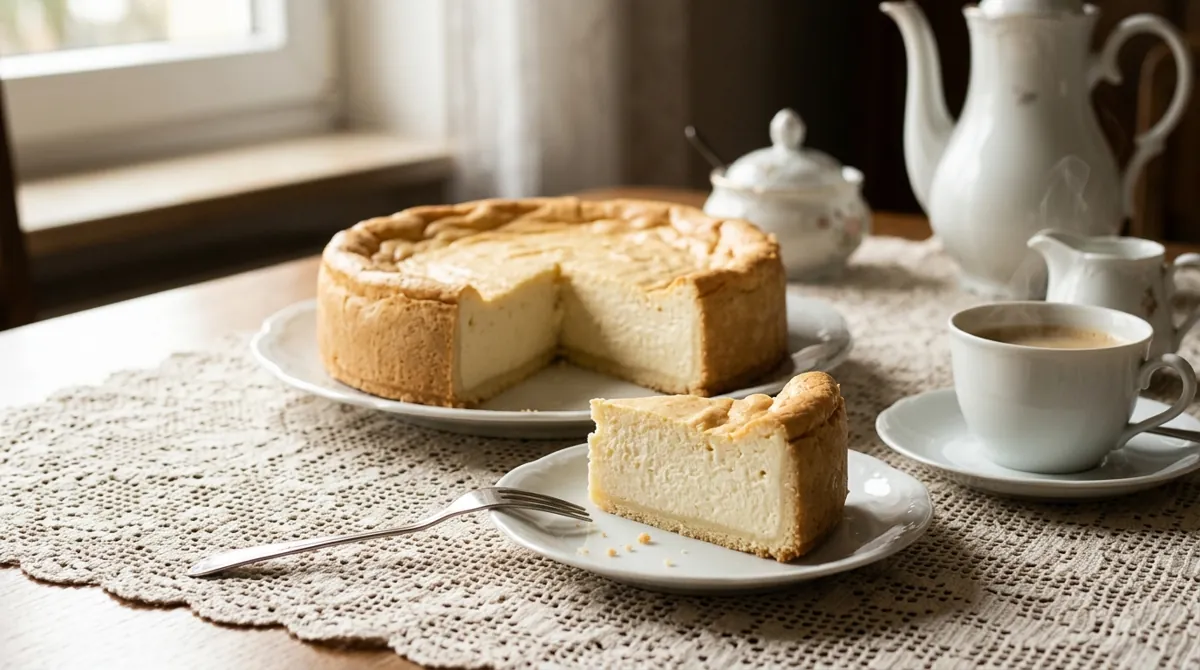
Käsekuchen (German Quark Cheesecake)
A buttery shortcrust base and rim filled with low-fat quark, lemon juice and cornstarch, lightened with whipped egg whites and whipped cream, baked low and long at 320°F and cooled in the turned-off oven so it stays tall, pale and tangy.
Meatballs of the World
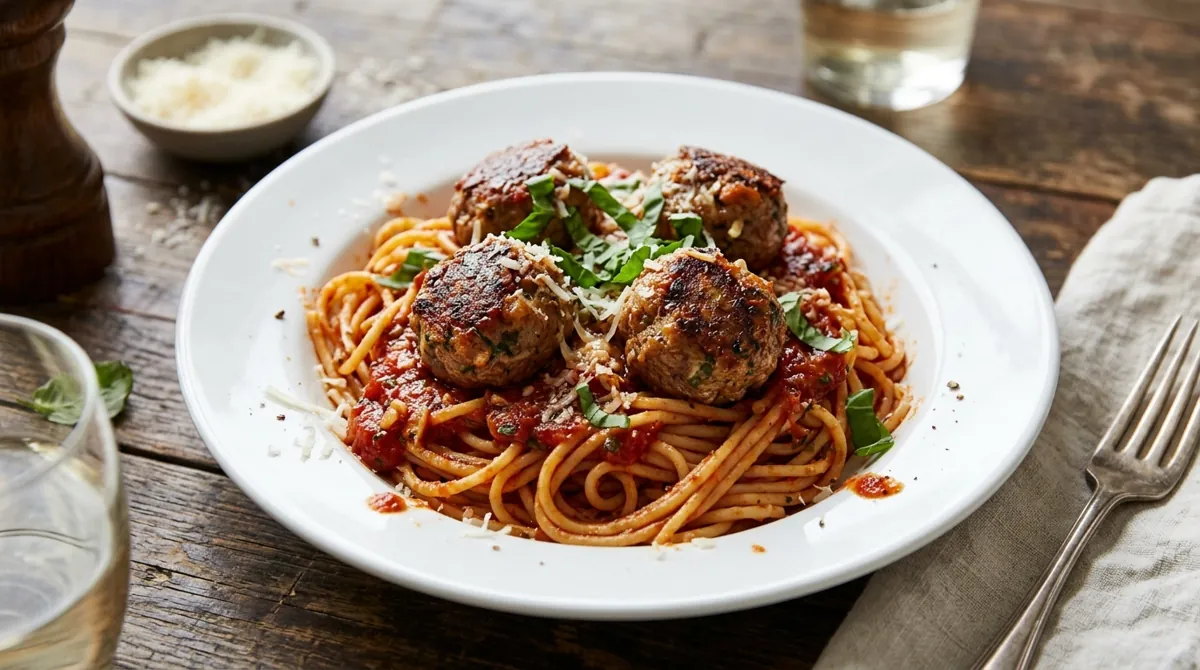
Italian-American Meatballs
Big, tender meatballs braised for an hour in red sauce over spaghetti. The one most Americans grew up with.
Pallottine (Abruzzo Meatballs)
Tiny meatballs, smaller than a marble, tossed right through square spaghetti alla chitarra. No bread at all.
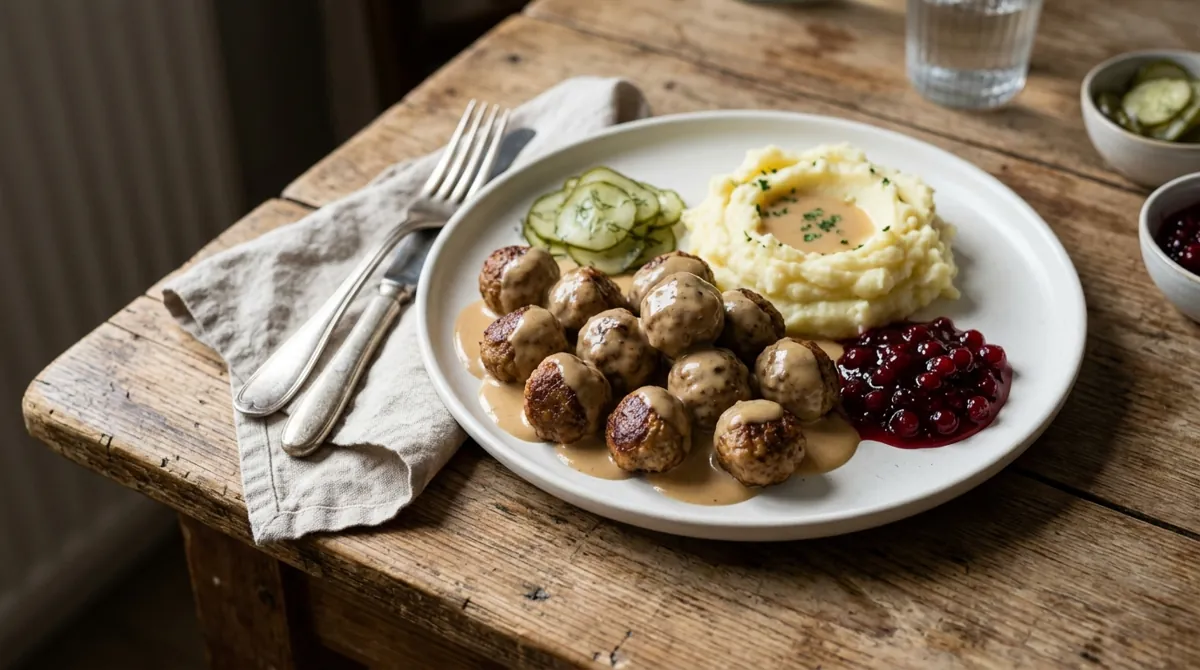
Swedish Meatballs (Köttbullar)
Small, soft meatballs browned in butter, in a cream sauce made from the same pan, with lingonberry jam on the plate.
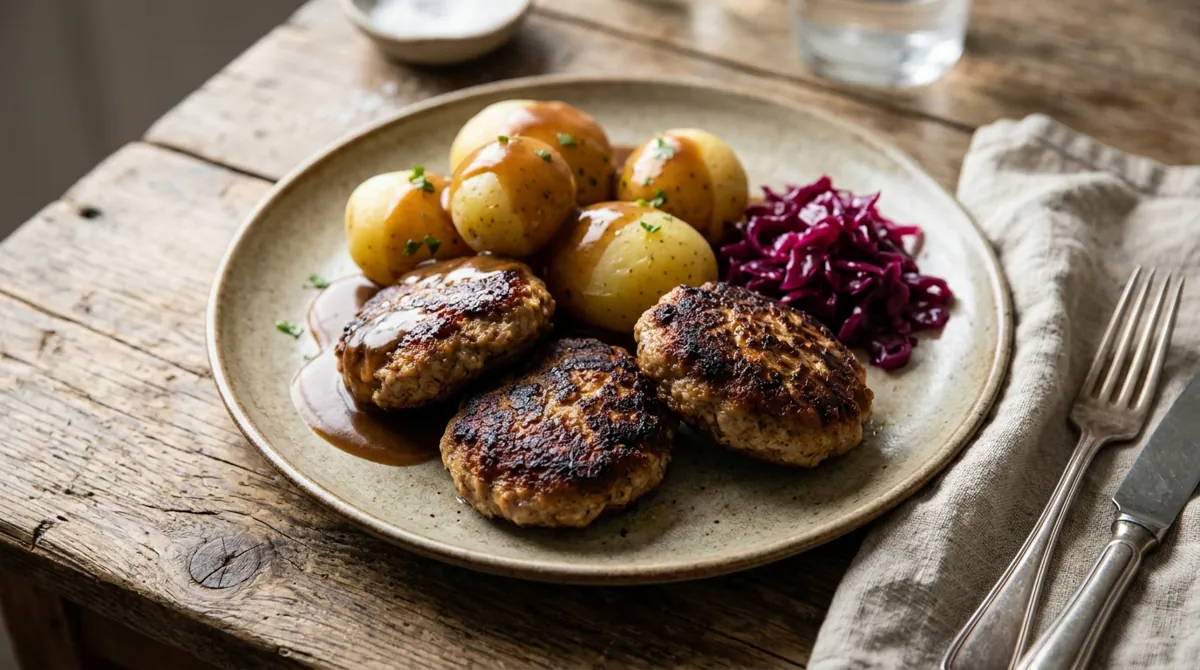
Danish Frikadeller
Pork meatballs shaped with a spoon and fried slowly in butter, crusty outside and soft in the middle.
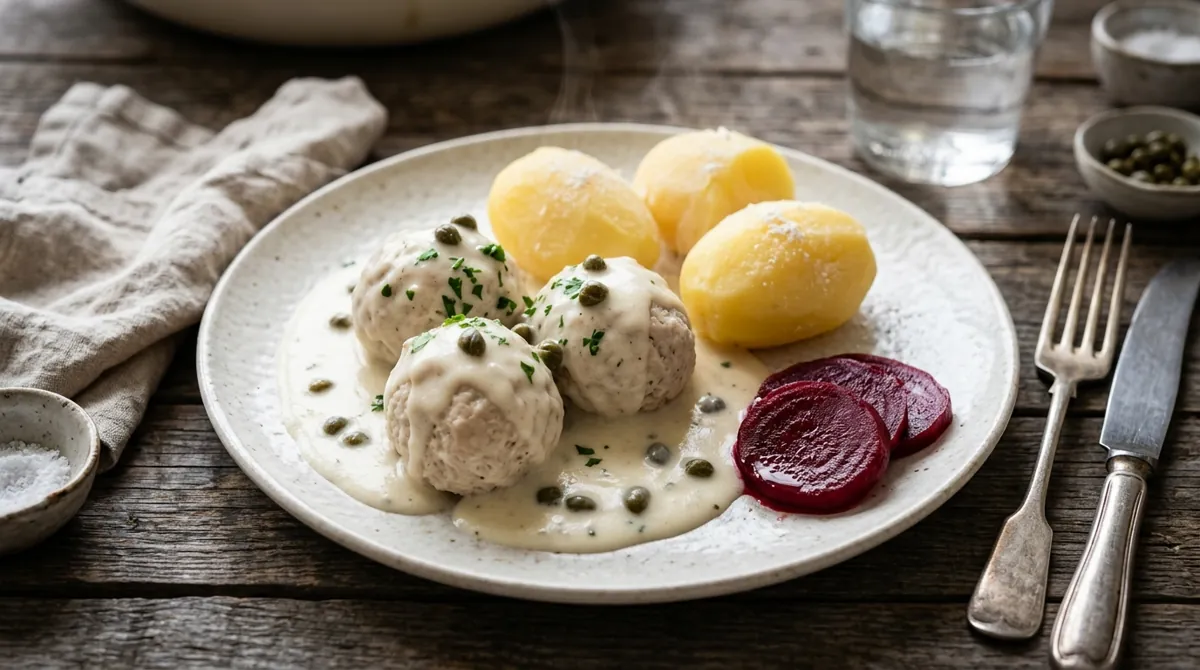
Königsberger Klopse
German meatballs that are never fried: poached, then served in a creamy white sauce with capers.
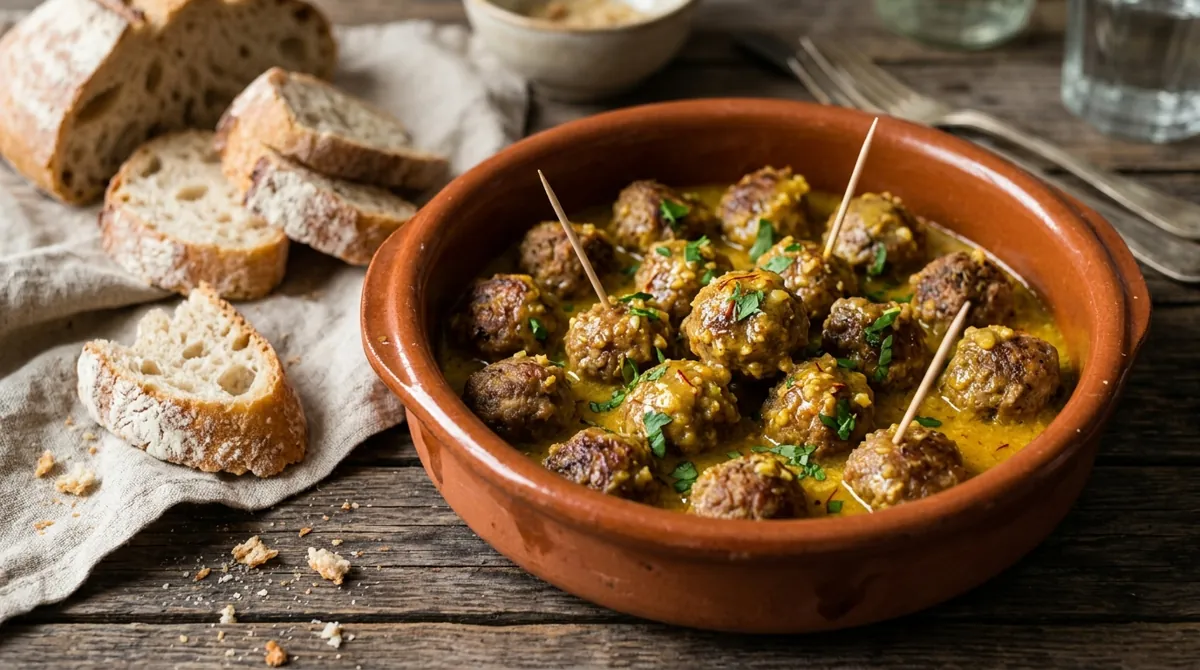
Spanish Albóndigas in Almond Saffron Sauce
The tapas bar classic: small meatballs in a golden sauce thickened with fried almonds and bread.
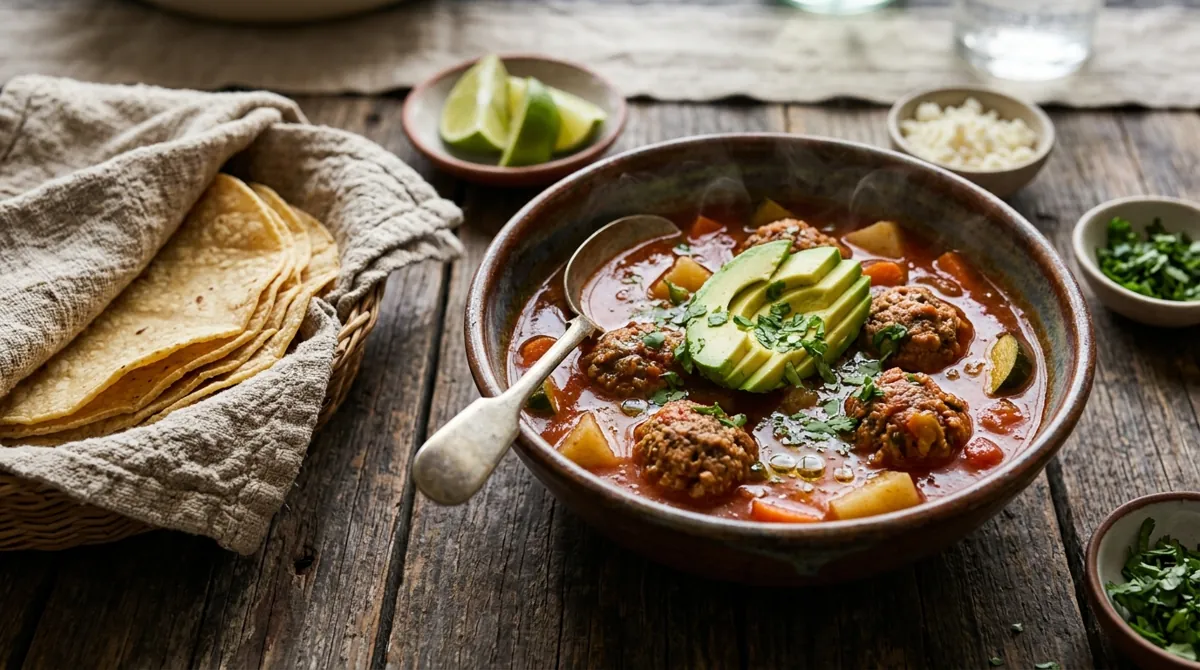
Mexican Albóndigas with Chipotle and Mint
Soft meatballs with rice and fresh mint inside, simmered in a smoky tomato and chipotle broth.
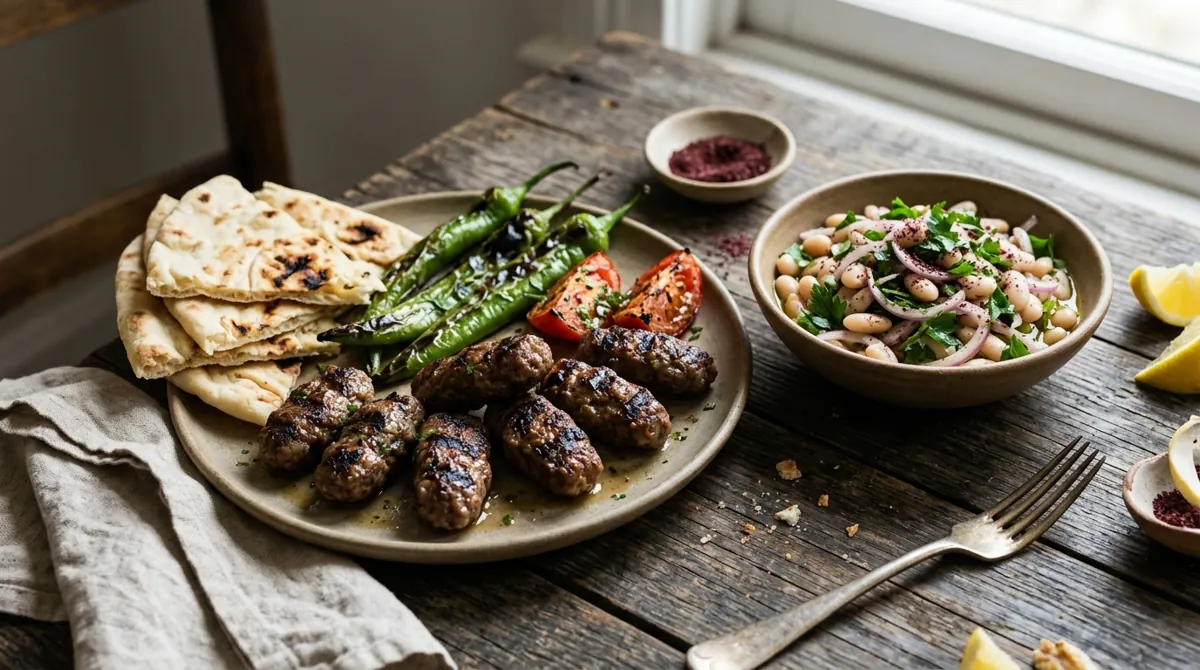
Izgara Köfte (Turkish Grilled Meatballs)
Small, flat meatballs kneaded hard, rested cold, and charred on a hot grill pan.
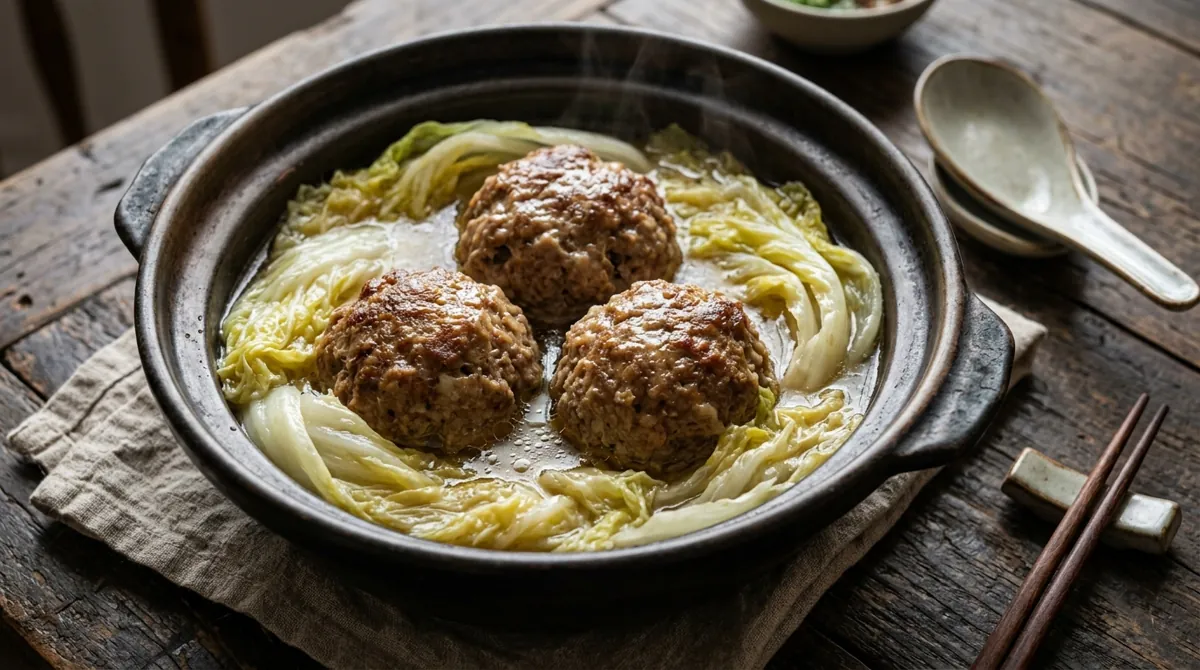
Lion's Head Meatballs
Big, soft pork meatballs, stirred into a sticky paste, fried to set, then braised in a savory sauce.
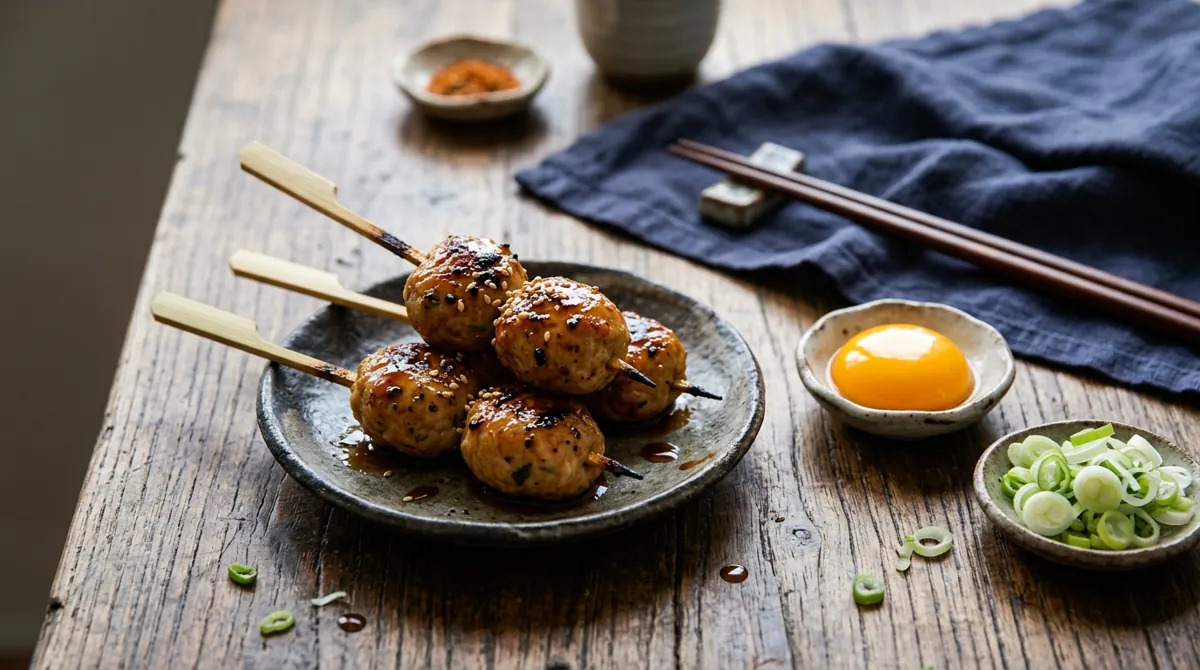
Chicken Tsukune
Japan's chicken meatball: kneaded sticky, grilled on skewers, glazed with sweet soy tare, dipped in egg yolk.