
🔬 Myth check
Is MSG Bad for You? What the Research Actually Says
One short letter to a medical journal in 1968 gave America a fear of MSG that lasted decades. Here is what regulators and controlled studies have found since.
The FDA classifies MSG as generally recognized as safe. Double-blind studies have not found consistent reactions at the amounts used in food: in the largest one, 130 people who believed they reacted to MSG got 5 grams without food, and their responses did not repeat on retesting and did not appear when MSG was given with food.
It started with a letter in 1968
In April 1968, Dr. Robert Ho Man Kwok, a Maryland physician, wrote a short letter to the New England Journal of Medicine about numbness, weakness and a racing heart after eating at Chinese restaurants. He floated three possible causes: cooking wine, salt or MSG. It ran under the title "Chinese-Restaurant Syndrome."
A month later the journal printed ten replies from other doctors, and newspapers picked up the phrase. As science writer Sam Kean notes for the Science History Institute, Americans had been eating MSG in canned and packaged food for decades without alarm; the panic only took off once it was tied to Chinese restaurants.
What MSG actually is
MSG is monosodium glutamate, the sodium salt of glutamic acid. The FDA calls glutamic acid a common amino acid, one the body makes and many foods contain. Japanese chemist Kikunae Ikeda turned it into a seasoning in the early 1900s.
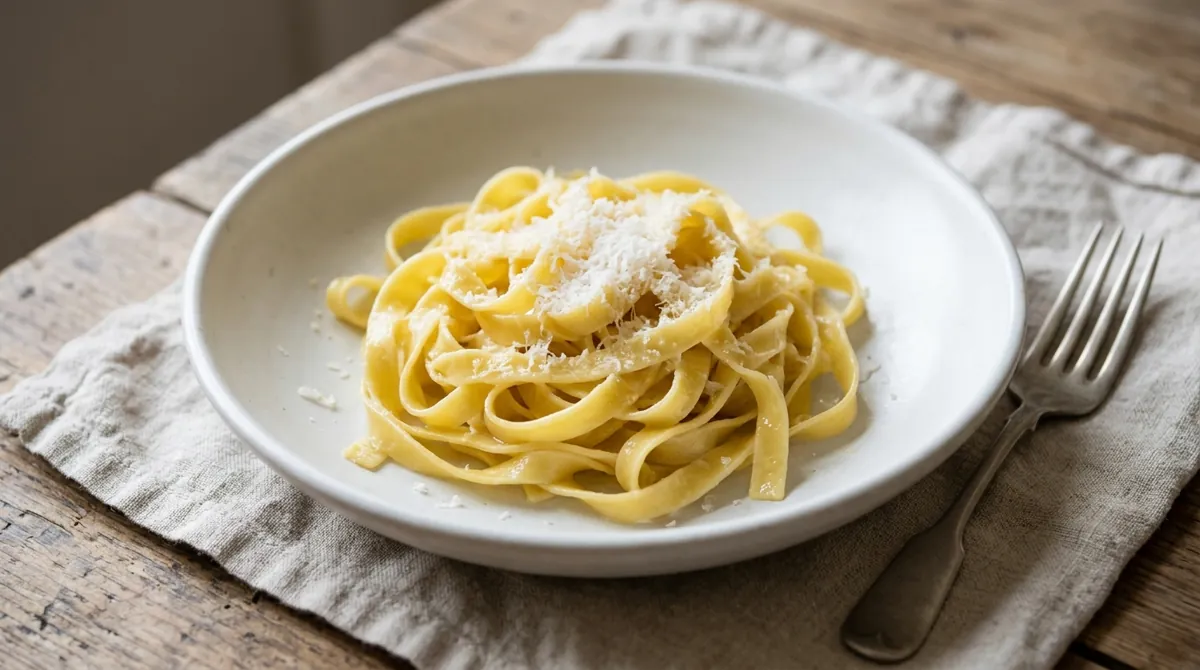
Glutamate is the savory taste in a lot of familiar food. The Umami Information Center lists about 1,680 mg per 100 grams in 24-month Parmigiano Reggiano, 246 mg in fresh tomatoes, and 400 to 1,700 mg in soy sauce. Our Roman fettuccine Alfredo uses a cup of grated Parmigiano for two plates. USDA puts that cup at 100 grams, so the pot holds roughly 1.7 grams of free glutamate before anyone adds a pinch of anything.
What the FDA says
The FDA classifies added MSG as generally recognized as safe. In the 1990s the agency asked an independent scientific group, FASEB, to review the evidence. It concluded MSG is safe, while noting that some sensitive people may get mild, short-lived symptoms such as headache, flushing or tingling after 3 grams or more without food.
For scale, the FDA says a typical serving of food with added MSG contains less than 0.5 grams, and that an average adult takes in about 13 grams of glutamate a day from protein, against about 0.55 grams a day from added MSG.
What controlled studies found
The largest double-blind trial, led by Raif Geha and published in 2000, recruited 130 people who said they reacted to MSG. Given 5 grams without food, 38.5 percent reacted to MSG only and 13.1 percent to the placebo only. But only half of the MSG-only reactors reacted the same way the second time, and the two people who seemed consistent responded to just one of three MSG challenges once it came with food.
A 2016 systematic review in The Journal of Headache and Pain looked at headache specifically and concluded that a causal link had not been proven, noting that many drink-based studies were probably easy to unblind by taste. Its lead author worked for an MSG maker, which the paper discloses.
So where does MSG show up on our site?
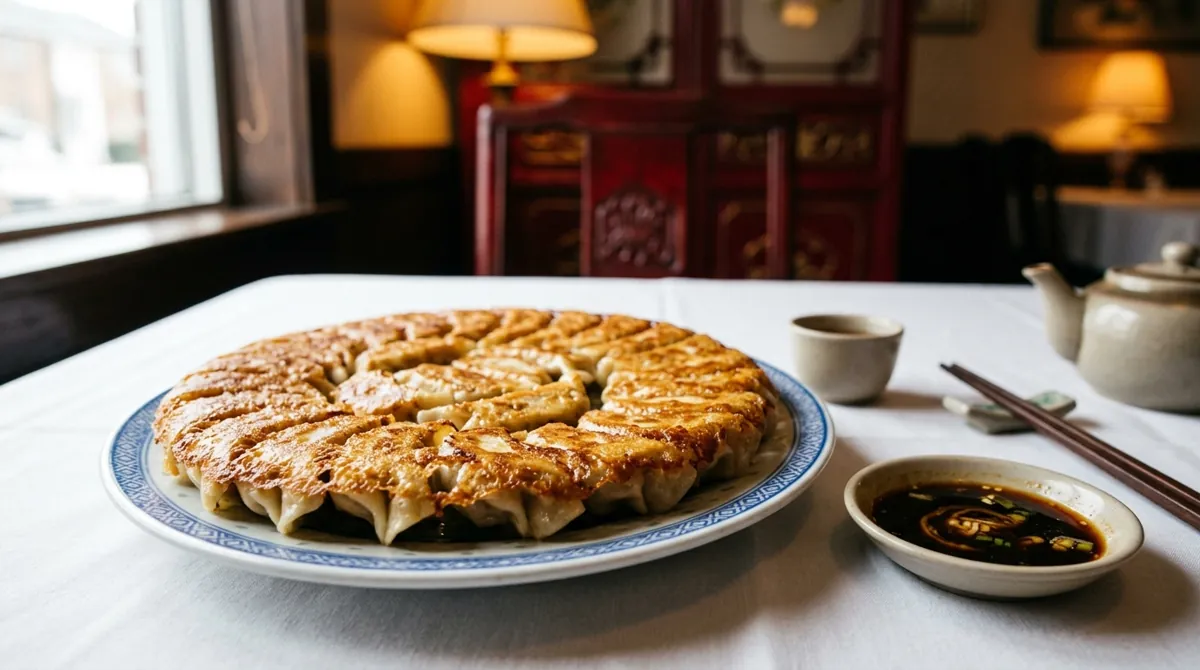
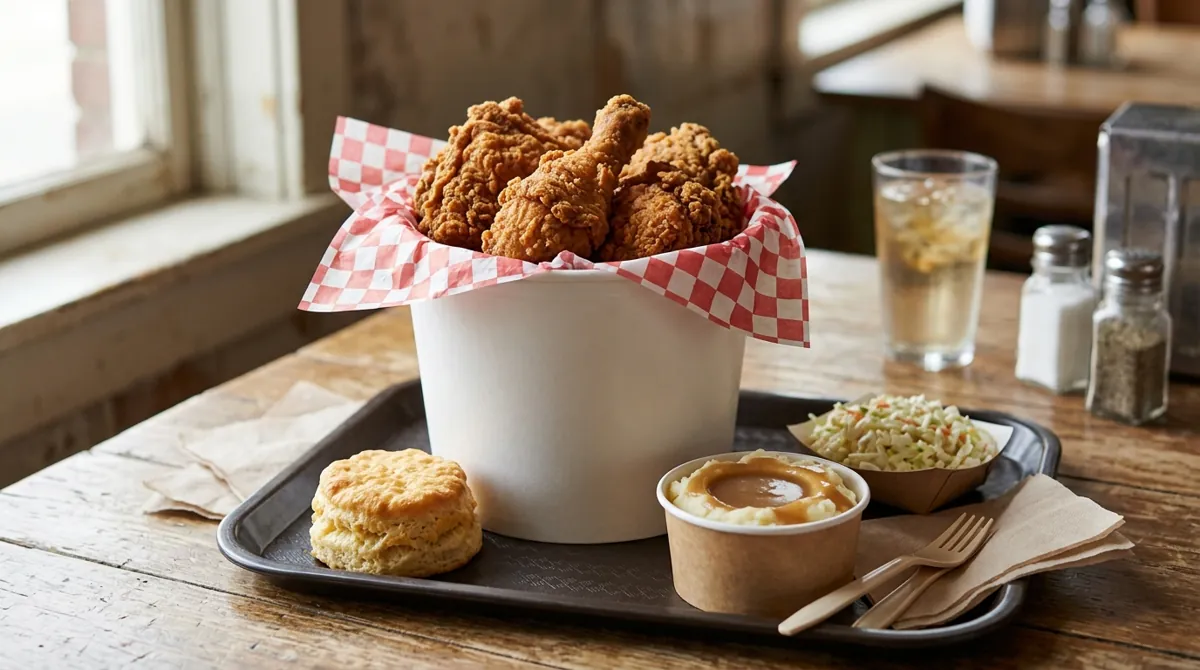
Joyce Chen's original printout for Peking ravioli includes a half teaspoon of MSG in the filling for about 48 dumplings, and we kept it as optional. Our KFC-inspired fried chicken offers an optional pinch of salt and MSG right after frying. Both work without it; you will just taste a little less of that savory depth.
Questions people ask
Is MSG listed on food labels?
Yes. The FDA requires added MSG to appear in the ingredient list as monosodium glutamate, and it cannot hide under spices or flavoring. Foods with naturally glutamate-rich ingredients, such as yeast extract or hydrolyzed protein, cannot claim "No MSG."
Is the glutamate in MSG different from the glutamate in tomatoes or cheese?
Chemically, no. The FDA says the free glutamate released when food proteins are digested is the same as the glutamate in MSG. The difference is the source, not the molecule.
Who coined Chinese Restaurant Syndrome?
It first appeared as the title of Kwok's 1968 letter. The text of the letter only calls it a syndrome and guesses at three causes, and newspaper coverage made the name stick.
Parts of this history are disputed. Where sources disagree, we say so.
Sources
- U.S. Food and Drug Administration, Questions and Answers on Monosodium Glutamate (MSG)
- Sam Kean, The Rotten Science Behind the MSG Scare, Distillations, Science History Institute (2023)
- Geha RS et al., Multicenter, double-blind, placebo-controlled, multiple-challenge evaluation of reported reactions to monosodium glutamate, Journal of Allergy and Clinical Immunology (2000), abstract via Europe PMC
- Obayashi and Nagamura, Does monosodium glutamate really cause headache? A systematic review of human studies, The Journal of Headache and Pain (2016)
- Umami Information Center, glutamate content: cheese, tomato, fermented products
- USDA FoodData Central, Cheese, parmesan, grated (FDC 171247), via the FDC API
- Reprint of R. H. M. Kwok, Chinese-Restaurant Syndrome, New England Journal of Medicine 278:796 (April 4, 1968), roblog.co.uk
More food facts
Cook it
Peking Ravioli (Boston Pan-Fried Pork Dumplings)
Joyce Chen's chiao-tzu: homemade wrappers around pork and salted napa cabbage with soy, sherry and sesame oil, steamed and fried in concentric rings, flipped out golden side up and dipped in soy sauce and rice vinegar.
Kentucky-Style Fried Chicken, Inspired by KFC
Buttermilk-brined chicken in a peppery coating of flour, white pepper, celery salt, garlic, ginger and herbs, fried in one covered batch to mimic a pressure fryer. Inspired by, not official.
Roman Fettuccine Alfredo (Fettuccine al Burro)
Fresh pasta, butter and Parmigiano. No cream, no garlic, no chicken, and somehow creamier than ours.