
Spaghetti alle Vongole in Bianco (Spaghetti with Fresh Clams)
Live clams steamed open in olive oil, garlic, chile and white wine, the meat pulled from most of the shells, and spaghetti finished in the briny juices with parsley and a fresh drizzle of oil.
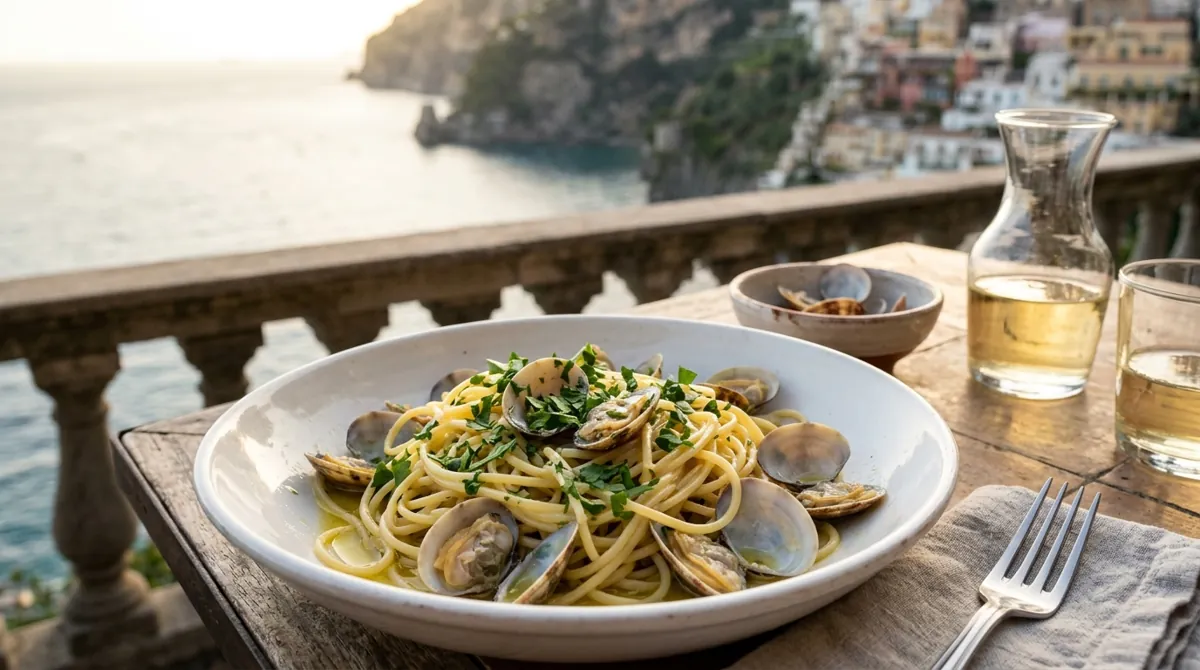
Spaghetti alle vongole is pasta with clams, and Wikipedia says it comes from Italy's coasts, particularly the south. Italians make it two ways: in bianco, with oil, garlic, parsley and sometimes white wine, and in rosso, with tomatoes, which Wikipedia says is more common in the south. The traditional clams are small carpet-shell clams (vongole veraci) or tiny wedge clams. The live clams open in the hot pan and release the juice that becomes the sauce.
America has its own clam sauce, and Wikipedia notes the differences Italians object to: some Italian-American recipes add cream, which Gillian Riley calls alien to the spirit of Italian cooking, and some add cheese, which Italians say smothers the clams. Daniel Gritzer's Serious Eats version, adapted here, is the Italian white kind with one practical change: he pulls most of the cooked clams out of their shells so every forkful has clam, keeping a few in the shell to show they are fresh.
🇮🇹 The original
Live clams steamed open in olive oil, garlic, chile and white wine, the meat pulled from most of the shells, and spaghetti finished in the briny juices with parsley and a fresh drizzle of oil.
🇺🇸 The American version
Italian-American linguine with white clam sauce turned it into a pantry dinner: canned clams and their juice, lots of garlic and butter. See the Linguine with White Clam Sauce (Canned Clams) recipe.
📖 Myth check: Should Pasta Water Be as Salty as the Sea? The Real Number →
Why it works the kitchen science
The clams make the sauce
Their juices, released as they open in wine, are the salty, sea-tasting liquid that the pasta water and oil turn into a creamy coating.
Clams out of the shell
Gritzer says shells and long noodles just get in each other's way, so shucking most of them gives clam in every bite without overcooking the meat, which goes back in only at the end.
Step by step
- Step 1
Stir salt into a large bowl of cold water until it tastes like the sea (about 7 tbsp Diamond Crystal kosher salt for 8 cups). Add the clams and let them stand 30 minutes. Lift them out, rinse the bowl and repeat until no more sand collects, usually 2 or 3 rounds. Throw out any clams with cracked shells or that gape open and do not close when tapped.
- Step 2
In a large skillet, combine the oil, garlic and pepper flakes. Cook over medium heat at a gentle sizzle about 5 minutes, until the garlic is very lightly golden.
- Step 3
Add the wine and clams, cover and turn the heat to high. Check every 30 seconds or so, moving clams to a bowl as they open, about 5 minutes in all. Discard any that have not opened. Take the pan off the heat.
- Step 4
When the clams are cool enough to handle, pull the meat from the shells, keeping a few in the shell for each plate. Chop large clam meat roughly.
- Step 5
Cook the spaghetti in lightly salted boiling water until 1 minute short of al dente. Keep at least 1 cup of the water. Move the pasta into the clam sauce with a few tablespoons of the water.
- Step 6
Cook over high heat, tossing quickly, 1 to 2 minutes, until the sauce reduces and turns creamy on the noodles. Add the butter, if using, and all the clams and toss about 1 minute more, adding pasta water a spoonful at a time if it looks dry or greasy.
- Step 7
Off the heat, stir in the parsley and a drizzle of olive oil. Serve right away.
Spaghetti alle Vongole in Bianco (Spaghetti with Fresh Clams)
Serves 4 · 4 plates · 1 hr 30 min total
Clams
- 3 lb fresh small clams, such as littlenecks, Manilas or cockles (about 3 dozen littlenecks or 4 dozen smaller clams)
- Kosher salt, for purging and for the pasta water
Sauce
- 3 tbsp extra-virgin olive oil, plus about 1 tbsp to finish
- 3 medium garlic cloves, very thinly sliced
- Pinch red pepper flakes
- 1/2 cup dry white wine
- 1 tbsp unsalted butter (optional)
- Small handful fresh parsley leaves, minced
Pasta
- 1 lb dried spaghetti
Method
- Stir salt into a large bowl of cold water until it tastes like the sea (about 7 tbsp Diamond Crystal kosher salt for 8 cups). Add the clams and let them stand 30 minutes. Lift them out, rinse the bowl and repeat until no more sand collects, usually 2 or 3 rounds. Throw out any clams with cracked shells or that gape open and do not close when tapped.
- In a large skillet, combine the oil, garlic and pepper flakes. Cook over medium heat at a gentle sizzle about 5 minutes, until the garlic is very lightly golden.
- Add the wine and clams, cover and turn the heat to high. Check every 30 seconds or so, moving clams to a bowl as they open, about 5 minutes in all. Discard any that have not opened. Take the pan off the heat.
- When the clams are cool enough to handle, pull the meat from the shells, keeping a few in the shell for each plate. Chop large clam meat roughly.
- Cook the spaghetti in lightly salted boiling water until 1 minute short of al dente. Keep at least 1 cup of the water. Move the pasta into the clam sauce with a few tablespoons of the water.
- Cook over high heat, tossing quickly, 1 to 2 minutes, until the sauce reduces and turns creamy on the noodles. Add the butter, if using, and all the clams and toss about 1 minute more, adding pasta water a spoonful at a time if it looks dry or greasy.
- Off the heat, stir in the parsley and a drizzle of olive oil. Serve right away.
Adapted from Daniel Gritzer, "Spaghetti Alle Vongole in Bianco (Spaghetti With White Clam Sauce)," Serious Eats (published February 26, 2016, updated December 10, 2025), serves 4. We follow it as written: 3 lb small clams purged in 3% salt water in 30-minute rounds; 3 tbsp olive oil with 3 sliced garlic cloves and red pepper flakes for about 5 minutes; 1/2 cup white wine; clams covered over high heat about 5 minutes; 1 lb spaghetti cooked 1 minute shy of al dente and finished with pasta water; optional butter; parsley and fresh oil. The 1 tbsp of finishing oil is our amount for Gritzer's "drizzle." One change for food safety: Gritzer keeps steaming clams that stay shut; we follow the FDA and discard any clam that does not open. Serious Eats. Ingredient list follows the source; the method is in our own words.
All sources (2)
Tips
- Purging matters; Gritzer's photo of his gritty purging water shows how much sand stays in unpurged clams.
- Pull clams out as they open so the early ones do not overcook while the others catch up.
- Keep the garlic pale; burnt garlic turns the whole sauce bitter.
- Cheese is not used.
The rules people argue about
What the sources agree on, what they don't, and what is just a good story.
- Throw out clams that don't open. Disputed: the FDA says to throw out clams whose shells do not open during cooking; Gritzer says that rule "is not true" and that a shut clam may be the liveliest in the pot, warning only about rare mud-filled shells. Our recipe follows the FDA.
- No cheese on seafood pasta. Documented as Italian practice by Wikipedia ("Italians state that it overpowers" the clams); some American recipes add it.
- No cream. Documented as the Italian norm (Wikipedia, quoting Gillian Riley); some Italian-American recipes use cream.
- Wine or no wine. Folklore: Wikipedia says the white version uses "sometimes a splash" of wine; both are traditional.
- Red or white. Documented: both exist in Italy (Wikipedia).
Every other pasta
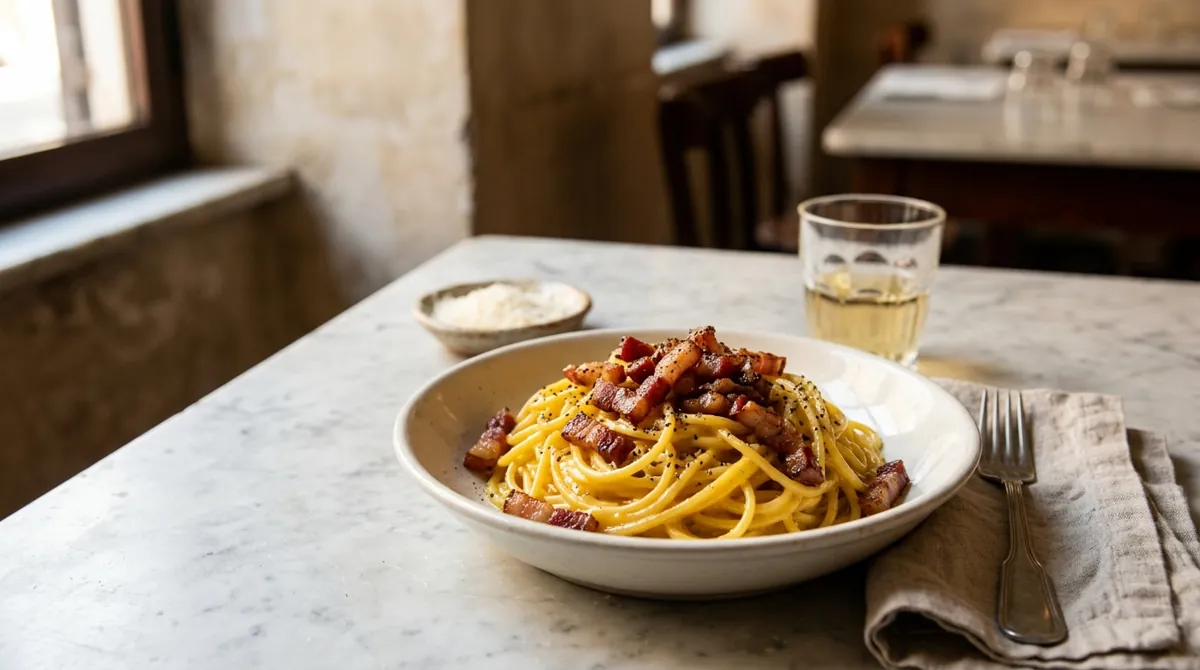
Roman Spaghetti alla Carbonara (Guanciale, Egg Yolks, Pecorino, No Cream)
Spaghetti tossed with crisp guanciale and its fat, then stirred over a pot of boiling pasta water with egg yolks, Pecorino Romano, Parmigiano-Reggiano and coarse black pepper until the eggs thicken into a glossy sauce, with no cream at all.
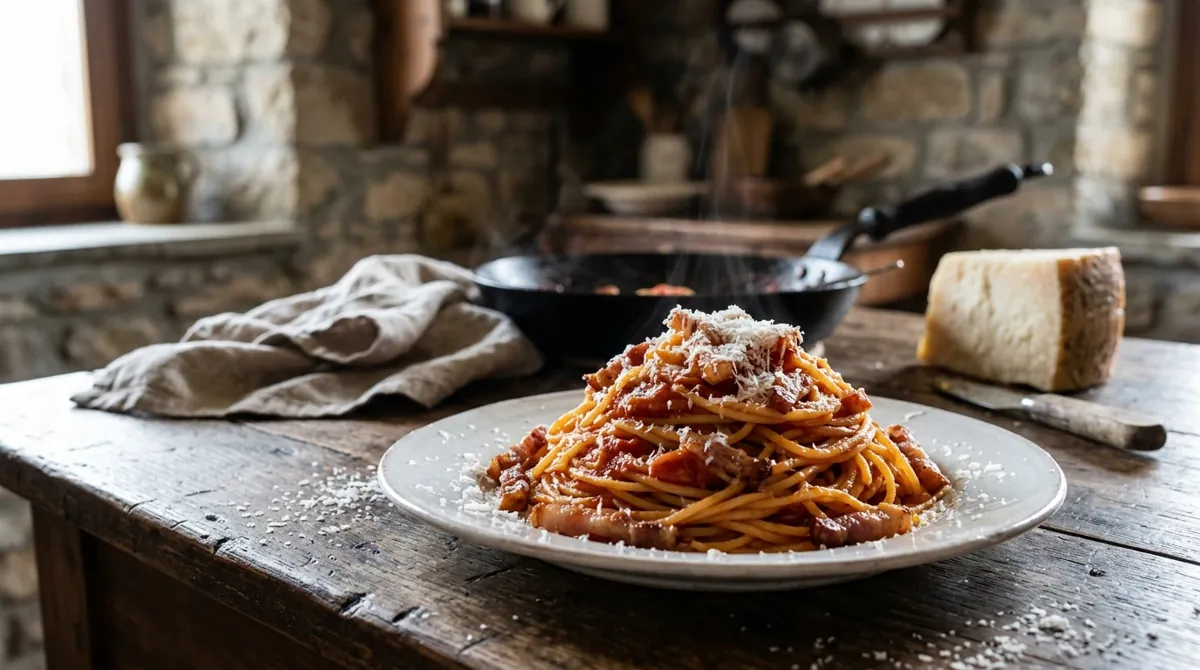
Spaghetti all'Amatriciana, the Amatrice Way (No Onion, No Garlic)
The recipe the town of Amatrice publishes: guanciale browned in an iron pan with a piece of chile and a splash of white wine, peeled tomatoes simmered briefly, and spaghetti tossed first with a heap of grated pecorino, then with the sauce.
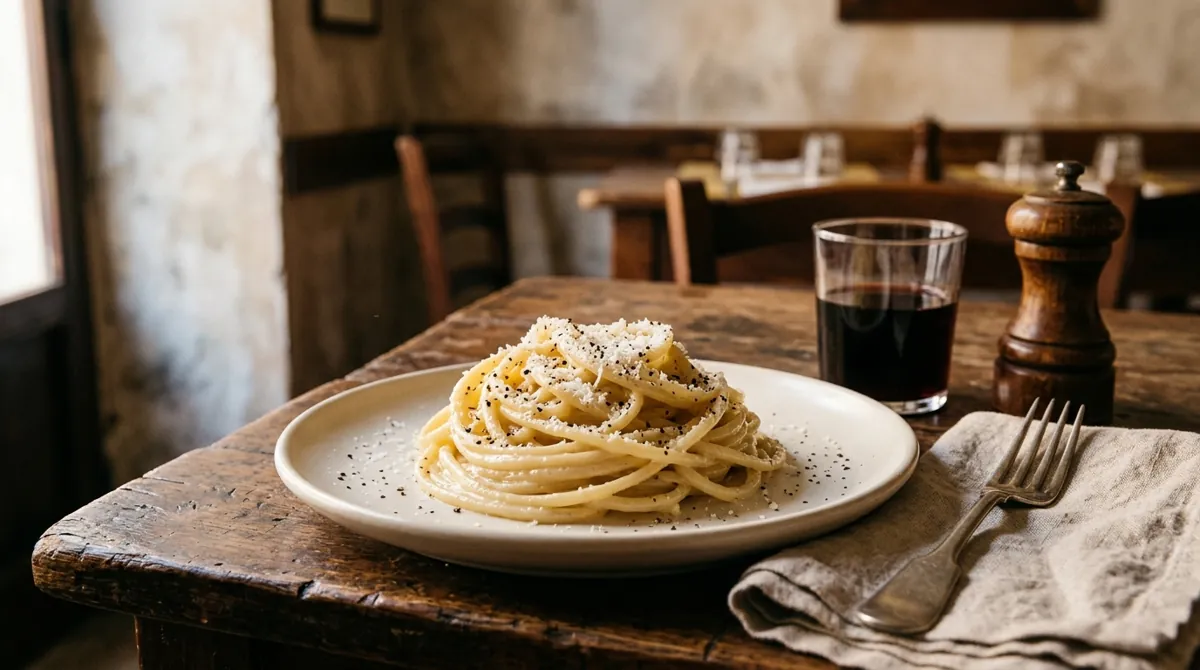
Cacio e Pepe (Pecorino and Black Pepper, the Never-Clumps Method)
Spaghetti in a smooth, sharp sauce of nothing but Pecorino Romano, toasted black pepper and pasta water, held together by a teaspoon of cooked cornstarch so it cannot seize into clumps.
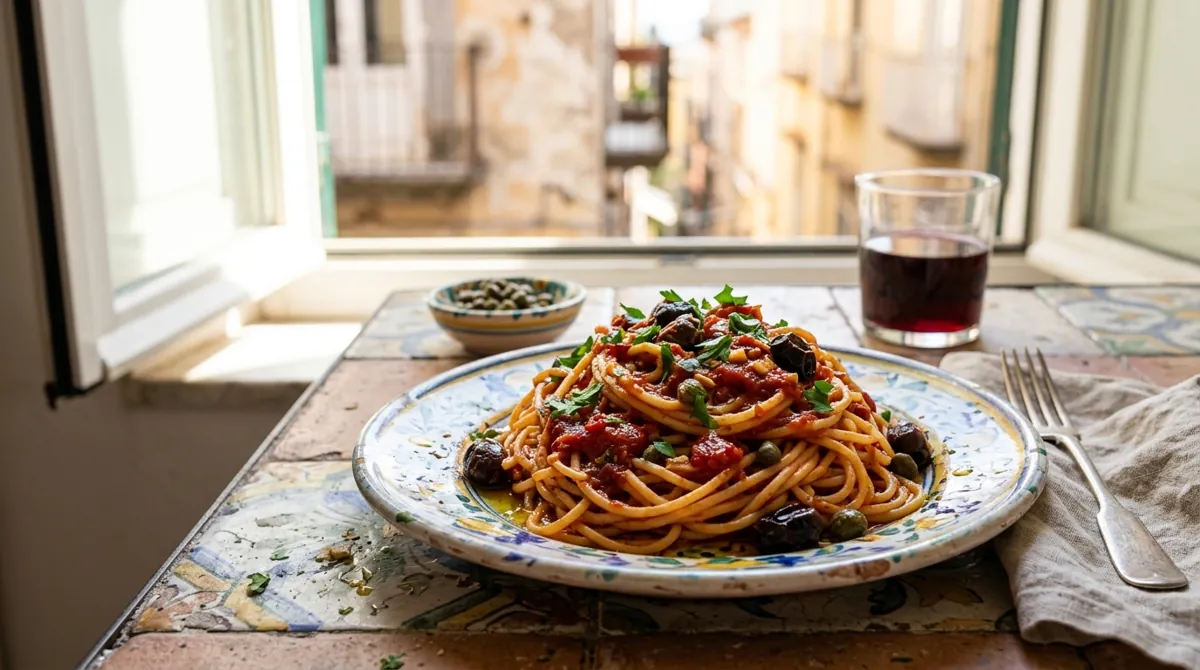
Spaghetti alla Puttanesca
A 20-minute pantry sauce: garlic and anchovies sizzled slowly in plenty of olive oil, then capers, black olives and hand-crushed San Marzano tomatoes, with the spaghetti finished in the pan.
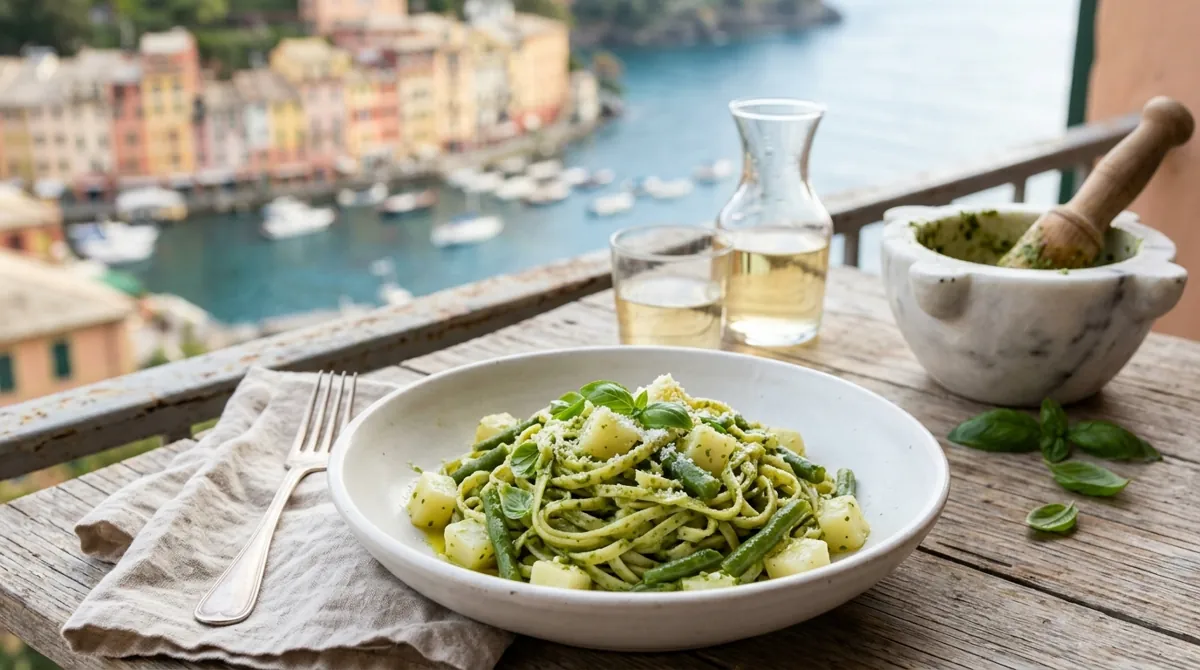
Trenette al Pesto with Potatoes and Green Beans (Genoa)
Genoese basil pesto pounded in a mortar from garlic, pine nuts, basil, Parmigiano, sheep's cheese and mild olive oil, tossed with trenette boiled in the same pot as cubes of potato and short lengths of green bean.
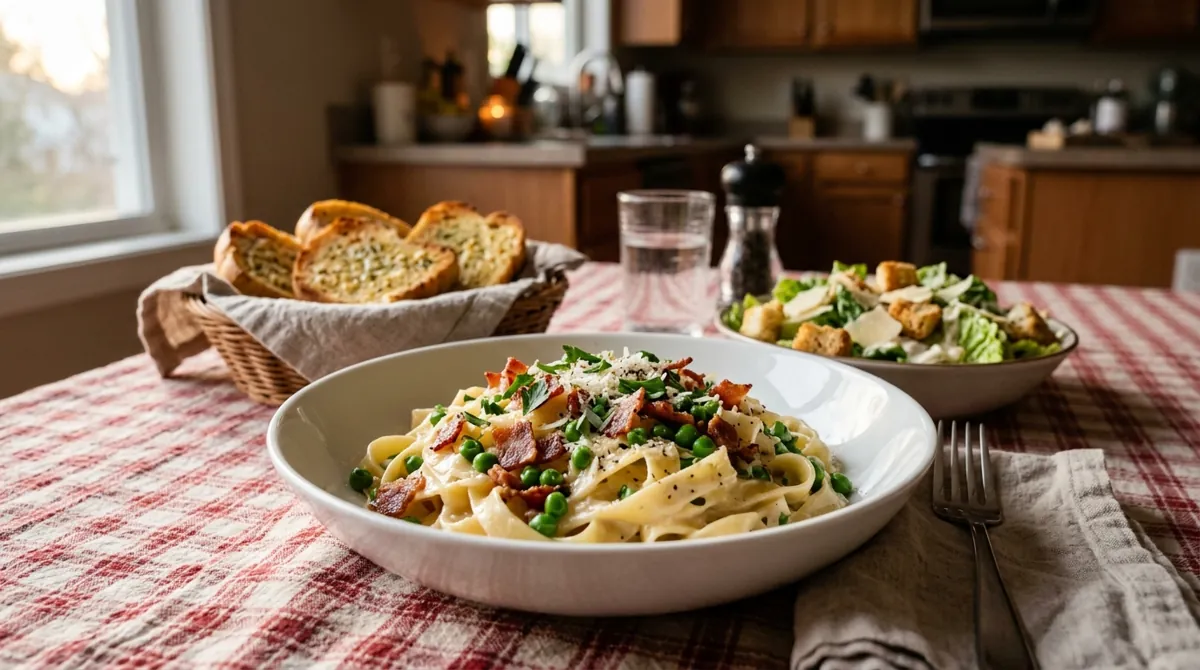
American Fettuccine Carbonara with Bacon, Cream and Peas
Fettuccine in a creamy sauce of half-and-half and tempered eggs cooked to 160°F, with crisp bacon, onion, garlic, Romano and sweet green peas: the carbonara most Americans grew up with, made on purpose.
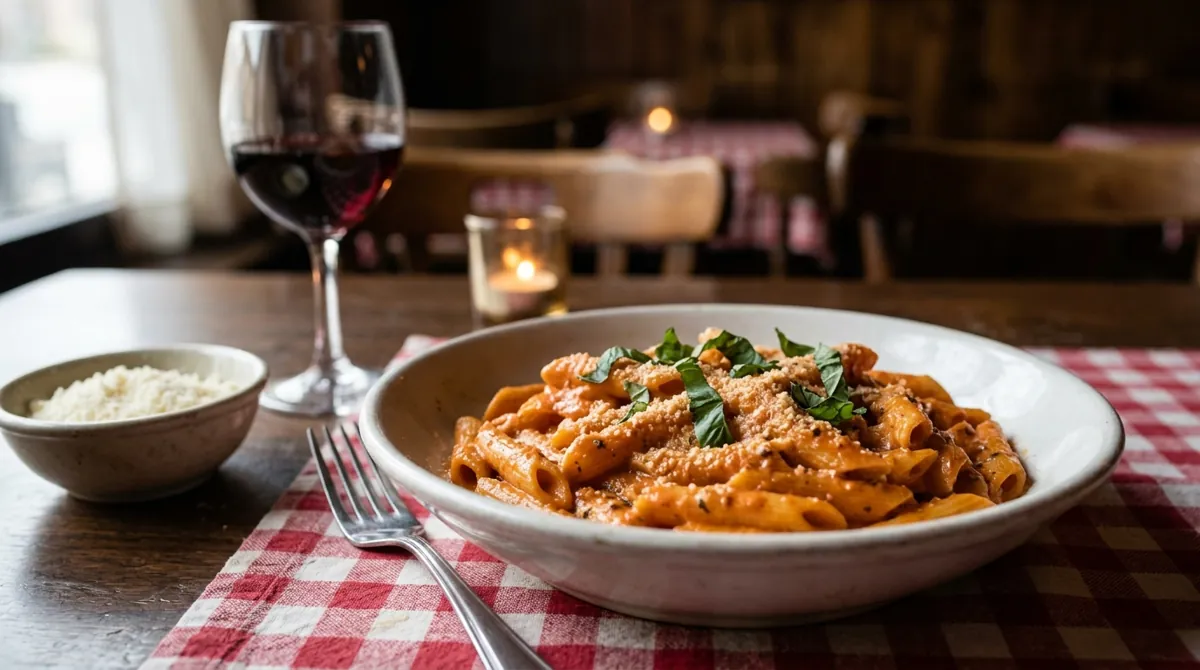
Penne alla Vodka
A smooth, blush-orange sauce of slowly softened onion, a whole tube of tomato paste, canned tomatoes and heavy cream, blended silky, spiked with a quarter cup of vodka and finished with Parmigiano on penne or rigatoni.
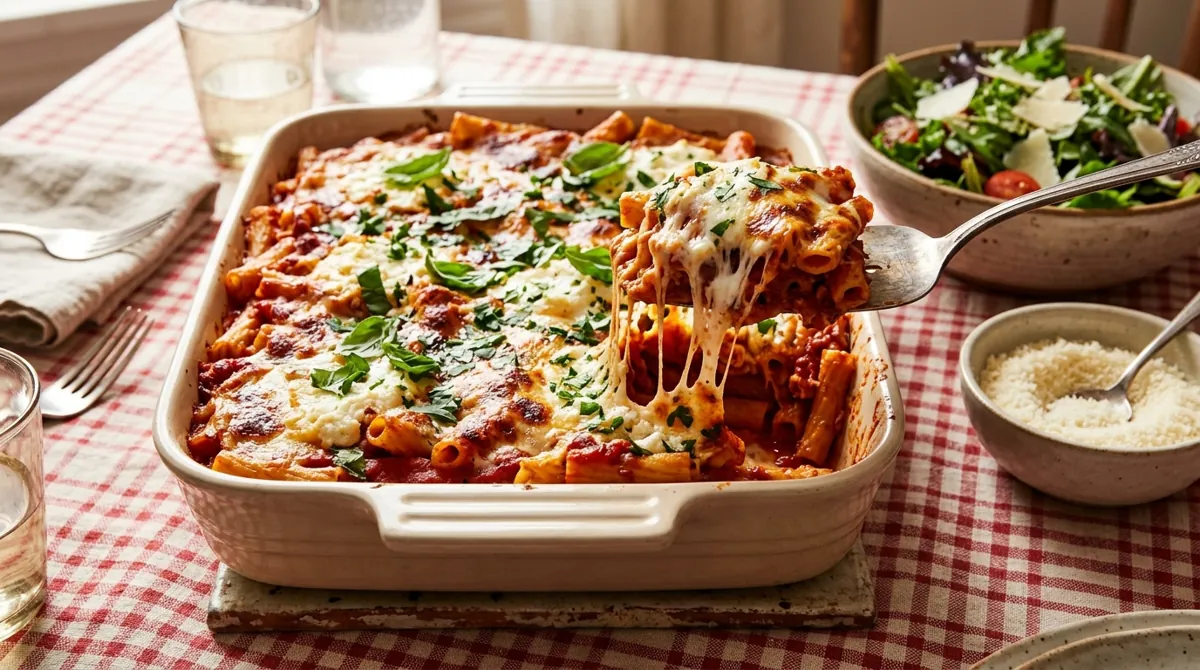
Baked Ziti (No-Boil, with Ricotta and Mozzarella)
Ziti soaked in hot salted water instead of boiled, stirred into red sauce with ricotta, Parmigiano, eggs, cream, herbs and cubes of mozzarella, then baked covered and uncovered at 400°F until bubbling and browned.
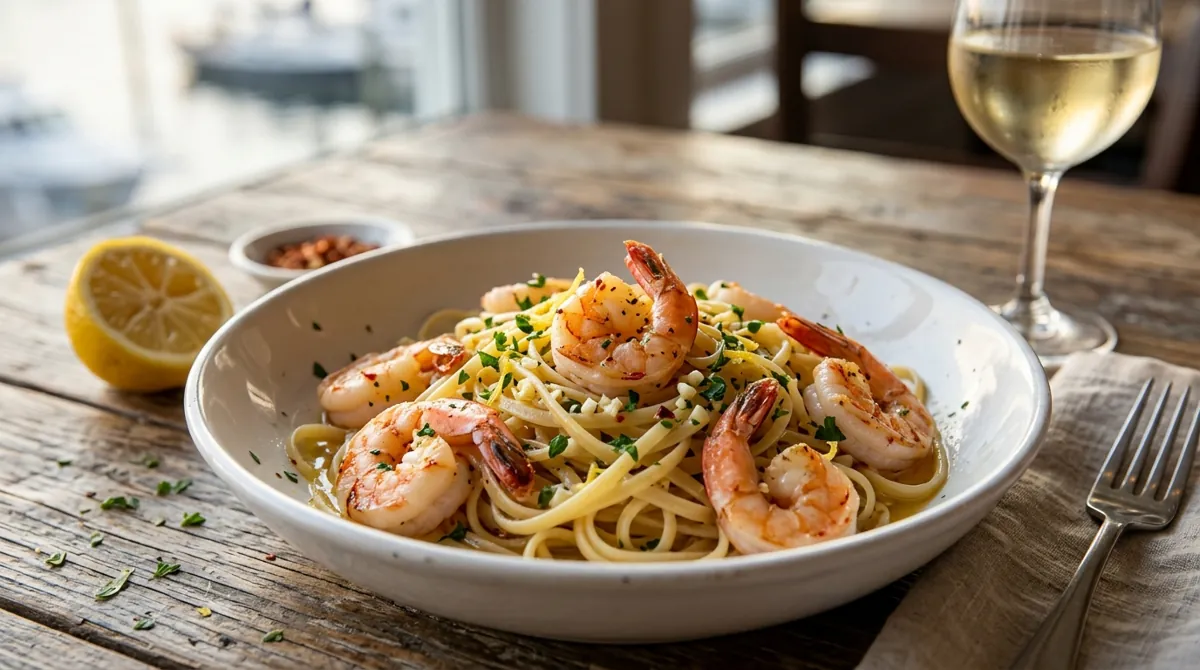
Shrimp Scampi with Linguine
Shrimp quickly brined and seared, then tossed back into linguine with a silky sauce of olive oil, a lot of garlic, chile, dry vermouth, butter and lemon, finished with parsley.
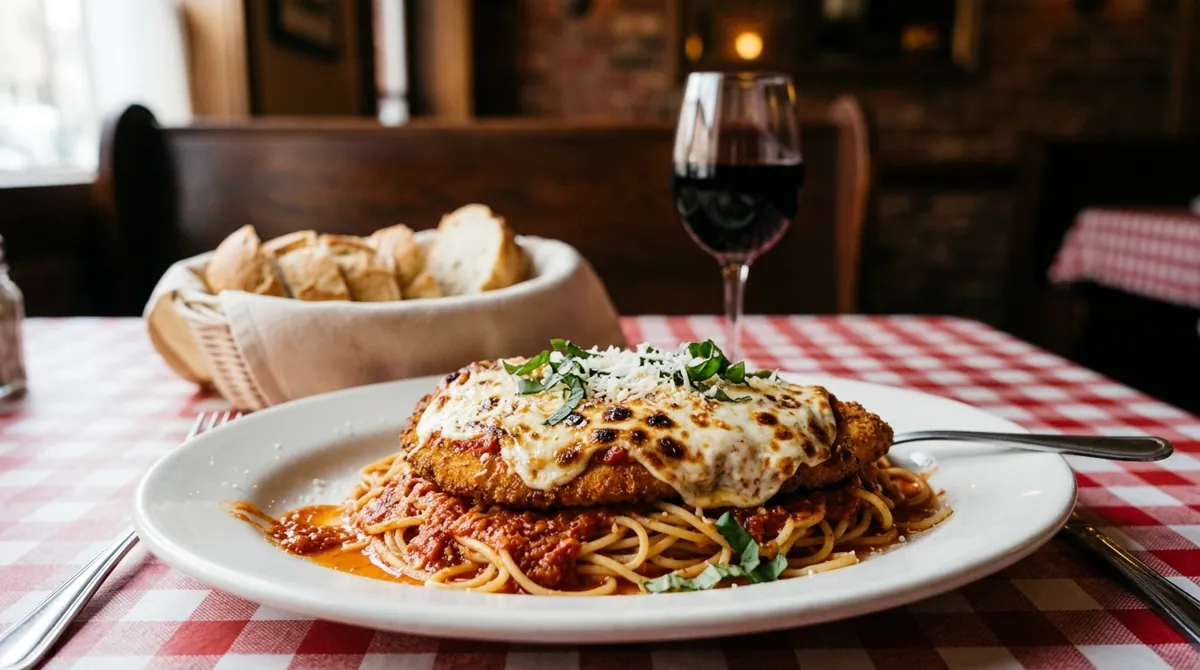
Chicken Parmesan over Spaghetti
Thin chicken cutlets soaked in garlicky buttermilk, coated in crumbs of dried Italian bread and Parmesan, shallow-fried crisp, then baked at 425°F under red sauce and fresh mozzarella and served on a bed of spaghetti.
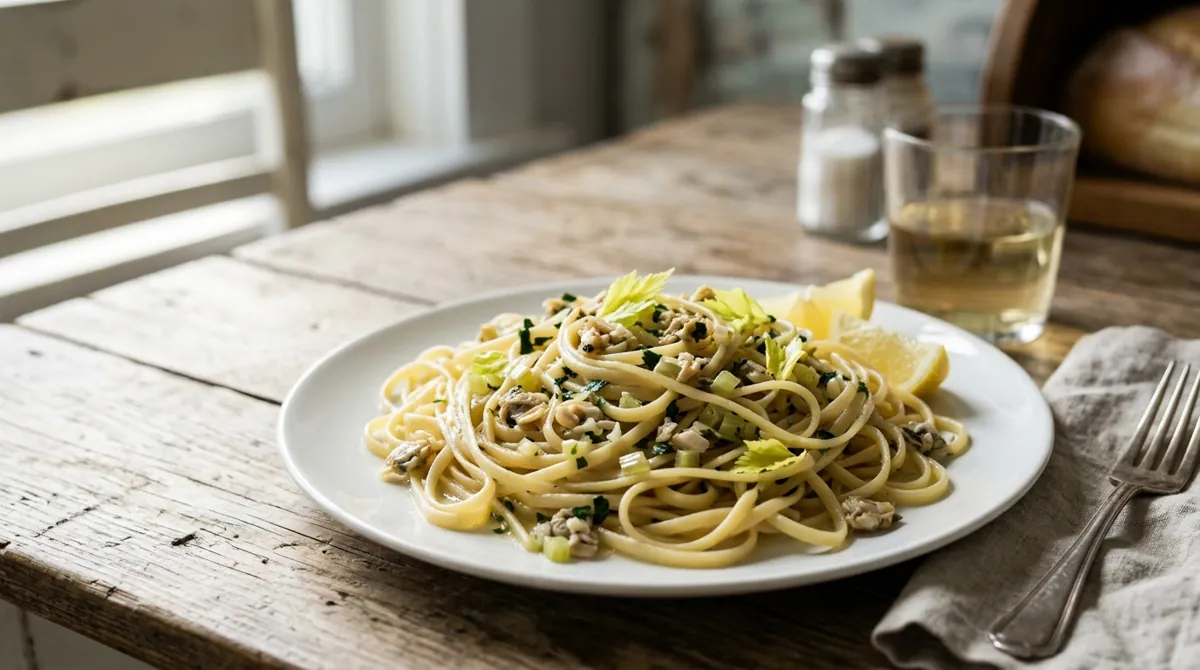
Linguine with White Clam Sauce (Canned Clams)
The pantry clam sauce: canned clams and bottled clam juice simmered with butter, celery, shallots, garlic, parsley and a splash of soy sauce, with linguine finished in the broth and lemon wedges on the side.
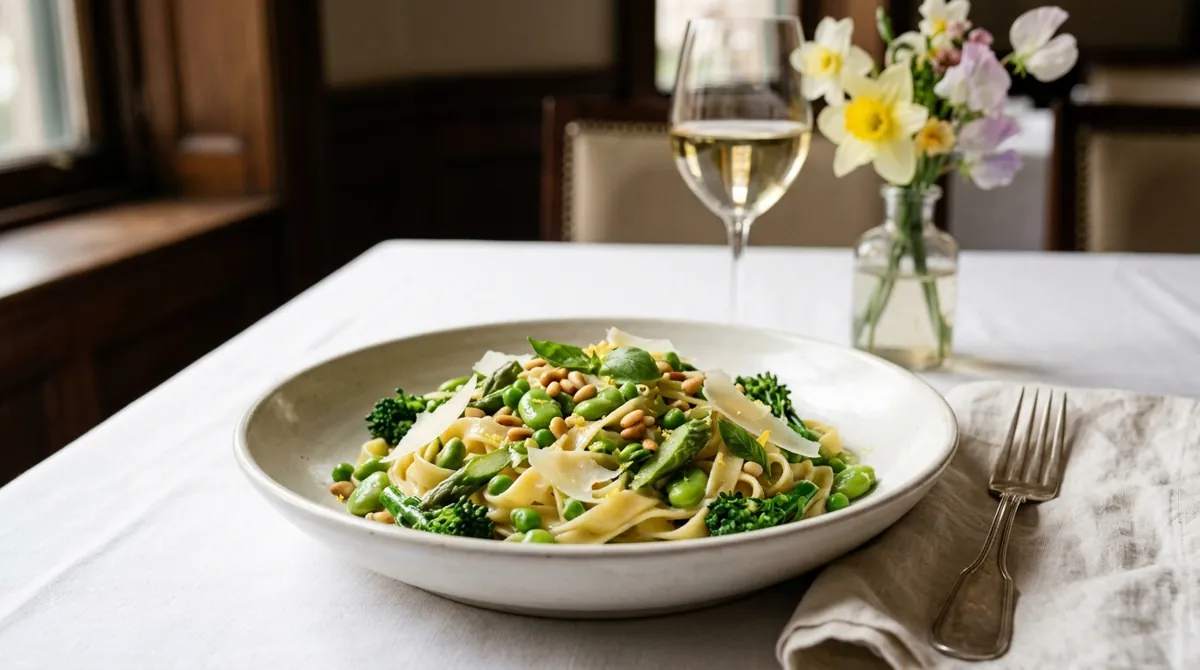
Pasta Primavera (Spring Vegetables, Pine Nuts and Creme Fraiche)
Fresh egg pasta with blanched fava beans, peas, asparagus, snap peas and broccolini, tossed with butter, garlic-scented pine nuts, creme fraiche, lemon, basil, parsley and Parmigiano: a lighter, greener take on Le Cirque's famous 1970s dish.
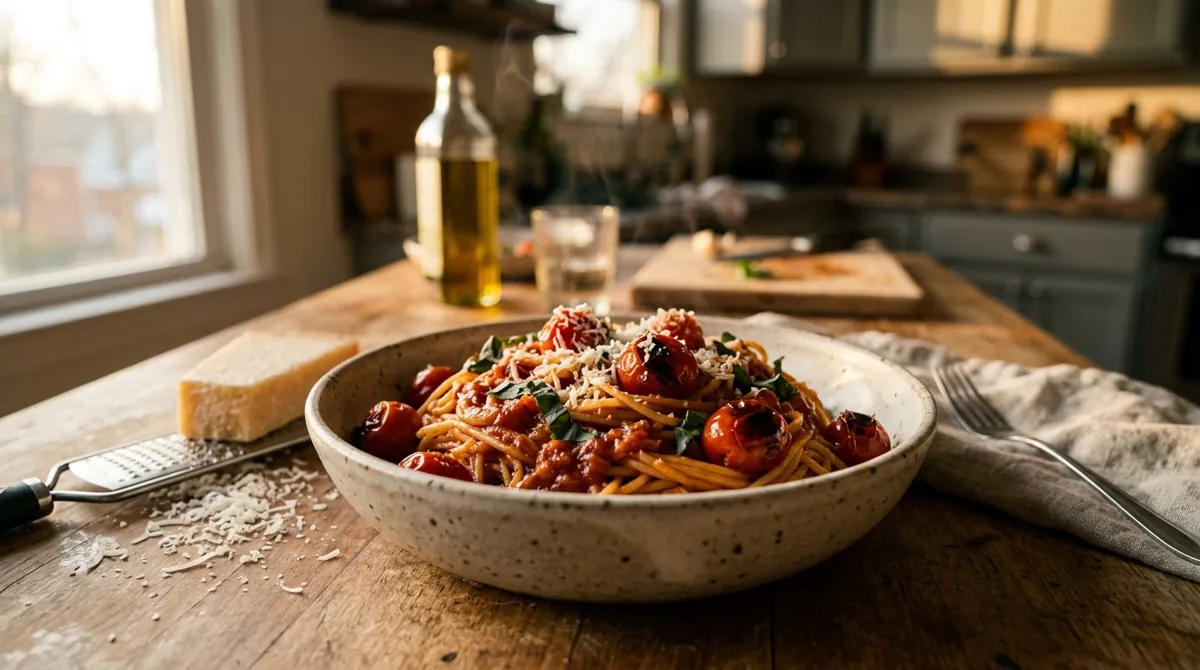
Weeknight Blistered Cherry Tomato Pasta
Two pints of cherry tomatoes cooked in garlicky olive oil until they burst into a sweet, creamy sauce, tossed with pasta, fresh basil and Parmesan while the pasta boils in a skillet: about 25 minutes, start to finish.
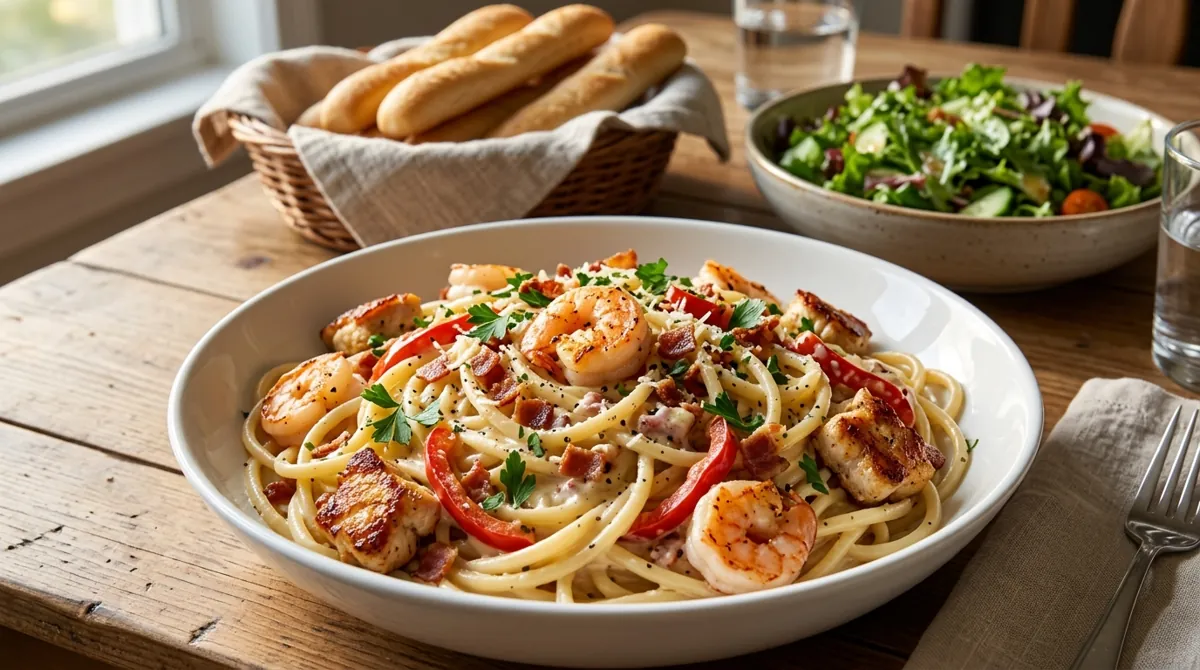
Copycat Chicken and Shrimp Carbonara, Inspired by Olive Garden
Inspired by, not official: crispy Parmesan-panko chicken and shrimp tossed with spaghetti or bucatini in a reduced cream, bacon and Parmesan sauce with roasted red peppers, a "carbonara" made with no eggs at all.
Meatballs of the World

Italian-American Meatballs
Big, tender meatballs braised for an hour in red sauce over spaghetti. The one most Americans grew up with.

Pallottine (Abruzzo Meatballs)
Tiny meatballs, smaller than a marble, tossed right through square spaghetti alla chitarra. No bread at all.

Swedish Meatballs (Köttbullar)
Small, soft meatballs browned in butter, in a cream sauce made from the same pan, with lingonberry jam on the plate.

Danish Frikadeller
Pork meatballs shaped with a spoon and fried slowly in butter, crusty outside and soft in the middle.

Königsberger Klopse
German meatballs that are never fried: poached, then served in a creamy white sauce with capers.

Spanish Albóndigas in Almond Saffron Sauce
The tapas bar classic: small meatballs in a golden sauce thickened with fried almonds and bread.

Mexican Albóndigas with Chipotle and Mint
Soft meatballs with rice and fresh mint inside, simmered in a smoky tomato and chipotle broth.

Izgara Köfte (Turkish Grilled Meatballs)
Small, flat meatballs kneaded hard, rested cold, and charred on a hot grill pan.

Lion's Head Meatballs
Big, soft pork meatballs, stirred into a sticky paste, fried to set, then braised in a savory sauce.

Chicken Tsukune
Japan's chicken meatball: kneaded sticky, grilled on skewers, glazed with sweet soy tare, dipped in egg yolk.