
🔬 Myth check
Should Pasta Water Be as Salty as the Sea? The Real Number
It is one of the most repeated lines in cooking. Do the math and sea-salty water is nearly twice the top of the range a Serious Eats taste test found tolerable.
No. Seawater averages about 3.5% salt, which works out to nearly 2 tablespoons of table salt per quart. Tested guidance for pasta water runs from about 0.5% to 2%, with 1% a common sweet spot: about 1½ teaspoons of table salt per quart, or 2 tablespoons in a 4-quart pot.
How salty is the sea?
The ocean's salinity averages about 35 parts per thousand, according to the USGS, meaning roughly 3.5% of seawater's weight is dissolved salt. It varies a little: Woods Hole oceanographers put the North Pacific surface near 33 and the Atlantic as high as 37.
A quart of water weighs about 946 grams, so matching the sea takes about 33 grams of salt per quart. USDA FoodData Central lists a teaspoon of table salt at 6 grams, so that is about 5½ teaspoons, or nearly 2 tablespoons, in every quart.
What testing found
Daniel Gritzer of Serious Eats boiled pasta in water salted from 0.5% to 3.5% by weight and tasted each batch. He found sea-strength water inedibly salty and 3% still too much. For him, 2% was the top of tolerable, 1% was the sweet spot, and 0.5% still worked for salt-sensitive eaters.
He also checked older rules of thumb: a tablespoon of salt per two quarts came to about 0.95%, and a tablespoon per quart to about 1.8%. Both land inside the workable range, while the sea sits far above it.
The numbers, per quart of water
Using table salt at 6 grams per teaspoon: 0.5% is about ¾ teaspoon per quart, 1% is about 1½ teaspoons, and 2% is about 1 tablespoon. For a pound of pasta boiled in 4 quarts, 1% means about 2 tablespoons in the pot. Sea strength would be about 7⅓ tablespoons, close to half a cup.
Kosher salt is flakier, so a spoonful weighs less. In Gritzer's chart, hitting 1% takes about twice the volume of table salt with Diamond Crystal, and about a third more with Morton coarse kosher. Weighing the salt avoids the guesswork.
When to go lighter
Gritzer notes that pasta water used to finish a sauce gets saltier as it reduces, so the top of the range can tip a dish over. That is why our Roman Fettuccine Alfredo salts its water lightly and uses less of it, so the starchy water can turn butter and Parmigiano into a sauce. Our Cacio e Pepe uses a lightly salted pot too, because Pecorino Romano is already very salty.
The one bowl in our pasta collection that is meant to taste like the sea is the cold water for purging clams in our Spaghetti alle Vongole, and nobody eats that.
Questions people ask
Does the pasta absorb all that salt?
No. Gritzer points out that most of the salt goes down the drain with the cooking water. You only take in what the pasta absorbs and whatever water you add to the sauce.
Is 1 tablespoon of salt per quart too much?
With fine salt it comes to roughly 1.8% to 2%, the upper edge of what Gritzer found tolerable. With a light kosher salt like Diamond Crystal it is closer to 1%, so the brand matters.
Can I just taste the water?
Yes. Water at about 1% tastes clearly seasoned but not briny. If it tastes like a swim in the ocean, it is roughly three times stronger than that.
Sources
More food facts
Cook it
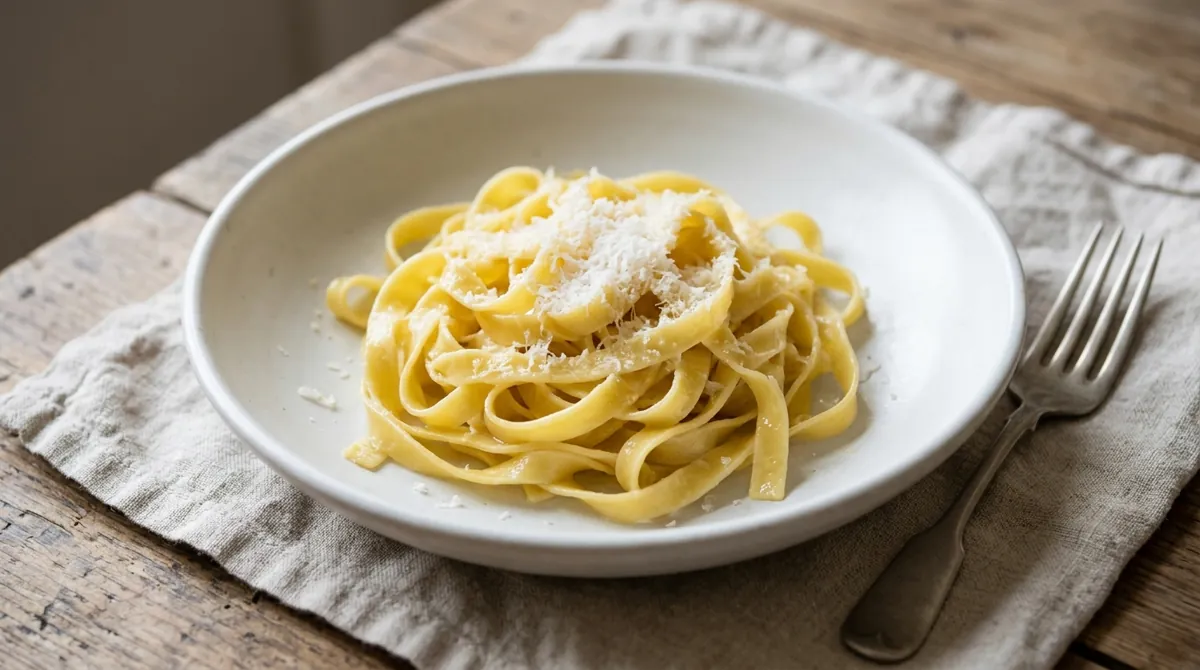
Roman Fettuccine Alfredo (Fettuccine al Burro)
Fresh pasta, butter and Parmigiano. No cream, no garlic, no chicken, and somehow creamier than ours.
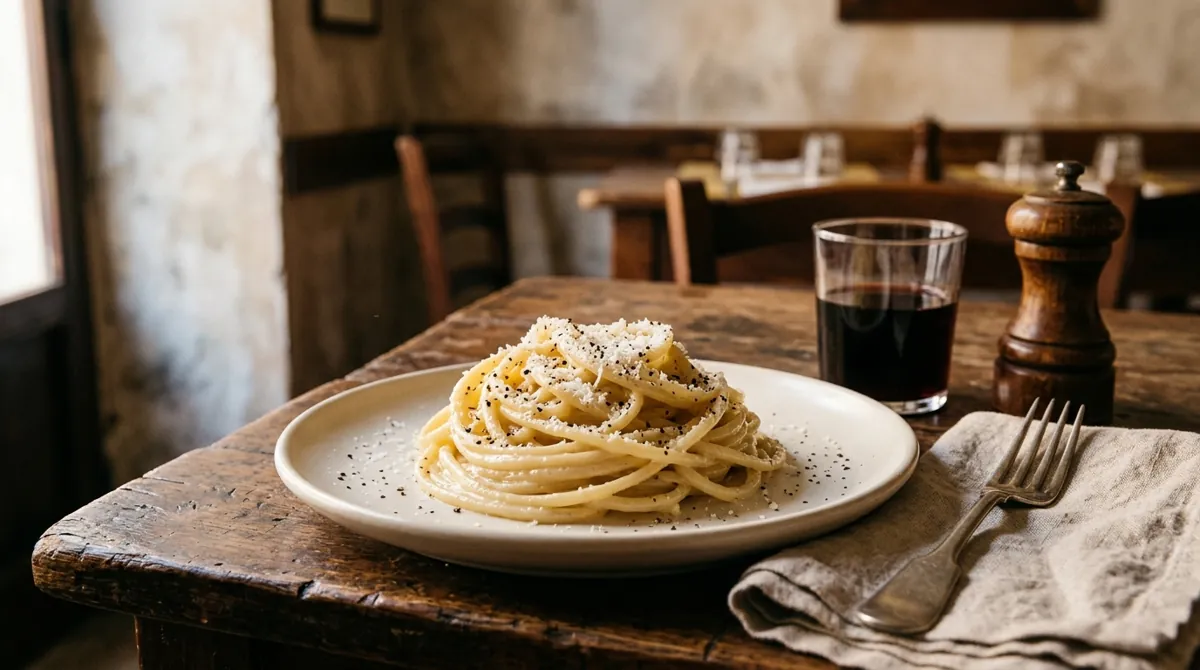
Cacio e Pepe (Pecorino and Black Pepper, the Never-Clumps Method)
Spaghetti in a smooth, sharp sauce of nothing but Pecorino Romano, toasted black pepper and pasta water, held together by a teaspoon of cooked cornstarch so it cannot seize into clumps.
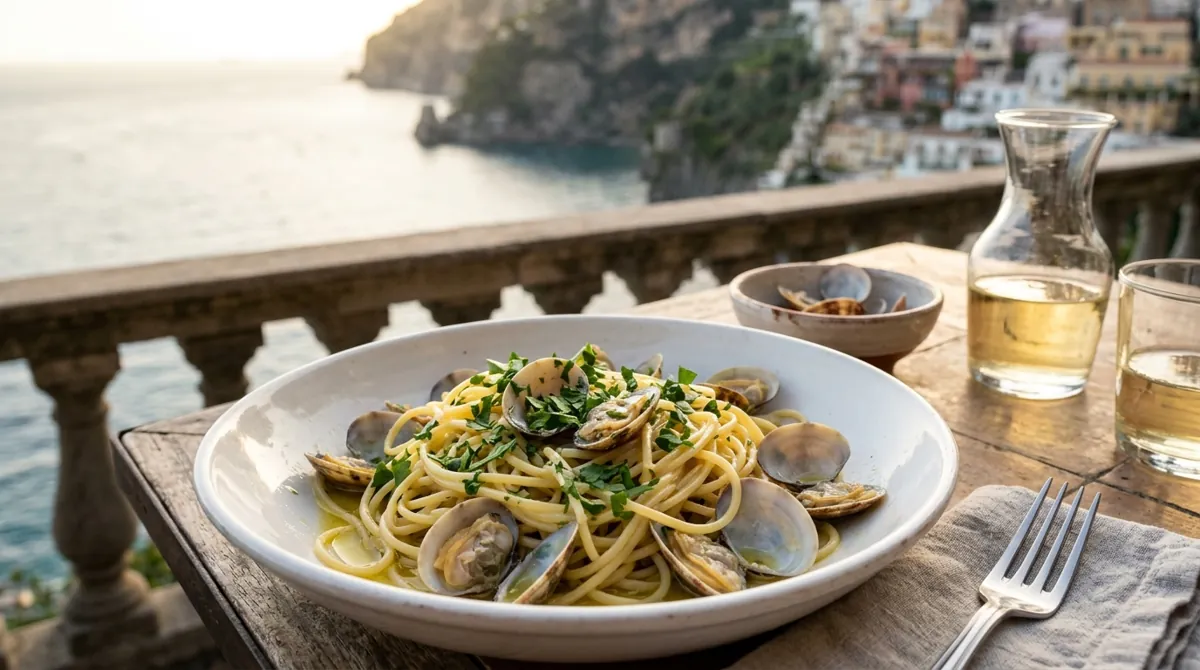
Spaghetti alle Vongole in Bianco (Spaghetti with Fresh Clams)
Live clams steamed open in olive oil, garlic, chile and white wine, the meat pulled from most of the shells, and spaghetti finished in the briny juices with parsley and a fresh drizzle of oil.
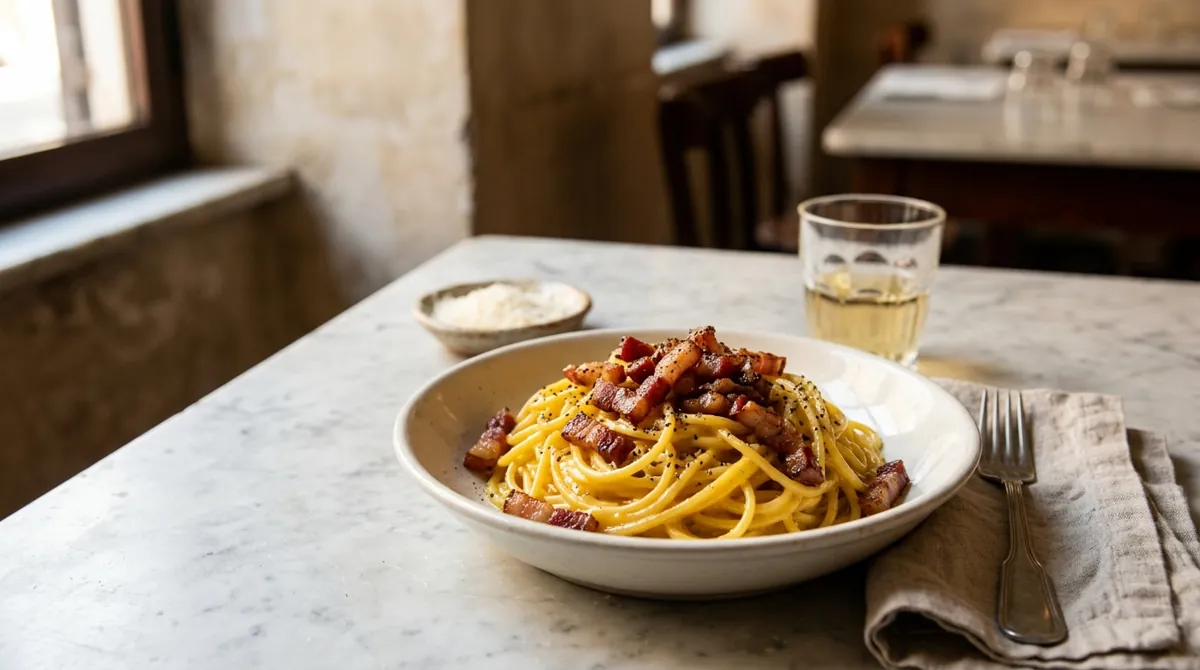
Roman Spaghetti alla Carbonara (Guanciale, Egg Yolks, Pecorino, No Cream)
Spaghetti tossed with crisp guanciale and its fat, then stirred over a pot of boiling pasta water with egg yolks, Pecorino Romano, Parmigiano-Reggiano and coarse black pepper until the eggs thicken into a glossy sauce, with no cream at all.
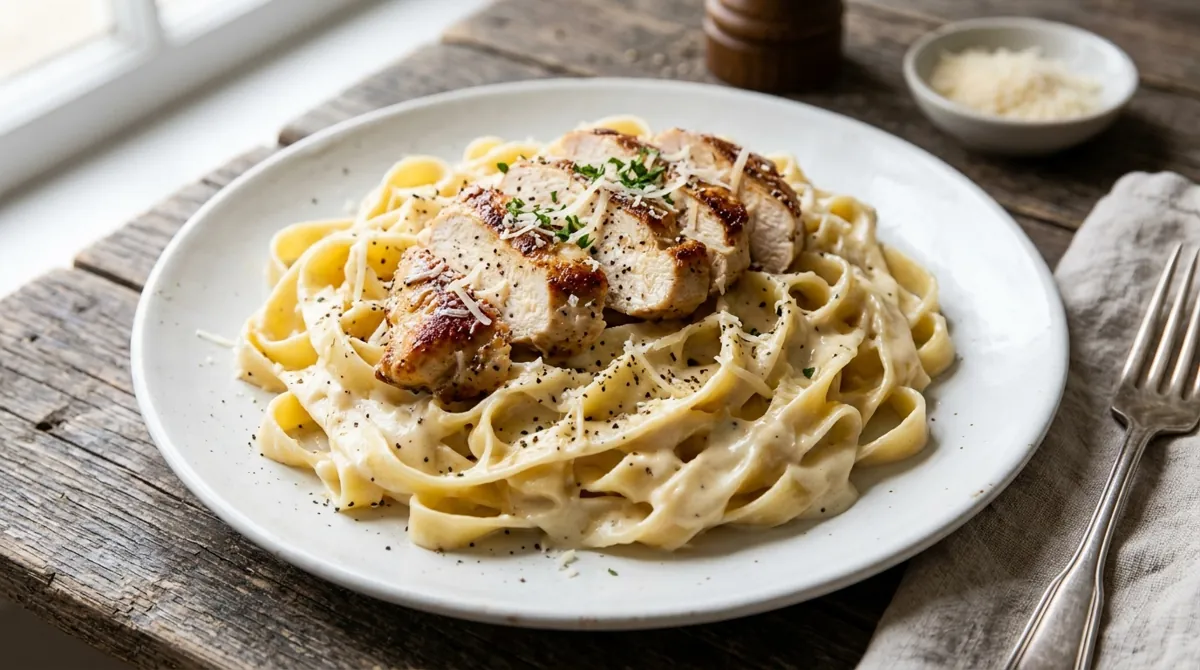
American Fettuccine Alfredo
Cream, butter, garlic, a mountain of Parmesan and sliced chicken. The Alfredo on almost every Italian-American menu.