
Versunkener Apfelkuchen (German Sunken Apple Cake)
A buttery vanilla and lemon batter spread in a springform, topped with a ring of peeled apple quarters scored on top so they fan open and sink as the cake rises around them, baked at 350°F for about 45 minutes and brushed hot with apricot jam.
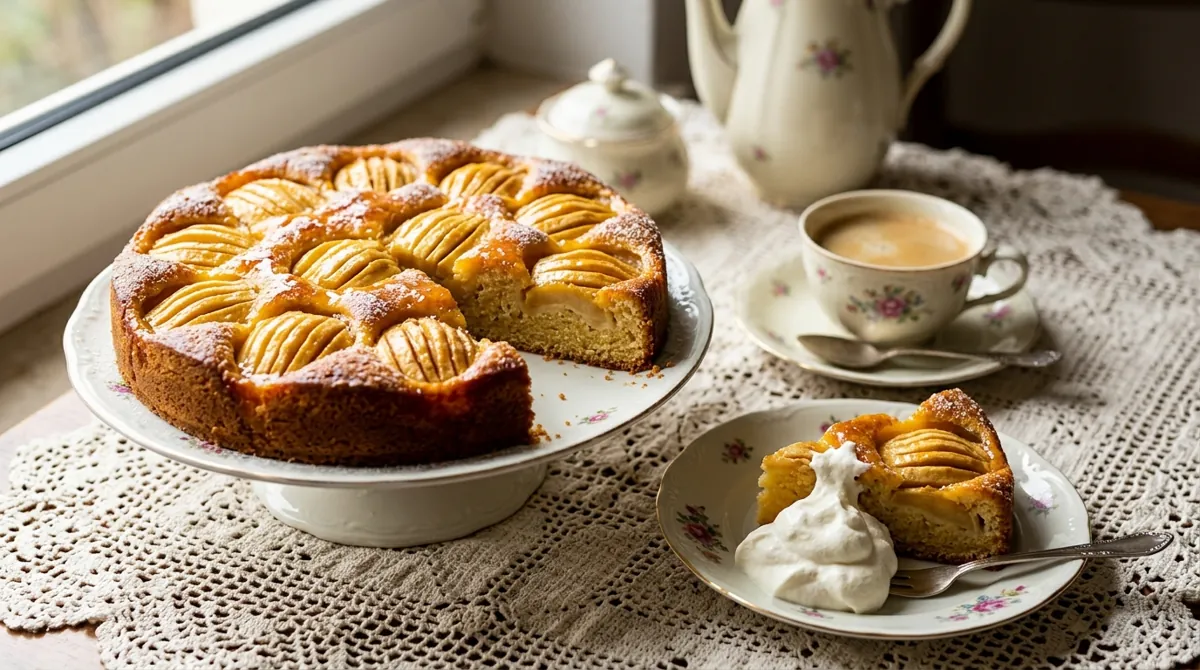
In German, apple pie and apple cake are the same word. Wikipedia's apple pie article says "Kuchen" covers what English speakers call pie, so apple pie falls under Apfelkuchen, and that a fully pastry-covered one is a gedeckter Apfelkuchen. German Wikipedia lists the family: the covered cake on shortcrust, a lattice-topped Apfel-Gitterkuchen, a yeast-dough sheet cake with apples and raisins that it calls one of the most common in the countryside, and the versunkener Apfelkuchen, quartered apples set on a batter in a springform, which it calls one of the simplest and fastest of all.
This is that sunken apple cake, from Dr. Oetker, the German baking company, whose recipe "Apfelkuchen, sehr fein" (apple cake, very fine) has more than 2,400 reader ratings on its site. There is no crust at all: a plain butter cake batter, apple quarters scored on their rounded backs, and a brush of apricot jam to make them shine. It is the German answer to the question every apple pie asks, how to keep the bottom from going soggy: leave out the pastry.
Why it works the kitchen science
Scored apples
The cuts let heat into the thick quarters so they cook through in the same 45 minutes as the cake, and they fan open into the ridged look the cake is known for (Dr. Oetker gives both reasons).
A batter instead of pastry
The cake rises up around the heavy apples as it bakes, so they sink in and are held by soft crumb instead of sitting on a crust that could turn soggy.
Step by step
- Step 1
Butter the bottom of a 10-inch (26 cm) springform. Heat the oven to 350°F (180°C), conventional heat, with a rack in the lower third.
- Step 2
Peel, quarter and core the apples. With a small knife, score the rounded top of each quarter lengthwise several times, cutting about halfway into the fruit.
- Step 3
Beat the butter until smooth. Gradually beat in the sugar, vanilla sugar, salt and lemon zest until well combined. Beat in the eggs one at a time, about 30 seconds each on high speed.
- Step 4
Mix the flour and baking powder and beat them in on medium speed briefly, in two additions, alternating with the milk. Spread the batter evenly in the pan.
- Step 5
Lay the apple quarters, scored side up, in a ring on the batter.
- Step 6
Bake about 45 minutes, until the cake is golden, a toothpick in the cake between the apples comes out clean and the apples are tender when pierced.
- Step 7
Push the jam through a sieve, bring it to a boil with the water, stirring, and brush it over the hot cake at once. Remove the ring and let the cake cool on the springform base.
Versunkener Apfelkuchen (German Sunken Apple Cake)
Serves 12 · one 10-inch (26 cm) cake · 1 hr 25 min total
Topping
- 750 g (about 1 2/3 lb) firm apples, such as Elstar, Braeburn or Jonagold
Batter
- 125 g (1/2 cup plus 1 tbsp) soft unsalted butter
- 100 g (1/2 cup) sugar
- 1 packet (8 g) vanilla sugar, or 2 tsp sugar plus 1/2 tsp vanilla extract
- A pinch of salt
- Finely grated zest of 1/2 lemon (in place of Dr. Oetker's lemon flavoring)
- 3 eggs
- 200 g (1 2/3 cups) all-purpose flour
- 2 level tsp baking powder
- About 2 tbsp milk
- Butter for the pan
Glaze
- 2 tbsp apricot jam
- 1 tbsp water
Method
- Butter the bottom of a 10-inch (26 cm) springform. Heat the oven to 350°F (180°C), conventional heat, with a rack in the lower third.
- Peel, quarter and core the apples. With a small knife, score the rounded top of each quarter lengthwise several times, cutting about halfway into the fruit.
- Beat the butter until smooth. Gradually beat in the sugar, vanilla sugar, salt and lemon zest until well combined. Beat in the eggs one at a time, about 30 seconds each on high speed.
- Mix the flour and baking powder and beat them in on medium speed briefly, in two additions, alternating with the milk. Spread the batter evenly in the pan.
- Lay the apple quarters, scored side up, in a ring on the batter.
- Bake about 45 minutes, until the cake is golden, a toothpick in the cake between the apples comes out clean and the apples are tender when pierced.
- Push the jam through a sieve, bring it to a boil with the water, stirring, and brush it over the hot cake at once. Remove the ring and let the cake cool on the springform base.
Adapted from Dr. Oetker, "Apfelkuchen, sehr fein" (about 12 pieces), in German. We follow it as written: a 26 or 28 cm springform with a greased bottom; 750 g apples such as Elstar, peeled, quartered, cored and scored lengthwise several times on top; a batter of 125 g soft butter or margarine beaten smooth with 100 g sugar, 1 packet vanilla sugar, a pinch of salt and half a vial of Dr. Oetker lemon flavoring, 3 medium eggs each beaten in about 1/2 minute on high, then 200 g flour mixed with 2 level tsp baking powder added alternately with about 2 tbsp milk; the apple quarters laid in a ring; about 45 minutes at about 180°C (160°C fan) in the lower third; 2 tbsp apricot jam pushed through a sieve and boiled with 1 tbsp water, brushed on right after baking; cooled on the springform base. Lemon zest for the flavoring, the 350°F rounding and the toothpick test are ours. History from German Wikipedia, "Apfelkuchen". oetker.de. Ingredient list follows the source; the method is in our own words.
All sources (3)
Tips
- Dr. Oetker: use apples with firm flesh, such as Elstar, Boskoop or Jonagold, which hold their shape and taste strong.
- The cake freezes well, Dr. Oetker says, and keeps about 2 days in the refrigerator.
- Serve it slightly warm with a spoonful of whipped cream or a dusting of powdered sugar.
- In a convection oven, Dr. Oetker gives about 160°C (325°F).
The rules people argue about
What the sources agree on, what they don't, and what is just a good story.
- In German, an apple pie is a cake. Documented as Wikipedia's account: "Kuchen" covers what English speakers call pie, so apple pie is Apfelkuchen.
- The sunken cake is the easy one. Documented as German Wikipedia's account: one of the simplest and fastest kinds of Apfelkuchen.
- The apples have to be scored. Documented as Dr. Oetker's method, for looks and even cooking; other sunken cakes skip it.
- Butter or margarine. Documented: Dr. Oetker's recipe allows either.
Every other apple pie
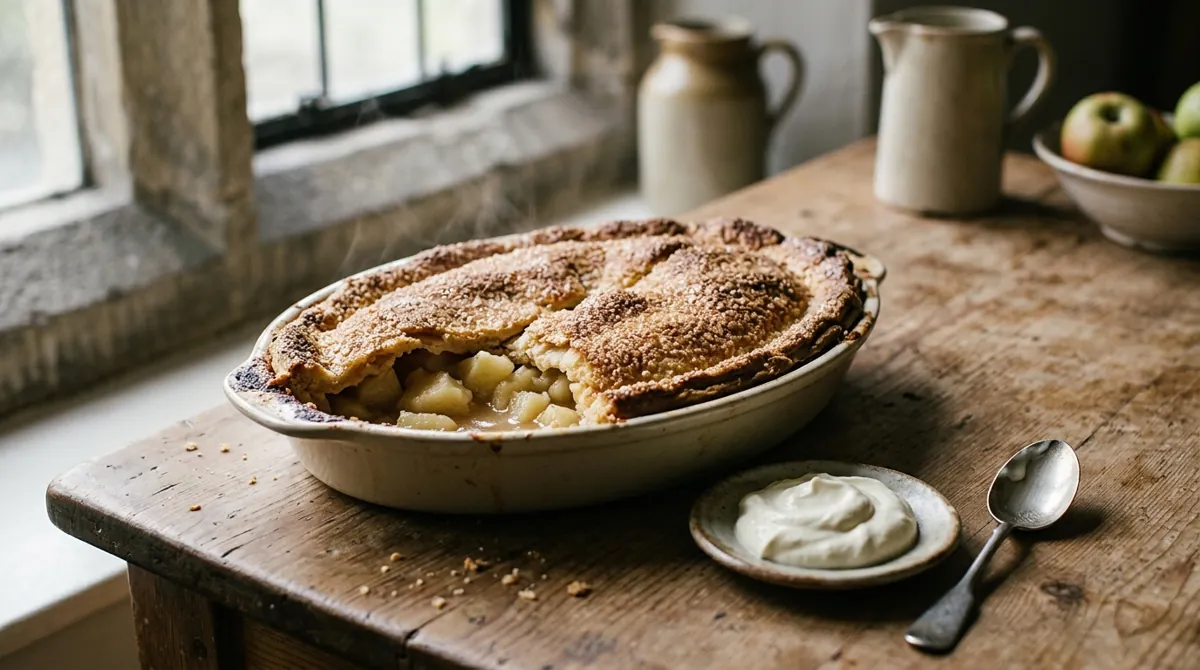
English Apple Pie (Cooking Apples Under a Pastry Lid)
Chunks of tart cooking apples with honey, cinnamon and mixed spice piled into a deep pie dish under a single lid of butter shortcrust, glazed with egg and baked hot at 400°F until golden and bubbling.
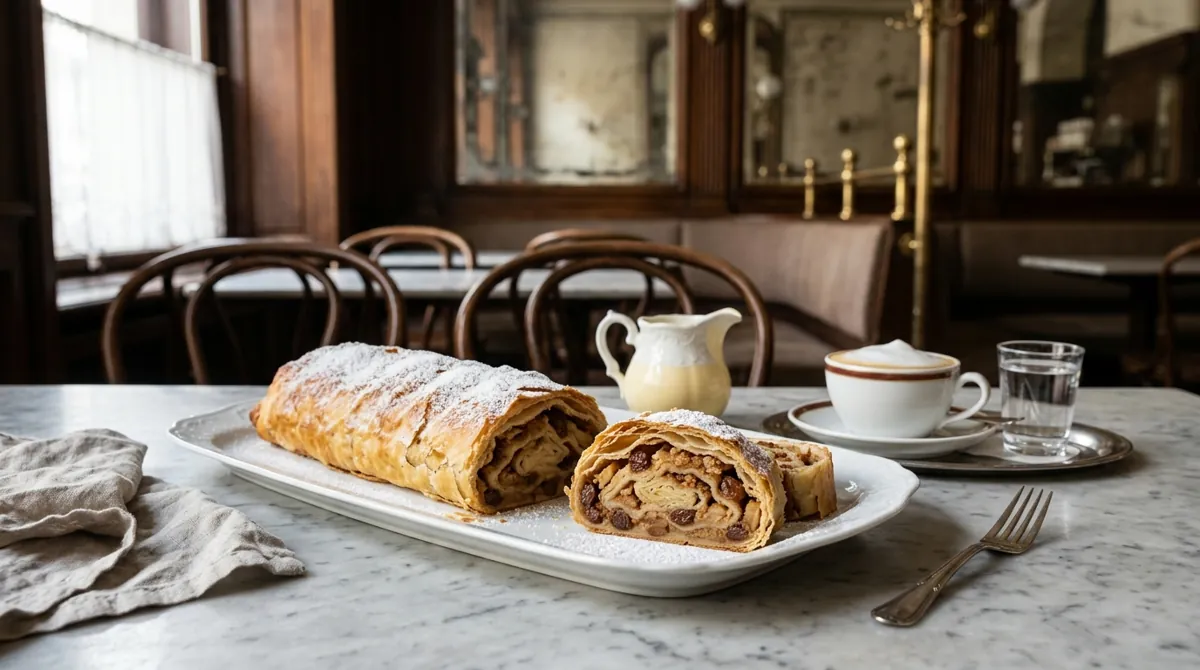
Wiener Apfelstrudel (Viennese Apple Strudel)
A soft egg and oil dough stretched over a floured tablecloth until it's paper thin, brushed with butter, layered with hazelnut breadcrumbs fried in butter, sliced apples, rum-soaked raisins, cinnamon and cloves, rolled up and baked at 350°F until golden.
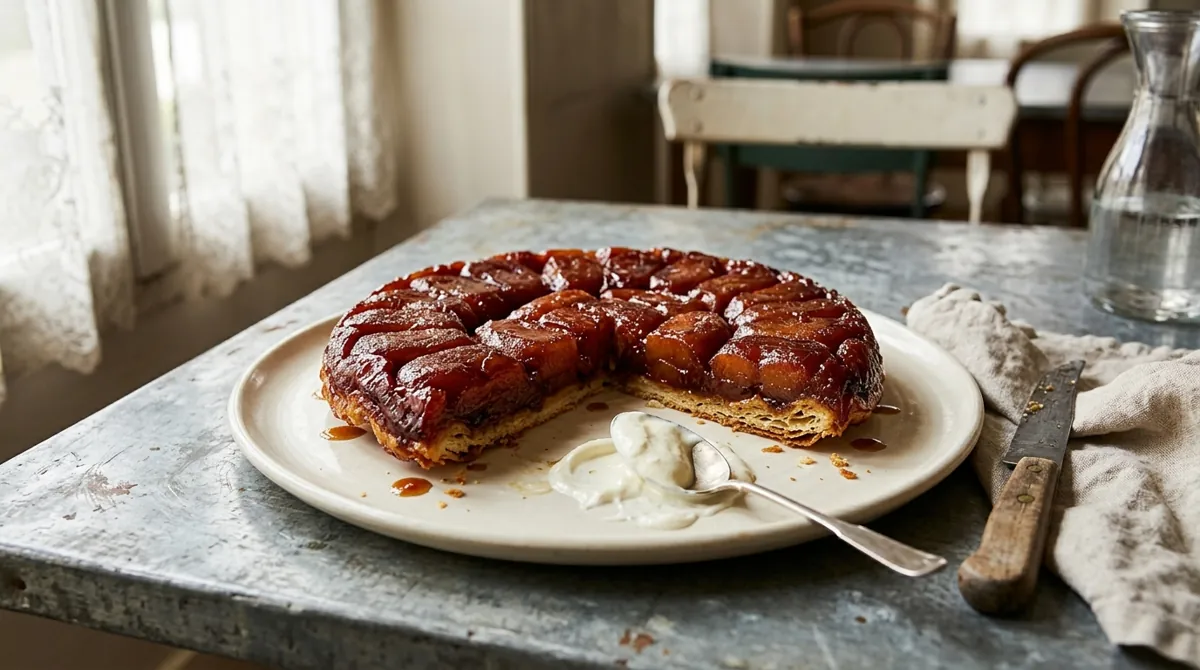
Tarte Tatin (French Upside-Down Apple Tart)
Apple quarters packed in a skillet and softened in butter, covered with a light amber caramel cooked to 355°F, topped with a chilled disk of butter pastry, baked at 350°F until the edges bubble thick and syrupy, then flipped onto a platter.
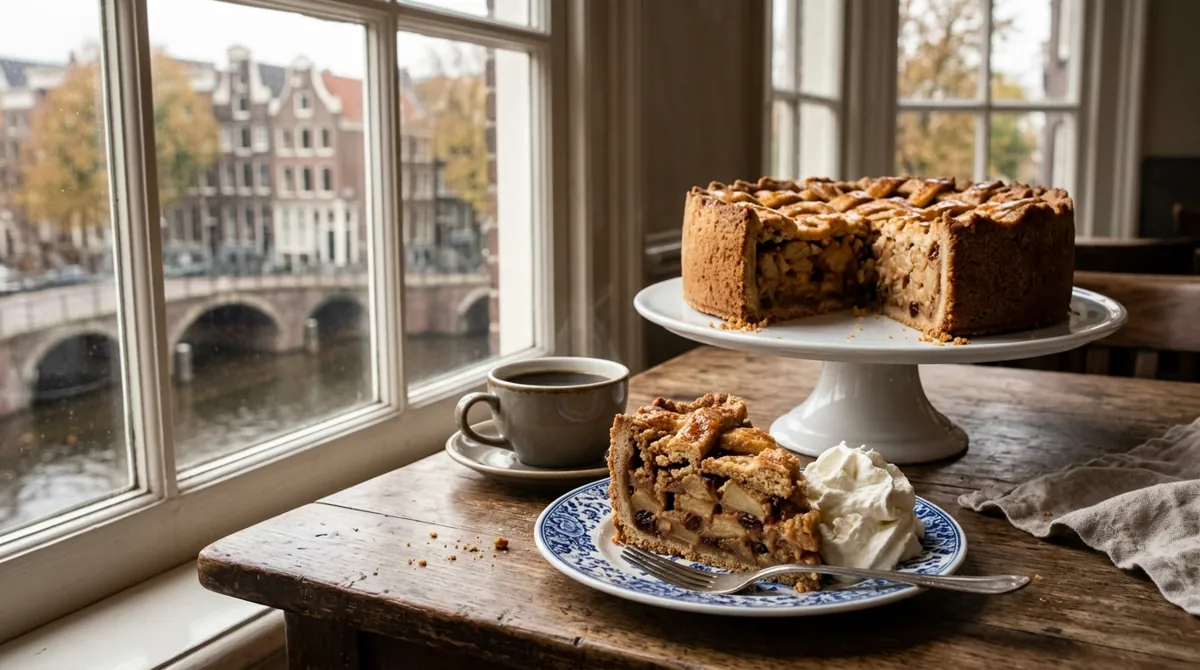
Appeltaart (Dutch Apple Pie)
A tall springform pie with a cookie-like brown sugar crust pressed in by hand, packed with precooked Golden Delicious apples, golden raisins and speculaas-style spices, topped with a crisscross of dough strips and baked at 375°F for about 75 minutes. Served "met slagroom", with whipped cream.
Gammeldags Æblekage (Danish Old-Fashioned Apple Cake)
Not a cake at all: tart apples cooked with vanilla and lemon into a chunky sauce and chilled, breadcrumbs toasted golden in butter and sugar, and lightly whipped cream, layered in glasses just before serving.
Sharlotka (Russian Apple Sponge Cake)
Four eggs and a cup of sugar beaten until thick and airy, a cup of flour folded in with diced apples, baked in one pan at 350°F for 35 to 40 minutes, then topped while hot with sour cream stirred with orange marmalade.
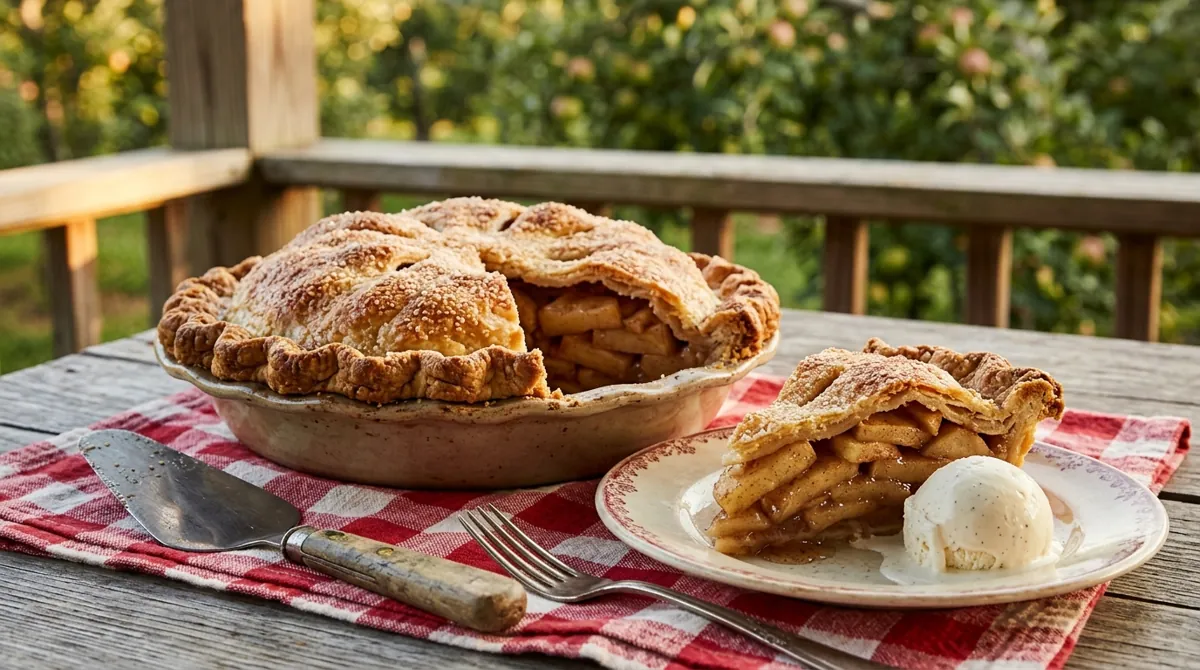
Classic American Apple Pie (Double Crust)
Eight cups of thin-sliced apples tossed with sugar, cinnamon, nutmeg and allspice, thickened with flour and cornstarch and dotted with butter, sealed between two flaky butter and shortening crusts, baked at 425°F and then 375°F until the filling bubbles hard through the vents.
Pennsylvania Dutch Apple Pie (Crumb Top)
One flaky shortening crust filled with 2 pounds of apples tossed with sugar, flour, cinnamon and nutmeg, covered with a lumpy brown sugar and butter streusel instead of a top crust, baked at 425°F and then 350°F.
Apple Pandowdy (Old New England Pan Dowdy)
Apples with sugar, cinnamon and nutmeg, molasses and butter baked between two crusts in a square pan at 425°F, then the top crust is slashed and pushed down into the juices in rough chunks, "dowdied", so it turns half crisp, half pudding.
Vermont Apple Pie with Cheddar Crust
A butter crust with grated sharp Vermont cheddar folded in, filled with sliced apples, sugar, maple syrup and apple pie spice, layered with thin slices of more cheddar under the top crust and baked at 375°F until browned. Vermont's 1999 state pie law names cheddar as one way to serve it.
Southern Fried Apple Pies (Dried-Apple Hand Pies)
Dried apples simmered soft and mashed with sugar and cinnamon, spooned onto 5-inch rounds of lard pastry, folded into half-moons, crimped with a fork and fried in lard at 350°F until blistered and lightly browned.
Skillet Apple Crisp (One-Pan, About an Hour)
Apple wedges sautéed in butter in one ovensafe skillet and coated with reduced cider, covered with a pecan, oat and brown sugar crumble made with melted butter, and baked hot at 450°F for 15 to 20 minutes until the fruit is tender and the top deep golden.
Fried Apple Hand Pies (Inspired by McDonald's, Not Official)
A copycat of the original fried fast food apple pie, inspired by McDonald's, not official: diced apples sautéed in browned butter with brown sugar and cinnamon, sealed in rectangles of pie dough and deep-fried at 375°F until golden and shatteringly crisp.
Meatballs of the World

Italian-American Meatballs
Big, tender meatballs braised for an hour in red sauce over spaghetti. The one most Americans grew up with.

Pallottine (Abruzzo Meatballs)
Tiny meatballs, smaller than a marble, tossed right through square spaghetti alla chitarra. No bread at all.

Swedish Meatballs (Köttbullar)
Small, soft meatballs browned in butter, in a cream sauce made from the same pan, with lingonberry jam on the plate.

Danish Frikadeller
Pork meatballs shaped with a spoon and fried slowly in butter, crusty outside and soft in the middle.

Königsberger Klopse
German meatballs that are never fried: poached, then served in a creamy white sauce with capers.

Spanish Albóndigas in Almond Saffron Sauce
The tapas bar classic: small meatballs in a golden sauce thickened with fried almonds and bread.

Mexican Albóndigas with Chipotle and Mint
Soft meatballs with rice and fresh mint inside, simmered in a smoky tomato and chipotle broth.

Izgara Köfte (Turkish Grilled Meatballs)
Small, flat meatballs kneaded hard, rested cold, and charred on a hot grill pan.

Lion's Head Meatballs
Big, soft pork meatballs, stirred into a sticky paste, fried to set, then braised in a savory sauce.

Chicken Tsukune
Japan's chicken meatball: kneaded sticky, grilled on skewers, glazed with sweet soy tare, dipped in egg yolk.