
📜 Origin story
History of the Hot Dog: From Frankfurt and Vienna to Coney Island
Two European cities claim the sausage, one Brooklyn beach made it a sandwich, and a nickel price war made it famous. Here is the short, honest version.
The hot dog's sausage comes from German-speaking Europe: Frankfurt claims the frankfurter, and Vienna's wiener is credited to a Frankfurt-trained butcher around 1805. German immigrants brought sausages to New York, and Charles Feltman is generally credited with serving them in a bun on Coney Island. Nathan Handwerker opened his rival stand there in 1916, selling hot dogs for a nickel.
Frankfurter vs. wiener: two cities, one sausage
Frankfurt am Main is traditionally credited with the frankfurter. The National Hot Dog and Sausage Council notes the city says the sausage dates to 1487, and Frankfurt threw it a 500th birthday party in 1987. The Council also says plainly that the claim is disputed.
Vienna's case is about a person. Austria's agriculture ministry credits butcher Johann Georg Lahner, who trained in Frankfurt, with making the first Viennese frankfurters in 1805 in what is now the 7th district. Frankfurt butchers were limited to pork, the ministry says, while Lahner blended pork and beef into sheep casings, smoked them lightly and scalded them.
That is why the names cross over. In Vienna the sausage is still called a Frankfurter, while Germans call it a Wiener Würstchen. Our Frankfurter Würstel is the Viennese way: two slim sausages warmed in water that never boils, with mustard and a roll.
Coney Island adds the bun
Charles Feltman arrived in New York from Germany in 1856, at fifteen. According to the Coney Island History Project, he started out in 1867 pushing a pie wagon through the Coney Island dunes, leased land four years later, and grew into a block of restaurants that by the 1920s served about five million customers a year.
Feltman is generally credited with putting a hot sausage in a roll. The usual story, which the History Project itself calls legend, is that a bun saved him from handing out plates and forks. Exact dates for the first bun vary from source to source, so treat any single year with caution.
1916: Nathan's and the nickel
Nathan Handwerker, a Polish immigrant, took a job at Feltman's slicing rolls for hot dogs that sold for ten cents. In 1916, he and his wife, Ida, put $300 in savings into a small stand at Surf and Stillwell Avenues and sold hot dogs for five cents. Ida is credited with the spicy, garlicky all-beef recipe.
Half price made some customers suspicious of the meat, and the story goes that Nathan hired people dressed as doctors to eat at his counter. Accounts also say that Eddie Cantor and Jimmy Durante, then working at Feltman's, nudged him toward the stand; that detail comes from company histories and is hard to confirm. Nathan's soon overshadowed Feltman's, and our Coney Island griddled dog is inspired by it.
Then every region made its own
Once the hot dog was American, cities rebuilt it. America's Test Kitchen traces the Chicago dog to a 1929 Depression-era cart, describes Detroit's Coney Island as a natural-casing dog under a beanless chili made by Greek and Macedonian immigrants, and places the Sonoran hot dog in Hermosillo, Mexico, before it reached Tucson in the 1980s. Seattle's cream cheese dog started at a late-night Pioneer Square cart in the late 1980s.
We have more than a dozen versions in our hot dog collection, from Vienna's original to the Korean corn dog. If you have a favorite city, our Chicago vs. New York vs. Detroit debate is where to argue about it.
Questions people ask
Is there a difference between a frankfurter and a wiener?
In the United States the words mean the same thing. In Europe the history differs: Frankfurt's sausage was traditionally pork, while the Viennese version credited to Lahner blended pork and beef, and each city calls the sausage by the other's name.
Did Nathan's invent the hot dog?
No. The sausage is European, and Charles Feltman, Nathan Handwerker's former employer, is generally credited with selling it in a bun on Coney Island decades earlier. Nathan's made it cheap and famous starting in 1916.
Where does the name hot dog come from?
Nobody knows for sure. The popular story about cartoonist Tad Dorgan drawing a dachshund in a bun in 1901 has no surviving cartoon behind it, and the National Hot Dog and Sausage Council notes the term was already in college magazines in the 1890s.
Parts of this history are disputed. Where sources disagree, we say so.
Sources
- National Hot Dog and Sausage Council, Hot Dog History
- Austrian Federal Ministry of Agriculture (BMLUK), Register of Traditional Foods: Frankfurter / Wiener Würstel
- Coney Island History Project, Hall of Fame: Charles Feltman
- International Directory of Company Histories via Encyclopedia.com, Nathan's Famous, Inc.
- America's Test Kitchen, A Guide to All-American Regional Hot Dogs (Rudolph and Faithfull, 2023)
More food facts
Cook it
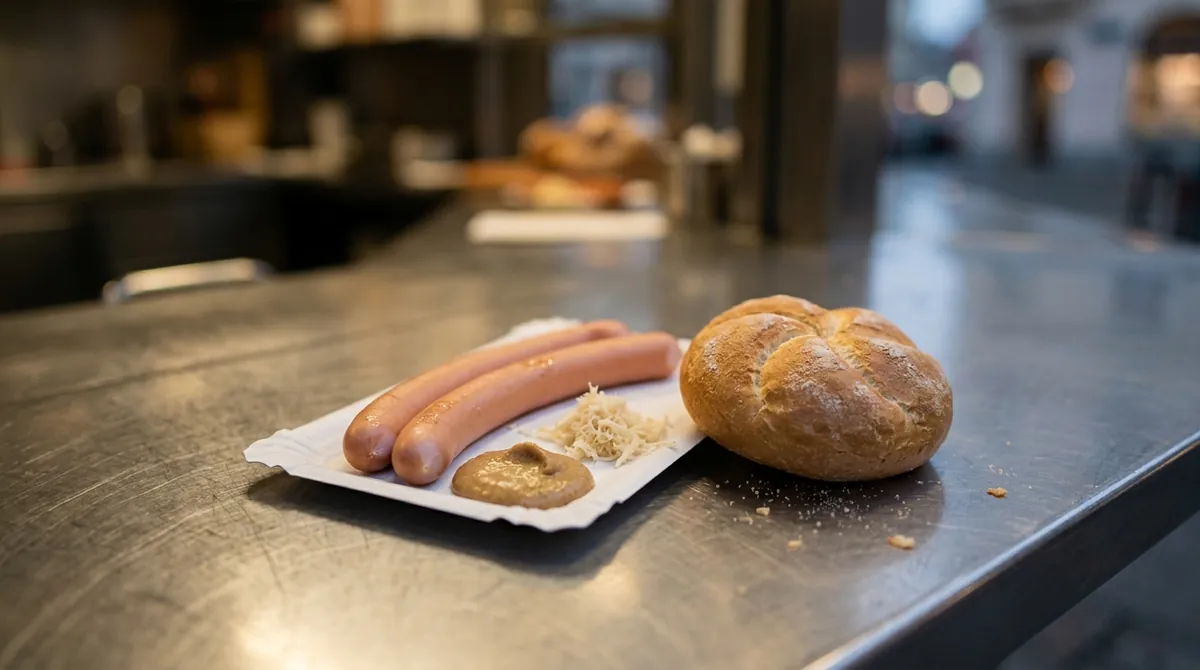
Frankfurter Würstel with Mustard and a Roll
Two slim smoked sausages, warmed in hot water that never boils and served in a pair with sharp or sweet mustard, horseradish and a crusty roll on the side.
Coney Island Griddled Dog, Inspired by Nathan's Famous
An all-beef natural-casing frank cooked whole on a flat-top, gently first and hot at the end, for a blistered, snappy skin.
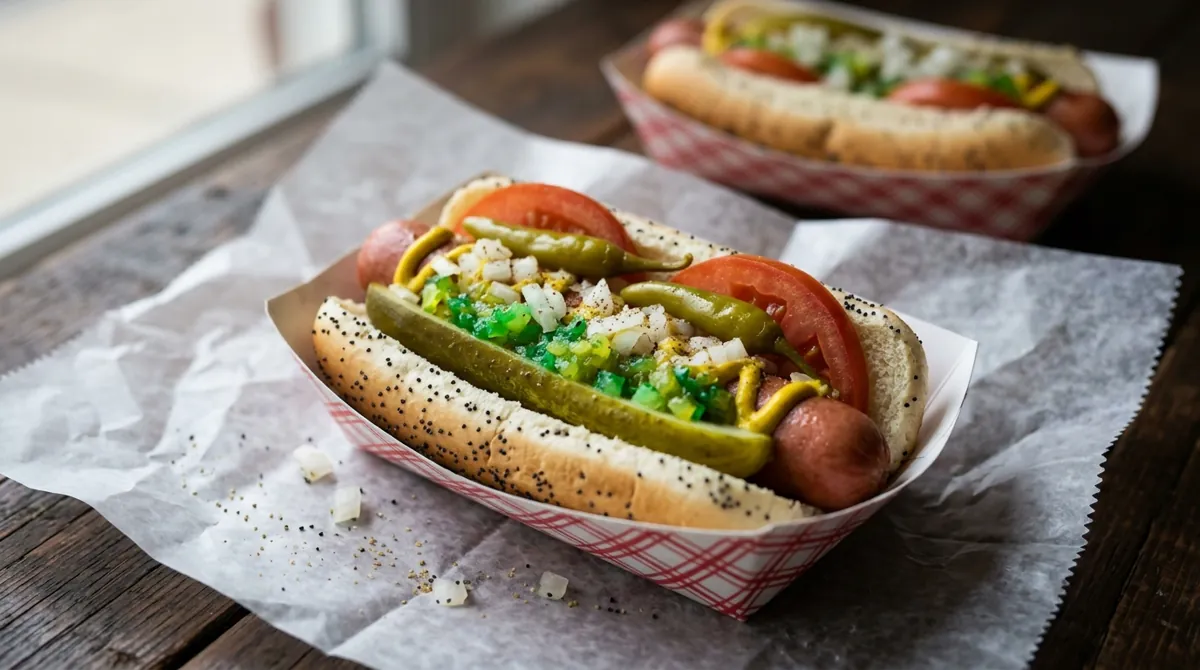
Chicago-Style Hot Dog
An all-beef frank in a steamed poppy seed bun, "dragged through the garden" with seven toppings, and never ketchup.
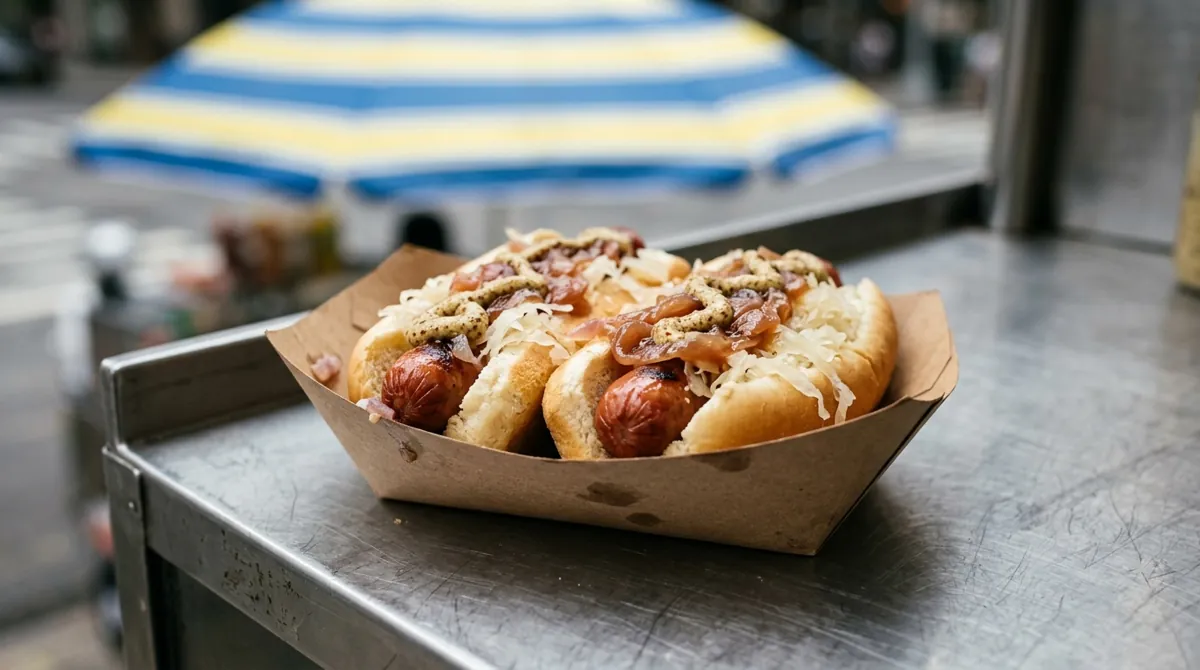
New York Street Cart Hot Dog
An all-beef frank held in a hot "dirty water" bath, in a steamed bun with sweet red onion sauce, sauerkraut and mustard.
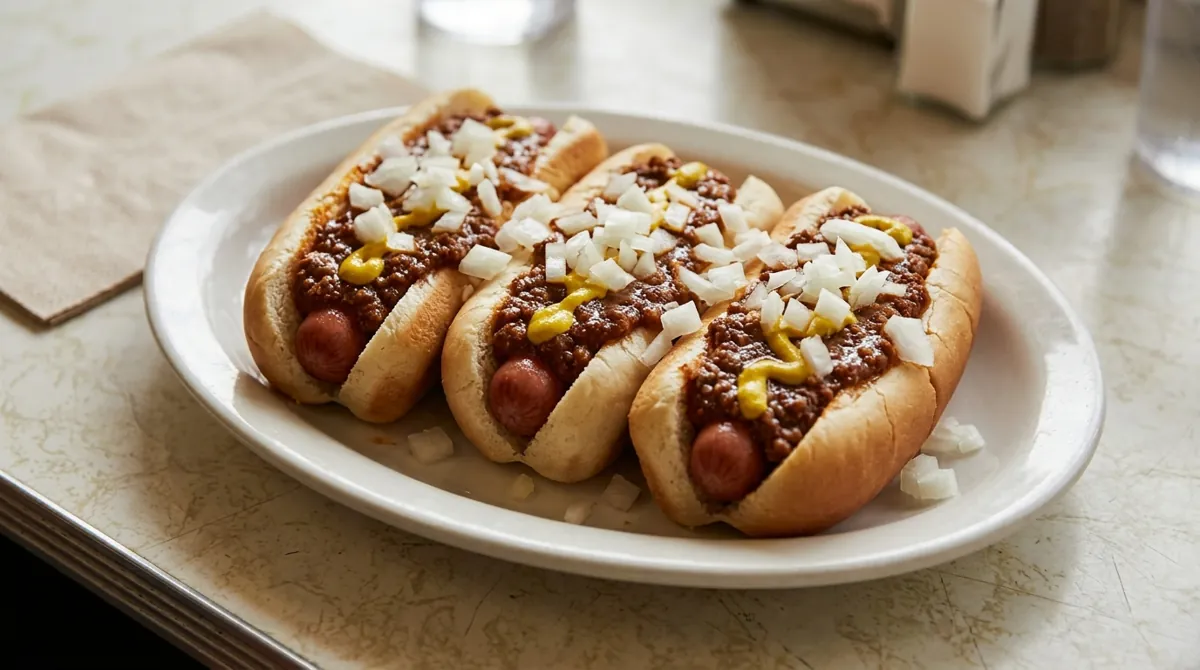
Detroit Coney Island Hot Dog
A natural-casing dog in a soft bun under a fine, beanless meat sauce, a stripe of yellow mustard and a pile of chopped onion.
Sonoran Hot Dog
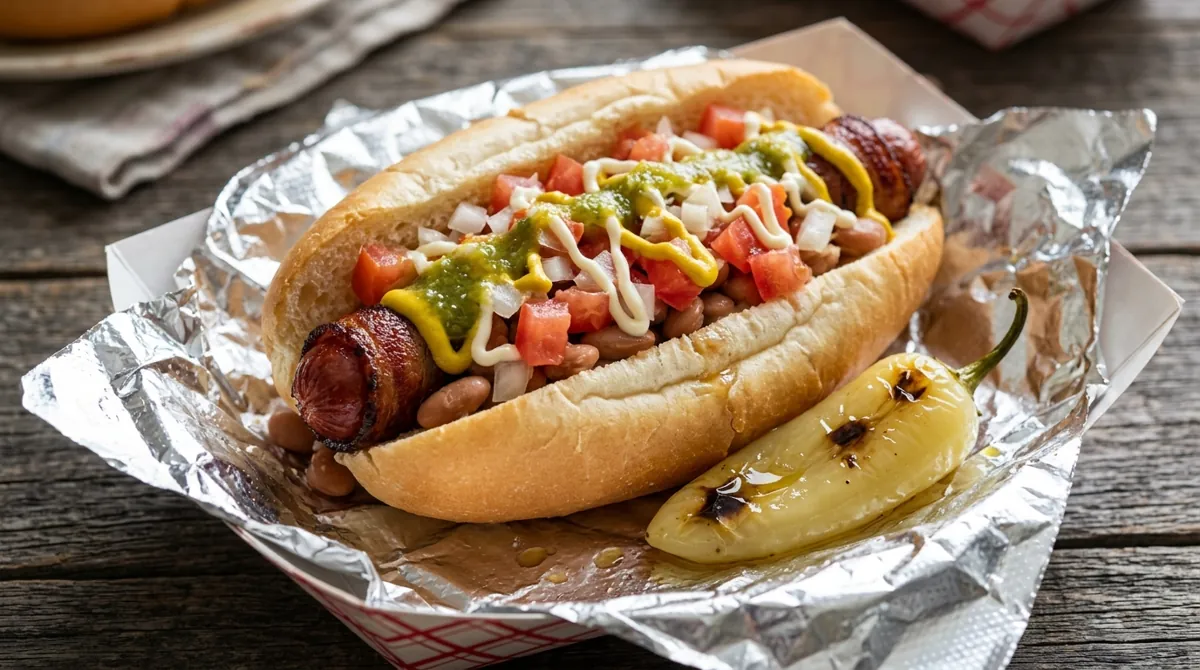
A bacon-wrapped dog in a soft bolillo split along the top, loaded with pinto beans, tomato, onion, jalapeño salsa, mustard and a zigzag of mayo.