
🔬 Myth check
Where Did Mississippi Delta Hot Tamales Come From?
Five origin stories and a blues song. The cotton-field story is the favorite, but the Delta's own historians keep the other four on the table.
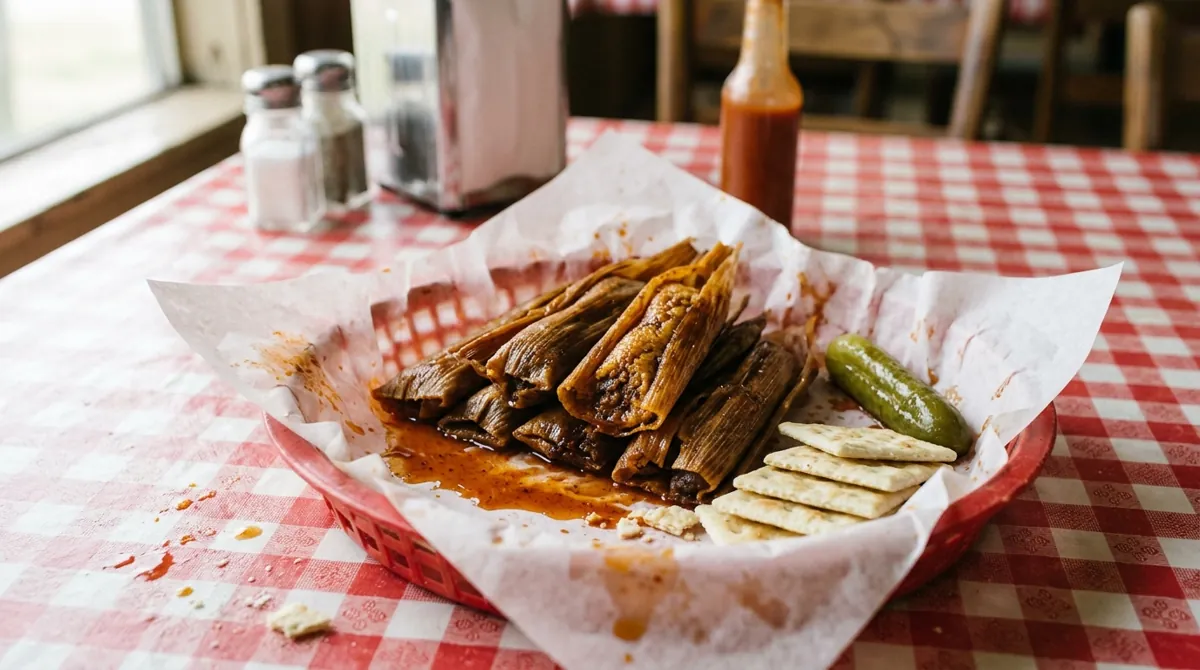
Nobody knows for sure. The most common story is Mexican cotton workers in the early 1900s: they brought tamales to the Delta, and African American cooks adopted and changed them. Other stories credit soldiers home from the U.S.-Mexican War, the region's Native American mound builders, Sicilian immigrants and an African American cornmeal dish called cush.
Five stories, no winner
The Southern Foodways Alliance, which recorded Delta tamale makers for its Hot Tamale Trail oral history project, lays out the theories without ranking them. Its oral historian, Amy C. Evans, writes that there are as many answers as there are recipes.
The cotton fields come first in most tellings. In the early 20th century Mexican migrants came to work the cotton harvest, and African Americans working beside them recognized the shared ingredients, cornmeal and pork. The Mississippi Blues Trail marker in Rosedale calls this the likely route, and says African Americans quickly took the tamale up.
The war story is older: U.S. soldiers who fought in Mexico in the 1840s brought recipes home. The Native American story points to the Mississippian mound builders, whose farming was based on maize; the marker says local Native Americans made a similar corn dish in husks centuries ago.
The last two are about how the tamale spread and changed. Sicilians drawn to Greenville by river trade may have learned tamales from Mexican migrants, the SFA says, and the marker notes a Sicilian family recipe in Helena, Arkansas, that added Italian meats and spices. And Lumumba Ajanaku, a Yazoo City vendor, told the SFA the tamale may have grown from cush, cornmeal seasoned to taste like meat by people who could not afford meat.
How a Delta tamale is different
According to the SFA, most Delta cooks prefer cornmeal to masa for its coarser texture, though some use masa. The tamales are simmered rather than steamed, they are smaller and much spicier than Latin-style tamales, and they come with the juice from the pot. A few cooks wrap them in parchment paper instead of corn shucks, and some now fry them.
Our Mississippi Delta hot tamales follow Cook's Country: the same spice mix goes into the cornmeal dough, the beef and the water, and the tamales are tied in bundles of six and simmered about 30 minutes. Compare that with our red chile pork tamales, light masa beaten with lard and steamed about 1 1/4 hours, in our Mexican vs Delta tamales debate.
The blues sang about them
Robert Johnson recorded "They're Red Hot" in 1936, using a tamale seller as an image for a woman, the Mississippi Blues Trail notes. Some references give 1937, but the Blues Trail and the SFA both say 1936. He was not the first: Moses Mason, recording as Red Hot Ole Mose, cut "Molly Man" in 1928, and Lucille Hegamin sang "Hot Tamale Molly" in 1925.
The street sellers themselves were recorded too. In 1939 the folklorist Herbert Halpert recorded a Greenville vendor's cry, "Hot Tamales," from F. W. Lindsey. The tamales moved from street carts to stands, groceries, restaurants and blues clubs, the marker says.
Who keeps the tradition
Whatever the origin, the SFA says African Americans are the primary keepers of the Delta tamale today. In Delta usage the singular is tamale, never the Spanish tamal. See how the Delta style sits next to Mexican, Texan and Venezuelan versions in our tamales hub.
Questions people ask
Are Delta hot tamales made with masa?
Usually not. The Southern Foodways Alliance says most Delta cooks prefer cornmeal for its rougher texture, though some use masa.
Why are Delta tamales simmered instead of steamed?
No source we found explains why, but simmering is the defining method: the tamales stand upright in spiced water, and that water becomes the juice served with them. The Mississippi Blues Trail marker notes that Mexican tamales are typically steamed.
What song mentions Delta hot tamales?
The best known is Robert Johnson's "They're Red Hot," recorded in 1936. Earlier blues records with tamale imagery include "Hot Tamale Molly" (1925) and "Molly Man" (1928).
Parts of this history are disputed. Where sources disagree, we say so.
Sources
- Amy C. Evans, "Hot Tamales: The Mississippi Delta," Southern Foodways Alliance
- Mississippi Blues Trail, "Hot Tamales" marker, Rosedale
- Amber Wright, entry on Delta hot tamales, Clio
- Christie Morrison, "Delta Hot Tamales," Cook's Country (America's Test Kitchen), March 30, 2014
- Rick Bayless, "Red Chile Pork Tamales Steamed in Corn Husks"
More food facts
Cook it
Mississippi Delta Hot Tamales
Small, spicy beef tamales with a gritty cornmeal dough, tied in bundles and simmered upright in a pot of seasoned water, then served with the juice thickened into a sauce.
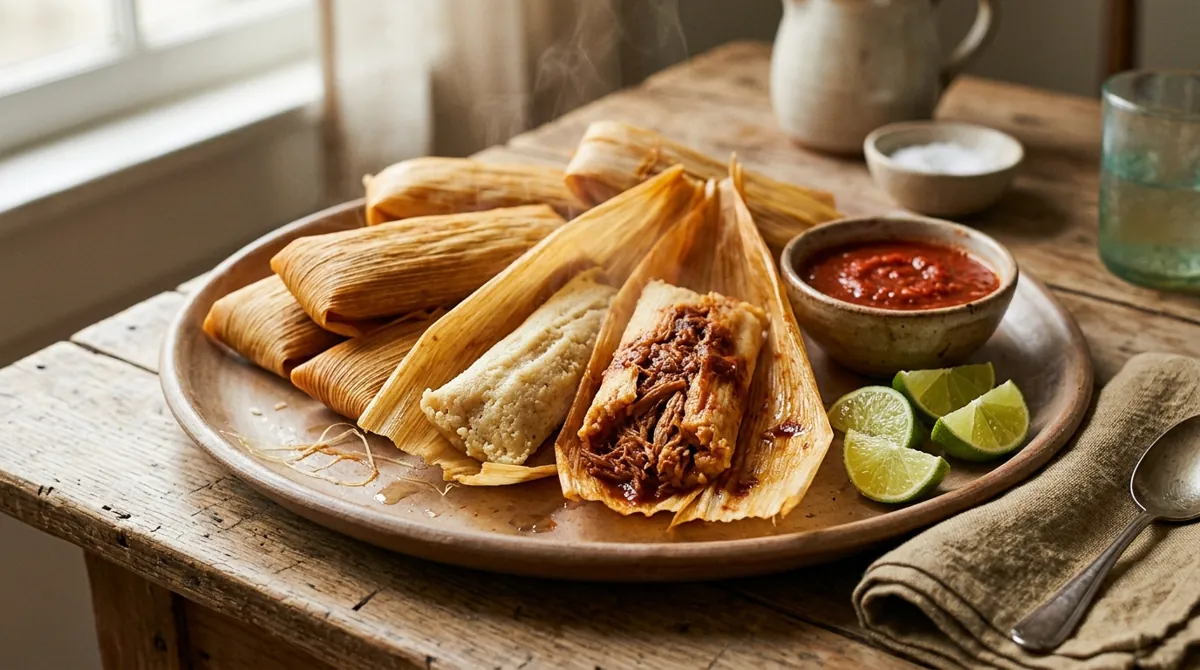
Red Chile Pork Tamales (Tamales Rojos de Puerco)
Pork shoulder simmered down in a smooth guajillo chile sauce, wrapped in light, fluffy lard-beaten masa and steamed upright in corn husks, the central Mexican way.
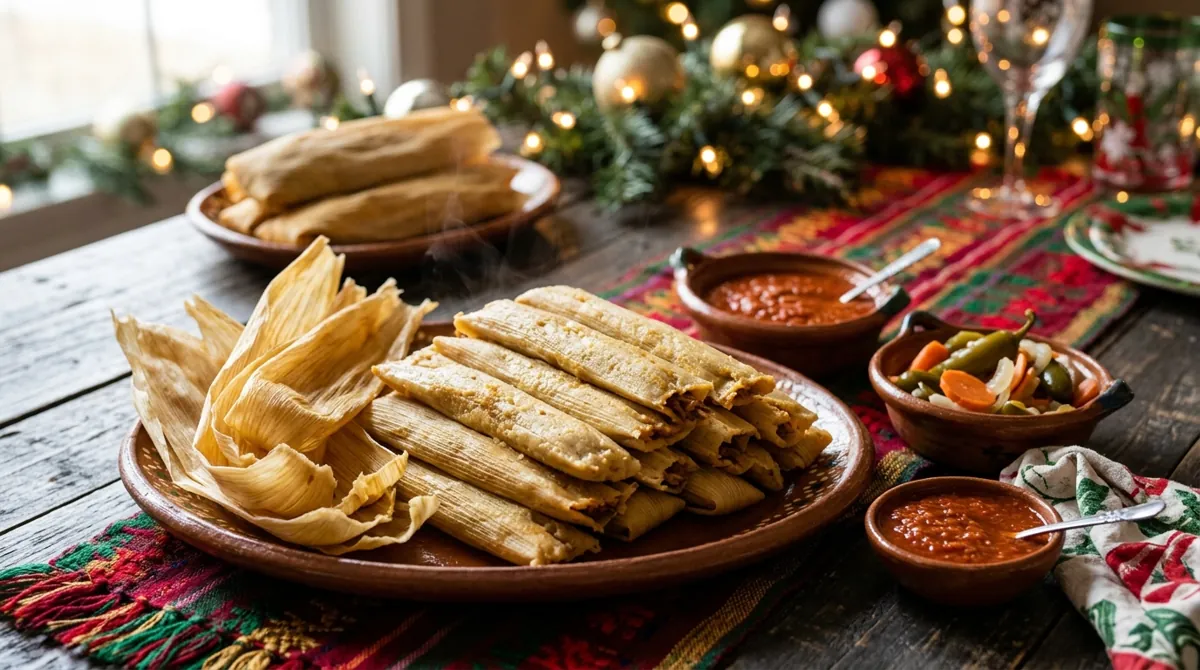
San Antonio Christmas Tamales
Long, thin San Antonio tamales with more filling than masa: lean pork simmered with raisins, then cooked in a tomato, green chile and oregano sauce, rolled in husks like cigars for the Christmas tamalada.
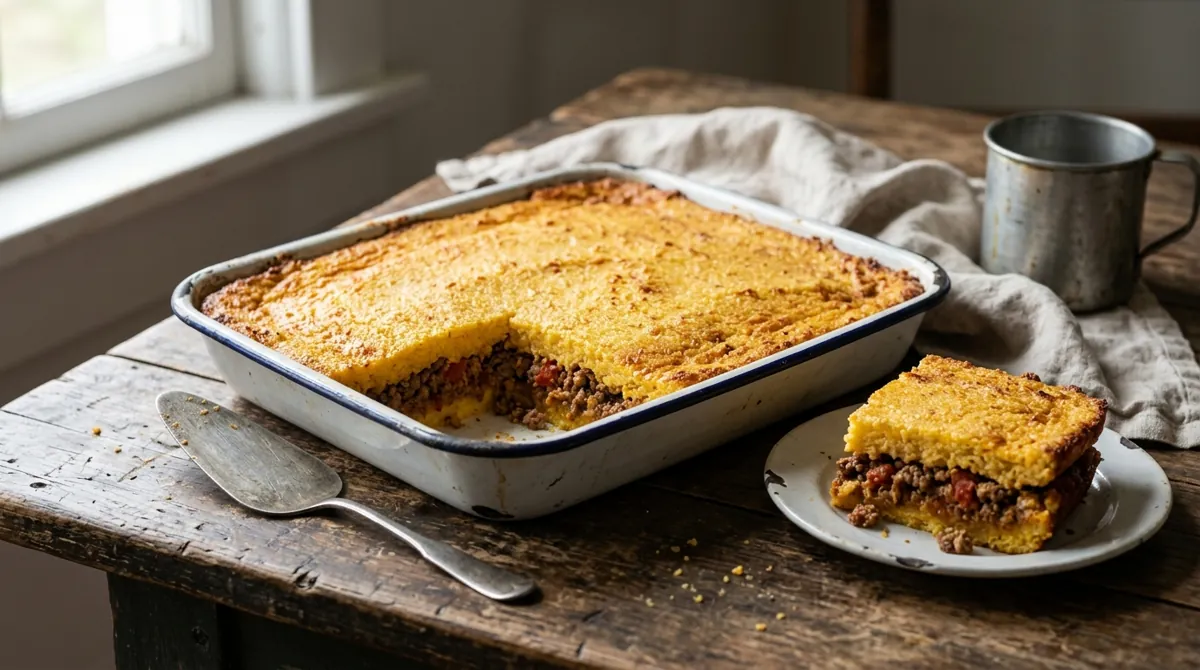
1918 Tamale Pie
The World War I version of America's tamale casserole: seasoned ground beef, onion and tomatoes baked between two layers of plain cornmeal mush, with no wrapper, no steamer and, in 1918, no chile.
New Mexico Red Chile Pork Tamales
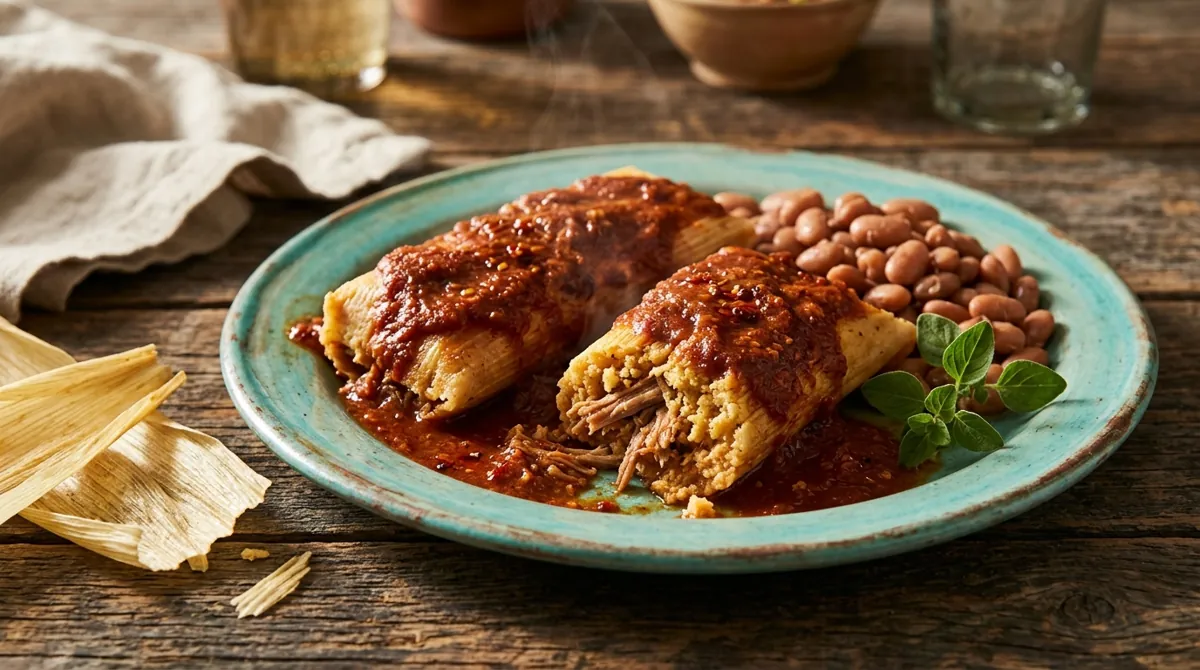
Slow-roasted pork shoulder in a New Mexico red chile sauce, with a little of the same sauce beaten into the masa, rolled in corn husks, steamed and served under more red chile.