
📖 Food facts
Corned Beef vs Pastrami: What's the Difference?
Same cow, two cures. Corned beef and pastrami share a brine and a deli counter, but what happens after the cure makes them taste like different meats.
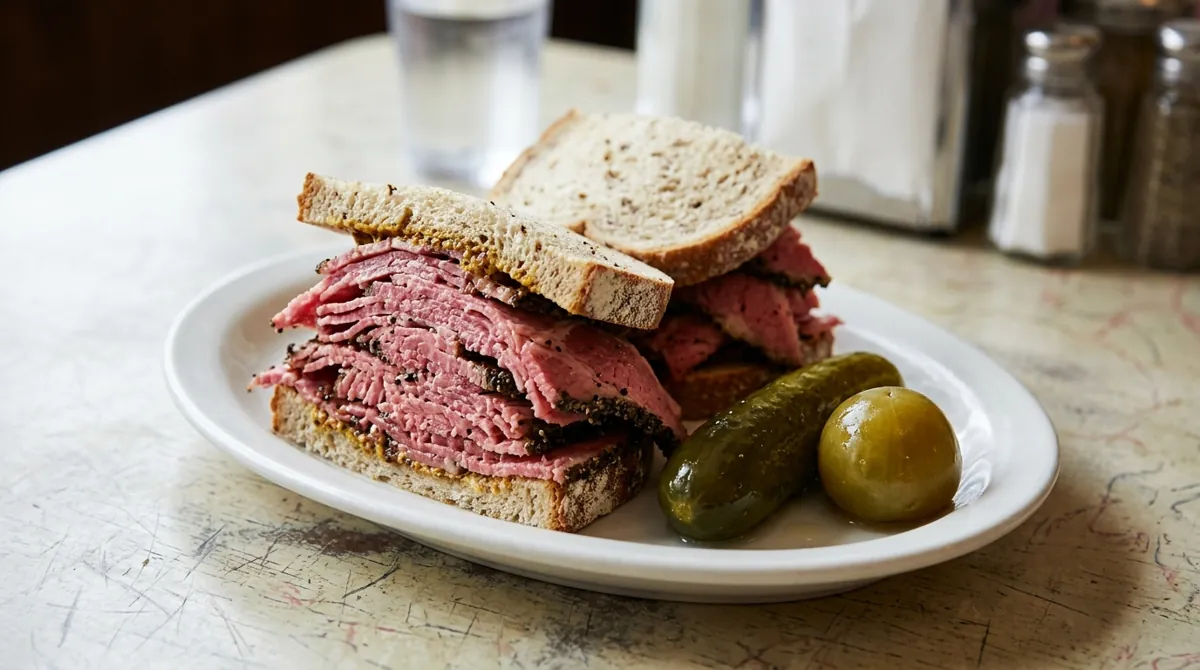
Both are salt-cured beef, usually pink from nitrite. Corned beef is typically brisket that is brined and then simmered or braised. Pastrami goes further: the cured meat, often navel or brisket, is rubbed with black pepper and coriander, smoked, and steamed before slicing. In short, pastrami is corned beef that has been spiced and smoked.
The shared start: a salt cure
Corned beef is beef cured in salt. USDA's Food Safety and Inspection Service says the cure once used coarse salt grains and today uses a brine, usually on less tender cuts like brisket, rump or round. Nitrite in the cure fixes the pigment, which is why both meats stay pink after cooking.
From there, corned beef is simply cooked in liquid, low and slow, until fork-tender. Our homemade deli corned beef cures a brisket for six days in a salt and pink curing salt brine, then cooks it gently in the oven before it is sliced thin for rye.
What turns it into pastrami
Pastrami starts where corned beef stops. Meathead, the founder of AmazingRibs, sums it up as corned beef with a spice rub that is then smoked, which is why his home recipe begins with store-bought corned beef. The cured meat is soaked to pull out excess salt, crusted mostly with cracked black pepper and coriander, smoked low, then steamed or wrapped in foil until the connective tissue goes soft.
The cut differs too. Traditional New York pastrami uses navel, the fatty plate below the ribs, though brisket is now common. Meathead reports that Katz's Delicatessen, one of New York's oldest delis, starts with navel, wet-cures it for weeks, then rubs, smokes and steams it on the day it is served. He also notes that staff gave him different answers to the same questions. Our pastrami on rye is a home version built on brisket.
Romanian Jewish roots
Both the word and the dish are usually traced to Romania. Meathead writes that culinary historians credit poor Jewish communities there, where it may first have been made from goose or duck as well as beef, so pastrami has Romanian Jewish roots. By family tradition, a New York kosher butcher named Sussman Volk made the first American pastrami in 1887, a claim others dispute.
Corned beef took a parallel path through the same delis and butcher shops. Jewish immigrants from Eastern and Central Europe sold salted, slow-cooked brisket in New York, Smithsonian notes, and it later became the base of the Reuben sandwich.
Montreal smoked meat, the close cousin
Montreal has its own version, made by Jewish immigrants from Romania and Eastern Europe. Serious Eats calls the process almost identical to pastrami: brisket dry-cured for about a week, smoked, then steamed and hand-sliced onto rye with yellow mustard. The differences are the cut, often the whole brisket rather than the flat or plate, and a busier rub with more spices.
Meathead adds that Montreal smoked meat is usually dry-cured and rarely has sugar in the rub. Try it with our Montreal smoked meat, then pick a side in our corned beef vs pastrami debate.
Questions people ask
Can you make pastrami from corned beef?
Yes, and many home cooks do. Meathead's method starts with raw, store-bought corned beef, soaks it at least 8 hours to remove salt, then rubs, smokes and finishes it in foil until very tender.
Which is saltier, corned beef or pastrami?
Both are cured with a lot of salt, and saltiness depends on the maker and how long the meat was soaked. Pastrami recipes deliberately soak the cured meat to pull some salt back out before the rub goes on.
Why is pastrami black on the outside?
That is the pepper and coriander rub darkening in the smoke, not burning. Inside it stays pink because of the curing salt, which is also why pastrami has no separate smoke ring.
Parts of this history are disputed. Where sources disagree, we say so.
Sources
- USDA Food Safety and Inspection Service, "Corned Beef and Food Safety" (revised June 2011, GovInfo copy)
- Meathead, "A Smoked Pastrami Recipe That's Close To Katz's," AmazingRibs.com (last modified September 25, 2026)
- Leah Colins, "Montreal Smoked Meat Sandwich," Serious Eats (updated March 14, 2024)
- Shaylyn Esposito, "Is Corned Beef Really Irish?", Smithsonian Magazine, March 15, 2013
- Wikipedia, "Pastrami" (used as a lead to sources)
More food facts
Cook it
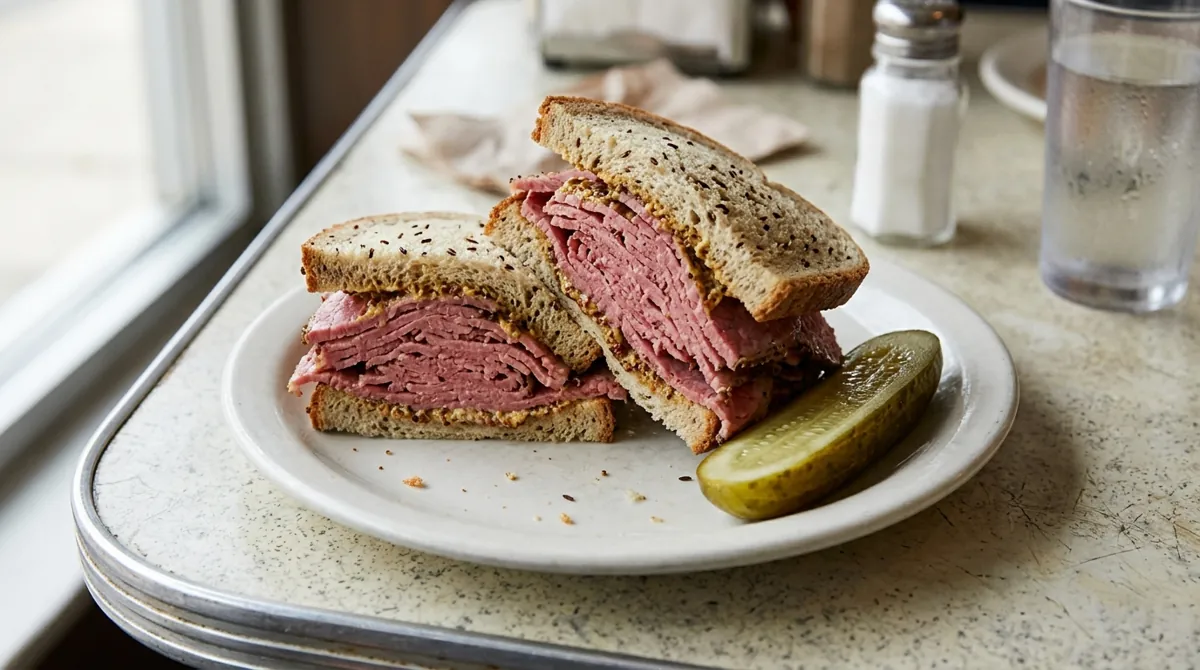
Homemade Deli Corned Beef on Rye
Cure your own brisket for six days in a salt, sugar and pink curing salt brine, simmer it in a low oven, then slice it thin, steam it and pile it on rye with deli mustard.
Pastrami on Rye, Inspired by Katz's
Inspired by, not official: store-bought corned beef soaked to pull out salt, crusted with cracked black pepper and coriander, smoked low, finished in foil to 203°F and hand-sliced onto rye with mustard, the way Katz's Delicatessen serves it.
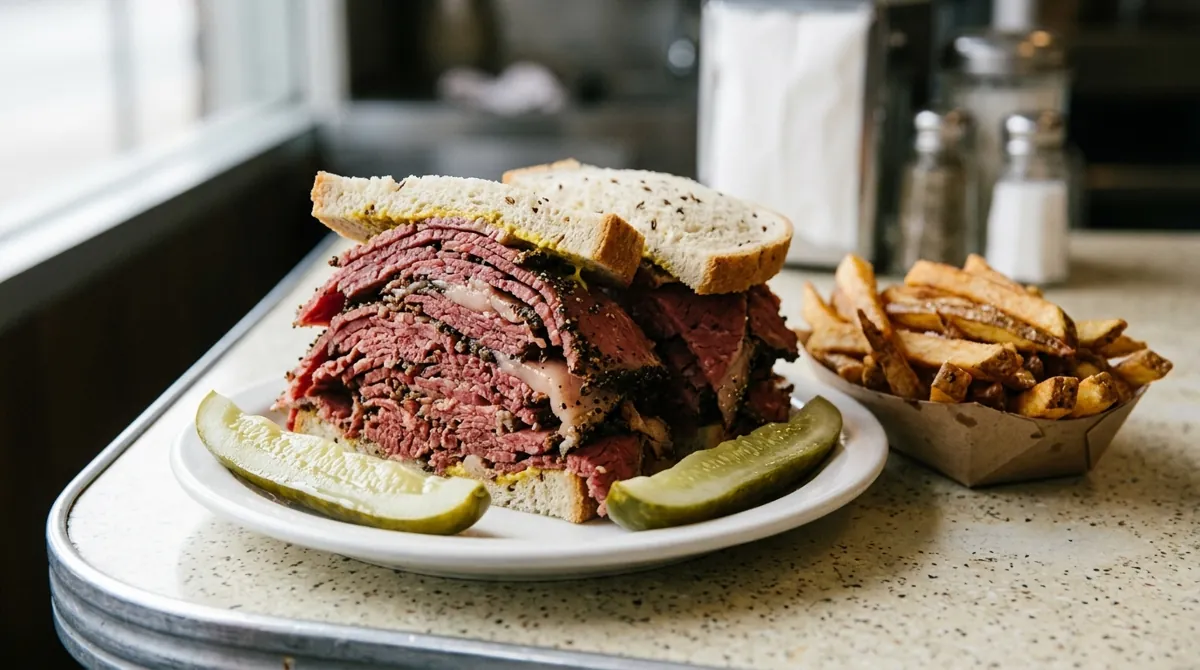
Montreal Smoked Meat
Montreal's answer to pastrami: a whole brisket dry-cured for a week, soaked, crusted with pepper, coriander and dill, smoked low, steamed in foil until tender and piled on rye with yellow mustard.
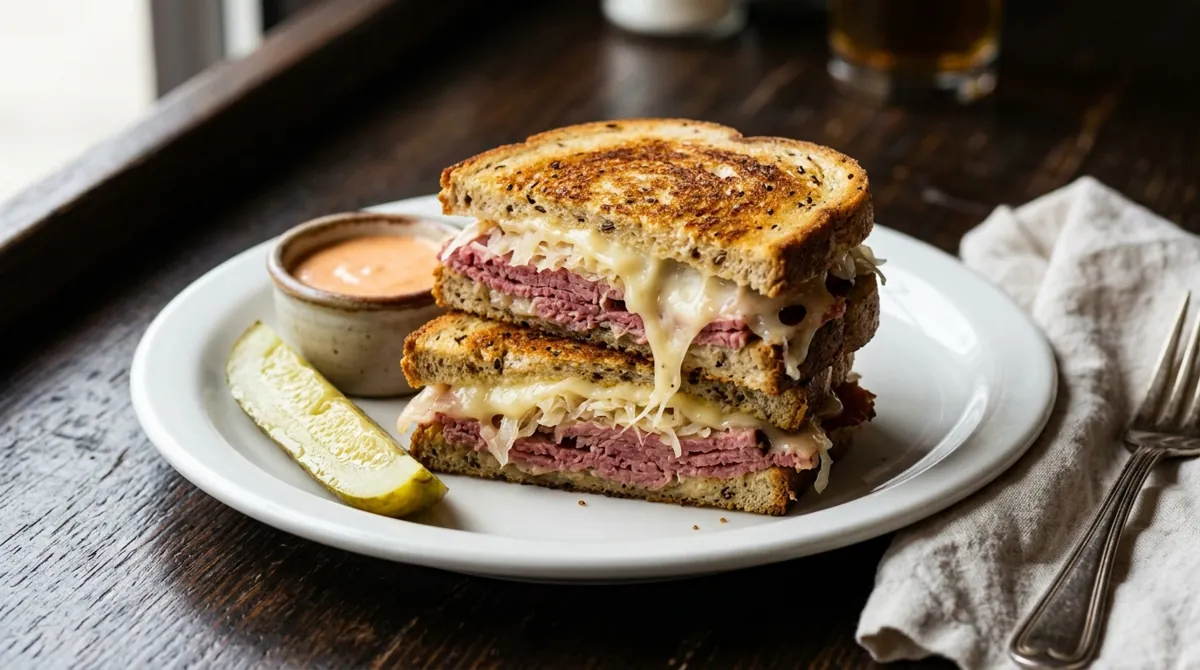
Reuben Sandwich
Corned beef, Swiss cheese and quick-cooked sauerkraut on rye with a Russian-style dressing, griddled in butter until the bread is golden and the cheese melts.
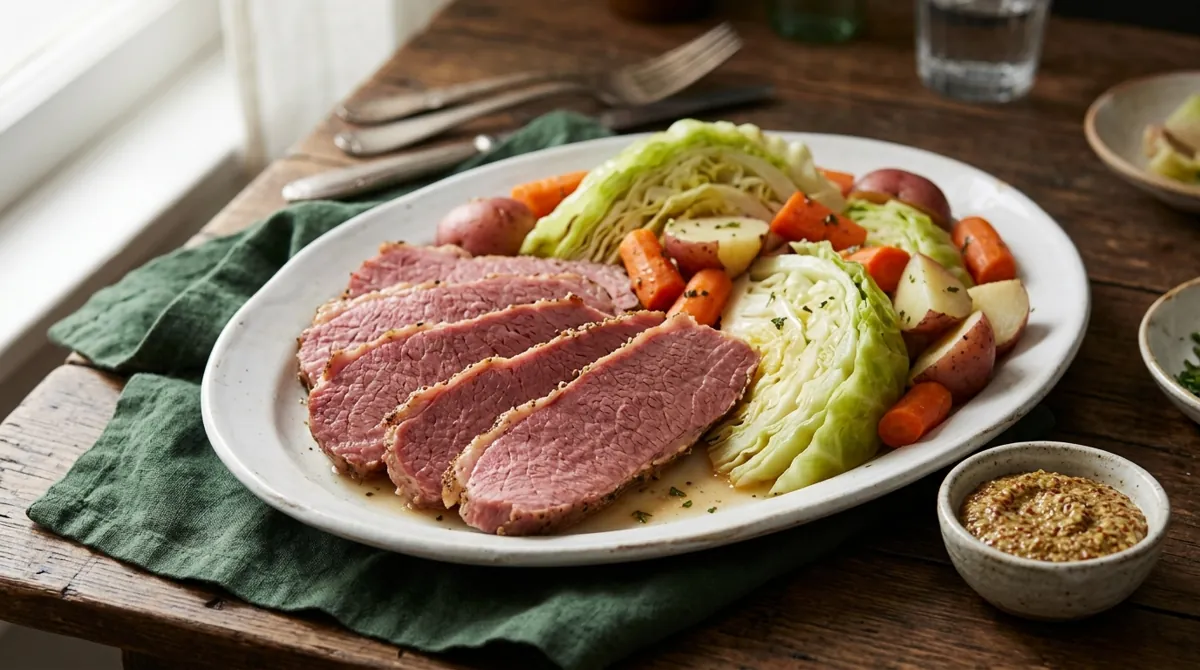
Corned Beef and Cabbage
The Irish-American St. Patrick's Day dinner: flat-cut corned beef braised low and slow in the oven, then cabbage wedges, carrots and red potatoes simmered in the strained, buttered cooking liquid.