
📜 Origin story
Why Are Latkes Made With Potatoes? The Cheese Came First
Potato latkes are younger than most people think. The frying goes back to the Temple; the potato arrived in the 1800s because it was the cheapest thing to fry.
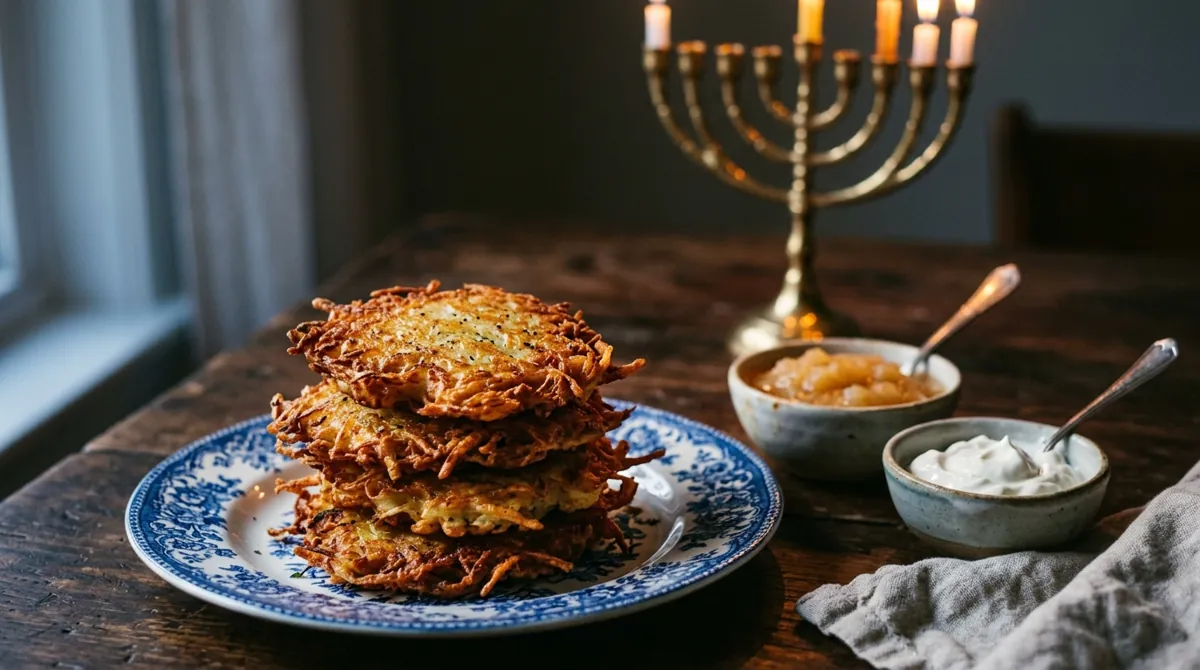
Because potatoes were the cheapest thing to fry when the dish took its modern shape. The first Hanukkah pancakes were made with cheese, and later with buckwheat or rye. Potatoes only became a staple for Eastern European Jews in the 1800s, when they cost less than wheat or cheese. The frying, not the potato, is the old part: it recalls the Hanukkah oil.
Before the potato: cheese and grain
The earliest written mention of Hanukkah pancakes is a 1322 poem by Kalonymus ben Kalonymus, which calls them levivot, according to Susannah Brodnitz in The Nosher. They were not potato pancakes. Cheese was eaten at Hanukkah in Judith's honor, after a story in which she fed the general Holofernes salty cheese and wine before killing him.
Reform Judaism's Tina Wasserman calls the Judith tale a legend, and it is not part of the Hanukkah account itself. Still, soft cheese pancakes were especially popular Hanukkah foods in Southern and Eastern Europe, writes the historian Rachel B. Gross, and the food historian Gil Marks traced Italian ricotta pancakes spreading across Europe.
In Eastern Europe the usual frying fat was schmaltz, rendered poultry fat. Kosher law does not mix meat and milk, so cooks there traded the cheese for buckwheat or rye flour, or for root vegetables such as turnips, The Nosher explains.
When the potato took over
Potatoes are native to the Americas. Marks dated their arrival in Europe to around 1570, and he liked to point out that the Maccabees "never saw a potato, much less a potato pancake." Wasserman says it took about 200 years for the potato to go from animal fodder to a staple of the poor.
Exactly when potato latkes began is disputed. The Nosher and Gross tie it to crop failures in Ukraine and Poland in 1839 and 1840, which pushed people to plant potatoes and points to the mid-1800s. Wasserman dates the potato latke to the late 18th or early 19th century. The safe summary is that potato latkes caught on in the 1800s.
The reason was price. Potatoes became cheaper than wheat flour or cheese, and they quickly replaced buckwheat as a staple, Gross writes. Even the name is about the pan: latke comes from a Slavic word for a small fried pancake.
The oil is the old part
The frying is what ties latkes to Hanukkah. The Talmud (Shabbat 21b) says that when the Hasmoneans retook the Temple, they found one sealed jar of oil, enough to light the lamp for a single day, and it burned for eight. A year later the sages made those eight days a festival.
The fat itself changed over time. Eastern European latkes were fried in schmaltz (Wasserman makes the case for goose fat, rendered when geese were slaughtered in early December), and The Nosher says neutral vegetable oil became the default after immigrants brought latkes to America in the early 20th century.
Our classic potato latkes use that American setup: wrung-out russets and onion, bound with egg and the potato's own starch and shallow-fried at 350°F. Our sweet potato latkes go a step further, mixing sweet potato with Yukon Gold and topping the pancakes with horseradish cream.
The other fried food: sufganiyot
Latkes are not the only answer to the oil. In the United States they are the main Hanukkah food, but in Israel the signature treat is the sufganiyah, a jam-filled doughnut, writes Carol Ungar in Jewish Action. The frying custom is older than either: in the 12th century Maimon ben Yosef, the father of Maimonides, defended eating fried fritters on Hanukkah as a custom of the ancients.
Gil Marks credited Israel's labor federation, the Histadrut, with promoting doughnuts over latkes in the late 1920s, because anyone could fry latkes at home while doughnuts needed workers to make, carry and sell them. Our Israeli sufganiyot follow Joan Nathan's 1979 recipe. Find both in our Hanukkah recipes, and compare latkes with potato pancakes from Sweden to Korea in our potato pancakes hub.
Questions people ask
Were the first latkes made of cheese?
Cheese pancakes were a Hanukkah food in medieval Europe, eaten in Judith's honor, and they came long before potato ones. Potatoes did not reach Europe until the 16th century and did not become a staple for Eastern European Jews until the 1800s.
What does the word latke mean?
Latke is Yiddish, from a Slavic word for a small fried pancake. Some writers trace the chain further back to a Greek word for olive oil, but the direct source is the Slavic pancake word.
When is Hanukkah in 2026?
Hanukkah 2026 begins at sundown on Friday, December 4, and ends at nightfall on Saturday, December 12, according to Hebcal. The dates move each year because the holiday follows the Hebrew calendar and starts on 25 Kislev.
Parts of this history are disputed. Where sources disagree, we say so.
Sources
- Susannah Brodnitz, "The Real History of Potato Latkes Will Surprise You," The Nosher (My Jewish Learning), December 8, 2022
- Tina Wasserman, "A Brief History of Latkes: Why We Really Eat Them on Hanukkah," ReformJudaism.org
- Rachel B. Gross, "The true history of the potato latke," J. The Jewish News of Northern California, December 30, 2024
- Babylonian Talmud, Shabbat 21b, William Davidson Edition (Sefaria)
- Hebcal, Chanukah 2026
- Carol Ungar, "The 'Hole' Truth About Sufganiyot," Jewish Action (Orthodox Union), Winter 2012
More food facts
Cook it
Classic Potato Latkes
Shredded russets and onion, wrung dry, bound with egg and the potato's own starch, and shallow-fried at 350°F into lacy, golden Hanukkah latkes with applesauce and sour cream.
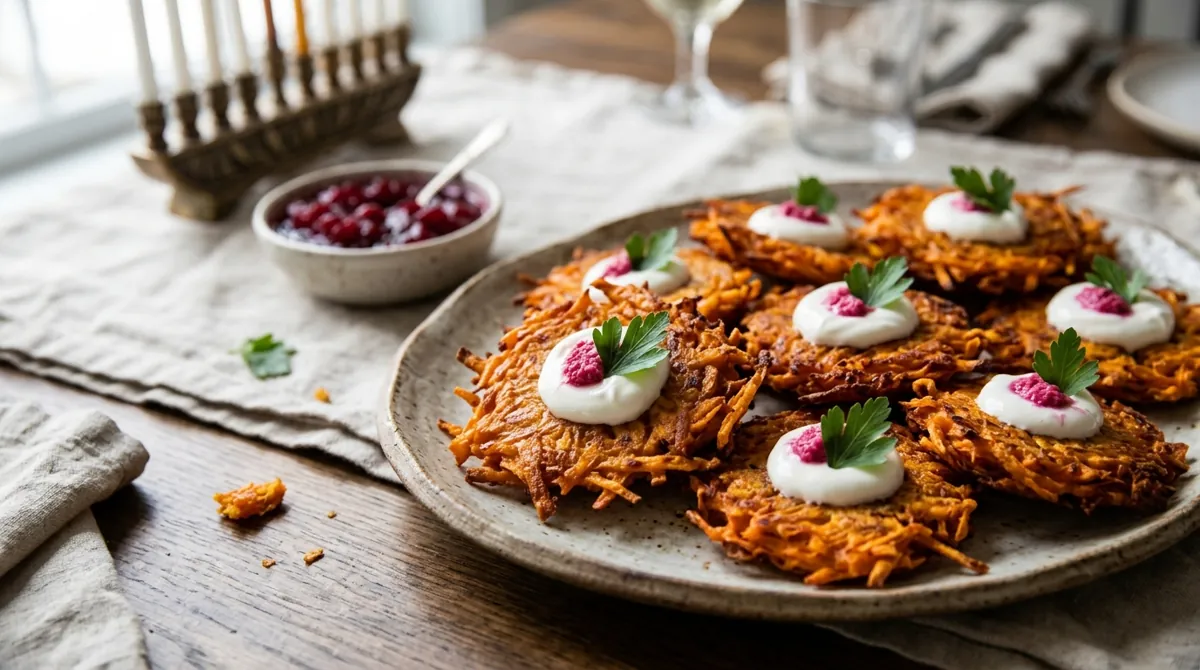
Sweet Potato Latkes with Horseradish Cream
Half sweet potato and half Yukon Gold, with onion, a pinch of cayenne and egg, fried into orange-flecked latkes and topped with sour cream and horseradish, the American swap.
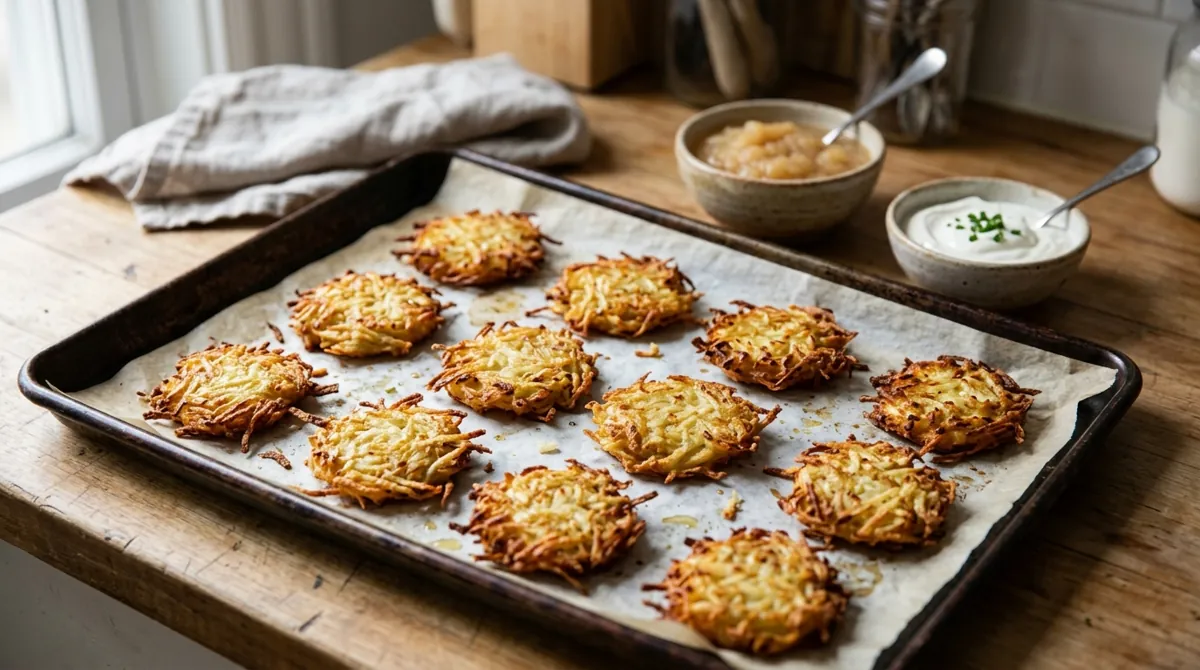
Sheet-Pan Latkes with Store-Bought Shreds
Refrigerated shredded hash browns squeezed dry, mixed with grated onion, egg and flour, and baked on a well-oiled sheet pan at 425°F, flipped once: twelve latkes, no grater and no skillet.
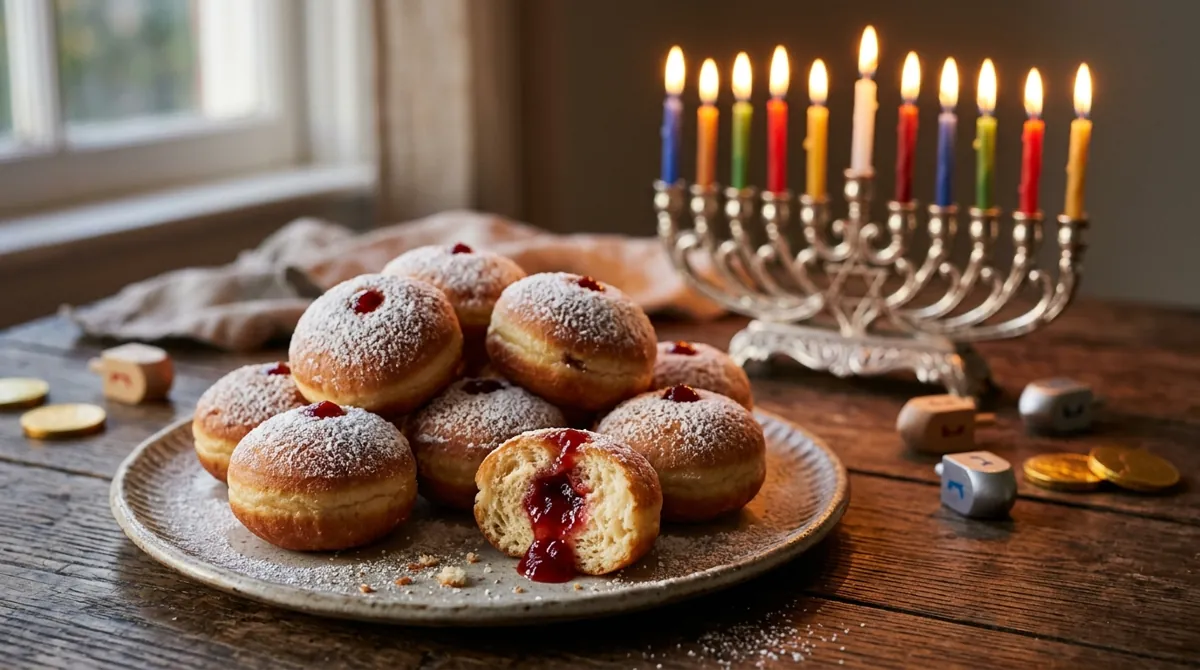
Israeli Sufganiyot (Hanukkah Jelly Doughnuts)
Small yeast doughnuts scented with cinnamon, fried hot and fast for Hanukkah, filled with a spoonful of berry or plum preserves and rolled in sugar, from Joan Nathan's 1979 holiday cookbook.
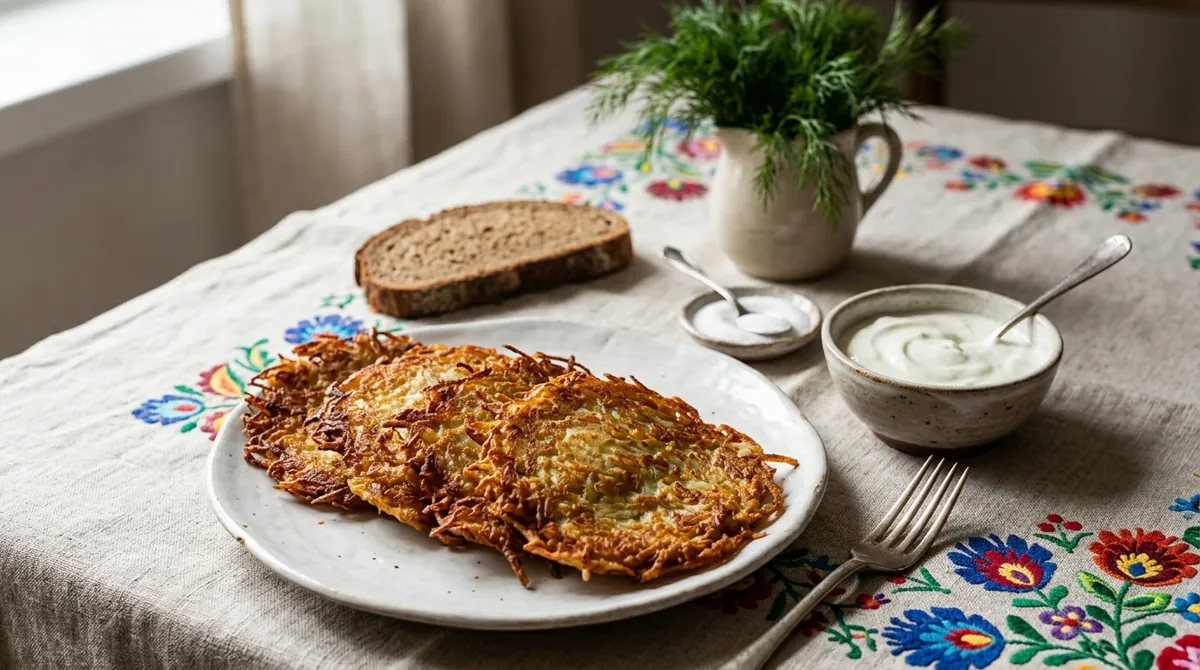
Polish Placki Ziemniaczane (Potato Pancakes with Sour Cream and Sugar)
Thin, crisp Polish potato pancakes from finely grated potatoes drained in a tilted bowl, fried by the spoonful and served the two classic ways, with sour cream or a sprinkle of sugar.
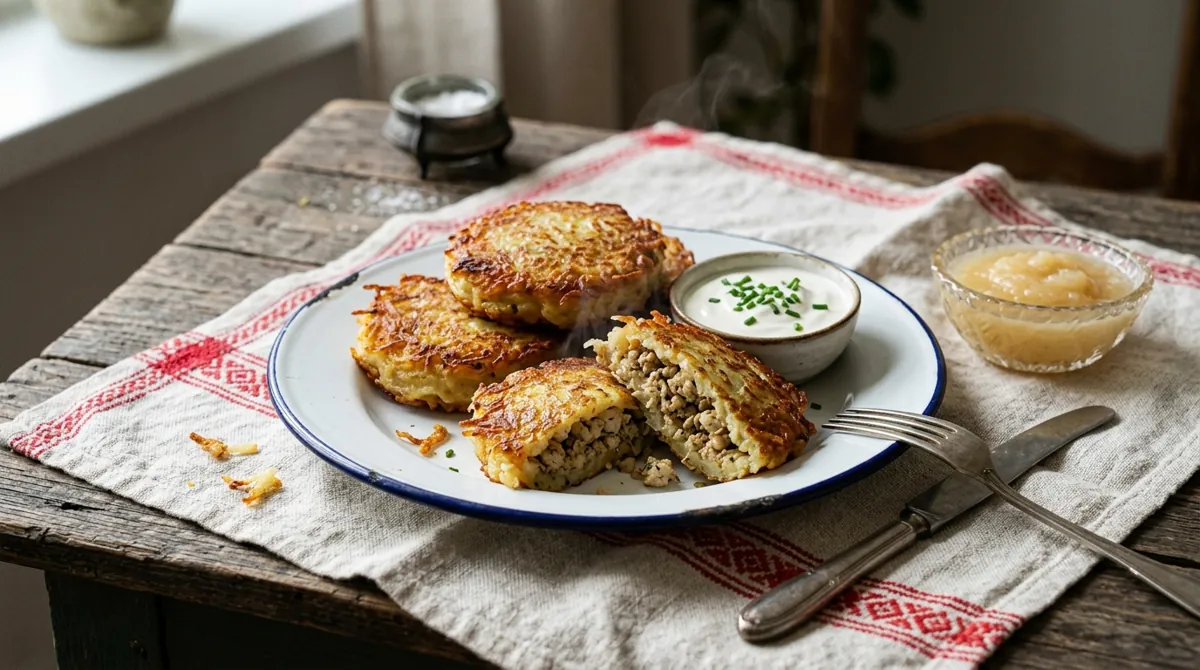
Belarusian Draniki Stuffed with Chicken
Thick Belarusian-style potato pancakes with a hidden layer of garlicky ground chicken, fried in sunflower oil, finished in the oven and served with sour cream, applesauce and chives.